Posted in MARIAN TITLES, SAINT of the DAY

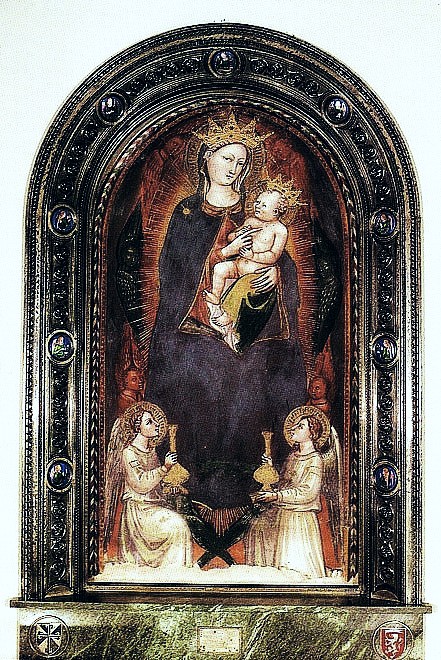
All Souls Day, Notre-Dame D’Emminont / Our Lady of Emminont. France (12th Century) and Memorials of the Saints for 2 November

All Souls Day – The Commemoration of All the Faithful Departed: Commemoration of the faithful departed in Purgatory. Abbot Odilo of Cluny instituted it in the Monasteries of his congregation in 998, other religious orders took up the observance and it was adopted by various Diocese and gradually by the whole Church. The Office of the Dead must be recited by the clergy on this day and Pope Benedict XV granted to all Priests, the privilege of saying three Masses of requiem –

St Ambrose of Agaune
St Amicus of Fonte Avellana
St Amicus of Rambone
St Baya of Scotland
St Domninus of Grenoble
St Erc of Slane
St Eustochium of Tarsus
St George of Vienne

Blessed John Bodey (1549-1583) Layman, Martyr

St Jorandus of Kergrist
St Justus of Trieste
St Marcian of Chalcis

St Willebald of Bavaria

Posted in franciscan OFM, SAINT of the DAY

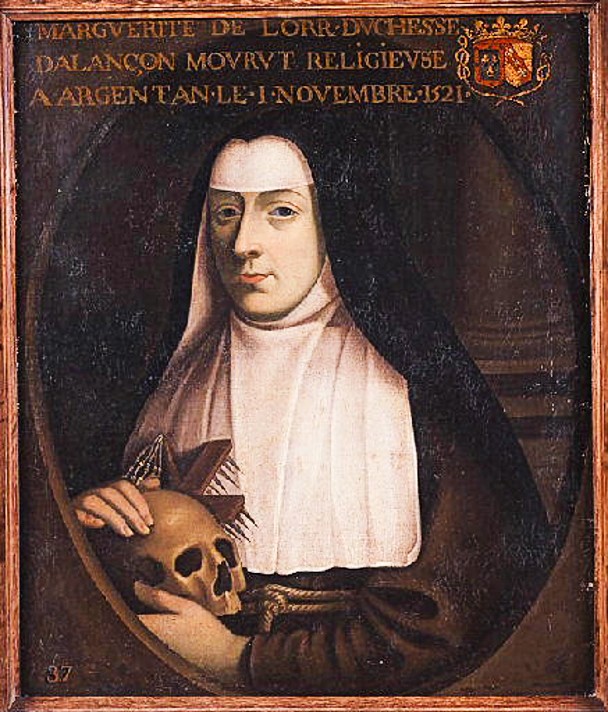
Saint of the Day – 2 November – Blessed Margaret of Lorraine OSC (1463-1521)

Saint of the Day – 2 November – Blessed Margaret of Lorraine OSC (1463-1521) Duchess of Alençon, Mother, Widow, Nun of the Poor Clares, Apostle of the sick, the poor and those suffering under unjust feudal lords. Born in 1463 as Marguerite de Lorraine-Vaudemont in Vaudemont Castle, Lorraine, France and died on 2 November 1521 at Argentan, Brittany, France of natural causes. Also known as – Margaret Lotarynska, Marguerite de Lorraine-Vaudemont, Margarita, Margherita, Marguerite. Margaret was Beatified on 10 March 1921 by Pope Benedict XV (cultus confirmed).

Blessed Margaret of Lorraine was born of the ancient noble family of the Dukes of Lorraine. Her earnest efforts to lead a virtuous life attracted attention very early in her life. After the death of her husband, Duke Rene of Alençon, she assumed the government of the Duchy. In this, she was guided solely by Catholic principles and by means of prudent economy, she managed to save a significant amount of materials which she used to render aid to the poor and the needy. She took particular pleasure in nursing the sick and the lepers. She built Churches, Convents and hospitals everywhere.

The subject matter taught in the schools and the instruction of the people were objects of particular solicitude to her. Hard-hearted landlords and selfish officials were dealt with by her, with the greatest severity.

Still, she remained very humble and spent a great part of her day in meditating on the sufferings of Christ and in performing works of penance.

In later years, after she had turned the government over to her son, she was invested with the habit of the Third Order. And when that no longer satisfied her desire for perfection, she entered the Convent of the Poor Clares at Alençon, which she herself had founded. Blessed Margaret aspired to perfection as a child, a woman, a ruler, a widow and finally as a religious and she succeeded in achieving her goal.

Every Christian is obliged to strive for perfection. It is not without reason that Our Lord says: “Be you, therefore, perfect as your heavenly Father is perfect” (Mt. 5,48).

This obligation does not require the impossible of us. Everyone can love his neighbour, do good and overcome himself. We must, above all, bear in mind that perfection does not consist in external practices but rather, in the disposition of our heart. The motive must be the love of God. All for the love of God!

Blessed Margaret of Lorraine died a saintly death at the Convent at Alençon in the year 1521. Pope Benedict XV approved her veneration.

In 1792 the body of Blessed Margaret was exhumed and found incorrupt. Inside the casket was found a small reliquary which contained her heart.

During the French Revolution a group of Jacobins disinterred the saint’s body to profane it, later placing it in a common grave. Only the bones and the saint’s heart remain and are now at the Monastery of Clarisses at Alençon

Posted in Uncategorized

All Souls Day, Notre-Dame D’Emminont / Our Lady of Emminont,France (12th Century) and Memorials of the Saints – 2 November

All Souls Day – The Commemoration of All the Faithful Departed: Commemoration of the faithful departed in Purgatory. Abbot Odilo of Cluny instituted it in the Monasteries of his congregation in 998, other religious orders took up the observance and it was adopted by various Diocese and gradually by the whole Church. The Office of the Dead must be recited by the clergy on this day and Pope Benedict XV granted to all Priests, the privilege of saying three Masses of requiem –
• one for the souls in Purgatory
• one for the intention of the Holy Father
• one for the Priest’s intentions
If the feast should fall on Sunday it is kept on 3 November.
Patronage: Monselice, Italy
HERE:
https://anastpaul.com/2018/11/02/commemoration-of-all-souls-day-2-november/
AND:
https://anastpaul.wordpress.com/2017/11/02/the-commemoration-of-all-the-holy-souls-in-purgatory-2-november/

Notre-Dame D’Emminont / Our Lady of Emminont. Abbeville, France (12th Century) – 2 November:
HERE:

https://anastpaul.com/2021/11/02/the-commemoration-of-all-the-faithful-departed-all-souls-day-notre-dame-demminont-our-lady-of-emminont-abbeville-france-12th-century-and-memorials-of-the-saints-2-november/

St Ambrose of Agaune
St Amicus of Fonte Avellana
St Amicus of Rambone
St Baya of Scotland
St Domninus of Grenoble
St Erc of Slane
St Eustochium of Tarsus
St George of Vienne
Bl John Bodey
St Jorandus of Kergrist
St Justus of Trieste
St Marcian of Chalcis
Blessed Margaret of Lorraine OSC (1463-1521)Duchess of Alençon, Mother, Widow, Nun of the Poor Clares
St Mateo López y López
St Maura of Scotland
St Theodotus of Laodicea

St Victorinus of Pettau (Died c 304) Bishop Martyr, learned Exegetists on both the Old and the New Testament, ecclesiastical writer, theologian.
His Life and Death:

https://anastpaul.com/2021/11/02/saint-of-the-day-2-november-st-victorinus-of-pettau-died-c-304/

St Willebald of Bavaria

Martyrs of Isfahan – 5+ Saints: Acindynus, Pegasius and Anempodistus were Persian priests who were imprisoned, tortured, interrogated and Martyred in the persecutions of king Sapor II of Persia; he considered any Christian to be a Roman spy and anti-Persian.

Martyrs of Sebaste – 10 Saints: A group of ten soldiers in the imperial Roman army of Emperor Licinius Licinianus who were executed together for refusing to burn incense as a sacrifice to the emperor. The only details that have survived are five of their names – Agapius, Cartherius, Eudoxius, Styriacus and Tobias. They were burned at the stake in 315 in Sebaste (in modern Turkey).