Posted in MARIAN TITLES, SAINT of the DAY

St Pantaleon (Died c 305) Martyr, Notre-Dame-de-Foy / Our Lady of Faith, Gravelines, Liege, France (1616) and Memorials of the Saints – 27 july

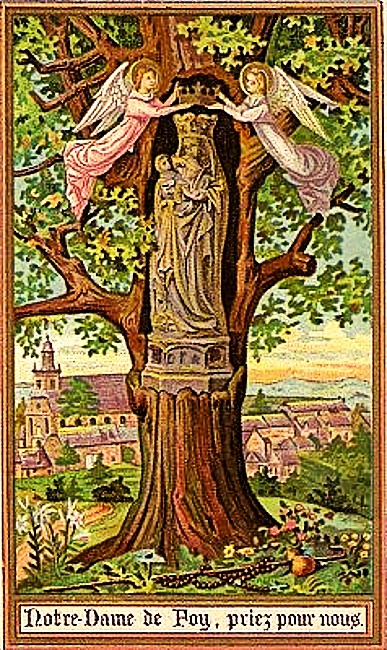
Notre-Dame-de-Foy / Our Lady of Faith, Gravelines, Liege, France (1616) – 27 July:
HERE:

https://anastpaul.com/2021/07/27/notre-dame-de-foy-our-lady-of-faith-gravelines-liege-france-1616-and-memorials-of-the-saints-27-july/
St Pantaleon (Died c 305) Martyr, Lay Physician, one of the Fourteen Holy Helpers.
His Life and Death:

https://anastpaul.com/2017/07/27/saint-of-the-day-27-july-st-panteleon/

St Aetherius of Auxerre
St Anthusa of Constantinople
St Arethas
St Aurelius of Cordoba
St Benno of Osnabruck (c 1020-1088) Bishop
Bl Berthold of Garsten

St Pope Celestine I (Died 432) called “the Heresy Fighter.” Much is unknown about Celestine, including his birthday. But his reign as Pope – from 422 to his death in 432 – is credited with many achievements.
Biography:

https://anastpaul.com/2018/07/27/saint-of-the-day-st-pope-celestine-i-died-432/

St Ecclesius of Ravenna
St Felix of Cordoba
St Galactorio of Lescar
St George of Cordoba
St Hermippus
St Hermocrates
St Hermolaus
St Juliana of Mataró
St Lillian of Cordoba
Bl Lucy Bufalari
St Luican

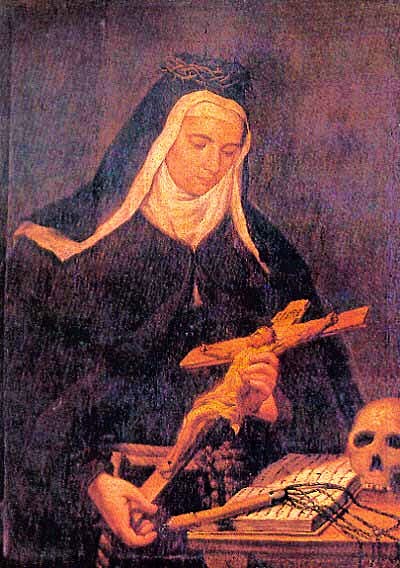
Blessed Maria Magdalena Martinengo OSC Cap (1687-1737) Nun of the Order of the Capuchin Poor Clares, Mystic with a great devotion to the Passion of Christ. She had a great horror of sin and devoted much time to contemplating death, and the Divine Judgement. The recognition of two miracles attributed to her direct intercession allowed for Pope Leo XIII to preside over her Beatification on 3 June 1900.
Her Story:

https://anastpaul.com/2021/07/27/saint-of-the-day-27-july-blessed-maria-magdalena-martinengo-osc-cap-1687-1737/

St Maurus of Bisceglia
St Natalia of Cordoba
Blessed Nevolone of Faenza OFM (Died 1280) Penitent, Widower, Lay brother of the Order of Friars Minor, then a Camaldolese Hermit.
St Pantaleimon
Bl Rudolf Aquaviva S.J.
Bl Robert Sutton
St Semproniana of Mataró
St Sergius of Bisceglia
Bl William Davies
Bl Zacarías Abadía Buesa

Martyrs of Nicomedia – 3 Saints: Three Christians Martyred together. The only other information to survive are their names – Felix, Jucunda and Julia. Nicomedia, Asia Minor.

Seven Sleepers of Ephesus: A group of seven young Christian men who hid in a cave in hopes of avoiding the persecution of Decius in the year 250. Found and arrested, they were ordered by the pro-consul in Ephesus to renounce their faith; they refused and were sentenced to die. Legend says that they were walled up in their hiding cave, guarded by the dog Al Rakim; when the cave wall was breached in 479 – they all woke up!
It is likely that the youths were tortured to death in various ways and buried in the cave. The resurrection story confusion came from the phrase “went to sleep in the Lord” which was used to describe the death of Christians and 479 is when their relics were discovered. Their names were Constantinus, Dionysius, Joannes, Malchus, Martinianus, Maximianus and Serapion. They were martyred in 250 in Ephesus (in modern Turkey); tradition says that they were walled up in a cave to suffocate but other records indicate that they were tortured to death in various ways. Their relics discovered in 479 and translated to Marseilles, France and enshrined in a large stone coffin.

Posted in SAINT of the DAY

Saint of the Day – 27 July – Blessed Maria Magdalena Martinengo OSC Cap (1687-1737)

Saint of the Day – 27 July – Blessed Maria Magdalena Martinengo OSC Cap (1687-1737) Nun of the Order of the Capuchin Poor Clares, Mystic with a great devotion to the Passion of Christ, Mother Superior. Maria Magdalena devoted her life as a professed religious to the performance of small but humble chores in her time as a Poor Clare nun and was noted for her life of spiritual discernment and devotion to God above all else. She had a great horror of sin and devoted much time to contemplating death, and the Divine Judgement . Born Margherita Martinengo da Barco on 5 October 1687 in Brescia, Milan, Italy and died on 27 July 1737 (aged 49) also in Brescia,, Patronage – against tuberculosis. Also known as – Margarita Martinengo, Maria Maddalena.

Margherita was born on 5 October 1687 in Brescia into a noble household in the Martinengo Ducal Palace to Francesco Leopoldo Martinengo and Margherita Secchi d’Aragona. Her brothers were Nestore and Gianfrancesco. Her mother died five months after her birth in 1688. She was Baptised straight after her birth since there was fear that she might die. The Baptism was formally celebrated on 21 August 1691 at the Baptism of her half-sister Cecilia, born to the second marriage of her father to Elena Palazzi.

As a child she was perceived to be an intelligent girl and received a structured and comprehensive education based on the civic and religious studies. At the age of six she was entrusted to the Ursulines for additional education. Her teacher, Isabella Marazzi, instructed her in proper devotional practices to God and Marazzi played a formative role in Margherita’s religious education. Margherita was an avid reader and made full use of the Latin literature that her father owned.

On one occasion during her childhood, she was in a six horse carriage and she fell out. She would have been crushed had there not been, what she described as, an invisible touch that seemed to save her life.

On 11 October 1689 she entered the Convent boarding school of the Augustinian nuns of Santa Maria degli Angeli – two nuns there were her maternal aunts.

She made her First Communion towards the end of her childhood during which – in the nervous tension and emotion of the moment – she dropped the Host which forced her to pick it up from the floor with her tongue.

In August 1699 she asked her father for permission to go to the Spirito Santo boarding school of the Benedictines. Before she left the family went on a holiday with her father and siblings, in the mountains around Lago d’Iseo where she realised what her true calling was.

Around this time, at the age of thirteen, she took a vow to God in which she promised to remain a virgin. But at the age of sixteen several suitors approached her and her father had even promised her to the son of a prominent Venetian Senator. It even grew to the point where her two brothers Nestore and Gianfrancesco, pressured her to accept one of the offers. Her suitors bought her books and love stories and she did in fact like them – but she brooded over the fact that such stories which were given to her were “books from Hell.”

Margherita returned from the Spirito Santo Convent after the conclusion of her studies in 1704 and on 21 December 1704, announced to her father and brothers, her intention of becoming a Capuchin Poor Clare nun. Her Confessor and house servants, as well as her father and siblings, opposed this decision. Despite this opposition, on Christmas 1704 she went to the Capuchin Poor Clare Convent of Santa Maria della Neve and presented herself to them with the words: “I want to become holy.”. However, she was required to undergo a period of probation, which was conducted in the Ursuline-run Maggi College.

Once she entered the Convent at the age of eighteen, she was described to be “like wax” for her delicate appearance. On 8 September 1705 she was clothed in the habit and assumed the religious name of “Maria Magdalena” and parted from her family. Maria Magdalena was later deemed to be unfit for the Capuchin life but with a change in mistress she received unanimous support. She made her solemn profession on 8 September 1706.

Her Confessor instructed her to compile notes of her life and experiences which she did in the spirit of obedience. She was appointed as the Mistress of Novices at the age of 36 and made Abbess in 1732; – she was re-elected in that post on 12 July 1736.

Maria Magdalena died of tuberculosis in 1737 and when news of her death spread across Brescia people across the entire area mourned her passing. Her remains are located in the Church of the Convent of the Capuchin Poor Clare nuns in Brescia.

The recognition of two miracles attributed to her direct intercession allowed for Pope Leo XIII to preside over her Beatification on 3 June 1900. The miracles in question concerned the healings of Isabella Groppelli Gromi and of the future priest Giuseppe Tosi.