
Saint of the Day – 17 April – Blessed Mariana of Jesus OdeM(c1565-1624) “The Lily of Madrid” Tertiary Sister of the Mercadarian Order (the Servants of Mary) Mystic and Ecstatic, graced with Visions of Our Lord and His Mother and granted the ability, by her intercession, to be responsible for many miracles, Spiritual Director and Apostle of the poor and the sick. In addition, Mariana was known to bilocate and levitate during her ecstasies. Born on 17 January 1565 at Madrid, Spain as María Ana Navarro de Guevara y Romero and died on 17 April 1624 of natural causes at Madrid, aged 59. Patronages – of Madrid, Mercedarian Tertiaries Mercedarian Lay Fraternities and Apostolates. Also known as – “The Lily of Madrid,” “The Saint of Madrid,”Mariana Navarra de Guevara, Mary Ann of Jesus Navarro, Maria Ana de Jesus Navarro de Guevara. Her body is Incorrupt.

Mariana was born in Madrid on 17 January 1565 into a wealthy family. Her father was an affluent merchant whose business supplied leather goods to the Spanish Court. He, himself being in the service of King Philip II.
She was Baptised on the 21st of the same month of her birth in the Church of Santiago (St James). Mariana was attracted very early to religious life. At the age of 22, she already had the firm determination to enter a Convent, despite the strong opposition of her father (who, widowed early, had remarried) and her stepmother, who had arranged her marriage. However, her parents’ attempts to separate her from her vocation were of little use. Legend says that she went as far as to disfigure her face and cut her hair in order to see herself rejected by the young man chosen for her..
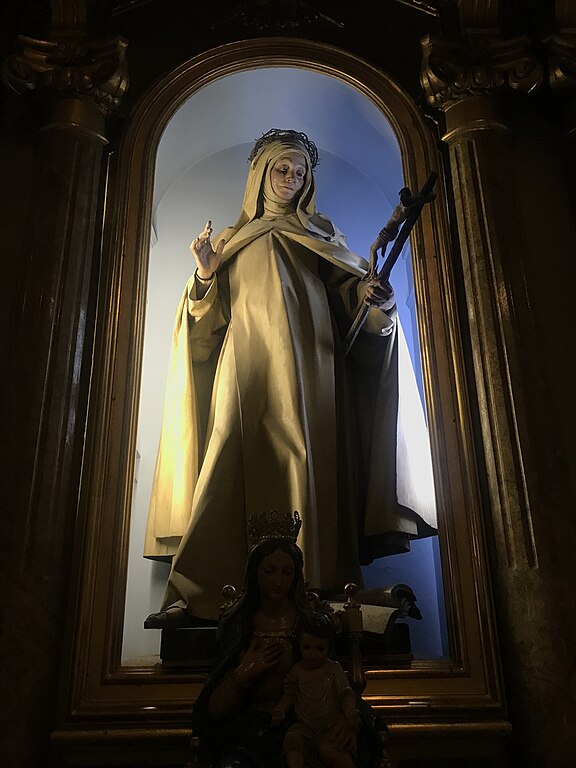
In 1598 she retired as a penitent to the hermitage of Santa Bárbara in the Capital of the Kingdom. There she was assisted by Brother Juan Bautista Sacramento, a Mercedarian Religious and reformer of the Order, who was her Spiritual director until her death and by other pious people. She made her home in a small house, next to the Convent of the Discalced Mercedarians where she spent several years dedicated to prayer and penance, as well as serving the poor and needy of the City. In 1613 she was received into the Order of Mercy, given the Tertiary Habit by order of Brother Felipe Guimerán, Master General of the Order, who the following year, on 20 May 1614, received her profession.
The fame of her virtues and the supernatural appearances and miracles which accompanied her, spread quickly throughout Madrid. Her Superiors ordered her to write about these experiences. In these writings, Mariana narrates, among other things, the visions she had of Jesus Christ and the Virgin Mother and her mystical ecstasies.

The Queen of Spain , Isabel de Borbón, sent for Mariana to attend at the Palace whereafter their acquaintance grew so much that Mariana was considered one of the Queen’s closest friends. At that time, Mariana was already called “The Saint of Madrid.”
Mariana’s death occurred on 17 April 1624 in the Mercedarian Convent of Santa Bárbara in Madrid, as a result of a lung condition. He was 59 years old.
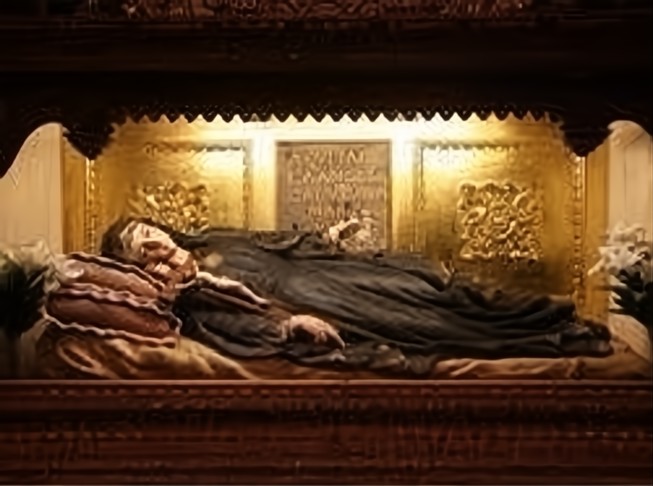
Her body is preserved Incorrupt in the Church of the Mercedarian Nuns of Don Juan Alarcón in Madrid as the Convent of Santa Bárbara was destroyed during later unrest. The Tomb where Mariana rests, was given by Queen Elizabeth II.

The extraordinary thing about her life of great solitude is precisely her ability to welcome, listen to and attend, to the spiritual and material needs of so many people who came to request assistance, or to ask for spiritual succour.
She was Beatified by Pope Pius VI on 18 January 1783.
If already during her life Mariana had achieved great renown for her piety and the prodigies of all kinds which were attributed to her, after her death, it only increased. It includes among them the fall of rain in Madrid, in times of severe drought, such as the one which devastated the two Castiles in 1613.
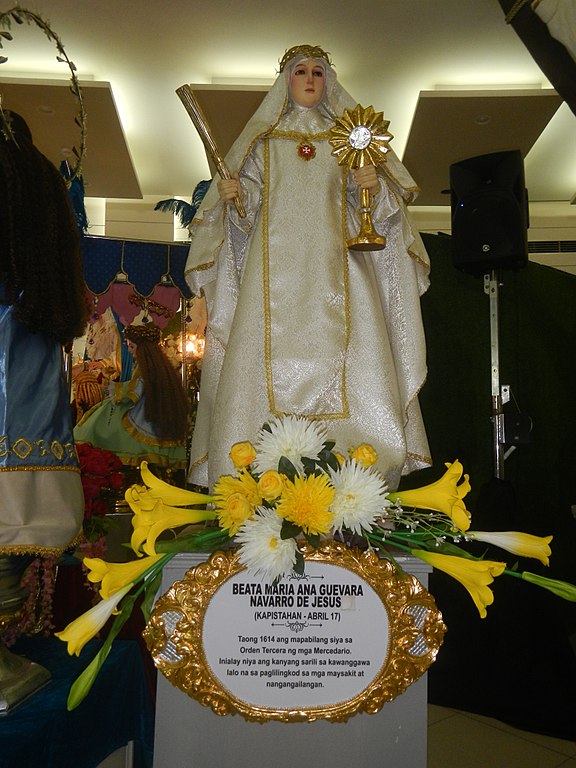
Mariana’s body was displayed to the public for two days in the midst of a large gathering. The artist Vicente Carducho made several death masks of the deceased. The same year of her death, the Canonical process of her Beatification began, encouraged by the people, the nobility and King Philip IV himself , a great devotee of hers. Barely a month after her death, the information process on the life and miracles of Mariana de Jesús began. 152 witnesses testified in it. On 8 August 1624, the Board of Theologians and Canonists of Madrid proposed that she could be given a private cult.
On 31 August 1627, her grave was opened and to the general astonishment, it was found that the body was intact, with fresh flesh and flexible limbs and exhaling a pleasant fragrance. Only her face was slightly disfigured due to the manipulations necessary to obtain the death mask. This fact has been verified each of the successive times when the mortal remains were inspected — in 1731, 1924 and 1965.



 AnaStpaul
You must be logged in to post a comment.