Posted in DOMINICAN OP, franciscan OFM, MARIAN TITLES, SAINT of the DAY

Notre-Dame Arcachon / Our Lady of La Teste-de-Buch, Guienne (1519) and the Saints for 5 October

St Alexander of Trier
St Anna Schaeffer
St Apollinaris of Valence
St Attilanus of Zamora
St Aymard of Cluny
St Boniface of Trier
St Charitina of Amasa
St Eliano of Cagliari

Blessed Felicia Meda OSC (1378-1444) Virgin

St Firmatus of Auxerre
St Flaviana of Auxerre
Bl Flora of Beaulieu
St Gallo of Aosta
St Jerome of Nevers
Bl John Hewett
St Magdalveus of Verdun
St Mamlacha
St Marcellinus of Ravenna

St Meinulph
St Palmatius of Trier

Bl Robert Sutton
Bl Sante of Cori
St Thraseas of Eumenia
Bl William Hartley

Posted in DOMINICAN OP, SAINT of the DAY

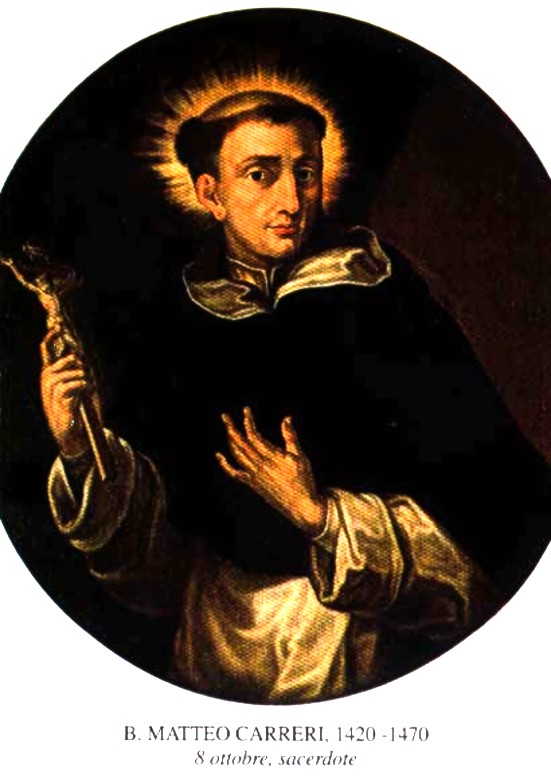
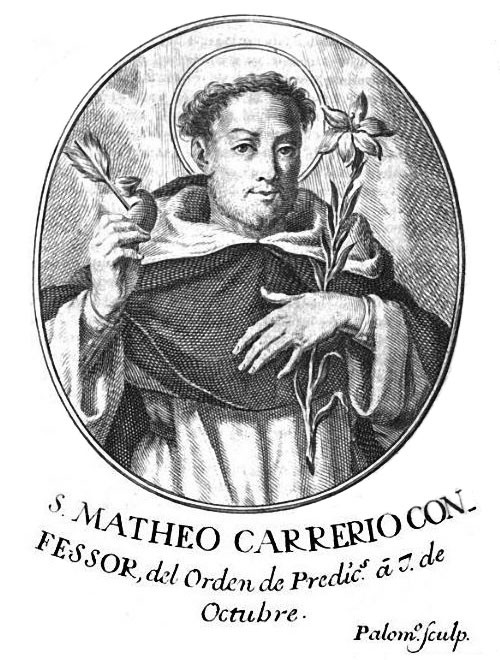
Saint of the Day – 5 October – Blessed Matthew Carreri OP (c 1420-1470)

Saint of the Day – 5 October – Blessed Matthew Carreri OP (c 1420-1470) Priest and Friar of the Order of Preachers, Stigmatic, Mystic, Reformer, renowned Preacher. Born Giovanni Francesco Carrieri in the City of Mantua, Italy some time around 1420 and died on 5 October 1470 at Vigevano, Province of Pavia, Italy of natural causes. Patronage – Vigevano, Italy. Also known as – Matthew of Mantua, Matteo Carreri. Additional Memorial – 7 October on some calendars.

Giovanni Francesco grew up a silent and prayerful child, a good student and a great reader. These qualities seemed to recommend him to the Preaching Friars and at an early age, he presented himself at the Convent in his home City and received the Habit. He took the name Matthew when he entered the Dominican Order. His later success as a preacher was inarguably, attributable, to the significant time he spent in spiritual exercises and meditation

Matthews’s career as a preacher began soon after his Ordination, when he was sent to Lombardy to preach against the heretics. He succeeded admirably in his preaching and converted many to a spiritual way of life. Travelling from Convent to Convent, he preached a revival of fervour and a deeper understanding of the spirit of St Dominic, and many of the religious of Lombardy-both Dominicans and members of other Orders,were led by him to renew their devotion and fervour..

At on time, when he was preaching in Vigevano, a troupe of jugglers came into Town and set up their act. They were a particularly scandalous set of people, poking ridicule at the religious and the pope. Matthew sent them word to move on, which they ignored. So he went after them with his walking-stick and this proved more effective. They scattered and ran but soon came back, fortified with the presence of the Duke of Milan, who scolded Matthew for being so narrow-minded and humourless. Matthew patiently pointed out to him, the unhealthy and evil areas in their humour and, in spite of the Duke’s natural aversion to Friars, convinced him that he should keep the jugglers out of Town.

At Lucina, there was a lady of noble birth and great talents, who was wasting her time in frivolities. Never one to avoid an issue, Matthew aimed a powerful sermon in her direction and she came to him afterwards ,in a torrent of tears and begged him to help her. He gave her the Habit of the Third Order and outlined a stiff rule of life, which she afterwards faithfully followed.

He also met and directed Blessed Stephanie Quinzan who proved to be an apt pupil.

Matthew was given the task of reforming the Convents of the Dominican Friars in Soncino and in nearby Towns and he worked for many years in Milan. Going up and down the Peninsula, he varied his approach but never his message – penance and love of God. So many were the conversions effected that a whole group of additional Preachers had to be appointed, to continue to carry on Matthew’s powerful methods and message, as he moved rapidly from place to place. Preaching his way, he went through Tuscany, and took ship at Genoa.

The ship was soon captured by a Turkish corsair. The Mohammed Captain called on the three Dominicans for an explanation of why they were there. Matthew spoke up so fearlessly and eloquently that the Captain released all three of them. Just as they were being hustled off to a rescue boat, the wail of one of the woman passengers stopped them. The lady and her young daughter were resisting the journey and were afraid to be taken to Algiers,and Matthew began pleading for them. The Captain told him he had better let the affair alone and be satisfied that he had saved his own skin. Matthew thereupon, volunteered to go to Algiers, in chains, if the Captain would release the two women. Amazed at his courage, as well as at his defence of those in danger, the Captain released all of them and told them to get off of his ship quickly, before he changed his mind.

Many miracles are credited to Matthew Carreri. One day, a young father who came to hear Matthew preach, had left his little son at home with the nurse. The baby fell into the fire and was badly burned. The distraught father brought the little one to Matthew, who cured him. The baby was well in a few days and grew up to be a Franciscan Friar. Matthew cured another man of hemorrhage and worked many cures on the sick and possessed.

One day, , while meditating on the Passion, Matthew asked our Lord tp allow him to partake of His sufferings. He received the stigmata, in the form of an arrow which pierced his heart. For the remainder of his life, he suffered great pain from his wound.

Matthew Carreri died, in 1470, in a house composed entirely of religious whom he had rescued from a life a laxity. His cult was confirmed twelve years after his death, testifying to the great reputation for sanctity he enjoyed among the people of northern Italy.

Pope Sixtus VI confirmed his cultus in 1483 and he was formally Beatified by Pope Urban VIII on 2 December 1625.

Posted in MARIAN TITLES, SAINT of the DAY

Notre-Dame Arcachon / Our Lady of La-Teste-de-Buch, Guienne (1519) and Memorials of the Saints – 5 October

Notre-Dame Arcachon / Our Lady of La Teste-de-Buch, Guienne (1519) – 5 October:

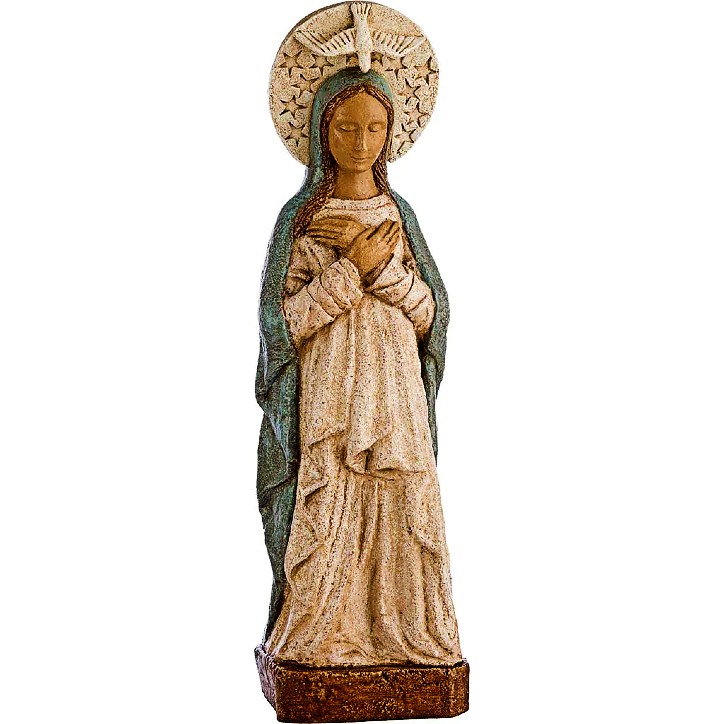
According to the Marian Calendar, Our Lady of Buch is located in the Pine Mountains, in Guienne. The sea cast this image upon the sands, while Saint Thomas, the Cordelier Friar, was praying on behalf of two vessels which he saw in danger of perishing. He respectfully received this image and deposited it in this place, in a small Chapel which he built there.

Guienne, or Guyenne, refers to a loosely defined region of pre-revolutionary, South-Western France. Buch, or La Teste-de-Buch, is a Town in the Gironde region in Aquitaine, located on the south shore of Arcachon Bay.
The “Cordeliers,” known also as the Grey Friars for the heavy grey cloth they wore, are Franciscans. Their belt was but a rope with five knots tied at the end, which gave them their name in France. The “Saint Thomas” mentioned is Thomas Illyricus (1484-1528), a Franciscan native of Vrana in the Diocese of Zarian. He was never Canonised. He was a hermit and itinerant preacher and an indefatigable missionary traveller who lived near Arcachon in la Teste-de-Buch. It was he, who built the Chapel of Notre-Dame Arcachon.

More than his voice, vibrant with emotion,” wrote the Abbe Mauriac, “more than his ascetic appearance, more than his style so direct and so strong, what stirred and attracted thousands of listeners, was his ardent sincerity which overflowed and poured itself out, while his love of God and of souls, accented his words and made him very eloquent.

It was in the year 1519 that Thomas Illyricus found the famous Statue now known as the Virgin of Advent at the edge of the sea. He built a Shrine of wood that same year for the Statue, and pilgrimages date from 1525 and grew so much in numbers that in 1624, Cardinal Francois de Sourdis authorised the construction of a stone Chapel. This small Chapel was gradually buried by the sands and it was decided to build a new one which was completed in 1723. The Church is known as the Church of L’eglise Notre Dame des Passes, or Notre-Dame Arcachon. Many miracles have been wrought through devotion to Mary at the Shrine and the Church is dedicated to sailors, who face the channels for entry into the Arcachon basin.
There is a tall Cross known as the Sailors Cross which stands at the end of the pier of the Chapel. Built at the same time as the construction of the Chapel in 1722, the original was destroyed by a gale in 1855 and was replaced by the one that we see today. It was once customary for sailors to greet the Cross with two blasts from their fog horn, to appeal for divine protection, when they went out on the ocean and faced its dangers.
Mary is particularly interested in seafarers and folk living near waters. She who was so familiar with the Sea of Galilee and the profession of the Twelve Pillars of her Divine Son’s Church, she is still is vigilant for their welfare and happiness.

St Alexander of Trier
St Anna Schaeffer
St Apollinaris of Valence
St Attilanus of Zamora
St Aymard of Cluny
St Boniface of Trier
St Charitina of Amasa
St Eliano of Cagliari
St Firmatus of Auxerre
St Flaviana of Auxerre
Bl Flora of Beaulieu
St Gallo of Aosta
St Jerome of Nevers
Bl John Hewett
St Magdalveus of Verdun
St Mamlacha
St Marcellinus of Ravenna
Blessed Matthew Carreri OP (c 1420-1470) Priest and Friar of the Order of Preachers, Stigmatist, Mystic.
St Meinulph
St Palmatius of Trier

Blessed Pietro of Imola (c1250-1320) Knight of the Order of St John of Jerusalem and Grand Prior , Lawyer, Jurist, Mediator, Peace-maker. The Roman Martyrology states: “In Florence, blessed Pietro da Imola, who, a Knight of the Order of St John of Jerusalem, took care of the sick with pious charity.”
Biography:

https://anastpaul.com/2021/10/05/saint-of-the-day-5-october-blessed-pietro-of-imola-c1250-1320/

Blessed Raymond of Capua OP (c 1330-1399) Priest, “The Second Founder” of the Dominican Order of Preachers, Reformer, Spiritual Director, he worked with St Agnes of Montepulciano and St Catherine of Siena, Hagiographer, Teacher. The important Mystic, Reformer, Doctor of the Church, St Catherine of Siena, accepted him as her spiritual director because of his burning passion for the Church and for the revival of religious life, most especially in their own Order. In 1899 Pope Leo XIII Beatified him, on the 500th anniversary of his death.
About Blessed Raymond:

https://anastpaul.com/2020/10/05/saint-of-the-day-5-october-blessed-raymond-of-capua-op-c-1330-1399/

Bl Robert Sutton
Bl Sante of Cori
St Thraseas of Eumenia
Bl William Hartley

Martyrs of Messina or St Placidus and Companions – 30 Saints: A group of about 30 Benedictine Monks and nuns, some blood relatives, who were sent in the early days of the order to establish Monasteries in the vicinity of Messina, Sicily, Italy and who were martyred. We know the names, and a few details, about seven of them –
• Donatus
• Eutychius
• Faustus
• Firmatus
• Flavia
• Placidus
• Victorinus
6th century Messina, Sicily, Italy.