St Adela of Blois Bl Antonio Taglia Bl Arnold of Carcassonne St Betto of Auxerre Bl Berta of Busano
Blessed Constantius of Fabriano OP (1401-1481) Priest and Friar of the Order of Preachers, Prior, Reformer, Preacher of renown, Writer, known as a Miracle-Worker and had the gift of prophecy, peacemaker Biography: https://anastpaul.com/2019/02/24/saint-of-the-day-24-february-blessed-constantius-of-fabriano-op-1401-1481/
Bl Ida of Hohenfels Bl Josefa Naval Girbes St Liudhard Bl Lotario Arnari Bl Marco De’ Marconi St Modestus of Trier St Peter the Librarian St Praetextatus of Rouen St Primitiva St Sergius of Caesarea Bl Simon of Saint Bertin
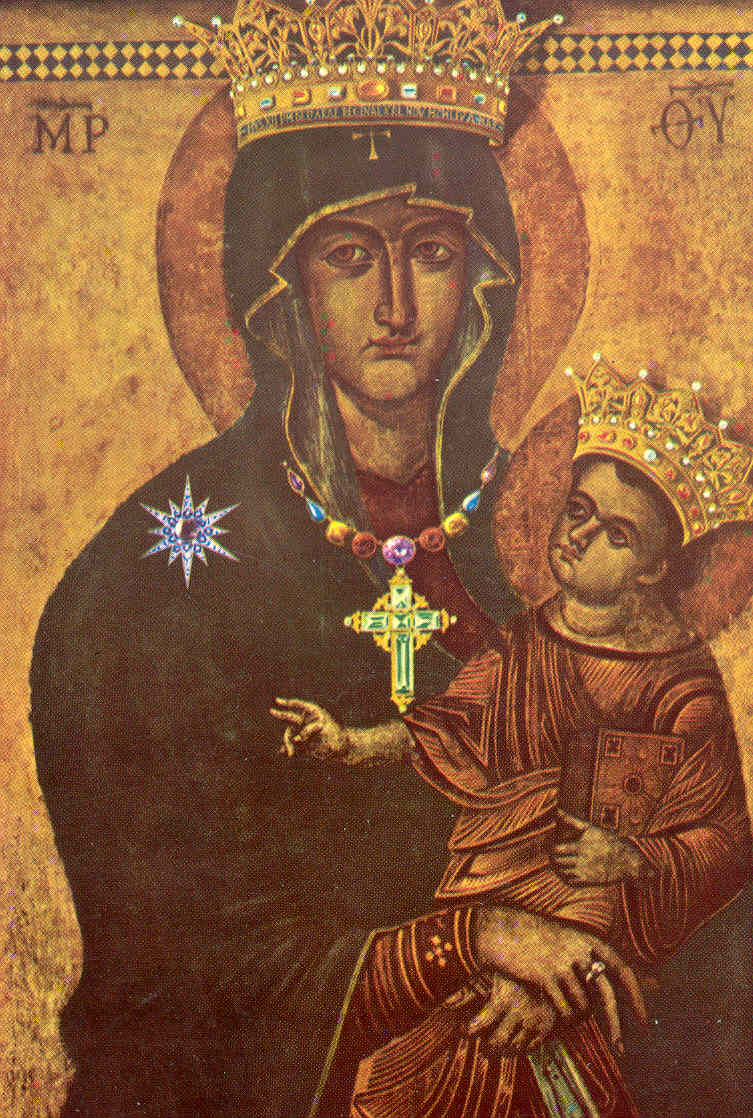
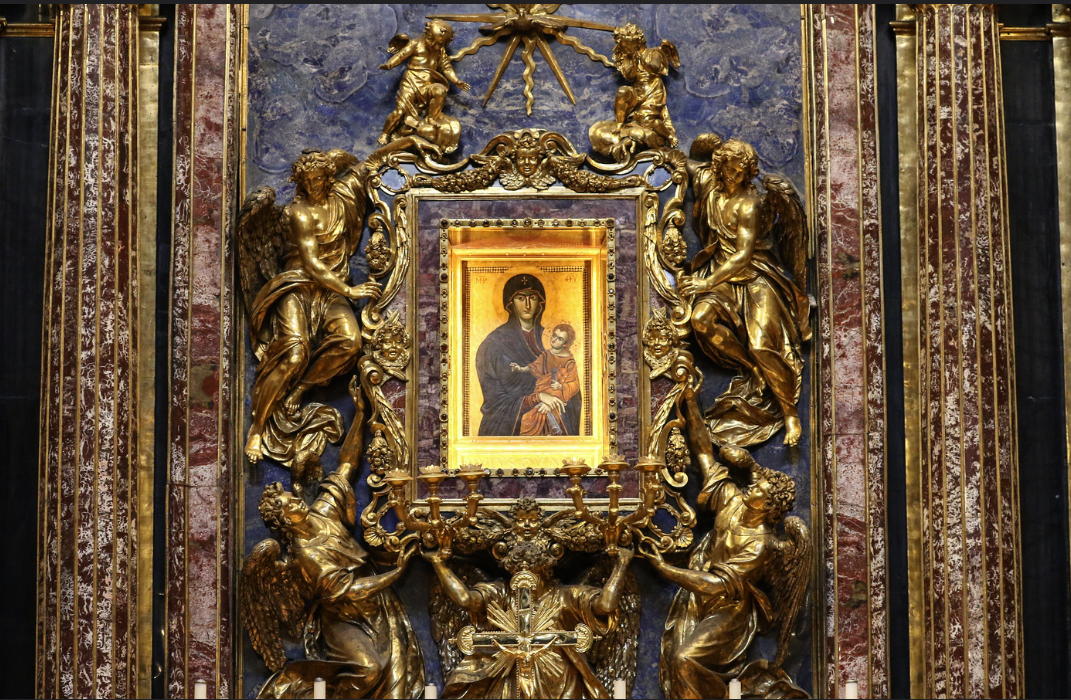
Plague in Rome ends after Saint Pope Gregory the Great leads a procession with a painting of Our Lady by Saint Luke (591): – 24 February
The Abbot Orsini wrote: “On this day, in the year 591, St Gregory the Great, having had the picture of Our Lady, which was painted by St Luke, carried in procession, the plague ceased at Rome.”
The miseries that afflicted Rome in the year 591 were substantial. The Gothic War between the Byzantine Empire and the Goths had substantially depopulated Italy, so much so that a Germanic tribe of Lombards had entered the peninsula and established their own kingdom. They were pagans and Arians who did not respect Catholics, burning the famous Benedictine Monastery of Monte Cassino and pillaging the land at will. The instability and warfare caused famine in large regions, though Rome was still able to obtain grain by sea. Then came earthquakes and flooding to further the suffering, and from this plague Rome was not immune. The banks of the Tiber overflowed and when the waters did not recede, all of the low-lying lands became swamps that brought death and the plague. The disease struck with such rapidity that the victim would often die shortly after realising he had contracted the disease, although there were some who sickened but recovered. Our custom of saying, “God Bless you,” to someone who sneezes came about at this time, for sneezing was one of the signs that someone had contracted the disease. Even the Roman Pontiff died of the plague on 7 February 590. His successor, was Pope Saint Gregory the Great, who was both a humble and pious man. It would be an understatement to say he did not want the honour of being the next Pope but once in that position, he did everything in his power to try to save his people. He understood that the plague was a chastisement from God and encouraged the faithful to repent of their sins and pray for deliverance while he and the religious cared for the people of Rome. Finally, Saint Gregory called for a procession to take place at dawn on 24 April. On that day, the faithful first assembled in their groups throughout Rome and then walked through the streets of the City praying and singing as they approached the Church of Saint Mary Major. The plague was so potent at that time, that eighty people collapsed and died as they walked toward the meeting place. Pope Saint Gregory met them upon their arrival, joining them in prayer as he took his place with them holding aloft the miraculous image of Our Lady painted by Saint Luke the Evangelist. This image is the very famous, Salus Populi Romani (the health or salvation, of the Roman People) As the procession neared the Vatican the participants all saw Saint Michael the archangel standing upon the cupola of Hadrian’s mausoleum as he sheathed his flaming sword. It was a sign that the chastisement had come to an end and, at once, the heaviness in the air abated and the air itself seemed to freshen and clear. Indeed, at that moment the plague ended, as the faithful rejoiced and lifted up their voices to thank the Mother of God.
Regina Coeli laetare, Alleluia! (Queen of heaven, rejoice, Alleluia!)
Quia quem meruisti portare, Alleluia! (Son whom you merited to bear, Alleluia!)
Resurrexit sicut dixit, Alleluia! (He has risen as He said, Alleluia!)
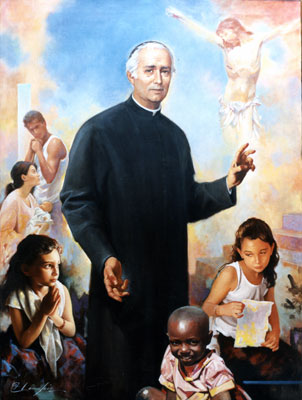
Saint of the Day – 24 February – Bl Thomas Mary Fusco/Tommaso Maria Fusco (1831-1891 died aged 59) Priest and Founder called an “Apostle of Charity” – Patron of Daughters of Charity of the Most Precious Blood
Thomas was born to a noble family in 1831 in Pagani, Italy. He was the seventh of eight children. When he was only six years old, his mother died of cholera. A few years later, his father also died. His uncle, a primary school teacher, took charge of Thomas’ education.
The canonization of St. Alphonsus Liguori in 1839 stirred aspirations for the priesthood in Thomas’ heart. He entered the seminary in 1847 and was ordained a priest in 1855. Immediately Thomas opened a morning school for the formation of boys and organized evening prayers for youth and adults. During these years, Thomas nurtured a deep devotion to the crucified Christ and to his Blessed Sorrowful Mother because of the deaths of his uncle and younger brother.
In 1862 he opened a school of moral theology in his home to train priests for the ministry of confession. That same year he also founded the priestly Society of the Catholic Apostolate for missions among the faithful.
In 1873, Thomas was deeply moved by the plight of an orphaned street girl. After careful discernment, he founded the Congregation of the “Daughters of Charity of the Most Precious Blood”.
For the remainder of his years, he was completely dedicated to his priestly ministry, preaching spiritual retreats and missions, teaching catechism to youth and organizing prayer for young people and adults at his parish. He worked to build a strong devotion to the Most Precious Blood of Jesus among the people he served.
In 1891, Thomas died of liver disease at the age of 59.
The cause for his beatification was opened in 1955 and the decree of his heroic Christian virtues was published in 2001.
At Thomas’ beatification, Blessed John Paul II presented him as “an example and a guide to holiness for priests, for the people of God and for his spiritual daughters, the Daughters of Charity of the Most Precious Blood.”
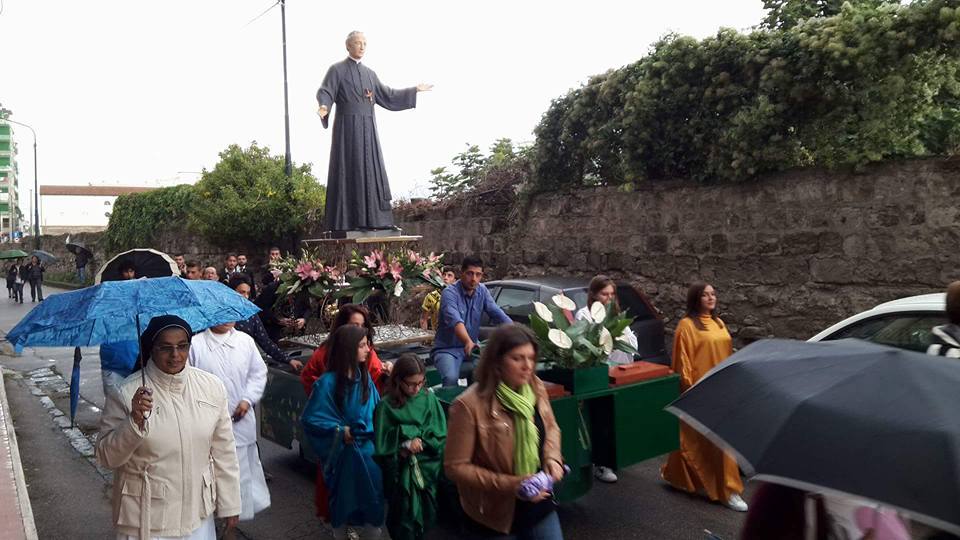
Celebrating Bl Thomas’s Beatification in his hometown “Pagani, Italy”




 AnaStpaul
You must be logged in to post a comment.