St Cyril (827-869) (Memorial) “Apostles to the Slavs,” Sibling Brother Bishops, Confessors, Theologians, Missionaries, Writers, Preachers, Patrons of Europe. Creators of the Glagolitic alphabet, the first alphabet used to transcribe Old Church Slavonic and Cyrillac Alphabet, which was developed from it. St Methodius (826-885) (Memorial) Their Feast Day is 7 July (moved in 1969) The great Saints Cyril & Methodius: https://anastpaul.wordpress.com/2018/02/14/saints-of-the-day-14-february-sts-cyril-827-869-methodius-826-885/
20 Mercedarians of Palermo Martyrs of Alexandria – 16 saints Martyrs of Rome Felicula Vitalis Zeno
Martyrs of Terni: Three Christians who gave proper burial to Saint Valentine of Terni. Martyred in the persecutions of Aurelius. 273 in Terni, Italy – Apollonius, Ephebus, Proculus.
Martyrs of Alexandria: A group of Christians murdered in various ways for their faith in Alexandria, Egypt. We know the names and a few details about 16 of them – Agatho, Agatone, Ammonio, Ammonius, Antonius, Bassiano, Bassianus, Cirione, Cyrio, Dionysius, Dionysius, Lucio, Moses, Moses, Proto and Tonione.
Sixth Sunday in Ordinary Time +2021 Quinquagesima Sunday (Traditional Calendar) +2021 – From Latin quinquagesimus meaning “fiftieth,” therefore, this is the period of fifty days before Easter. It begins with the Sunday before Ash Wednesday, called Dominica in Quinquagesima or Esto Mihi from the beginning of the Introit of the Mass; it is a Sunday of the second class and the colour the Mass and Office is violet.
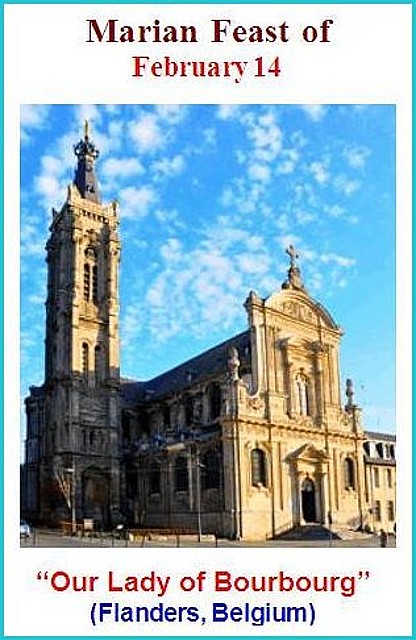
Notre-Dame de Bourbourg /Our Lady of Bourbourg, Flanders (1383) – 14 February:
Jean Froissart, born in the 1330s, was a man devoted to literature. His famous Chronicles was aimed at a knightly and aristocratic audience and was devoted to “the honourable enterprises, noble adventures and deeds of arms, performed in the wars between England and France…to the end that brave men taking example from them may be encouraged in their well-doing.” His history is one of the most important sources for the first half of the Hundred Years’ War, and certain events of the era, such as the battles of Crecy and Poitiers and the English Peasant Revolt of 1381. He was also an eyewitness to the miracles of Our Lady of Bourbourg that occurred in the year 1383. “When the king of France came before Bourbourg there were never seen such fine men at arms nor such numbers as he had with him. The lords and their men were all drawn up, and eager for the attack. Those who had reconnoitred the place, said it could not hold out long. The Bretons, Burgundians, Normans, Germans and others, who knew there was much wealth in the place, which, if taken by storm, would probably fall to their share, began to skirmish with the infantry at the barriers, without waiting for orders from the constable or marshals of the army. This skirmish increased so much that the French set fire to the town by means of fire-arrows and cannons, so that such a flame and smoke came from the houses of Bourbourg as might have been seen forty leagues off. Many gallant deeds were done and the assailants leaped cheerfully into the mud of the ditches above the knees when they engaged with the English at the palisade and barriers. The garrison defended themselves handsomely, indeed, they had need of their exertions, for they knew not on which side to turn themselves. They were attacked on all part and the houses of the town were blazing with fire, which more confounded the English than anything else. This, however, did not throw them off their guard, nor cause them to quit their posts. Sir Matthew Redman and Sir Nicholas Drayton, with their men, in the centre of the town, endeavoured to check the progress of the fire but it was such a dry season, that the smallest spark set the houses in flames. It is certain, that if the attack had begun earlier, or had not the night come on soon, the town must have been taken by storm but the approach of night put an end to it. On the attack ceasing, the French retired to their quarters, to attend the sick and bury the dead. They said that on the morrow they would renew the attac, and it should be irresistible. The English were employed in repairing the palisades which had been broken, in putting all things in a good state and in extinguishing the fires in the town. They were in a most perilous situation, being surrounded on all sides, without means of escaping by flight. The Duke of Brittany, who was on the opposite side of the town to the King, entered into negotiations with the English, aware of the peril they were in. He advised them to surrender the town, on their lives and fortunes being spared. This they were very willing to do and they entreated the Duke, through love of God and in honour of his gentility, to undertake the business. The King of France replied, that, in God’s name, he would willingly agree to a treaty. The English had been much renowned for gallantry and deeds of arms and it was settled that the English should depart from Bourbourg and Gravelines and carry away with them as much of their wealth as they could. Several of the Bretons, French, Normans and Burgundians were much vexed at this treaty, for they thought of partaking of the spoils but the King and his council had ordered it otherwise. The whole of Tuesday they employed in shoeing their horses and in packing up all their wealth, of which they had much and in making preparations for their departure. On the Wednesday morning they loaded their baggage-horses and began their march, passing through the army with passports from the King. The Bretons were much exasperated when they saw them so loaded, waiting at Calais for a favourable wind to return to England. The King of France and all the lords of his army, with their attendants, entered Bourbourg on Thursday morning. The Bretons began to plunder it, without exception, even the Church of St John. In that Church a pillager stood upon an Altar with the intent of forcing out a precious stone that was in the crown of an image of Our Lady. As he reached to steal the stone, the image suddenly turned about and the pillager in his fright, fell from the Altar and was instantly struck dead. This is a certain truth, for many persons were witnesses of it. Shortly afterwards, another pillager came with a similar intent of robbing the image but all the bells began a peal without anyone touching them, for no-one could have rung them, the bell-ropes being drawn up and fastened. On account of these miracles, the Church was visited by large crowds. The King made a handsome present to the Church, as did all the lords, so that the amount of their gifts was upwards of three thousand francs.” __
Martyrs of Terni: Three Christians who gave proper burial to Saint Valentine of Terni. Martyred in the persecutions of Aurelius. 273 in Terni, Italy – Apollonius, Ephebus, Proculus.
Martyrs of Alexandria: A group of Christians murdered in various ways for their faith in Alexandria, Egypt. We know the names and a few details about 16 of them – Agatho, Agatone, Ammonio, Ammonius, Antonius, Bassiano, Bassianus, Cirione, Cyrio, Dionysius, Dionysius, Lucio, Moses, Moses, Proto and Tonione.
One Minute Reflection – 14 February – Friday of the Fifth Week in Ordinay Time, Year A, Readings: 1 Kings 11:29-32; 12:19, Psalm 81:10-15, Mark 7:31-37 and the Memorial of Blessed Vicente Vilar David (1889-1937) Martyr
“Ephphatha,” that is, “Be opened.” … Mark 7:34
REFLECTION – “The Gospel relates the healing of a deaf-mute by Jesus. For Him, this clearly has to do with more than a physical disability. It is a parable for the people of Israel, who, in turn, represent all mankind.
As the prophets have said so often, Israel is hard of hearing when it comes to the Word of God, which, in turn, renders it incapable of giving a valid response.
Jesus does not make a spectacle out of His miracles.
Hence, He takes the sick man aside, seeking the middle line between entirely avoiding publicity and helping the people.
Physically touching both ears and tongue precedes His upward look toward the Father (in this miracle, the Father acts through Him) and His sign, which probably points to His having been filled with the Holy Spirit.
This trinitarian fullness, indicates that the prayer “Be opened!” speaks not only of physical healing but, of effective grace for Israel and for all mankind.” … Hans Cardinal Urs von Balthasar (1905-1988)
PRAYER – Almighty and merciful God, open the ears and eyes of our hearts and fill us with Your grace. May we follow You in holiness all the days of our lives. Grant we pray, that as You brought Your Martyr Blessed Vicente to overcome fearlessly, the persecutions of Your people, that we too may remain invincible under Your protection and by his prayers be strengthened against the snares of the enemy. Through our Lord Jesus Christ, your Son, who lives and reigns with you in the unity of the Holy Spirit, one God, for ever and ever. Amen.
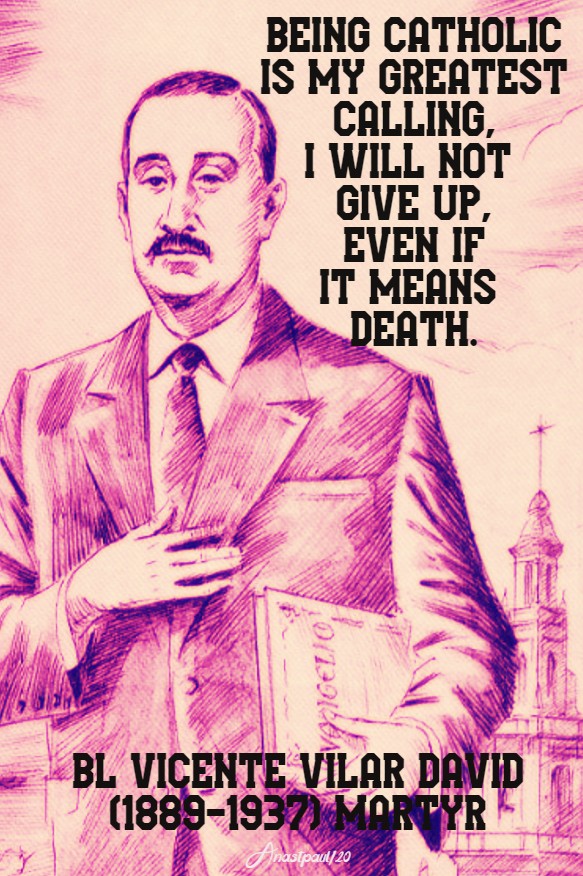
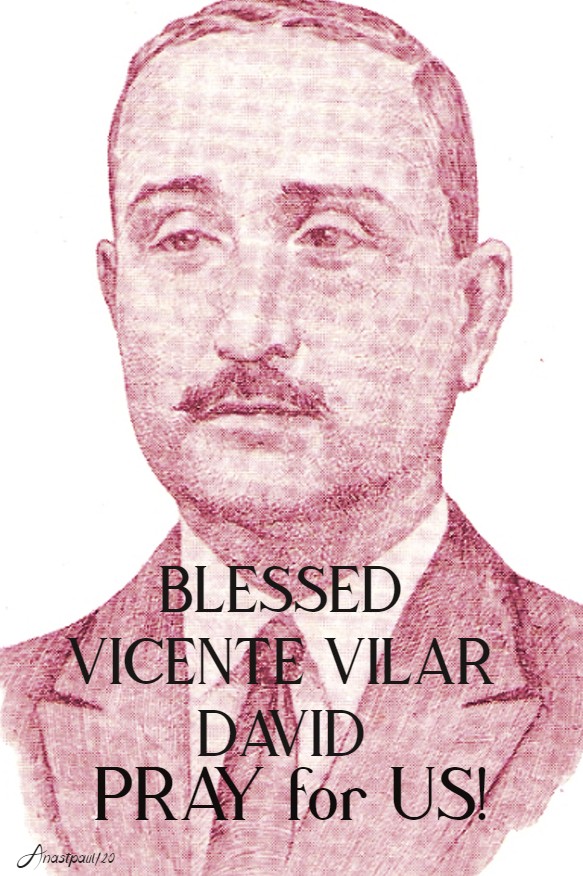
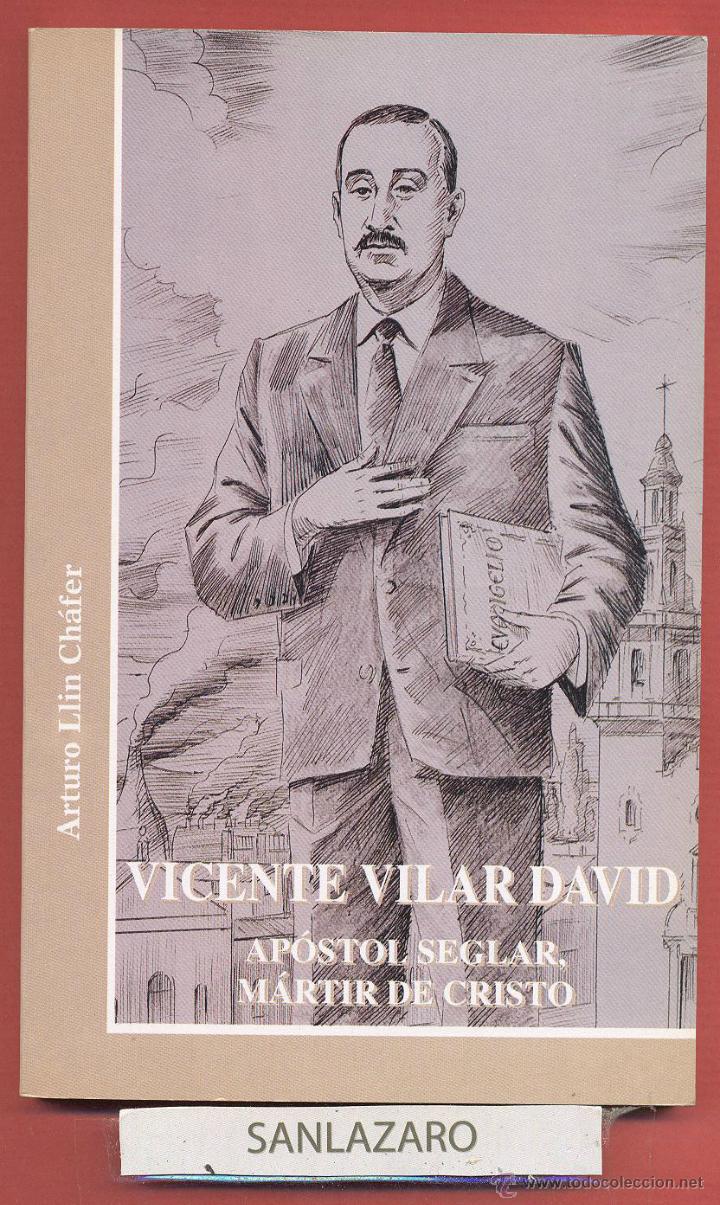
Saint of the Day – 14 February – Blessed Vicente Vilar David (1889-1937) Martyr, Layman, Social reformer, Worker for Justice and Peace, Apostle of Charity – born on 28 June 1889 in Manises, Spain and died on 14 February 1937 (aged 47) in Manises, by being shot to death. Patronages – Manises, Persecuted Christians, Engineers. As he was being taken away on the morning of 14 February 14, 1937, his wife called out to him and said, “See you tomorrow.” Vicente replied, “Until tomorrow or in heaven!”Minutes later he was shot to death.
The youngest of eight children, Blessed Vicente was born to a ceramics manufacturer and his wife on 28 June 1889, in Valencia, Spain. His parents were devoted to their Catholic faith and their children received a good Christian education. After attending a school run by the Piarist Fathers, Blessed Vicente enrolled at a technical school and earned an industrial engineer’s degree.
At the aged of 33, Blessed Vicente married a young woman named Isabel (died 1993) and the two lived a model Christian life together. Blessed Vicente became involved in his Parish, helping the Priests however he could. He spread fundamental Christian morals among his fellow colleagues and was known for his deep commitment to charitable works in the name of the poor. He served as an industrial engineer in his own ceramics farm that he had inherited and oversaw, with three of his brothers, after the premature death of their parents. David also held several important municipal positions where he put the social teachings of the faith into full practice and was renowned for his deep commitment to fundamental values and traditional principles. Youth organisations were also a forum for his work, as well as a range of parish activities.
He also took over the management of his father’s ceramics factory. His workers saw him, not only as their boss but also as a caring father. He was concerned that they would be treated with the justice and dignity to which all workers have a right.
In the summer of 1936, the Spanish Civil War was at its peak in Valencia. ,,The persecution of Catholics and of the Church by the governing regime was also very intense. Blessed Vicente, who had been teaching at a ceramics trade school, was fired because of his Catholic beliefs. He bravely continued to encourage other Catholics and to give the Priests whatever support and help he could by protecting their whereabouts and hiding them in his home.
On 14 February 1937, he was called to appear before a tribunal and commanded to stop his activities on behalf of the Catholic Church. Blessed Vicente replied that being a Catholic was his greatest calling and he would not give up, even if it meant death. He was immediately sentenced to be executed. He was permitted to see his wife and encouraged her with words of faith and conviction. He publicly forgave his persecutors and enemies. Then he was shot to death on the very same day he was arrested.
The ceramics factory workers were outraged. In protest at Blessed Vicente’s execution, they went on strike for three days. They told the socialist officials who tried to prevent their strike, “You have robbed us of our employer and our father. Because he was prudent, kind and concerned for our working conditions, we not only respected him, we loved him.”
Blessed Vicente was Beatified on 1 October 1995 by St Pope John Paul II. His death by violent hands was recognised as a true Martyrdom for the faith.
Our faith applies to every aspect of our lives. In our family and social life, our time at school, our time spent working, we are called to put into practice the values that Jesus taught in the Gospel.
St Abraham of Harran
St Antoninus of Sorrento
St Auxentius of Bithynia
St Conran of Orkney
St Eleuchadius St Juan García López-Rico O.SS.T. (1561-1613) Biography: https://anastpaul.com/2019/02/14/saint-of-the-day-14-february-st-juan-garcia-lopez-rico-o-ss-t-1561-1613/
St Nostrianus of Naples
St Theodosius of Vaison
St Valentine of Terni Blessed Vicente Vilar David (1889-1937) Martyr
St Vitale of Spoleto
—
20 Mercedarians of Palermo
Martyrs of Alexandria – 16 saints
Martyrs of Rome
Felicula
Vitalis
Zeno
Martyrs of Terni: Three Christians who gave proper burial to Saint Valentine of Terni. Martyred in the persecutions of Aurelius.
273 in Terni, Italy – Apollonius, Ephebus, Proculus.
Martyrs of Alexandria: A group of Christians murdered in various ways for their faith in Alexandria, Egypt. We know the names and a few details about 16 of them – Agatho, Agatone, Ammonio, Ammonius, Antonius, Bassiano, Bassianus, Cirione, Cyrio, Dionysius, Dionysius, Lucio, Moses, Moses, Proto and Tonione.





 AnaStpaul
You must be logged in to post a comment.