
25 November – The Solemnity of Our Lord Jesus Christ, King of the Universe
The political context in which Pope Pius XI, by the Encyclical Quas Primas, established the feast of Christ the King in 1925, was the still unresolved Roman Question, which concerned the papacy and the kingdom of Italy regarding the temporal authority of the popes and the Papal States. For those of us who have grown up with the separation of church and state, the Papal States are a distant historical oddity.
Yet even if these political issues no longer resonate for us today, Quas Primas commemorated these same issues and problems by taking the view that marks the Church off as a unique society, one that is eternal, whose King’s authority transcends all political divisions and historical epochs. The Church exists in the messiness of history and responds to events that emerge from that same messiness but claims a King who transcends it all.
Already in the book of Daniel and in earlier prophetic books, the hope for the true king, the one who would establish God’s kingdom, emerged in the language and imagery of ancient Near Eastern myth, when the prophet sees “I saw in the night visions and behold, with the clouds of heaven there came one like a son of man.” While scholars dispute the identification of the son of man as the messiah in Daniel, the earliest Christians understood that the one to whom “was given dominion and glory and kingdom, that all peoples, nations and languages should serve him; his dominion is an everlasting dominion, which shall not pass away and his kingdom one that shall not be destroyed.”
When would this King of all peoples, nations and languages arrive? When would God’s kingdom, the everlasting dominion, be established? The book of Revelation, written in opposition to the Caesars of Rome and their empire, declared that Jesus was already “the ruler of kings on earth” who “made us a kingdom, priests to his God and Father, to him be glory and dominion for ever and ever.” And Revelation promised, evoking the language of Daniel, that Jesus’ first coming will be followed by a second coming with the clouds when “every eye will see him, every one who pierced him; and all tribes of the earth will wail on account of him.”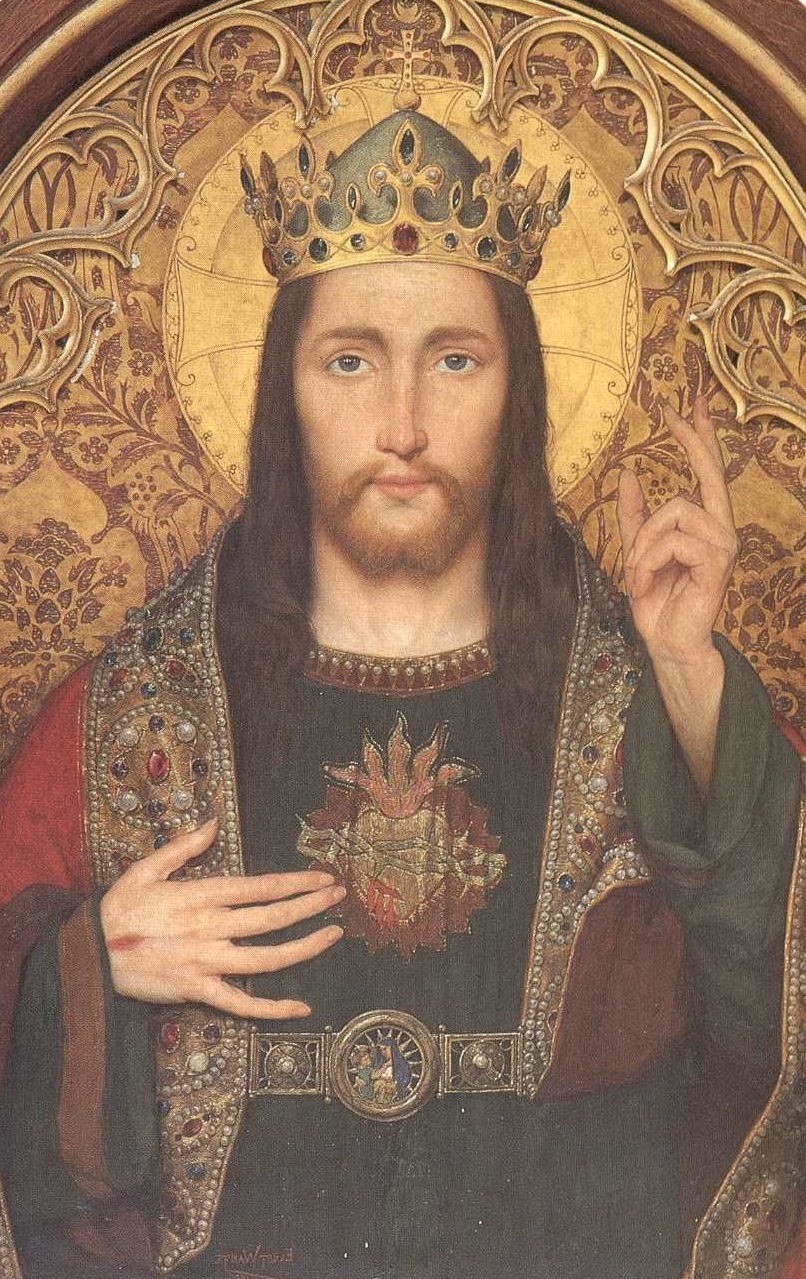
Even Jesus’ disciples, though, who followed Him faithfully if unsurely to Jerusalem, must have wondered about the answer when they heard the Roman procurator Pilate, ask their teacher, “Are you the King of the Jews?” Jesus answered, “My kingship is not of this world; if my kingship were of this world, my servants would fight, that I might not be handed over to the Jews; but my kingship is not from the world.” It is a true answer, of course but also elusive, for though Jesus’ kingdom is “not from this world” and does not involve peach treaties, concordats, armies and diplomatic corps, it includes all of this world and all that is in it.
It is a point Pope Pius XI makes in Quas Primas (13), citing St Cyril of Alexandria, who wrote that “Christ has dominion over all creatures …by essence and by nature.” Pope Pius XI also writes that though Jesus’ kingship is founded upon the ineffable hypostatic union, “Christ is also our King by acquired, as well as by natural right, for He is our Redeemer.” Jesus’ kingship is unlike any other by nature and by behaviour.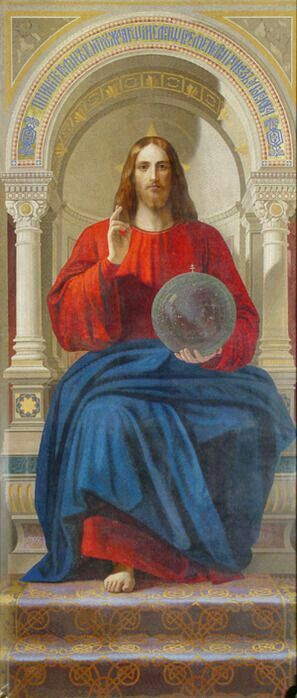
But there is another consideration as to why Jesus declared that His kingdom was ‘not from this world’. Pope Pius XI states that all people can enter “this kingdom, whoever they are and from wherever they are, since “this kingdom is opposed to none other than to that of Satan and to the power of darkness” (18). This kingdom welcomes all kingdoms and all peoples.
If we see only the messiness of history and politics, we are missing the true story of eternity and the true King of all, who is already “the ruler of the kings of the earth.” I f we believe it to be true, we must never despair of the politics of our age, for He came as King, is now King and is coming again in glory as King!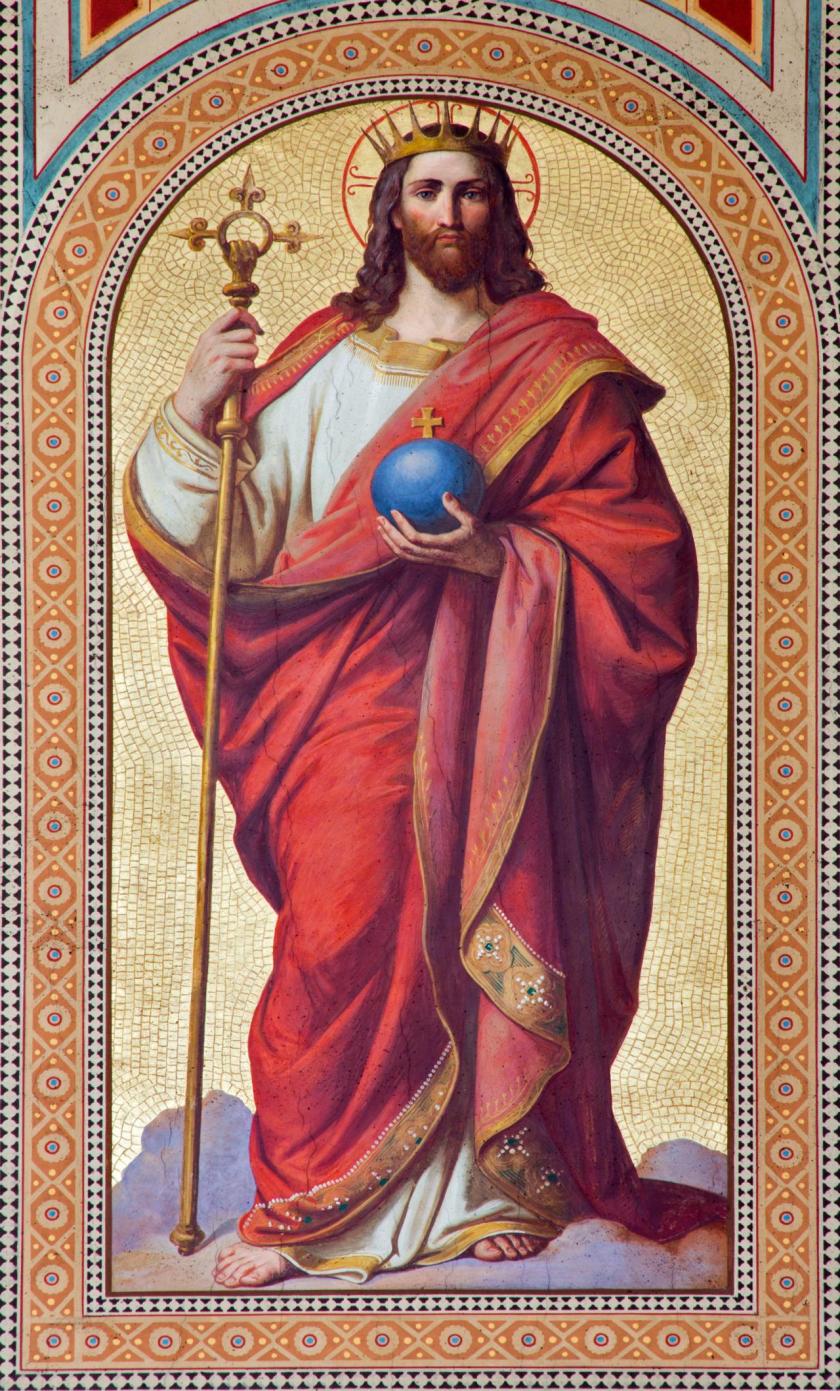
(From ‘King of All’ by John W Martens)
 AnaStpaul
You must be logged in to post a comment.