Thought for the Day – 21 September – The Feast of St Matthew, Apostle and Evangelist- Today’s Gospel: Matthew 9:9–13
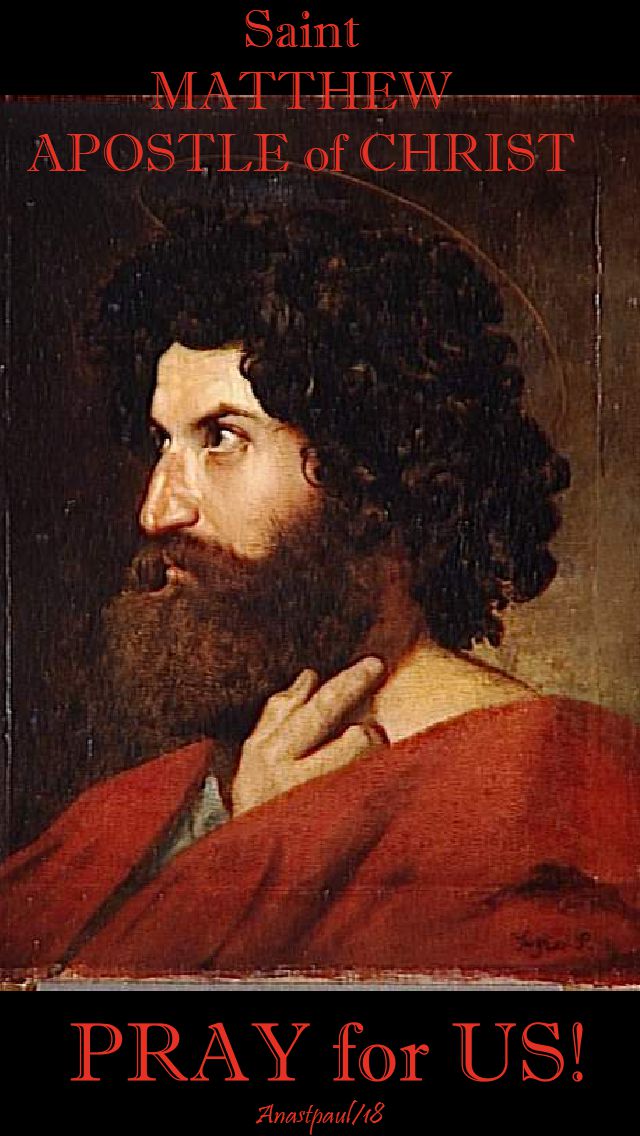
Thank you, Matthew, for your story, because it is you who writes your own story. Thank you, because you were a sinner and became an Apostle. And that is very encouraging for me because I’m a sinner and have to become an Apostle. Thank you, Matthew, because you were a publican who was lining his pockets with the money of the Jews but when Jesus called you, you were ready to leave everything and follow Him.
Thank you, Matthew, because you could have stayed where you were thinking that it was crazy to leave your job, your money, your plans and your future… but you were brave enough to follow Jesus instead. And I give thanks with you to Jesus because He knew you well and was aware of the great things that you could do. While on that day some of the Jews looked at you with disdain, that Jew, Jesus of Nazareth, passed by your tax office and smiled at you. He stood there, gazing at you with affection, a loving look, the like of which a publican in Palestine had probably never experienced. And you couldn’t look anywhere else. That loving face of Jesus was inviting you to do something special with your life.
You weren’t happy and Jesus offered you Happiness. You were wasting your life and Jesus invited you to do something great with it. You only loved your money but Jesus helped you to expand your heart to love God and others more than yourself. Your talents were wasted in that tax office and millions of souls were waiting for you. Thank you, Matthew, because you said ‘yes’ to Jesus.
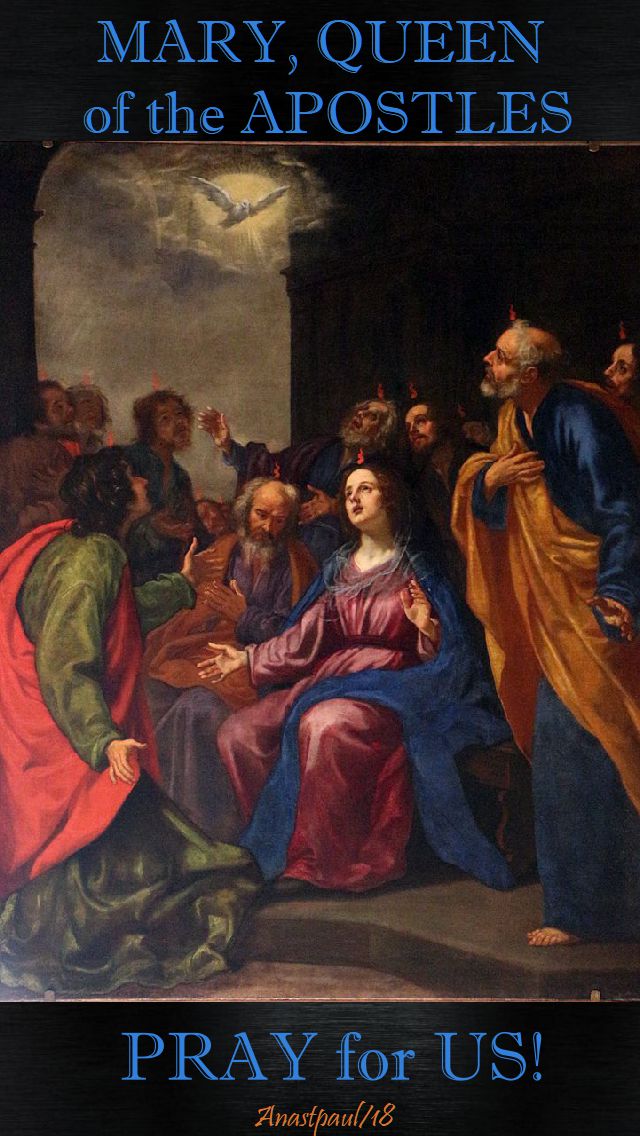
Mary, Queen of the Apostles, help me to have the courage to say ‘yes’ to Him as well and become a saint, like you, like St Matthew and please pray for us all!
Fr George Boronat M.D. S.T.D is a Catholic priest from the Prelature of Opus Dei, working in the Archdiocese of Southwark in London.
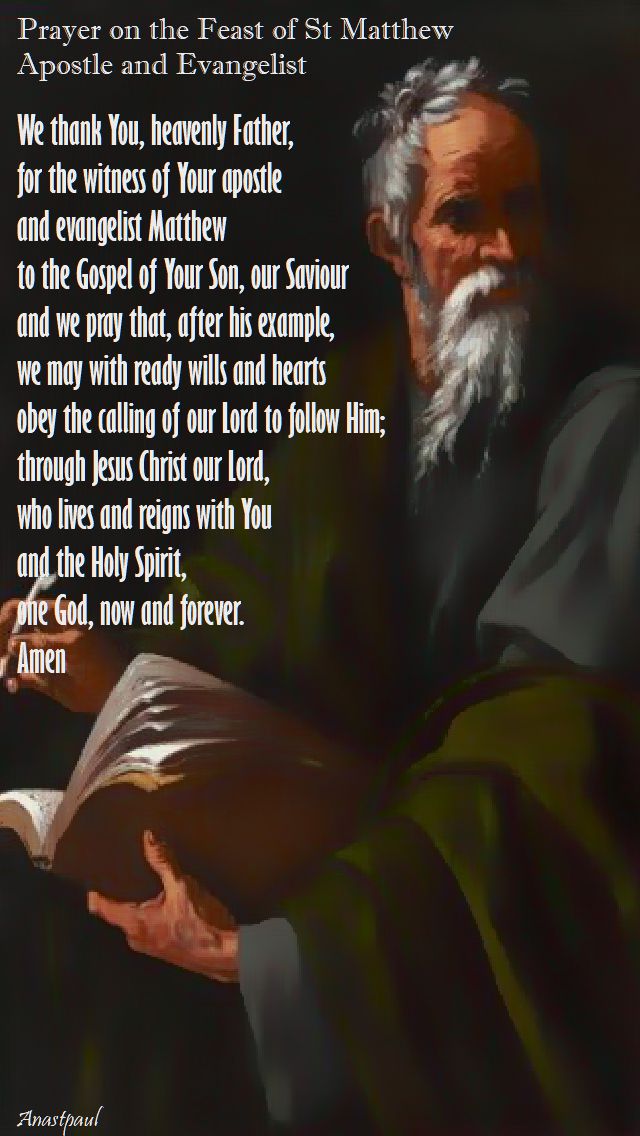
We thank You, heavenly Father, for the witness of Your apostle and evangelist Matthew to the Gospel of Your Son our Saviour and we pray that, after his example, we may with ready wills and hearts obey the calling of our Lord to follow Him; through Jesus Christ our Lord, who lives and reigns with You and the Holy Spirit, one God, now and forever. Amen
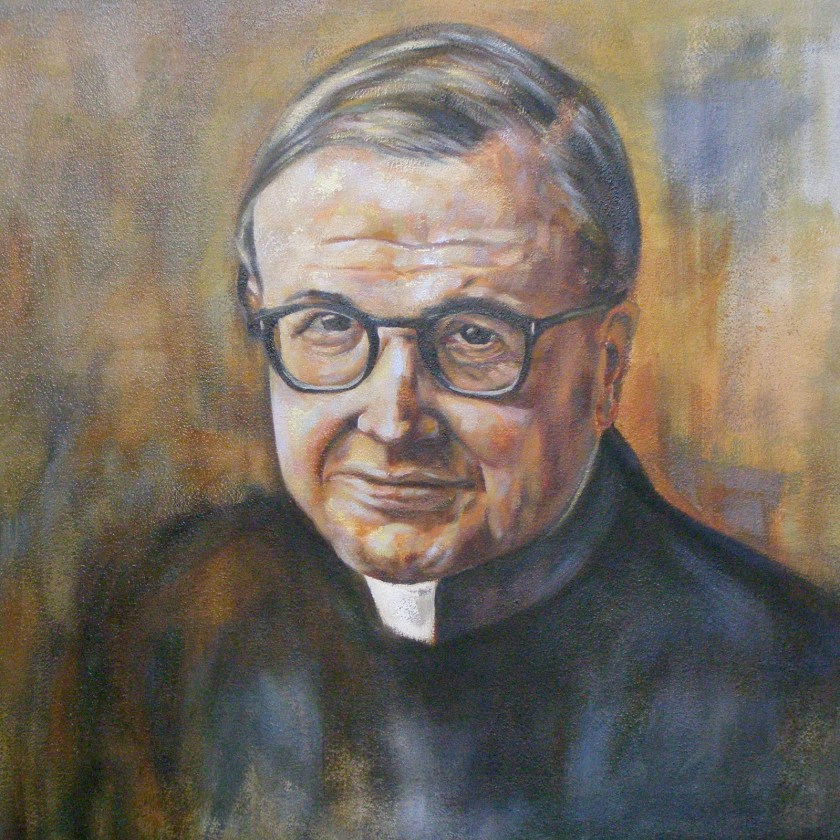
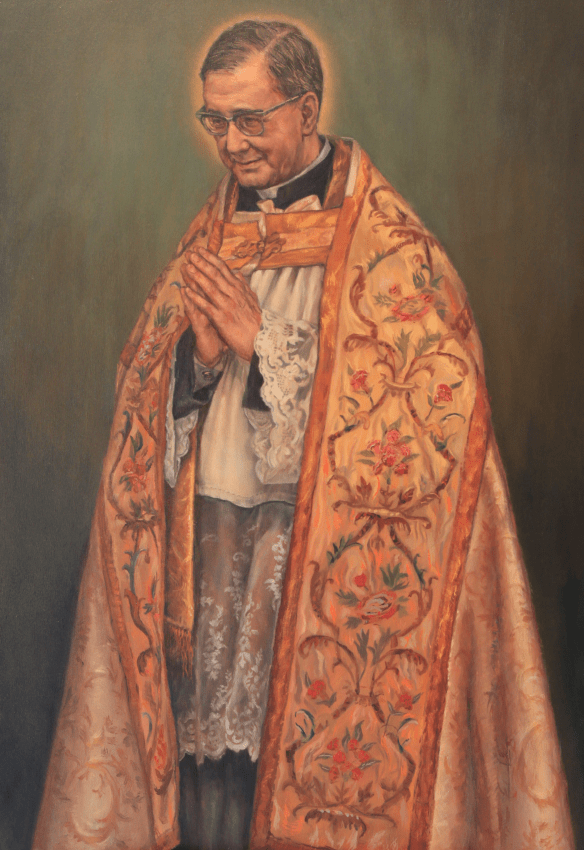
Saint of the Day – 26 June – St Josemaría Escrivá de Balaguer y Albás (1902-1975) commonly known as Josemaria Escrivá- “The Saint of Ordinary Life” – Priest, Founder of Opus Dei, an organisation of laypeople and priests dedicated to the teaching that everyone is called to holiness by God and that ordinary life can result in sanctity. St Josemaria was born on 9 January 1902 in Barbastro, Spain and died on 26 June 1975 of natural causes in his office in Rome, Italy. His remains are interred at the Prelatic Church of Our Lady of Peace at Viale Bruno Buozzi 75, Rome, Italy. Patronage – Opus Dei.
From the Apostolic Brief regarding the Beatification of the Venerable Servant of God Josemaría Escrivá, Priest, Founder of Opus Dei:
“The Founder of Opus Dei has recalled that the universality of the call to full union with Christ implies also that any human activity can become a place for meeting God. (…) He was a real master of Christian living and reached the heights of contemplation with continuous prayer, constant mortification, a daily effort to work carried out with exemplary docility to the motions of the Holy Spirit, with the aim of serving the Church as the Church wishes to be served.
A bright and cheerful home: Josemaría Escrivá was born in Barbastro, Spain, on 9 January 1902, the second of six children born to José Escrivá and María Dolores Albás. His parents were devout Catholics and he was baptised on 13 January that year and received from them – first through the example of their life – a firm grounding in the faith and the Christian virtues: love for frequent Confession and Holy Communion, a trusting recourse to prayer, devotion to Our Lady, helping those in greatest need.
Blessed Josemaría grew up as a cheerful, lively and straightforward child, fun-loving, good at study, intelligent and with an observing eye. He had a great affection for his mother and a trusting friendship with his father, who encouraged him to feel free to open his heart and tell him his worries and was always ready to answer his questions with affection and prudence. It was not long before Our Lord began to temper his soul in the forge of sorrow. Between 1910 and 1913 his three younger sisters died and in 1914 his family suffered financial ruin. In 1915 the Escrivás moved to Logroño, a nearby town, where their father found a job with which to keep his family.
In the winter of 1917-18 something happened which was to have a decisive influence on Josemaría Escrivá’s future. The snow fell very heavily that Christmas in Logroño, and one day he saw some frozen footprints in the snow. They had been left by a discalced Carmelite. Josemaría found himself wondering If others sacrifice so much for God and their neighbour, couldn’t I do something too? This was how God started to speak to his heart: “I began to have an inkling of what Love is, to realise that my heart was yearning for something great, for love.” He did not yet know what precisely God wanted of him, but he decided to become a priest, thinking that it would make him more available to fulfil God’s will.
Priestly ordination: Having completed his secondary education, he started his priestly studies at the Seminary of Logroño, passing on, in 1920, to the Seminary of Saragossa, at whose Pontifical University he completed his formation prior to ordination. At his father’s suggestion and with the permission of his ecclesiastical superiors, he also studied Law at the University of Saragossa. His generous and cheerful character and his straightforwardness and calm approach to things won him many friends. His life of piety, respect for discipline and endeavour in study were an example to his fellow seminarians and in 1922, when he was but twenty years of age, he was appointed an inspector or prefect in the Seminary by the Archbishop of Saragossa.
During that time he spent many hours praying before the Blessed Sacrament. His spiritual life became deeply rooted in the Eucharist. Each day he would also visit the Basilica of Our Lady of Pilar, asking Mary to request God to show him what He wanted him to do. As he recalled on 2 October 1968: “Since I felt those inklings of God’s love, I sought to carry out, within the limits of my smallness, what He expected from this poor instrument. (…) And, with those yearnings, I prayed and prayed and prayed, in constant prayer. I kept on repeating: Domine, ut sit!, Domine, ut videam! like the poor fellow in the Gospel, who shouted out because God can do everything. Lord, that I may see! Lord, that it may come to be! And I also repeated (…) filled with confidence in my heavenly Mother: Domina, ut sit!, Domina, ut videam! The Blessed Virgin has always helped me to discover her Son’s desires.”
On 27 November 1924 his father, José Escrivá, died suddenly and unexpectedly. On 28 March 1925, Josemaría was ordained a priest by Bishop Díaz Gómara in the church of the Seminary of St Charles in Saragossa. Two days later he celebrated his first Solemn Mass in the Holy Chapel of the Basilica of Our Lady of Pilar and on 31 March he moved to Perdiguera, a small country village, where he had been appointed assistant regent to the parish.
In April 1927, with the consent of his Archbishop, he took up residence in Madrid to study for his doctorate in Civil Law, a degree which at that time was only granted by the Central University in the Spanish capital. In Madrid, his apostolic zeal soon brought him into contact with a wide variety of people: students, artists, workers, academics, priests. He spent many hours caring for children and for sick and poverty-stricken people in the outer suburbs of the city. At the same time he taught law to earn a living for himself and his mother and sister and young brother. For a good many years the family were in serious financial difficulties, which they bore with dignity and courage. Our Lord blessed Fr Josemaría with abundant graces, both ordinary and extraordinary. They found a fertile reception in his generous soul and produced much fruit in the service of the Church and souls.
The foundation of Opus Dei (Work of God): Opus Dei was born on 2 October 1928. Blessed Josemaría was spending some days on retreat and, while doing his meditation on some notes regarding the inner motions he had received from God in the previous years, he suddenly saw – to see was the term he always used to describe the foundational experience– the mission the Lord wanted to entrust to him: to open up in the Church a new vocational path, aimed at spreading the quest for holiness and the practice of apostolate through the sanctification of ordinary work in the middle of the world, without changing one’s place. A few months later, on 14 February 1930, God made him understand that Opus Dei was to spread among women also.
From that moment onward, Blessed Josemaría devoted all his energies to the fulfilment of his foundational mission, fostering among men and women from all areas of society a personal commitment to follow Christ, to love their neighbour and seek holiness in daily life. He did not see himself as an innovator or reformer, for he was convinced that Jesus Christ is eternally new and that the Holy Spirit is constantly rejuvenating the Church, for whose service God has brought Opus Dei into existence. Fully aware that the task entrusted to him was supernatural by nature, he proceeded to dig deep foundations for his work, based on prayer and penance, on a joyous awareness of his being a son of God and on tireless work. People of all sorts began to follow him and, in particular, university students and teachers, among whom he awakened a genuine determination to serve everyone, firing in them a desire to place Christ at the heart of all human activities by means of work that is sanctified and sanctifies both the doer and those for whom it is done. This was the goal he set for the initiatives of the faithful of Opus Dei: to lift up to God, with the help of grace, each and every created reality, so that Christ may reign in everyone and in everything; to get to know Christ Jesus; to get Him known by others; to take Him everywhere. One can understood why he was able to declare that The divine paths of the earth have been opened up.
Apostolic expansion: In 1933, he started a university Centre, the DYA Academy, because he grasped that the world of human knowledge and culture is a key to the evangelisation of society as a whole. In 1934 he published Spiritual Considerations, the first version of The Way. Since then there have been 372 printings of the book in 44 languages and its circulation has passed the four and a half million mark (in 1992 – the figures are much higher now).
While Opus Dei was thus taking its first steps, the Spanish Civil War broke out. It was 1936. There were serious outbreaks of religious violence in Madrid. To these Fr Josemaría responded heroically with prayer, penance and apostolic endeavour. It was a time of suffering for the whole Church but also a time of spiritual and apostolic growth and for strengthening hope. By 1939, with the war over, the Founder of Opus Dei was able to give new vigour to his apostolic work all over the Spanish peninsula. In particular he mobilised many young university students to take Christ to every area of society and discover the greatness of the Christian calling. At the same time, with his reputation for holiness growing, many Bishops invited him to preach to their clergy and to lay people involved in Catholic organisations. Similar petitions came to him from the superiors of religious orders – he always said yes.
In 1941, while he was preaching a retreat to priests in Lerida, in the North of Spain, his mother who had been a great help to him in the apostolates of Opus Dei, died. God also let him become the butt of harsh misunderstandings. The Bishop of Madrid, Bishop Eijo y Garay gave him his fullest backing and granted the first canonical approval to Opus Dei. Blessed Josemaría accepted these difficulties with a prayerful and cheerful attitude, aware that “all those desiring to live piously in Christ Jesus will meet persecution” (2 Tim 3:12) and he recommended his spiritual children, in the face of these attacks, to forgive ungrudgingly: “don’t answer back, but pray, work and smile.”
In 1943, through a new foundational grace he received while celebrating Holy Mass, there came to birth – within Opus Dei – the Priestly Society of the Holy Cross, in which priests proceeding from the faithful of Opus Dei could be incardinated. The fact of all the faithful of Opus Dei, both laity and priests, belonging fully to Opus Dei, with both laity and priests cooperating organically in its apostolates, is a feature of the foundational charism, which the Church confirmed in 1982, when giving Opus Dei its definitive status in Church Law as a Personal Prelature. On 25 June 1944 three engineers were ordained to the priesthood. One of them was Alvaro del Portillo, who would eventually succeed the Founder as the head of Opus Dei. In the years that followed, close on a thousand laymen of Opus Dei reached the priesthood at the encouragement of Blessed Josemaría.
The Priestly Society of the Holy Cross, which is intrinsically united to the Prelature of Opus Dei, also carries out, in close harmony with the Pastors of the local Churches, activities of spiritual formation for diocesan priests and candidates to the priesthood. Diocesan priests too may belong to the Priestly Society of the Holy Cross, while maintaining unchanged their status as clergy of their respective dioceses.
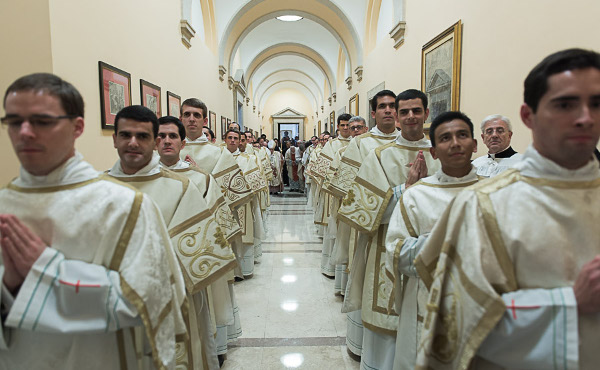
29 April 2017, 31 Opus Dei Priests about to be Ordained
A Roman and universal spirit: As soon as the end of the world war was in sight, Blessed Josemaría began to prepare apostolic work in other countries, because, as he pointed out, Jesus wants his Work from the outset to have a universal, Catholic heart. In 1946 he moved to Rome, in order to obtain papal recognition for Opus Dei. On 24 February 1947, Pius XII granted Opus Dei the decretum laudis, or decree of praise; and three years later, on 16 June 1950, the Church’s definitive approval. Since then it has been possible to admit as Cooperators of Opus Dei men and women who are not Catholic and not even Christian but who wish to help its apostolic works, with their work, alms and prayer.
The headquarters of Opus Dei were fixed in Rome, to emphasise even more clearly the aspiration which is the guiding force of all its work, to serve the Church as the Church wishes to be served, in close union with the see of Peter and the hierarchy of the Church.On several occasions, Pope Pius XII and St Pope John XXIII sent Blessed Josemaría expressions of their affection and esteem; Paul VI wrote to him in 1964 describing Opus Dei as “a living expression of the perennial youthfulness of the Church”.
This stage too of the life of the Founder of Opus Dei, was characterised by all kinds of trials. Not only was his health affected by many sufferings (for more than ten years he had a serious form of diabetes, from which he was miraculously cured in 1954) but also there were financial hardships and the difficulties arising from the expansion of the apostolic works worldwide. Nevertheless, he kept smiling throughout, because “True virtue is not sad or disagreeable but pleasantly cheerful.” His permanent good humour was a constant witness to his unconditional love for God’s will.
“The world is little, when Love is great”: his desire to flood the earth with the light of Christ led him to follow up the calls that many Bishops made to him from all over the world, asking Opus Dei to help them in the work of evangelisation with its apostolates. Many varied projects were undertaken: colleges to impart professional training, schools for agricultural workers, universities, primary and secondary schools, hospitals and medical centres, etc. These activities, which he often compared to a shoreless sea, originate at the initiative of ordinary Christians who seek to meet specific local needs with a lay mentality and a professional approach. They are open to people of all races, religions and social backgrounds, because their unmistakably Christian outlook is always matched by a deep respect for the freedom of consciences.
When John XXIII announced his decision to call an Ecumenical Council, Blessed Josemaría began to pray and get others to pray for the happy outcome of this great initiative of the Second Vatican Ecumenical Council, as he wrote in a letter in 1962. As a result of the deliberations of the Council, the Church’s solemn Magisterium was to confirm fundamental aspects of the spirit of Opus Dei, such as the universal call to holiness; professional work as a means to holiness and apostolate; the value and lawful limits of Christian freedom in temporal affairs; and the Holy Mass as the centre and root of the interior life. Blessed Josemaría met numerous Council Fathers and experts, who saw him as a forerunner of many of the master lines of the Second Vatican Council. Profoundly identified with the Council’s teaching, he diligently fostered its implementation through the formative activities of Opus Dei all over the world.
Holiness in the midst of the world: “Heaven and earth seem to merge, far away, on the horizon. But don’t forget that where they really meet is in your heart as a son of God.” Blessed Josemaría preached constantly that interior life is more important than organising activities. In The Way he wrote that “These world crises are crises of saints.” He insisted that holiness always requires prayer, work and apostolate to be intertwined in what he called a unity of life and practised this himself, with cheerful perseverance.
He was utterly convinced that in order to attain sanctity through daily work, one needs to struggle to be a soul of prayer, of deep inner life. When a person lives this way, “everything becomes prayer, everything can and ought to lead us to God, feeding our constant contact with Him, from morning till night. Every kind of work can become prayer and every kind of work, become prayer, turns into apostolate.”
The root of the astonishing fruitfulness of his ministry lies precisely in his ardent interior life which made Blessed Josemaría a contemplative in the midst of the world. His interior life fed on prayer and the sacraments and expressed itself in a passionate love for the Eucharist, in the depth with which he lived the Mass as the centre and root of his own life, in his tender devotion to the Virgin Mary, to St Joseph and the Guardian Angels, and in his faithfulness to the Church and the Pope.
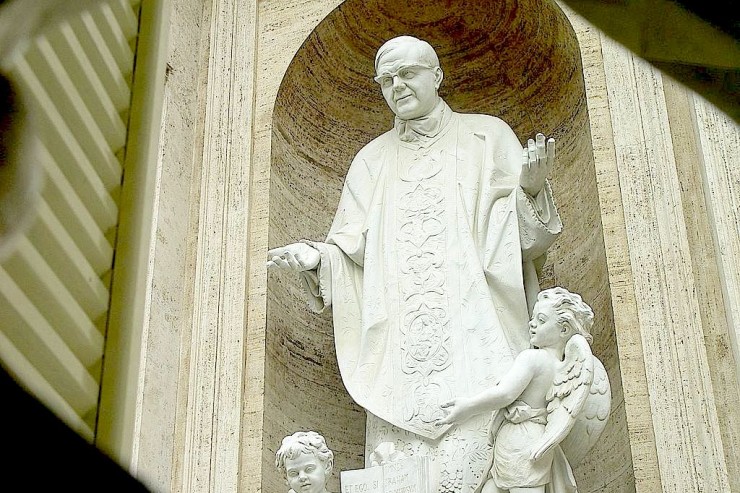
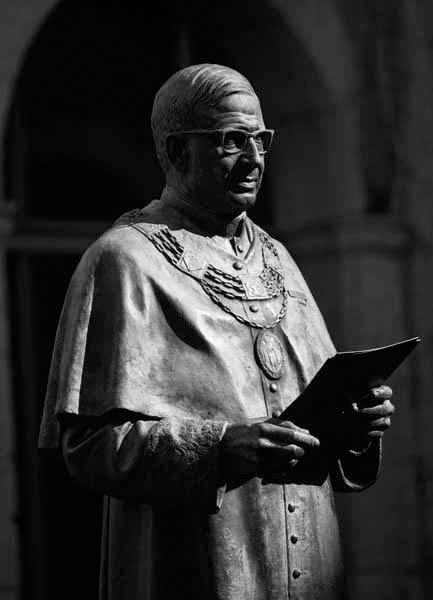
Founder Statue at the Vatican
The definitive encounter with the Most Holy Trinity: During the last years of his life, the Founder of Opus Dei undertook a number of catechetical journeys to countries in Europe and Latin America. Wherever he went, there were meetings, which were always simple and familiar in tone, even though often those listening to him were to be counted in thousands. He would speak about God, the sacraments, Christian devotions, the sanctification of work and his love for the Church and the Pope. On 28 March 1975 he celebrated his priestly Golden Jubilee. His prayer that day was like a summing up of his whole life: “Fifty years have gone by and I am still like a faltering child. I am just beginning, beginning again, as I do each day in my interior life. And it will be so to the end of my days: always beginning anew.”
On 26 June 1975, at midday, Blessed Josemaría died in his workroom, of a cardiac arrest, before a picture of Our Lady which received his last glance. At the time, Opus Dei was present in all five continents, with over 60,000 members from 80 nationalities. His books of spirituality (The Way, Holy Rosary, Conversations with Mgr Escrivá, Christ is Passing By, Friends of God, Love for the Church, The Way of the Cross, Furrow, The Forge)have reached multi-millions of copies.
After his death, many people asked the Holy Father for his canonisation. On 17 May 1992, in Rome, His Holiness St Pope John Paul II raised Josemaría Escrivá to the altars, in a beatification ceremony before hundreds of thousands of pilgrims. On 21 September 2001, the Ordinary Congregation of Cardinal and Bishop members of the Congregation for the Causes of Saints, unanimously confirmed the miraculous character of a cure attributed to Blessed Josemaría. The decree regarding this miracle was read before the Holy Father on 20 December. On 26 February 2002, John Paul II presided over an Ordinary Public Consistory of Cardinals and, having heard the Cardinals, Archbishops and Bishops present, he established that the ceremony for the Canonisation of Blessed Josemaría Escrivá should take place on 6 October 2002. And so it did!….Vatican.va
St Josemaria, Pray for us!
more images and information here : https://anastpaul.wordpress.com/2017/06/26/saint-of-the-day-26-june-josemaria-escriva-de-balaguer-y-albas/
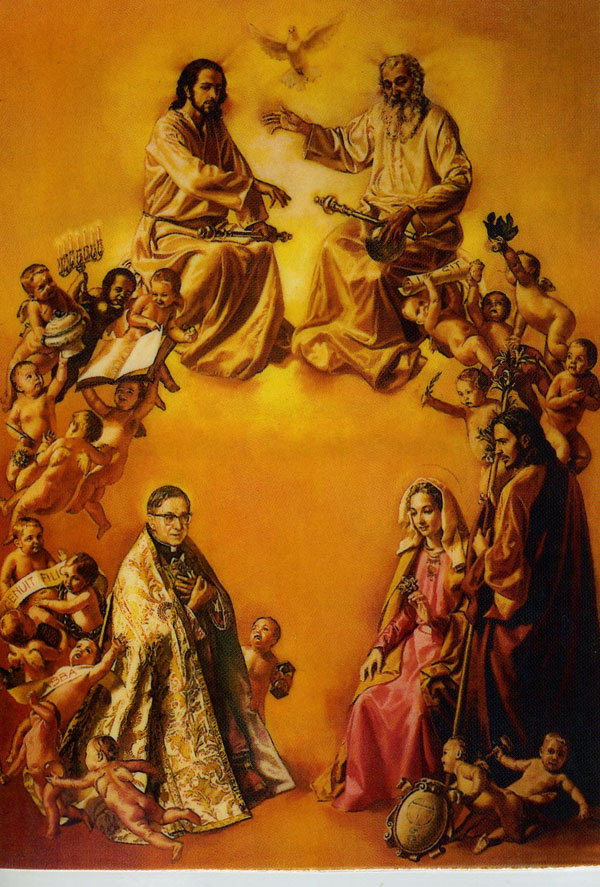
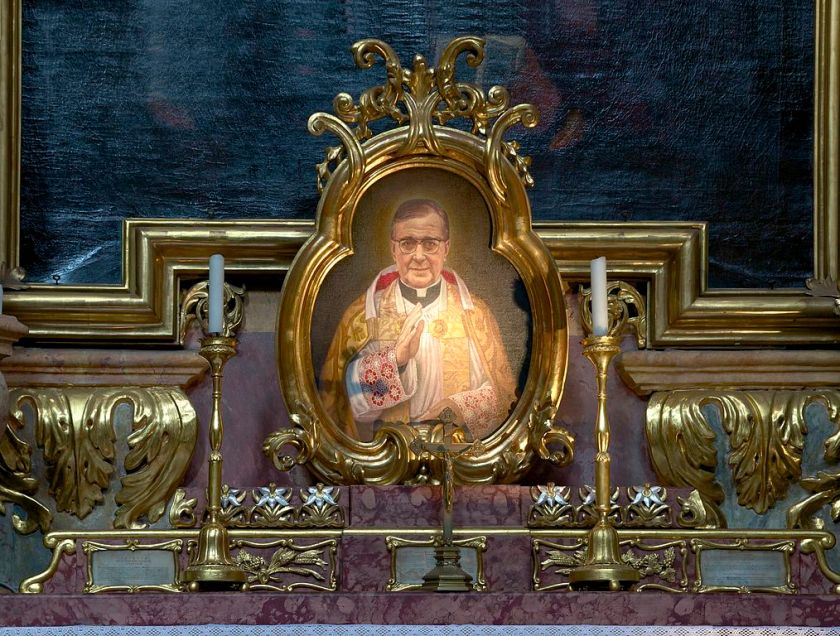
Detail from a Shrine to St Josemaria at the Basilica of St Peter in Vienna, Austria
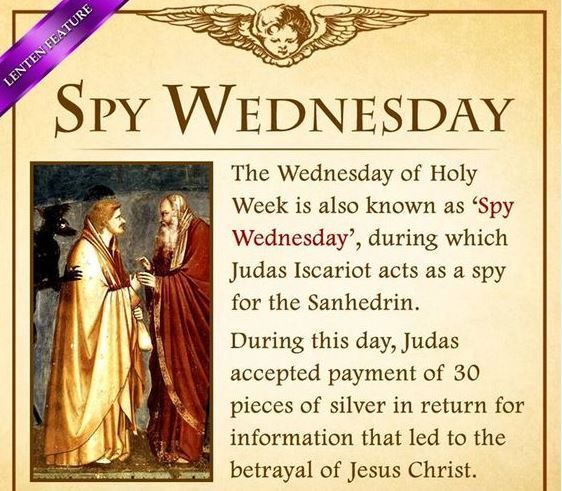
Thought for the Day – 28 March – Wednesday of Holy Week 2018 Judas
Commentaries on Holy Week | Wednesday
Wednesday of Holy Week recalls the sad story of one who was an apostle of Christ, Judas. As St Matthew tells us in his gospel: Then one of the twelve, who was called Judas Iscariot, went to the chief priests and said, “What will you give me if I deliver him to you?” And they paid him thirty pieces of silver. And from that moment he sought an opportunity to betray Him.
So that we realise that we all might behave as Judas did. So that we ask our Lord that, on our part, there be no treachery, nor distancing, nor abandonment. Not only because of the great harm this could bring to our personal lives but because we could drag along others who need the help of our good example, of our support, of our friendship.
JUDAS’ KISS
In some places in Latin America, the images of Christ crucified show a deep bruise on our Lord’s left cheek. People say this represents Judas’ kiss. So great is the pain that our sins cause Jesus. Let us tell Him that we want to be faithful, that we don’t want to sell Him, as Judas did, for thirty coins, for a trifle, for that’s what our sins are: pride, envy, impurity, hatred, resentment… When a temptation threatens to overwhelm us, let’s remember that it is not worthwhile to exchange the happiness of God’s children, which is what we are, for a pleasure that ends right away, leaving the bitter aftertaste of defeat and infidelity.
We have to feel on our shoulders the weight of the Church and of all humanity. Isn’t it marvellous to know that each of us can influence the whole world. In that place where we are, doing our work well, caring for our family, serving our friends, we can help make so many people happy. As St Josemaria wrote, through the fulfilment of our duties, we Christians have to be like the stone fallen into the lake. With your word and your example you produce a first circle… and it another… and another, and another…Until you reach the furthest sites.
Let us ask our Lord that there be no more betrayals; that we learn, with His grace, how to reject the temptations that the devil presents us with, trying to trick us. We have to say no, firmly, to all that would separate us from God. Thus the sad story of Judas will not be repeated in our own lives.
SACRAMENT OF DIVINE MERCY
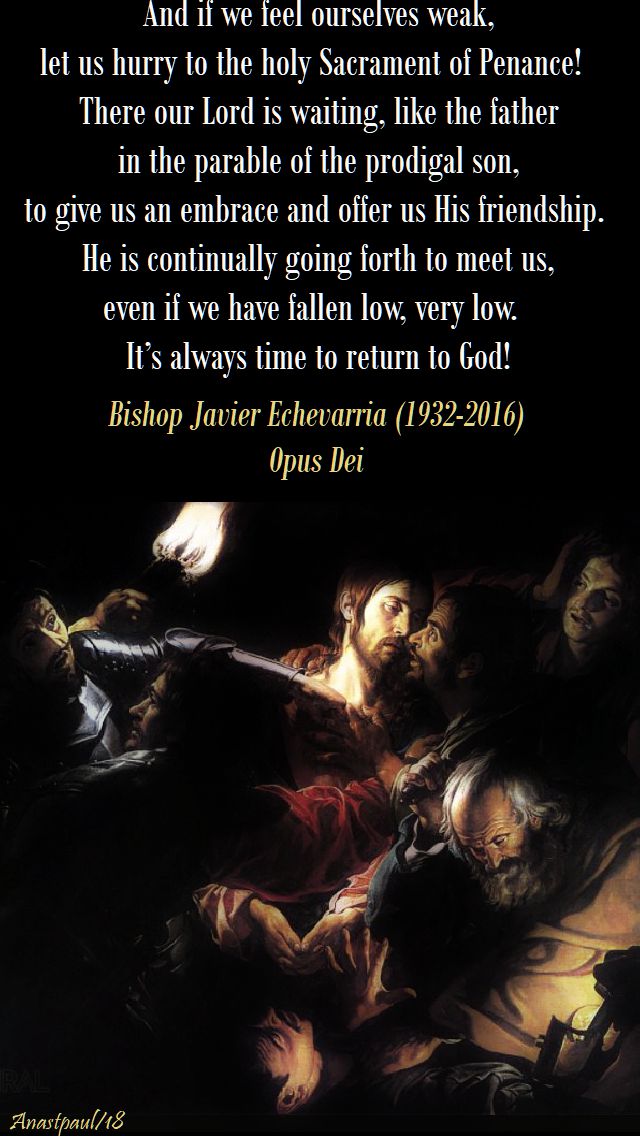
And if we feel ourselves weak, let us hurry to the holy Sacrament of Penance! There our Lord is waiting, like the father in the parable of the prodigal son, to give us an embrace and offer us His friendship. He is continually going forth to meet us, even if we have fallen low, very low. It’s always time to return to God! We should never react with discouragement or pessimism. Don’t think: What can I do, if I’m just a pile of wretchedness? God’s mercy is even greater. What can I do, if I fall again and again through my weakness? God’s power to lift us from our falls is even greater.
The sins of Judas and of Peter were great. Both of them betrayed the Master: one by handing Him over to His persecutors, the other by denying Him three times. And nevertheless, how differently each reacted. Our Lord longed to show mercy towards both. Peter repented; he wept over his sin, he asked for forgiveness and Christ strengthened him in his faith and love. In time, he came to give his life for our Lord. But Judas failed to trust in Christ’s mercy. Up till the last moment, God held the doors of forgiveness open for him, but he didn’t want to enter them through penance.
MOMENT OF CONVERSION AND FORGIVENESS
In his first encyclical, John Paul II spoke of Christ’s “right to meet each one of us in that key moment in the soul’s life constituted by the moment of conversion and forgiveness” (Redemptor Hominis, 20). Let’s not deprive Jesus of that right! Let’s not take away from God the Father the joy of giving us a welcoming embrace! Let’s not sadden the Holy Spirit, who wants to give supernatural life back to souls!
Let’s ask Blessed Mary, the Hope of Christians, to prevent us from becoming discouraged on seeing our mistakes and sins, perhaps repeated ones. May she win for us from her Son the grace of conversion, an efficacious desire to go humbly and contritely to Confession, the sacrament of divine mercy, beginning and beginning again as often as necessary.
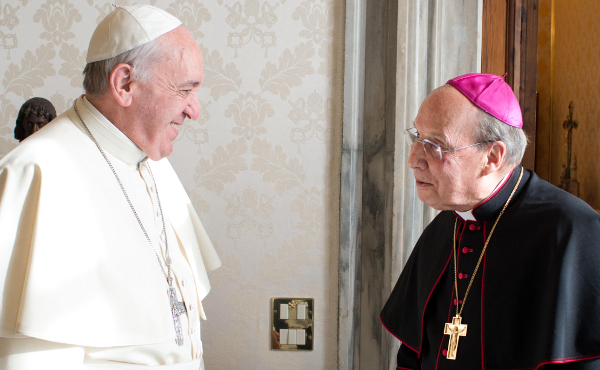
Bishop Javier Echevarria (1932-2016)
Fr Javier Echevarria (born 1932) was the second successor of St Josemaria Escriva as head of Opus Dei from 1994-2016. He worked closely with St. Josemaria Escriva as his personal secretary from 1953 until St Josemaria’s death in 1975. Bishop Echevarria was ordained as a priest on 7 August 1955. He was elected and appointed by John Paul II as prelate of Opus Dei on 20 April 1994. The Pope ordained him as a bishop on 6 January 1995. Bishop Echevarria died in Rome on 12 December 2016.





 AnaStpaul
You must be logged in to post a comment.