Posted in FEASTS and SOLEMNITIES, SAINT of the DAY, The APOSTLES & EVANGELISTS, The WORD

Blessed and Holy Solemnity of Sts Peter and Paul – 29 June

Blessed and Holy Solemnity of Sts Peter and Paul – 29 June – Today we celebrate St Peter and Paul as co-founders of the Church.   St Peter is also celebrated on 22 February (feast of the Chair of Peter, emblematic of the world unity of the Church), 1 August (Saint Peter in Chains) and 18 November (feast of the dedication of the Basilicas of Peter and Paul). St Paul is also celebrated on 25 January – his conversion and 16 February (Saint Paul Shipwrecked).

St Peter Patronages:  Universal Church, against fever, against foot problems, against frenzy, bakers, bridge builders, butchers, clock makers, cobblers, shoe makers, fishermen, harvesters, locksmiths, longevity, net makers, papacy, popes, ship builders, shipwrights, stone masons, watch makers, Isle of Guernsey, Exeter College, Oxford, England, 17 dioceses, 46 cities, 3 abbeys

St Paul Patronages:  against hailstorms, against snake bites, against snakes, Catholic Action, Cursillo movement, lay people, authors, writers, evangelists, journalists, reporters, missionary bishops, musicians, newspaper editorial staff, public relations personnel and work, publishers, rope braiders and makers, saddle makers; saddlers, tent makers, Malta, Bath Abbey, England, 16 dioceses, 28 cities,

peter and paul HEADER 3Peter-and-Paul-Stroman_school_circa_1620_saints_peter_and_paul.jpg - header

SOLEMNITY OF STS PETER AND PAUL

(Excerpt) HOMILY OF HIS HOLINESS BENEDICT XVI

St Peter’s Basilica
Wednesday, 29 June 2005

Dear Brothers and Sisters,

The Feast of the Holy Apostles Peter and Paul is at the same time a grateful memorial of the great witnesses of Jesus Christ and a solemn confession for the Church: one, holy, catholic and apostolic. It is first and foremost a feast of catholicity. The sign of Pentecost – the new community that speaks all languages and unites all peoples into one people, in one family of God -, this sign has become a reality. Our liturgical assembly, at which Bishops are gathered from all parts of the world, people of many cultures and nations, is an image of the family of the Church distributed throughout the earth.

Strangers have become friends; crossing every border, we recognize one another as brothers and sisters. This brings to fulfilment the mission of St Paul, who knew that he was the “minister of Christ Jesus among the Gentiles, with the priestly duty of preaching the Gospel of God so that the Gentiles [might] be offered up as a pleasing sacrifice, consecrated by the Holy Spirit” (Rom 15: 16).
The purpose of the mission is that humanity itself becomes a living glorification of God, the true worship that God expects: this is the deepest meaning of catholicity – catholicity that has already been given to us, towards which we must constantly start out again. Catholicity does not only express a horizontal dimension, the gathering of many people in unity, but also a vertical dimension: it is only by raising our eyes to God, by opening ourselves to him, that we can truly become one.

Like Paul, Peter also came to Rome, to the city that was a centre where all the nations converged and, for this very reason, could become, before any other, the expression of the universal outreach of the Gospel. As he started out on his journey from Jerusalem to Rome, he must certainly have felt guided by the voices of the prophets, by faith and by the prayer of Israel.magnificent glass sts peter and paul

The mission to the whole world is also part of the proclamation of the Old Covenant: the people of Israel were destined to be a light for the Gentiles. The great Psalm of the Passion, Psalm 22[21], whose first verse Jesus cried out on the Cross: “My God, my God, why have you forsaken me?”, ends with the vision: “All the ends of the earth shall remember and turn to the Lord; all the families of the nations shall bow down before him” (Ps 22[21]: 28). When Peter and Paul came to Rome, the Lord on the Cross who had uttered the first line of that Psalm was risen; God’s victory now had to be proclaimed to all the nations, thereby fulfilling the promise with which the Psalm concludes.

Catholicity means universality – a multiplicity that becomes unity; a unity that nevertheless remains multiplicity. From Paul’s words on the Church’s universality we have already seen that the ability of nations to get the better of themselves in order to look towards the one God, is part of this unity. In the second century, the founder of Catholic theology, St Irenaeus of Lyons, described very beautifully this bond between catholicity and unity and I quote him. He says: “The Church spread across the world diligently safeguards this doctrine and this faith, forming as it were one family: the same faith, with one mind and one heart, the same preaching, teaching and tradition as if she had but one mouth. Languages abound according to the region but the power of our tradition is one and the same. The Churches in Germany do not differ in faith or tradition, neither do those in Spain, Gaul, Egypt, Libya, the Orient, the centre of the earth; just as the sun, God’s creature, is one alone and identical throughout the world, so the light of true preaching shines everywhere and illuminates all who desire to attain knowledge of the truth” (Adv. Haer. I 10, 2). The unity of men and women in their multiplicity has become possible because God, this one God of heaven and earth, has shown himself to us; because the essential truth about our lives, our “where from?” and “where to?” became visible when he revealed himself to us and enabled us to see his face, himself, in Jesus Christ. This truth about the essence of our being, living and dying, a truth that God made visible, unites us and makes us brothers and sisters. Catholicity and unity go hand in hand. And unity has a content: the faith that the Apostles passed on to us in Christ’s name.

… We have said that the catholicity of the Church and the unity of the Church go together. The fact that both dimensions become visible to us in the figures of the holy Apostles already shows us the consequent characteristic of the Church: she is apostolic. What does this mean?sts peter and paul - snip

The Lord established Twelve Apostles just as the sons of Jacob were 12. By so doing he was presenting them as leaders of the People of God which, henceforth universal, from that time has included all the peoples. St Mark tells us that Jesus called the Apostles so “to be with him, and to be sent out” (Mk 3: 14). This seems almost a contradiction in terms. We would say: “Either they stayed with him or they were sent forth and set out on their travels”. Pope St Gregory the Great says a word about angels that helps us resolve this contradiction. He says that angels are always sent out and at the same time are always in God’s presence, and continues, “Wherever they are sent, wherever they go, they always journey on in God’s heart” (Homily, 34, 13). The Book of Revelation described Bishops as “angels” in their Church, so we can state: the Apostles and their successors must always be with the Lord and precisely in this way – wherever they may go – they must always be in communion with him and live by this communion.

… Today’s Gospel tells of the profession of faith of St Peter, on whom the Church was founded: “You are the Messiah… the Son of the living God” (Mt 16: 16). Having spoken today of the Church as one, catholic and apostolic but not yet of the Church as holy, let us now recall another profession of Peter, his response on behalf of the Twelve at the moment when so many abandoned Christ: “We have come to believe; we are convinced that you are God’s holy one” (Jn 6: 69). …

Let us pray to the Lord that the truth of these words may be deeply impressed in our hearts, together with his joy and with his responsibility; let us pray that shining out from the Eucharistic Celebration it will become increasingly the force that shapes our lives.B.Vivarini, Apostel Petrus und Paulus - The Apostles Peter and Paul / Vivarini -


Posted in DOCTORS of the Church, SAINT of the DAY

Saint of the Day – 10 May – St John of Avila

Saint of the Day – 10 May – St John of Avila (1499-1569) – Priest, Doctor of the Church, known as the Apostle of Andalusia, Mystic, Author, Preacher, Scholastic teacher, Founder of Schools and Universities – Patron of  Andalusia, Spain, Spain, Spanish secular clergy, World Youth Day 2011.   His Relics are  interred in the Jesuit church at Montilla, Spain.

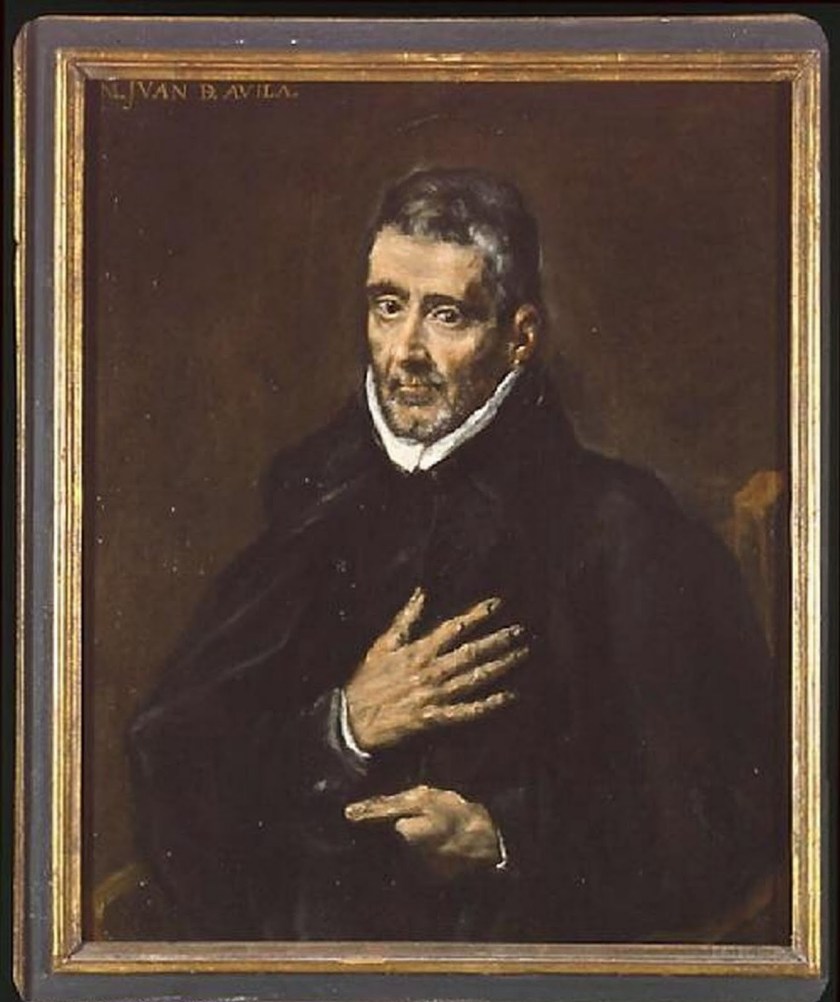
JOHN OF AVILA 1
A portrait by El Greco (1580)

St John was born in Almodóvar del Campo, in the Province of Ciudad Real, to Alfonso de Ávila, of Jewish converso descent and Catalina Xixón (or Gijón), a wealthy and pious couple.    At the age of fourteen, in 1513, he was sent to the University of Salamanca to study law;   he withdrew in 1517, however, without receiving a degree.

Returning home, Ávila spent the next three years in the practice of austere piety.    His sanctity impressed a Franciscan friar journeying through Almodóvar, on whose advice he resumed his studies.   Thereafter, he undertook the study of philosophy and theology, in which he was fortunate to have as his teacher the noted Dominican friar Domingo de Soto.    It appears that Ávila earned his bachelor’s degree during his years at Alcalá and then left without completing requirements for the licentiate degree.

Both his parents died while Ávila was still a student, and after his ordination in spring 1526, he celebrated his first Mass in the church where they were buried.     He then sold the family property and gave the proceeds to the poor.    He saw in the severing of natural ties a vocation to foreign missionary work and prepared to go to Mexico.    He, therefore, traveled to Seville to await departure for the Indies in January 1527 with the Dominican friar, Julián Garcés, appointed the first Bishop of Tlaxcala.    While waiting in Seville, his unusually great devotion in celebrating Mass and his skills in catechesis and preaching, attracted the attention of Hernando de Contreras, a local priest, who mentioned him to the Archbishop of Seville and Inquisitor General, Alonso Manrique de Lara.    The archbishop saw in the young cleric a powerful instrument to stir up the faith in Andalusia, and after considerable persuasion Juan was induced to abandon his journey to America.

800px-Cueva_en_la_casa_natal_en_Almodóvar_del_Campo
The basement of the family home of John of Ávila in Almodóvar del Campo, Ciudad Real, Spain

John seems to have lived in the initial years after 1526 in a small house in Seville with another priest, probably Contreras and disciples gathered around him, in a loosely structured fraternal life.    It was at the request of the younger sister of one of these disciples, Sancha Carrillo, that he began in 1527 to write the Audi, filia (Listen, Daughter), a work he continued expanding and editing until his death.

Apostle of Andalusia
John’s first sermon was preached on 22 July 1529 and immediately established his reputation.    During his nine years of missionary work in Andalusia, crowds packed the churches at all his sermons.    However, his strong pleas for reform and his denunciation of the behaviour of the aristocracy meant that he was denounced to the office of the Inquisition in Seville in 1531 and put in prison in the summer of 1532.    He was charged with exaggerating the dangers of wealth and with closing the gates of heaven to the rich. The charges were refuted and he was declared innocent and released in July 1533.

Around the end of 1534 or the beginning of 1535, John of Ávila was incardinated into the Diocese of Córdoba, from which he received a small benefice.    This city became his base for directing his disciples and moving around Andalusia, preaching and establishing schools and colleges in various neighbouring cities such as Granada, Baeza, Montilla and Zafra.    It is thought that during this time Ávila received the title of Master of Sacred Theology, probably in Granada around 1538.

Of special importance was the University of Baeza, established in 1538 by a papal bull of Pope Paul III.    Ávila served as its first rector and it became a model for seminaries and for the schools of the Jesuits.

Ávila stayed in Granada from 1538-9, where it appears some kind of community was taking shape.   Likewise, during the years 1546 to 1555, John lived with about 20 disciples in Córdoba, making it seem that he intended to begin some kind of formal foundation of apostolic priests.    However, the foundation and fast expansion of the Jesuits meant that these ideas never came to fruition;   from early 1551, when Ávila began to experience poor health, he began actively encouraging his disciples who so desired to join the Jesuits (around 30 in total seem to have joined).

From early 1551 Ávila was in constant ill-health.   He spent the last years of his life in semi-retirement in the town of Montilla, in the Province of Córdoba.    He died there on 10 May 1569 and in accordance with his wishes was buried in that city, in the Jesuit Church of the Incarnation, which now serves as the sanctuary to his memory.

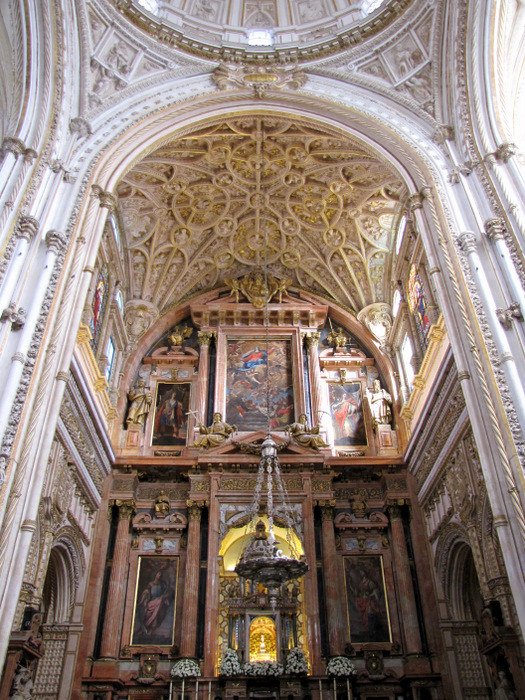
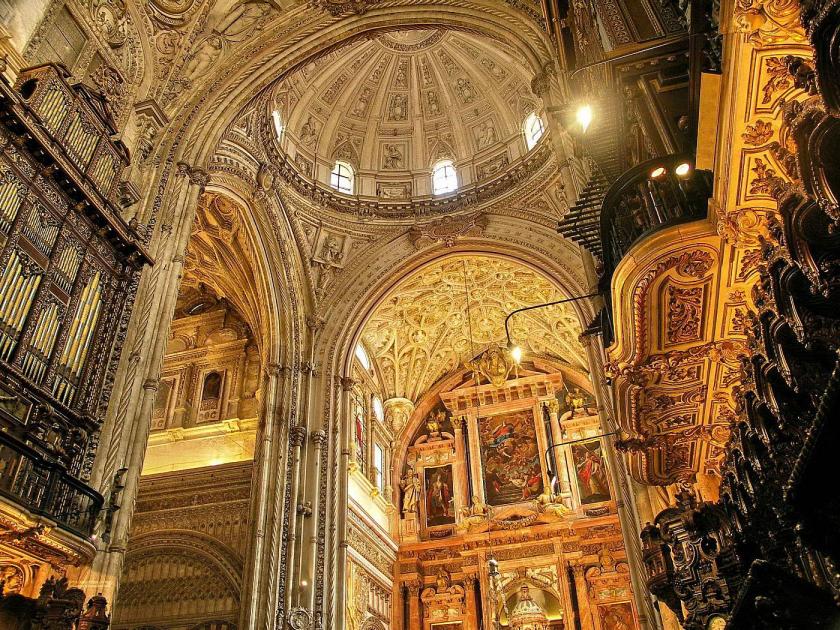
CORDOBA294191-great-mosque-cathedral-of-cordoba-cordoba-spainfeb-23-032Mosque–Cathedral.of.Córdoba.original.1435

St John of Ávila was declared Venerable by Pope Clement XIII on 8 February 1759 and beatified by Pope Leo XIII on 15 November 1893.    On 31 May 1970 he was canonized by Pope Paul VI.

Pope Benedict XVI named him a Doctor of the Church on 7 October 2012, the Feast of the Holy Rosary.   The proclamation of the two new Doctors of the Church was made by Pope Benedict before tens of thousands of people in St. Peter’s Square.   During his homily, Pope Benedict said that John of Ávila was a “profound expert on the sacred Scriptures, he was gifted with an ardent missionary spirit. He knew how to penetrate in a uniquely profound way the mysteries of the redemption worked by Christ for humanity. A man of God, he united constant prayer to apostolic action. He dedicated himself to preaching and to the more frequent practice of the sacraments, concentrating his commitment on improving the formation of candidates for the priesthood, of religious and of lay people, with a view to a fruitful reform of the Church”.

Posted in DOCTORS of the Church, EASTER, MORNING Prayers

One Minute Reflection – 20 April – Easter Thursday – Fifth Day of the Octave

One Minute Reflection – 20 April – Easter Thursday – Fifth Day of the Octave

Daily Meditation: May we be one in faith. love and peace through the Eucharist.

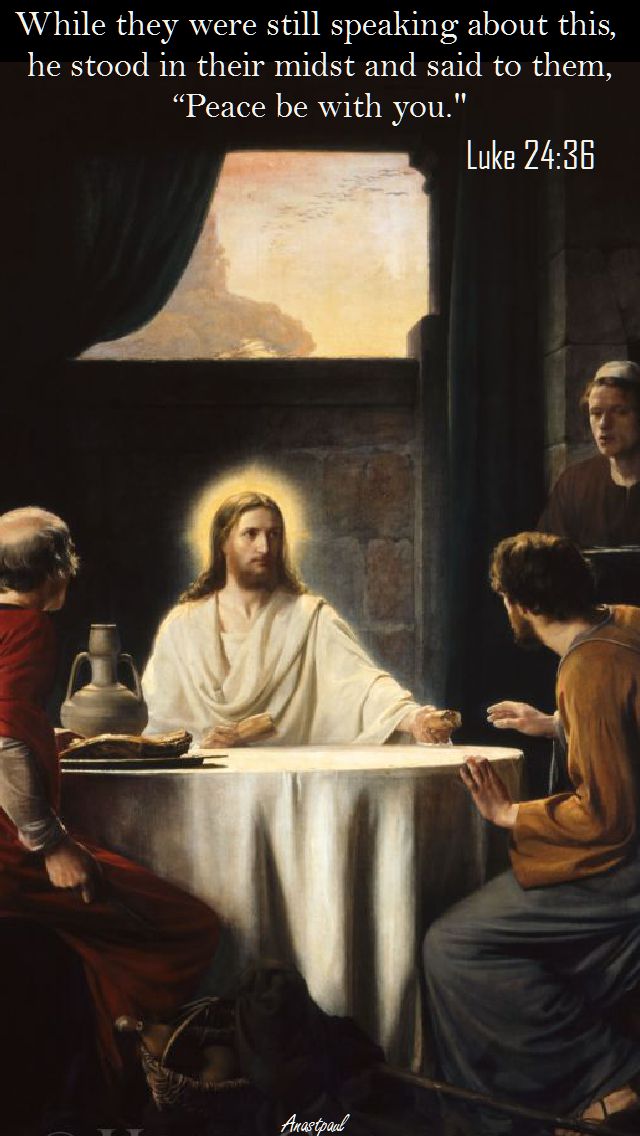
While they were still speaking about this,
he stood in their midst and said to them,
“Peace be with you.”
…..Luke 24:36

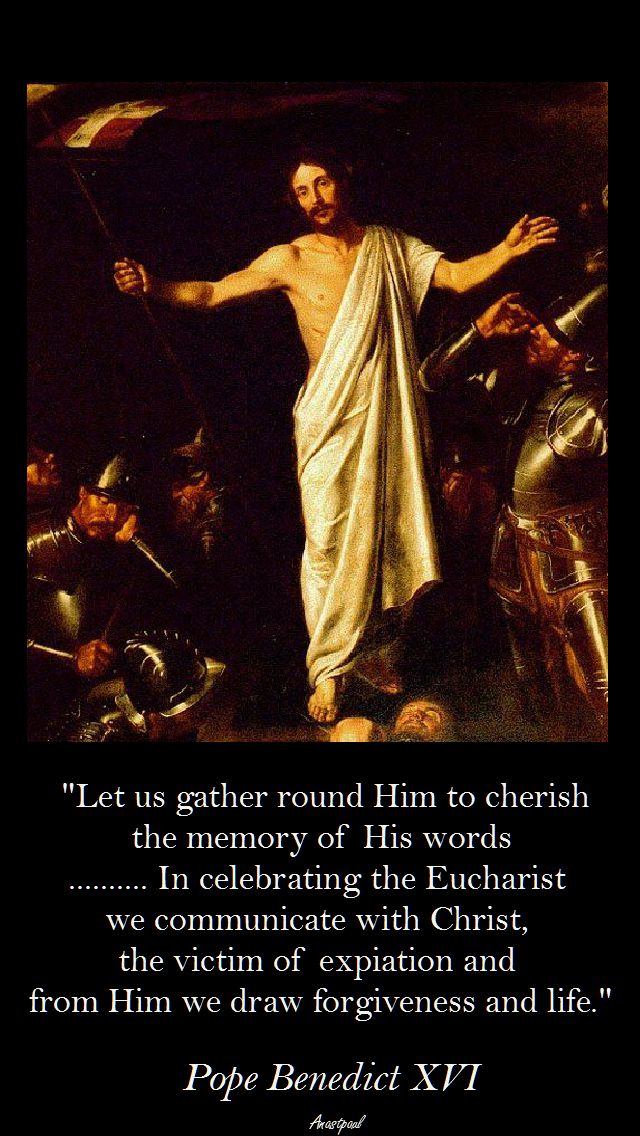
REFLECTION – “Let us gather round Him to cherish the memory of His words and of the events contained in Scripture; let us relive His Passion, death and Resurrection. In celebrating the Eucharist we communicate with Christ, the victim of expiation and from Him we draw forgiveness and life. What would our lives as Christians be without the Eucharist? The Eucharist is the perpetual, living inheritance which the Lord has bequeathed to us in the Sacrament of His Body and His Blood and which we must constantly rethink and deepen so that, as venerable Pope Paul VI said, it may “impress its inexhaustible effectiveness on all the days of our earthly life” (Insegnamenti, V [1967], p. 779).”……..Pope Benedict XVI 2009

PRAYER – Heavenly Father, we are scattered in this world and so easily distracted from seeing You. Help me to communicate in love to those around me
who gather in Your love. Let me praise Your name from my heart and rejoice that I have been given the grace of faith through Your love for me. Lord Jesus, remember Your holy Church, built on the apostles and reaching to the ends of the earth and let Your blessing and peace rest on all who gather to celebrate at Your feast in the most holy Eucharist. Amen

luke 24 -36LET US GATHER ROUND HIM - POPE BENEDICT

Posted in DOCTORS of the Church, EASTER, EUCHARISTIC Adoration, MORNING Prayers

One Minute Reflection – 19 April – Wednesday of Easter Octave

One Minute Reflection – 19 April – Wednesday of Easter Octave

Daily Meditation: Give us the joy of this feast.

Then the disciples from Emmaus
told what happened on the road
and how they knew he was the Lord
when he broke the bread.
— Luke 24:35

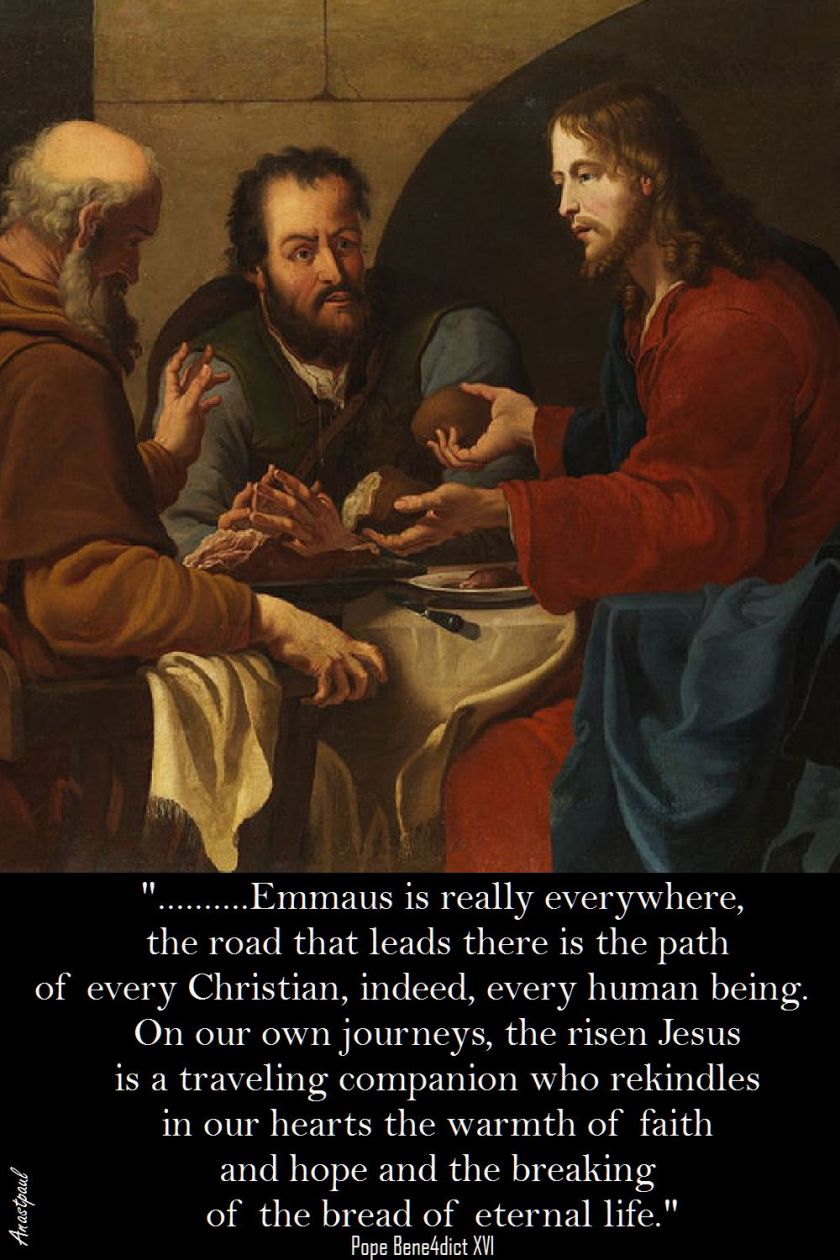
REFLECTION – “The fact that archaeologists have not identified the location of Emmaus with any certainty, holds for me a certain value :  it suggests that Emmaus is really everywhere, the road that leads there is the path of every Christian, indeed, every human being.    On our own journeys, the risen Jesus is a traveling companion who rekindles in our hearts the warmth of faith and hope and the breaking of the bread of eternal life.    This beautiful evangelical text already contains the structure of the Mass: in the first part listening to the Word through the Scriptures;  second in the Eucharistic liturgy and communion with Christ present in the sacrament of his Body and his Blood. Nourishing ourselves in this twofold meal, the Church builds itself up and is renewed every day in faith, hope and charity.”……………..Pope Benedict XVI 2008

PRAYER – Loving Father, do I feel this joy so deeply each year?   I know how solemn this season is and yet I am overcome by sheer delight.  I celebrate this joyful time of remembering how I am brought to new life by the sacrifice Your Son made for me.   Help me to delight in the gift He left us, help me to experience the great joy of the feast of the Holy Mass and the Holy Eucharist the food to nourish me on my own road to Emmaus. Amen

luke 24-35EMMAUS-BENDICT XVI

Posted in ART DEI, EASTER, MORNING Prayers, The WORD

One Minute Reflection – 18 April – Easter Tuesday 3rd Day of the Octave

One Minute Reflection – 18 April – Easter Tuesday 3rd Day of the Octave

Daily Meditation: You give us the freedom of the children of God.

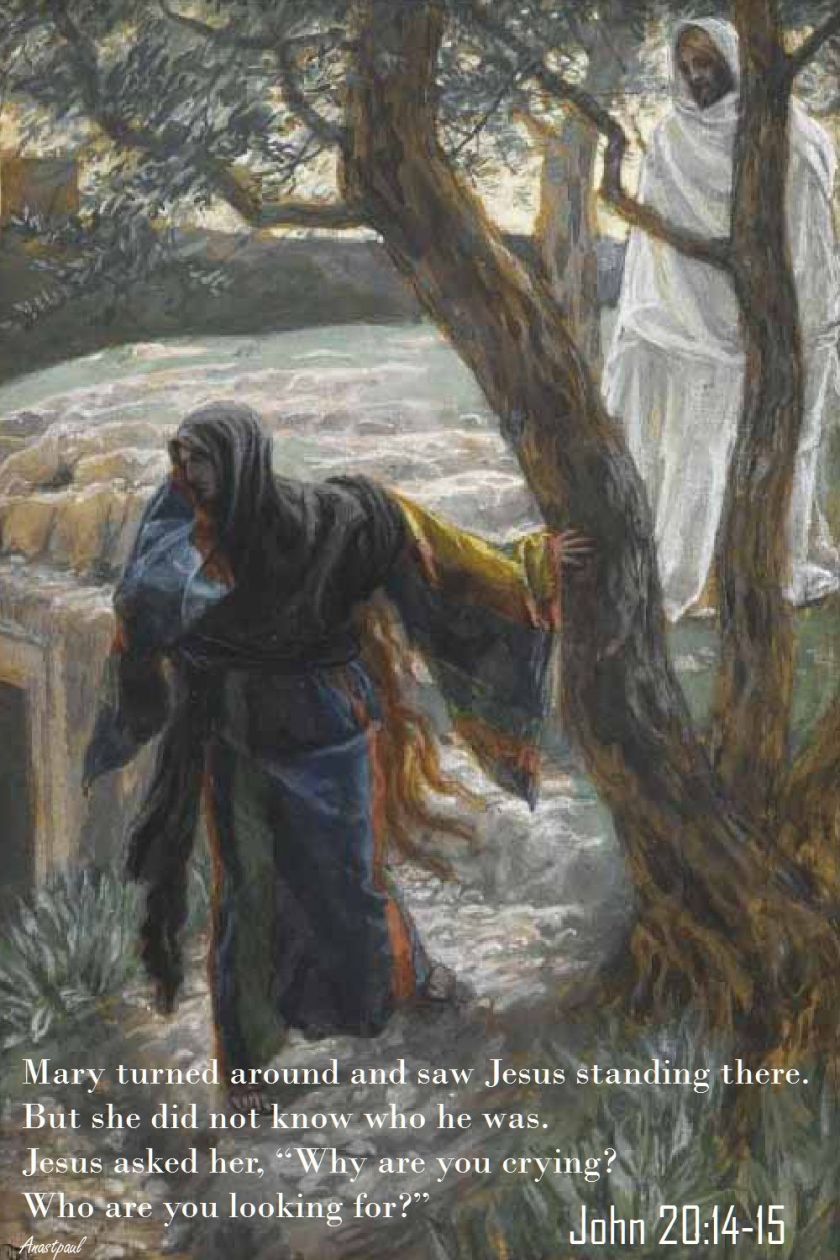
Mary turned around and saw Jesus standing there.
But she did not know who he was.
Jesus asked her, “Why are you crying?
Who are you looking for?” ……………….. John 20:14-15

REFLECTION – “Throughout the history of the living, the origins of anything new have always been small, practically invisible and easily overlooked.   The Lord Himself has told us that “heaven” in this world is like a mustard seed, the smallest of all the seeds (Matthew 13:31-32), yet contained within it are the infinite potentialities of God.   In terms of world history, Jesus’ Resurrection is improbable; it is the smallest mustard seed of history.

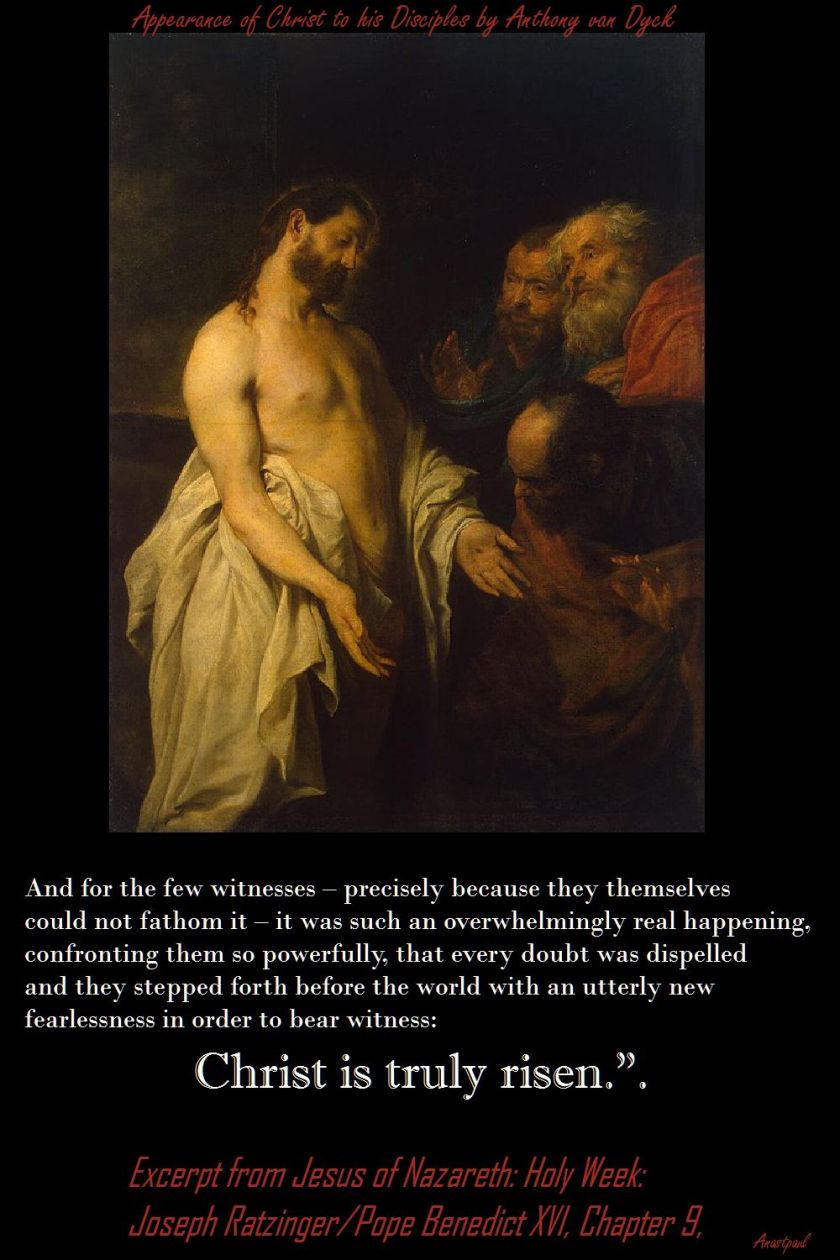
This reversal of proportions is one of God’s mysteries. The great – the mighty – is ultimately the small.   And the tiny mustard seed is something truly great.    So it is that the Resurrection has entered the world only through certain mysterious appearances to the chosen few.   And yet it was truly the new beginning for which the world was silently waiting.   And for the few witnesses – precisely because they themselves could not fathom it – it was such an overwhelmingly real happening, confronting them so powerfully, that every doubt was dispelled and they stepped forth before the world with an utterly new fearlessness in order to bear witness:  Christ is truly risen.……………Excerpt from Jesus of Nazareth: Holy Week: From the Entrance Into Jerusalem To The Resurrection, by Joseph Ratzinger/Pope Benedict XVI, Chapter 9,

PRAYER – Lord God, give me the opportunity to recognise the healing power of love that has been offered me and that it really does fill these days with power.   Teach me to recognise Jesus alive and Jesus with me now.. Grant me freedom from fear, freedom for courageous love and service. Help me to understand the freedom You give us all as Your children. Amen

JOHN 20-14 & 15CHRIST IS TRULY RISEN-PAPA B

Apostles-at-a-Christ-s-Tomb
Francisco Ribalta (Spain 1590s) Apostles Peter and John at Christ’s Tomb
Posted in CATHOLIC Quotes, FEASTS and SOLEMNITIES, SAINT of the DAY

Feast of the Chair of St Peter – 22 February

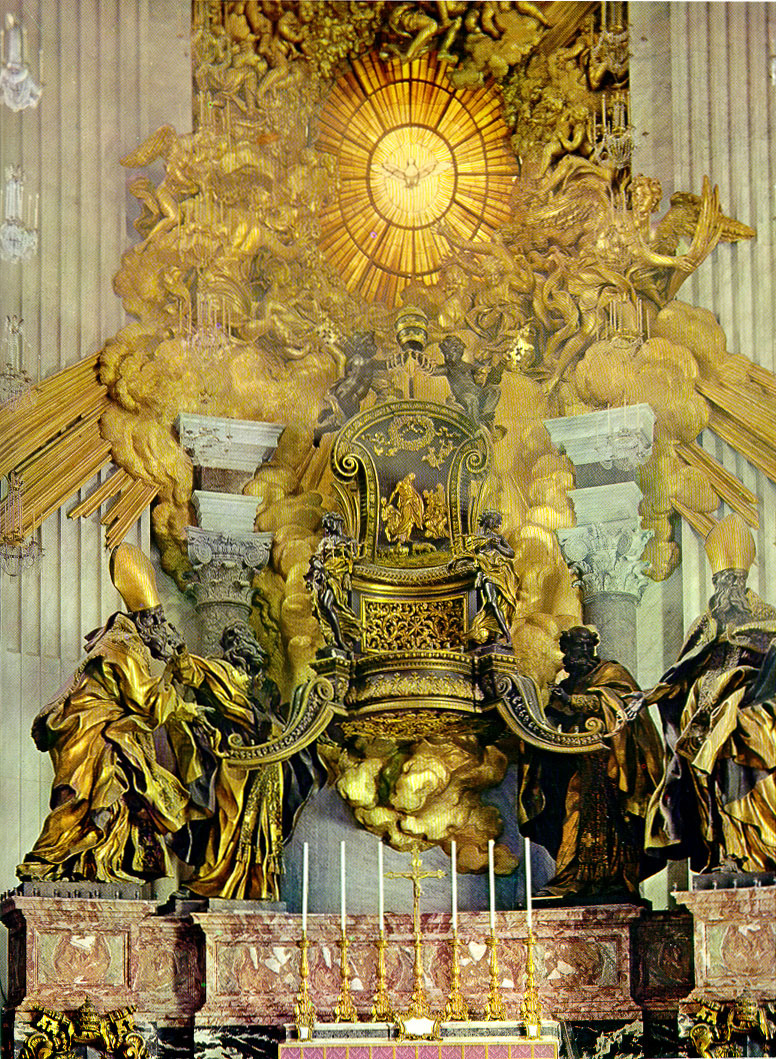
Feast of the Chair of St Peter – 22 February – Cathedra Petri), also known as the Throne of Saint Peter, is a relic conserved in St. Peter’s Basilica in Vatican City.    The relic is a wooden throne that tradition claims the Apostle Saint Peter, the leader of the Early Christians in Rome and first Pope, used as Bishop of Rome.    The relic is enclosed in a sculpted gilt bronze casing designed by Gian Lorenzo Bernini and executed between 1647 and 1653.    In 2012, Pope Benedict XVI described the chair as “a symbol of the special mission of Peter and his Successors to tend Christ’s flock, keeping it united in faith and in charity.”

The wooden throne was a gift from Holy Roman Emperor Charles the Bald to Pope John VIII in 875.    It has been studied many times over the years, the last being from 1968 to 1974, when it was last removed from the Bernini altar.    That study concluded that it was not a double, but rather a single, chair with a covering and that no part of the chair dated earlier than the sixth century.   Below – The Pope’s throne in St. Peter’s Basilica, Vatican City, last publicly exposed in 1867.

The Chair is the cathedra of St. Peter’s Basilica. Cathedra is Latin for “chair” or “throne”, and denominates the chair or seat of a bishop, hence “cathedral” denominates the Bishop’s church in an episcopal see.    The Popes formerly used the Chair.    It is distinct from the Papal Cathedra in St. John Lateran Archbasilica, also in Rome, which is the actual cathedral church of the Pope, because the Cathedra he currently and officially sits upon is in its apse.

“Dear Brothers and Sisters,

Today, the Latin-rite liturgy celebrates the Feast of the Chair of St Peter.   This is a very ancient tradition, proven to have existed in Rome since the fourth century. On it we give thanks to God for the mission he entrusted to the Apostle Peter and his Successors.

“Cathedra” literally means the established seat of the Bishop, placed in the mother church of a diocese which for this reason is known as a “cathedral”; it is the symbol of the Bishop’s authority and in particular, of his “magisterium”, that is, the evangelical teaching which, as a successor of the Apostles, he is called to safeguard and to transmit to the Christian Community.

When a Bishop takes possession of the particular Church that has been entrusted to him, wearing his mitre and holding the pastoral staff, he sits on the cathedra. From this seat, as teacher and pastor, he will guide the journey of the faithful in faith, hope and charity.

So what was the “Chair” of St Peter? Chosen by Christ as the “rock” on which to build the Church (cf. Mt 16: 18), he began his ministry in Jerusalem, after the Ascension of the Lord and Pentecost.   The Church’s first “seat” was the Upper Room, and it is likely that a special place was reserved for Simon Peter in that room where Mary, Mother of Jesus, also prayed with the disciples.   Therefore, we have the journey from Jerusalem, the newly born Church, to Antioch, the first centre of the Church formed from pagans and also still united with the Church that came from the Jews.   Then Peter went to Rome, the centre of the Empire, the symbol of the “Orbis” – the “Urbs”, which expresses “Orbis”, the earth, where he ended his race at the service of the Gospel with martyrdom.

…This is testified by the most ancient Fathers of the Church, such as, for example, St Irenaeus, Bishop of Lyons, but who came from Asia Minor, who in his treatise Adversus Haereses, describes the Church of Rome as the “greatest and most ancient, known by all… founded and established in Rome by the two most glorious Apostles, Peter and Paul”; and he added: “The universal Church, that is, the faithful everywhere, must be in agreement with this Church because of her outstanding superiority” (III, 3, 2-3)….

Tertullian, a little later, said for his part: “How blessed is the Church of Rome, on which the Apostles poured forth all their doctrine along with their blood!” (De Praescriptione Hereticorum, 36).
Consequently, the Chair of the Bishop of Rome represents not only his service to the Roman community but also his mission as guide of the entire People of God.

Celebrating the “Chair” of Peter, therefore, as we are doing today, means attributing a strong spiritual significance to it and recognizing it as a privileged sign of the love of God, the eternal Good Shepherd, who wanted to gather his whole Church and lead her on the path of salvation.

Among the numerous testimonies of the Fathers, I would like to quote St Jerome’s. It is an extract from one of his letters, addressed to the Bishop of Rome. It is especially interesting precisely because it makes an explicit reference to the “Chair” of Peter, presenting it as a safe harbour of truth and peace.

This is what Jerome wrote:   “I decided to consult the Chair of Peter, where that faith is found exalted by the lips of an Apostle; I now come to ask for nourishment for my soul there, where once I received the garment of Christ. I follow no leader save Christ, so I enter into communion with your beatitude, that is, with the Chair of Peter, for this I know is the rock upon which the Church is built” (cf. Le lettere I, 15, 1-2).

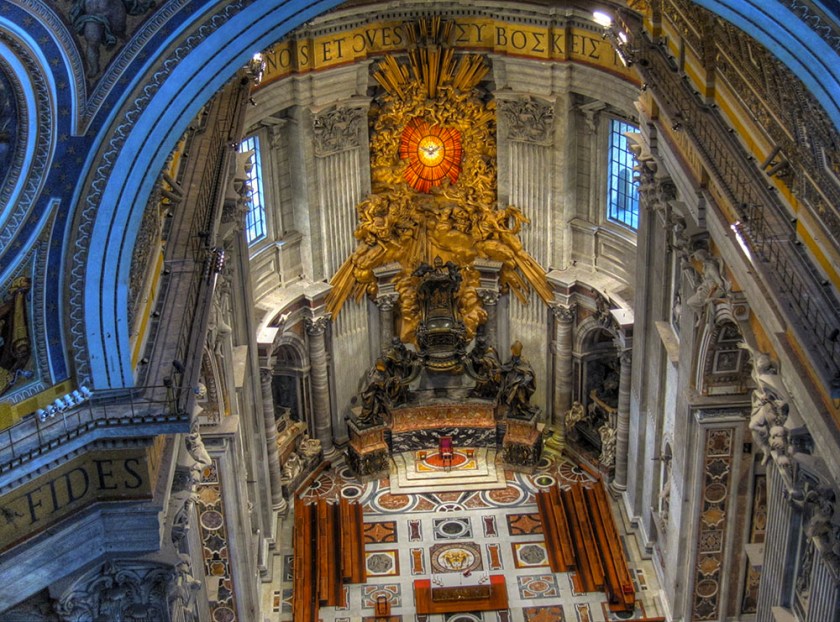
Dear brothers and sisters, in the apse of St Peter’s Basilica, as you know, is the monument to the Chair of the Apostle, a mature work of Bernini.    It is in the form of a great bronze throne supported by the statues of four Doctors of the Church: two from the West, St Augustine and St Ambrose and two from the East: St John Chrysostom and St Athanasius.

I invite you to pause before this evocative work which today can be admired, decorated with myriads of candles and to say a special prayer for the ministry that God has entrusted to me.    Raise your eyes to the alabaster glass window located directly above the Chair and call upon the Holy Spirit, so that with his enlightenment and power, He will always sustain my daily service to the entire Church.   For this, as for your devoted attention, I thank you from my heart.”…………….. Pope Benedict XVI Wednesday, 22 February 2006

43abb21fa88456beb01516a6554a2156cathedra-altar

arnolfo_di_cambio_the_statue_of_saint_peter


Posted in CATHOLIC Quotes, DOCTORS of the Church, MORNING Prayers, The WORD

One Minute Reflection – 26 January

One Minute Reflection – 26 January

So do not be ashamed of your testimony to our Lord,
nor of me, a prisoner for his sake;
but bear your share of hardship for the Gospel
with the strength that comes from God………..2 Tm 1:1-8
…….to Titus, my true child in our common faith:
grace and peace from God the Father and Christ Jesus our saviour.
For this reason I left you in Crete
so that you might set right what remains to be done…………Ti 1:1-5

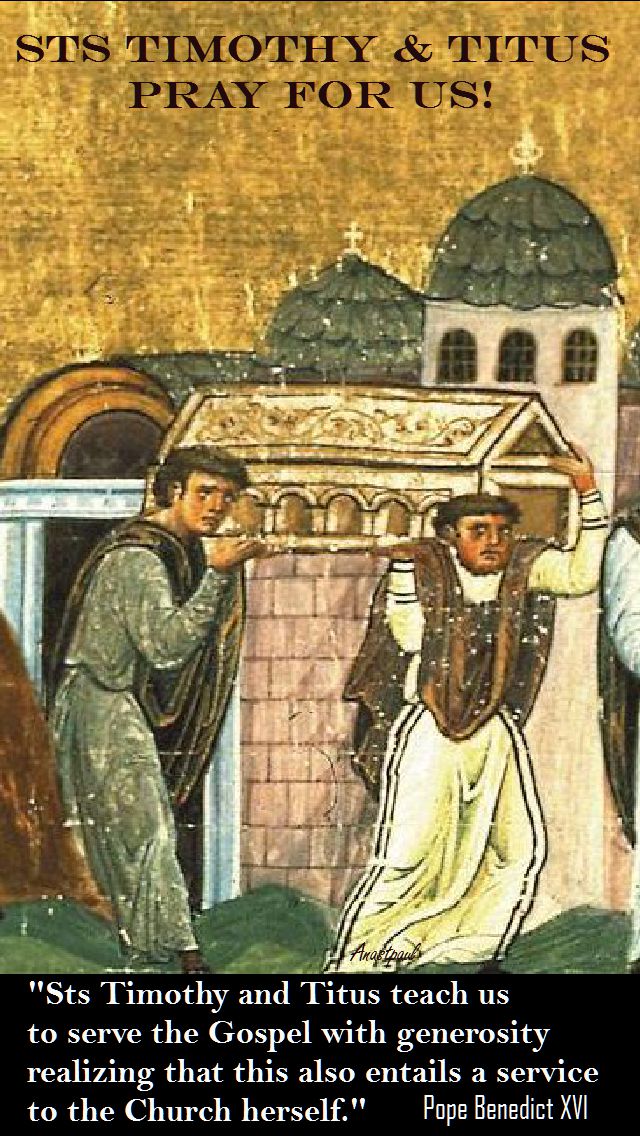
REFLECTION – …. we consider together the two figures of Timothy and Titus, we are aware of certain very significant facts………. it clearly appears that (Paul) he did not do everything on his own but relied on trustworthy people who shared in his endeavours and responsibilities.   The sources concerning Timothy and Titus highlight their readiness to take on various offices that also often consisted in representing Paul in circumstances far from easy.   In a word, they teach us to serve the Gospel with generosity realizing that this also entails a service to the Church herself..”………………Pope Benedict XVI

PRAYER – Father of light, let my life be illumined by the light of Christ and enable me to radiate the Gospel to others.  Teach me, like Sts Timothy and Titus to give my all to the service of the Bride of Christ, His Mystical Body, the Church.   Sts Timothy and Titus, pray for us. amen.

one-minute-reflectionmemorial-sts-tim-and-titus