Posted in BREVIARY Prayers, CATHOLIC-PRAYERS OF THE CHURCH, MARIAN Antiphons, MARIAN DEVOTIONS, MARIAN HYMNS, MARIAN PRAYERS, MARIAN Saturdays, PRAYERS of the CHURCH

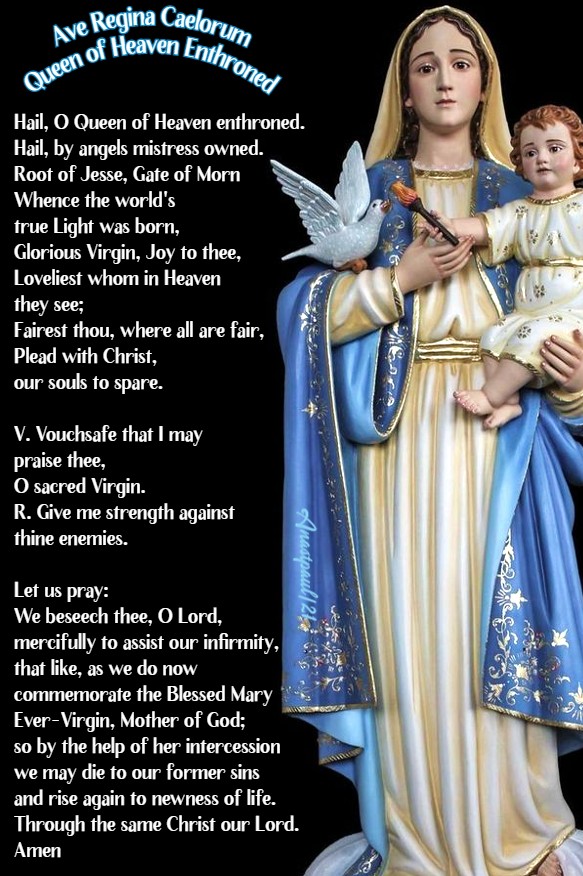
Our Morning Offering – 10 February – Ave Regina CaelorumQueen of Heaven Enthroned

Our Morning Offering – 10 February

Ave Regina Caelorum
Queen of Heaven Enthroned

Hail, O Queen of Heaven enthroned.
Hail, by Angels mistress owned.
Root of Jesse, Gate of Morn
Whence the world’s true Light was born,
Glorious Virgin, Joy to thee,
Loveliest whom in Heaven they see;
Fairest thou, where all are fair,
Plead with Christ, our souls to spare.

V. Vouchsafe that I may praise thee,
O sacred Virgin.
R. Give me strength against thine enemies.

Let us pray:
We beseech thee, O Lord,
mercifully to assist our infirmity,
that like, as we do now
commemorate the Blessed Mary
Ever-Virgin, Mother of God;
so by the help of her intercession
we may die to our former sins
and rise again to newness of life.
Through the same Christ our Lord.
Amen

“Ave Regina caelorum” is one of the Marian antiphons said or sung in the Liturgy of the Hours at the close of compline. In the Roman Breviary as revised by Pope Pius V in 1569 it was assigned for this use from compline of 2 February until compline of Wednesday of Holy Week.
The original author is unknown – it has been found in a manuscript from the twelfth-century.
It has been set to music by various composers including Hyden and many others.

Posted in BREVIARY Prayers, CATHOLIC-PRAYERS OF THE CHURCH, HYMNS, MARIAN Antiphons, MARIAN POETRY, MARIAN Saturdays, MARIAN TITLES, PRAYERS of the CHURCH, QUEENSHIP of MARY

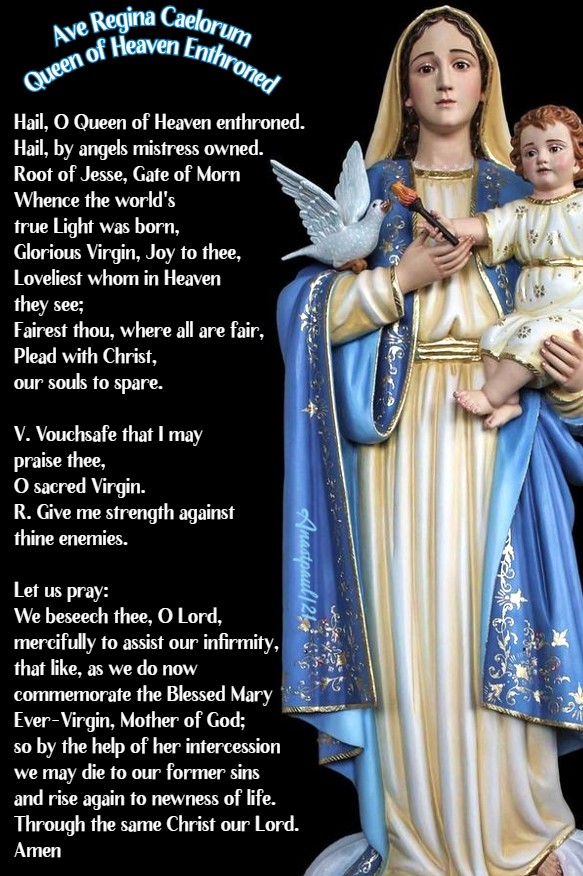
Our Morning Offering – 5 February – Ave Regina Caelorum

Our Morning Offering – 5 February – Mary’s Saturday

Ave Regina Caelorum
Queen of Heaven Enthroned

Hail, O Queen of Heaven enthroned.
Hail, by Angels mistress owned.
Root of Jesse, Gate of Morn
Whence the world’s true Light was born,
Glorious Virgin, Joy to thee,
Loveliest whom in Heaven they see;
Fairest thou, where all are fair,
Plead with Christ, our souls to spare.

V. Vouchsafe that I may praise thee,
O sacred Virgin.
R. Give me strength against thine enemies.

Let us pray:
We beseech thee, O Lord,
mercifully to assist our infirmity,
that like, as we do now
commemorate the Blessed Mary
Ever-Virgin, Mother of God;
so by the help of her intercession
we may die to our former sins
and rise again to newness of life.
Through the same Christ our Lord.
Amen

“Ave Regina caelorum” is one of the Marian antiphons said or sung in the Liturgy of the Hours at the close of compline. In the Roman Breviary as revised by Pope Pius V in 1569 it was assigned for this use from compline of 2 February until compline of Wednesday of Holy Week.
The original author is unknown – it has been found in a manuscript from the twelfth-century.
It has been set to music by various composers including Hyden and many others.

Posted in Hail MARY!, MARIAN Antiphons, MARIAN PRAYERS, MARIAN Saturdays, Our MORNING Offering, QUEENSHIP of MARY

Our Morning Offering – 6 November – Ave Regina Caelorum

Our Morning Offering – 6 November – Mary’s Day

Ave Regina Caelorum
Queen of Heaven Enthroned

Hail, O Queen of Heaven enthroned.
Hail, by angels mistress owned.
Root of Jesse, Gate of Morn
Whence the world’s true Light was born,
Glorious Virgin, Joy to thee,
Loveliest whom in Heaven they see;
Fairest thou, where all are fair,
Plead with Christ, our souls to spare.

V. Vouchsafe that I may praise thee,
O sacred Virgin.
R. Give me strength against thine enemies.

Let us pray:
We beseech thee, O Lord,
mercifully to assist our infirmity,
that like, as we do now
commemorate the Blessed Mary
Ever-Virgin, Mother of God;
so by the help of her intercession
we may die to our former sins
and rise again to newness of life.
Through the same Christ our Lord.
Amen

“Ave Regina caelorumis one of the Marian antiphons said or sung in the Liturgy of the Hours at the close of compline. In the Roman Breviary as revised by Pope Pius V in 1569 it was assigned for this use from compline of 2 February until compline of Wednesday of Holy Week.
The original author is unknown – it has been found in a manuscript from the twelfth-century.
It has been set to music by various composers including Hyden and many others.