St Catherine of Genoa (1447-1510) Married laywoman, Widow, Mystic, Apostle of the sick, the poor and the needy, Writer. Her Feast Day was moved after Vatican II to 15 September but today is the date of her death. Her Life: https://anastpaul.com/2020/09/15/saint-of-the-day-15-september-st-catherine-of-genoa-1447-1510/ St Avitus of Périgord St Basil of Ancyra St Basilissa of Galatia
St Callinica of Galatia St Darerca of Ireland St Deghitche
St Epaphroditus of Terracina (1st Century) First Bishop of Terracina, Italy, Missionary, Evangelist, Disciple of the Apostles, Friend and Envoy of St Paul Apostle. St Hippolytus’ list of the Seventy Disciples includes “Epaphroditus, Bishop of Andriace.” The Roman Martyrology reads: “At Terracina, St Epaphroditus, a disciple of the Apostles, who was Consecrated Bishop of that City by the blessed Apostle Peter.” Biography: https://anastpaul.com/2022/03/22/saint-of-the-day-22-march-saint-epaphroditus-of-terracina-1st-century/
St Failbhe of Iona St Harlindis of Arland Blessed Hugolinus Zefferini OSA (c1320-1367) Priest, Hermit St Lea of Rome
Blessed Clemens August von Galen (1878-1946) Martyr Boshop, known as “The Lion of Munster,” “The Bishop Who Roared Against The Nazis,” “The Bishop Who Took On the Führer.” Blessed Clemens had a great love for the Blessed Virgin, often leading pilgrimages, or going on his own, to Marian Shrines. He was too, a great lover of the Holy Eucharist and a fervent apostle of charity. Patronage – Munster. The Lion of Munster! https://anastpaul.com/2019/03/22/saint-of-the-day-22-march-blessed-clemens-august-count-von-galen-1878-1946/
St Darerca of Ireland St Deghitche St Epaphroditus of Terracina (1st Century) Bishop St Failbhe of Iona Bl François-Louis Chartier St Harlindis of Arland Bl Hugolinus Zefferini St Lea of Rome Bl Marian Górecki
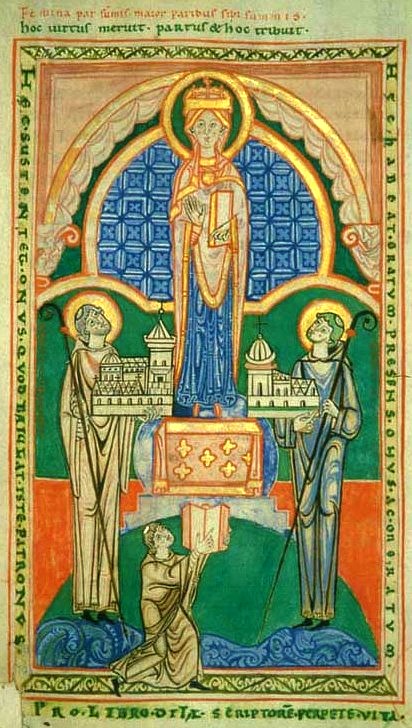
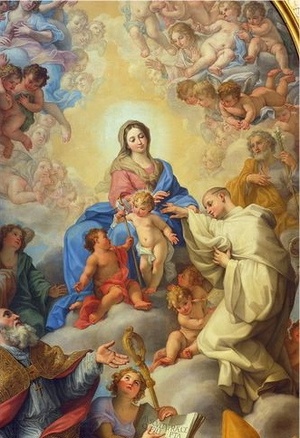
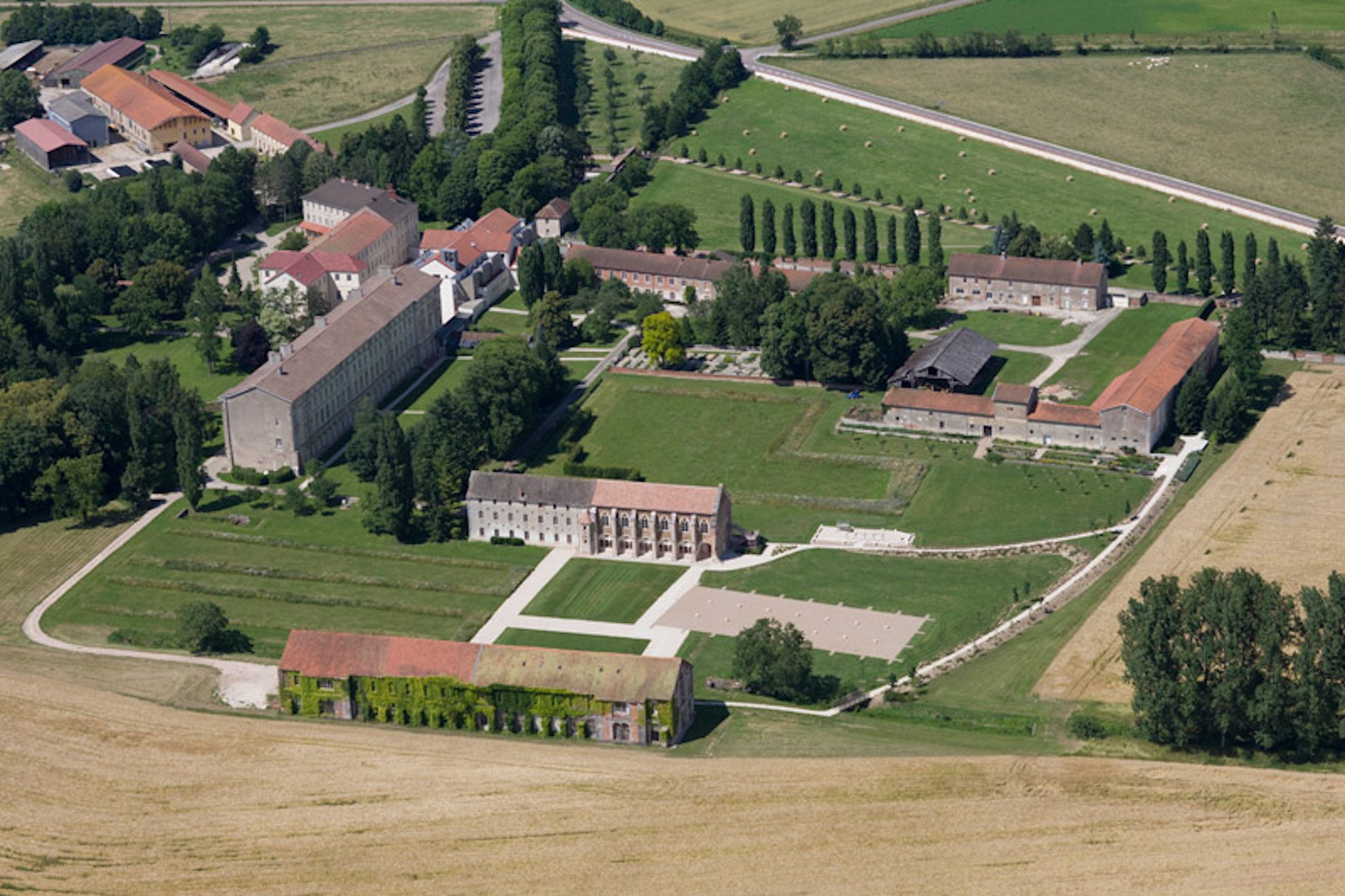
Notre-Dame-de-Citeaux / Our Lady of Citeaux, France built by St Robert (1098) – 22 March:
The Abbot Orsini wrote: “On Palm Sunday, in the year 1098, Saint Robert, Abbot of Moleme, retired with twenty-one of his Monks to the Diocese of Chalops-sur-Saone, where he built, in honour of Our Lady, the celebrated Monastery of Citeaux, the head house of the order.”
The Notre-Dame de Citeaux Abbey is the first Abbey of the Order of Citeaux, or the Cistercian Order. The original Abbey dates back to 1098, where in the Duchy of Burgundy, Robert of Molesme, Abbot of the Abbey of Our Lady of Molesme, founded the Church. Constructed in the Gothic style, which was current in the 11th century, it was dedicated to Mary, Mother of God and placed under the protection of the Dukes of Burgundy. Having left the Abbey of Our Lady of Molesme, a small group of twenty-one Monks, led by Robert of Molesme, went to Citeaux to apply the Gregorian reform and live in the spirit of prayer and poverty of the rule of St. Benedict. The low country was a land sparsely populated, well forested but also an unwelcoming and hostile place. The beginning was very difficult, for what was required to develop the land was beyond what they possessed. The disciples of Robert suffered from extreme poverty but Pope Pascal II, in the year 1100, gave his protection to the new Monastery and the Duke of Burgundy provided the Monks with what they needed for construction and supplied funding for food and the overall maintenance of the religious.
Our Lady and St Robert
Difficulties with the water supply at the original site required Aubry, successor of Robert after 1099, to settle the new community two kilometers further south. New buildings were constructed, including a Chapel, which was built of stone and dedicated to Our Lady. After the death of Abbot Aubry in 1109, Stephen was elected as the third Abbot. He faced great problems, for their voluntary poverty appeared so strict, that they had a reputation for too much austerity and there were few vocations. The community was shrinking and some appeared at the gates of despair because they feared to have no successors. Depending directly on the Papal States by pontifical right, the Cistercian Order was officially approved in 1119 by Pope Calixte II, with the purpose that it spread and enforce the Gregorian reform throughout the Christian West. The Abbey of Citeaux, thus became the founding mother of more than two thousand Monasteries from the Kingdom of France and throughout the Christian West to Transylvania in the East, during the 12th century. The Abbey of Citeaux, whose founding was so difficult, became a major spiritual center which profoundly influenced the spiritual, economic and social life of men in the Middle Ages. It was from this place, that new Cistercian Abbeys sprung up all over Europe for the benefit of all mankind. The Christian West returned to a more rigorous respect for the rule of St Benedict and none of this, is to even begin to mention, the influence of the great Saint and Monk, Bernard of Clairvaux (1090-1153). The famous Saint Bernard actually left Citeaux to found his Monastery at Clairvaux in the year 1115. The Monastery at Citeaux suffered pillaging several times throughout the Hundred Year’s War and the Monks were often forced to take refuge elsewhere during those perilous times. It was not until the 16th century, that the community once again numbered over 200 Monks but then, with the Wars of Religion, the number of Monks began to decrease again. Finally, in 1791, the Abbey was struck by the French Revolution. The property was illegally seized and sold as national property by the government. In 1898, twenty Cistercians returned to occupy the Abbey, although the Church had been completely destroyed. Still, it is one of the few sites that has regained at least something of its spiritual tradition. The Church has been rebuilt and there are currently about 30 brothers living there. The Abbey of Citeaux was classified as an historical monument in 1978.
St Avitus of Périgord
St Basil of Ancyra
St Basilissa of Galatia
St Benevenuto Scotivoli of Osimo
Bl Bronislaw Komorowski
St Callinica of Galatia Bl Clemens August von Galen (1878-1946)
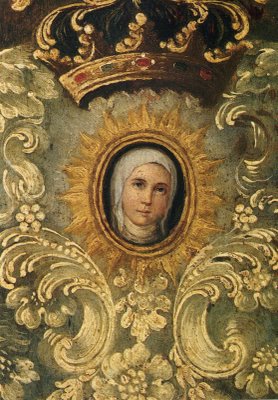
Nostra Signora dei Sette Veli / Our Lady of the Seven Veils, Foggia, Italy (11th Century) – 22 March:
In the Cathedral of Foggia one can find an ancient and mysterious image of the Blessed Virgin Mary. This icon, called “Our Lady of the Seven Veils,” once caused Saint Alphonsus to go into ecstasy, which I will describe below. As a young priest, St Pio of Pietreclina would make a visit to this image everyday. In the eleventh century Foggia, Italy was a tiny town perched around the Tavern of the Owl. One day some local farmers saw three flames over a small pond or bog. Intrigued, they dug where the miraculous fire had been and discovered a large “table” buried in the mud. They realised that this “table” was actually a Byzantine icon that had remained somewhat preserved despite being soaked in water and mud. The image was cleaned and then cloaked with new veils. I assume there were seven veils and hence the name but I cannot verify this. The icon was then placed in the local Tavern of the Owl for veneration. Soon the tavern became a place of pilgrimage. In 1080 Robert Guiscard built a church to honour the sacred image. In 1172 the church was expanded by William II “the Good” of Sicily. The “face hole” is all that one can now see of the original wooden icon. It is black and the face is now indiscernible. However, on Maundy Thursday of 1731, the Virgin Mary’s white face appeared in this portal, which was usually black and dark. Saint Alphonsus Liguori heard about apparition and went to Foggia to venerate the Immaculate Mother of the Saviour. He also received an apparition of the Virgin’s face in the small black portal. He described the Blessed Virgin’s face on that occasion as a girl of 13-14 with a white veil. The apparitions of the Virgin’s face on the icon continued until about 1745. As the city grew larger, the church was decorated and enriched. The Normans, Swabians, Angevins, Aragonese, Spaniards and Bourbons considered the church to be one of the most important in Italy. It has served as the site for several royal weddings. Today, the image is said to be covered in seven layers of precious metal and embroidered material – hence the name Madonna of the Seven Veils.
St Avitus of Périgord St Basil of Ancyra St Basilissa of Galatia St Benevenuto Scotivoli of Osimo Bl Bronislaw Komorowski St Callinica of Galatia Bl Clemens August von Galen St Darerca of Ireland St Deghitche St Epaphroditus of Terracina St Failbhe of Iona Bl François-Louis Chartier St Harlindis of Arland Bl Hugolinus Zefferini St Lea of Rome Bl Marian Górecki St Nicholas Owen S.J. (1562-1606)
St Octavian of Carthage St Paul of Narbonne St Saturninus the Martyr St Trien of Killelga





 AnaStpaul
You must be logged in to post a comment.