
Saint of the Day – 17 July – Saint Magnus Felix Ennodius (c473-521) Bishop and Confessor of Pavia, Father of the Church, Poet, Rhetorician, a man of great erudition and eloquence, well employed for the benefit of the Faith and the Church of Christ. He is commonly referred to by his surname. Born in Arles, France as agnus Felix in either 473 or 474 and died
The Roman Martyrology reads today: “At Pavia, St Magnus Ennodius, Bishop and Confessor.”
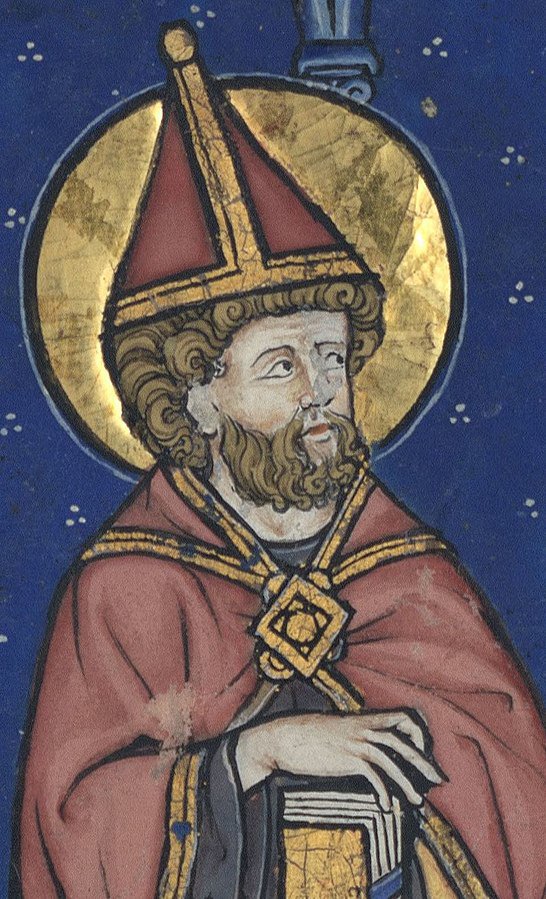
Ennodius was a highly important figure of the 5th Century. He was a Bishop but also a Latin poet and rhetorician, undoubtedly a figure of the highest cultural and spiritual importance in that dark and somewhat fragmented century. The high level of esteem in which he and his work was held earned him the title of Confessor of the Faith and Father of the Church.
He was born in 473 or 474, related to the highest nobility of Rome. It is thought he may have descended from Felix Ennodius, who was the Pro-Consul of Africa between 408 and 423. His Father appears to have been named Firminus; Ennodius himself, in fact, cites this name, alongside that of Gerontius, as one of the two Grandfathers of his nephew Lupicinus. We also know of the existence of two Sissters and two Nieces: one, Euprepia, was the Mother of Lupicinus, the other, whose name is unknown, was the Mother of Parthenius.
Ennodius, orphaned at an early age, was raised by his paternal Aunt in northern Italy, more precisely in Pavia, a City to which he would be particularly attached and linked for his name and work, especially later as the Bishop.
At the age of sixteen, around 489-490, Ennodius lost his Guardian Aunt and found himself alone in a region then gripped by the misery resulting from the armed conflicts between Theodoric and Odoacer. However, he found refuge with a pious and wealthy family and became engaged to their Daughter but for reasons which are not entirely clear (one hypothesis is that the family was ruined by the war) the marriage did not take place.

Around 493, we know, Ennodiush entered the Clergy of Pavia, whose Bishop was Epiphanius, who died on 21 January 496 (or 498). Our Saint then became a Deacon in the Church of Milan, whose Bishop Lawrence (490-512) was his relative and it is precisely during his Milanese period that the bulk of his works date.
Known for his literary talent, he was induced to write in defence of Pope Symmachus during the long conflict between the latter and the Deacon Lawrence. This would be the beginning of an increasingly strong visibility throughout the Catholic Church and an opportunity to admire his eloquence and doctrinal erudition.
In July 511, he was struck by a serious fever, from which he recovered through the intercession of St. Victor. This illness was accompanied by a moral crisis which led him to renounce the literary trivialities he had practiced, until then, with too much complacency and to replace it with a maturity of faith which allowed him to live his vocation with greater devotion and determination.
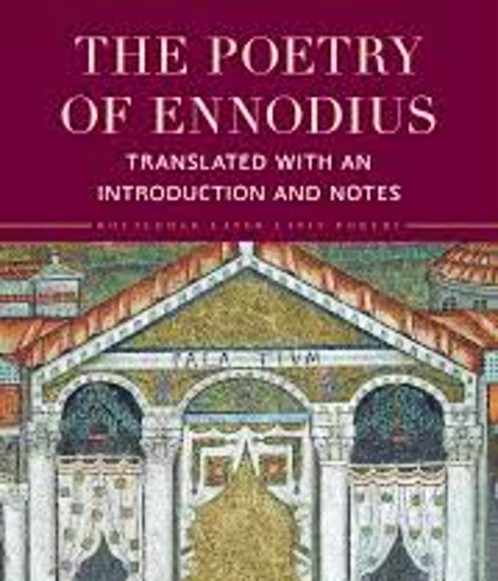
In 514, he became the Bishop of Pavia. Given that it was the Seat of the Kingdom, everything suggests that Theodoric had been involved in this appointment. His work as a shepherd was intense and marked by charity and the need to confirm the Clergy and people in correct doctrine.
In 515 and 517, along with other Italian Bishops, Ennodius took part in several missions sent by Pope Hormisdas to the East to attempt to resolve the conflict between the two Churches. This would be the pinnacle of his Ecclesiastical diplomacy in the service of the Pope and for the good of the entire Church. A few years later, he died and, as his Epitaph records, was buried on 17 July 521.
Of Ennodius, 9 books of Epistles and Sermons have survived, a collection of writings in prose and verse on various subjects, including Hymns, descriptions of travels, epigrams, a panegyric to Theodoric (dated 507) and the biography of his predecessor, Saint Epiphanius.
Ennobius’ Relics and Tomb are venerated in the Basilica of St Michael in Pavia.


 AnaStpaul
You must be logged in to post a comment.