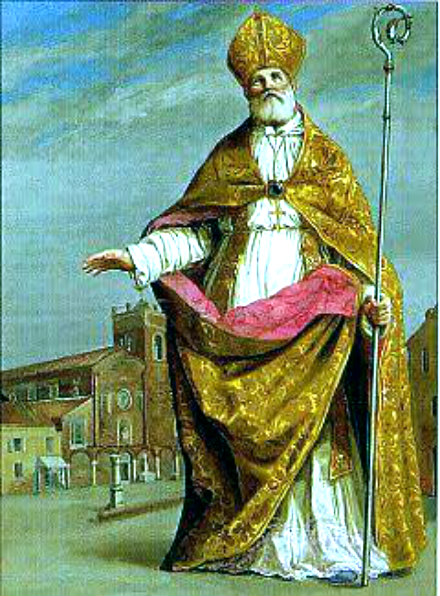
Saint of the Day – 19 September – St Eustochius (Died c461) Bishop of Tours, a zealous shepherd and defender of the Church and his flock against secular interference, a Reformer of the discipling amongst the Clerics. He formed new Parishes and built new Churches. Born in Auvergne, France and died in c461 in Tours, France. Also known as – Eustachius.
The Roman Martyrology reads today: “At Tours, St Eustochius, Bishop, a man of great virtue.”
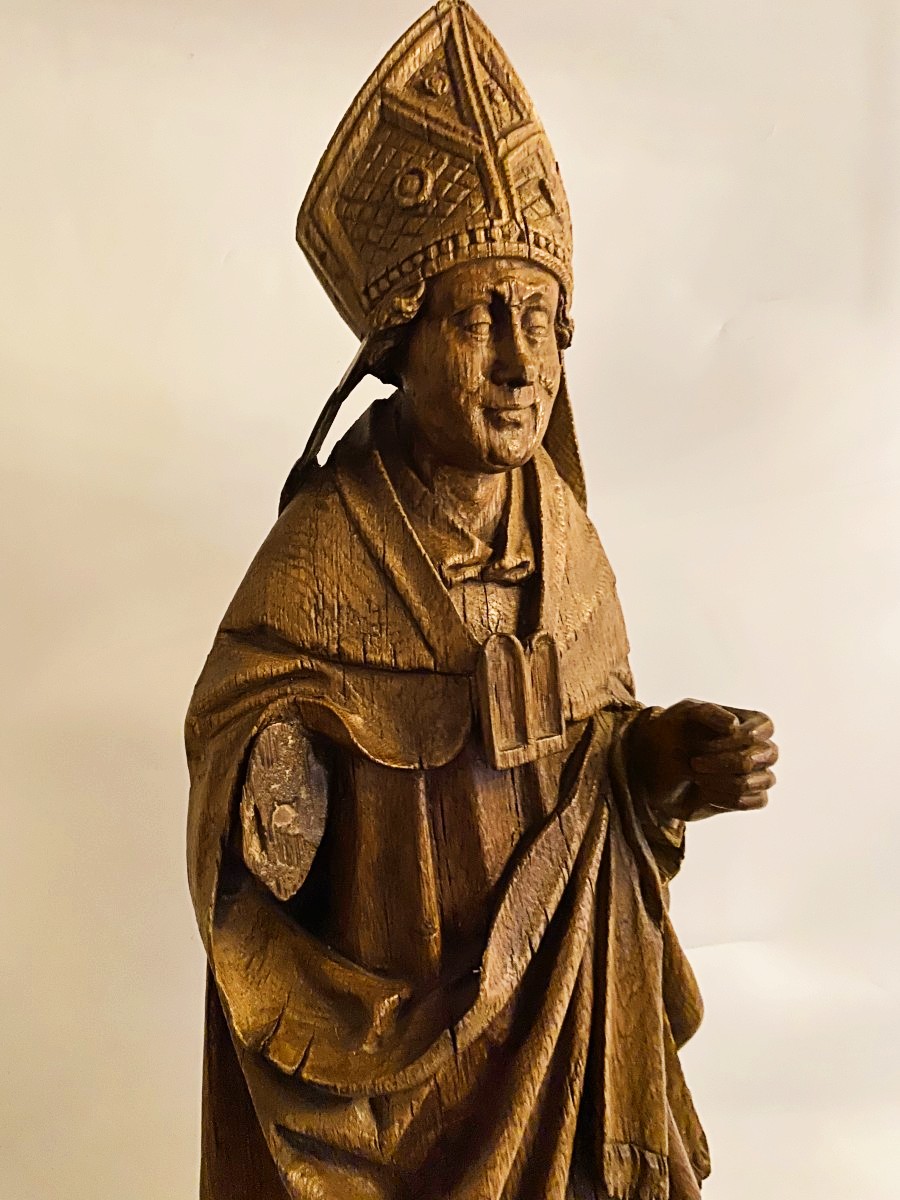
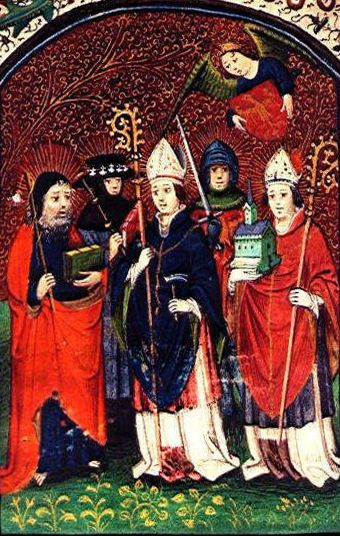
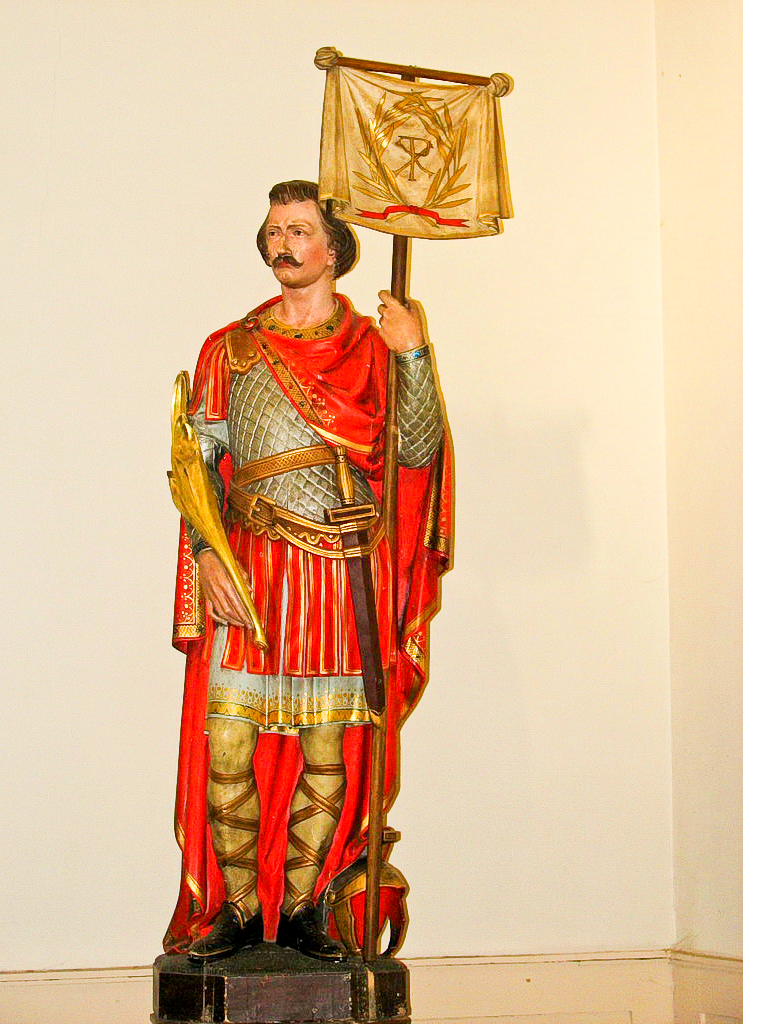
A wooden Statue of an unknown French or Flemish Bishop
Eustochius was descended from an illustrious family of Auvergne and, according to St Gregory of Tours, was a man of eminent virtue.
Being raised to the See of Tours after the death of St Brice in 444, Eustochius, at the Council of Angers, strenuously defended the privileges of the Church which were threatened by a law imposed by Emperor Valentinian III.
Eustochius, thereafter, had a principal share in composing the Decrees reached at that Council concerning discipline.
Eustochius also increased the number of Parishes in his Diocess and built in the City of Tours, a Church, wherein he translated the Relics of Saints Gervasius and Protasius which St Martin had received from Rome.
He died in c461 and was buried in the Church built by St Brice over the Tomb of St Martin.
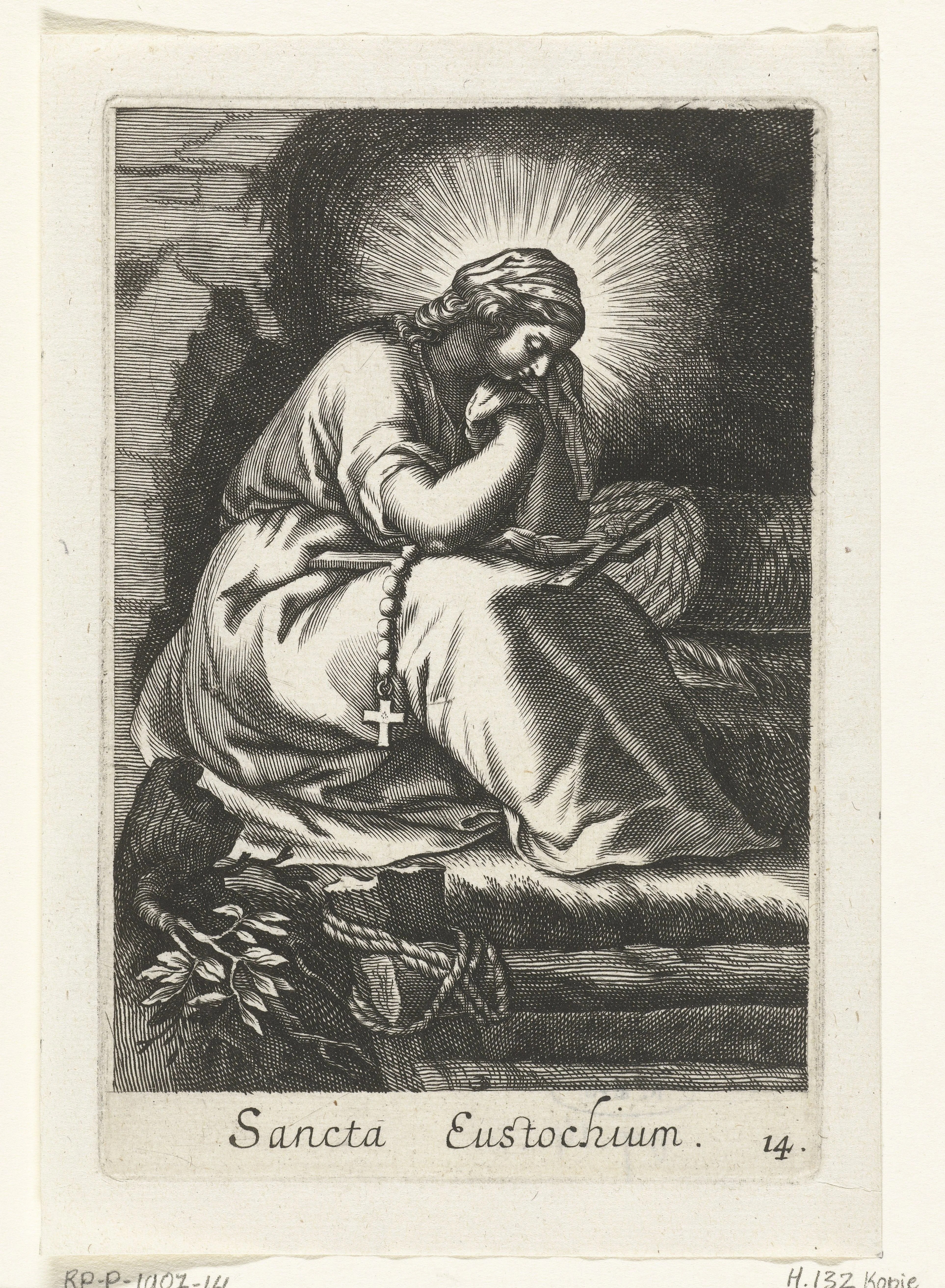
Saint of the Day – 28 August – St Eustochium (c368-c419) Virgin, daughter of St Paula a noble matron of Rome. Guided by the teachings of St Jerome, Eustochium practiced asceticism and committed her life to perpetual virginity. Also known as – Julia Eustochium
The Roman Martyrology reads today: “The holy virgin, Eustochium the daughter of blessed Paula, who was brought up at the manger of our Lord, with other virgins and being celebrated for merits, went to our Lord.”
Eustochium was the third of four daughters and one son of the Roman Senator Toxotius. The three sisters were named, Blaesilla, Paulina and Rufina, and a brother, named Toxotius. After the death of her husband in around 380, Paula and her daughter Eustochium, lived in Rome as austere a life as the fathers of the desert.
When Jerome came to Rome from Palestine in 382, they put themselves under his spiritual and educational guidance. Hymettius, an uncle and his wife, Praetextata, tried to persuade the youthful Eustochium to give up her austere life and enjoy the pleasures of the world but all their attempts were futile. About the year 384, she made a vow of perpetual virginity, on which occasion Jerome addressed his celebrated letter on virginity, to her “De Custodia Virginitatis.”
Eustochium and Paulahad known St Jerome ever since his arrival in Rome in 382.[3] In 386 they accompanied him on his journey to Egypt, where they visited the hermits of the Nitrian Desert in order to study and afterward imitate their mode of life. In the autumn of the same year, they returned to Palestine and settled permanently at Bethlehem. Paula and Eustochium at once began to erect four Monasteries and a Hospice near the spot where Jesus Christ was born. While the erection of the Monasteries was in process (386–389) they lived in a small builing in the neighbourhood.
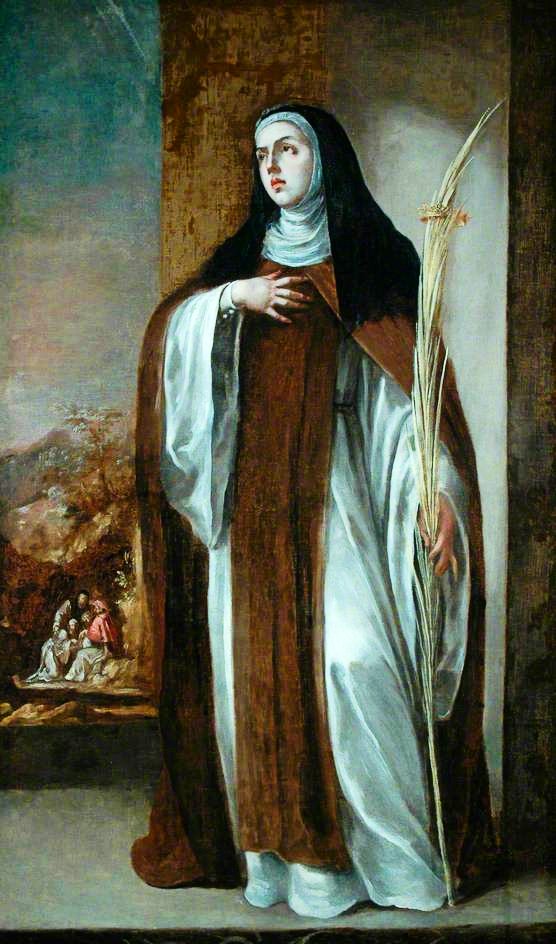
St Eustochium by Juan de Valdés Leal
When completed, one of the Monasteries was occupied by Monks and put under the direction of St Jerome. The three others were taken by Paula and Eustochium and the numerous virgins who flocked around them. The three convents, which were under the supervision of Paula, had only one oratory, where all the virgins met several times daily for prayer and the liturgy of the hours. St Jerome testifies (Ep. 308) that Eustochium and Paula performed the most menial services. Much of their time they spent in the study of Sacred Scripture under the direction of St Jerome.
Eustochium spoke Latin and Classical Greek with equal ease and was able to read the Scriptures in the Hebrew text, thus afording great assistance to St Jerome in his works of translation and commentaries.
The letters which St Jerome wrote for her instruction and spiritual advancement are, according to his own testimony, very numerous.
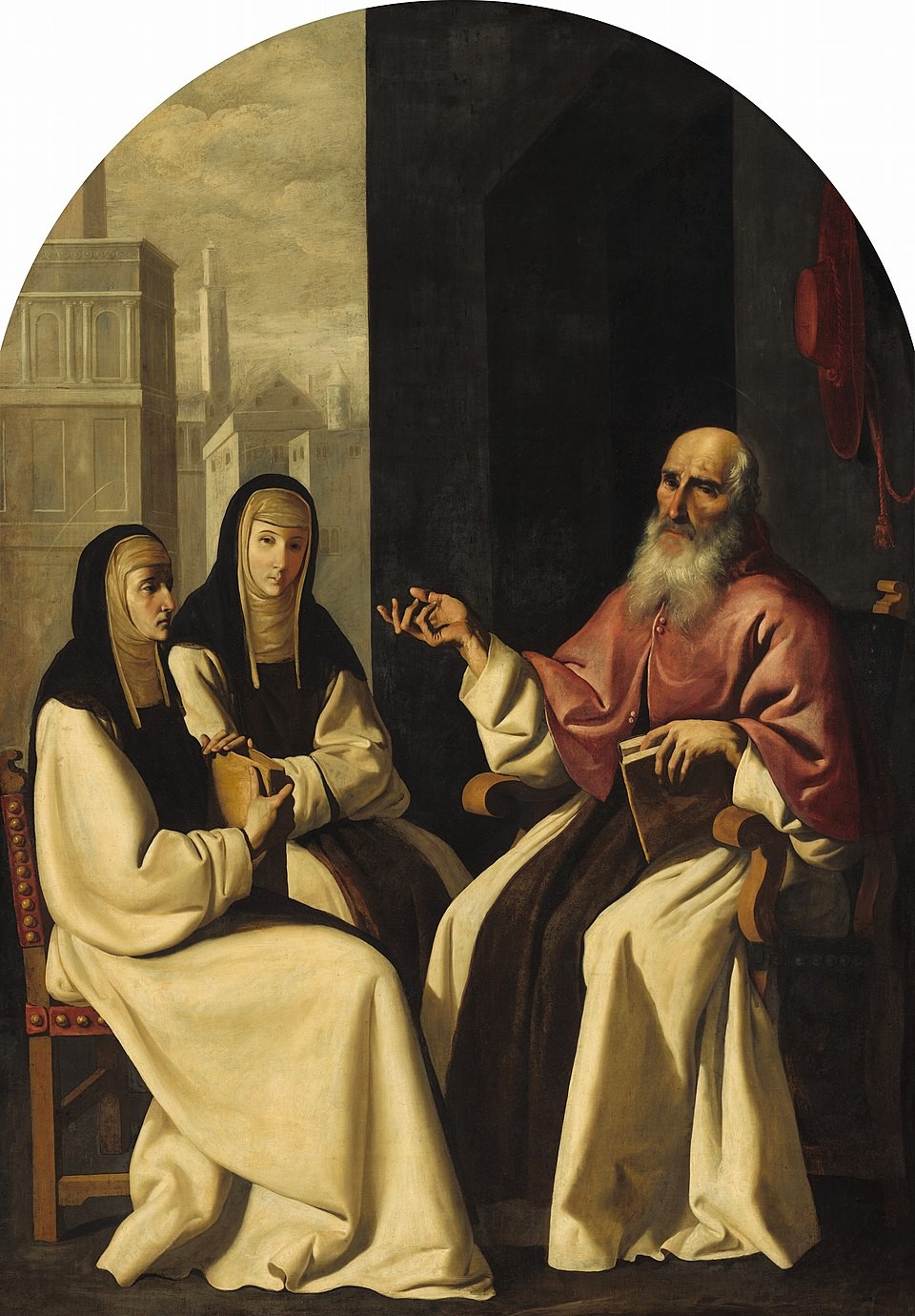
St Jerome with Sts Paula and Eustochium
In 417, a crowd of ruffians attacked and pillaged the Monasteries of Bethlehem, destroyed one of them by fire, besides killing and maltreating some of the residents.Both St Jerome and Eustochium informed Pope Innocent I by letter of the occurrence, who severely reproved the patriarch for having permitted the outrage.
Eustochium died shortly after and was succeeded in the supervision of the Convents by her niece, the younger Paula. St Eustochius of Tour might have been her nephew and further lateral descendants may include Sts Perpetuus and Volusianus.
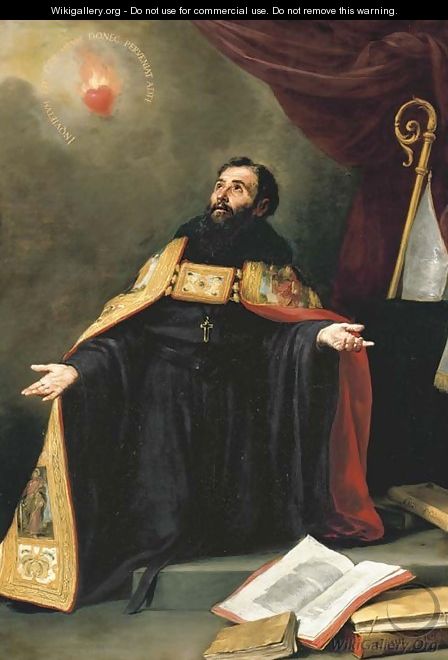
St Augustine (354-430) – Bishop of Hippo, Confessor, Doctor of Grace and one of the original Four Fathers & Doctors of the Latin Church, Theologian, Preacher, Writer a None of these titles, though accurate, would please him, however, as much as the simple one he used to describe himself: ‘Servant of God.’ For, whatever we achieve in life, whatever gifts and talents we have been given, are of little value unless they lead us, as they did Augustine, to know, love and serve God ever more deeply.
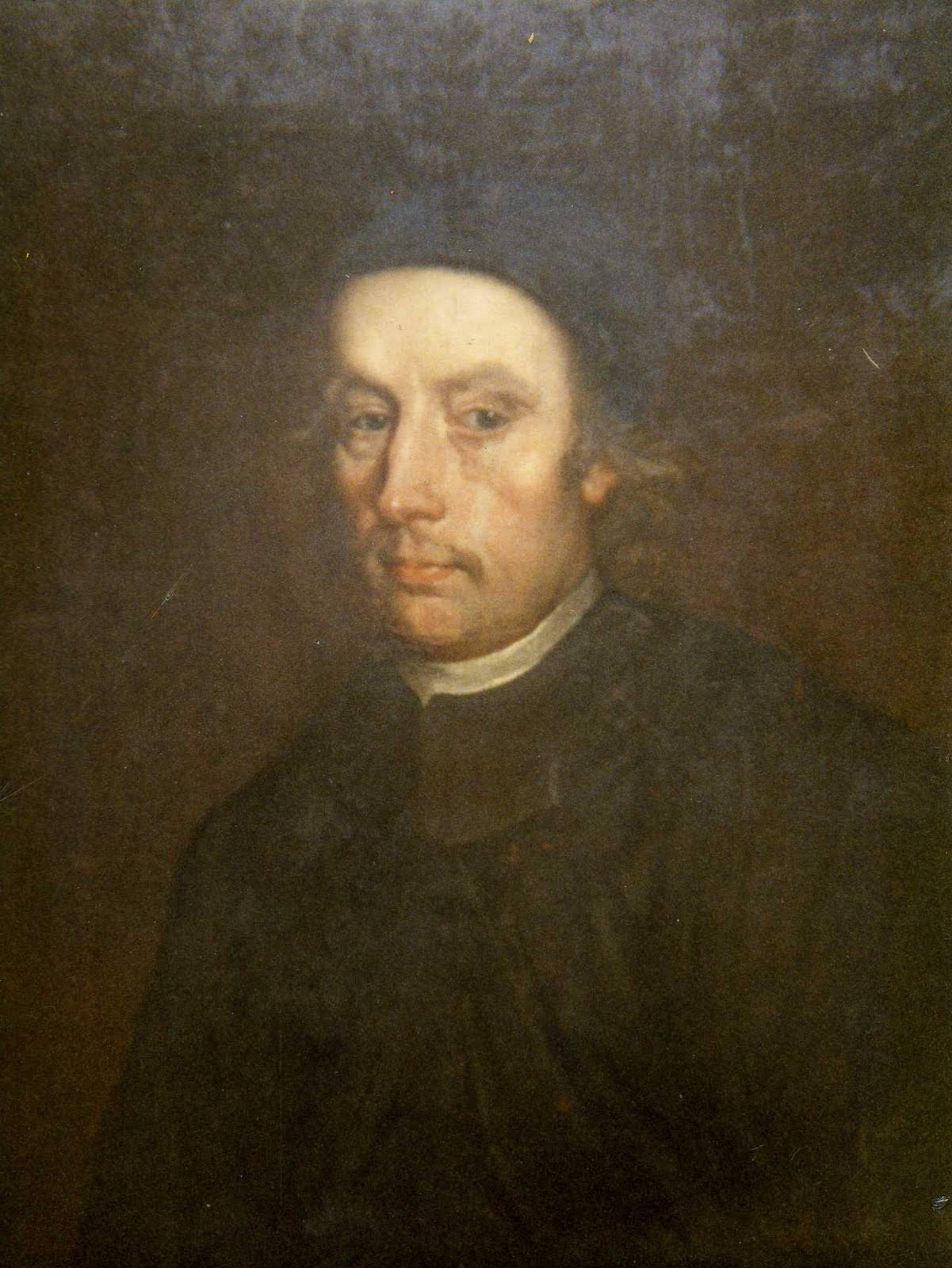
St Facundinus of Taino St Felix of Venosa St Fortunatus of Salerno St Gaius of Salerno St Gorman of Schleswig
Bl Hugh More Bl James Claxton St Januarius of Venosa
St Julian (Died c304) Martyrof Auvergne . The Roman Martyrology reads today : “At Brioude, in Auvergne, St Julian, Martyr, during the persecution of Diocletian. Being the companion of the blessed tribune, Ferreol and secretly serving Christ under a military garb, he was arrested by the soldiers and killed in a barbarous manner by having his throat cut.” His Life and Death: https://anastpaul.com/2024/08/28/saint-of-the-day-28-august-st-julian-of-auvergne-died-c304-martyr/


 AnaStpaul
You must be logged in to post a comment.