
Saint of the Day – 9 August – Saint Falco of Palermo (Died mid 11th Century) Hermit, Monk, Miracle-worker. Born in the Calabria region of Italy and died ion 13 January of natural causes at Palermo, Italy. Also known as – Falcon, Falco the Hermit. Additional Memorias – 13 January in commemoration of his death and on the Sunday following 15 August 15 in memory of the translation of his Relics from the Church of St Egidius. St Falco was Canonised in 1893 by Pope Leo XIII.
Falco, born in Taverna in Calabria towards the middle of the tenth century, of the ancient and noble Poerio family, was, from a very young age, attracted by solitude andan eremetic life.
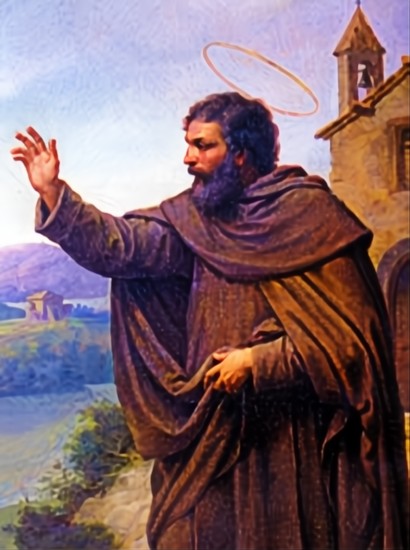
He soon decided to retire to the Monastery of Pesica near his hometown, among the Basilians, under the discipline of a holy Abbot named Ilarione. The community was already known throughout Calabria for the virtues and sanctity of all the brothers who formed it.
In 980 Calabria became the scene of ruin as a prey of the Saracens. From the Monastery of Taverna, the “seven brothers” (a long story of Falco’s friends who all entered religious life and were all Canonised with him) decided to leave for Abruzzo.
Here they built some cells and a small Church, the ruins of which were visible until the end of the 19th Century. Here, they settled, living in poverty and sanctity, imposing rigid rules on themselves as true imitators of the ancient Monks of Egypt.
Under the guidance of their holy Abbot Hilarion, they led an austere life of fasting, eating mostly herbs, except on Sundays. Their conversation consisted of the practice of prayer and the recitation of praise. When the holy Abbot died, they elected as Superior, the youngest, Nicolò Greco, younger in age but not in merit.
The new Abbot, to give thanks to God, asked his brothers to make a pilgrimage to Rome. During the journey, with their prayers, “the seven brothers” managed to free seven possessed people from evil spirits they had met near Lake Fucino. Once they set off again, one of them, weighed down by poor health, left his companions and, near Ortucchio, found shelter in the Church of the Santissima Vergine, in St Maria in Capo d’acqua.
The other companions, having completed the pilgrimage, returned to Prata to their monastic life. Nicolò was the Abbot for several years but at his death, the other brothers, unable to elect a successor, considered themselves free to follow their own path.
Falco decided to return to Rome and set out but that same evening, having reached Palena, attempting to climb the mountain of Coccia, he felt his strength failing and was forced to rest in the nearby Church of St Egidius. At the unexpected arrival of this holy Friar, the district infested by evil spirits, was immediately purified and his presence was a reason for hope for the inhabitants of the place who immediately acclaimed him and showed him respect. He thus decided to remain in those mountains, continuing his life of rigours and prayers.
Out of extreme humility he never wished to embrace the Priesthood but to remain a very humble Friar, an example of virtue.
It was the morning of 13 January presumably of a year around the middle of the 11th Century, suddenly the small bell of the hermitage where Falco lived in retreat, was heard ringing. Many people rushed there, thinking that the Friar needed help and found him lifeless lying on a table with two lit candles. His body was transported to the Church of St Egidius Abate, where, after the funeral, he was buried.
A possessed man was passing by those parts when everyone with amazement, saw him break the ropes and run towards the Tomb of the Saint, where as soon as he arrived, he was freed from the devil. From that moment the fame of St Falco became even greater and confirmed by several other miracles, so much so that at the request of the people, the remains were exposed to public veneration.
If the archives of Sulmona and Palena had not been destroyed in a fire, we would today have countless descriptions of graces and miracles reported in the acts of his Canonisation.
In 1383, due to continuous raids and robberies, fearing for their fate, the Bishop of Sulmona decided to transfer the Relics and the Statue of St Falco to the Church of St Anthony Abbot in the centre of Palena. Since then, the Church and the Relics of St Falco became a destination for pilgrims, believers, devotees, the sick and the obsessed, even from far away.
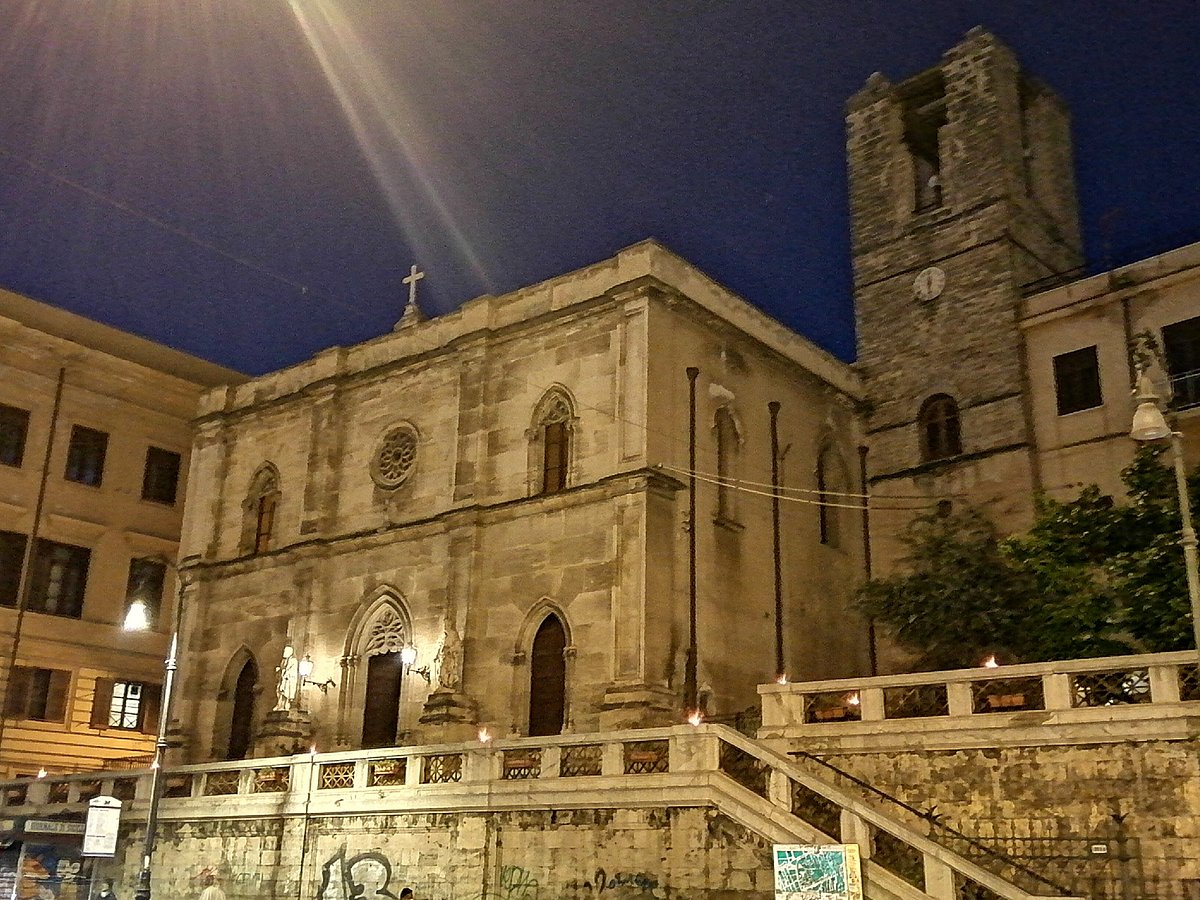
In the earthquake of 1706, the Church was not exempt from disaster but was soon rebuilt with the help and devotion of the faithful. In 1841, fue to the growing devotion and the countless pilgrimages, it was decided to demolish the old Church to build a much larger and more spacious one and in 1842, thanks to the great devotion, a half-length silver Statue of the Saint was erected by the famous Domenico Capozzi.
The Shrine with his Relics, the Dalmatic tunic in the Greek style and the silver Statue containing his skull, are exposed twice a year for the devotion of the faithful, on 13 January in commemoration of his death and on the Sunday following 15 August 15 in memory of the translation of his Relics from the Church of St Egidius. St Falco was Canonised in 1893 by Pope Leo XIII.



 AnaStpaul
You must be logged in to post a comment.