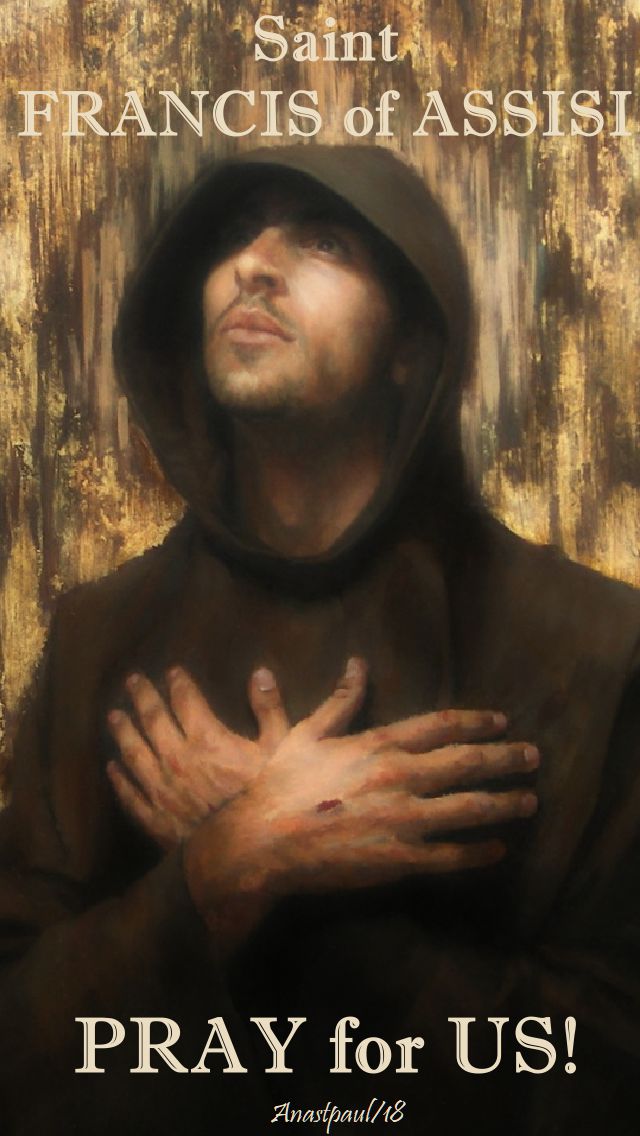
One Minute Reflection – 4 October – Today’s Gospel: Luke 10:1-12 – Thursday of the Twenty-sixth week in Ordinary Time – The Memorial of St Francis of Assisi OFM (1181/2–1226)
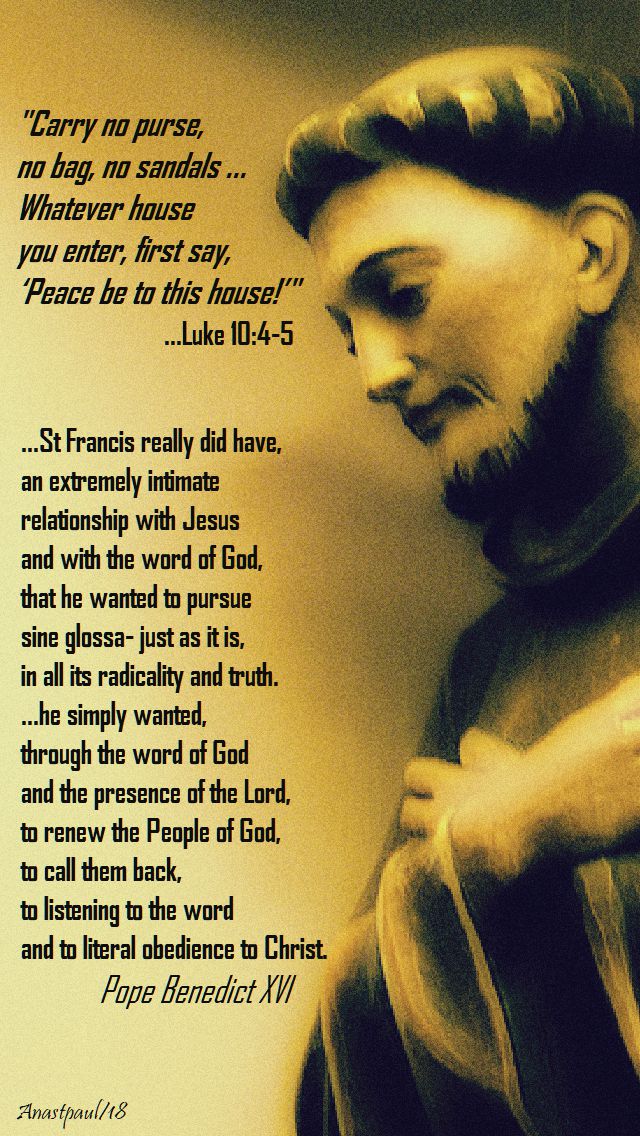
“Carry no purse, no bag, no sandals and salute no one on the road. Whatever house you enter, first say, ‘Peace be to this house!’”...Luke 10:4-5
REFLECTION – “Three times Christ on the Cross came to life and told him: “Go, Francis, and repair my Church in ruins”. This simple occurrence of the word of God heard in the Church of St Damian, contains a profound symbolism. At that moment, St Francis was called to repair the small church but the ruinous state of the building, was a symbol of the dramatic and disquieting situation of the Church herself…. it is important to note that St Francis does not renew the Church without, or in opposition, to the Pope but only in communion with him. Authentic renewal grew from these together….
Francis, standing before the Bishop of Assisi, in a symbolic gesture, stripped off his clothes, thus showing he renounced his paternal inheritance. Just as at the moment of creation, Francis had nothing, only the life that God gave him, into whose hands he delivered himself….
The truth is that St Francis really did have an extremely intimate relationship with Jesus and with the word of God, that he wanted to pursue sine glossa – just as it is, in all its radicality and truth. It is also true, that initially he did not intend to create an Order with the necessary canonical forms. Rather he simply wanted, through the word of God and the presence of the Lord, to renew the People of God, to call them back to listening to the word and to literal obedience to Christ.”…Pope Benedict XVI – Catechesis on St Francis – General Audience, 27 January 2010
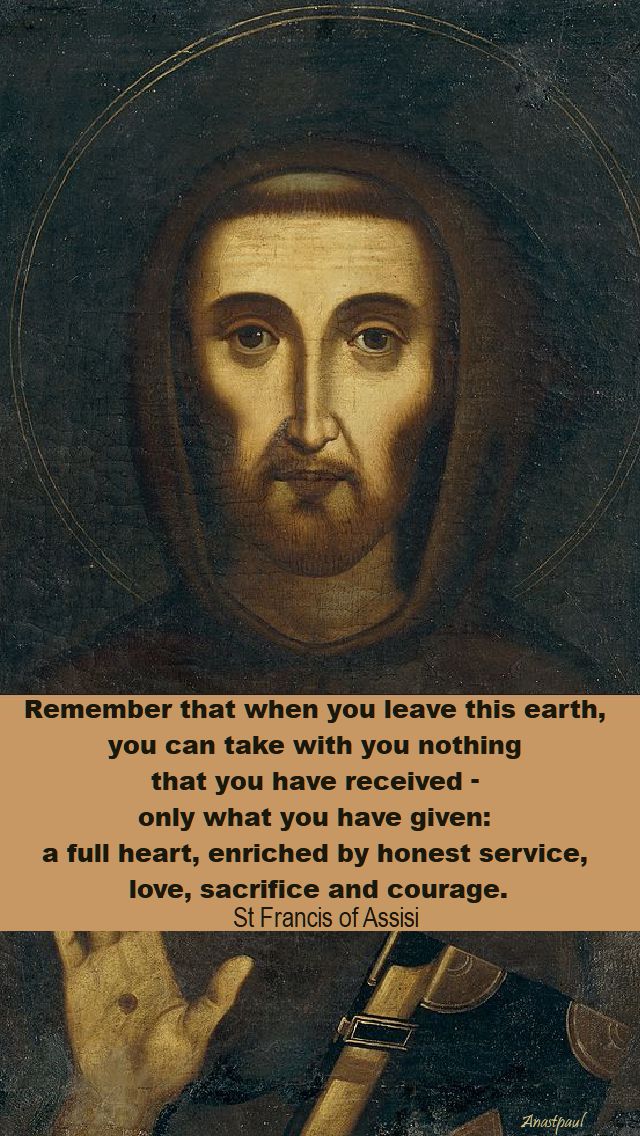
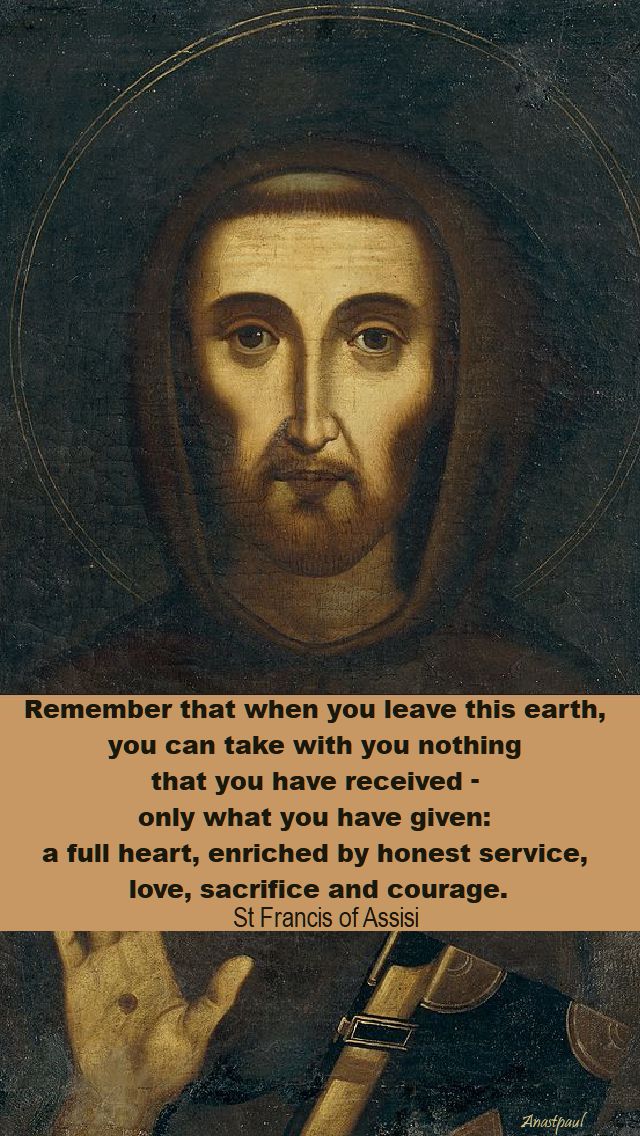
“Remember that when you leave this earth, you can take with you nothing that you have received—only what you have given: a full heart, enriched by honest service, love, sacrifice and courage.”….St Francis of Assisi
PRAYER – Lord God, You made St Francis of Assisi, Christ-like in his poverty and humility, his gentleness and charity, his love and courage. Help us to walk in his ways that, with joy and love, we may follow Christ Your Son and be united with You. May the intercession of St Francis, be an assistance on our journey. Through Christ our Lord, with the Holy Spirit, one God forever, amen.
Our Morning Offering – 4 October – The Memorial of St Francis of Assisi OFM (c1181–1226)
I Beg Thee, Lord By St Francis of Assisi (c1181–1226)
I beg Thee, Lord, let the fiery, gentle power of Thy love take possession of my soul and snatch it away, from everything under Heaven, that I may die, for love of Thy love, as Thou saw fit, to die for love of mine! Amen
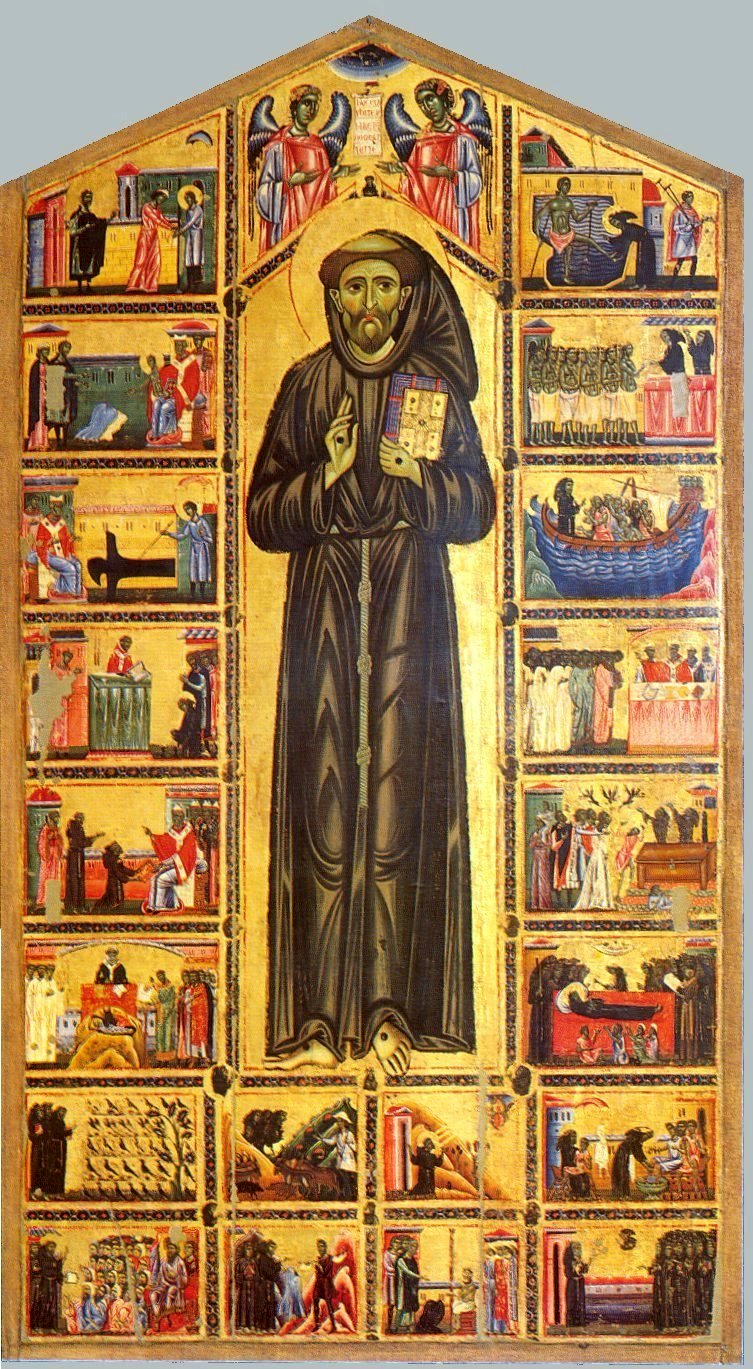
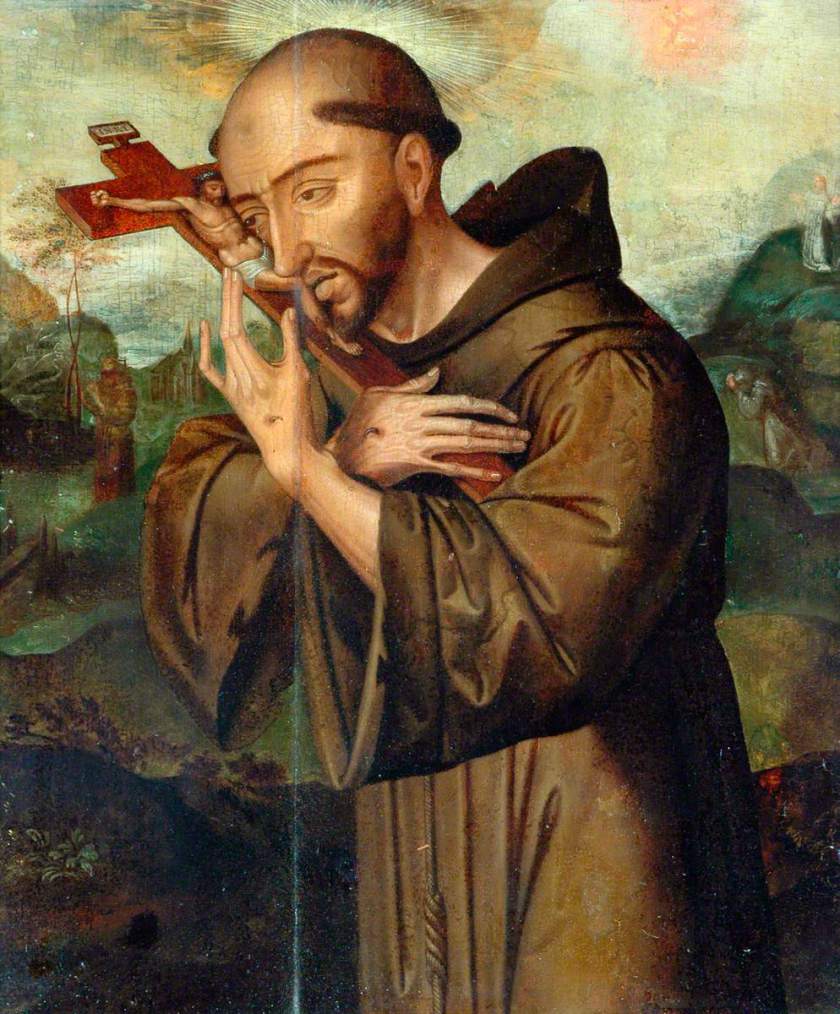
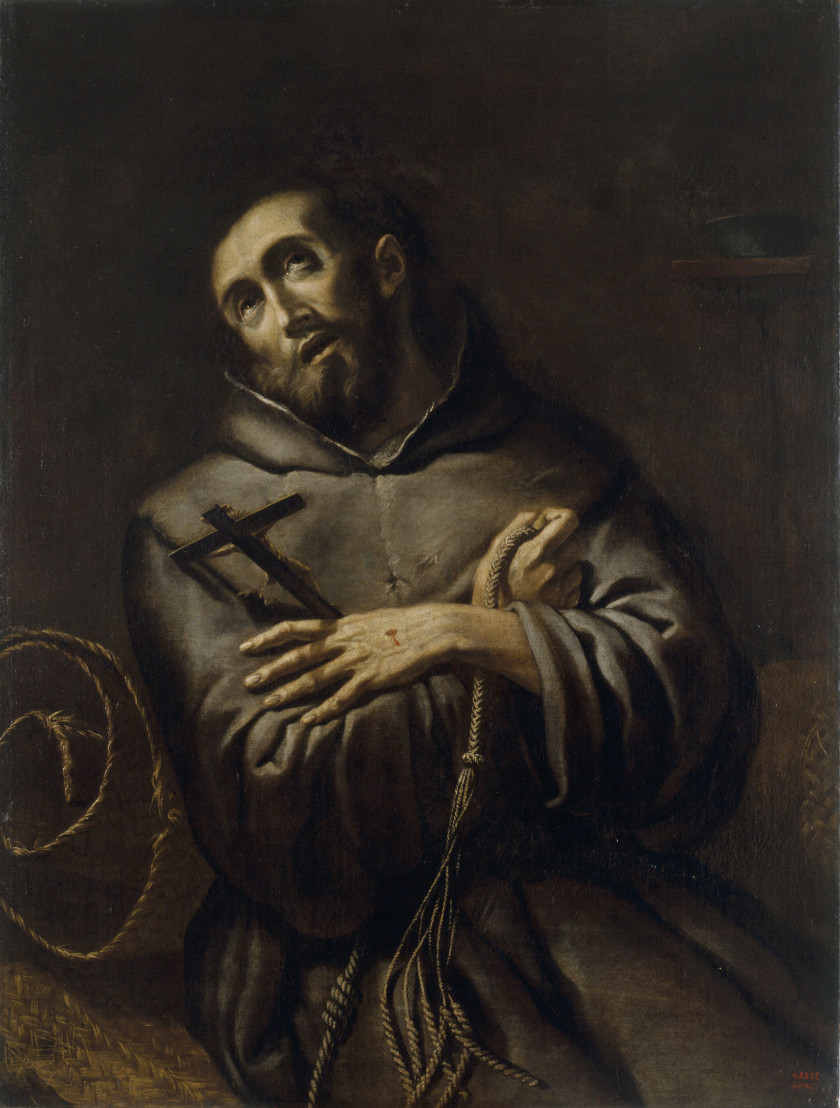
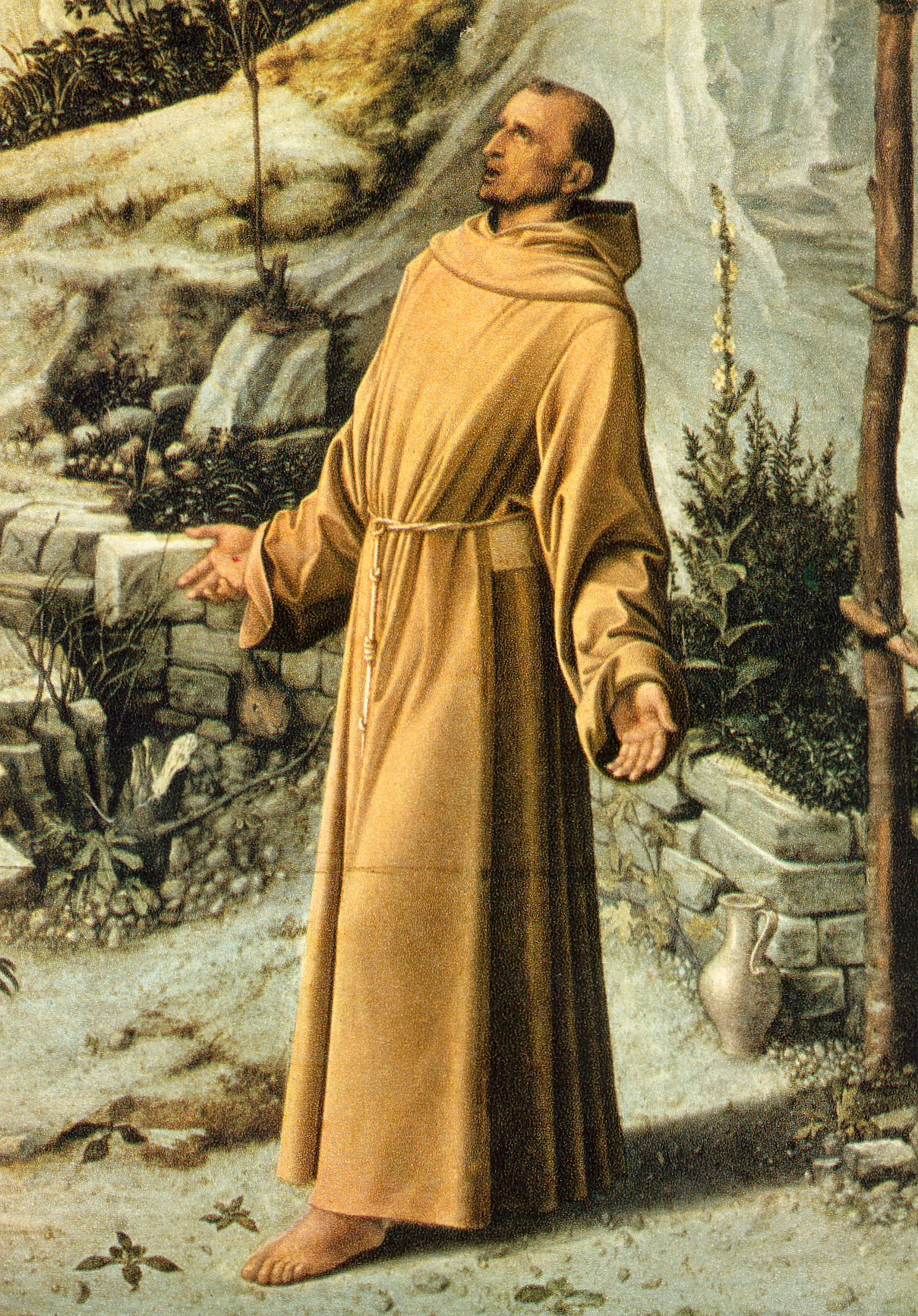
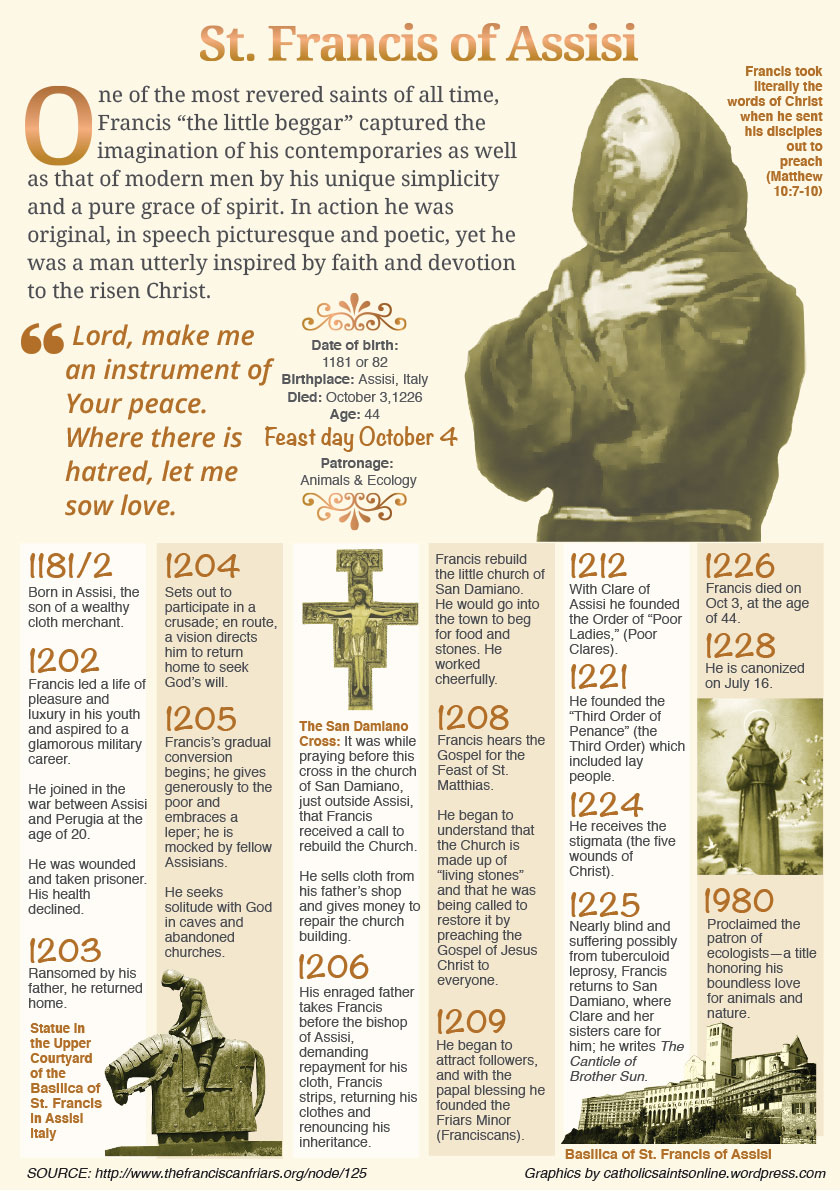
Saint of the Day – 4 October – St Francis of Assisi OFM (1181/2–1226) – born Giovanni di Pietro di Bernardone, informally named as Francesco (1181/1182 – 3 October 1226), was an Italian Friar, Deacon, the First known Stigmatist, Founder, Mystic, Apostle of the Holy Eucharist, of the Blessed Virgin, of Charity, Confessor, Missionary, Writer, Poet, Miracle-Worker, Preacher. He founded the men’s Order of Friars Minor, the women’s Order of Saint Clare, the Third Order of Saint Francis and the Custody of the Holy Land. Francis is one of the most venerated religious figures in history.
Francis of Assisi was a poor little man who astounded and inspired the Church by taking the gospel literally—not in a narrow fundamentalist sense but by actually following all that Jesus said and did, joyfully, without limit and without a sense of self-importance.
Serious illness brought the young Francis to see the emptiness of his frolicking life as leader of Assisi’s youth. Prayer—lengthy and difficult—led him to a self-emptying like that of Christ, climaxed by embracing a leper he met on the road. It symbolised his complete obedience to what he had heard in prayer: “Francis! Everything you have loved and desired in the flesh it is your duty to despise and hate, if you wish to know my will. And when you have begun this, all that now seems sweet and lovely to you will become intolerable and bitter but all that you used to avoid will turn itself to great sweetness and exceeding joy.”
From the cross in the neglected field-chapel of San Damiano, Christ told him, “Francis, go out and build up my house, for it is nearly falling down.” Francis became the totally poor and humble workman.
He must have suspected a deeper meaning to “build up my house.” But he would have been content to be for the rest of his life the poor “nothing” man actually putting brick on brick in abandoned chapels. He gave up all his possessions, piling even his clothes before his earthly father—who was demanding restitution for Francis’ “gifts” to the poor—so that he would be totally free to say, “Our Father in heaven.” He was, for a time, considered to be a religious fanatic, begging from door to door when he could not get money for his work, evoking sadness or disgust to the hearts of his former friends, ridicule from the unthinking.
But genuineness will tell. A few people began to realise that this man was actually trying to be Christian. He really believed what Jesus said : “Announce the kingdom! Possess no gold or silver or copper in your purses, no travelling bag, no sandals, no staff” (Luke 9:1-3).
Francis’ first rule for his followers was a collection of texts from the Gospels. He had no intention of founding an order but once it began he protected it and accepted all the legal structures needed to support it. His devotion and loyalty to the Church were absolute and highly exemplary at a time when various movements of reform tended to break the Church’s unity.
Francis was torn between a life devoted entirely to prayer and a life of active preaching of the Good News. He decided in favour of the latter but always returned to solitude when he could. He wanted to be a missionary in Syria or in Africa but was prevented by shipwreck and illness in both cases. He did try to convert the sultan of Egypt during the Fifth Crusade.
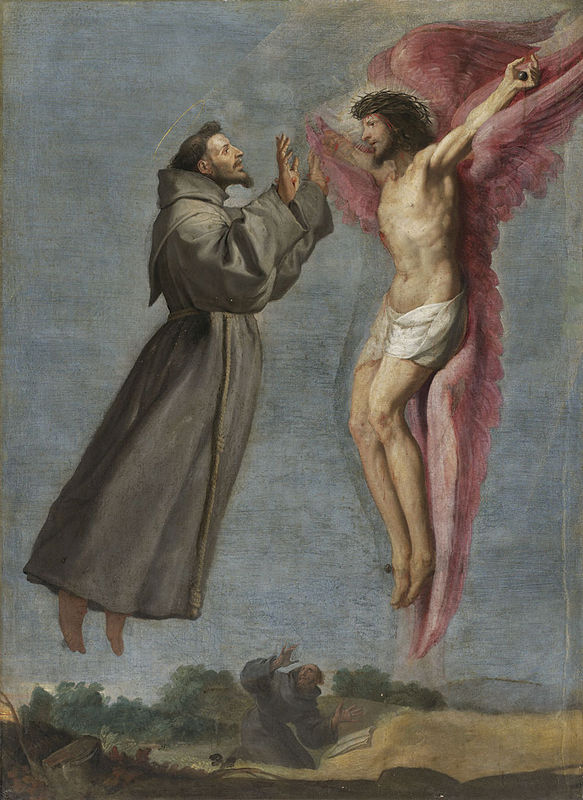
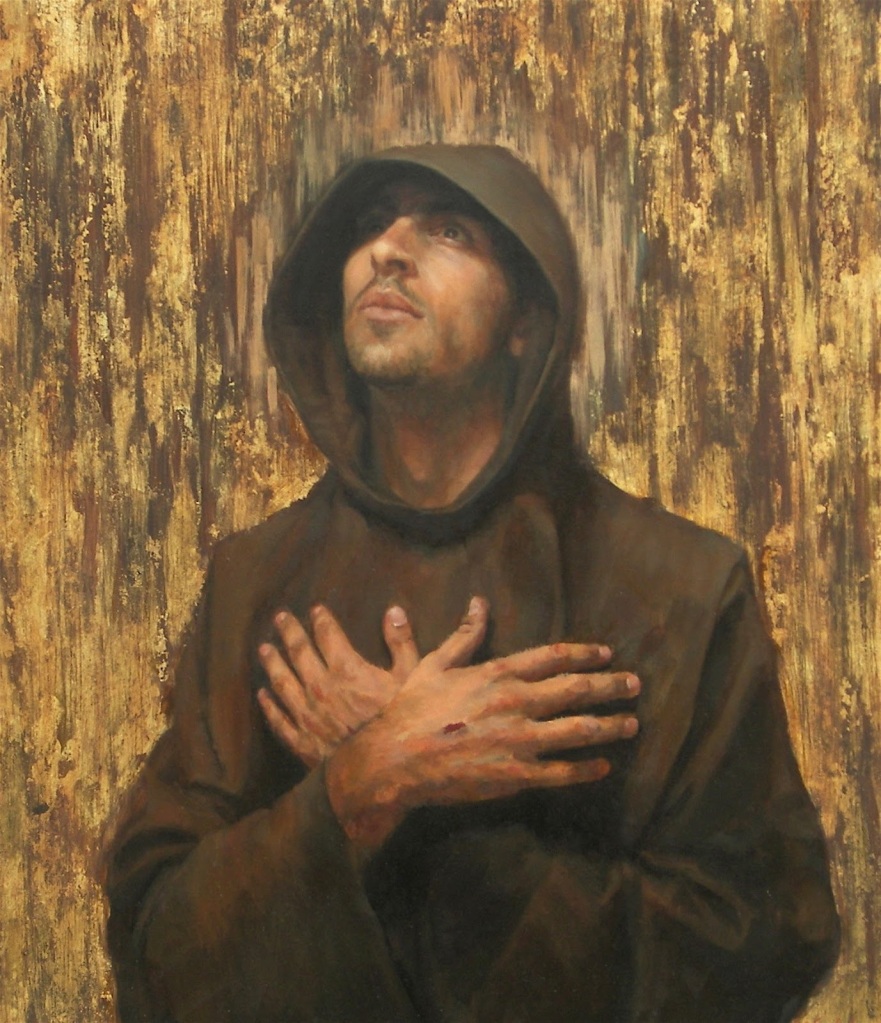
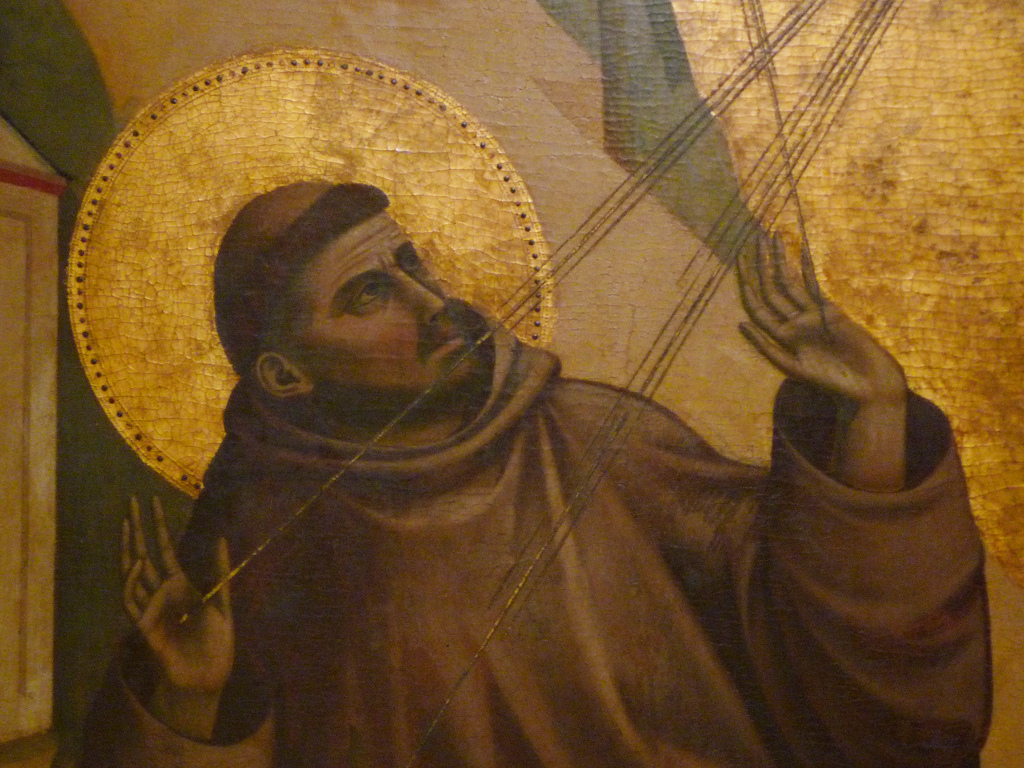
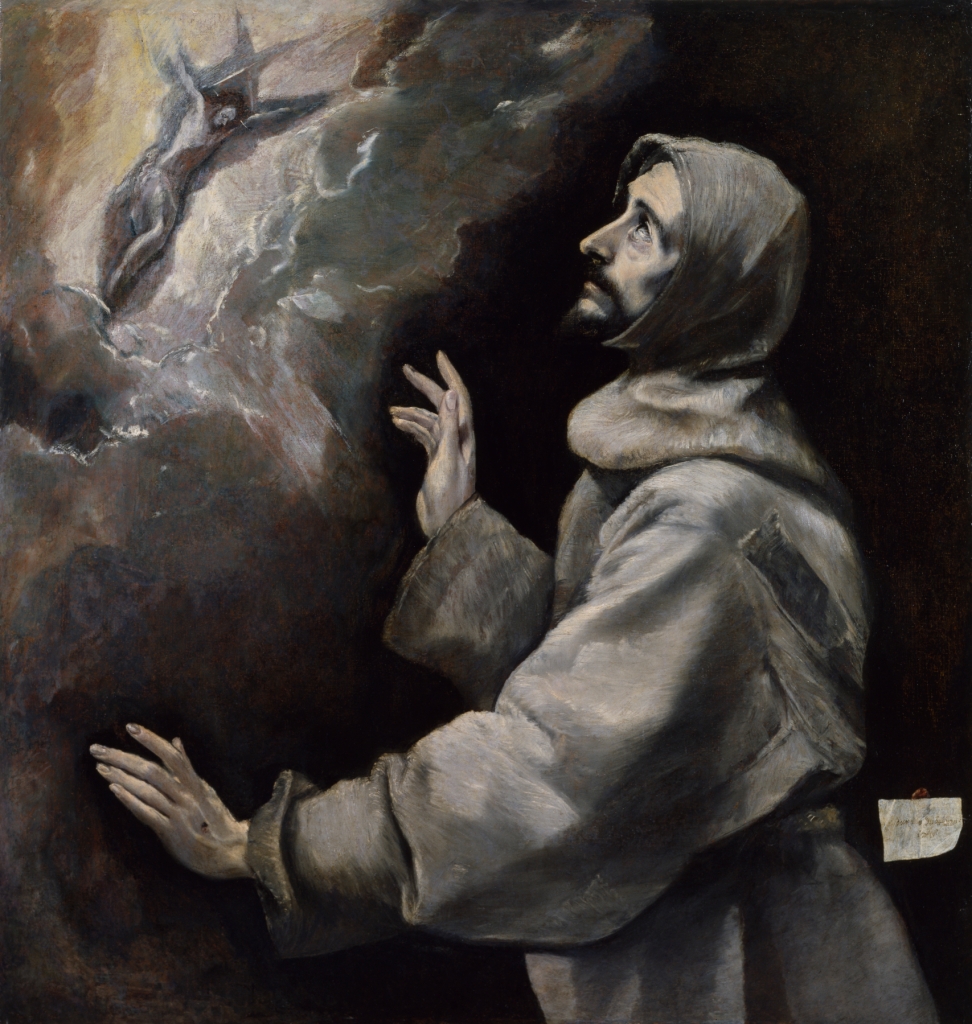
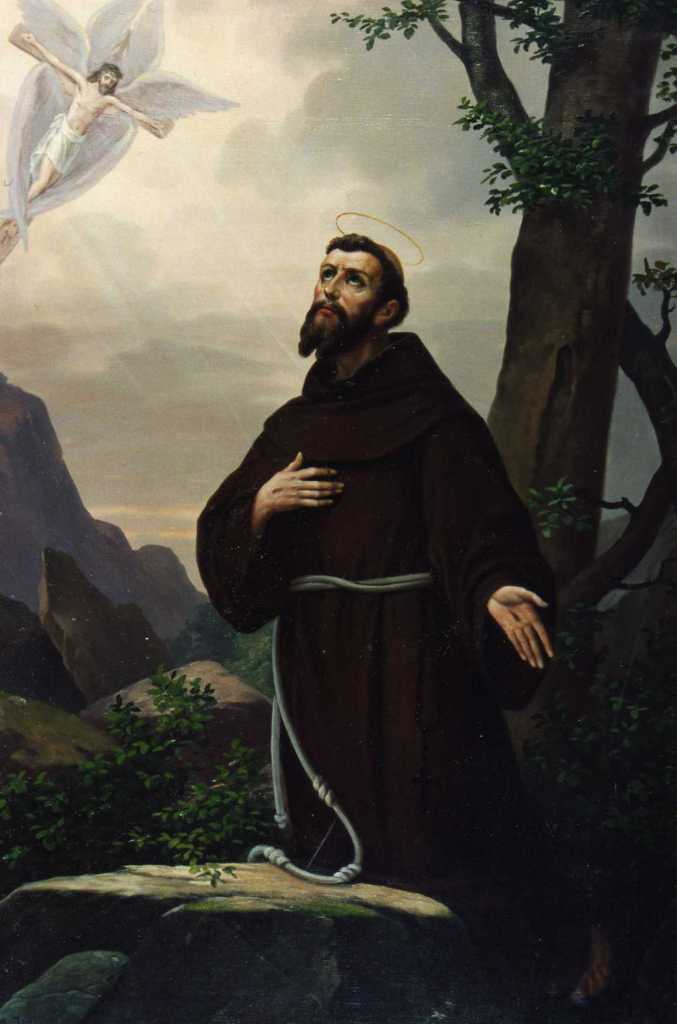
During the last years of his relatively short life, he died at 44, Francis was half blind and seriously ill. Two years before his death he received the stigmata, the real and painful wounds of Christ in his hands, feet and side.
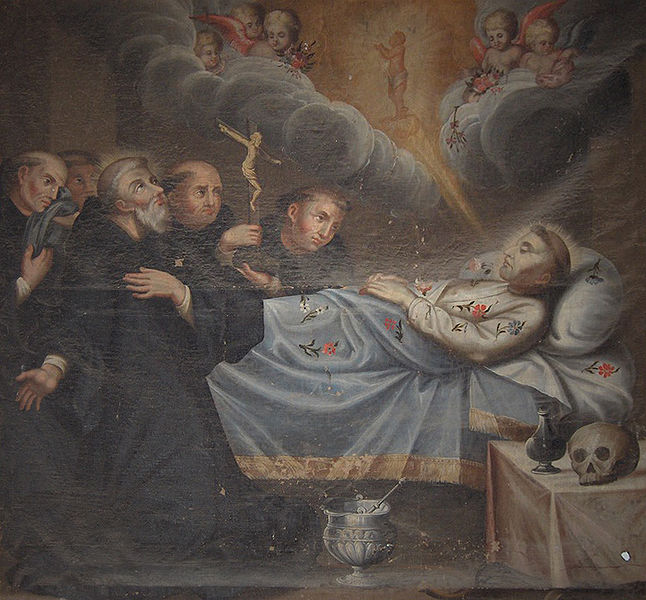
On his deathbed, Francis said over and over again the last addition to his Canticle of the Sun, “Be praised, O Lord, for our Sister Death.” He sang Psalm 141, and at the end asked his superior’s permission to have his clothes removed when the last hour came in order that he could expire lying naked on the earth, in imitation of his Lord. (via Franciscan media)
Quote/s of the Day – 18 September – Today’s Gospel: Luke 7:11–17, Tuesday of the Twenty-fourth week in Ordinary Time and the Memorial of St Juan Macias O.P. (1585-1645) and St Joseph of Cupertino O.F.M. Conv. (1603-1663)
Speaking of: Living the Word
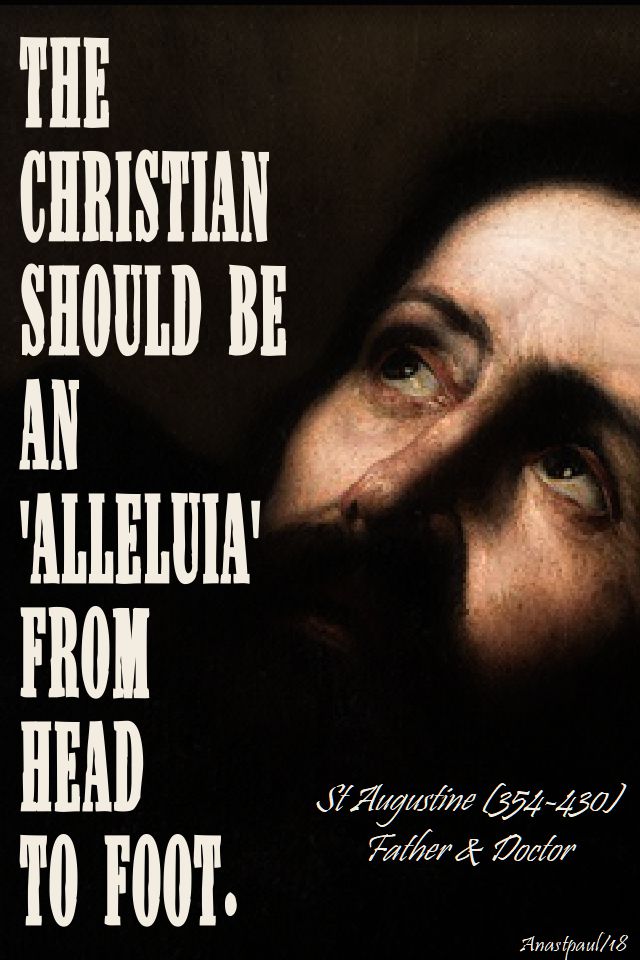
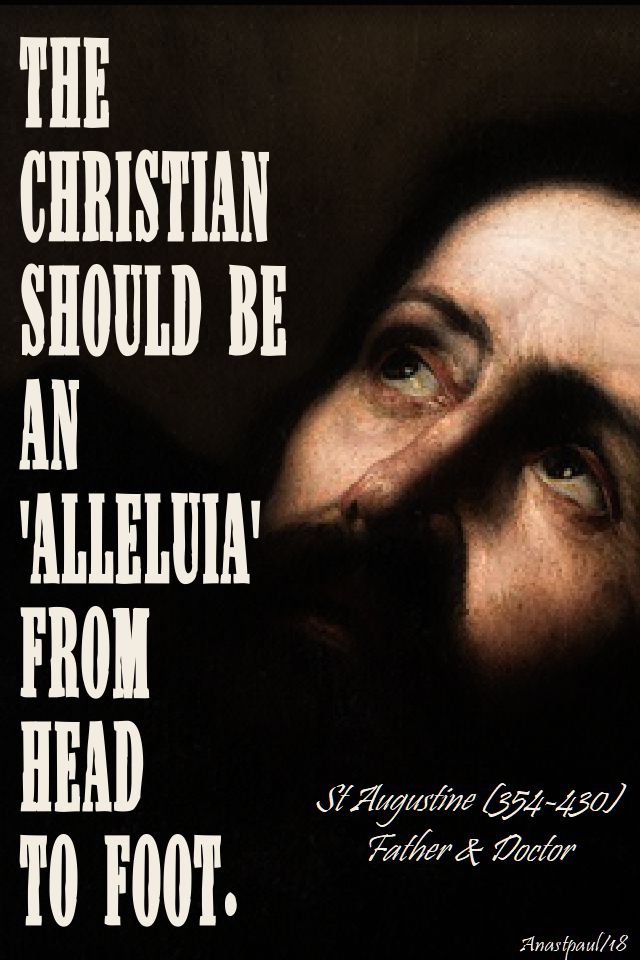
“The Christian should be an ‘alleluia’ from head to foot.
St Augustine (354-430) Father & Doctor of the Church
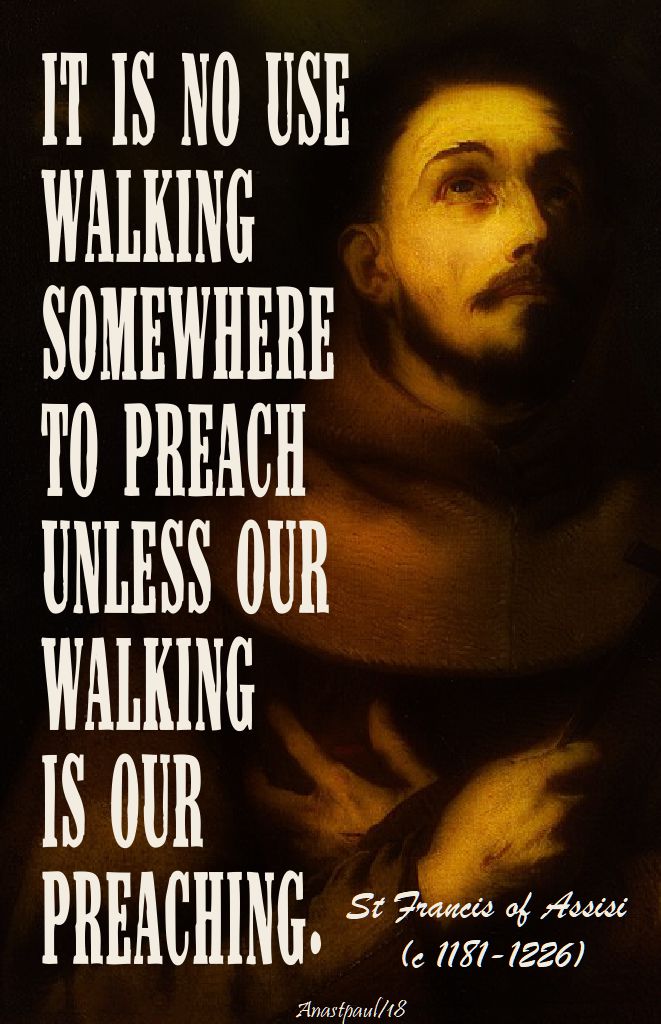
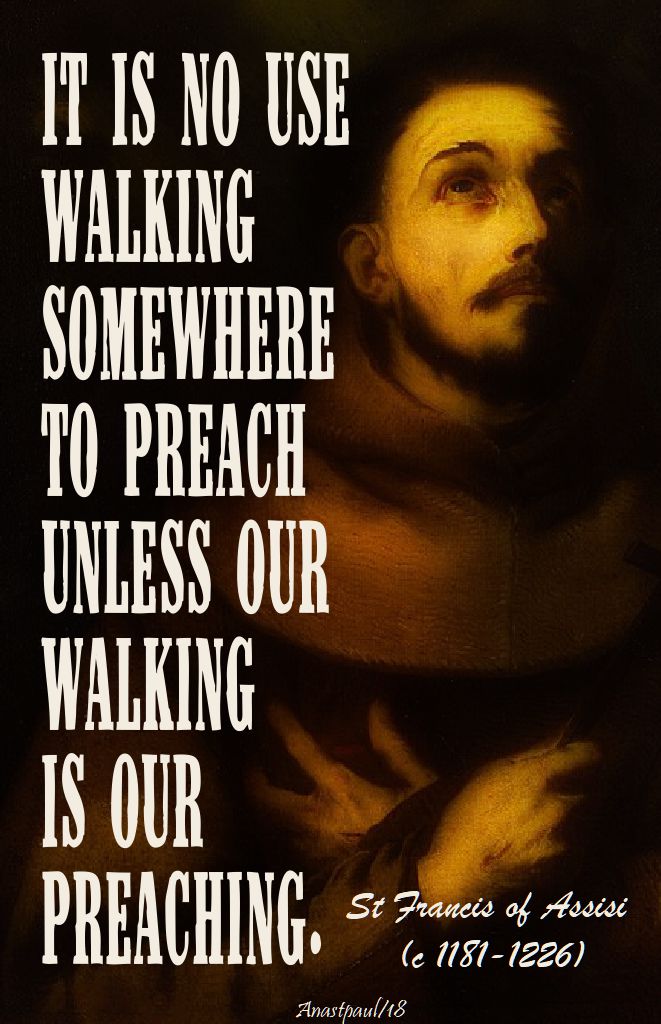
“It is no use walking somewhere to preach, unless our walking is our preaching.”
St Francis of Assisi (c 1181-1226)
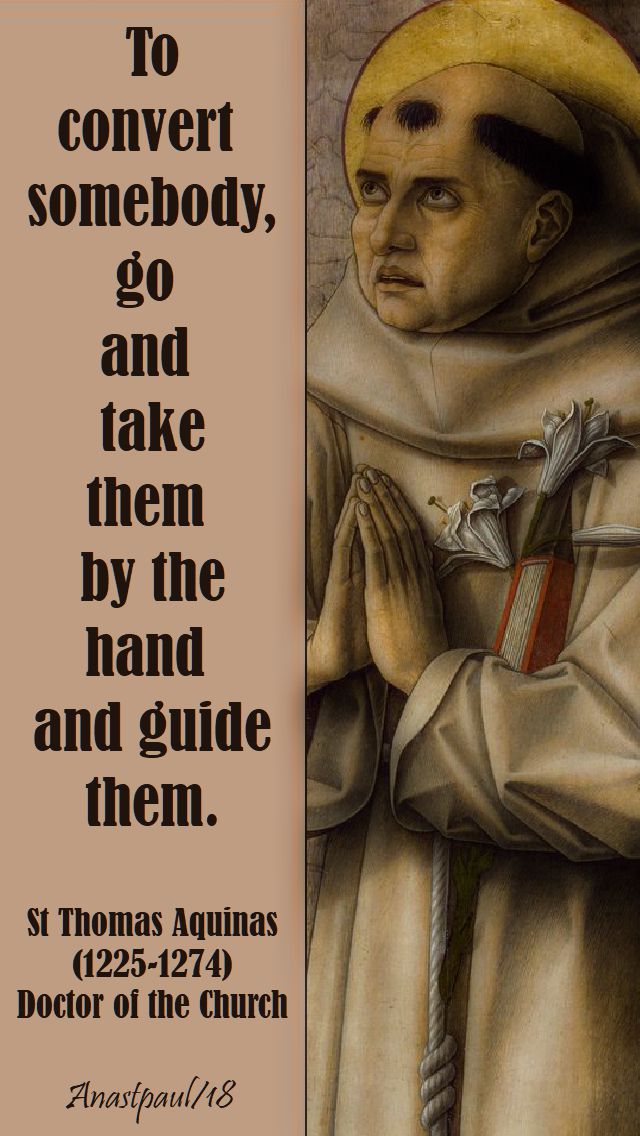
“To convert somebody, go and take them by the hand and guide them.”
St Thomas Aquinas (1225-1274) Doctor of the Church
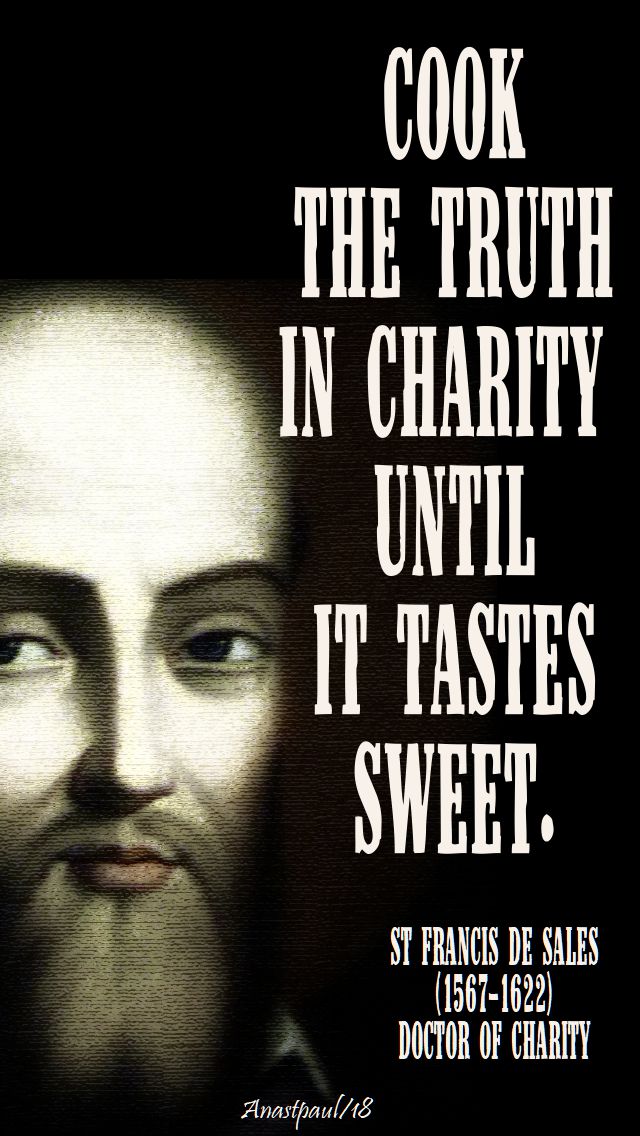
“Cook the truth in charity, until it tastes sweet.”
St Francis de Sales (1567-1622) Doctor of the Church
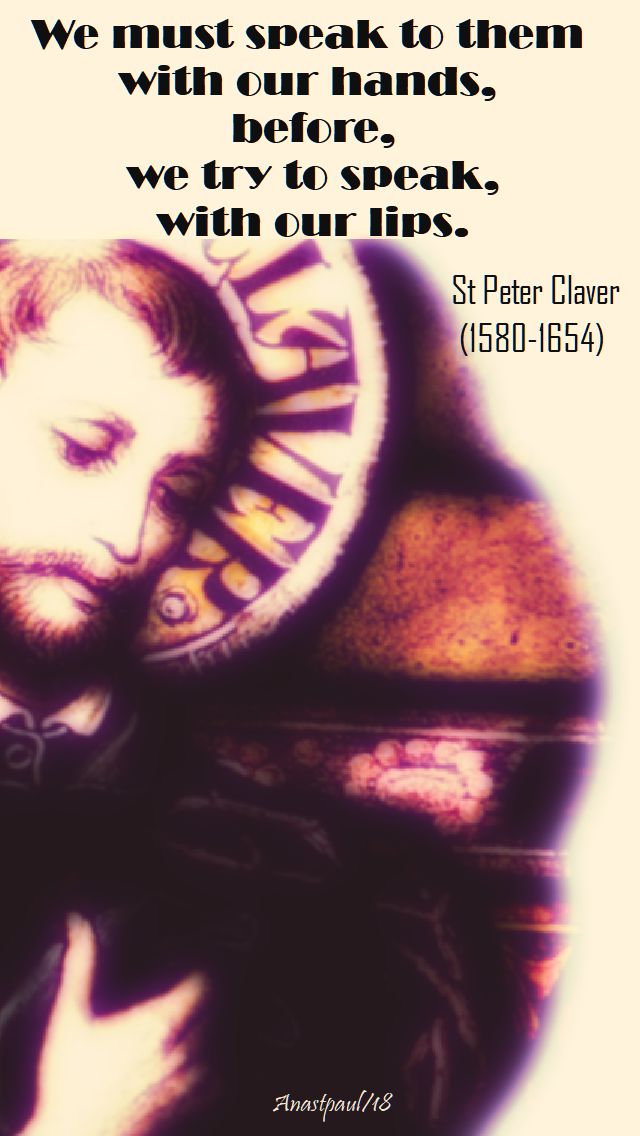
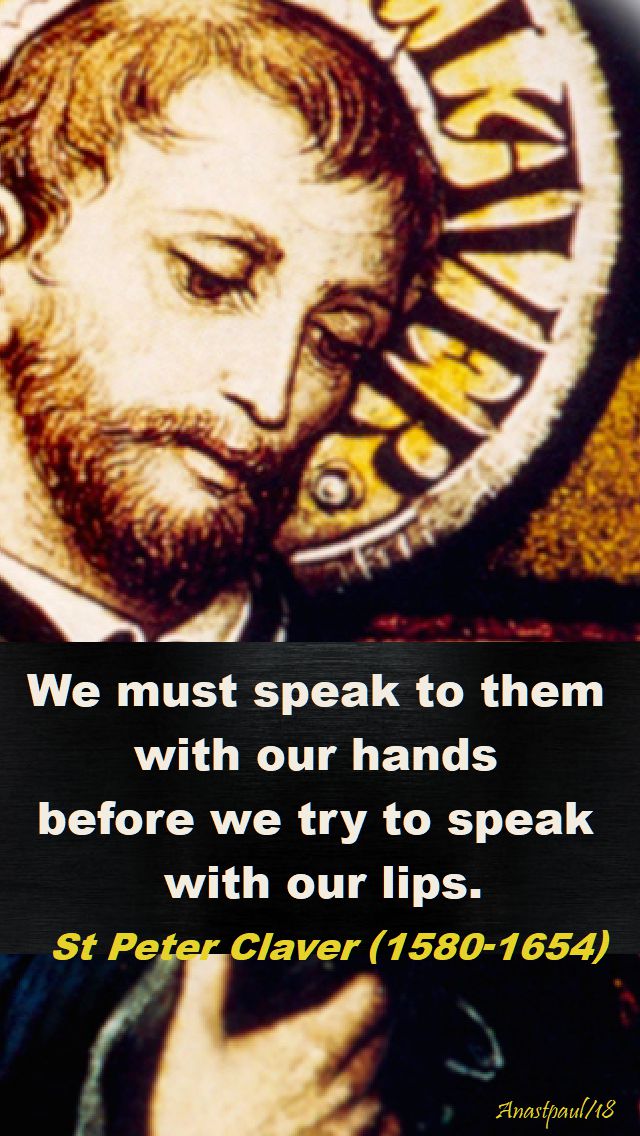
“We must speak to them with our hands before we try to speak with our lips.”
St Peter Claver (1580-1654)
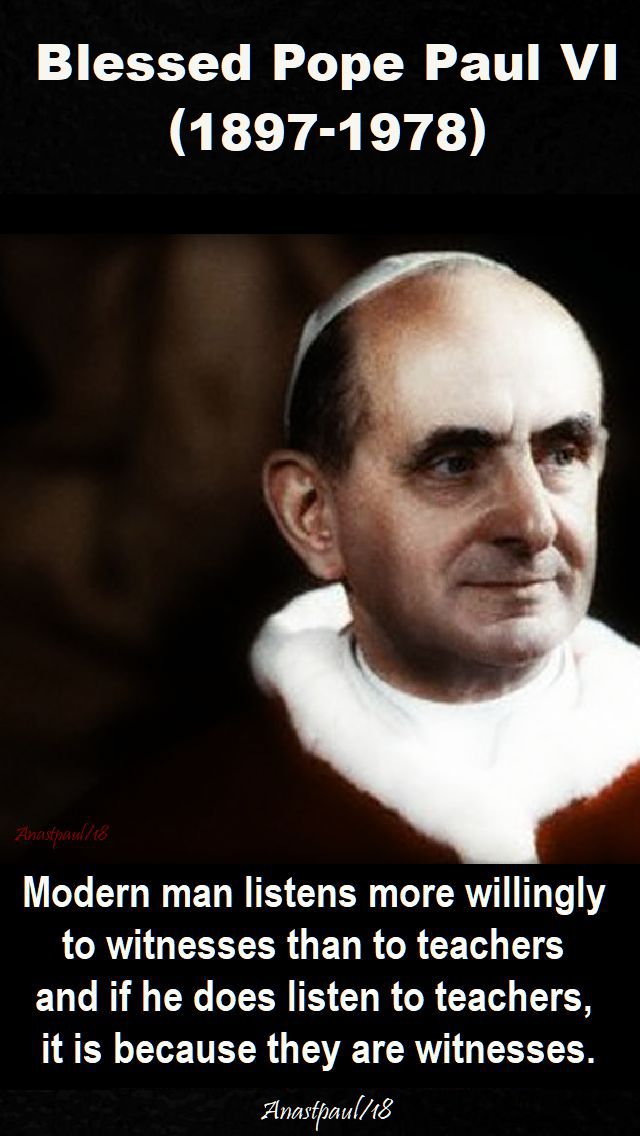
“Modern man listens more willingly to witnesses, than to teachers and if he does listen to teachers, it is because they are witnesses.”
Blessed Pope Paul VI (1897-1978)
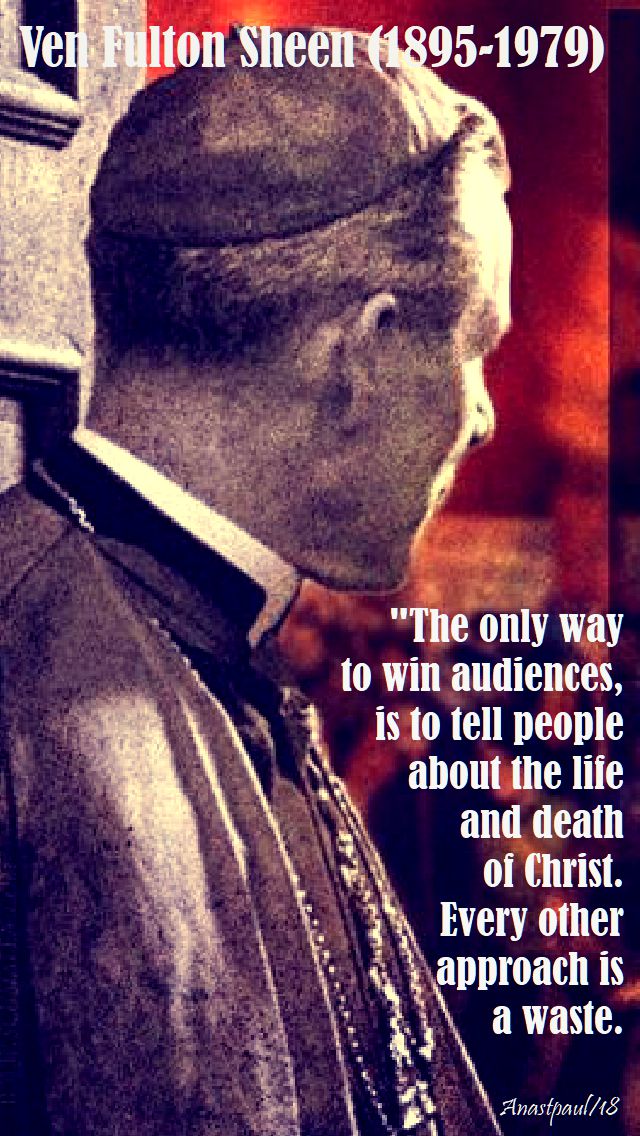
“The only way to win audiences, is to tell people about the life and death of Christ. Every other approach is a waste.”
Ven Archbishop Fulton Sheen (1895-1979)
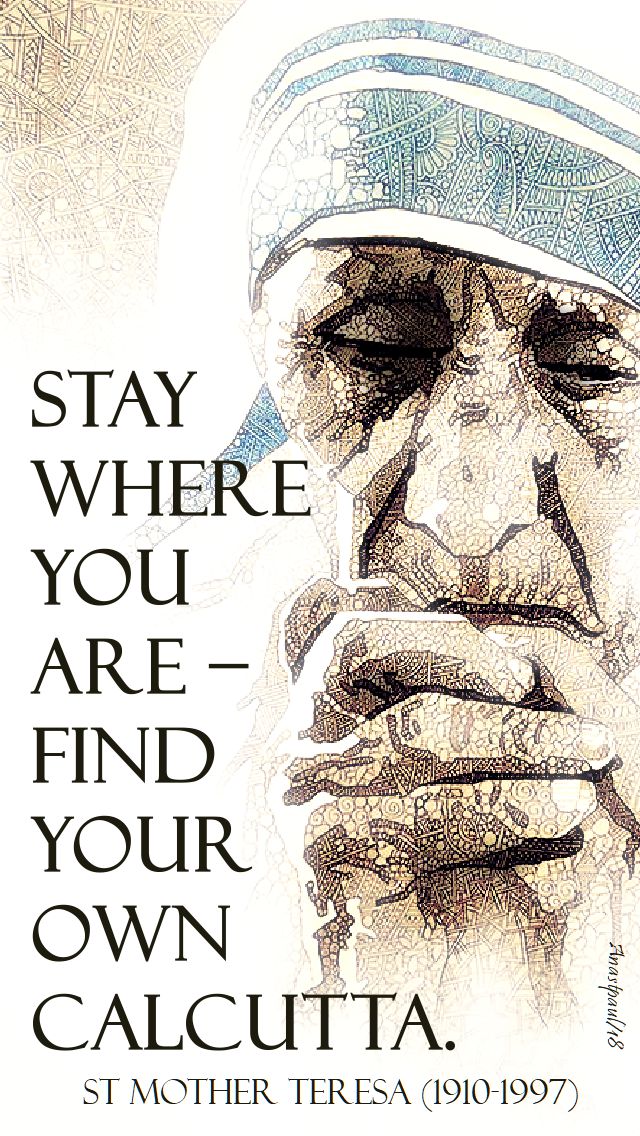
“Stay where you are – find your own Calcutta.”
St Mother Teresa (1910-1997)
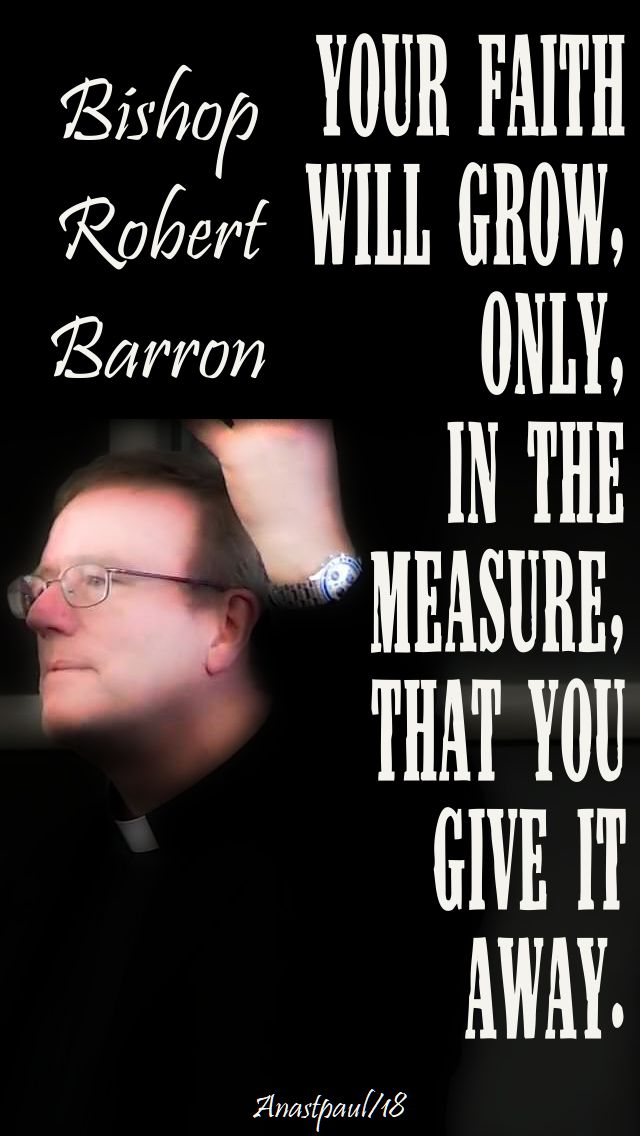
“Your faith will grow, only in the measure, that you give it away.”
Thought for the Day – 17 September 2018 – The Memorial of Stigmata of St Francis of Assisi & St Robert Bellarmine SJ (1542-1621)
The glory of the Saints and of the Church never ceases to amaze me in every finer detail of the arrangement of our communal life together with them, thus confirming the presence of the Holy Spirit and the Divinity of this Mystical Body of Christ!
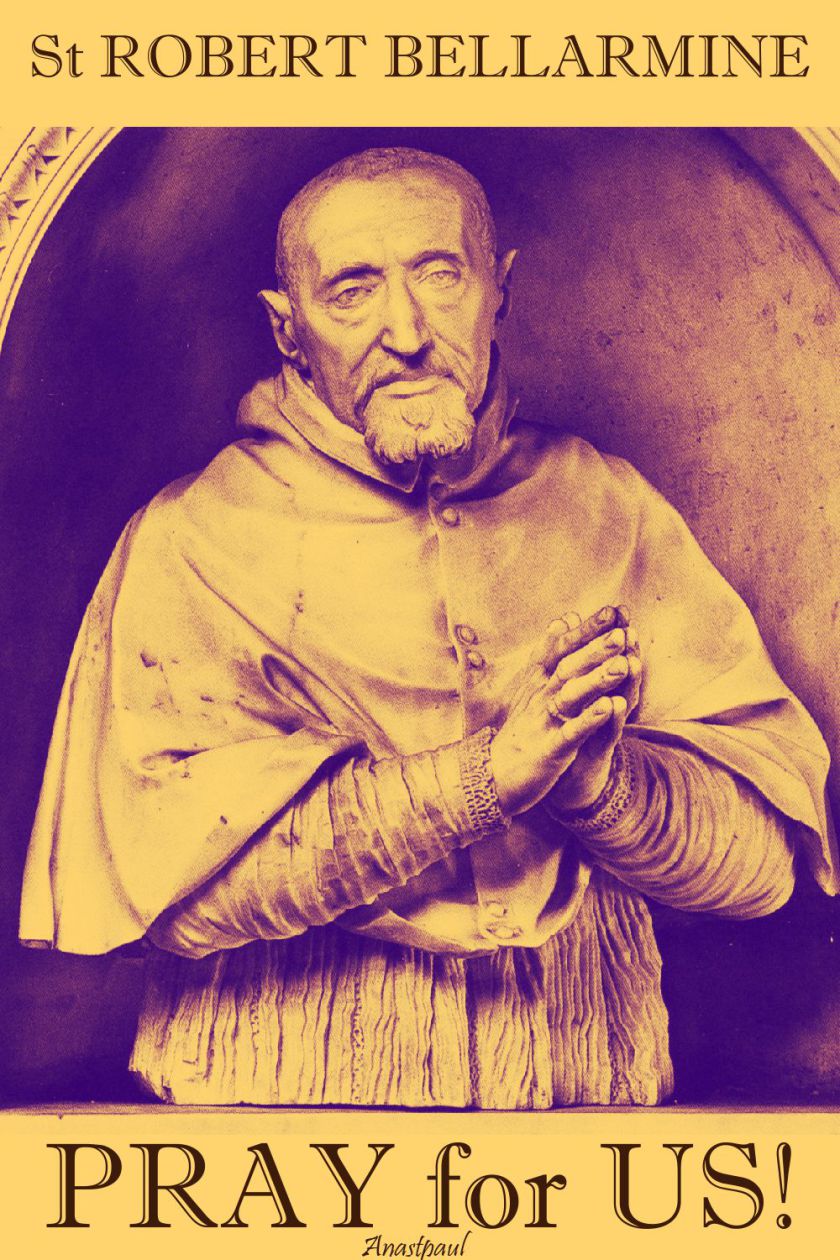
St Robert Bellarmine had a great devotion to St Francis of Assisi and was especially devoted to honouring Francis’ stigmata. Bellarmine urged that there be a special feast in honour of the five stigmata of St Francis. Bellarmine had an important position in the Vatican and he made sure that the feast was introduced in the Church, despite strong opposition.
As Providence arranged, Robert Bellarmine died on the feast of the Stigmata of St Francis, 17 September. And in the revised liturgical calendar St Bellarmine’s feast, which used to be celebrated on 13 May, has been moved to 17 September. In the Universal Church today is the feast of both!
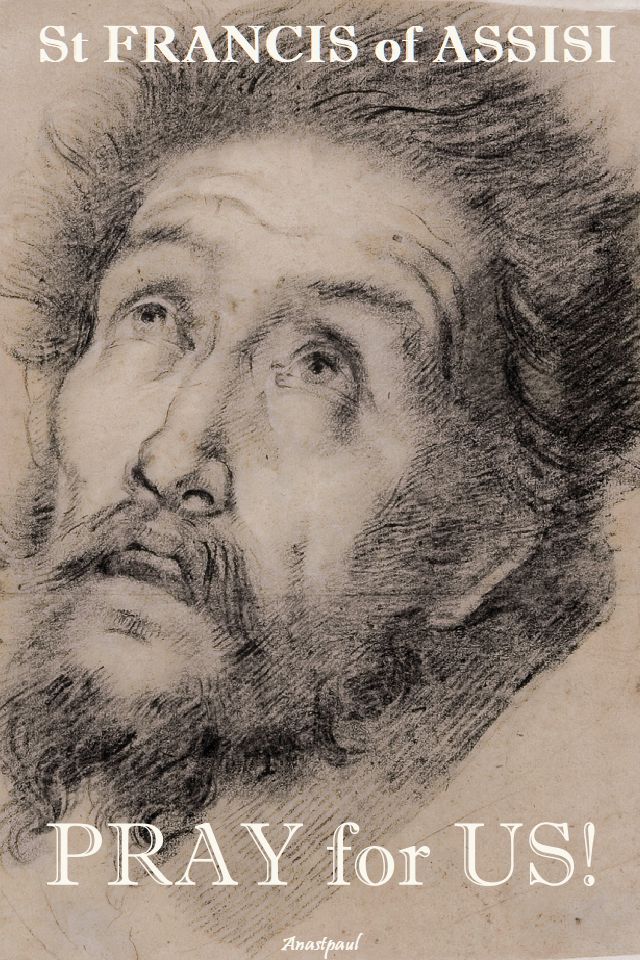
St Francis of Assisi and St Robert Bellarmine, pray for us, your family here on earth and in great need of your prayers!
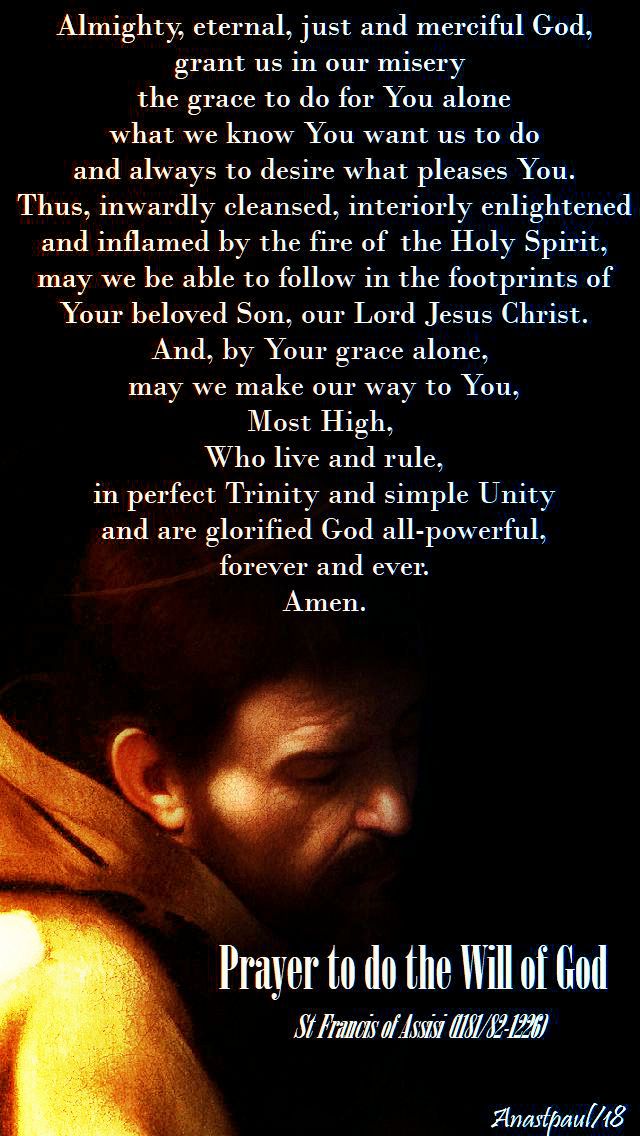
Prayer to do the Will of God By St Francis of Assisi (c 1181-1226)
Almighty, eternal, just and merciful God,
grant us in our misery, the grace to do for You alone
what we know You want us to do
and always to desire, what pleases You.
Thus, inwardly cleansed, interiorly enlightened
and inflamed by the fire of the Holy Spirit,
may we be able to follow in the footprints of
Your beloved Son, our Lord Jesus Christ.
And, by Your grace alone,
may we make our way to You,
Most High, Who live and rule in perfect Trinity and simple Unity
and are glorified God all-powerful, forever and ever.
Amen.
(From “A Letter to the Entire Order”)
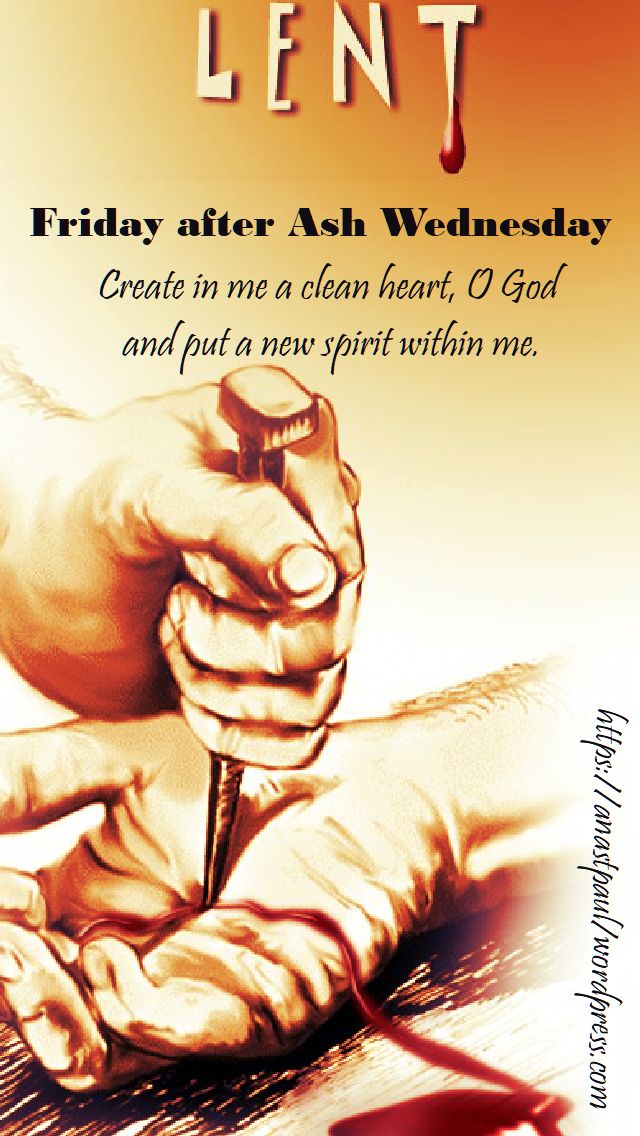
Friday after Ash Wednesday – 16 February 2018
Isaiah 58:1-9, Psalms 51:3-6, 18-19, Matthew 9:14-15
Isaiah 58:3-4 – Behold, in the day of your fast you seek your own pleasure and oppress all your workers. Behold, you fast only to quarrel and to fight and to hit with wicked fist. Fasting like yours this day will not make your voice to be heard on high…
Matthew 9:14-15 – 14 – Then the disciples of John came to him, saying, “Why do we and the Pharisees fast but your disciples do not fast?” And Jesus said to them, “Can the wedding guests mourn as long as the bridegroom is with them? The days will come, when the bridegroom is taken away from them, and then they will fast.”
Create in me a clean heart, O God and put a new spirit within me.
Genuine faith does not make a believer pretentious.
Dialogue with God is not a business bargain.
External observance of religion wins little favour with God, if it is combined with unfairness to the weak and indifference to the poor.
Openness to the indigent is the door to true religion.
The world itself changes for the better with the widening of human concern for the poor. Good works multiply on the face of the earth and everyones sees the glory of God in action.
The Gospel presents Jesus, as refusing to absolutise ritual fasting.
What He expects from His disciples is that they remain faithful to the mission He is about to give them even at great sacrifice.
It will make evidently greater demands from them than mere ritual fasting.
They should be prepared.
Jesus is introducing a new set of values of immense worth, for which the old order of things must make way. (Archbishop Thomas Menamparanpil SDB – GodsWord)
Each of us has different talents, material resources and opportunities. Lent is an invitation, not to introspection and penance for its own sake but always to help us to better partner with God in responding to the needs of our world.
Is there a need I feel called to do something about? Could I ask God to show me where He is inviting me to act? What one thing might I do today to reach out to someone in need? (excerpt Fr Nicholas King S.J. ‘The Long Journey to the Resurrection’)
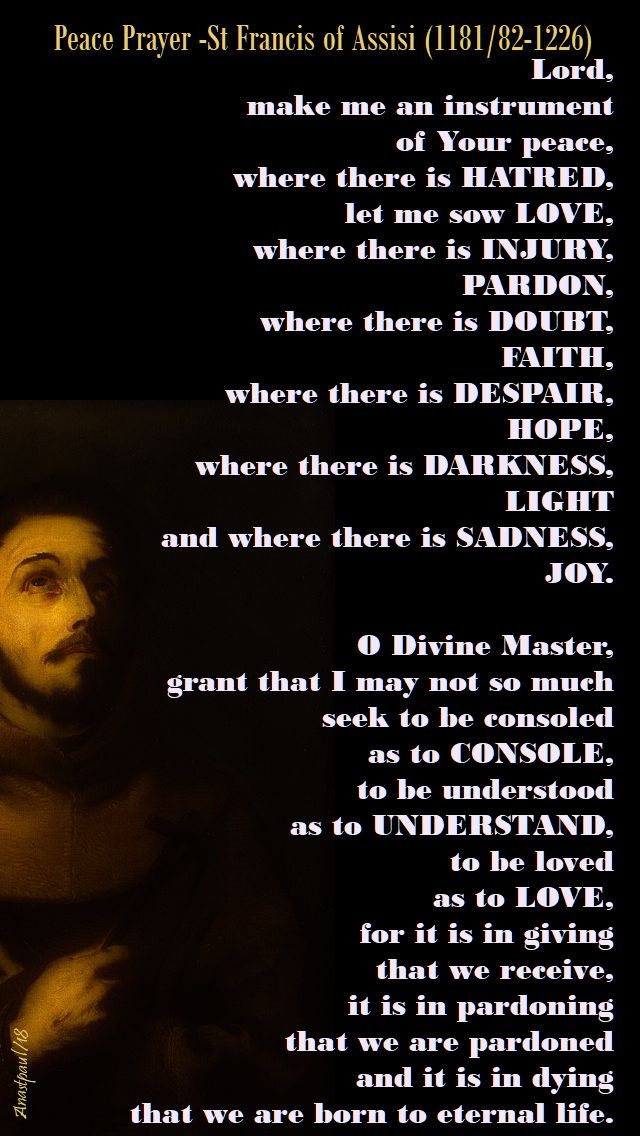
Lord, make me an instrument of Your peace, where there is hatred, let me sow love, where there is injury, pardon, where there is doubt, faith, where there is despair, hope, where there is darkness, light and where there is sadness, joy. O Divine Master, grant that I may not so much seek to be consoled as to console, to be understood as to understand, to be loved as to love, for it is in giving that we receive, it is in pardoning that we are pardoned and it is in dying that we are born to eternal life.
Quote/s of the Day – 11 January – Speaking of Worry
“Let not your hearts be troubled; believe in God, believe also in me. In my Father’s house are many rooms; if it were not so, would I have told you that I go to prepare a place for you? And when I go and prepare a place for you, I will come again and will take you to myself, that where I am you may be also. And you know the way where I am going.”
John 14:1-4
“Where there is charity and wisdom, there is neither fear nor ignorance. Where there is patience and humility, there is neither anger nor vexation. Where there is poverty and joy, there is neither greed nor avarice. Where there is peace and meditation, there is neither anxiety nor doubt.”
St Francis of Assisi (1181/82 – 1226)
“I will not mistrust Him, Meg, although I shall feel myself weakening and on the verge of being overcome with fear. I shall remember how St Peter, at a blast of wind began to sink because of his lack of faith and I shall do as he did: call upon Christ and pray to Him for help. And then, I trust He shall place His holy hand on me and in the stormy seas, hold me up from drowning.”
St Thomas More (1478-1535) (Letter to his daughter, Meg, from his prison cell.)
“It will be quite enough to receive the evils that come upon us from time to time, without anticipating them by the imagination.”
St Francis de Sales (1567-1622) Doctor of the Church
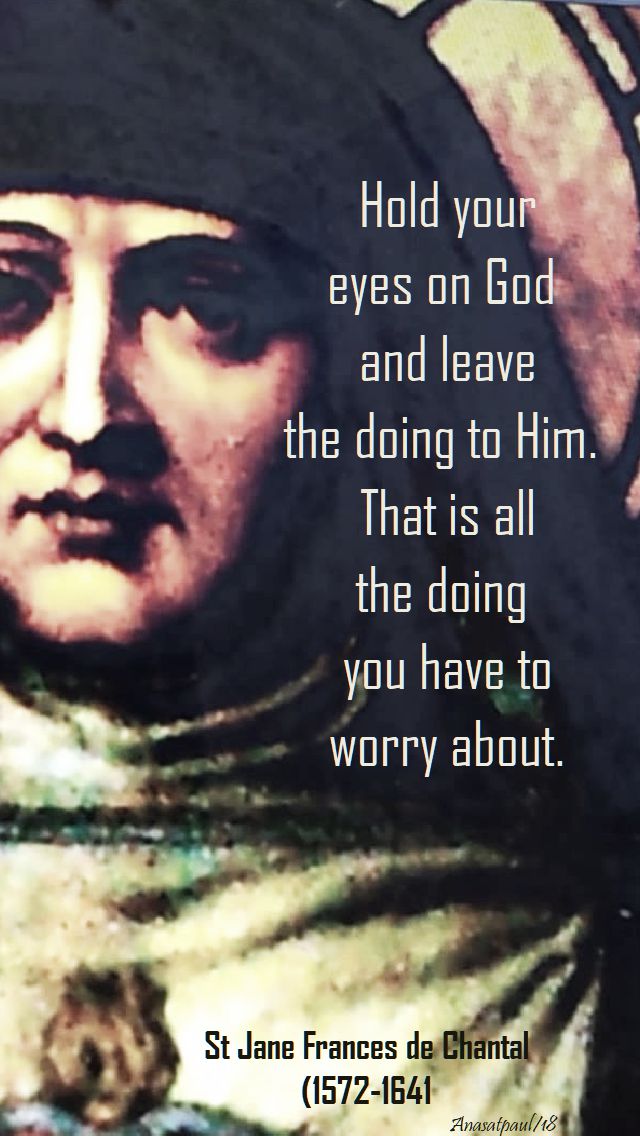
“Hold your eyes on God and leave the doing to Him. That is all the doing you have to worry about.”
St Jane Frances de Chantal (1572-1641)
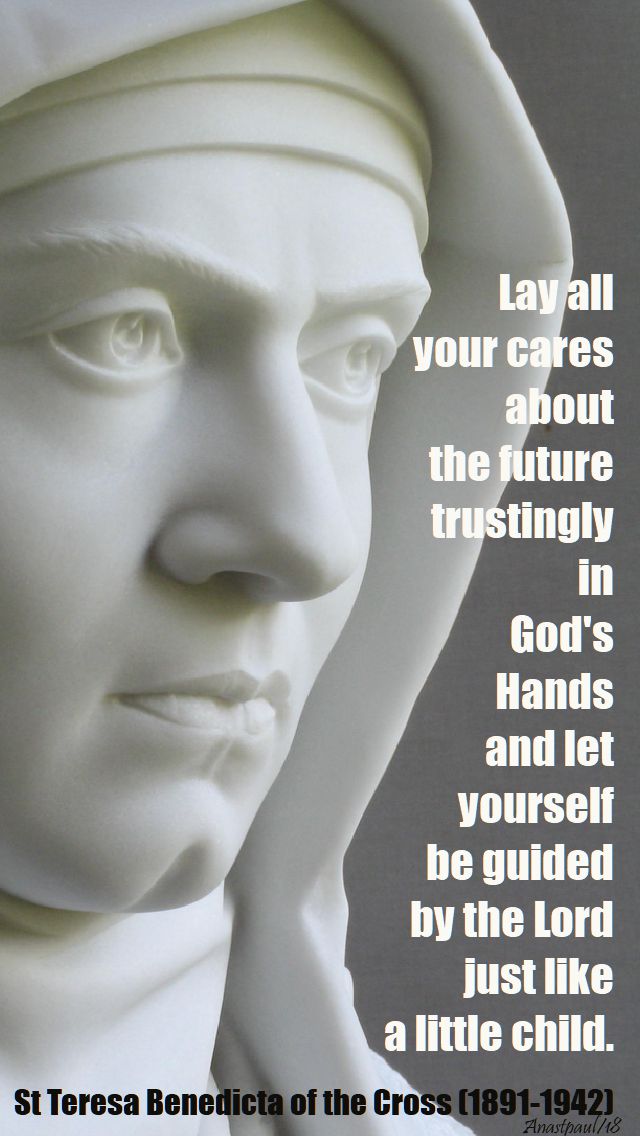
“Lay all your cares about the future trustingly in God’s Hands and let yourself be guided by the Lord just like a little child.”
St Teresa Benedicta of the Cross (1891-1942)
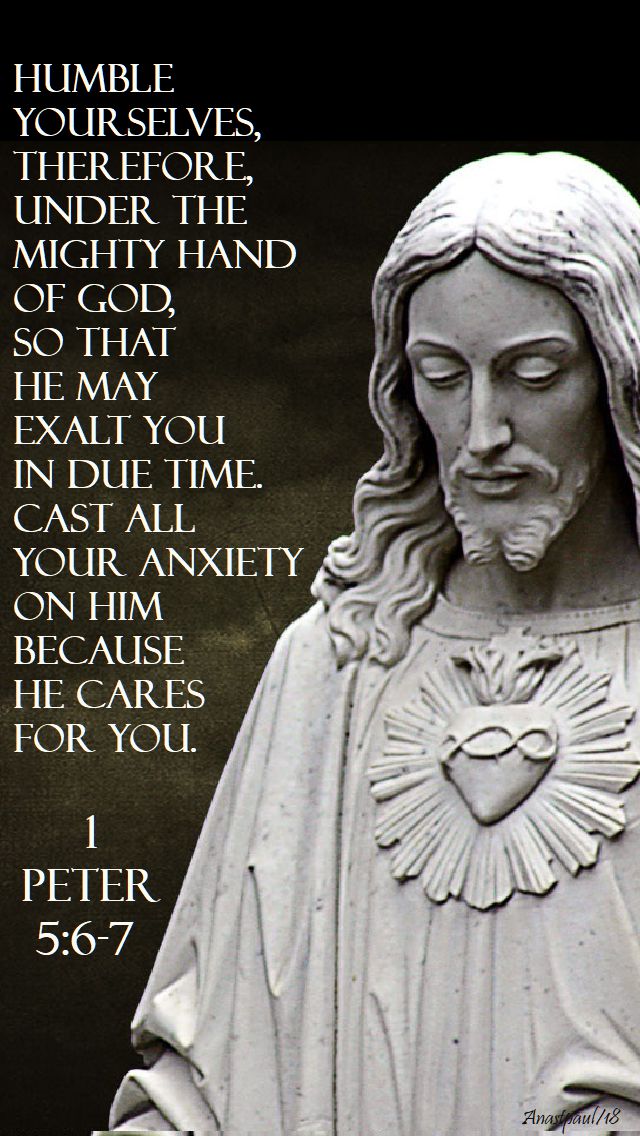
“Humble yourselves therefore, under the mighty hand of God, so that he may exalt you in due time. Cast all your anxiety on him because he cares for you.”
1 Peter 5:6-7
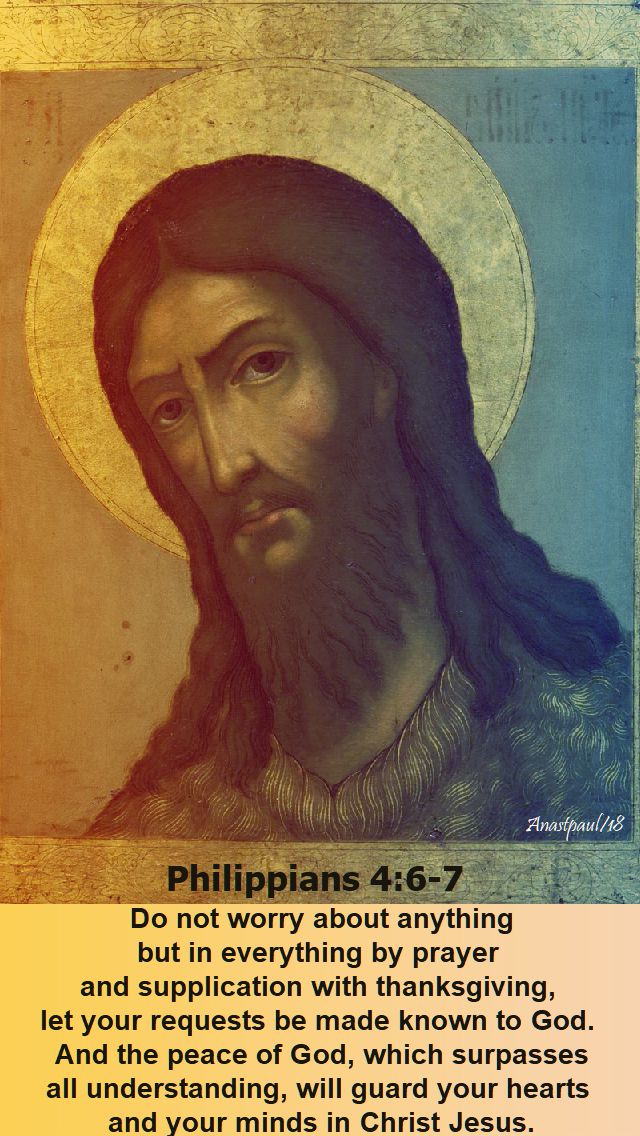
“Do not worry about anything but in everything by prayer and supplication with thanksgiving, let your requests be made known to God. And the peace of God, which surpasses all understanding, will guard your hearts and your minds in Christ Jesus.”
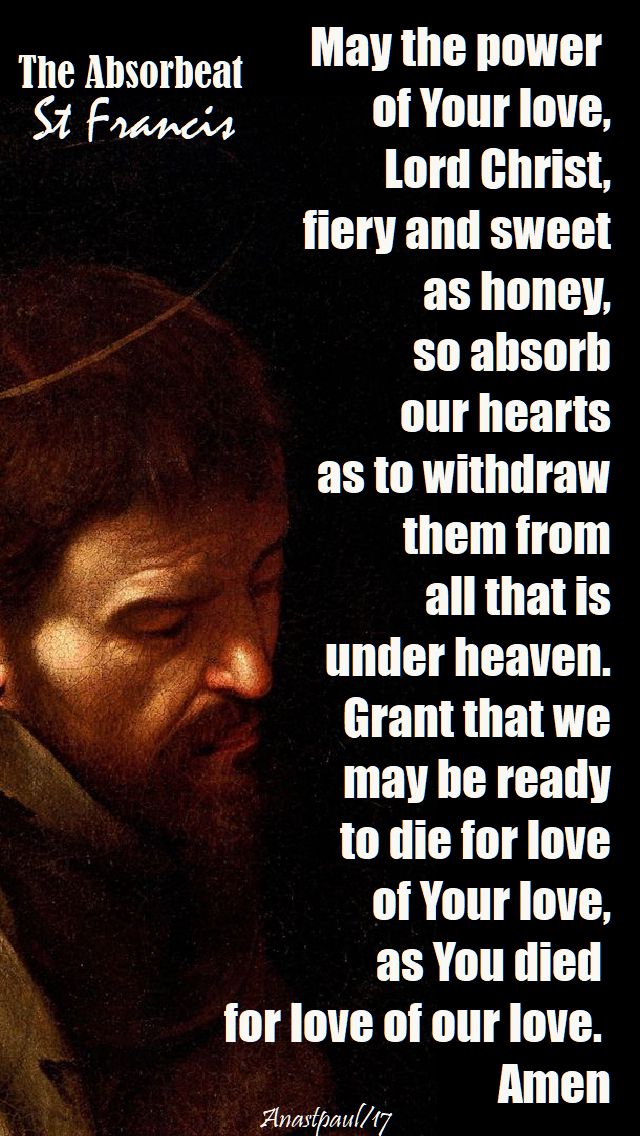
May the power of Your love, Lord Christ,
fiery and sweet as honey,
so absorb our hearts
as to withdraw them
from all that is under heaven.
Grant that we may be ready
to die for love of Your love,
as You died for love of our love.
Amen
Thought for the Day – 4 October – The Memorial of St Francis of Assisi (1181–1226)
Francis, the destitute and lowly, enters heaven, a rich man, acclaimed by the songs of angels! (Antiphon for the Memoria of St Francis from the Divine Office)
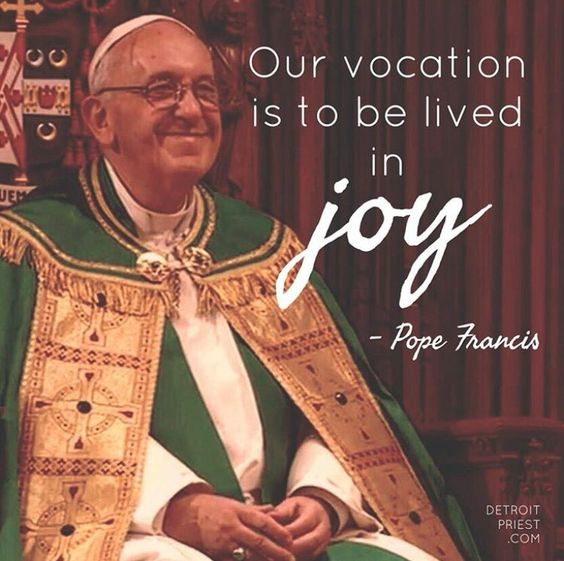
Joyful Saint, Joyful Pope!
In my presence and in the presence of others, try to be always joyful, for it is not fitting that a servant of God appear before the brothers or other men with a sad and glum face. —Saint Francis
The encounter with the living Jesus…fills the heart with joy, because it fills it with true life, a profound goodness that does not pass away or decay. —Pope Francis
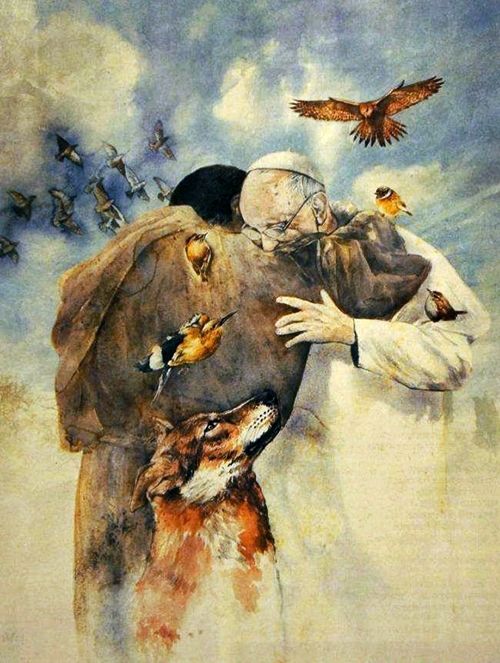
Saint Francis called himself God’s court jester—the Jongleur de Dieu—as he went about singing the praise of God. Pope Francis brought the house down the night of his election, telling his brother cardinals, “May God forgive you!”
One can’t help but notice a kind of effervescent joy that spreads happiness to others. These men have shattered the stereotype of rigid, grim, calcified piety. They radiate something entirely different: the joy of Christ.
Jesus was attractive, in the literal sense of the word. People wanted to meet Him and hear Him and follow Him. Saint Francis had a similar effect and if the three million people who showed up at World Youth Day in Rio de Janeiro are any indication, Pope Francis does too. The wisdom and faith of these men make them intriguing, to be sure, but their spirit of joy goes a long way in drawing these crowds.
Jesus, too, “rejoiced in the Holy Spirit” (Luke 10:21). And he wanted us to share in his joy. “These things I have spoken to you,” Jesus told his disciples, “that my joy may be in you, and that your joy may be full” (John 15:11). Twice again Jesus speaks in these terms: “Ask, and you will receive, that your joy may be full” (John 16:24), and, “These things I speak in the world, that they may have my joy fulfilled in themselves” (John 17:13).
This fullness of joy is our inheritance as Christians. And it doesn’t always have to come with suffering! The gift of knowing Christ, being subjects of the King of Kings, is a great joy in and of itself. This is what Jesus taught: “The kingdom of heaven is like treasure hidden in a field, which a man found and covered up; then in his joy he goes and sells all that he has and buys that field” (Matthew 13:44).
Saint Francis and Pope Francis have given everything, dedicating their entire lives for the sake of the kingdom of heaven. And in this they have found great joy.
St Francis Pray for us and let us all pray for our Holy Father!
St Francis leaves us with his blessing:
May the Lord bless you and keep you.
May the Lord make His face to shine upon you
and be gracious to you.
May the Lord lift up His countenance upon you and give you peace.
Quote/s of the Day – 4 October – The Memorial of St Francis of Assisi (1181–1226)
“The one you are looking for, is the one who is looking.”
“Let the whole world of mankind tremble, the whole world shake and the heavens exult when Christ, the Son of the living God, is on the altar in the hands of a priest. O admirable heights and sublime lowliness! O sublime humility! O humble sublimity! That the Lord of the universe, God and the Son of God, so humbles Himself that for our salvation, He hides Himself under the little form of bread! Look, brothers, at the humility of God and pour out your hearts before Him! Humble yourselves, as well, that you may be exalted by Him. Therefore, hold back nothing of yourselves, for yourselves, so that He, Who gives Himself totally to you, may receive you totally.”
“Therefore, O sons of men, how long will you be hard of heart? Why do you not recognize the truth and believe in the Son of God? See, daily He humbles Himself as when He came from the royal throne into the womb of the Virgin; daily He comes to us in a humble form; daily He comes down from the bosom of the Father upon the altar in the hands of the priest. And as He appeared to the holy apostles in true flesh, so now He reveals Himself to us in the sacred bread. As they saw only his flesh by means of their bodily slight, yet believed Him to be God as they contemplated Him with the eyes of faith, so, as we see bread and wine with [our] bodily eyes, we too are to see and firmly believe them to be His most holy Body and Blood living and true. And in this way the Lord is always with His faithful, as He Himself says: Behold I am with you even to the end of the world (cf. Mt. 28:30).”
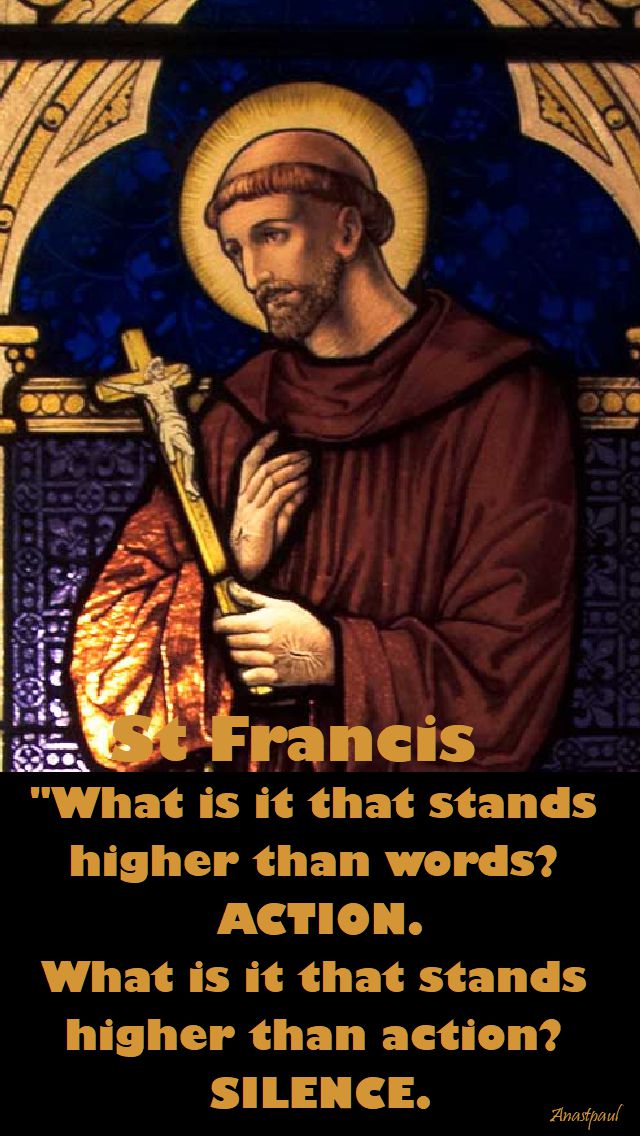
“What is it that stands higher than words? ACTION. What is it that stands higher than action? SILENCE.”
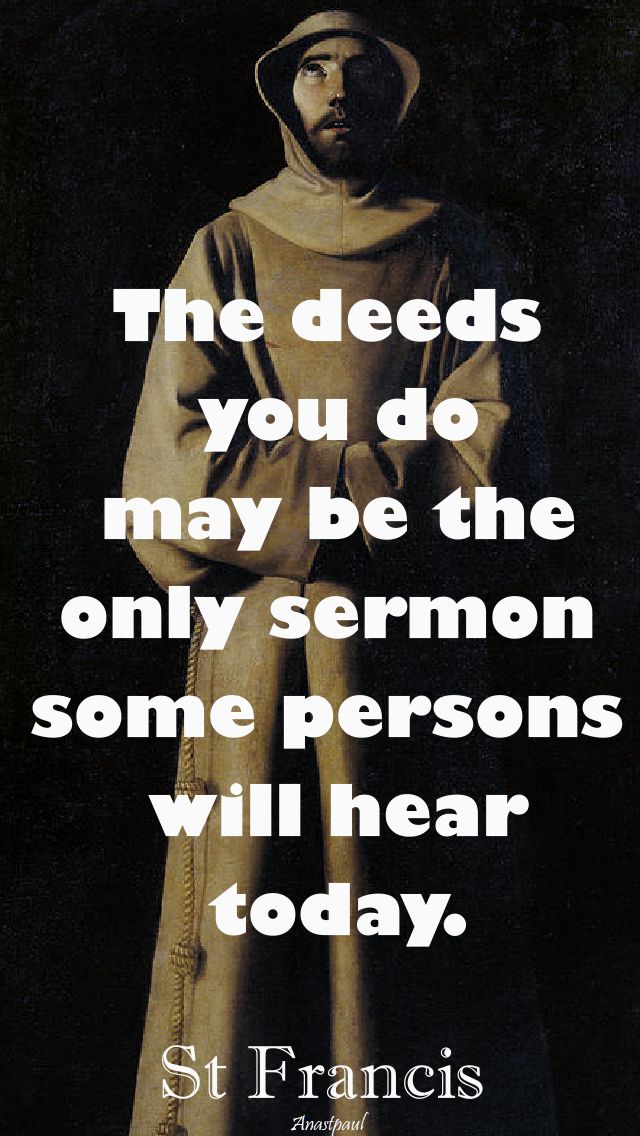
“The deeds you do may be the only sermon some persons will hear today.”
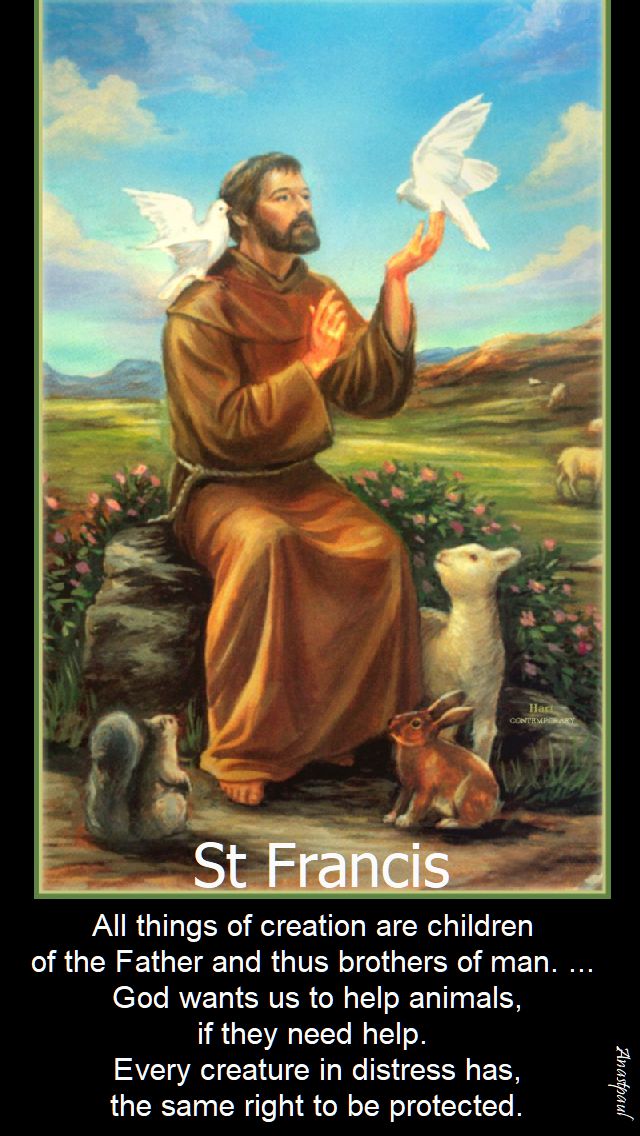
“All things of creation are children of the Father and thus brothers of man. … God wants us to help animals, if they need help. Every creature in distress has, the same right to be protected.”
One Minute Reflection – 4 October – The Memorial of St Francis of Assisi (1181–1226)
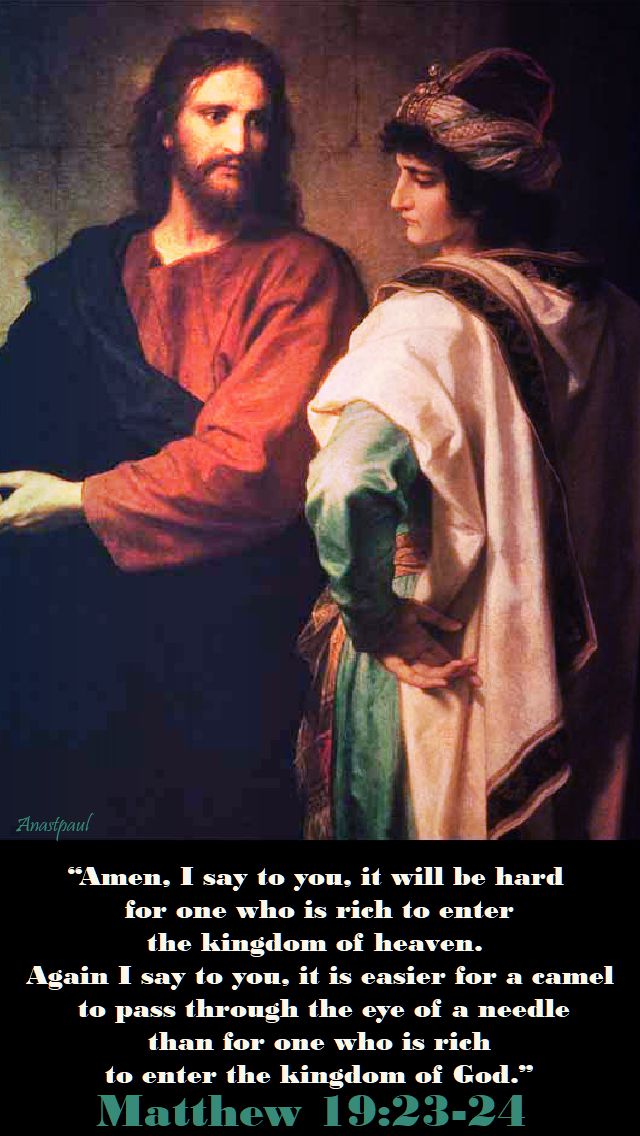
Then Jesus said to his disciples, “Amen, I say to you, it will be hard for one who is rich to enter the kingdom of heaven. Again I say to you, it is easier for a camel to pass through the eye of a needle than for one who is rich to enter the kingdom of God.”….Matthew 19:23-24
REFLECTION – “Remember that when you leave this earth, you can take with you nothing that you have received—only what you have given: a full heart, enriched by honest service, love, sacrifice and courage.”….St Francis of Assisi
PRAYER – Lord God, You made St Francis of Assisi, Christ-like in his poverty and humility, his gentleness and charity, his love and courage. Help us to walk in his ways that, with joy and love, we may follow Christ Your Son and be united with You. St Francis, pray for us, amen.
Saint of the Day – 4 October – St Francis of Assisi OFM Confessor, Religious, Deacon, Stigmatist and ounder, Apostle of the Holy Eucharist, the Blessed Virgin and of Charity, Preacher, Missionary, Mystic, Miracle-Worker, Co-patron of Italy, Founder of the Seraphic Order – the men’s Order of Friars Minor, the women’s Order of Saint Clare, the Third Order of Saint Francis and the Custody of the Holy Land, as well as being the Founder of the Nativity Crib and Manger as we know it today.
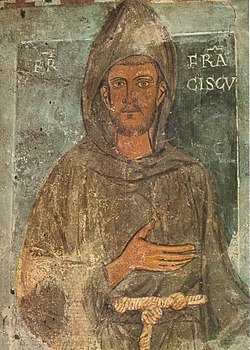
The oldest surviving depiction of Saint Francis is a fresco near the entrance of the Benedictine abbey of Subiaco, painted between March 1228 and March 1229. He is depicted without the stigmata but the image is a religious image and not a portrait.
Born Giovanni di Pietro di Bernardone ( informally called Francesco by his Mother) – (1181 at Assisi, Umbria, Italy – 4 October 1226 at Portiuncula, Italy of natural causes). His relics are enshrined in the Basilica built and named for him in Assisi, Italy. St Francis was Canonised on 16 July 1228 by Pope Gregory IX. Patronages – • against dying alone• against fire• animal welfare societies• animals• birds• ecologists, ecology• environment, environmentalism, environmentalists• families• lace makers, lace workers• merchants• needle workers• peace• tapestry workers• zoos• Italy• Colorado• Catholic Action• Franciscan Order• 10 dioceses• 10 cities. Attributes – • apparition of Jesus• Christ child• birds• deer• fish• lamb• skull• stigmata• wolf. In 1224 he received the stigmata during the apparition of Seraphic angels in a religious ecstasy making him the first recorded person in Christian history to bear the wounds of Christ’s Passion. He died during the evening hours of 3 October 1226, while listening to a reading he had requested of Psalm 142 (141). Francis is one of the most venerated religious figures in history.
Francis was born in Assisi in 1182, the son of a wealthy cloth merchant, Pietro Bernardone, and his wife, Pica. He was baptised Giovanni (John) but soon gained the nickname Francesco because of his father’s close trading links with France.
Francis’ early years were not especially religious. He was a leader among the young men of Assisi, enjoying a good social life, singing and partying. His first biographer, Thomas of Celano, describes him as quite short, with black eyes, hair and beard; he had a long face, with a straight nose and small, upright ears. His arms were short but his hands and fingers slender and long. He had a strong, clear, sweet voice. Francis didn’t want to follow his father into the cloth trade; he wanted to be a knight. So at the age of twenty he joined the forces of Assisi in a minor skirmish with the neighbouring city of Perugia. He was captured and spent a year in a Perugian jail, until his father ransomed him. This became the first of a series of experiences through which God called Francis to the life which he finally embraced.
One of these experiences, at San Damiano, led to a rift with his father. Francis, in response to a voice from the crucifix in this tiny ruined Church, began to rebuild churches; when he ran out of money he took cloth from his father’s shop and sold it. His father disowned him before the bishop of Assisi and Francis in his turn stripped off his clothes, returning to his father everything he had received from him and promising that in future he would call only God his Father.
And thus, Francis of Assisi, this poor little man began a journey to astound and inspire the Church by taking the gospel literally—not in a narrow fundamentalist sense but by actually following all that Jesus said and did, joyfully, without limit and without a mite of self-importance.
Serious illness brought the young Francis to see the emptiness of his frolicking life as leader of Assisi’s youth. Prayer—lengthy and difficult—led him to a self-emptying like that of Christ, climaxed by embracing a leper he met on the road. It symbolised his complete obedience to what he had heard in prayer: “Francis! Everything you have loved and desired in the flesh it is your duty to despise and hate, if you wish to know my will. And when you have begun this, all that now seems sweet and lovely to you will become intolerable and bitter but all that you used to avoid will turn itself to great sweetness and exceeding joy.”
From the Cross in the neglected Chapel of San Damiano, Christ told him, “Francis, go out and build up my house, for it is nearly falling down.” Francis became the totally poor and humble workman.
He must have suspected a deeper meaning to “build up my house.” But he would have been content to be for the rest of his life the poor “nothing” man actually putting brick on brick in abandoned chapels. He gave up every material thing he had, piling even his clothes before his earthly father (who was demanding restitution for Francis’ “gifts” to the poor) so that he would be totally free to say, “Our Father in heaven.”
He was, for a time, considered to be a religious “nut,” begging from door to door when he could not get money for his work, bringing sadness or disgust to the hearts of his former friends, ridicule from the unthinking.
But genuineness will tell. A few people began to realise that this man was actually trying to be Christian. He really believed what Jesus said: “Announce the kingdom! Possess no gold or silver or copper in your purses, no traveling bag, no sandals, no staff” (see Lk 9:1-3).
Francis’ first rule for his followers was a collection of texts from the Gospels. He had no idea of founding an order but once it began he protected it and accepted all the legal structures needed to support it. His devotion and loyalty to the Church were absolute and highly exemplary at a time when various movements of reform tended to break the Church’s unity.
He was torn between a life devoted entirely to prayer and a life of active preaching of the Good News. He decerned in favour of the latter but always returned to solitude when he could. He wanted to be a missionary in Syria or in Africa but was prevented by shipwreck and illness in both cases. He did try to convert the sultan of Egypt during the Fifth Crusade.
During the last years of his relatively short life (he died at 44) he was half blind and seriously ill. Two years before his death, he received the stigmata, the real and painful wounds of Christ in his hands, feet and side.
On his deathbed, he said over and over again the last addition to his Canticle of the Sun, “Be praised, O Lord, for our Sister Death.” He sang Psalm 141 and at the end asked his superior to have his clothes removed when the last hour came and for permission to expire lying naked on the earth, in imitation of his Lord.
On 13 March 2013, upon his election as Pope, Archbishop and Cardinal Jorge Mario Bergoglio of Argentina chose Francis as his papal name in honour of Saint Francis of Assisi, becoming Pope Francis I. At his first audience on 16 March 2013, Pope Francis told journalists that he had chosen the name in honour of Saint Francis of Assisi and had done so because he was especially concerned for the well-being of the poor. He explained that, as it was becoming clear during the conclave voting that he would be elected the new bishop of Rome, the Brazilian Cardinal Cláudio Hummes had embraced him and whispered, “Don’t forget the poor”, which had made Bergoglio think of the saint. Bergoglio had previously expressed his admiration for St Francis, explaining that “He brought to Christianity an idea of poverty against the luxury, pride, vanity of the civil and ecclesiastical powers of the time. He changed history.” Bergoglio’s selection of his papal name is the first time that a pope has been named Francis.
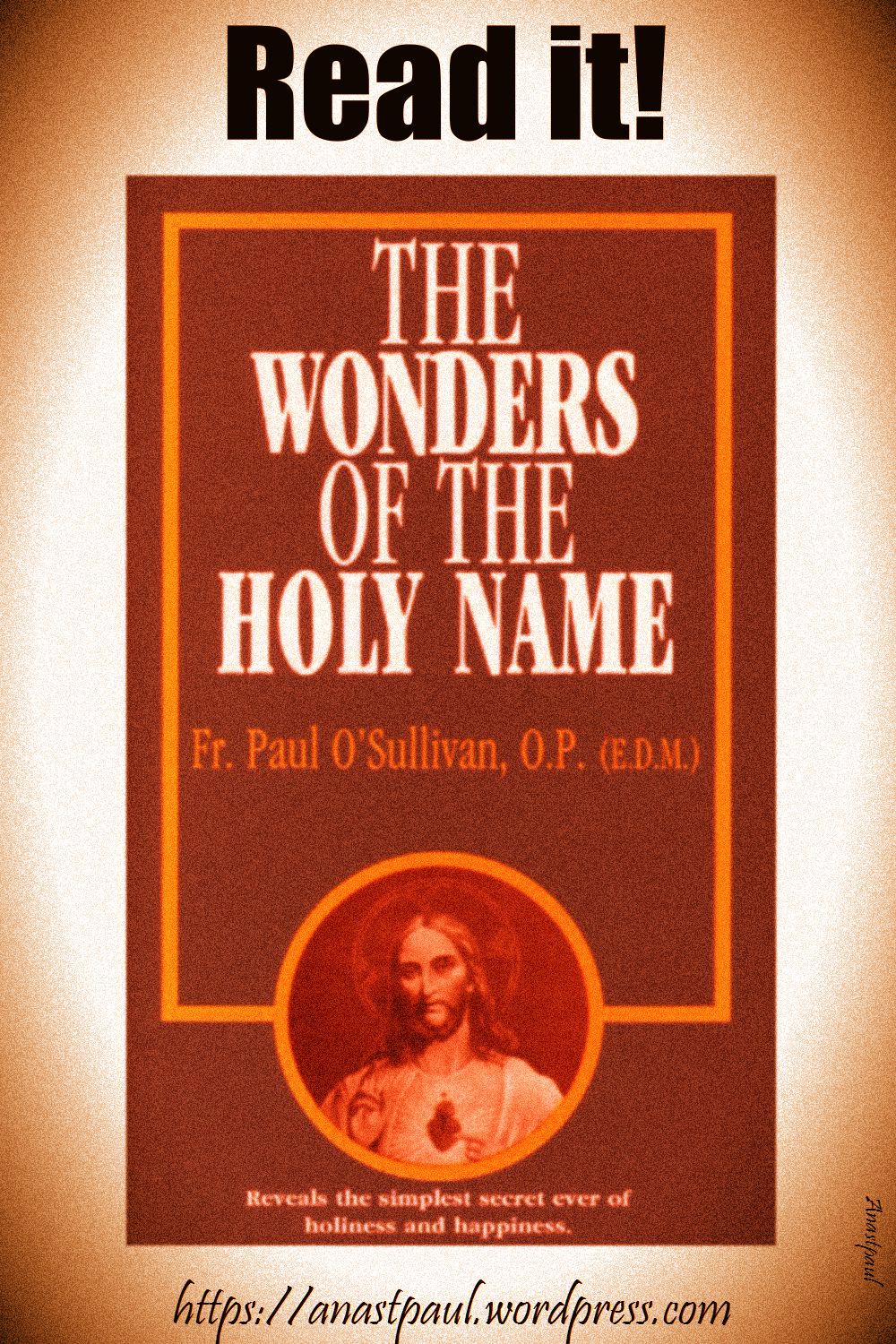
St Francis of Asslsi: that burning Seraph of
love found his delights in repeating the loved Name
of Jesus. St. Bonaventure says that his face lit
up with joy and his voice showed by its tender
accents how much he loved to invoke this all-Holy
Name.
No ‘wonder then that he received on his hands
and feet and side the marks of the Five Wounds
of Our Lord, a reward of his burning love.
St Ignatius of Loyola: was second to none in
his love for the Holy Name. He gave to his great
Order not his own name but called it the Society
of Jesus. This Divine Name has been, as it
were a shield and defence of the · Order against
its enemies and a guarantee of the holiness and
sanctity of its members. Glorious, indeed is the
great Society of Jesus. And now, our present Holy Father , too is a Jesuit.
St Francis de Sales: has no hesitation in saying
that those who have the custom of repeating
the Holy Name frequently may feel certain of
dying a holy and happy death.
And, indeed, there can be no doubt of this
because every time we say Jesus we apply the
saving Blood of Jesus to our Souls, at the same
time we implore God, to do as He has promised,
granting us everything we ask in His Name. All
who desire a holy death can secure it by repeating
the Name of Jesus. Not only will this practice
obtain for us a holy death but it will lessen
notably our time in Purgatory and may very possibly
deliver us altogether from that dreadful fire.
Many saints spent their last days repeating
constantly Jesus, Jesus. ALL the doctors of the Church agree in telling us that the devil reserves his fiercest temptations for our last moments and then he fills the minds of the dying person with doubts, fears and dreadful temptations in the hope of, at last, carrying the unfortunate . soul to Hell. Happy those who in life have made sure of acquiring the habit of calling on the Name of Jesus. Facts like these we have just mentioned are to be found in the 1ives of all the great servants of God who became saints and reached the highest degrees of sanctity by this simple and easy means. St Vincent Ferrer: one of the most famous
preachers that the World has ever seen, converted
the most abandoned criminals and transformed
them into the most fervent Christians. He converted
80000 Jews, and 70000 Moors, a prodigy
we read of in the life of no other saint. He
worked an incredible number of miracles. Three
miracles are demanded by the Church for the
canonisation of the saints, whereas in the bull of
canonisation of St. Vincent 873 are mentioned.
This great saint burned with love for the Name
of Jesus and with this Divine Name worked
extraordinary wonders. .
We, therefore, sinful as we are, can with this
Omnipotent Name obtain every favour and every
grace. The weakest mortals become strong, the
most afflicted find in it consolation and joy.
Who then can be so foolish or negligent as not
to acquire the habit of repeating Jesus, Jesus, Jesus
constantly. It robs us of no time, presents no
difficulty and is an infallible remedy for every evil.
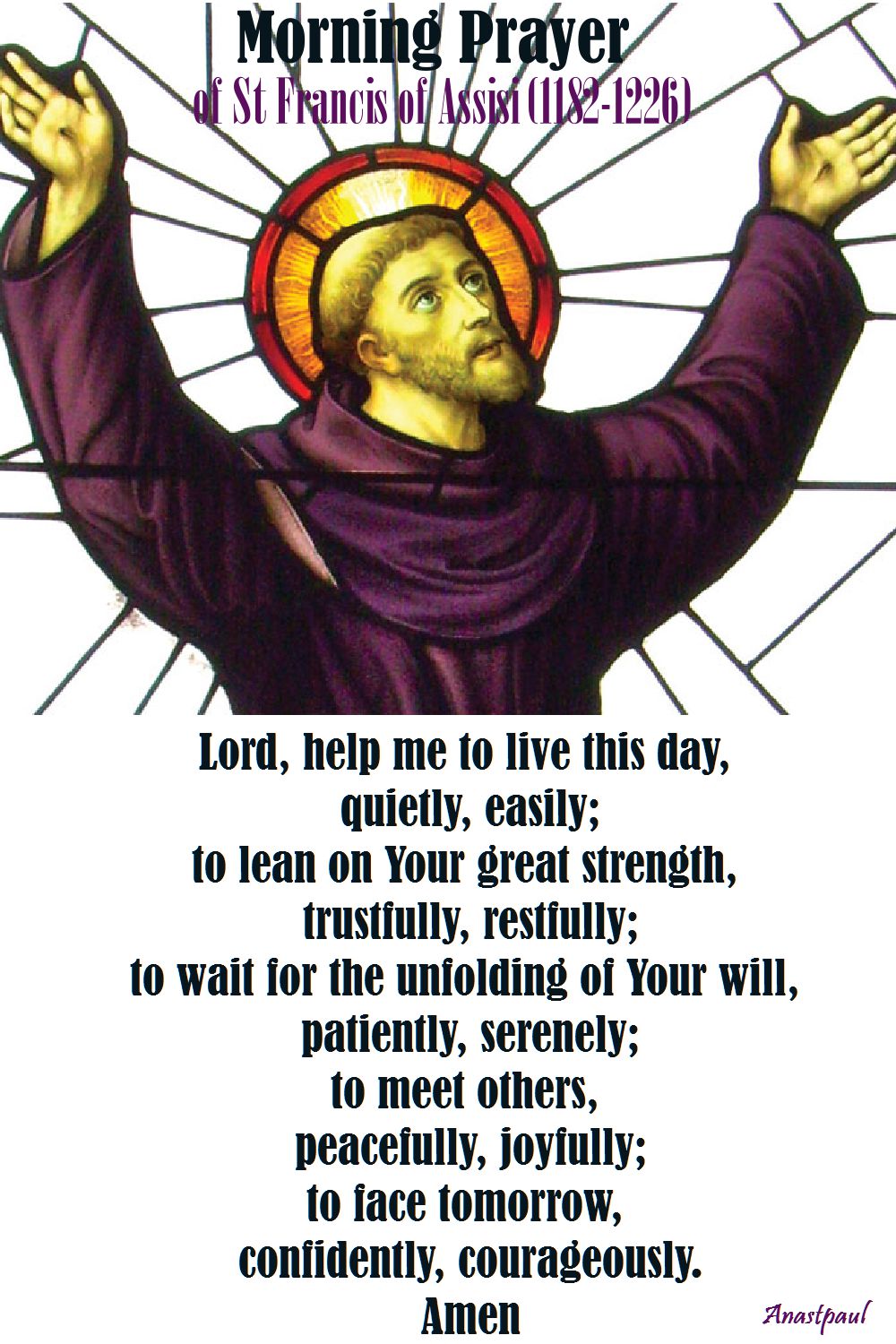
Morning Prayer of St Francis of Assisi (1182-1226)
Lord, help me to live this day, quietly, easily;
to lean on Your great strength, trustfully, restfully;
to wait for the unfolding of Your will, patiently, serenely;
to meet others, peacefully, joyfully;
to face tomorrow, confidently, courageously.
Amen
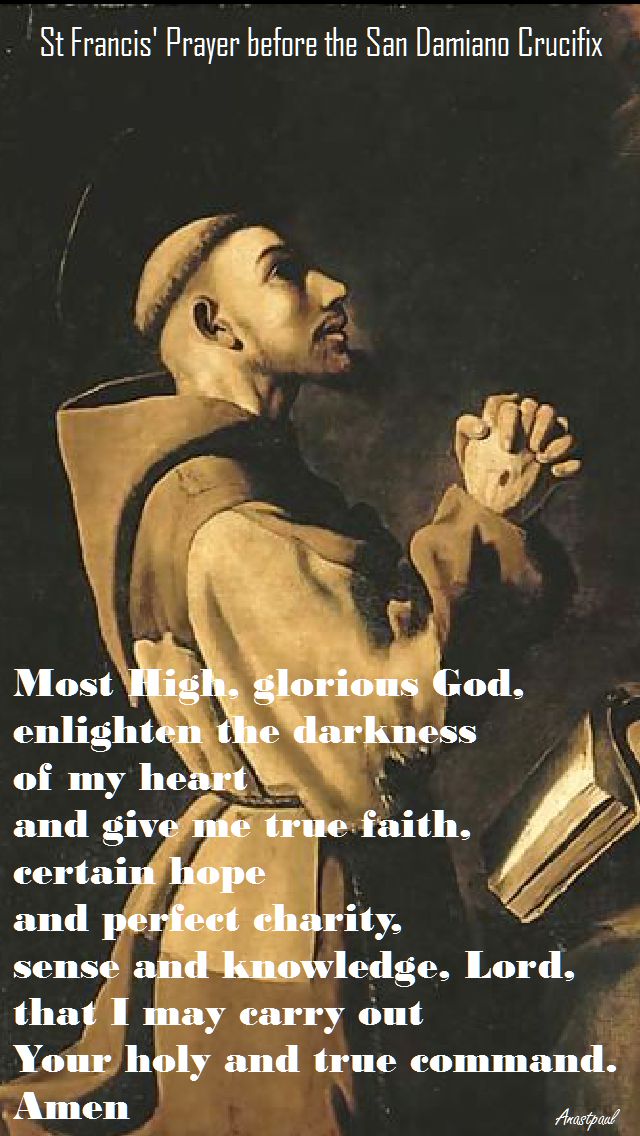
Prayer in front of the Crucifix of San Damiano
Francis used to recite this prayer already in 1205-1206, during the period of his vocational discernment, when he would visit the small abandoned church of San Damiano, where there was a Byzantine Crucifix which is nowadays venerated in the Basilica of Santa Chiara in Assisi.
Most High, glorious God,
enlighten the darkness of my heart
and give me true faith,
certain hope
and perfect charity,
sense and knowledge, Lord,
that I may carry out
Your holy and true command. Amen
LENTEN REFLECTION – Tuesday of the First Week of Lent – 7 MARCH
The devil’s strategy
by St Ambrose of Milan (337-397 AD) Doctor of the Church
The devil demonstrates simultaneously his weakness and his wickedness.
He is unable to harm anyone who does not harm himself. In fact, anyone who denies heaven and chooses the earth is, as it were, rushing towards a precipice, even though running of his own accord.
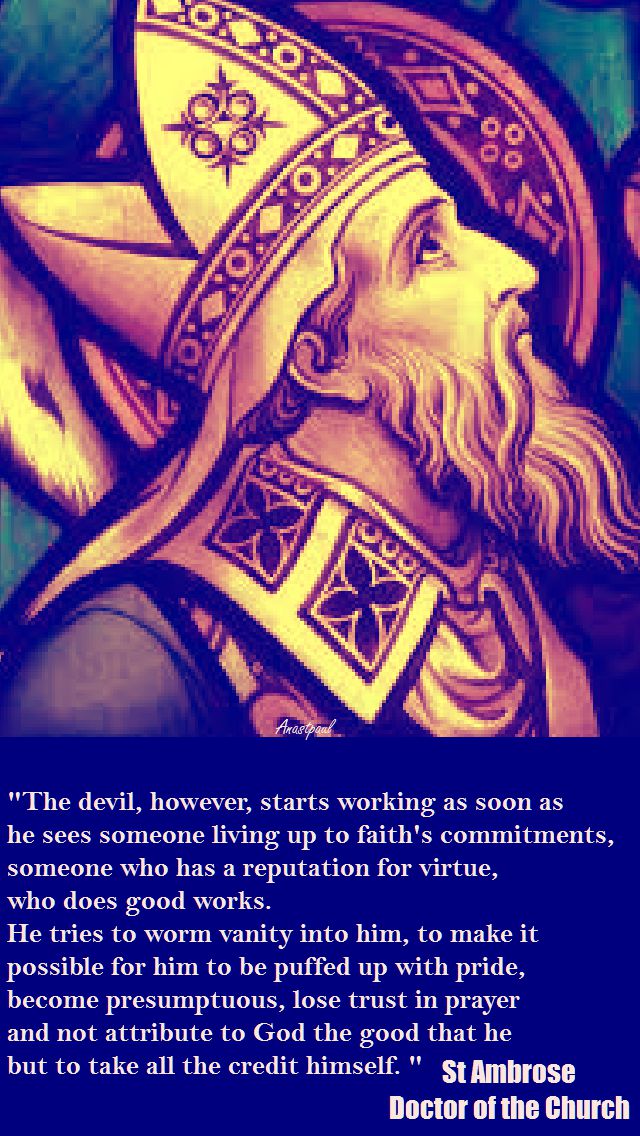
The devil, however, starts working as soon as he sees someone living up to faith’s commitments, someone who has a reputation for virtue, who does good works.
He tries to worm vanity into him, to make it possible for him to be puffed up with pride, become presumptuous, lose trust in prayer and not attribute to God the good that he does but to take all the credit himself.
LET US PRAY as Jesus taught us in today’s Gospel and with St Francis, who in his love for God was graced with this meditation:
Our Father: Creator, Redeemer, Saviour and Comforter.
In Heaven: In the angels and the saints. You give them light so that they may have knowledge, because You are light. You inflame them so that they may love, because You are love. You live continually in them so that they may be happy, because You are the supreme good, the eternal good, and it is from You all good comes and without You there is no good.
Hallowed be your name: May our knowledge of You become ever clearer, so that we may realise the breadth of Your blessings, the extent of Your promises, the height of Your majesty and the depth of Your judgments.
Your kingdom come: So that You may reign in us by Your grace and bring us to Your kingdom, where we shall see You clearly, love You perfectly, be happy in Your company and enjoy You for ever.
Your will be done, on Earth as in Heaven: That we may love You with our whole heart by always thinking of You; with our whole mind by directing our whole intention towards You and seeking Your glory in everything; and with all our strength by spending all our energies and affections of soul and body in the service of Your love alone. And may we love our neighbour as ourselves, encouraging them all to love You as best we can, rejoicing at the good fortune of others, just as if it were our own and sympathising with their misfortunes, while giving offence to no one.
Give us today our daily bread: Your own beloved Son, our Lord Jesus Christ, to remind us of the love He showed for us and to help us to understand and appreciate it and everything that He did or said or suffered.
And forgive us our sins: In Your infinite mercy, and by the power of the passion of Your Son, our Lord Jesus Christ, together with the merits and the intercession of the Blessèd Virgin Mary and all the saints.
As we forgive those who sin against us: And if we do not forgive perfectly, make us forgive perfectly, so that we may truly love our enemies for love of You and pray fervently to You for them, returning no one evil for evil, anxious only to serve everybody in you.
Lead us not into temptation: Hidden or obvious, sudden or unforeseen.
But deliver us from evil: Present, past or future. Amen.
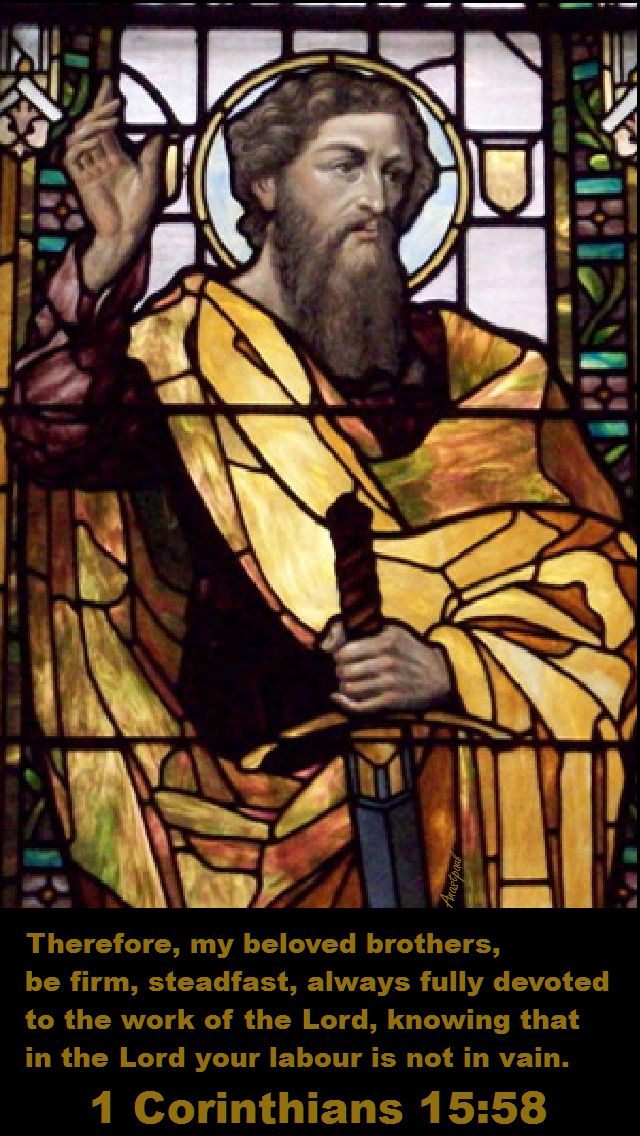
Therefore, my beloved brothers, be firm, steadfast, always fully devoted to the work of the Lord, knowing that in the Lord your labour is not in vain…….1 Cor 15:58
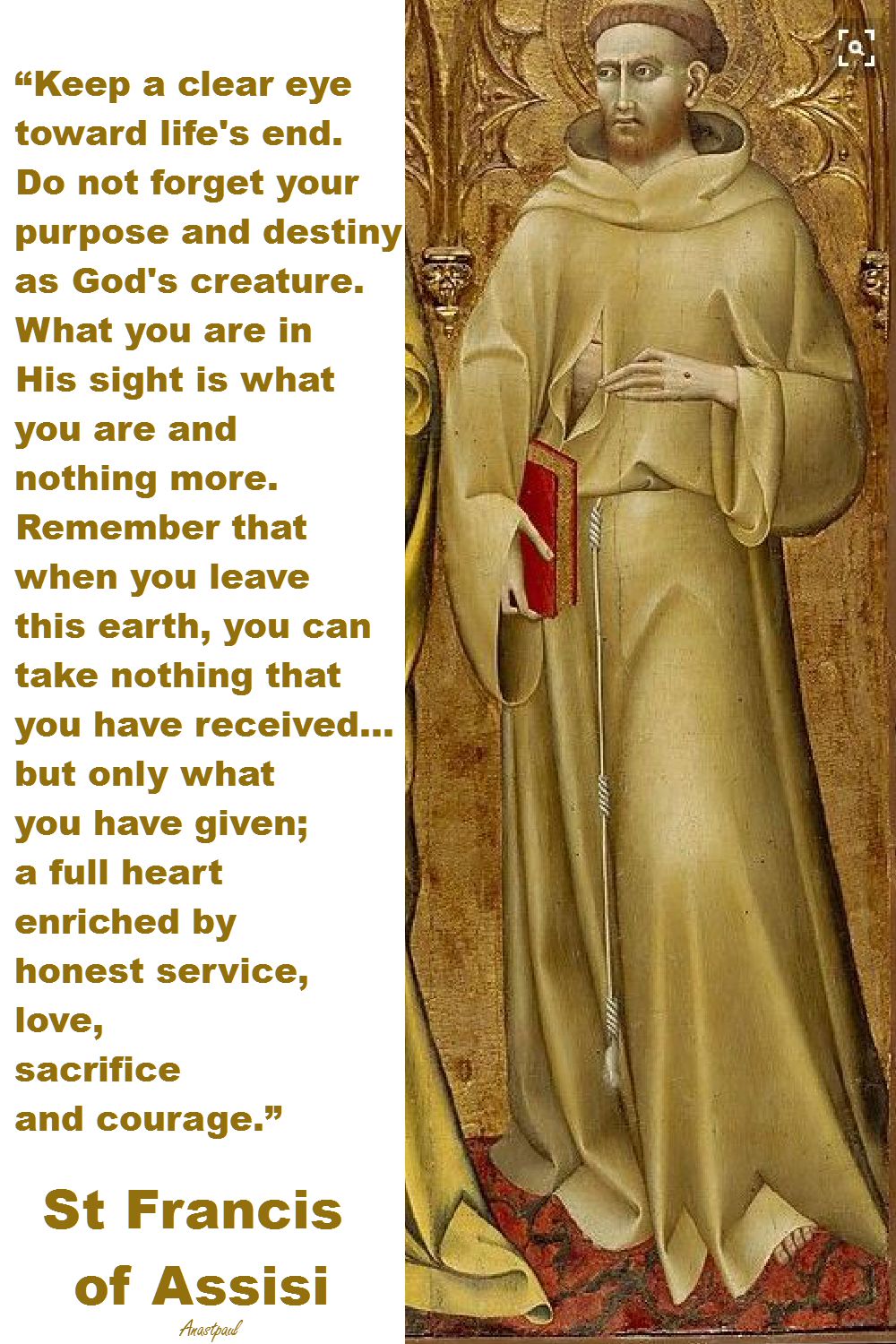
REFLECTION – “Keep a clear eye toward life’s end. Do not forget your purpose and destiny as God’s creature. What you are in His sight is what you are
and nothing more. Remember that when you leave this earth, you can take nothing that you have received…but only what you have given; a full heart enriched by honest service, love, sacrifice and courage.”…………St Francis of Assisi
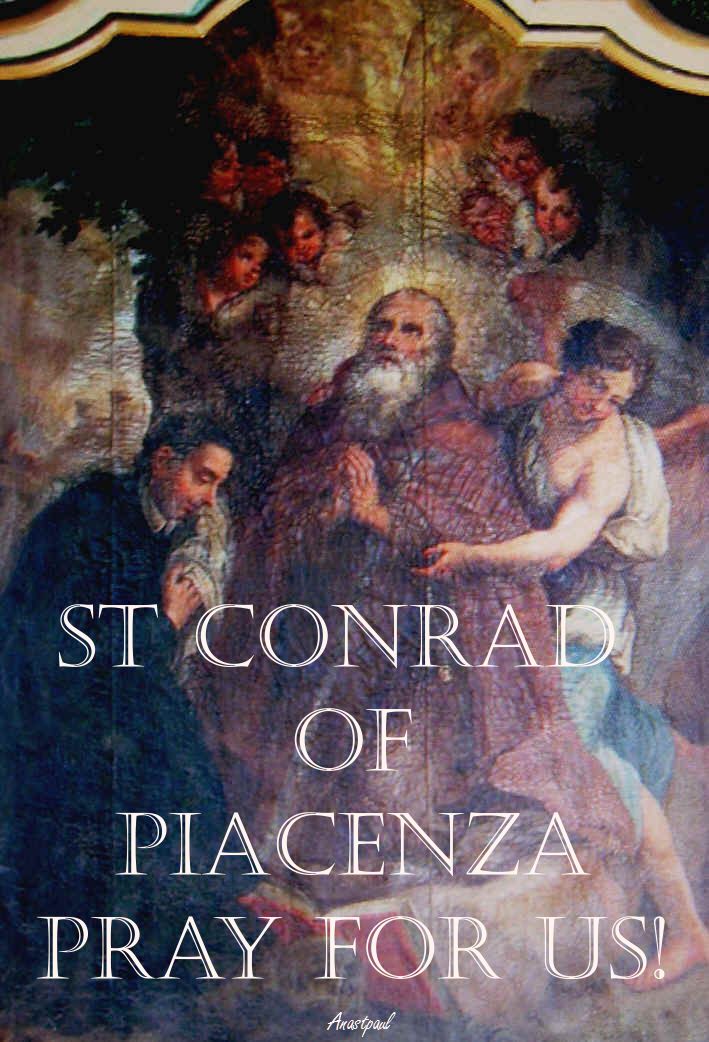
PRAYER – God of mercy, teach me to live as You have ordained. Help me to follow Your commandments with courage and steadfast devotion. As St Conrad learnt courage through adversity, help me too to use the events of my life, both good and bad, to give only my best to all I meet. St Conrad of Piacenza, pray for us, amen.
“A child is born to us, and a son is given to us” -Isa. 9:6
CONSIDER that after so many centuries, after so many prayers and sighs, the Messiah, whom the holy patriarchs and prophets were not worthy to see, whom the nations sighed for, “the desire of the everlasting hills,” our Saviour, has come; He is already born and has given Himself entirely to us: “A child is born to us, and a son is given to us.”
The Son of God has made Himself little, in order to make us great.
He has given Himself to us, in order that we may give ourselves to Him.
He has come to show us His love, in order that we may respond to it by giving Him ours.
Let us, therefore, receive Him with affection.
Let us love Him and have recourse to Him in ill our necessities.
“A child gives easily,” says St. Bernard; children readily give anything, that is asked of them. Jesus came into the world as a child in order to show Himself ready and willing to give us all! good gifts: “The Father hath given all things into his hands.” If we wish for light, He has come on purpose to enlighten us. If we wish for strength to resist our enemies, He has come to give us comfort. If we wish for pardon and salvation, He has come to pardon and save us. If, in short, we desire the sovereign gift of divine love, He has come to inflame our hearts with it and, above all, for this very purpose, He has become a child and has chosen to show Himself to us worthy of our love, in proportion as He was poor and humble, in order to take away from us all fear and to gain our affections.
“So,” said St. Peter Chrysologus, “should He come who willed to drive away fear and seek for love.” And Jesus has chosen to come as a little child to make us love Him, not only with an appreciative but even a tender love.
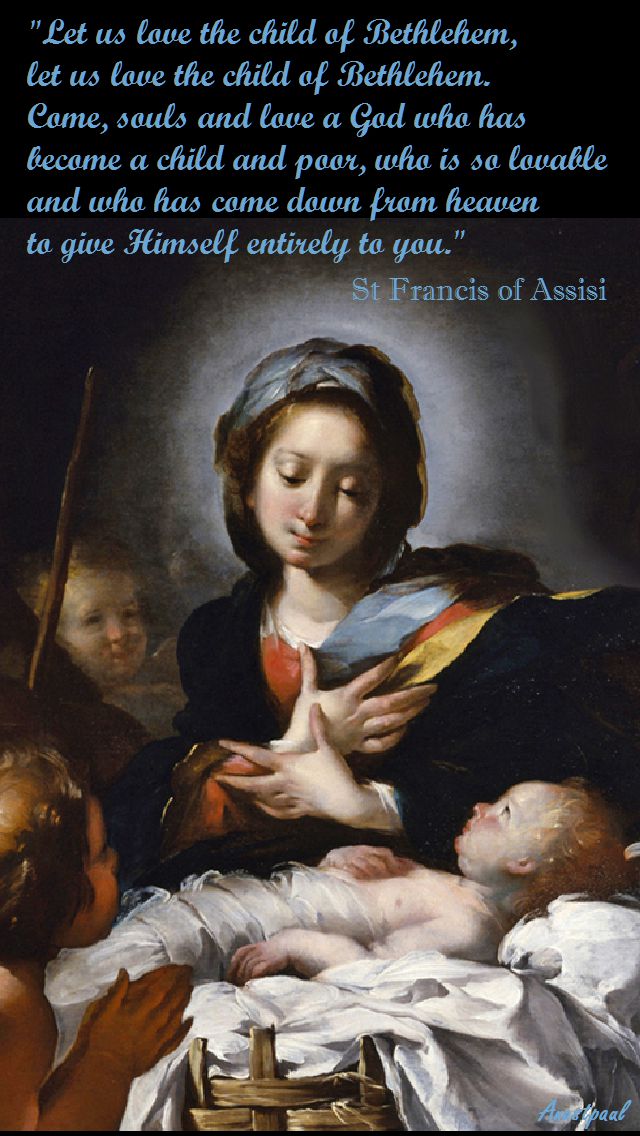
All infants attract the tender affection of those who behold them- but who will not love, with all the tenderness of which they are capable, a God whom they behold as a little child, in need of milk to nourish Him, trembling with cold, poor, abased and forsaken, weeping and crying in a manger, and lying on straw? It was this that made the loving St. Francis exclaim: “Let us love the child of Bethlehem, let us love the child of Bethlehem. Come, souls and love a God who has become a child and poor, who is so lovable and who has come down from heaven to give Himself entirely to you.”









 AnaStpaul
You must be logged in to post a comment.