
Saint of the Day – 19 October – Saint Frideswide (c665-c735) Virgin, Abbess, Founder of the St Mary’s Convent, Miracle-worker The Convent is now Christ Church College, University of Oxford and the Convent Church became Oxford Cathedral. Born in c665 in the upper Thames region of England and died on 19 October 735 of natural causes at her little hermitage at Binsey. Patronage – of the City of Oxford, England and of the University of Oxford. Also known as – Fredeswida, Fredeswinda, Frévisse, Friday, Frideswida, Frideswith, Friðuswiþ, Fris, Fritheswithe, Frithuswith, Fridesvida.
The Roman Martyrology reads today: “At Oxford, in England, St Frideswide, Virgin.”
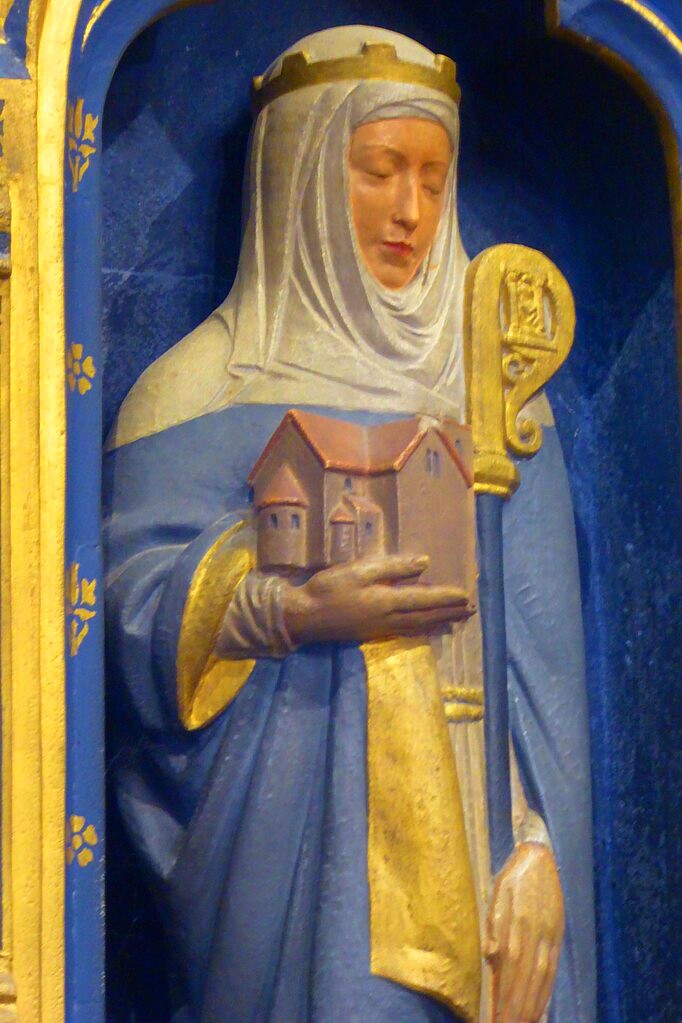
Today is the Feast of Oxford’s Patron St Frideswide, a true Anglo-Saxon Saint. She was born in the Southern border regions of the Kingdom of Mercia, traditionally at Oxford. She was the daughter of pious parents, Didan, the 7th Century sub-King of North and West Berkshire and his wife, Sefrida. These two committed her to the care of a holy woman named, Aelfgith, but, after her mother’s death, Frideswide returned to live with her father. She persuaded him to build her a Church at the gates of Oxford and, there, she took the veil with twelve young women of her acquaintance. Didan enhanced the establishment, by erecting Convent buildings nearby and, there, they lived, not bound by the rules of the cloister but by holy charity and love of seclusion.
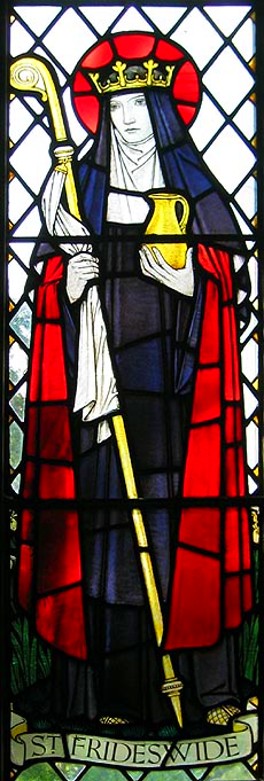
Not long afterward, Aelfgar, a minor Prince of Mercia, heard of Frideswide’s great beauty, as well as her wealth as Didan’s heiress and sent a messenger to ask for her hand in marriage. She excused herself, upon the plea of her vow of celibacy but the Prince persisted and, eventually, made a plan to carry her off. Fortunately, Frideswide discovered the scheme and fled, just in time, to the River Thames. Finding an unattended boat there, she floated to a place, probably Bampton (Oxfordshire) or Frilsham (Berkshire). She took up her abode in a deserted hut used to shelter the pigs which fed upon the acorns in the surrounding forest. A fountain sprang up at her prayer and she was thus able to survive, concealed there for about three years.
Prince Aelfgar had been determined not to be beaten so easily, however and continued to try and find the lady’s hiding place. By the time she felt it safe to return to Oxford, he was absolutely fuming. Hearing of her return, Aelfgar besieged the City and threatened to burn it to the ground unless Frideswide was given up to him. He vowed to sacrifice the lady, not only to his own brutality but to that of his men. Both Frideswide and her father’s defending army were worn out with fatigue. Just as she was about to fall into Aelfgar’s hands, she was reminded of the early saintly ladies of the Church who had saved their honour at the price of life. She thus invoked Sts Catherine and Cecilia, who immediately struck her persecutor blind at the moment he broke through the City gates and entered Oxford. With their leader so wounded, Aelfgar’s fear-stricken men dispersed.
The Princess returned to her nunnery and collected around her a number of Saxon maidens and Monks, over whose double Monastery she presided in great holiness for many years. The origins of the University of Oxford are said, to lie in the school she established there.
Abbess Frideswide was well known for the miracles she performed during her own lifetime. One well-known tale reveals how she was once accosted by a local leper who appealed to her, in the name of Christ, to kiss him. Overcoming her fear of infection and natural disgust at his loathsome condition, the holy lady made the Sign of the Cross and kissed him. Immediately, the scales fell away and his flesh became like that of a child.
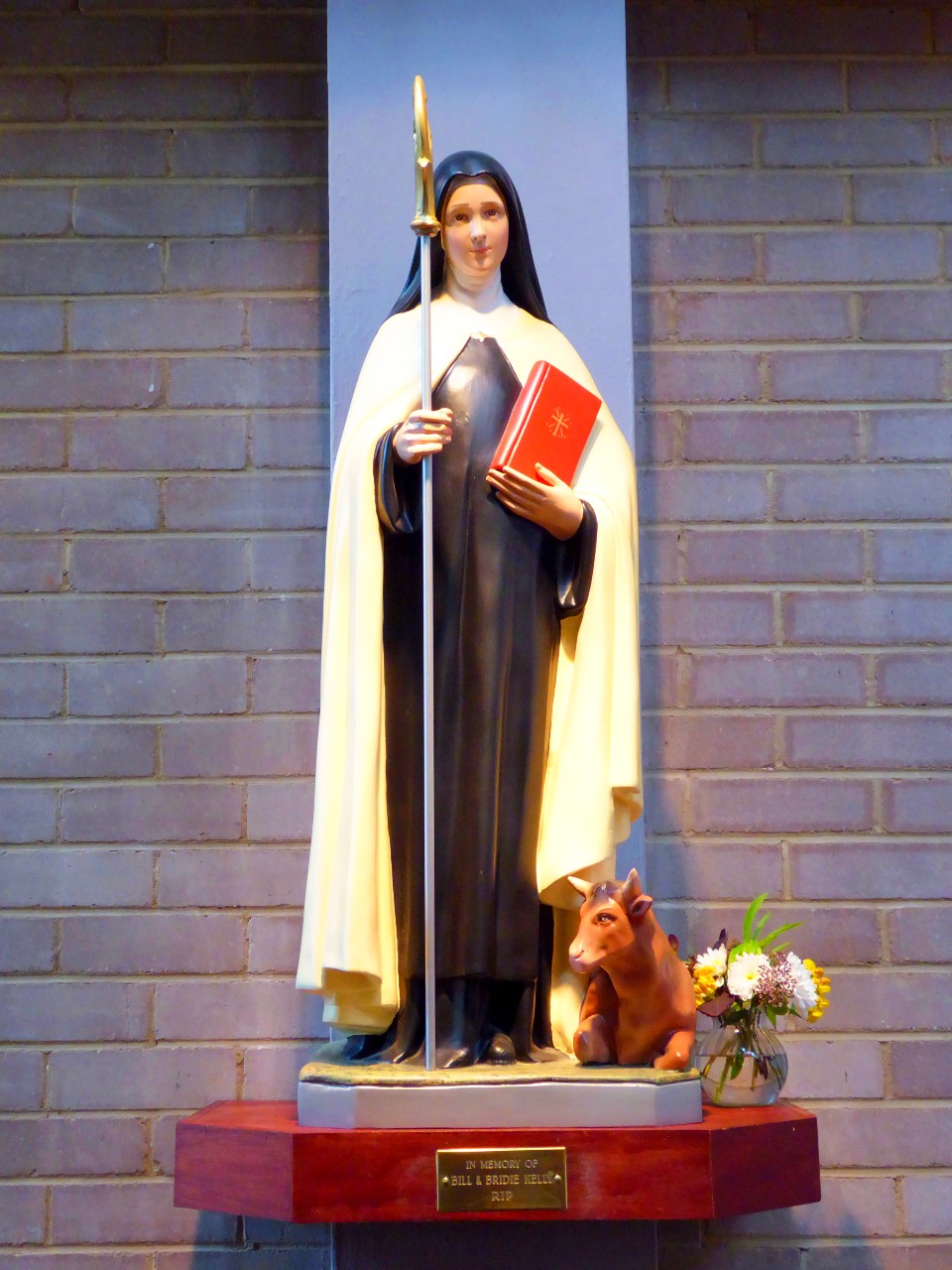
In later life, Frideswide retired to the transquility of a little hermitage at Binsey, not far outside Oxford. There she died on 19 October 735, being subsequently buried in her Monastery in Oxford, where Christ Church Cathedral now stands. Multitudes of pilgrims resorted to her tomb and to the Binsey Chapel, although the well and Chapel at Frilsham were eclipsed by other claimants. All became famous for miraculous cures. She is represented, in art, with the pastoral staff of an Abbess, a model of her foundation and Church, a fountain springing up near her and an ox at her feet.



 AnaStpaul
You must be logged in to post a comment.