Our Morning Offering – 11 November – Monday of the Thirty Second Week in Ordinary Time, Year C
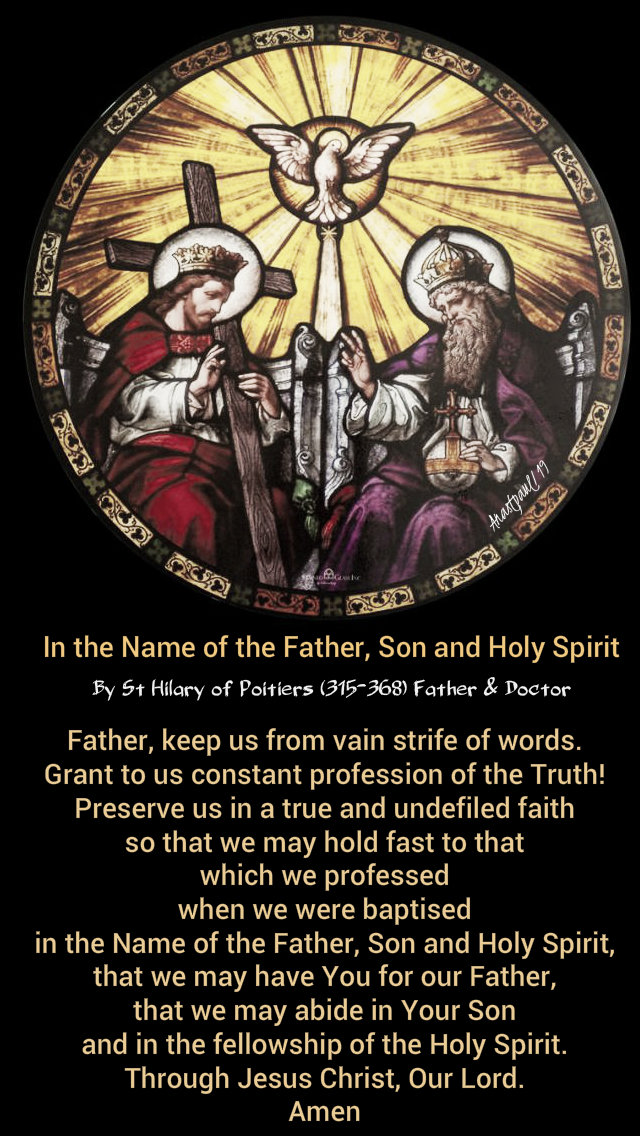
In the Name of the Father, Son and Holy Spirit By St Hilary of Poitiers (315-368) Father & Doctor of the Church
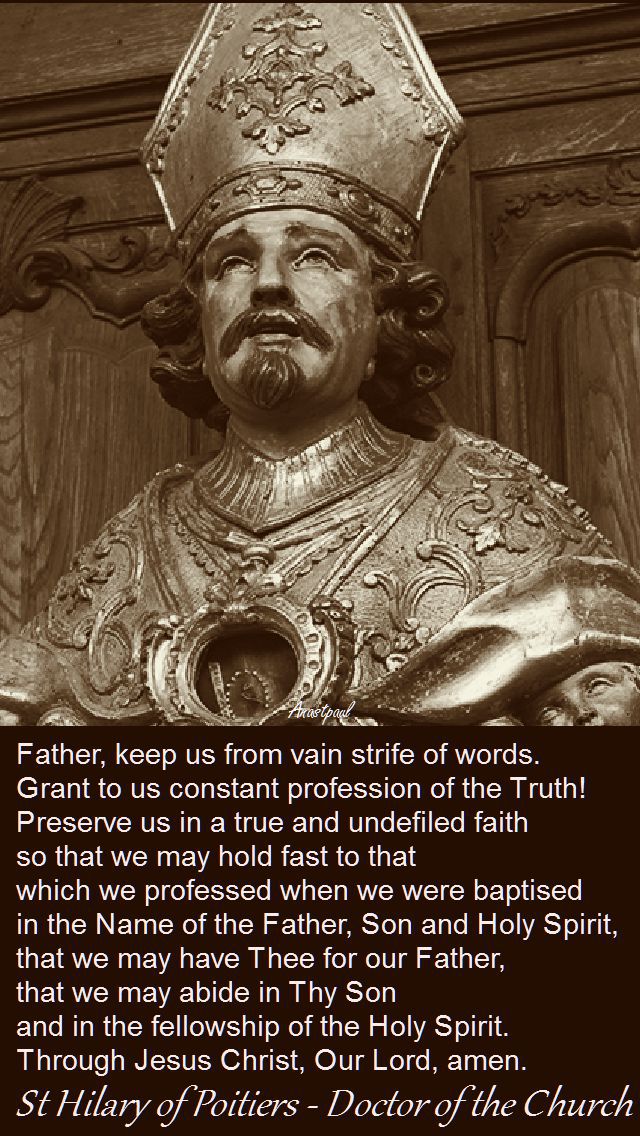
Father, keep us from vain strife of words.
Grant to us constant profession of the Truth!
Preserve us in a true and undefiled faith
so that we may hold fast to that
which we professed
when we were baptised
in the Name of the Father, Son and Holy Spirit,
that we may have You for our Father,
that we may abide in Your Son
and in the fellowship of the Holy Spirit.
Through Jesus Christ, Our Lord.
Amen
One Minute Reflection – 3 August – Friday of the Seventeenth week in Ordinary Time, Year C, Gospel: Matthew 13:54–58 and The Memorial of St Eusebius of Vercelli (c 283-371)
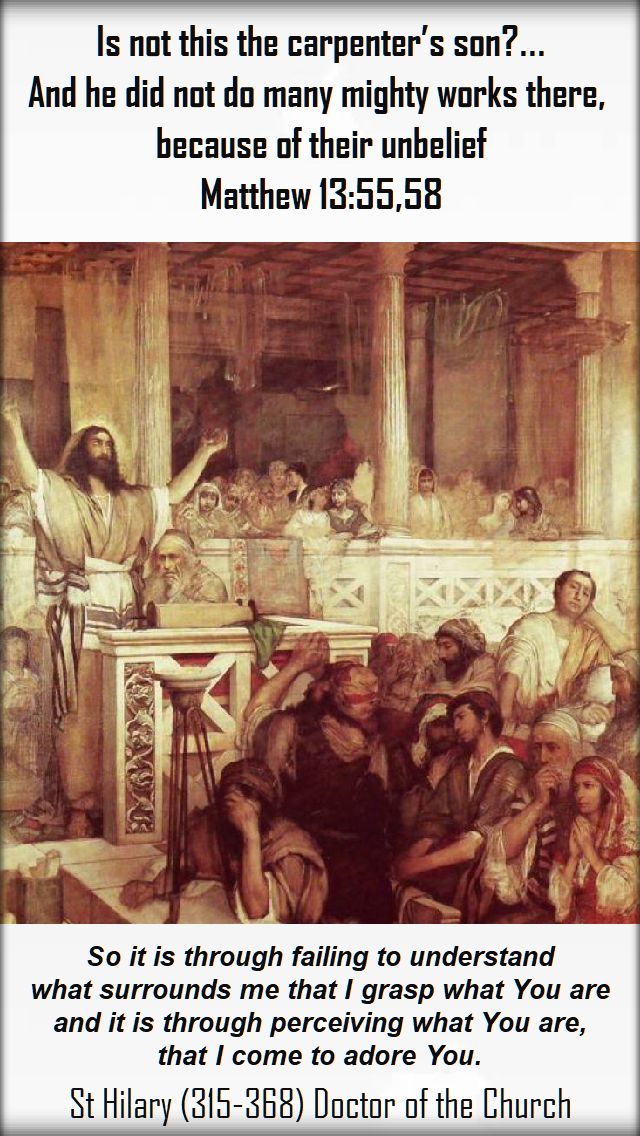
Is not this the carpenter’s son?…And he did not do many mighty works there, because of their unbelief.…Matthew 13:55,58
REFLECTION – “For if I do not understand the nature placed at my service, I discern Your goodness from the mere fact that it is there to serve me. I perceive that I do not even understand myself but I wonder at You all the more… You have given me intellect, life and human feeling, the source of so many joys, yet I do not begin to understand how I began to be…
So it is through failing to understand what surrounds me, that I grasp what You are and it is through perceiving what You are, that I come to adore You. That is why, in what concerns Your mysteries, my incomprehension, lessens not a bit my faith in Your omnipotence… Your eternal Son’s birth exceeds even the idea of eternity, it is prior to the times everlasting. Before any other thing that exists, He was Son proceeding from You, O God and Father. He is true God… You have never existed without Him… Before ever time was, You are the eternal Father of Your Sole Begotten One.”…St Hilary (315-368) Bishop of Poitiers, Doctor of the Church
PRAYER – “So long as I enjoy that breath of life granted to me by You, Holy Father, Almighty God, I will proclaim You as God eternal but also as Father eternal. Never will I set myself up as judge of Your almighty power and mysteries, never will I set my limited understanding before the true appreciation of Your infinity, never will I claim You to have existed beforehand without Your Wisdom, Power and Word, God the Only-Begotten, my Lord Jesus Christ. For even though human language is weak and imperfect when it speaks of You, this will not inhibit my mind, to the point of reducing my faith to silence, for lack of words, able to express the mystery of Your being…” (St Hilary) Lord God, You hold out the light of Your Word to those who do not know You. Strengthen in our hearts the faith You have given us, so that no trials may quench the fire Your Spirit kindled within us . Grant that the prayers of St Eusebius of Vercelli, may assist us to grow in love of You. Through Jesus Christ, our Lord, with the Holy Spirit, one God forever, amen.
Our Morning Offering – 8 July – Monday of the Fourteenth week in Ordinary Time, Year C
In the Name of the Father, Son and Holy Spirit By St Hilary of Poitiers (315-368) Father & Doctor of the Church
Father, keep us from vain strife of words.
Grant to us constant profession of the Truth!
Preserve us in a true and undefiled faith
so that we may hold fast to that
which we professed
when we were baptised
in the Name of the Father, Son and Holy Spirit,
that we may have You for our Father,
that we may abide in Your Son
and in the fellowship of the Holy Spirit.
Through Jesus Christ, Our Lord.
Amen
The Church, a communion living in the faith of the apostles
which she transmits, is the place where we know the Holy Spirit:
– in the Scriptures He inspired;
– in the Tradition, to which the Church Fathers are always timely witnesses;
– in the Church’s Magisterium, which He assists;
– in the sacramental liturgy, through its words and symbols,
in which the Holy Spirit puts us into communion with Christ;
– in prayer, wherein He intercedes for us;
– in the charisms and ministries, by which the Church is built up;
– in the signs of apostolic and missionary life;
– in the witness of saints, through whom
He manifests His holiness
and continues the work of salvation.
Catechism of the Catholic Church
Section Two – Article 8 “I believe in the Holy Spirit” #688
++++++++++++++++++++
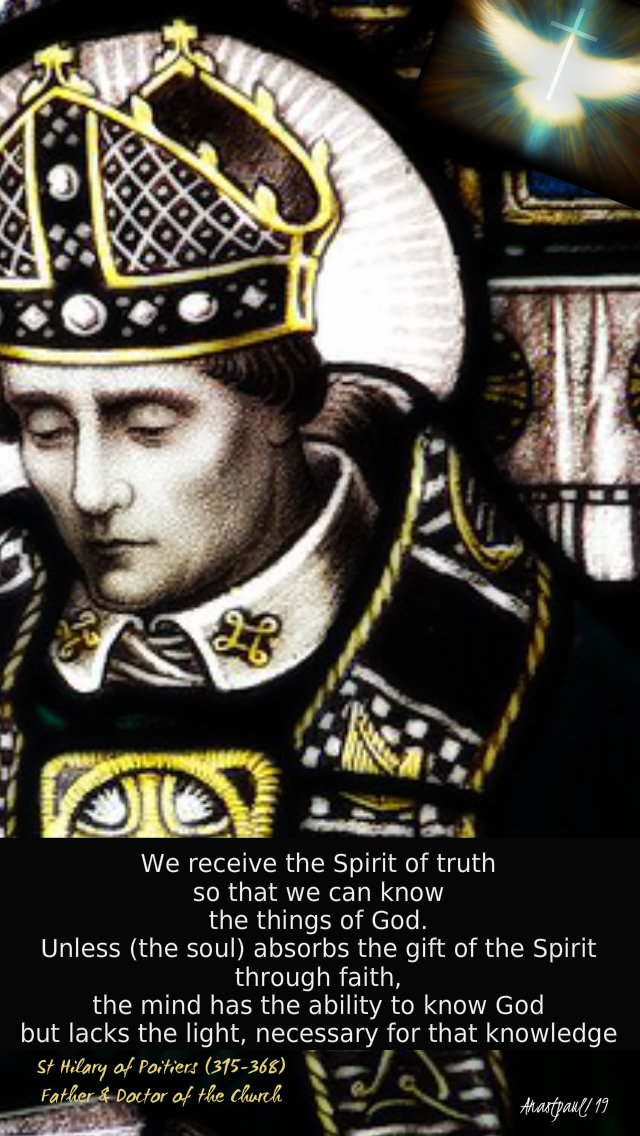
“We receive the Spirit of truth so that we can know the things of God. In order to grasp this, consider how useless the faculties of the human body would becom, if they were denied their exercise. Our eyes cannot fulfil their task without light, either natural or artificial, our ears cannot react without sound vibrations and in the absence of any odour, our nostrils are ignorant of their function. Not that these senses would lose their own nature, if they were not used. rather, they demand objects of experience in order to function. It is the same with the human soul. Unless it absorbs the gift of the Spirit through faith, the mind has the ability to know God but lacks the light necessary for that knowledge.”
St Hilary of Poitiers (315-368)
Father & Doctor of the Church
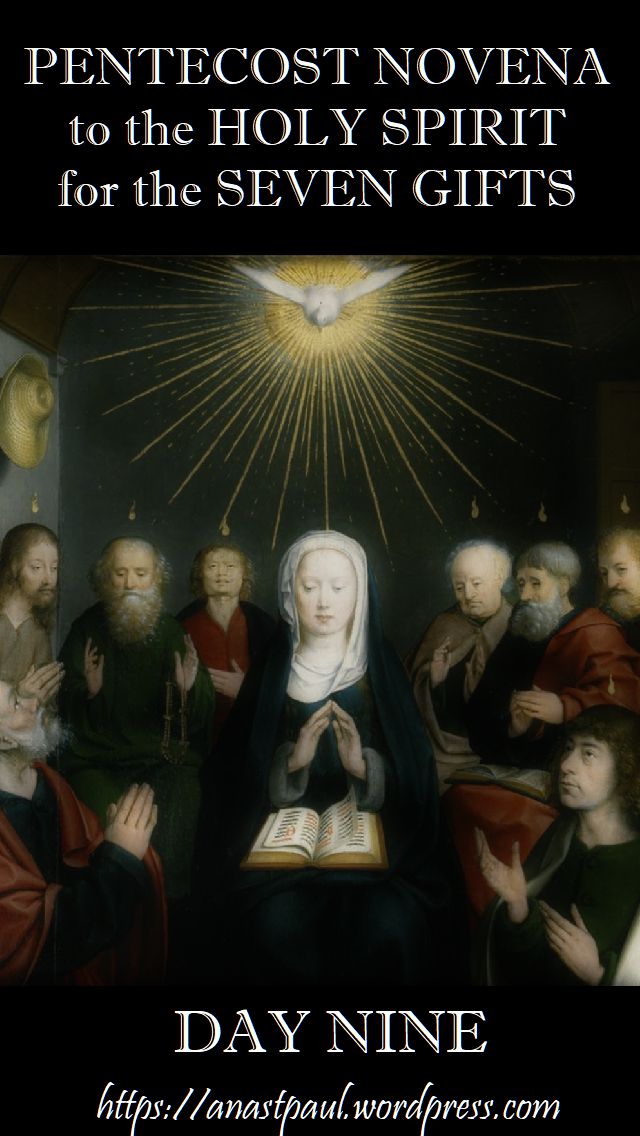
O Holy Spirit, Divine Consoler!
I adore You as my True God.
I offer You my whole heart
and I render You heartfelt thanks
for all the benefits You have bestowed upon the world.
You are the author of all supernatural gifts
and enriched the Blessed Virgin Mary,
the Mother of God,
with all favours,
I ask You to visit me by Your grace and Your love,
and grant me the favour
I so earnestly seek…
…………………………………. State your request here…
O Holy Spirit,
spirit of truth, come into our hearts.
Let us Pray:
O Lord, Holy Spirit,
grant me sight to see the wondrous promise of divine love,
insight to see my own weakness,
delight in Your divine presence in my soul
which You have made Your temple, through sanctifying grace.
I pray, O Holy Spirit,
that I may be not doubting;
that I be spared the pain of being alone
without trust or hope in Christ,
that my prayer may always be “My Lord and my God!”
I pray that I may acquire a sense of retreat
to prayer and recollection at various times in my daily life,
for prayer is the bond that joins us to Christ.
I pray that I may be aware of the physical needs of the poor
and that I may share what I can with them
in the charitable works of the Church.
I pray, O Holy Spirit,
that You will, in Your mercy
grant me the favour, I have sought in this novena.
Come, O Holy Spirit,
fill the hearts of Your faithful,
and kindle in them the fire of Your love.
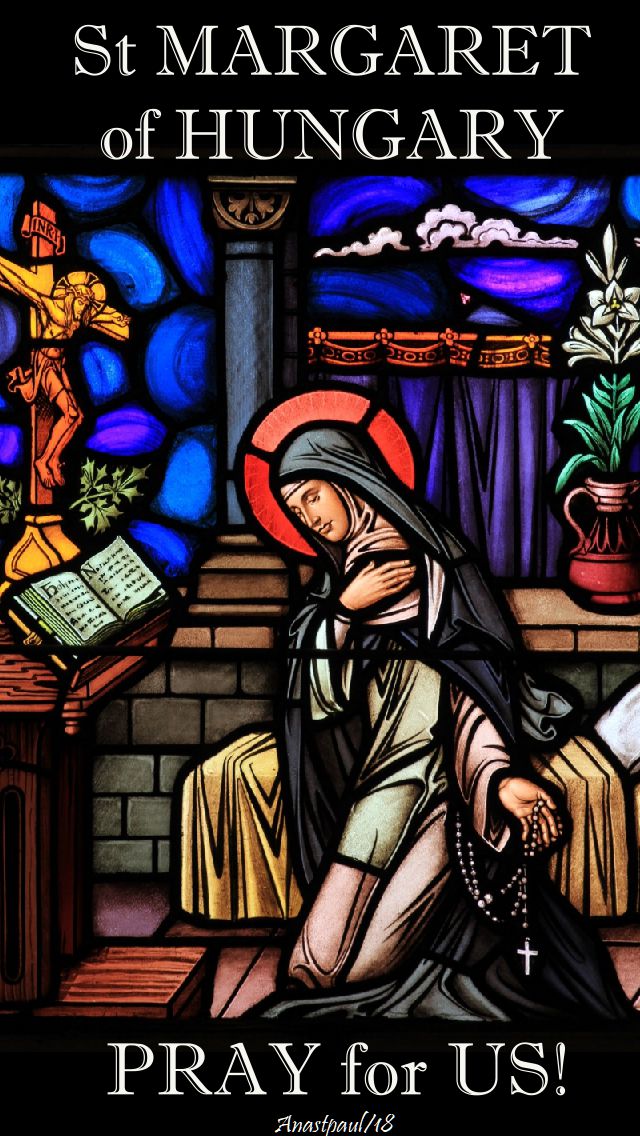
One Minute Reflection – 18 January – Friday of the First week in Ordinary Time: Gospel Mark 2:1-12 and the The Memorial of St Margaret of Hungary (1242-1270)
“I say to you, rise, take up your pallet and go home.” …Mark 2:11
REFLECTION – “None can forgive sins except God alone, and so He who healed them is God… And so that people might understand that He had taken flesh for the remission of their sins and to gain resurrection for their bodies, He said: “That you may know that the Son of Man has authority on earth to forgive sins on earth” – He then said to the paralytic: “Rise, pick up your stretcher”. It would have been enough to have said: “Rise”, but… He added: “Pick up your stretcher and go home.” First He granted remission of sins, then He manifested the power of the resurrection and then, by making him take up his stretcher, He taught that weakness and pain will no longer afflict the body. Finally, by sending this man home healed, He showed that believers must rediscover the road to paradise, the same road that Adam, the father of all, abandoned when he was spoiled by the stain of sin.”…St Hilary (c.315-367) Father & Doctor of the Church
PRAYER– Living God, You have given me the Eucharist as my food for heavenly life. Help me to partake of it often and so be strengthened on my pilgrim journey on earth. Grant that St Margaret of Hungary, may add us all to her prayers, that by her intercession, we too may learn the true way home. Through Jesus Christ, our Lord, in union with the Holy Spirit, one God forever and ever, amen.
Thought for the Day – 13 January – May I serve You by making You known
The Memorial of St Hilary of Poitiers (315-368) Father & Doctor of the Church
This prayer is an excerpt from a sermon On the Trinity by Saint Hilary of Poitiers, a bishop and early Church Father of the fourth century who struggled valiantly against the Arian heresy, defending the divinity of Christ and the doctrine of the Trinity. From a sermon on the Trinity by St Hilary of Poitiers (315-368) Father & Doctor of the Church – (Lib 1, 37-38: PL 10, 48-49)
May I serve You by making You known
“I am well aware, almighty God and Father, that in my life I owe You a most particular duty. It is to make my every thought and word speak of You.
In fact, You have conferred on me this gift of speech and it can yield no greater return than to be at Your service. It is for making You known as Father, the Father of the only-begotten God and preaching this to the world that knows You not and to the heretics who refuse to believe in You.
In this matter, the declaration of my intention, is only of limited value. For the rest, I need to pray for the gift of Your help and Your mercy. As we spread our sails of trusting faith and public avowal before You, fill them with the breath of Your Spirit, to drive us on, as we begin this course of proclaiming Your truth. We have been promised and He who made the promise is trustworthy: Ask, and it will be given to you; seek, and you will find; knock, and it will be opened to you.
Yes, in our poverty we will pray for our needs. We will study the sayings of Your prophets and apostles with unflagging attention and knock for admittance wherever the gift of understanding is safely kept. But Yours it is, Lord, to grant our petitions, to be present when we seek You and to open when we knock.
There is an inertia in our nature that makes us dull and in our attempt to penetrate Your truth. we are held within the bounds of ignorance. by the weakness of our minds. Yet we do comprehend divine ideas by earnest attention to Your teaching and by obedience to the faith, which carries us beyond mere human apprehension.
So we trust in You to inspire the beginnings of this ambitious venture, to strengthen its progress and to call us into a partnership, in the spirit, with the prophets and the apostles. To that end, may we grasp precisely what they meant to say, taking each word in its real and authentic sense. For we are about to say what they already have declared as part of the mystery of revelation – that You are the eternal God, the Father of the eternal, only-begotten God; that You are one and not born from another; and that the Lord Jesus is also one, born of You from all eternity. We must not proclaim a change in truth regarding the number of gods. We must not deny that He is begotten of You who are the one God, nor must we assert that He is other than the true God, born of You who are truly God the Father.
Impart to us, then, the meaning of the words of Scripture and the light to understand it, with reverence for the doctrine and confidence in its truth. Grant that we may express what we believe. Through the prophets and apostles we know about You, the one God the Father and the one Lord Jesus Christ. May we have the grace, in the face of heretics who deny You, to honour You as God, who is not alone and to proclaim this as truth.”
The above is used in the Roman Office of Readings for the feast (liturgical memorial) of St Hilary of Poitiers on 13 January.
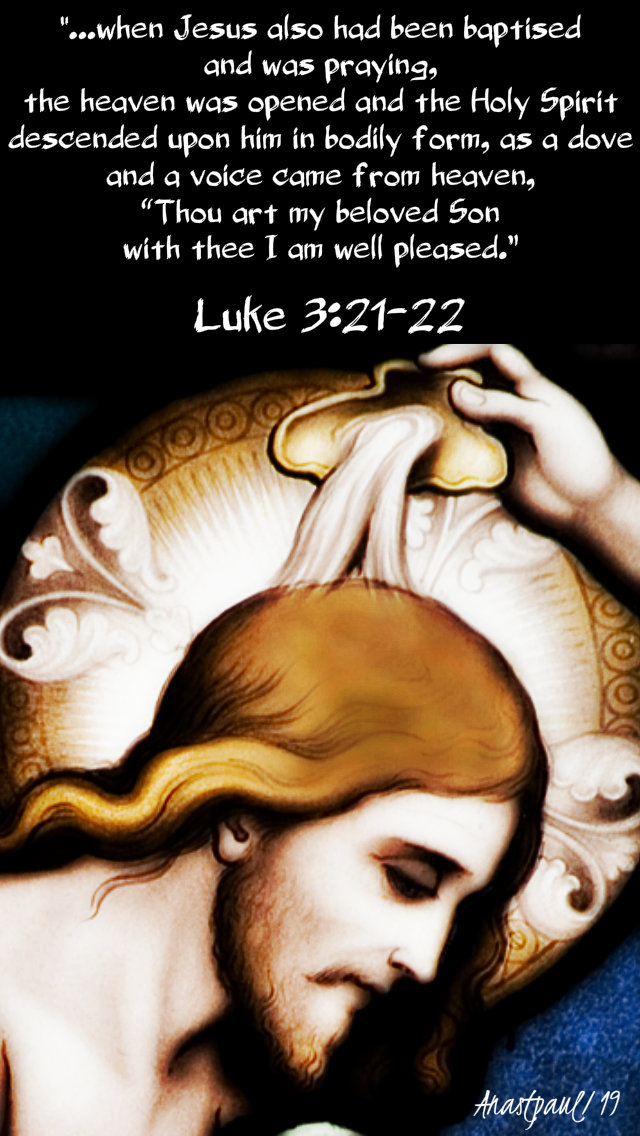
One minute Reflection – 13 January – The Feast of the Baptism of the Lord, Gospel: Luke 3:15-22 and Memorial of St Hilary of Poitiers (315-368) Father & Doctor of the Church
“…when Jesus also had been baptised and was praying, the heaven was opened and the Holy Spirit descended upon him in bodily form, as a dove and a voice came from heaven, “Thou art my beloved Son with thee I am well pleased.”…Luke 3:21-22
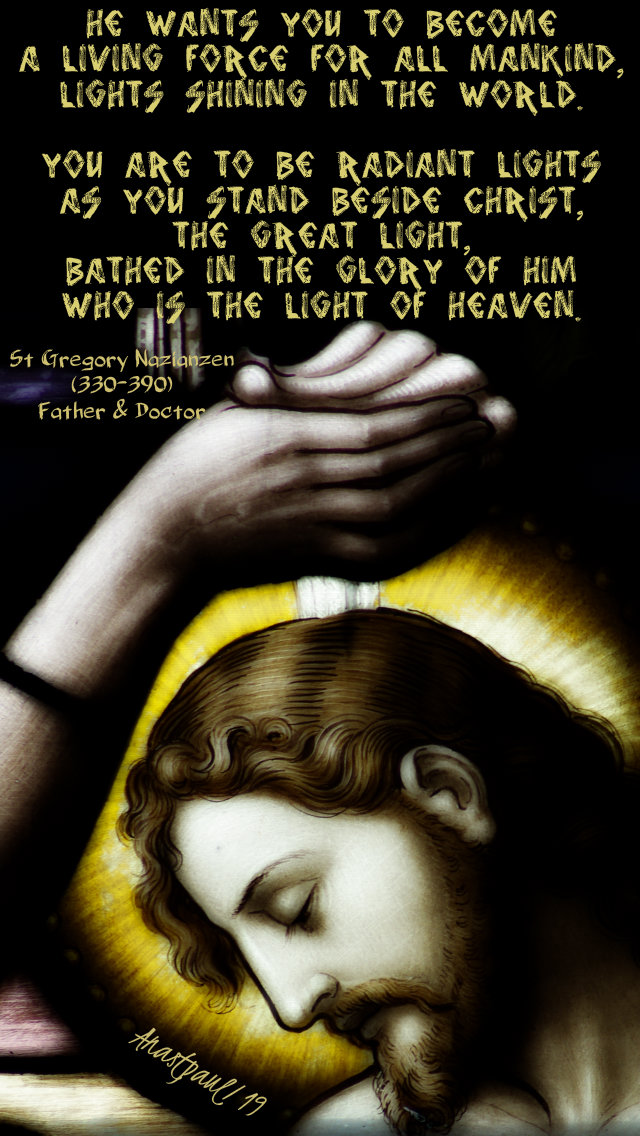
REFLECTION – “Jesus rises from the waters; the world rises with Him. The heavens like Paradise with its flaming sword, closed by Adam for himself and his descendants, are rent open. The Spirit comes to Him as to an equal, bearing witness to His Godhead. A voice bears witness to Him from heaven, His place of origin. The Spirit descends in bodily form like the dove that so long ago announced the ending of the flood and so gives honour to the body that is one with God.
Today, let us do honour to Christ’s baptism and celebrate this feast in holiness. Be cleansed entirely and continue to be cleansed. Nothing gives such pleasure to God as the conversion and salvation of men, for whom His every word and every revelation exist. He wants you to become a living force for all mankind, lights shining in the world. You are to be radiant lights as you stand beside Christ, the great light, bathed in the glory of Him who is the light of heaven. You are to enjoy, more and more, the pure and dazzling light of the Trinity, as now you have received—though not in its fullness—a ray of its splendour, proceeding from the one God, in Christ Jesus our Lord, to whom be glory and power for ever and ever. Amen. “…St Gregory Nazianzen (330-390 – Father & Doctor of the Church (An excerpt from Oration 39: On Holy Light)
PRAYER – Father, keep us from vain strife of words.
Grant to us constant profession of the Truth!
Preserve us in a true and undefiled faith
so that we may hold fast to that
which we professed when we were baptised
in the Name of the Father, Son and Holy Spirit,
that we may have You for our Father,
that we may abide in Your Son
and in the fellowship of the Holy Spirit.
Through Jesus Christ, Our Lord.
Amen…St Hilary of Poitiers
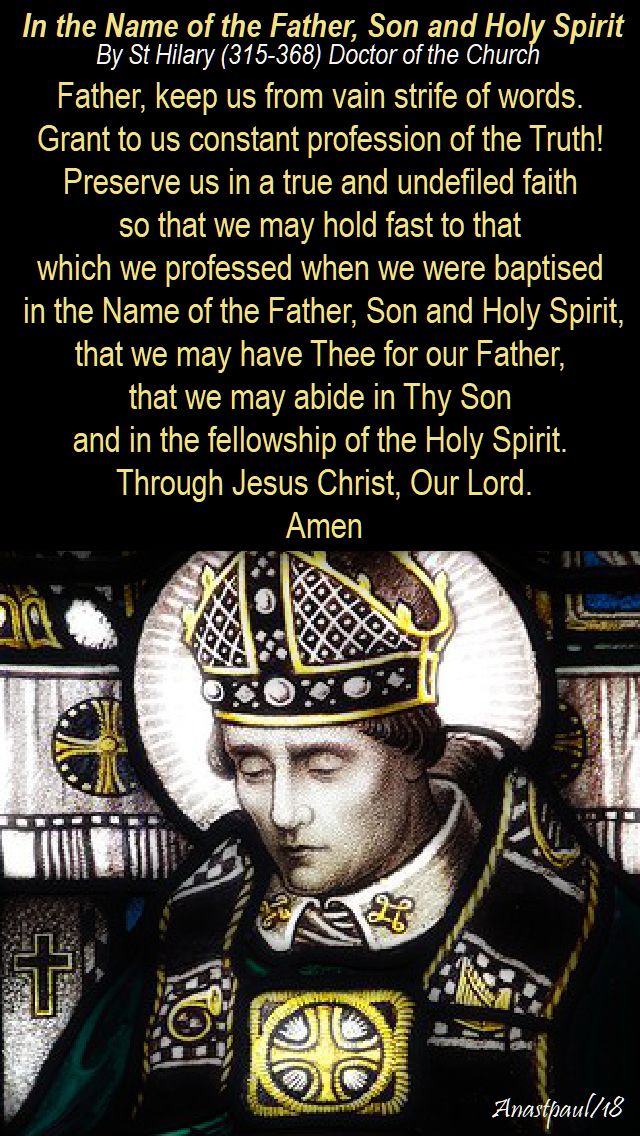
In the Name of the Father, Son and Holy Spirit By St Hilary (315-368) Father & Doctor of the Church
Father, keep us from vain strife of words.
Grant to us constant profession of the Truth!
Preserve us in a true and undefiled faith
so that we may hold fast to that
which we professed when we were baptised
in the Name of the Father, Son and Holy Spirit,
that we may have Thee for our Father,
that we may abide in Thy Son
and in the fellowship of the Holy Spirit.
Through Jesus Christ, Our Lord.
Amen
One Minute Reflection – 29 July – Seventeenth Sunday in Ordinary Time – Today’s Gospel: John 6:1–15
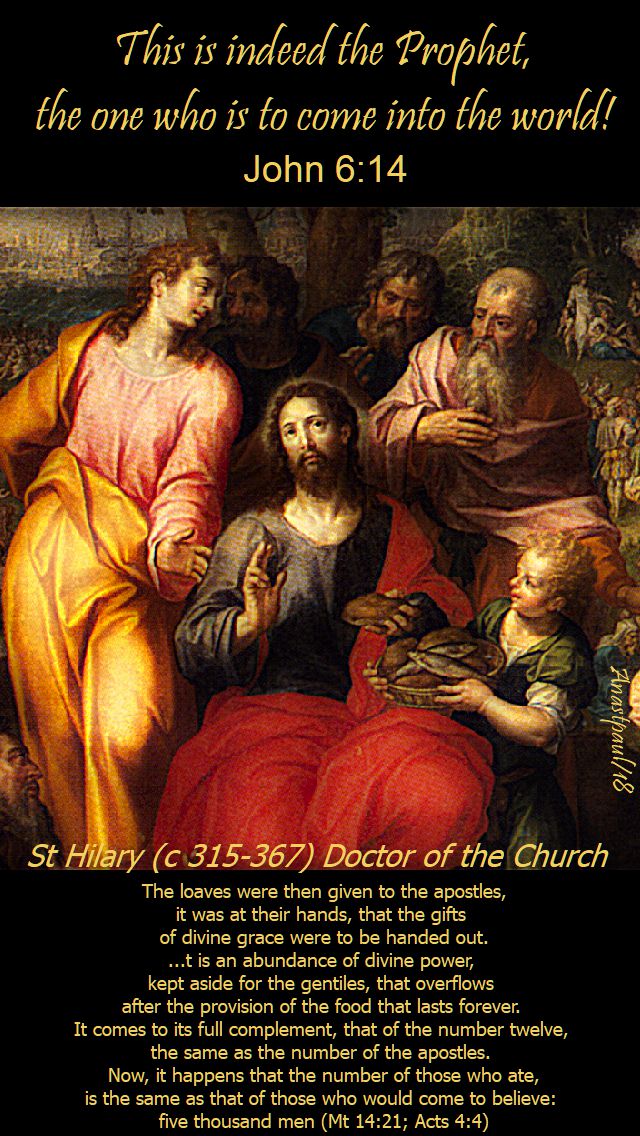
“This is indeed the Prophet, the one who is to come into the world!”…John 6:14
REFLECTION – “The disciples say that they have only five loaves and two fish. The five loaves signified that they were still subject to the five books of the Law and the two fish that they were fed by the teachings of the prophets and John the Baptist… This was what the apostles had to offer to begin with since this was the point they were at and it was from this point, that the preaching of the Gospel began…
Our Lord took the loaves and the fish. He raised his eyes to heaven, said the blessing and broke them. He gave thanks to the Father because the Good News was being changed into food after centuries of the Law and the prophets… The loaves were then given to the apostles, it was at their hands, that the gifts of divine grace were to be handed out. Then the people were fed with the five loaves and two fish and, when those who were invited were satisfied, the leftovers of bread and fish were so plentiful that twelve baskets were filled with them. What this means is that the crowd was filled with God’s word coming from the teaching of the Law and the prophets. But it is an abundance of divine power, kept aside for the gentiles, that overflows after the provision of the food that lasts forever. It comes to its full complement, that of the number twelve, the same as the number of the apostles. Now, it happens that the number of those who ate is the same as that of those who would come to believe: five thousand men (Mt 14:21; Acts 4:4).”…St Hilary (c 315-367) Bishop of Poitiers, Doctor of the Church
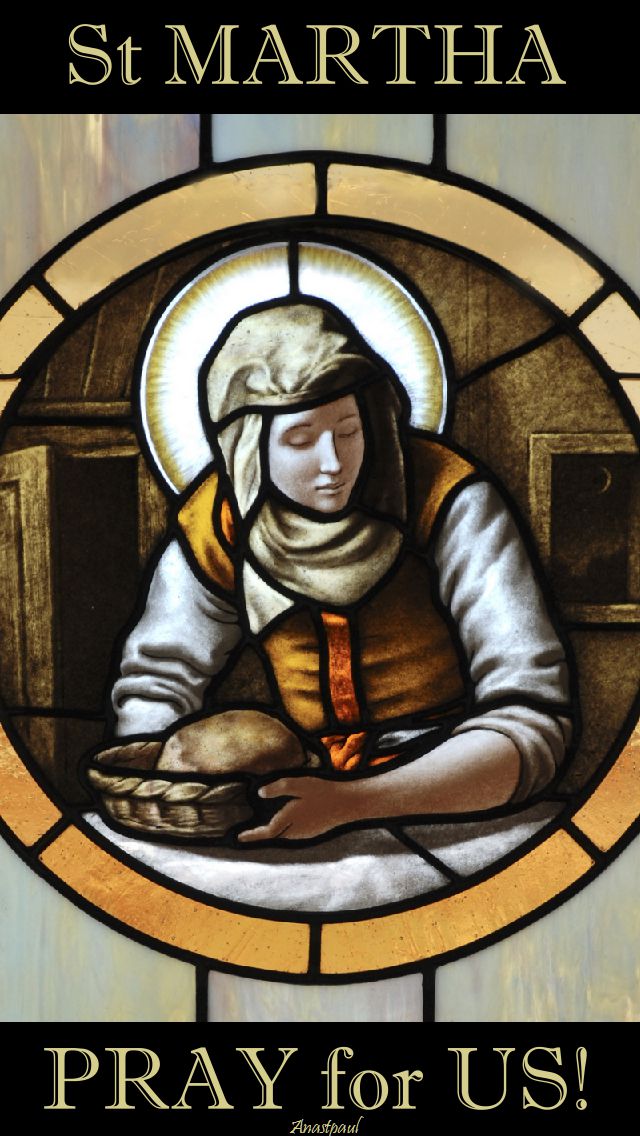
PRAYER – Lord God, protector of those who hope in You, without whom nothing is strong, nothing holy, support us always with Your love. Help us to offer our own ‘loaves and fishes’ our own talents and possessions, to feed all who need our care. May the prayers of St Martha grant us Your grace to serve Christ faithfully in our brethren and guide us so to use the good things of this world, that even now, we may hold fast to what endures forever, through Jesus Christ, our Lord. Amen
Quote of the Day – 6 May “Mary’s Month!” – Sixth Sunday of Eastertide B
The great St Hilary (315-368) , Father and Doctor of the Church (Doctor of the Divinity of Christ), wrote this excellent passage:
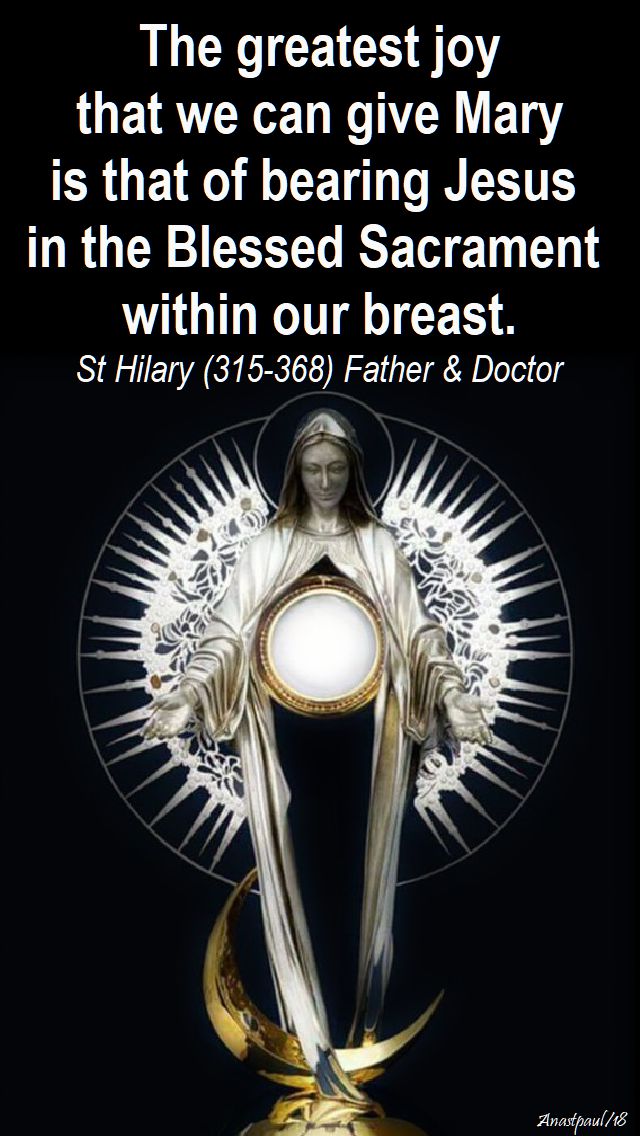
“The greatest joy that we can give Mary is that of bearing Jesus in the Blessed Sacrament within our breast.”
Her motherly union with Jesus becomes a union also with whoever is united to Jesus, especially in Holy Communion. And what can give as much joy to one who loves, as union with the person loved? And we—–do we not happen to be beloved children of the heavenly Mother?
One Minute Reflection – 13 January – The Memorial of St Hilary of Poitiers (315-368) Father & Doctor of the Church
Then he said, ‘In truth I tell you, unless you change and become like little children you will never enter the kingdom of Heaven…Matthew 18:3
REFLECTION – “Little children follow and obey their father. They love their mother. They know nothing of covetousness, ill-will, bad temper, arrogance and lying. This state of mind opens the road to heaven. To imitate our Lord’s own humility, we must return to the simplicity of God’s little ones. – St Hilary
PRAYER – Give us the grace, almighty God, to become as innocent and obedient to You as little children. Teach us neither to question, nor fear, for it is our total trust of You that we will reach our heavenly home. Grant that the intercession of St Hilary we may achieve such innocence, through Christ our Lord, in union with the Holy Spirit, one God forever and ever, amen.
Our Morning Offering – 13 January – The Memorial of St Hilary of Poitiers (315-368) Father & Doctor of the Church
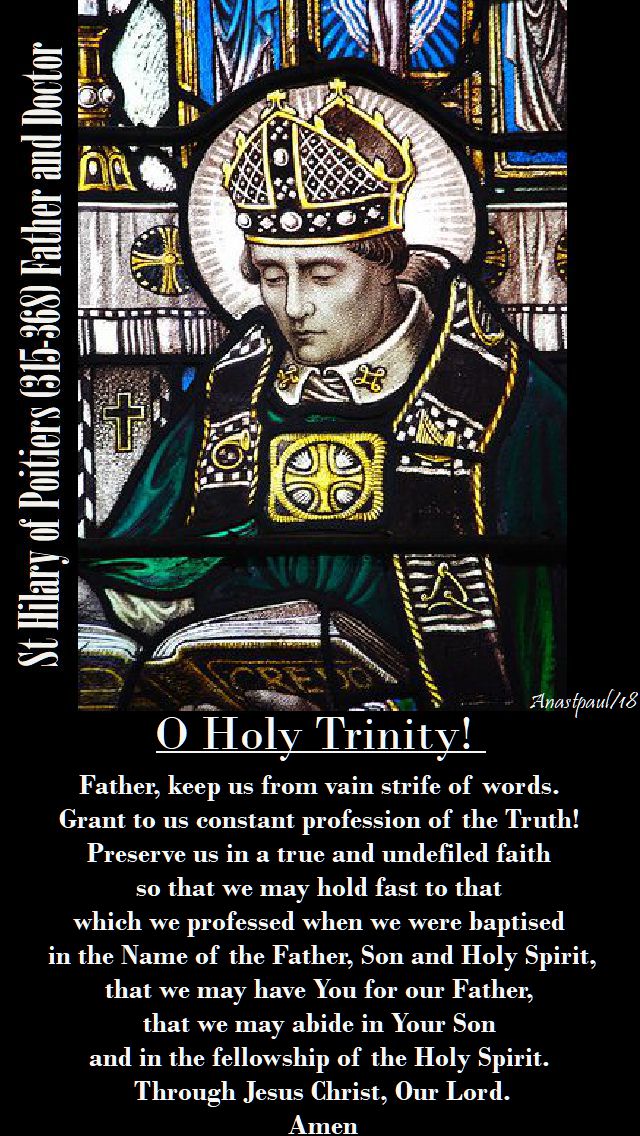
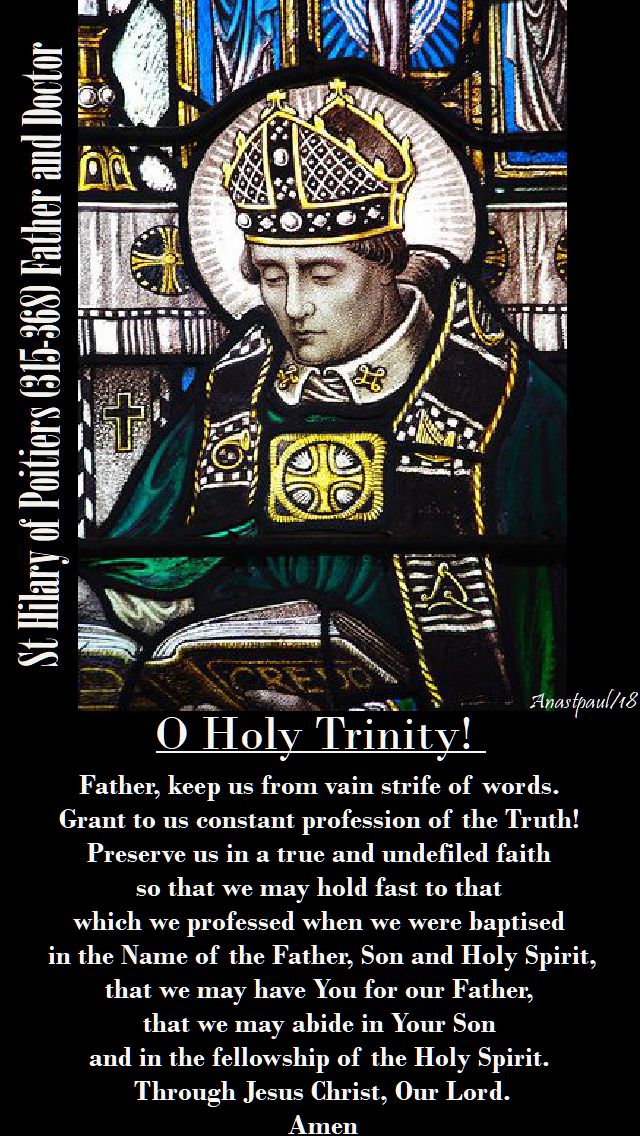
O Holy Trinity! For Perseverance In the One True Faith By St Hilary of Poitiers
Father, keep us from vain strife of words.
Grant to us constant profession of the Truth!
Preserve us in a true and undefiled faith
so that we may hold fast to that
which we professed when we were baptised
in the Name of the Father, Son and Holy Spirit,
that we may have You for our Father,
that we may abide in Your Son
and in the fellowship of the Holy Spirit.
Through Jesus Christ, Our Lord.
Amen
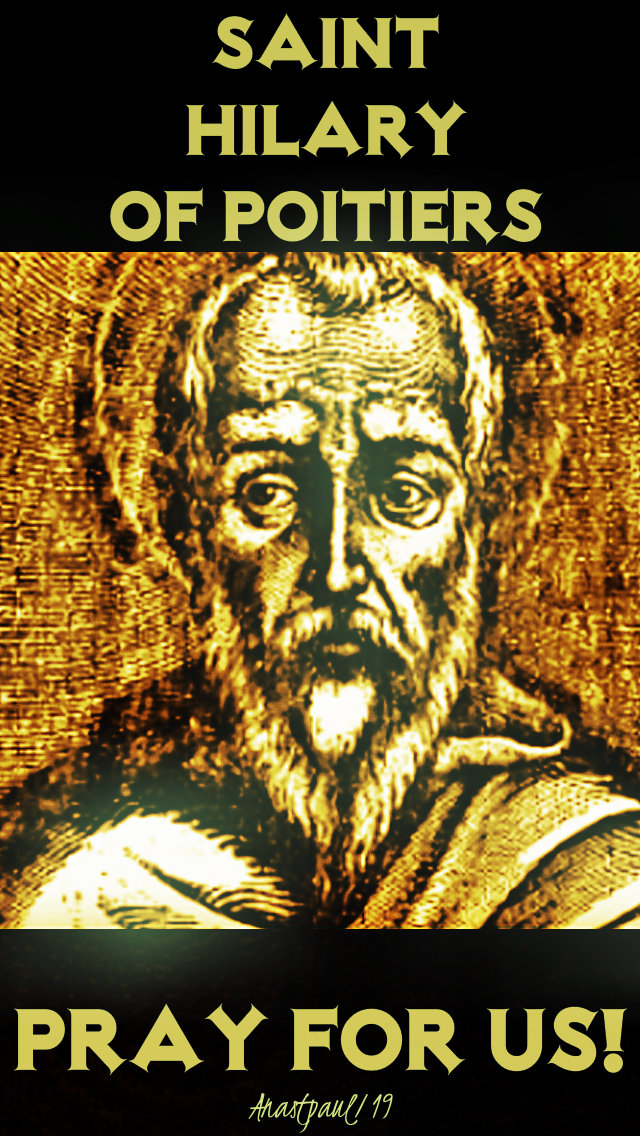
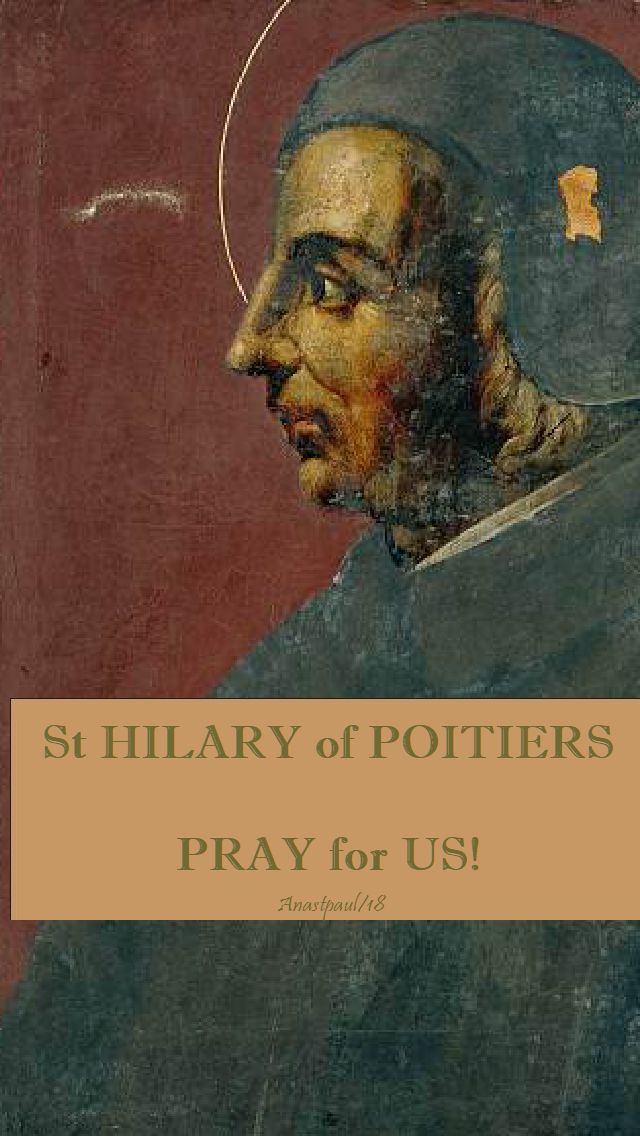
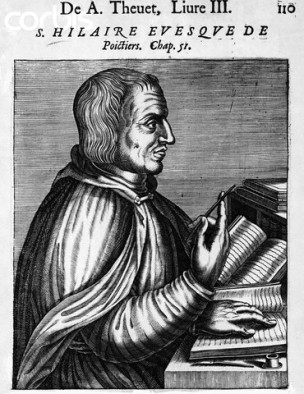
Saint of the Day – 13 January – St Hilary of Poitiers (315-368) Father & Doctor of the Church, Bishop, Confessor, Writer, Philosopher, Theologian, Preacher, Defender of the Faith. He was sometimes referred to as the “Hammer of the Arians” and the “Athanasius of the West.” His name comes from the Latin word for happy or cheerful. St Hilary was born in 315 at Poitiers, France and he died in 368 of natural causes. Patronages – against rheumatism, against snakes, against snake bites, backward children, children learning to walk, mothers, the sick/the infirm, 4 Cities.
Hilary was born to pagan parents of Poitiers, France, in 315. After training in the classics and philosophy, Hilary married. He and his wife had one daughter, Afra. All who knew Hilary said he was a friendly, charitable, gentle man. Hilary’s studies led him to read Scripture. He became convinced that there was only one God, whose Son became man and died and rose to save all people. This led him to be baptised along with his wife and daughter.
This gentle and courteous man, became a staunch defender of the divinity of Christ. He was devoted to writing some of the greatest theology on the Trinity and was, like his Master, in being labeled a “disturber of the peace.” In a very troubled period in the Church, his holiness was lived out in both scholarship and controversy.
The people of Poitiers chose Hilary to be their bishop in 353. As Bishop, he was soon taken up with battling what became the scourge of the fourth century, Arianism, which denied the divinity of Christ.
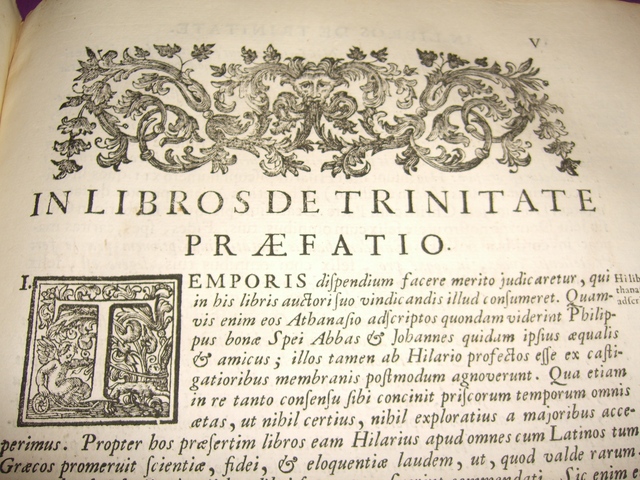
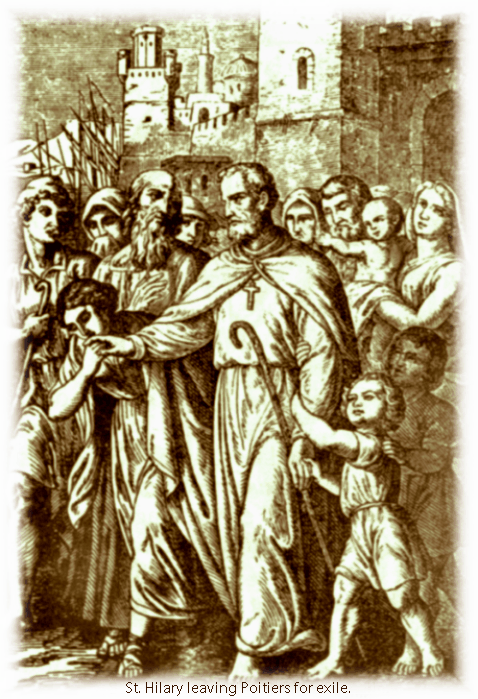
The heresy spread rapidly. Saint Jerome said “The world groaned and marvelled to find that it was Arian.” When Emperor Constantius ordered all the bishops of the West to sign a condemnation of Athanasius, the great defender of the faith in the East, Hilary refused and was banished from France to far off Phrygia. There, too, his pastoral solicitude led him to work tirelessly for the re-establishment of the Church’s unity, based on the correct faith, as formulated by the Council of Nicea. To this end, he began writing his most important and most famous dogmatic work: “De Trinitatae” (On the Trinity). Eventually he was called the “Athanasius of the West” and the “Hammer of the Arians.”
Fearing Hilary’s arguments, Arian’s followers begged the emperor to send Hilary home. The emperor, believing Hilary was also undermining his authority, recalled him. Hilary’s writings show that he could be fierce in defending the faith but in dealing with the bishops who had given in to the Arian heresy, he was charitable. He showed them their errors and helped them to defend their faith. Though the emperor called Hilary “disturber of the peace,” Saints Jerome and Augustine praised him as “teacher of the churches.”
During the last years of his life, he wrote “Treatises on the Psalms,” a commentary on 58 psalms, interpreted according to the principle highlighted in the introduction to the work: “There is no doubt that all the things said in the Psalms must be understood according to the Gospel proclamation, so that, independently of the voice with which the prophetic spirit has spoken, everything refers to the knowledge of the coming of our Lord Jesus Christ, incarnation, passion and kingdom and the glory and power of our resurrection”(“Instructio Psalmorum” 5).
In all of the Psalms, he sees this transparency of Christ’s mystery and of His body, which is the Church. On various occasions, Hilary met with St Martin, the future bishop of Tours who founded a monastery near Poitiers, which still exists today.
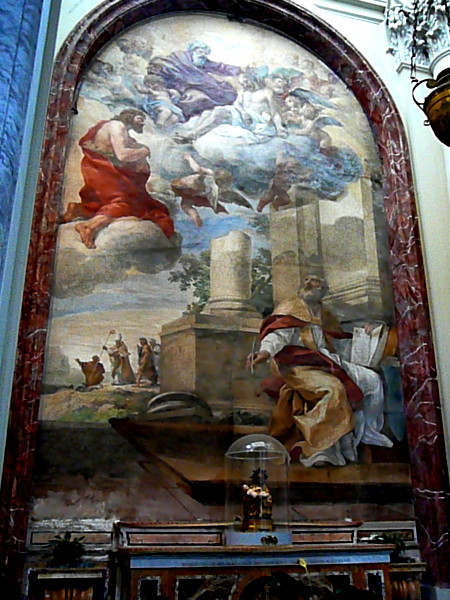
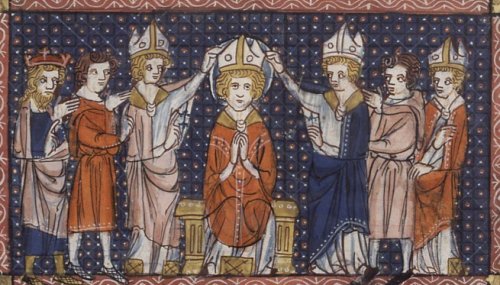
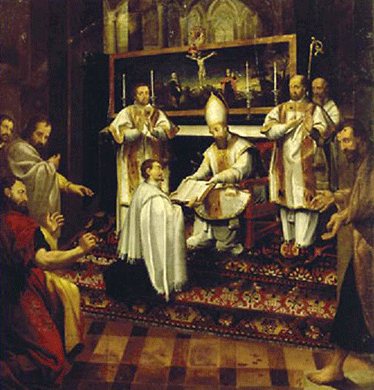
St Hilary confers minor Orders on St Martin of Tours
Hilary died in 367. His feast day is celebrated today throughout the universal Church. In 1851, Blessed Pius IX proclaimed him a doctor of the Church.
Father, keep us from vain strife of words.
Grant to us constant profession of the Truth!
Preserve us in a true and undefiled faith
so that we may hold fast to that
which we professed when we were baptised
in the Name of the Father, Son and Holy Spirit,
that we may have Thee for our Father,
that we may abide in Thy Son
and in the fellowship of the Holy Spirit.
Through Jesus Christ, Our Lord, amen.
It was in reading the Bible that St Hilary discovered the greatness of God and the sublimity of the Church and Christian teachings. The Bible is not just a revered book to be placed on our shelves in a place of honour it is a book to be read, to be studied and reflected upon. It leads not only to faith and holiness of life but also to the Kingdom of God itself. So we lear that Christ said His coming would bring not peace but a sword (see Matthew 10:34). The Gospels offer no support for us if we fantasise about a sunlit holiness that knows no problems. Christ did not escape at the last moment, though He did live happily ever after—after a life of controversy, problems, pain and frustration. Hilary, like all saints, simply had more of the same.
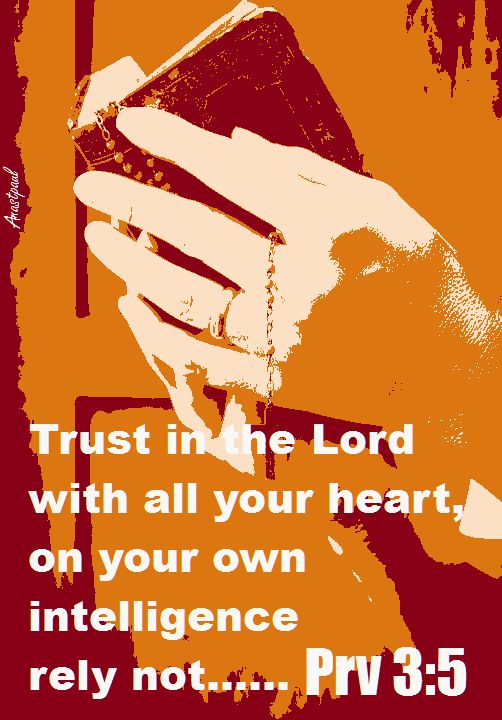
Trust in the Lord with all your heart, on your own intelligence rely not….Prv 3:5
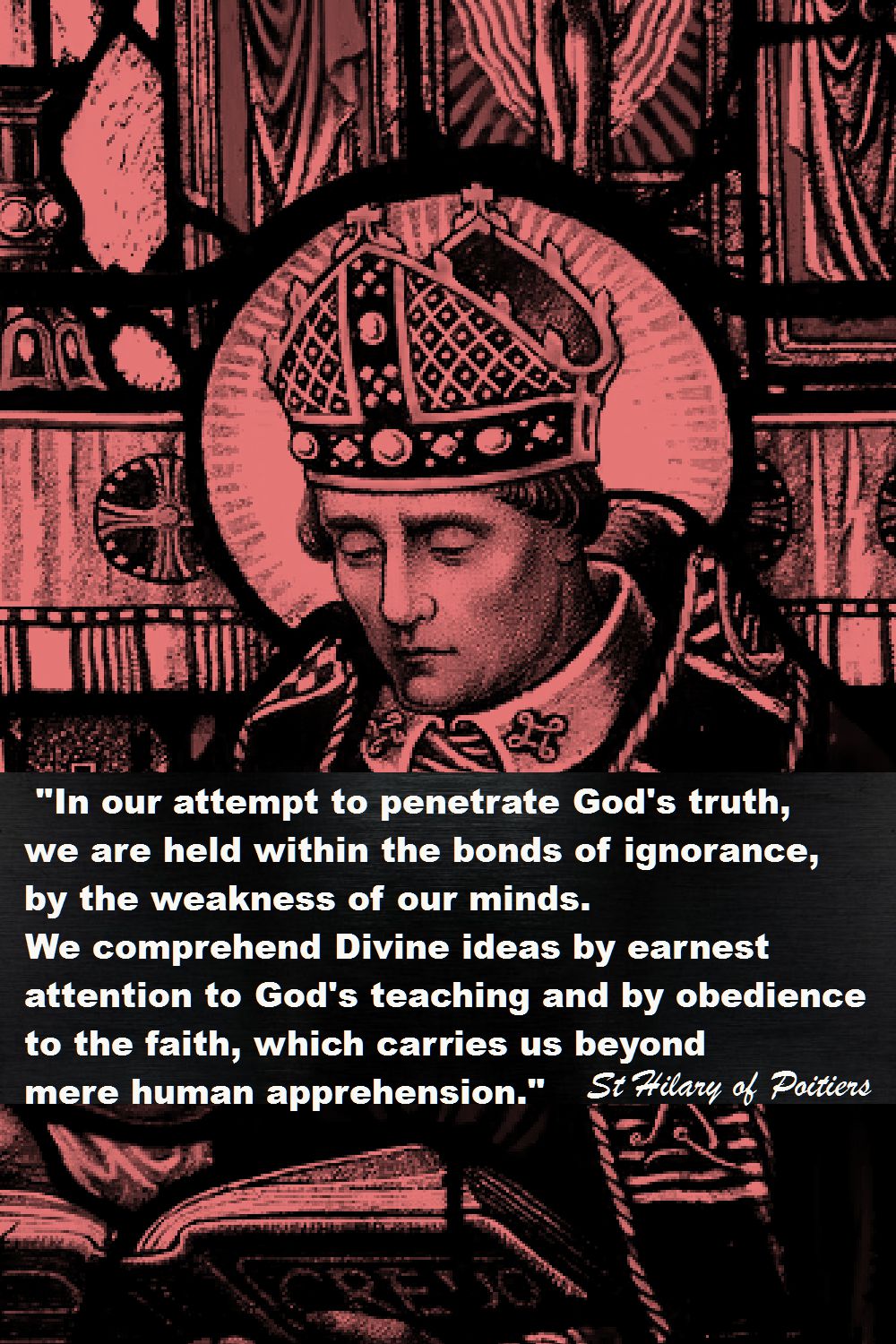
REFLECTION – “In our attempt to penetrate God’s truth, we are held within the bonds of ignorance, by the weakness of our minds.
We comprehend Divine ideas by earnest attention to God’s teaching and by obedience to the faith, which carries us beyond mere human apprehension.”……St Hilary of Poitiers (Saint of the Day)
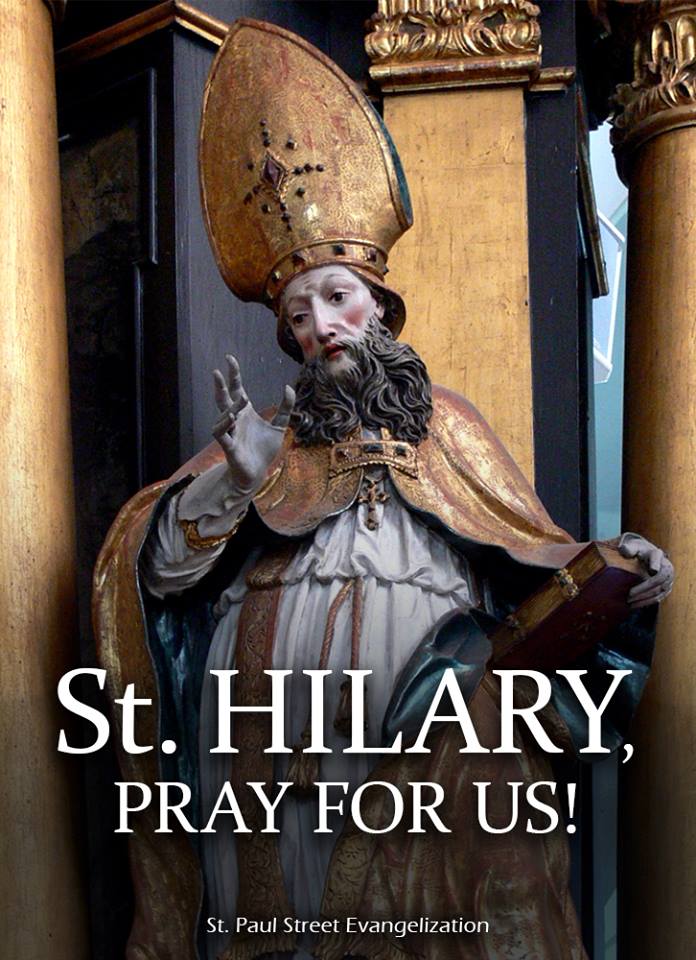
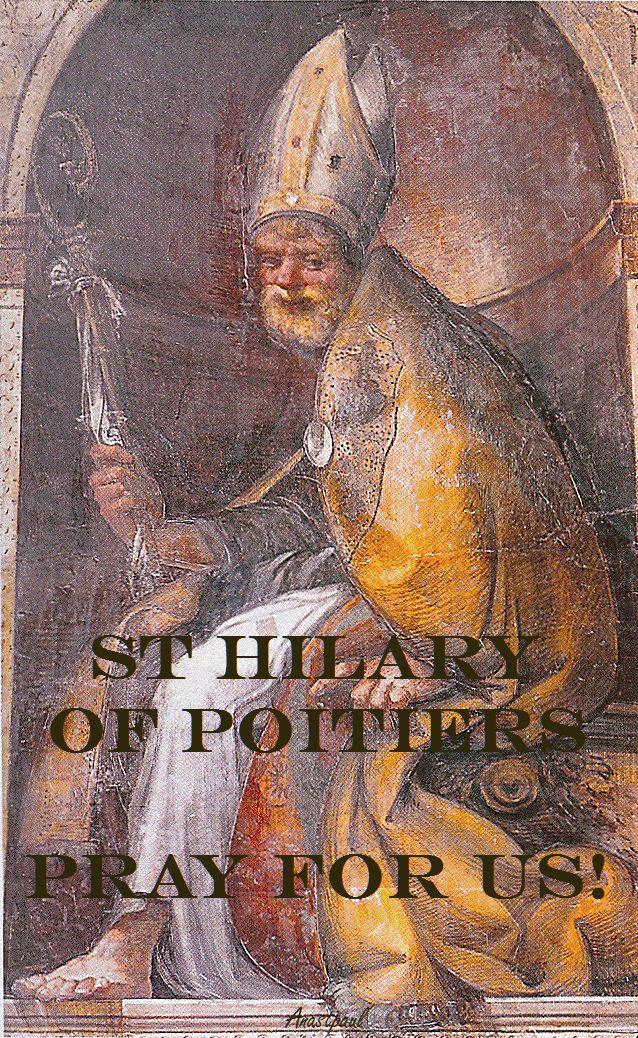
PRAYER – All-knowing God, grant me the grace to come to a better understanding of Your truths. Let me not only believe them but also carry them out daily in my life. St Hilary of Poitiers, Pray for us, amen!
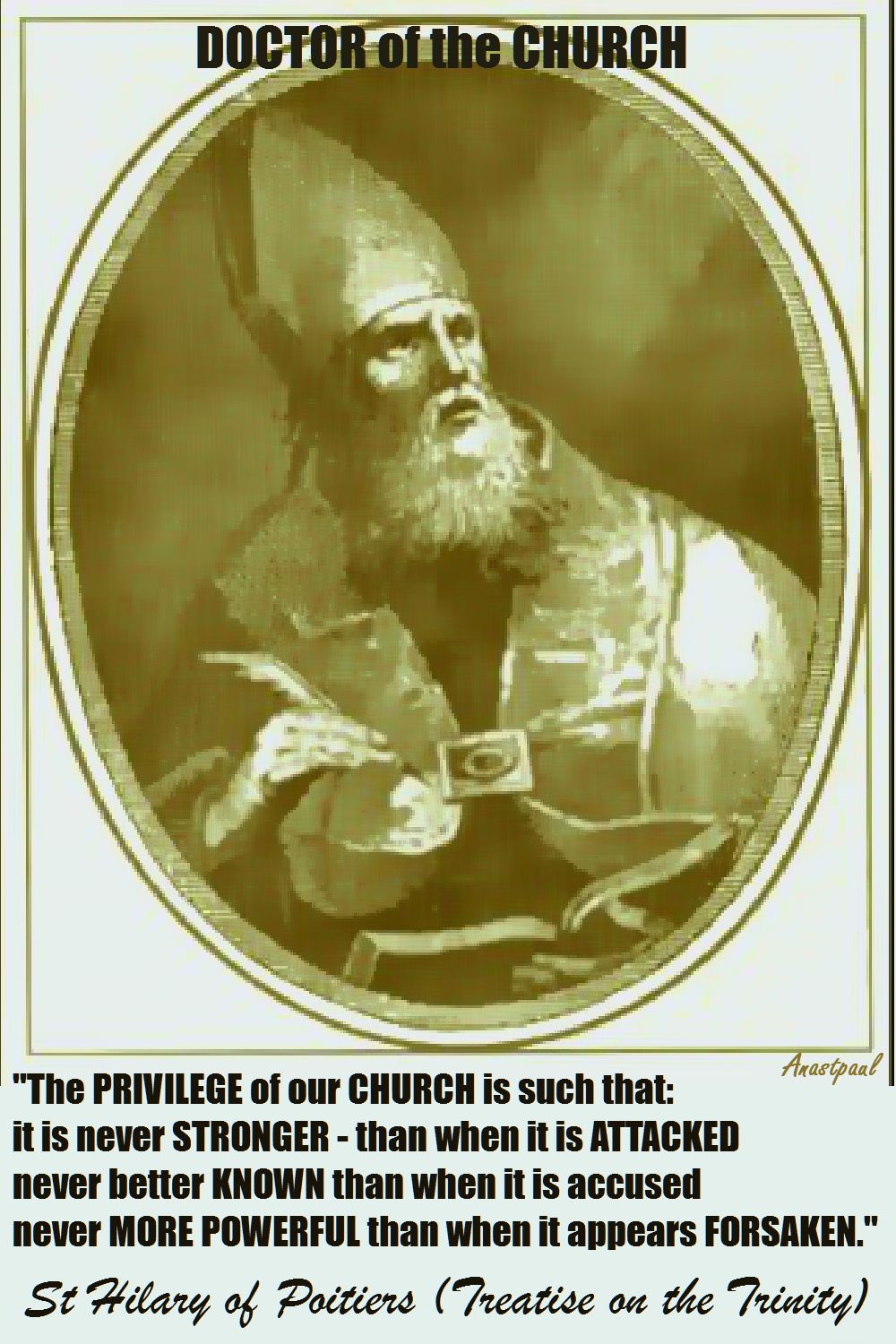
“The privilege of our Church is such that
it is never stronger than when it is attacked,
never better known than when it is accused,
never more powerful than when it appears forsaken.” (Treatise on the Trinity)
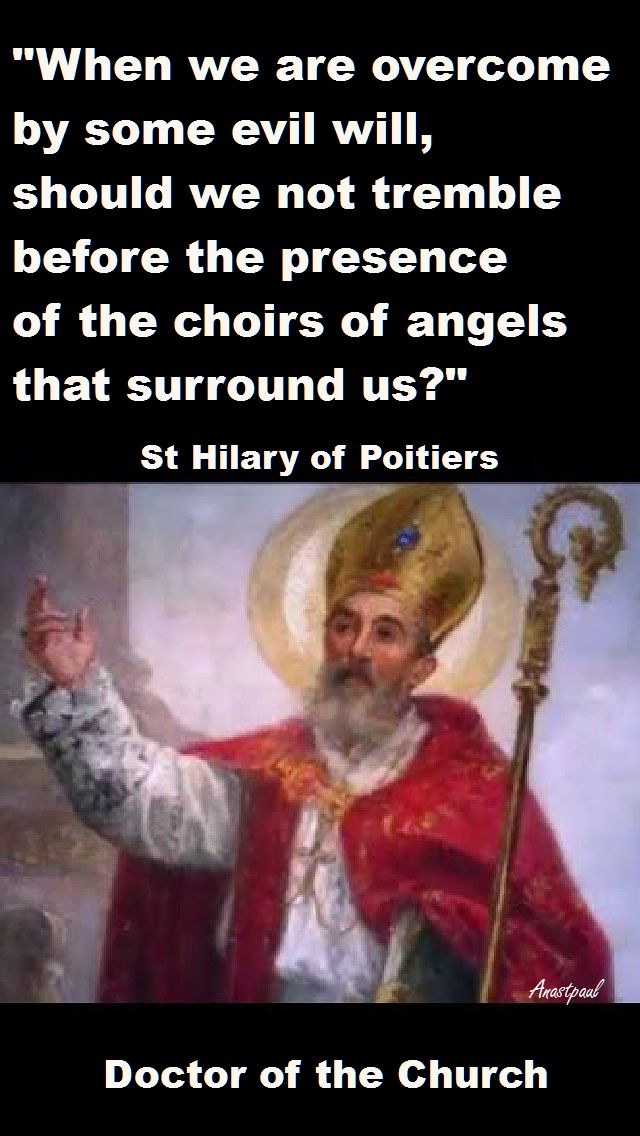
“When we are overcome by some evil will,
should we not tremble before the presence
of the choirs of angels that surround us?”
“The perfection of learning is to know God
in such a way that, though you realise
He is knowable, yet you know Him as indescribable.”
“No matter how sinful one may have been,
if he has devotion to Mary,
it is impossible that he be lost.”
PRAYER OF ST. HILARY OF POITIERS For Perseverance In Faith
Father, keep us from vain strife of words.
Grant to us constant profession of the Truth!
Preserve us in a true and undefiled faith
so that we may hold fast to that
which we professed when we were baptised
in the Name of the Father, Son and Holy Spirit,
that we may have Thee for our Father,
that we may abide in Thy Son
and in the fellowship of the Holy Spirit.
Through Jesus Christ, Our Lord, amen.
Saint of the Day – 13 January – St Hilary of Poitiers (c315-c368) Bishop/Confessor “”Hammer of the Arians” and “Athanasius of the West” – DOCTOR of the CHURCH. His name “Hilary” His name comes from the Latin word for happy or cheerful. His optional memorial in the General Roman Calendar is 13 January. In the past, when this date was occupied by the Octave of the Epiphany, his feast day was moved to 14 January.
Hilary was born to pagan parents of Poitiers, France, in 315. After training in the classics and philosophy, Hilary married. He and his wife had one daughter, Afra. All who knew Hilary said he was a friendly, charitable, gentle man. Hilary’s studies led him to read Scripture. He became convinced that there was only one God, whose Son became man and died and rose to save all people. This led him to be baptised along with his wife and daughter.
This gentle and courteous man, became a staunch defender of the divinity of Christ. He was devoted to writing some of the greatest theology on the Trinity and was, like his Master, in being labeled a “disturber of the peace.” In a very troubled period in the Church, his holiness was lived out in both scholarship and controversy.
The people of Poitiers chose Hilary to be their bishop in 353. As Bishop, he was soon taken up with battling what became the scourge of the fourth century, Arianism, which denied the divinity of Christ.
The heresy spread rapidly. Saint Jerome said “The world groaned and marveled to find that it was Arian.” When Emperor Constantius ordered all the bishops of the West to sign a condemnation of Athanasius, the great defender of the faith in the East, Hilary refused and was banished from France to far off Phrygia. There, too, his pastoral solicitude led him to work tirelessly for the re-establishment of the Church’s unity, based on the correct faith, as formulated by the Council of Nicea. To this end, he began writing his most important and most famous dogmatic work: “De Trinitatae” (On the Trinity). Eventually he was called the “Athanasius of the West” and the “Hammer of the Arians.”
During the years of his exile, Hilary also wrote the “Book of the Synod,” in which, for his brother bishops of Gaul, he reproduces and comments on the confessions of faith and other documents of the synods which met in the East around the middle of the 4th century. Always firm in his opposition to radical Arians, St. Hilary showed a conciliatory spirit with those who accepted that the Son was similar to the Father in essence, naturally trying to lead them toward the fullness of faith, which says that there is not only a similarity but a true equality of the Father and the Son in their divinity.
This also seems characteristic: His conciliatory spirit tries to understand those who still have not yet arrived to the fullness of the truth and helps them, with great theological intelligence to reach the fullness of faith in the true divinity of the Lord Jesus Christ.
In 360 or 361, Hilary was finally able to return from exile to his homeland and immediately resumed the pastoral work in his Church but the influence of his teaching extended, in fact, well beyond its borders. A synod celebrated in Paris in 360 or 361 took up again the language used by the Council of Nicea. Some ancient authors think that this anti-Arian development of the bishops of Gaul was due, in large part, to the strength and meekness of the bishop of Poitiers.
During the last years of his life, he wrote “Treatises on the Psalms,” a commentary on 58 psalms, interpreted according to the principle highlighted in the introduction to the work: “There is no doubt that all the things said in the Psalms must be understood according to the Gospel proclamation, so that, independently of the voice with which the prophetic spirit has spoken, everything refers to the knowledge of the coming of our Lord Jesus Christ, incarnation, passion and kingdom, and the glory and power of our resurrection” (“Instructio Psalmorum,” 5).
In all of the Psalms, he sees this transparency of Christ’s mystery and of his body, which is the Church. On various occasions, Hilary met with St. Martin, the future bishop of Tours founded a monastery near Poitiers, which still exists today. Hilary died in 367. His feast day is celebrated on Jan. 13. In 1851, Blessed Pius IX proclaimed him a doctor of the Church.
St Hilary confers minor Orders on St Martin of Tours












 AnaStpaul
You must be logged in to post a comment.