Quote/s of the Day – 12 July – “The Month of the Most Precious Blood” – St John Gualbert (c985-1073) Abbot – Ecclesiasticus Sirach 31:8-11 – Matthew 5:43-48 – Scripture search here: https://www.drbo.org/
“But I say to you, love your enemies …”
Matthew 5:44
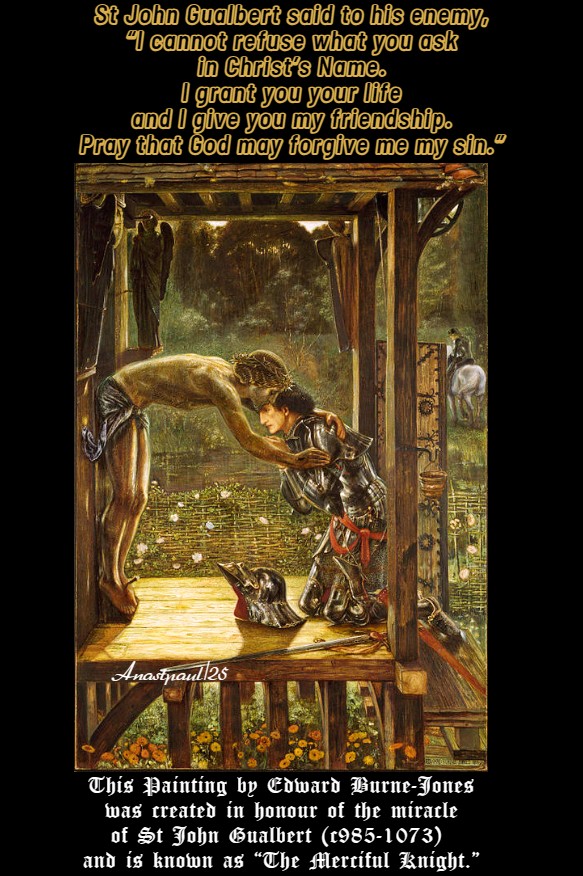
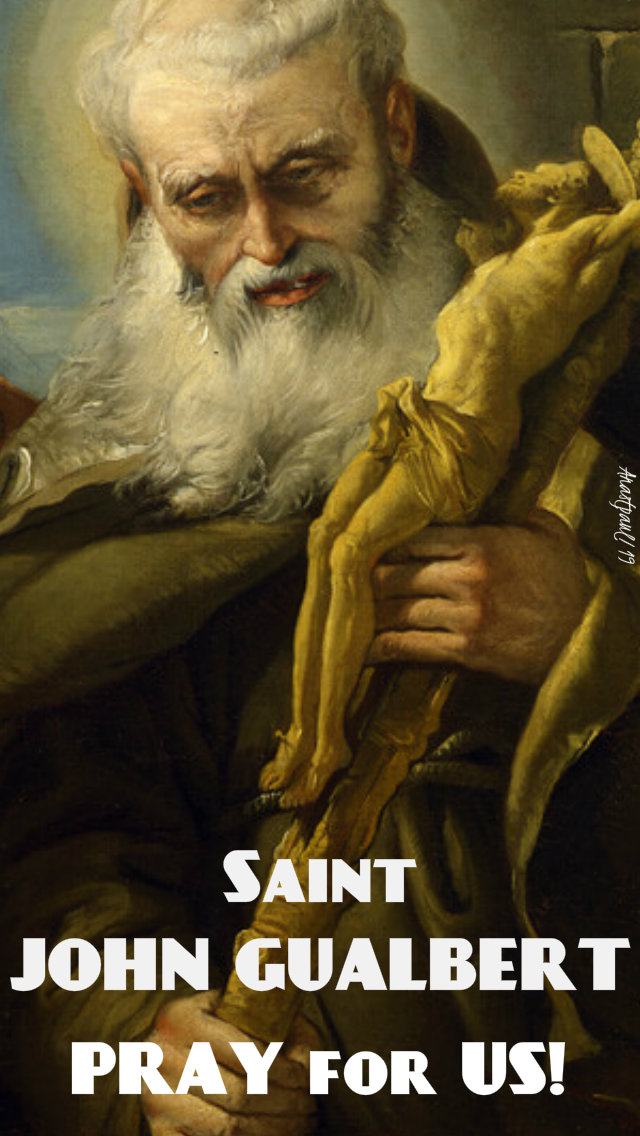
St John Gualbert said to his enemy, “I cannot refuse what you ask in Christ’s Name. I grant you your life and I give you my friendship. Pray that God may forgive me my sin.”
St John Gualbert (c985-1073) “The Merciful Knight”
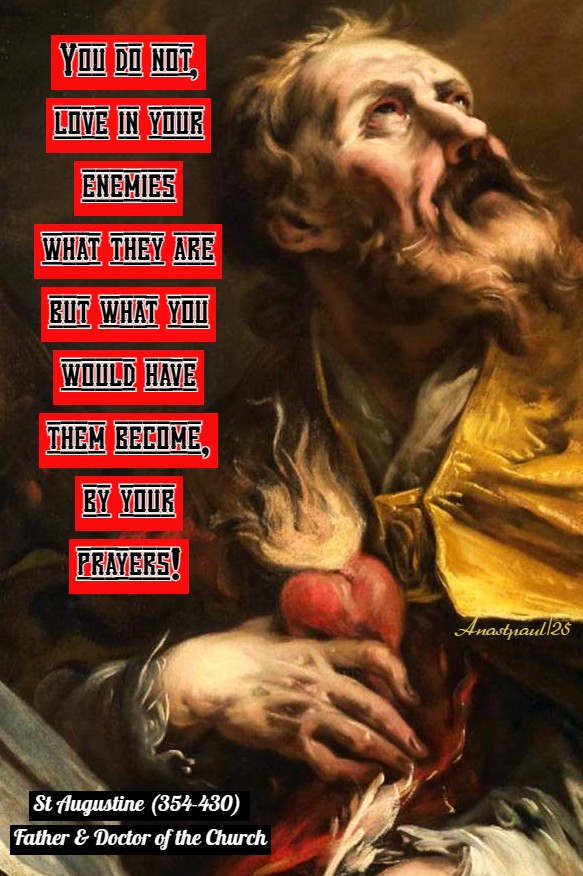
“You do not, in your enemies, love what they are but what you would have them become, by your prayers!”
St Augustine (354-430) Father & Doctor of the Church
One Minute Reflection – 12 July – “The Month of the Most Precious Blood” – St John Gualbert (c985-1073) Abbot – Ecclesiasticus Sirach 31:8-11 – Matthew 5:43-48 – Scripture search here: https://www.drbo.org/
“But I say to you, Love your enemies …” – Matthew 5:44
REFLECTION – “Let us pay attention, all my brothers, to what the Lord says: “Love your enemies and do good to those who hate you,” for our Lord Jesus Christ, Whose footprints we must follow (cf 1 Pt 2:21), called His betrayer “friend” (Mt 26:50) and gave Himself willingly to those who crucified Him. Our friends, then, are all those who, unjustly afflict upon us, trials and ordeals, shame and injuries, sorrows and torments, martyrdom and death! We must love them greatly for we will possess eternal life because of what they bring upon us.” – St Francis of Assisi (c1181-1226) Founder of the Friars Minor (Earlier Rule, #22).
PRAYER – May the intercession of the blessed Abbot John commend us to Thee, O Lord, so that through his merits we may obtain that which we cannot accomplish by our own. Through Jesus Christ, Thy Son our Lord, Who lives and reigns with Thee, in the unity of the Holy Ghost, God, world without end. Amen (Collect).Through the same Jesus Christ, Thy Son our Lord, Who lives and reigns with Thee, in the unity of the Holy Ghost, God, world without end. Amen (Collect).
Bl Conrad of Maleville Bl David Gonson St Epiphana St Faustus the Soldier
St Felix of Milan * Commemorated with St Nabor
St Fortunatus of Aquileia (1st Century – Died c66) Deacon St Hermagorus of Aquileia (1st Century – Died c 66) Bishop, Disciple of St Mark the Evangelist Bl Guy Vignotelli St Hilarion of Ancyra St Jason of Tarsus Bl Jeanne-Marie de Romillon
Bl Madeleine-Thérèse Talieu Bl Marguerite-Eléonore de Justamond Bl Marie Cluse St Menas the Soldier St Menulphus of Quimper
St Nabor of Milan * Commemorated with St Felix
St Paternian of Bologna St Paulinus of Antioch St Phêrô Khan St Proclus of Ancyra St Proculus (Died c542) Bishop and Martyr of Bologna St Uguzo of Carvagna St Ultán
Three Holy Exiles: Three Christian men who became Benedictine Monks at the Saint James Abbey in Regensburg, Germany, then Hermits at Griestatten and whose lives and piety are celebrated together. – Marinus, Vimius and Zimius.
Martyrs of Rome – Four members of the Imperial Roman nobility. They were all soldiers, one or more may have been officers, and all were Martyred in the persecutions of Diocletian – Basilides, Cyrinus, Nabor and Nazarius. Died in c 304 outside Rome, Italy and were buried there along the Aurelian Way.
Martyrs of Nagasaki – 8 Beati: Additional Memorial – 10 September as one of the 205 Martyrs of Japan Eight lay people, many them related to each other, who were martyred together: Catharina Tanaka, Ioannes Onizuka Naizen, Ioannes Tanaka, Ludovicus Onizuka, Matthias Araki Hyozaemon, Monica Onizuka, Petrus Araki Chobyoe, Susanna Chobyoe, 12 July 1626 in Nagasaki, Japan. Beatified on 7 May 1867 by Pope Blessed Pius IX.
Quote/s of the Day – 12 July – “The Month of the Most Precious Blood” – St John Gualbert (c985-1073) Abbot, “The Merciful Knight”– Ecclesiasticus 45:1-6, Matthew 5:43-48 – Scripture search here: https://www.drbo.org/
“But I say to you, love your enemies …” Matthew 5:44
St John Gualbert said to his enemy, “I cannot refuse what you ask in Christ’s Name. I grant you your life and I give you my friendship. Pray that God may forgive me my sin.”
St John Gualbert (c985-1073) “The Merciful Knight”
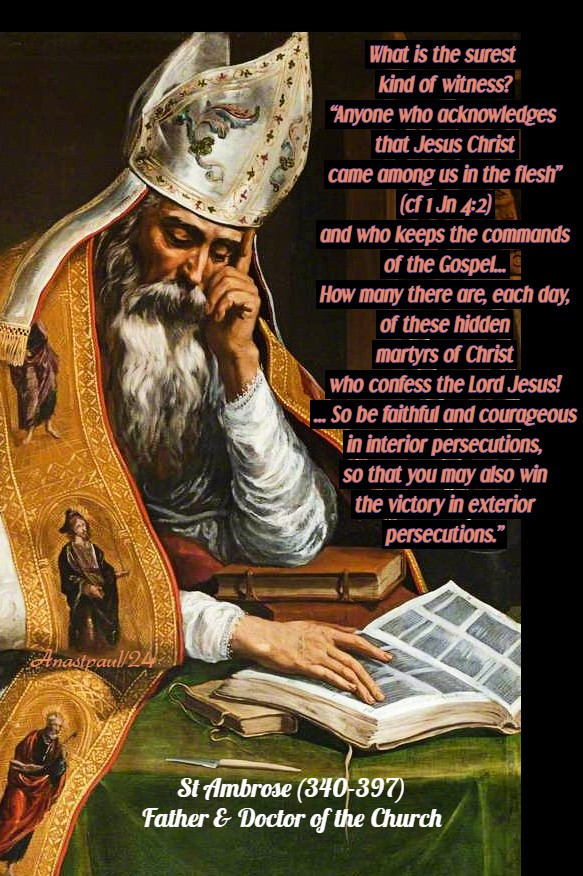
“What is the surest kind of witness? “Anyone who acknowledges that Jesus Christ came among us in the flesh” (cf 1 Jn 4:2) and who keeps the commands of the Gospel… How many there are, each day, of these hidden martyrs of Christ who confess the Lord Jesus! … So be faithful and courageous in interior persecutions, so that you may also win the victory in exterior persecutions.”
St Ambrose (340-397) Father & Doctor of the Church
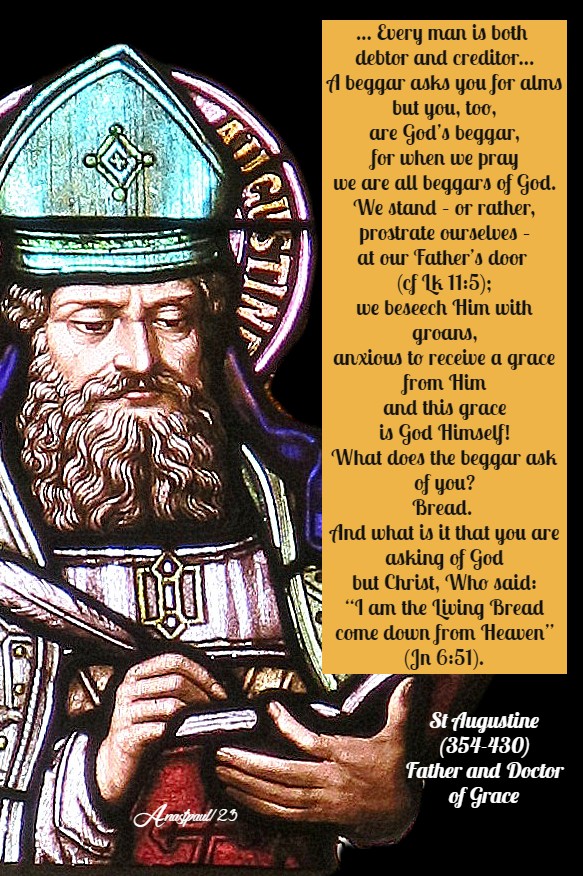
“… Every man is both debtor and creditor… A beggar asks you for alms but you, too, are God’s beggar, for when we pray we are all beggars of God. We stand – or rather, prostrate ourselves – at our Father’s door (cf Lk 11:5); we beseech Him with groans, anxious to receive a grace from Him and this grace is God Himself! What does the beggar ask of you? Bread. And what is it that you are asking of God but Christ, Who said: “I am the Living Bread come down from Heaven” (Jn 6:51).”
St Augustine (354-430) Father and Doctor of Grace
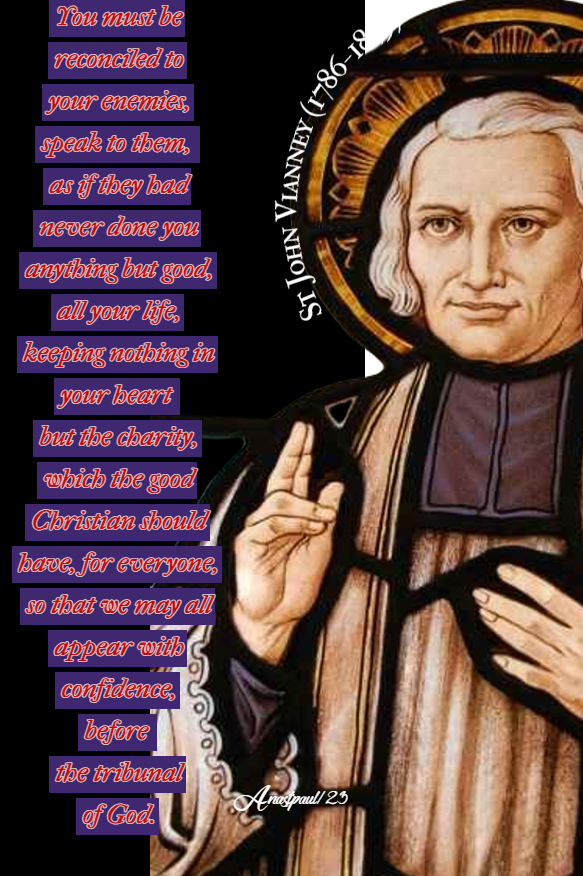
“You must be reconciled to your enemies, speak to them, as if they had never done you anything but good, all your life, keeping nothing in your heart but the charity, which the good Christian should have, for everyone, so that we may all appear with confidence, before the tribunal of God.”
Quote/s of the Day – 12 July – “The Month of the Most Precious Blood of Jesus” – St John Gualbert (c985-1073) Abbot – Ecclesiasticus 45:1-6, Matthew 5:43-48 – Scripture search here: https://www.drbo.org/
“But I say to you, love your enemies …” Matthew 5:44
St John Gualbert said to his enemy, “I cannot refuse what you ask in Christ’s Name. I grant you your life and I give you my friendship. Pray that God may forgive me my sin.”
St John Gualbert (c985-1073) “The Merciful Knight”
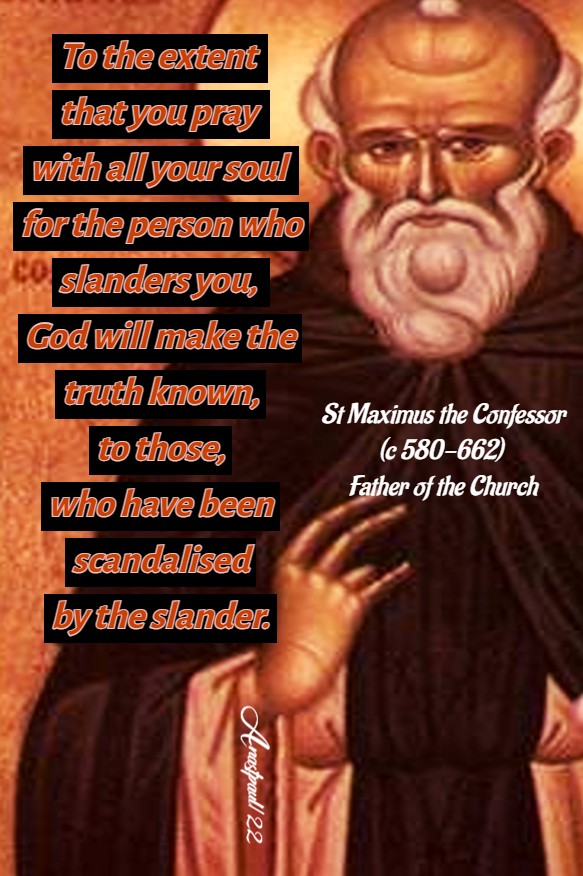
“To the extent that you pray, with all your soul, for the person who slanders you, God will make the truth known to those who have been scandalised by the slander.”
St Maximus the Confessor (c 580–662)
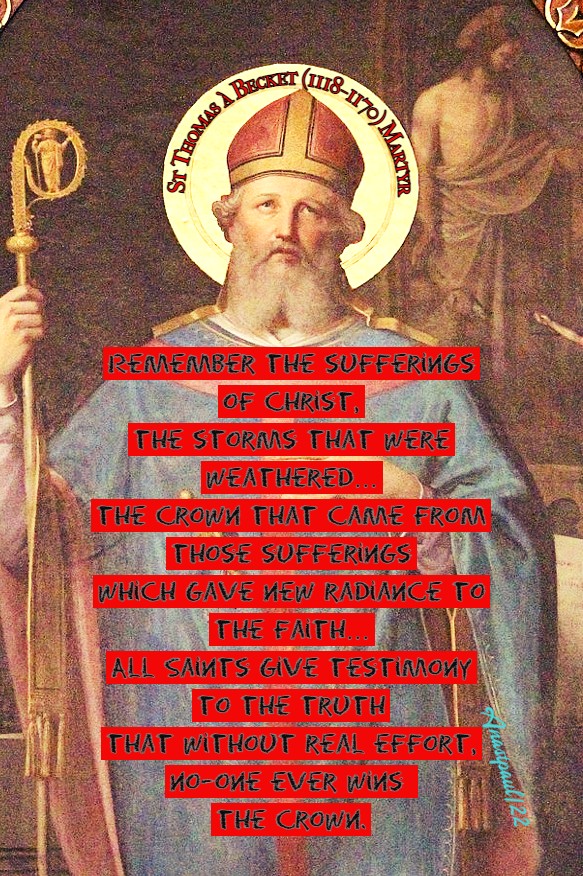
“Remember the sufferings of Christ, the storms that were weathered… the crown that came from those sufferings which gave new radiance to the faith… All Saints give testimony to the truth that without real effort, no-one ever wins the crown.”
St Thomas à Becket (1118-1170) Martyr, Archbishop of Canterbury
“Above all, avoid false accusations and the distortion of truth regarding your neighbour.”
St Francis de Sales (1567-1622) Doctor of the Church
The Lord’s Prayer Jesus Matthew 6:9-13
Our Father who art in heaven, Hallowed be Thy name. Thy kingdom come. Thy will be done, On earth as it is in heaven. Give us this day our daily bread And forgive us our trespasses As we forgive those who trespass against us And lead us not into temptation but deliver us from evil. Amen
Bl Conrad of Maleville Bl David Gonson St Epiphana St Faustus the Soldier St Felix of Milan * Commemorated with St Nabor St Fortunatus of Aquileia (1st Century – Died c66) Deacon St Hermagorus of Aquileia (1st Century – Died c 66) Bishop, Disciple of St Mark the Evangelist Bl Guy Vignotelli St Hilarion of Ancyra St Jason of Tarsus Bl Jeanne-Marie de Romillon
St John the Georgian Bl Lambert of Cîteaux St Leo of Cava (Died 1079) The second Abbot of the Abbey of La Trinità della Cava Bl Madeleine-Thérèse Talieu Bl Marguerite-Eléonore de Justamond Bl Marie Cluse St Menas the Soldier St Menulphus of Quimper St Nabor of Milan * Commemorated with St Felix St Paternian of Bologna St Paulinus of Antioch St Phêrô Khan St Proclus of Ancyra St Proculus of Bologna St Uguzo of Carvagna St Ultán
St Viventiolus of Lyons
Three Holy Exiles: Three Christian men who became Benedictine Monks at the Saint James Abbey in Regensburg, Germany, then Hermits at Griestatten and whose lives and piety are celebrated together. – Marinus, Vimius and Zimius.
Martyrs of Rome – Four members of the Imperial Roman nobility. They were all soldiers, one or more may have been officers, and all were Martyred in the persecutions of Diocletian – Basilides, Cyrinus, Nabor and Nazarius. Died in c 304 outside Rome, Italy and were buried there along the Aurelian Way.
Martyrs of Nagasaki – 8 Beati: Additional Memorial – 10 September as one of the 205 Martyrs of Japan Eight lay people, many them related to each other, who were martyred together: Catharina Tanaka Ioannes Onizuka Naizen Ioannes Tanaka Ludovicus Onizuka Matthias Araki Hyozaemon Monica Onizuka Petrus Araki Chobyoe Susanna Chobyoe 12 July 1626 in Nagasaki, Japan Beatified on 7 May 1867 by Pope Blessed Pius IX.
Bl Conrad of Maleville Bl David Gonson St Epiphana St Faustus the Soldier St Felix of Milan * Commemorated with St Nabor St Fortunatus of Aquileia (1st Century – Died c 66) Deacon St Hermagorus of Aquileia (1st Century – Died c 66) Bishop, Disciple of St Mark the Evangelist Bl Guy Vignotelli St Hilarion of Ancyra St Jason of Tarsus Bl Jeanne-Marie de Romillon
St John the Georgian Bl Lambert of Cîteaux Bl Madeleine-Thérèse Talieu Bl Marguerite-Eléonore de Justamond Bl Marie Cluse St Menas the Soldier St Menulphus of Quimper St Nabor of Milan * Commemorated with St Felix St Paternian of Bologna St Paulinus of Antioch St Phêrô Khan St Proclus of Ancyra St Proculus of Bologna St Uguzo of Carvagna St Ultán
St Viventiolus of Lyons
Three Holy Exiles: Three Christian men who became Benedictine Monks at the Saint James Abbey in Regensburg, Germany, then Hermits at Griestatten and whose lives and piety are celebrated together. – Marinus, Vimius and Zimius.
Martyrs of Rome – Four members of the Imperial Roman nobility. They were all soldiers, one or more may have been officers, and all were Martyred in the persecutions of Diocletian – Basilides, Cyrinus, Nabor and Nazarius. Died in c 304 outside Rome, Italy and were buried there along the Aurelian Way.
Martyrs of Nagasaki – 8 Beati: Additional Memorial – 10 September as one of the 205 Martyrs of Japan Eight lay people, many them related to each other, who were martyred together: • Catharina Tanaka • Ioannes Onizuka Naizen • Ioannes Tanaka • Ludovicus Onizuka • Matthias Araki Hyozaemon • Monica Onizuka • Petrus Araki Chobyoe • Susanna Chobyoe 12 July 1626 in Nagasaki, Japan Beatified on 7 May 1867 by Pope Blessed Pius IX.
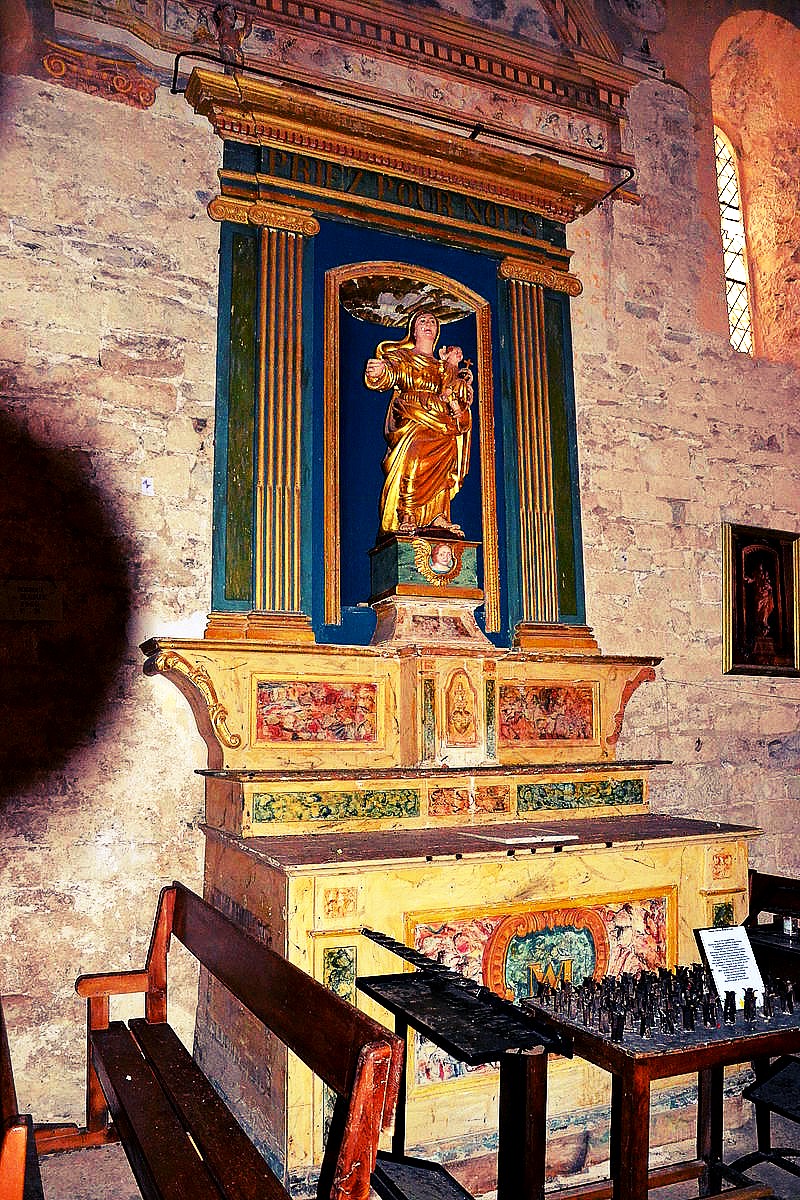
Notre-Dame -de- lure / Our Lady of Lure, Avignon, France (1110) – 12 July:
At the beginning of the 6th century, a Priest from Orleans, France, named Saint Donat du Val, in search of solitude, made his way into the Alps. The mountain of Lure seemed to be the kind of place he was looking for and with the approval of the Bishop of Sisteron, he settled there. On the side of the mountain he built an oratory for which he himself made the Statue of Our Lady, carving it from native stone. When after 32 years he died, having spent these years in penance and apostolic work, he was replaced by the Benedictines of Val-Benoit. A Chapel was built to replace the oratory which proved too small to accommodate the many pilgrims. When the Saracens invaded Provence, the religious had to flee and so they hid the Statue. Barbarians ravaged the country several times and the Convent was destroyed. In 1110, the Countess Adelaide, to whom the land of Lure belonged, gave the place of the original oratory to the Bishop of Sisteron. Several nobles aided in the work of restoring the Monastery of Our Lady of Lure. The ancient sSatue was found and placed above the tomb of Saint Donat. The Church became well known and pilgrimages were well attended. In 1318, Pope John XXII attached the Shrine of Our Lady of Lure, to the metropolitan area or See of Avignon. In 1481, Pope Sixtus IV called back to Avignon the 12 canons at the Shrine. The Church fell into disrepair. For 80 years the place remained desolate. One day a shepherd, who was resting near the ruins, heard a voice saying, “Oh, how many graces I would give to men in this place, if my Sanctuary were rebuilt.” The ecclesiastics to whom he told his story took the shepherd seriously. The Shrine was rebuilt and the Statue rescued from the debris, was placed on a new Altar which was Consecrated in 1637. Pilgrimages again flourished. During the French Revolution the Chapel was pillaged and the Statue mutilated. With the return of peace, pilgrims again came. On a number of occasions, Mary granted the miracle of an abundant rain to pilgrims that had come to seek this favour. The largest number of pilgrims were wont to come on Pentecost, the Feast of the Assumption and the Nativity of Our Lord.
St Agnes De St Andreas the Soldier St Ansbald of Prum St Balay St Clement Ignatius Delgado Cebrian St Colmán of Cloyne (c 522-600) Priest, Monk Bl David Gonson St Epiphana St Faustus the Soldier St Felix of Milan St Fortunatus of Aquileia (1st Century – Died c 66) Deacon St Hermagorus of Aquileia (1st Century – Died c 66) Bishop, Disciple of St Mark the Evangelist St Hilarion of Ancyra St Jason of Tarsus Bl Jeanne-Marie de Romillon
Bl Madeleine-Thérèse Talieu Bl Marguerite-Eléonore de Justamond Bl Marie Cluse St Menas the Soldier St Menulphus of Quimper St Nabor of Milan St Paternian of Bologna St Paulinus of Antioch St Phêrô Khan St Proclus of Ancyra St Proculus of Bologna St Uguzo of Carvagna St Ultán
St Viventiolus of Lyons — Martyrs of Nagasaki – 8 beati: Additional Memorial – 10 September as one of the 205 Martyrs of Japan Eight lay people, many them related to each other, who were martyred together: • Catharina Tanaka • Ioannes Onizuka Naizen • Ioannes Tanaka • Ludovicus Onizuka • Matthias Araki Hyozaemon • Monica Onizuka • Petrus Araki Chobyoe • Susanna Chobyoe 12 July 1626 in Nagasaki, Japan Beatified on 7 May 1867 by Pope Blessed Pius IX.
The Fifteenth Sunday of the Year in Ordinary Time, Year A +2020
__
St Agnes De
St Andreas the Soldier
St Ansbald of Prum
St Balay
St Clement Ignatius Delgado Cebrian
Bl David Gonson
St Epiphana
St Faustus the Soldier
St Felix of Milan
St Fortunatus of Aquileia
St Hermagorus of Aquileia
St Hilarion of Ancyra
St Jason of Tarsus
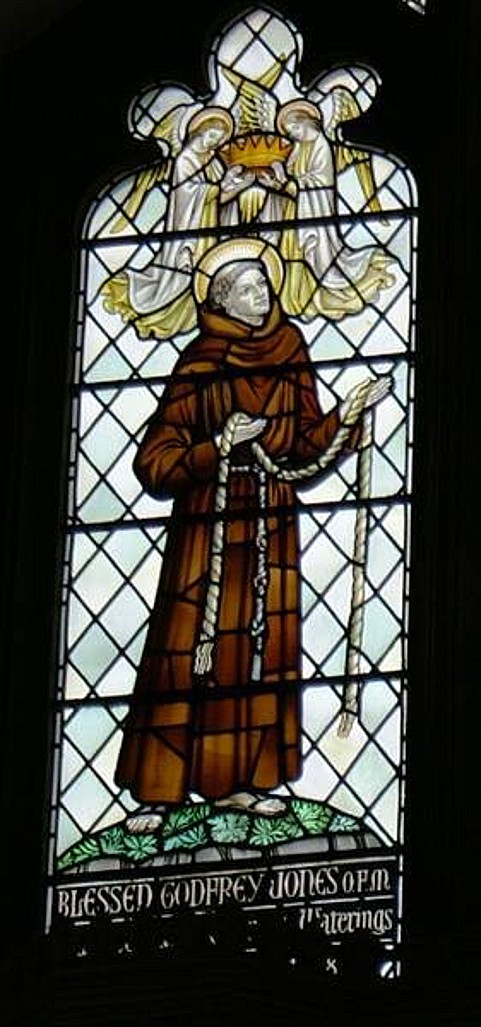
Bl Jeanne-Marie de Romillon St John Gualbert (c 985-1073) His Life: https://anastpaul.com/2019/07/12/saint-of-the-day-12-july-st-john-gualbert-c-985-1073-the-merciful-knight/ St John Jones OFM (c 1574 – 1598) Priest and Martyr
Bl Madeleine-Thérèse Talieu
Bl Marguerite-Eléonore de Justamond
Bl Marie Cluse
St Menas the Soldier
St Menulphus of Quimper
St Nabor of Milan
St Paternian of Bologna
St Paulinus of Antioch
St Phêrô Khan
St Proclus of Ancyra
St Proculus of Bologna
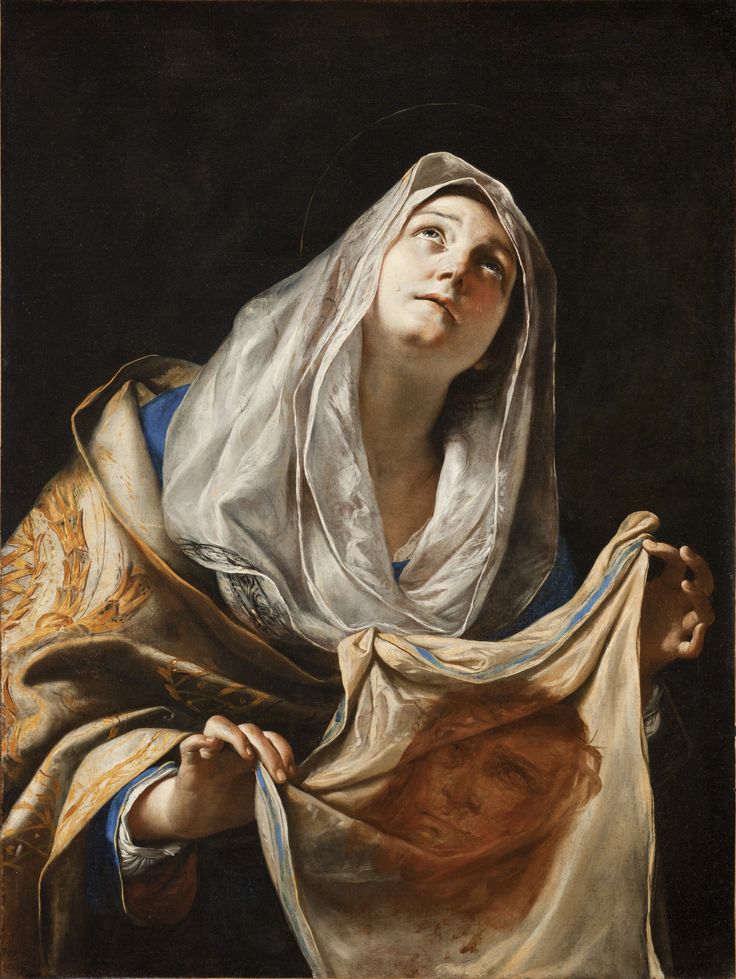
St Uguzo of Carvagna St Veronica St Veronica’s Story: https://anastpaul.wordpress.com/2017/07/12/saint-of-the-day-12-july-st-veonica/
St Viventiolus of Lyons
—
Martyrs of Nagasaki – 8 beati: Additional Memorial – 10 September as one of the 205 Martyrs of Japan
Eight lay people, many them related to each other, who were martyred together:
• Catharina Tanaka
• Ioannes Onizuka Naizen
• Ioannes Tanaka
• Ludovicus Onizuka
• Matthias Araki Hyozaemon
• Monica Onizuka
• Petrus Araki Chobyoe
• Susanna Chobyoe
12 July 1626 in Nagasaki, Japan
Beatified on 7 May 1867 by Pope Blessed Pius IX.
Thought for the Day – 12 July – Friday of the Fourteenth week in Ordinary Time, Year C – Gospel: Matthew 10:16–23 and The Memorial of John Gualbert (c 985-1073) “The Merciful Knight”
St John Gualbert’s monastic vocation began on Good Friday in a decisive encounter with Jesus Crucified. Saint John Gualbert points to the Cross as the source of all forgiveness and reconciliation, giving peace to those who dwell in the shadow of its branches. “They shall return,” says Hosea, “and dwell beneath my shadow, they shall flourish as a garden” (Hos 14:7).
The Benedictine lectionary offers proper readings today: Leviticus 19:1-2, 17-18; and Matthew 5:43-48. The lesson taken from Leviticus, speaks powerfully: “You shall not hate your brother in your heart, but you shall reason with your neighbour, lest you bear sin because of him. You shall not take vengeance or bear any grudge against the sons of your own people, but you shall love your neighbour as yourself: I am the Lord” (Lev 19:17-18). The Benedictus Antiphon proposed for today is another stroke of liturgical genius: “Save us, Lord, from our enemies, and from the hands of all who hate us, to guide our feet into the way of peace” (Lk 1:71, 79).
The Face of Christ
The Word of God compels us always to seek the Face of the crucified, risen and ascended Christ. One cannot look at the Face of Christ and harbour resentment in one’s heart. One cannot look at the Face of Christ and refuse to look at one’s brother. One cannot look at the Face of Christ with compassion and then refuse a look of mercy to one who waits for it.
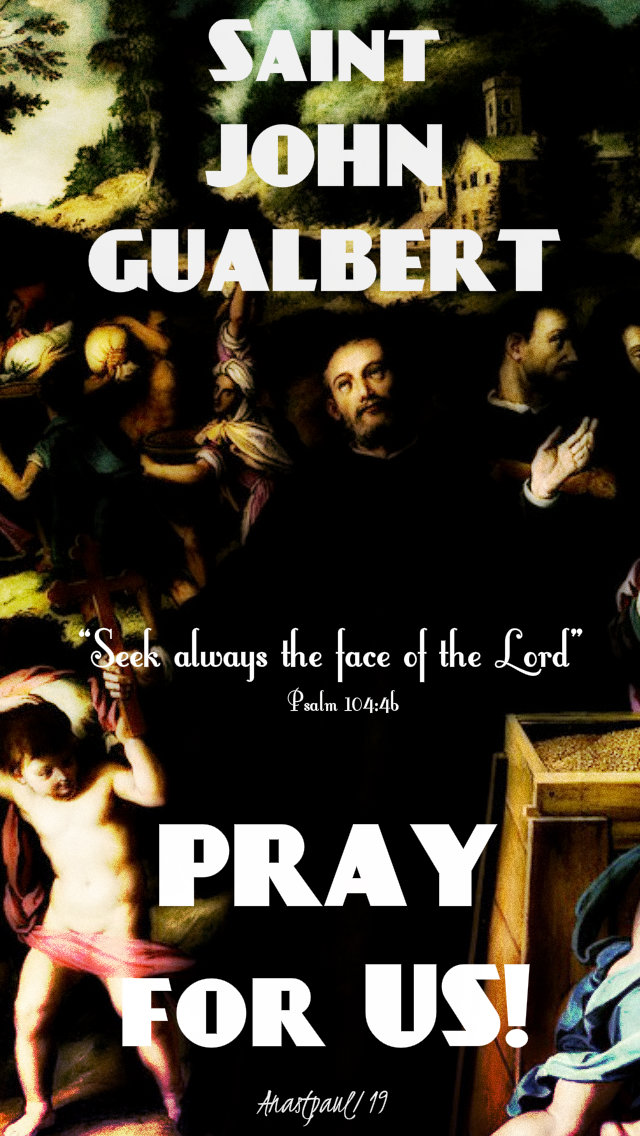
Ask Saint John Gualbert, today, to obtain for us, the grace to seek always the Face of Jesus Crucified – His Eucharistic Face, His Face hidden in the Scriptures, His Face depicted in holy images — yes — but also His Face in one another. One who refuses to meet the gaze of Our Lord will never come to know the secrets of His Sacred Heart. Quaerite faciem Domini semper. “Seek always the face of the Lord”(Ps 104:4b).
One Minute Reflection – 12 July – Friday of the Fourteenth week in Ordinary Time, Year C – Gospel: Matthew 10:16–23 and the Memorial of St John Gualbert (c 985-1073)
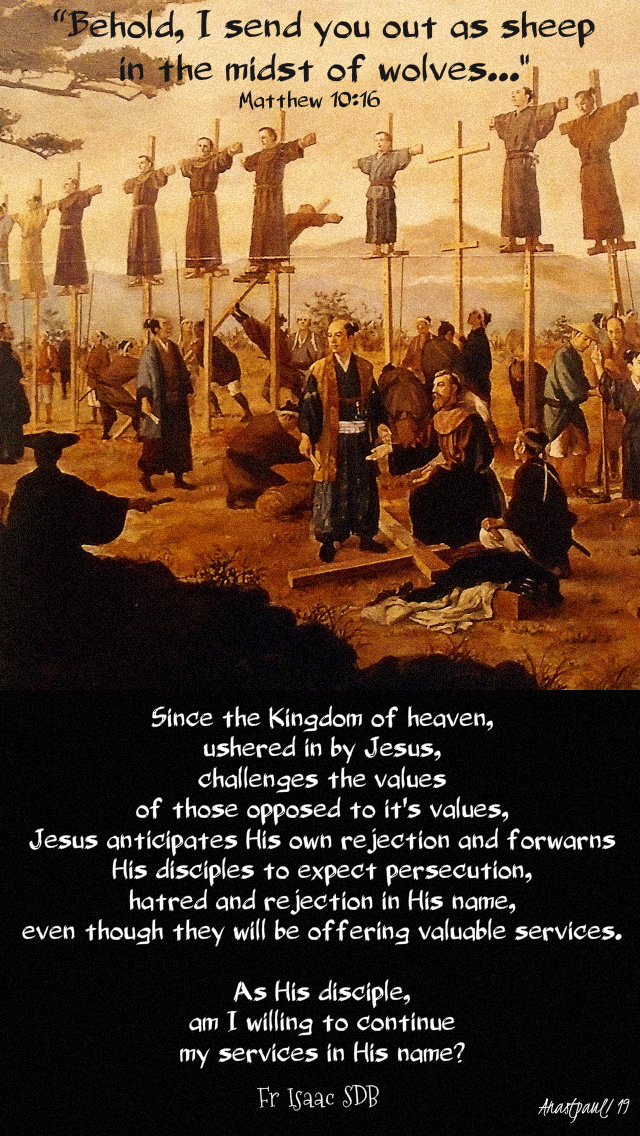
“Behold, I send you out as sheep in the midst of wolves, so be wise as serpents and innocent as doves.”...Matthew 10:16
REFLECTION – “As Jesus gave His disciples authority to offer valuable services of health, freedom and life, who should they have to face opposition? The point is, that these good services are not ends in themselves but manifestations of what Jesus came to establish, namely, the Kingdom of heaven. These services are also the doorway for stirring in people an interest in Jesus, eventually leading them to faith in Him.
So what’s so jarring about the Kingdom of heaven that it provokes persecution? Since the Kingdom of heaven, ushered in by Jesus, challenges the values of those opposed to it’s values, Jesus anticipates His own rejection and forewarns His disciples to expect persecution, hatred and rejection in His name, even though they will be offering valuable services.
As His disciple, am I willing to continue my services in His name, by standing firm for His cause of establishing God’s reign?”…Fr Isaac SDB
PRAYER – Lord God, grant us restless hearts, hearts which seek Your Face. Keep us from the blindness of heart which sees only the surface of things. Give us the simplicity and purity which allow us to recognise Your presence in the world. When we are not able to accomplish great things, grant us the courage which is born of humility and goodness. Impress Your Face on our hearts. May we encounter You along the way and show Your image to the world. Grant, we pray that the prayers of St John Gualbert may assist in being courageous and merciful to all. Through Christ, our Lord, with the Holy Spirit, God forever, amen.
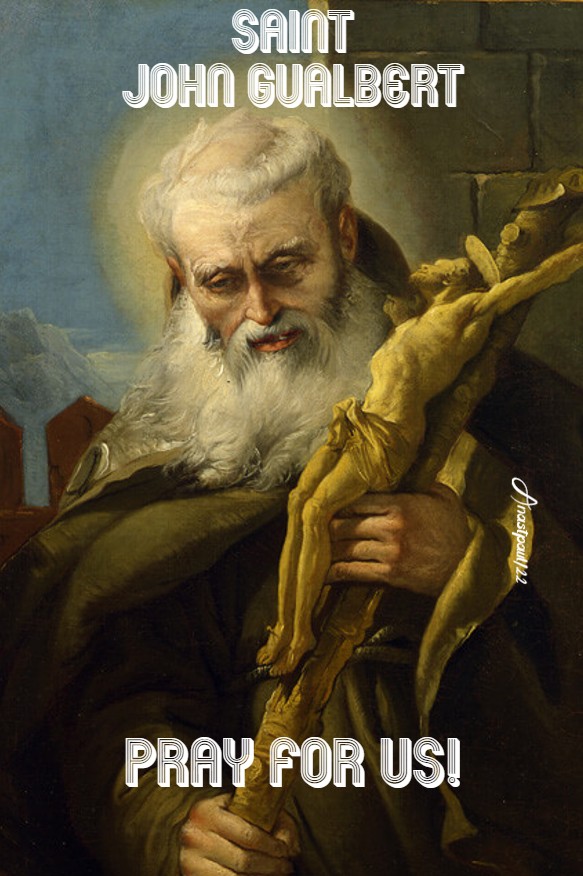
Saint of the Day – 12 July – St John Gualbert (c 985-1073) Abbot, Founder of the Vallumbrosan Order and many monasteries, Apostle of the poor, Reformer – born Giovanni Gualberto in c 985 at Florence, Italy and died in 1073 at Passignano near Florence, Italy of natural causes. Patronages – Forest workers, Foresters, Park rangers, Parks, Badia di Passignano, Vallumbrosan Order, Italian Forest Corps, Brazilian forests.
Giovanni Gualberto was born circa 985 to nobles who hailed from the Visdomini House, he was born in the Castle known as Poggio Petroio. His sole sibling was his older brother Ugo. He was also related to the Blessed Pietro Igneo.
He was educated and raised a devout Catholic but during his adolescence, cared little for religion. He was instead focused on frivolous things and was concerned with vain amusements and romantic intrigues. When his brother Ugo was murdered, Gualbert set out to avenge his death.
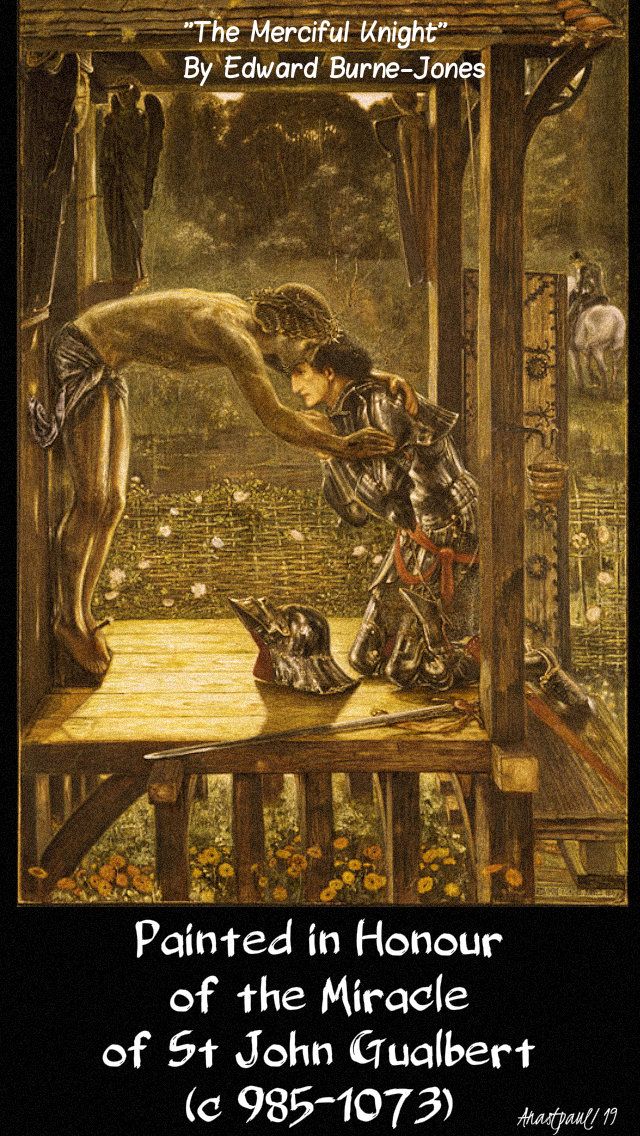
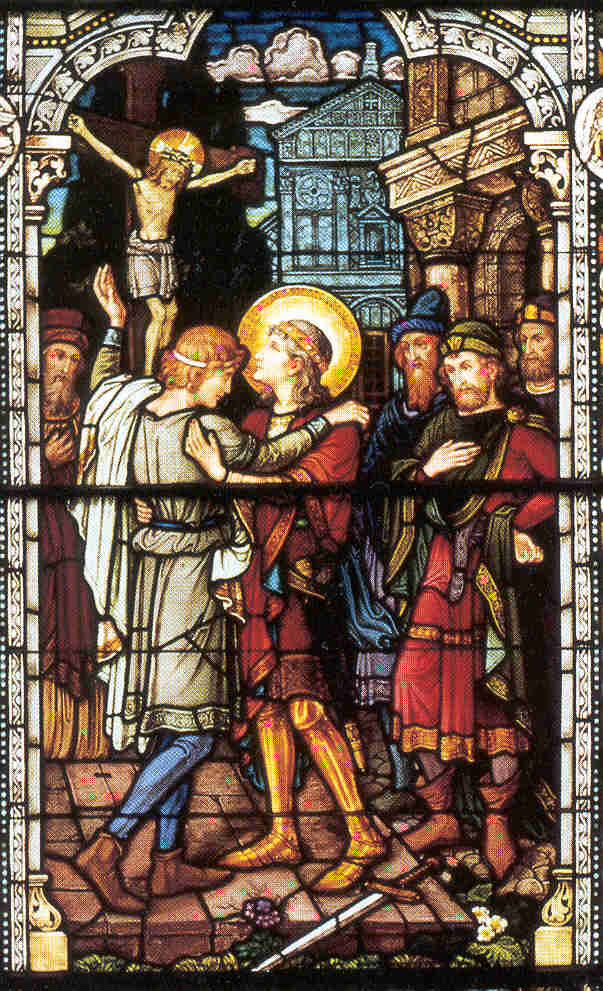
On Good Friday, as he was riding into Florence accompanied by armed men, he encountered his enemy in a place where neither could avoid the other. John would have slain him but his adversary, who was totally unprepared to fight, fell upon his knees with his arms stretched out in the form of a cross and implored him, for the sake of Our Lord’s holy Passion, to spare his life. St John said to his enemy, “I cannot refuse what you ask in Christ’s name. I grant you your life and I give you my friendship. Pray that God may forgive me my sin.” Grace triumphed.
Gualbert entered the nearby Benedictine Church at San Miniato al Monte to pray and the figure on the Crucifix bowed His head to him in recognition of his generous and merciful act. Gualbert begged pardon for his sins and that week cut off his hair and began to wear an old habit that he had borrowed.
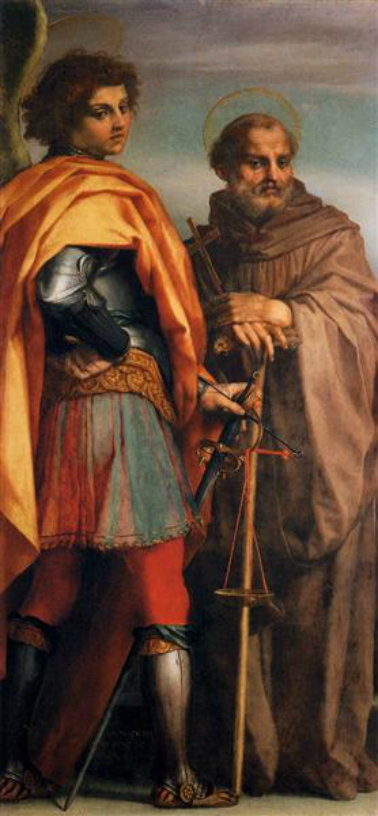
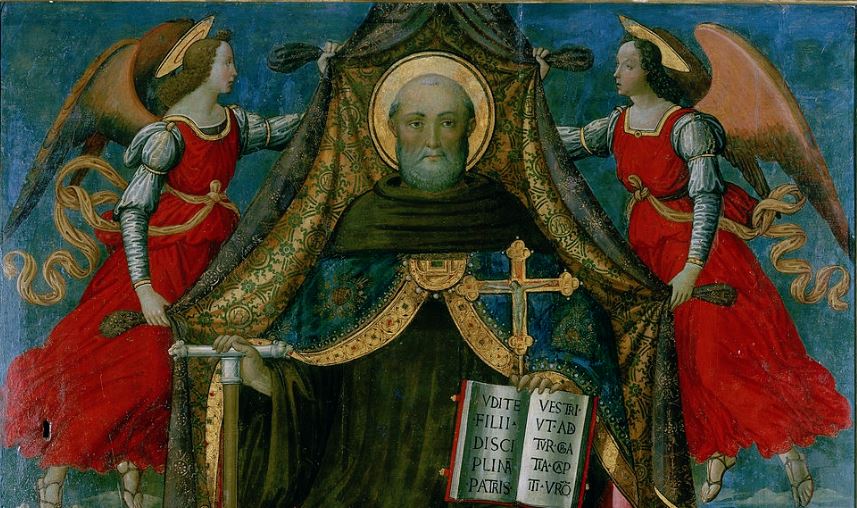
St Michael & St John Gualbert
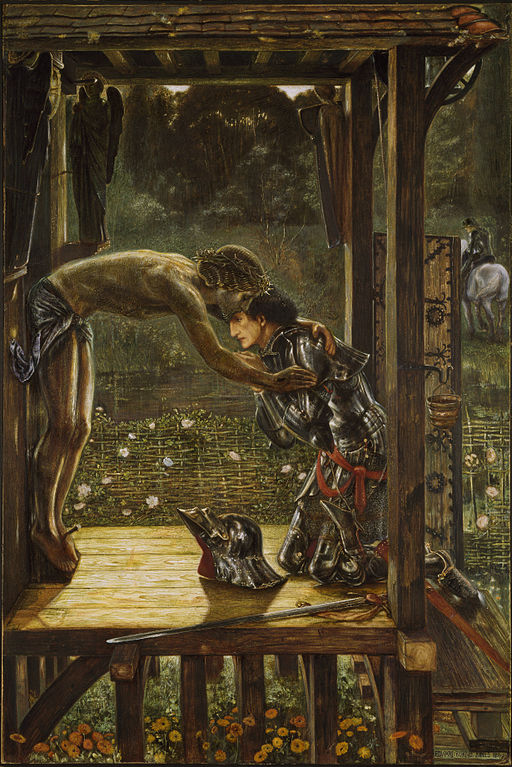
This holy miracle, forms the subject of Edward Burne-Jones’s artwork, “The Merciful Knight” and Joseph Shorthouse, the author, adapted this in his celebrated novel “John Inglesant”. The explanatory inscription provided by Burne-Jones tells the viewer of a knight who forgave his enemy when he might have destroyed him and how the image of Christ kissed him in token to show that his acts had pleased God.
Edward Burne-Jones “The Merciful Knight”
Gualbert became a Benedictine Monk at San Miniato despite his father’s opposition. His father hastened to find his son but gave him his blessing when he heard his son’s arguments and saw that he was resolute in his decision. But he counselled his son to do good. He fought against simoniacal actions of which both his Abbot Oberto and the Bishop of Florence, Pietro Mezzabarba, were accused and their guilt discovered. Unwilling to compromise, he left to find a more solitary and strict life. He often fasted and imposed other strict penances on himself. His attraction was for the cenobitic and not eremitic life, so after he spent some time with the Monks at Camaldoli he late, in 1036, settled at Vallombrosa where he founded his own convent. Instead of a traditional garden he wished to have his Monks plant trees (firs and pines for the most part), hence his Patronage of forests and foresters. He founded additional Monasteries for his Order in locations such as Rozzuolo and San Salvi.
He became a noted figure for his compassion to the poor and the ill. Pope Leo IX travelled to Vallambrosa to see and talk with St John. Pope Stephen IX and pOPE Alexander II ,held him in the greatest esteem as did Pope Gregory VII, who praised Gualbert for the pureness and meekness of his faith, as a staunch example of compassion and goodness. Gualbert also admired the teachings of the Church Fathers, in particular Saint Basil and Saint Benedict of Nursia.
He never wished to be Ordained to the Priesthood and nor did he even wish to receive the Minor Orders. He fought manfully against simony and in many ways promoted the interest of the Faith in Italy. On 12 July 107, after a life of great austerity, he died whilst the Angels were singing round his bed.
The holy lives of the first Monks at Vallombrosa attracted considerable attention and brought many requests for new foundations but there were few Postulants, since few could endure the extraordinary austerity of the life. Thus only one other Monastery,, that of San Salvi at Florence, was founded during this period. But when the Founder had mitigated his Rule somewhat, three more Monasteries were founded and three others reformed and united to the Order during his lifetime.
In the struggle of the Popes against simony, the early Vallumbrosans took a considerable part, of which the most famous incident is the ordeal by fire undertaken successfully by St Peter Igneus in 1068. Shortly before this, the Monastery of St Salvi had been burned and the Monks ill-treated by the anti-reform party. These events still further increased the repute of Vallombrosa. A Bull of Pope Urban II in 1090, which takes Vallombrosa under the protection of the Holy See, enumerates fifteen Monasteries besides the Motherhouse.
St John was Canonised by Pope Celestine III on 24 October 1193.
Pope Pius XII, in 1951, named St John the Patron Saint for the Italian Forest Corps while he was named as the Patron for Brazilian forests in 1957.












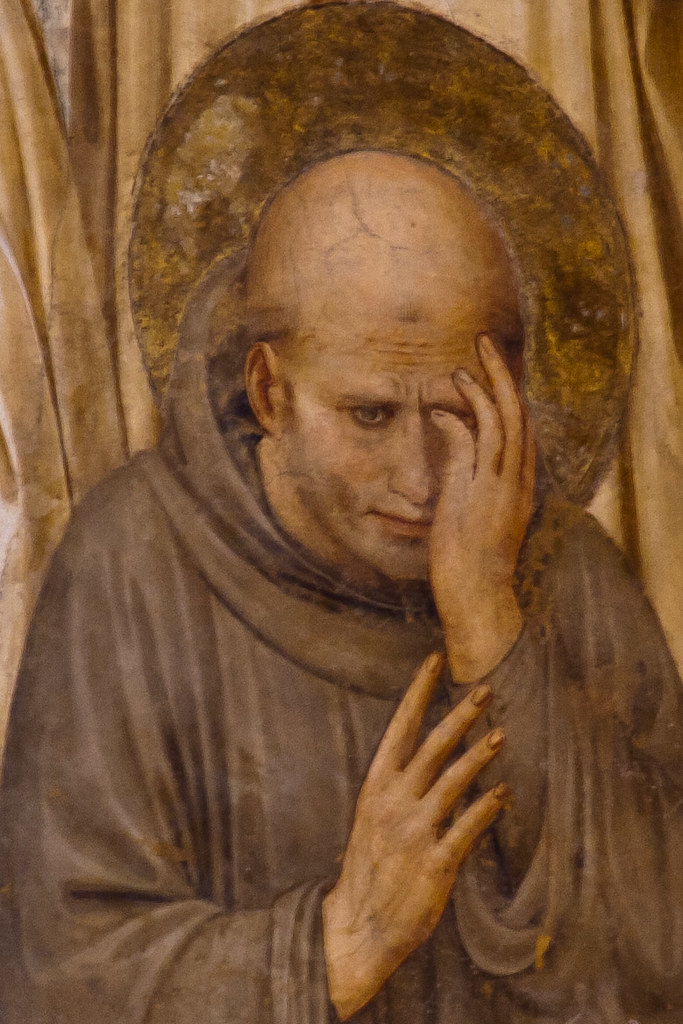 He often fasted and imposed other strict penances on himself. His attraction was for the cenobitic and not eremitic life, so after he spent some time with the Monks at Camaldoli he late, in 1036, settled at Vallombrosa where he founded his own convent. Instead of a traditional garden he wished to have his Monks plant trees (firs and pines for the most part), hence his Patronage of forests and foresters. He founded additional Monasteries for his Order in locations such as Rozzuolo and San Salvi.

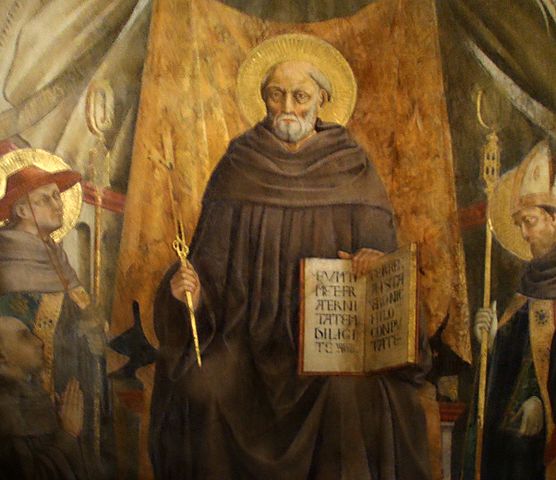
 AnaStpaul
You must be logged in to post a comment.