
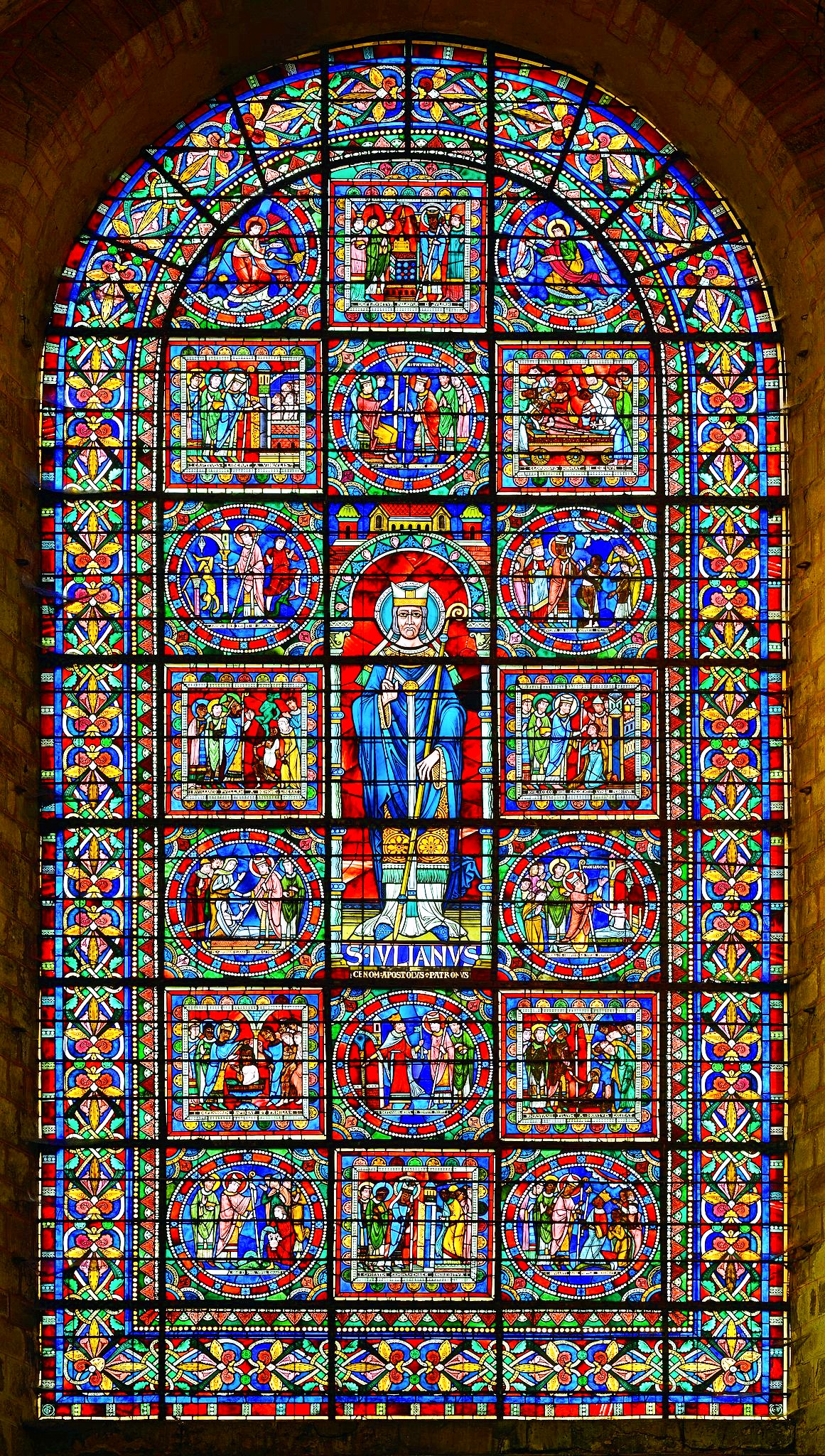
Saint of the Day – 27 January – Saint Julian (Died 3rd or 4th Century) the 1st Bishop of Le Mans. Died in the 3rd or 4th Century at Sarthe, Gaul (modern Sant-Marceaux, France) of natural causes . Patronages – Beaumont, Belgium; Castrovillari, Italy; Le Mans, France; Pollina, Italy. Also known as – Julien du Mans, Iulianus, Juliani.
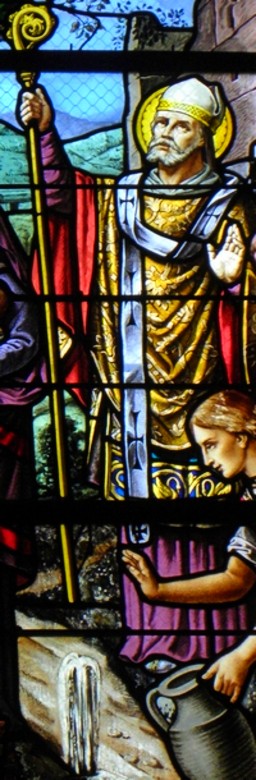
The Roman Martyrology reads today: “At Le Mans, the demise of St Julian, the first Bishop of that City, who was sent thither by St Peter, to preach the Gospel.”
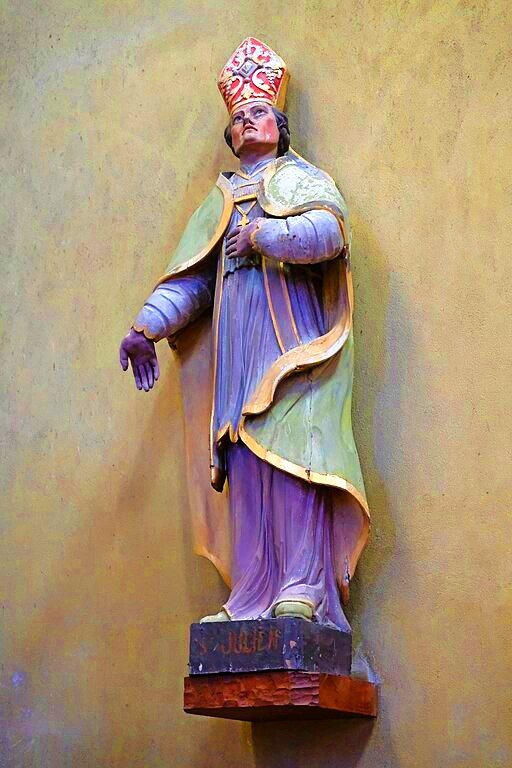
The oldest account of Julian’s life, the Gesta Domini Juliani, is found in the famous work entitled, Actus Pontificum Cenomannis in Urbe Degentium. Now, these Actus, undoubtedly composed between 840 and 857, are the work of an unscrupulous forger, only concerned with defending the rights and possessions of the Church of Le Mans at the time he wrote which is why, his biography is completely false and discounted.
According to this source, Julian, after having been one of the 72 disciples, was Consecrated as Bishop by the Pope St Clement of Rome and sent to Gaul. Arriving at the gates of the City of Le Mans, he miraculously made a fountain gush forth. The inhabitants converted in crowds and, especially the local authorities, who made Julian innumerable donations carefully enumerated in the above-mentioned writing. The Bishop, after 7 years, went on a pilgrimage to Rome, from where he returned laden with Relics. These Relics produced many miracles which, in turn, caused conversions. Julian also created 90 rural Parishes and this was easy for him because, in 27 Ordinations, he Consecrated 176 Priests, 22 Deacons and, as many Sub-deacons. Finally, after an Episcopate of 47 years, he died on 28 January.
None of the above Vita, can be considered reliable. It must be remembered that the claims of the Churches to apostolicity, that is, to have a Founder who can be directly linked to Apostolic times, are a fact of the 8th and 9th Centuries which finds its explanation, without doubt, in local vanity but, at the same time, in the very great prestige the Church of Rome enjoyed at that time.
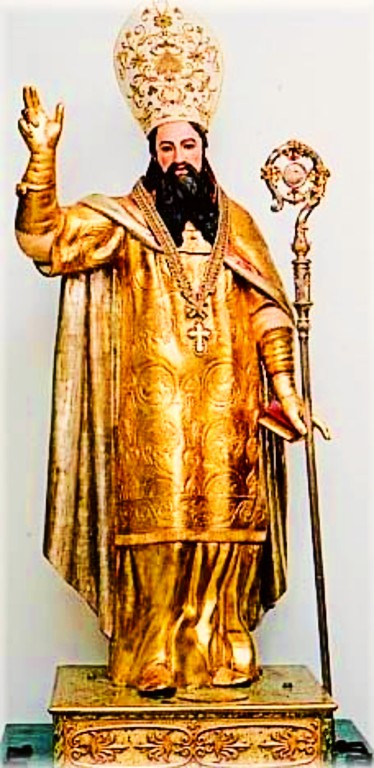
To know something about Julian, then, we must consult indirect sources. We know from the will of St Bertrand, the Bishop of Le Mans (616), that there existed, at that time, a suburban Church dedicated to St Julian the Bishop. In 832, an imperial charter informs us that the building still existed and that it was served by a small Monastery. This Church has been identified; it is located on the site of the Church of Le Pré which, before the Revolution, had a small Crypt in the form of a confessional which can undoubtedly be dated to the end of the 4th Century, or the beginning of the 5th. This is the Clue which leads us to place Julian in the 4th Century.
The tradition which makes him the 1st Bishop of Le Mans and which attributes the foundation of the Cathedral to him, can also be accepted. The fact of his lengthy and zealous career as a true shepherd of his flock, too must be regarded as authentic. We note, however, that the cult of St Julian developed only later.
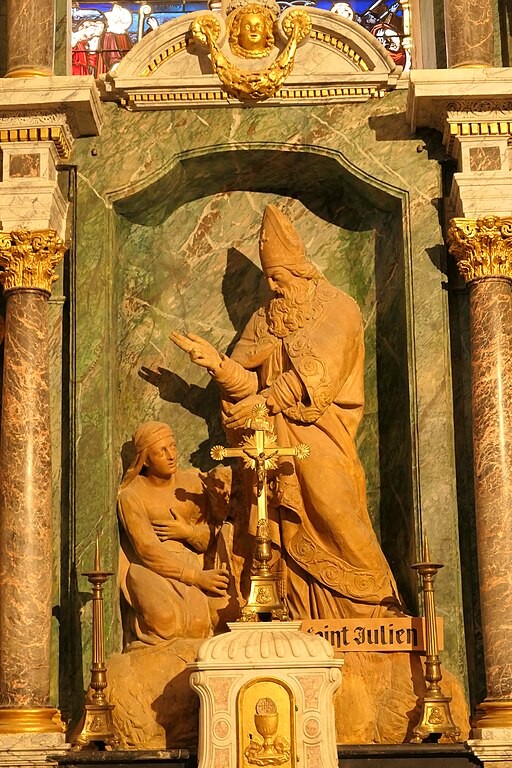
In 1254, things changed, when the above-mentioned legend of Julian’s Apostolic mission was born. Between 841 and 850 his body was transported from the Church of Le Pré to the Cathedral, the cult assumed ever more intense proportions, until in the 11th Century, St Julian had by then become famous.
The Feast is fixed on 27 January. The Cathedral of Le Mans, after having borne the name of Our Lady, then of Sts Gervase and Protasus, is currently dedicated to St Julian, whose cult developed greatly in England too, thanks to the Normans.



 AnaStpaul
You must be logged in to post a comment.