
Saint of the Day – 29 July – Saint Lupus of Troyes (c383-c479) Bishop and Confessor, Defender – defended the City from the devastating fury of the Huns and strenuously fought the rampant heretical climate. He was also a friend of Bishop St Euphronius of Autun (Died c473). Born in Toulouse, Alsace, around 383 and died c479 in Troyes of natural causes. Patronages – against demonic possession, against epilepsy, against paralysis, of Benevento, and San Lupo, Italy and of Troyes, France. Also known as – Leu, Lou, Loup, Lupo.
St Sidonius Apollinaris (c430 – 489) called him “The Father of Fathers and Bishop of Bishops, the Chief of the Gallican Prelates, the Rule of Manners, the Pillar of Truth, the Friend of God and the Intercessor to Him for men.”

The Roman Martyrology reads: “At Troyes, in France, St Lupus, Bishop and Confessor who accomopanied the blessed St Germanus to England to combat the Pelagian heresy and by assiduous prayers, defencded the City of Troyes from the fury of Attila, who was debastating all of France.”
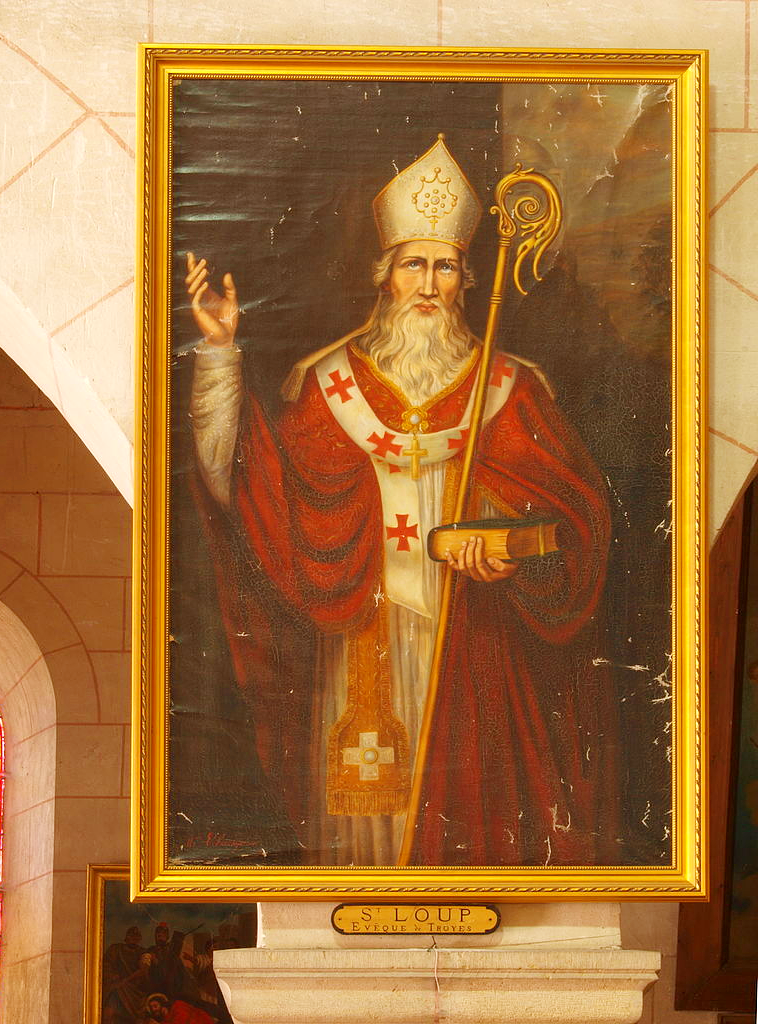
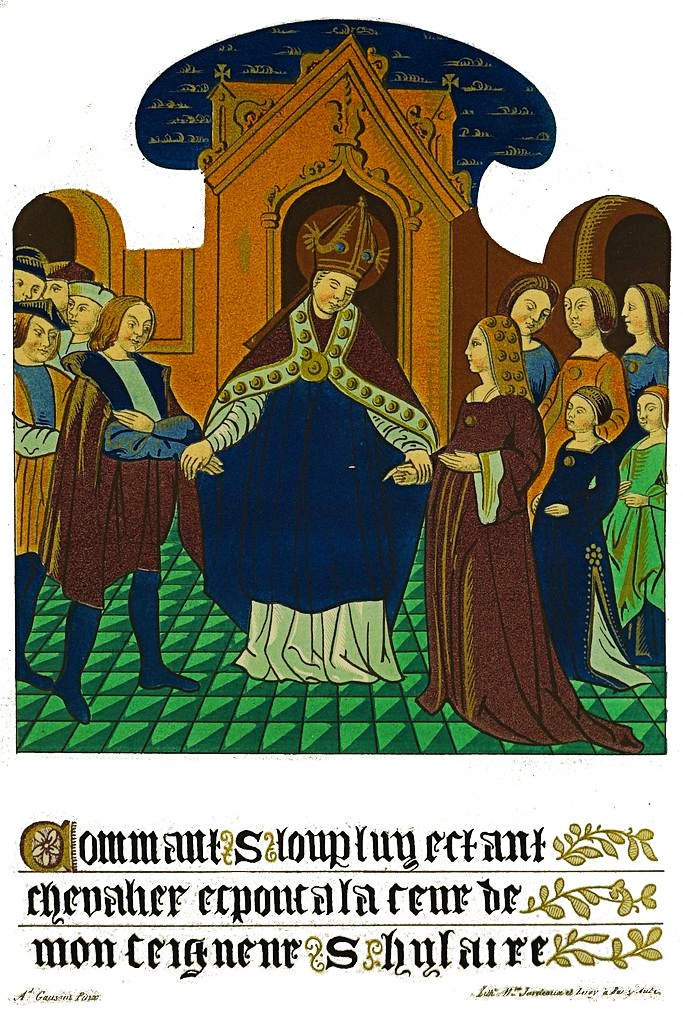
Lupus was the son of a wealthy nobleman, Epirocus of Toul. It is believed that Lupus was the brother of St Vincent of Lérins (Died c445) Monk, Ecclesiatical Writer. Having lost his parents when he was an infant, Lupus was brought up by his uncle Alistocus. He was brother-in-law to St Hilary of Arles (c400-449), as he had married one of Hilary’s sisters, Pimeniola. He held a number of estates in Maxima Sequanorum and worked as a lawyer. After six years of marriage, he and his wife parted by mutual consent to dedicate themselves to God’s service.
Lupus sold his estate and gave the money to the poor. He entered Lérins Abbey, a community founded and led by St Honoratus of Arles (c350-c429), where he stayed about a year. In 427 Honoratus was named as the Archbishop of Arles and St Hilary accompanied him to his new See. Lupus then retired to Macon where he came to the attention of St Germanus of Auxerre (c378 – c448) , who appointed him as the Bishop of Troyes. He was reluctant to assume this high and demanding office and at first declined but eventually relented.
In the autumn of 429, the Council of Arles, at the request of the Bishops of Britain, sent Lupus and Germanus to combat Pelagianism. As such, Lupus is remembered in Wales as Bleiddian and appears in early Welsh Literature. He is particularly venerated at Llanblethian in the Vale of Glamorgan.
The two Saints returned to Gaul just after Easter in the spring of 430 having achieved great success in countering and instruction against the Pelagianist heresy.
In 451, hearing of the advancing Huns, after praying for many days, Lupus, dressed in full Episcopal regalia, went to meet Attila at the head of a procession of the Clergy. Attila was so impressed with Lupus that he spared the City. Attila went onto lose the Battle of Châlons. Lupus then encountered an extremely fraught and difficult problem, when Attila asked the Bishop to accompany him and his army afterthe loss at Châlons, believing that Lupus’ presence would spare his army from extermination. Of course, Lupus had to decline. Many doubt the veracity of the account of the Attila incident. However, the historical kernel it contains is that Troyes was spared being sacked by Attila’s army and that its inhabitants considered this a miraculous deliverance by the intercession and bravery of St Lupus!

St Lupus was the Bishop of Troyes for fifty-two years and died at Troyes in c479. His Relics are enshrined in Troyes Cathedral.
His cult in Benevento, Italy and in his own Diocese, dates to at least the 9th-10th Centuries. Already in the 9th Century, there existed in Benevento a Benedictine Abbey named after him, whose Abbots exercised spiritual and temporal jurisdiction over the fortified village of San Lupo (Archdiocese and Province of Benevento). When, in 1450, Pope Nicholas V suppressed the Abbey, its assets and jurisdiction were annexed to the metropolitan Chapter which, since then, has honoured our holy Bishop as its illustrious Patron.

In San Lupo, Italy, our Saint is celebrated from 27-29 July each year with processions, Holy Mass and many festivities.
St Vincent of Lérins:
https://anastpaul.com/2023/05/24/saint-of-the-day-24-may-saint-vincent-of-lerins-died-c445-confessor/
QUOTES by St Vincent:
https://anastpaul.com/2023/05/24/quote-s-of-the-day-24-may-st-vincent-of-lerins/
https://www.santiebeati.it/dettaglio/91806
St Hilary of Arles:
https://anastpaul.com/2022/05/05/saint-of-the-day-5-may-saint-hilary-of-arles-c-400-449-hilary-of-holy-memory/
St Honoratus of Arles:
https://anastpaul.com/2024/01/16/saint-of-the-day-16-january-saint-honoratus-of-arles-c350-c429-bishop-and-confessor/
St Germanus d’Auxerre:
https://anastpaul.com/2018/07/31/saint-of-the-day-31-july-st-germanus-dauxerre-c-378-c-448/
St Sidonius Apollinaris (c430 – 489) Bishop, Copnfessor, Poet, Diplomat, Writer, Scholar, Apostle of the poor and of exiles – Sidonius is “the single most important surviving author of 5th Century Gaul.”
https://anastpaul.com/2020/08/21/saint-of-the-day-21-august-saint-sidonius-apollinaris-c-430-489/



 AnaStpaul
You must be logged in to post a comment.