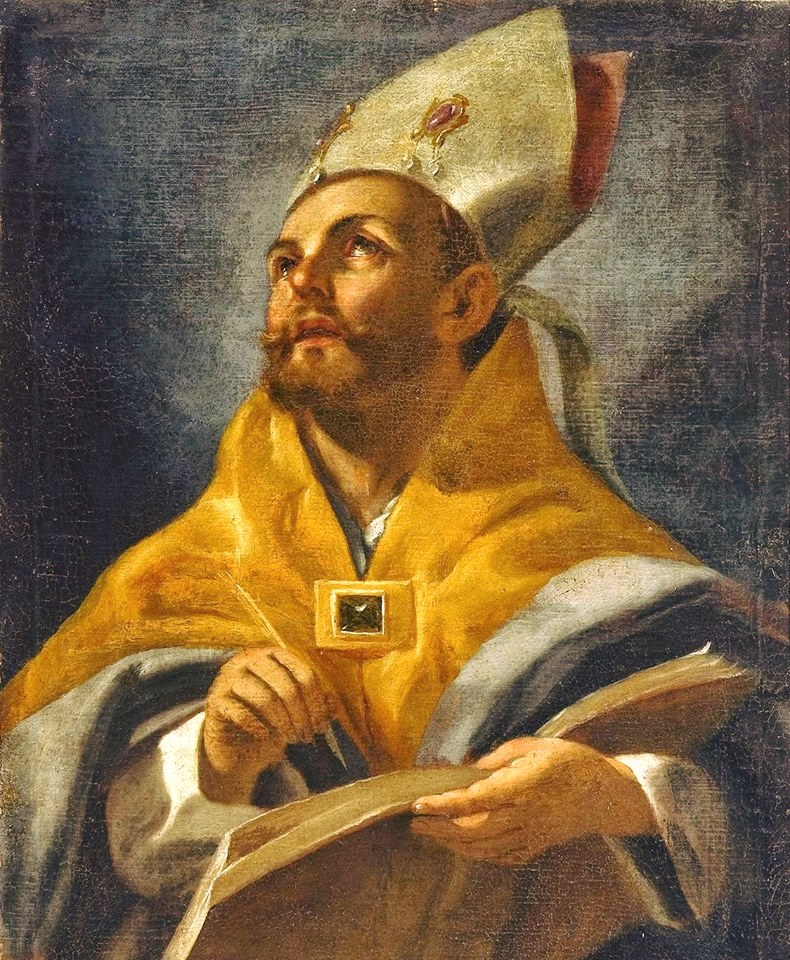
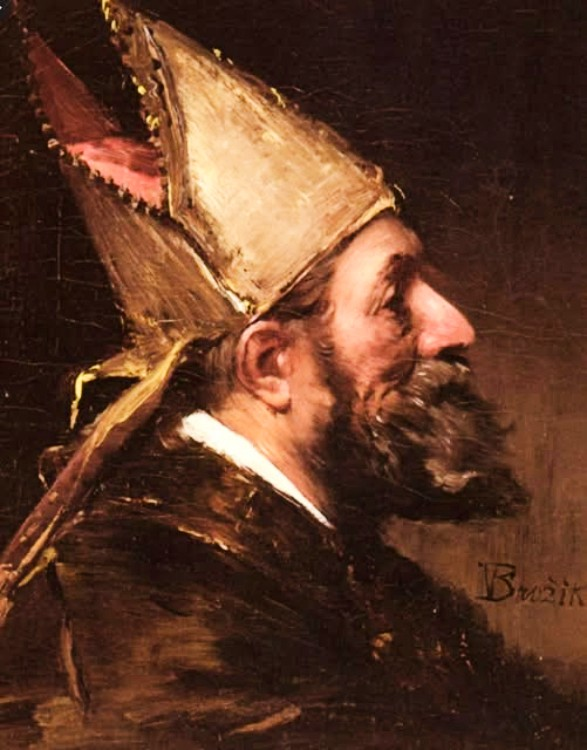
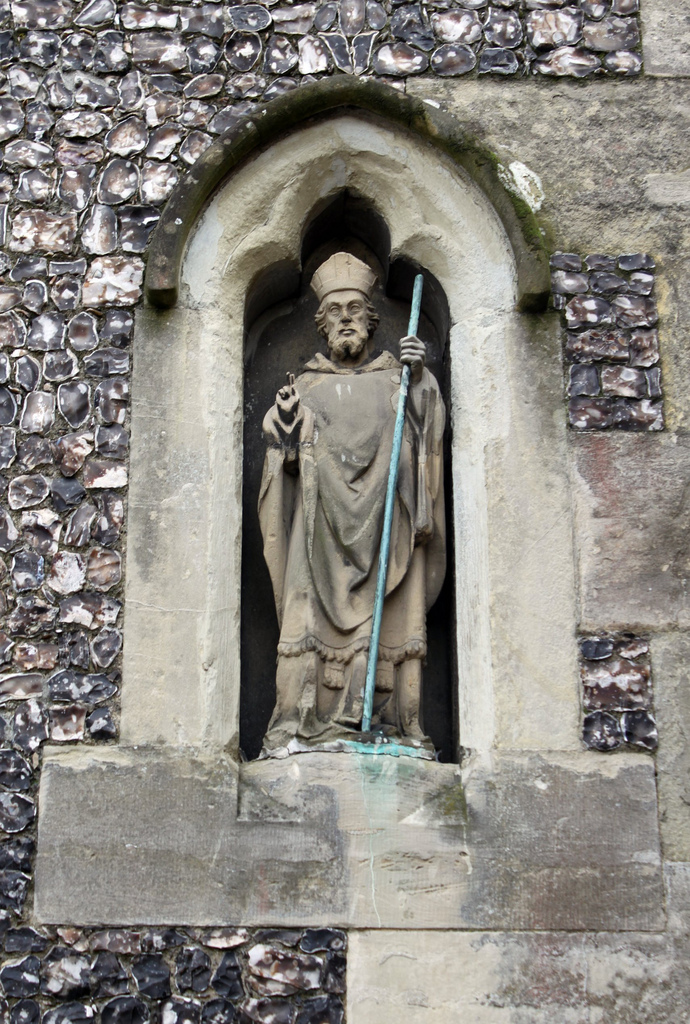
Saint of the Day – 4 December – St Meletus (4th Century) Bishop of Pontus, Scholar and learned Bishop of great sanctity. Pontus is a region within Anatolia on the southern coast of the Black Sea, located in the modern-day eastern Black Sea region of Turkey … Also known as – Meletiu, Melitiusi, Melezio.
The Roman Martyrology reads today: “In Pontus, blessed St Meletus, Bishop and Confessor, who, joined to an eminent gift of knowledge, the more distinguished glory of fortitude and integrity of life.”
After praising the Martyr Saint Pamphilus, St Eusebius, in his Historia Ecclesiastica, adds: “Among the men of rare qualities who are of our time, (i.e. of the 4th Century) we know Pierius, an Alexandrian Priest and Meletus, Bishop of the Churches of Pontus.”
After pausing to praise Pierius, he continues: “Meletus—called *Attic Honey by men of learning—answered the ideal of the erudite in every field of doctrine. One could not sufficiently admire the force of his eloquence. Perhaps some will say this was a natural gift in him but who was superior to him in terms of the sum of his experience and the breadth of his erudition? Even at a single test you would have had to admit that in all disciplines based on reasoning he was the most able and eloquent. The sanctity of his life, moreover, was not inferior to his other qualities. I learned to know him for 7 years, when during the persecution, he had withdrawn to the regions of Palestine.”
It was necessary to cite this in full, as it is the principal source which, through such a laudatory portrait, introduces us to this Prelate.
According to Philostorgius, Meletus was the Bishop of Sevastopol. However, one can hardly give credence to this author’s assertions when he places Meletus in the Arian sect. This could not be reconciled with the praise given to him by both St Athanasius of Alexandria and St Basil of Caesarea.
Usuard is the first to include him in his, Martyrology, with a eulogy taken from St Eusebius on the arbitrary date of 4 December. P. Galesini, influenced by Usuard, introduced Meletus on this same day. G Meulen (Molano) takes up the eulgy of Usuard that Baronius reproduced almost verbatim in the Roman Martyrology.
*Attic Honey used as an analogy referring to a rare Greek Honey crafted from by the bees from fine herbs and flowers.
St Peter Chrysologus (c 400-450) “Golden Words” Confessor,, Father & Doctor of the Church – Bishop of Ravenna, Italy. Today we celebrate the Memorial of Saint Peter Chrysologus, a fifth-century Italian Bishop known for testifying courageously to Christ’s full humanity and divinity during a period of the heresy called “Monophysite.” The saint’s title, Chrysologus, signifies “golden speech” in Greek. Named as a Doctor of the Church in 1729 by Pope Benedict XIII., he is distinguished as the “Doctor of Homilies” for the concise but theologically rich reflections he delivered during his time as the Bishop of Ravenna. 176 of his sermons have survived – it is the strength of these beautiful explanations of the Incarnation, the Creed, the place of Mary and John the Baptist in the great plan of salvation, Mary’s perpetual Virginity, the penitential value of Lent, Christ’s Eucharistic presence and the Primacy of St Peter and his successors in the Church. FEAST DAY: 4 December (General Roman Calendar 1729-1969) https://anastpaul.com/2018/07/30/saint-of-the-day-30-july-st-peter-chrysologus-c-400-450-golden-words/
Bl Francis Galvez St Heraclas of Alexandria Bl Jerome de Angelis St John the Wonder Worker
St Maruthas (Died c415) Bishop, Confessor, Theologian, Writer, honoured in the Syrian Rite Church as a Doctor of the Church. He was a friend of Saint John Chrysostom and acted as an Ambassador between the East Roman Emperor and the Persian Emperor. The Roman Martyrology reads: “In the kingdom of Persia, St Maruta, Bishop, who, having restored peace for the Church, presided over the Council of Seleucia, restored the Churches of God which had collapsed during the persecution of King Sabor and placed the relics of the Martyrs of Persia in the City Seat of the Bishop, since then called Martiropoli.” Feast Day seems to have fallen victim to the changes made byy VII. His Holy Life: https://anastpaul.com/2022/02/16/saint-of-the-day-16-february-saint-maruta-died-c-415/




 AnaStpaul
You must be logged in to post a comment.