
Saint of the Day – 27 August – Saint Narnus of Bergamo (Died c345) Bishop and Confessor, of Bergamo which is a suffragan of the Archdiocese of Milan. Died in c345 in Bergamo, Italy of natural causes. Additional Memorial – 15 January in Bergamo. Also known as – Narno.
The Roman Martyrology reads today: “At Bergamo, St Narnus, who was Baptised by the blessed Barnabas and Consecrated by him as the first Bishop of that City.”

Narnus is venerated as the 1st Bishop of Bergamo. Christian tradition holds that he was Consecrated during the Apostolic Age by St Barnabas, although Narnus probably lived later than that.
The oldest source which mentions Narnus is from the 13th Century and was written by Brother Branca da Gandino, a Friar. He considers Narnus a Bishop of Bergamo. He probably held the Episcopal Office towards the middle of the 4th Century, according to some scholars in the years 334-345 and they also affirm that it was St Ambrose, who consecrated him as the 3rd Bishop of Bergamo.
The place of his birth is uncertain, some say Castione, some Ogna, some Villa d’Ogna but the consensus is Ogna (Bergamo). It is believed that he built the primitive Alexandrian Basilica, of which St Grata was the promoter.
He died in his seat of Bergamo, towards 345 or around 375 (?) and was buried four metres deep from the choir, in the Crypt of the ancient Alexandrian Church which was the ‘martyrium’ of St Alessandro and, at the same time, a Cathedral and there, he was honoured with an Altar and venerated every year with solemn liturgies.
In 1561, the ancient Basilica of St Alessandro had to be demolished and the Relics of St Narnus, together with those of his successor St Viatore and other Saints, were transferred to the Church of St Vincenzo, today’s Cathedral of ST Alessandro, where they are still venerated.
During these works, an ancient Tombstone was found which indicated the place where both St Narnus and St Viatore were buried, in Latin: “episcopus Narnus Christi Confessor” that is, St Narnus has the title of ‘Confessor’ which, in ancient times, also included Martyrs, it is thought that perhaps he had suffered mistreatment in his youth, during the persecution of Diocletian.
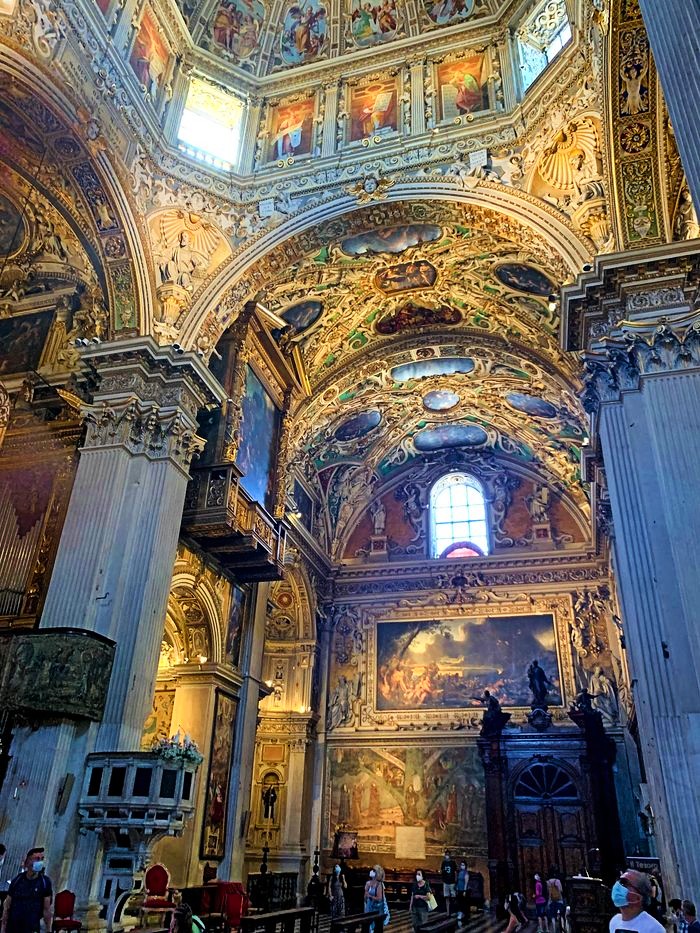
In the following centuries there were four other recognitions of the Relics; in a calendar of the 11th Century and in one of the 13th Century, owned by the Monastery of St Grata, the Feast of St Narnus is placed on 27 August, a date which was then passed into other ‘Catalogs’ and also into the Roman Martyrology.
On the figure of the Bishop of Bergamo, there is a vast bibliography, as well as a discrete ancient iconography.
In the Diocese of Bergamo, his memory is celebrated on 15 January.



 AnaStpaul
You must be logged in to post a comment.