Posted in CATHOLIC PRESS, DOCTORS of the Church, JESUIT SJ, Of Catechists, SAINT of the DAY

Saint of the Day – 21 December – St Peter Canisius SJ (1521-1597) – Confessor, Doctor of the Church

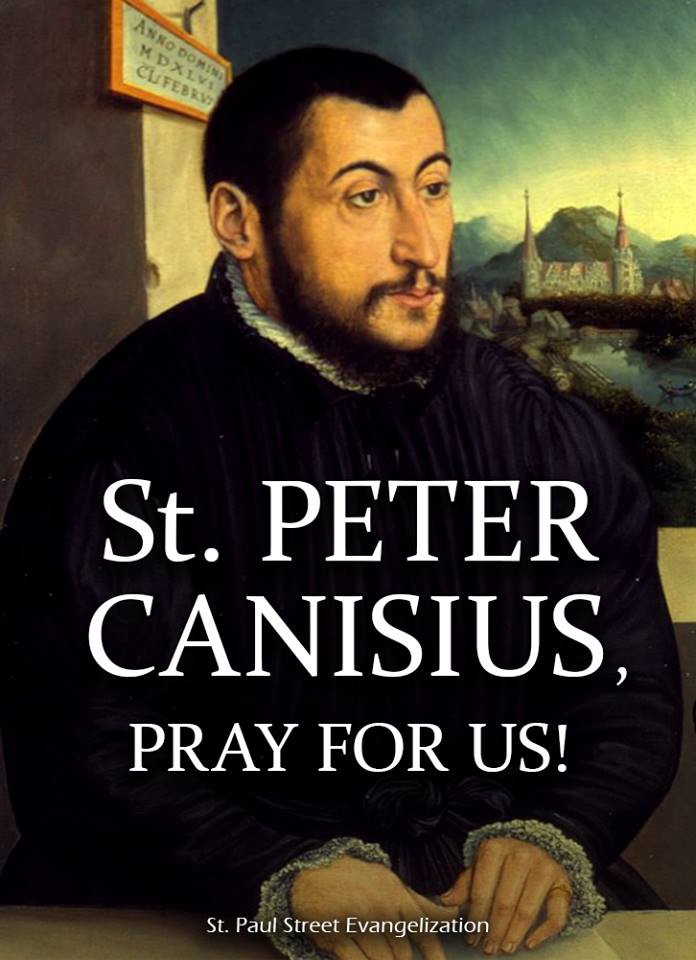
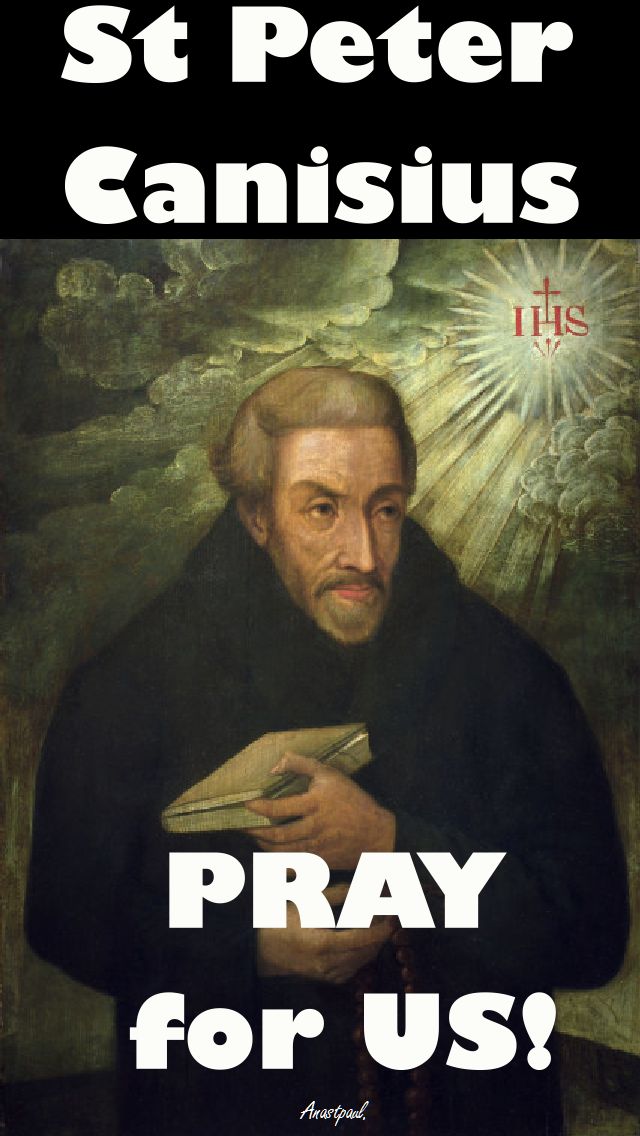
Saint of the Day – 21 December – St Peter Canisius SJ (1521-1597) – Confessor, Priest, Religious, Doctor of the Church, Reformer, Teacher,  Writer, Apostle of Charity –  (Born as Pieter Kanis on 8 May 1521 at Niemguen, Netherlands – 21 December 1597 at Fribourg, Switzerland of natural causes).   Patronages – Catholic Press, Germany, Catechists.   Known as the Hammer of Protestantism and the Second Apostle of Germany.   St Peter  became known for his strong support for the Catholic faith during the Protestant Reformation in Germany, Austria, Bohemia, Moravia and Switzerland.   The restoration of the Catholic Church in Germany after the Protestant Reformation is largely attributed to the work there of the Society of Jesus, which he led.   “Peter Canisius was the first publisher, the first author, the first editor of the Society of Jesus.   By now, Jesuits have followed in his footsteps to the tune of having published in 400 years, thousands of books.   From the time of Canisius, and his name is first in the bibliography of Jesuit writers, from Peter Canisius to the end of the l9th century, that is to 1900, there are about twenty volumes of bibliography, each volume about two inches thick, stands about eighteen inches high, filled just with authors and titles, thousands and thousands and thousands, no other religious institute in the Church publishes as much as members of the Society.   It was all started by Peter Canisius.” (Ven Servan of God Fr John A Hardon S.J.)

canisius - large

St Peter Canisius was born in 1521 in what is now the Netherlands.   His father was the local mayor and his mother died shortly of his birth.  Peter studied at the University of Cologne and earned a Master’s degree in 1540 at the age of 19.   While there, he met St Peter Faber, one of the first Jesuits.   Through him, Canisius became the first Dutchman to join the Society of Jesus in 1543.   St Peter Canisius’ preaching and writings, led him to become one of the most influential Catholics of his time.   He supervised the founding and maintenance of the first German-speaking Jesuit colleges and was known as the Second Apostle of Germany.

If you have too much to do, with God’s help you will find time to do it all – St Peter Canisius

For a half-century he led the Catholic Reformation in Austria, Bavaria and Bohemia.   For that reason he is reckoned an apostle to Germany, second only to St. Boniface.   With stupendous energy he preached and taught in parishes, reformed and founded universities, wrote many books including popular catechisms, restored lapsed Catholics, converted Protestants, preached retreats and found time to care for the sick.   In his last 30 years travelling more than 20,000 miles on foot or horseback, St Peter Canisius spearheaded the renewal of the Catholic faith in southern Germany.Saint_Petrus_Canisius

Peter Canisius revitalised Catholic life and teaching at universities in Ingolstadt and Augsburg.   He founded new ones at Prague and Fribourg.   In all four cities his preaching and catechising won the hearts of Catholics and attracted nominal Protestants to the church.   In Vienna his personal care for plague victims made him a most popular figure.  Thus, when appointed diocesan administrator, he was in a position to revive the city’s long decadent Catholic community.

After 1555, Peter Canisius published his famous Summary of Christian Doctrine and two smaller catechisms.   These books generated the Catholic Reformation as Luther’s catechism had spread Protestantism.   Canisius’s catechisms also helped launch the Catholic press.    The Three Catechisms he compiled between 1555 and 1558.   The first Catechism was addressed to students who could grasp the elementary notions of theology;  the second, to young people of the populace for an initial religious instruction;  the third, to youth with a scholastic formation of middle and high school levels.   He explained Catholic doctrine with questions and answers, concisely, in biblical terms, with great clarity and with no polemical overtones.   “There were at least 200 editions of this Catechism in his lifetime alone, translated into 15 languages!   And hundreds of editions succeeded one another until the 20th century.   So it was that still in my father’s generation people in Germany were calling the Catechism simply “the Canisius”.   He really was the Catechist of Germany for centuries, he formed people’s faith for centuries.” (Pope Benedict XVI).

He was offered the post of Bishop of Vienna in 1554 but declined in to continue his travelling and teachings.

canisius2

In the late 16th century, when open hostility typified relations between Catholics and Protestants, Peter Canisius advised charity and moderation. He opposed theological debates with Protestant leaders and in general, discouraged discussion of Catholic distinctives such as indulgences, purgatory and monastic vows with Protestants.   He believed such efforts only heightened division and embittered relations.   He articulated his views in this letter to his Jesuit superior:

“It is plainly wrong to meet non-Catholics with bitterness or to treat them with discourtesy.   For this is nothing else than the reverse of Christ’s example because it breaks the bruised reed and quenches the smoking flax.   We ought to instruct with meekness those whom heresy has made bitter and suspicious and has estranged from orthodox Catholics, especially from our fellow Jesuits.   Thus, by whole-hearted charity and good will we may win them over to us in the Lord.

Again, it is a mistaken policy to behave in a contentious fashion and to start disputes about matters of belief with argumentative people who are disposed by their very natures to wrangling.   Indeed, the fact of their being so constituted is a reason the more why such people should be attracted and won to the simplicity of the faith as much by example as by argument.”

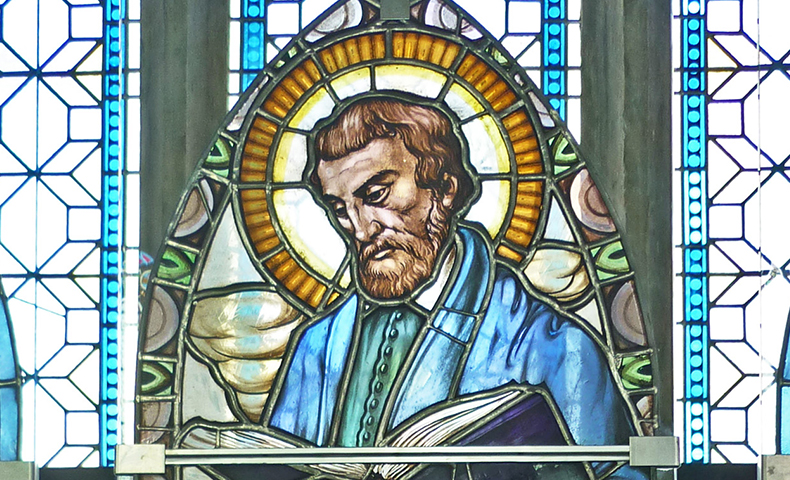
In 1591, Peter Canisius suffered a stroke that nearly killed him.   But he recovered and devoted himself to writing for six more years until his death in 1597.   His body was interred before the high altar of the Church of Saint Nicholas in Fribourg and his relics were translated to the Church of Saint Michael at the Jesuit College in Fribourg in 1625. He was Canonised 21 May 1925 by Pope Pius XI and was added to the now 36 Doctors of the Church, by Pope Pius XI in 1925.SOD-1221-SaintPeterCanisius-790x480Petrus Canisius / Gemaelde - Petrus Canisius / Painting -

Posted in JESUIT SJ, MORNING Prayers, PRAYERS of the CHURCH, SAINT of the DAY

Our Morning Offering – 13 November – The Memorial of St Stanislaus Kostka SJ (1550-1568)

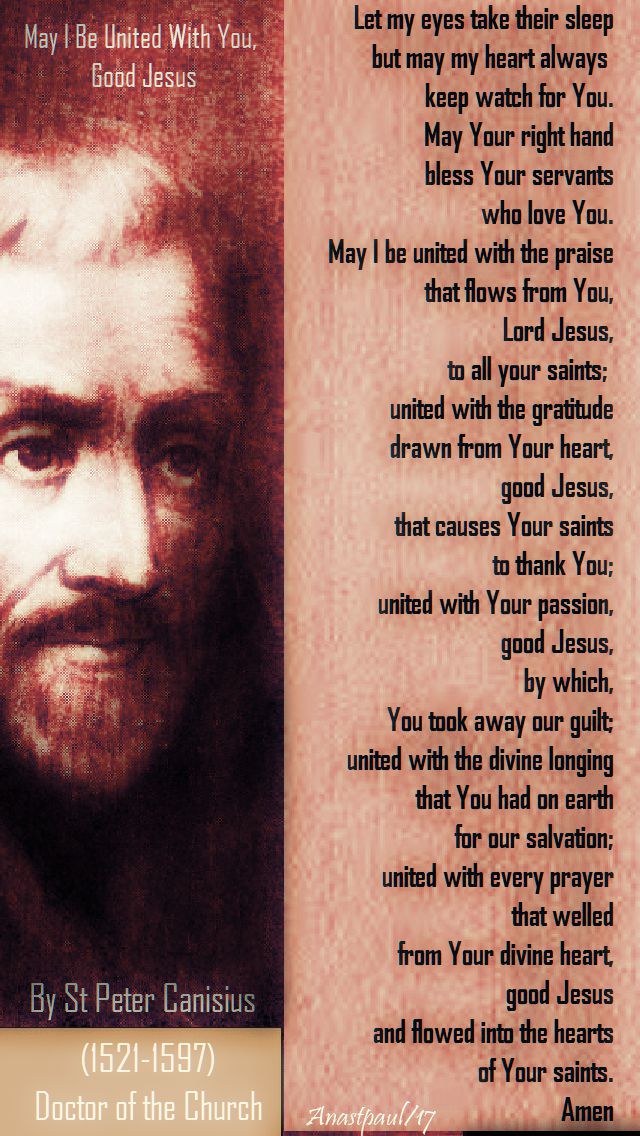
Our Morning Offering – 13 November – The Memorial of St Stanislaus Kostka SJ (1550-1568)

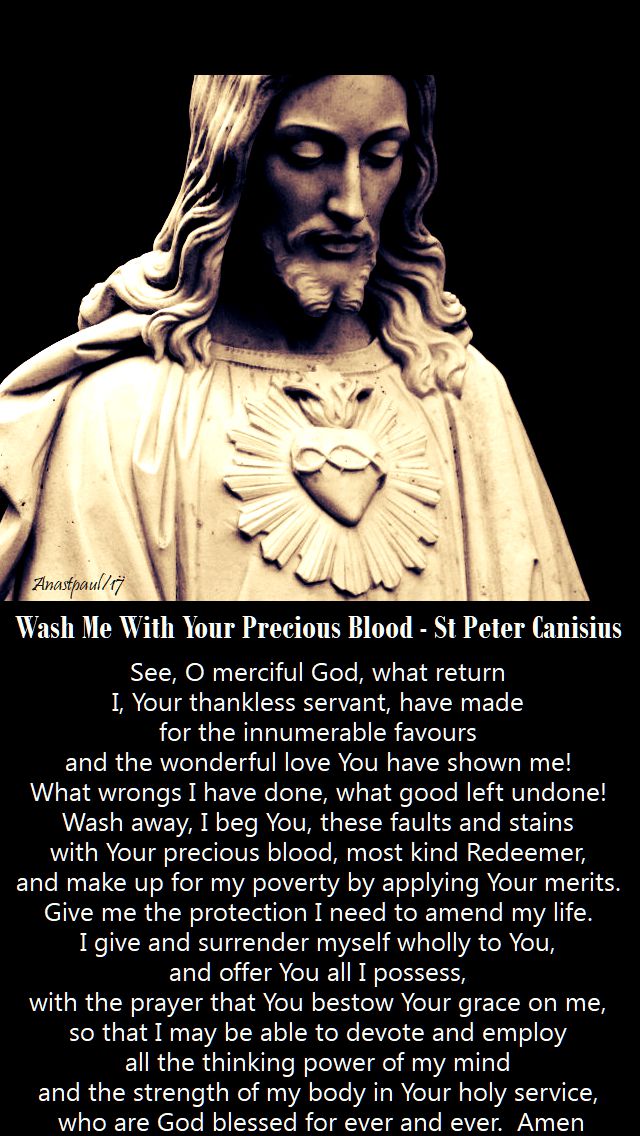
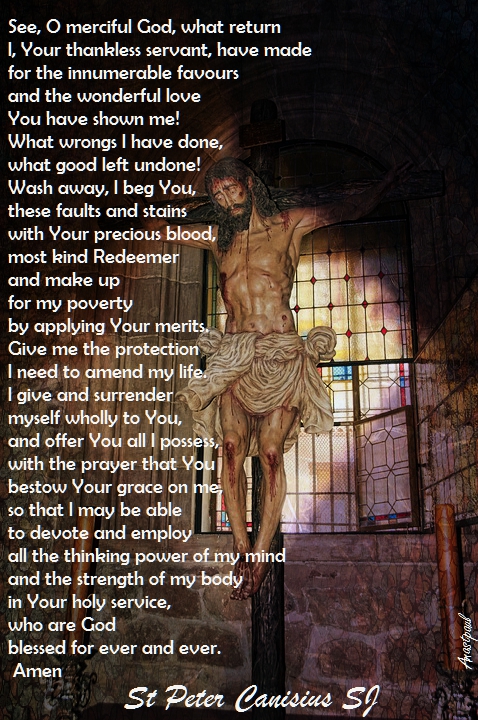
Wash Me With Your Precious Blood
By St Peter Canisius, S.J.

See, O merciful God, what return
I, Your thankless servant, have made
for the innumerable favours
and the wonderful love You have shown me!
What wrongs I have done, what good left undone!
Wash away, I beg You, these faults and stains
with Your precious blood, most kind Redeemer,
and make up for my poverty by applying Your merits.
Give me the protection I need to amend my life.
I give and surrender myself wholly to You,
and offer You all I possess,
with the prayer that You bestow Your grace on me,
so that I may be able to devote and employ
all the thinking power of my mind
and the strength of my body in Your holy service,
who are God blessed for ever and ever. Amenwash me with your precious blood - st peter canisius - 13 nov 2017

Posted in CATHOLIC DEVOTIONS of the Month, JESUIT SJ, MORNING Prayers, PRAYERS of the SAINTS, Uncategorized

Our Morning Offering – 28 July (July Devotion) – The Most Precious Blood)

Our Morning Offering – 28 July

Wash Me With Your Precious Blood
By St Peter Canisius S.J.

See, O merciful God, what return
I, Your thankless servant, have made
for the innumerable favours
and the wonderful love You have shown me!
What wrongs I have done, what good left undone!
Wash away, I beg You, these faults and stains
with Your precious blood, most kind Redeemer,
and make up for my poverty by applying Your merits.
Give me the protection I need to amend my life.
I give and surrender myself wholly to You,
and offer You all I possess,
with the prayer that You bestow Your grace on me,
so that I may be able to devote and employ
all the thinking power of my mind
and the strength of my body in Your holy service,
who are God blessed for ever and ever. Amen

wash me with yur precious blood - st peter canisius sj

Posted in JESUIT SJ, MORNING Prayers, SAINT of the DAY

Thought for the Day – 21 December

Thought for the Day – 21 December – St Peter Canisius

St Peter’s untiring efforts are an apt example for those involved in the renewal of the Church or the growth of moral consciousness in business or government. He is regarded as one of the creators of the Catholic press and can easily be a model for the Christian author or journalist. Teachers can see in his life a passion for the transmission of truth. Whether we have much to give, as Peter Canisius did, or whether we have only a little to give, as did the poor widow in the Gospel (see Luke 21:1–4), the important thing is to give our all. It is in this way that Peter is so exemplary for Christians in an age of rapid change when we are called to be in the world but not of the world.

In 1565, the Vatican was looking for a secret agent. It was shortly after the Council of Trent and the pope wanted to get the decrees of the Council to all the European bishops. What would be a simple errand in our day, was a dangerous assignment in the sixteenth century. The first envoy who tried to carry the decrees through territory of hostile Protestants and vicious thieves was robbed of the precious documents. Rome needed someone courageous but also someone above suspicion. They chose Peter Canisius. At 43 he was a well-known Jesuit who had founded colleges that even Protestants respected. They gave him a cover as official “visitor” of Jesuit foundations. But Peter couldn’t hide the decrees like our modern fictional spies with their microfilmed messages in collar buttons or cans of shaving cream. Peter traveled from Rome and crisscrossed Germany successfully loaded down with the Tridentine tomes — 250 pages each — not to mention the three sacks of books he took along for his own university!

St Peter believed in the importance in learning and understanding the Catholic faith. If it is available to you, resolve to read a portion of the new Catechism of the Catholic Church. Don’t try to read too much but consider reading a page a day. Before we can spread our faith we must have a solid foundation in ourselves.

Prayer:

Saint Peter Canisius, you saw the good in even the most troublesome of people. You found their talents and used them. Help me to see beyond the behaviour of others that may bother me to the gifts God has given them and please Pray for us all! Amen

st-peter-canisius-dec-21canisius-pray-for-us

Posted in QUOTES of the SAINTS, SAINT of the DAY

Saint of the Day – 21 December

Saint of the Day – 21 December – St Peter Canisius SJ (1521-1597 aged 76) –  Priest, Religious and Doctor of the Church – Known as The Hammer of Protestantism and the Second Apostle of Germany – Patron of Catholic press, Germany

St. Peter Canisius, from modern-day Netherlands, was born in 1521. His father was the local mayor and his mother died shortly of his birth. Peter studied at the University of Cologne and earned a Master’s degree in 1540 at the age of 19. While there, he met Peter Faber, one of the first Jesuits. Through him, Canisius became the first Dutchman to join the Society of Jesus in 1543. Through his preaching and writings, Peter Canisius became one of the most influential Catholics of his time. He supervised the founding and maintenance of the first German-speaking Jesuit colleges and was known as the Second Apostle of Germany.

If you have too much to do, with God’s help you will find time to do it all…. St Peter Canisius

For a half-century Jesuit Father Peter Canisius led the Catholic Reformation in Austria, Bavaria and Bohemia. For that reason he is reckoned an apostle to Germany, second only to St. Boniface. With stupendous energy he preached and taught in parishes, reformed and founded universities, wrote many books including popular catechisms, restored lapsed Catholics, converted Protestants, preached retreats, and found time to care for the sick. In his last 30 years traveling more than 20,000 miles on foot or horseback, St. Peter Canisius spearheaded the renewal of the Catholic faith in southern Germany.

Peter Canisius revitalised Catholic life and teaching at universities in Ingolstadt and Augsburg. He founded new ones at Prague and Fribourg. In all four cities his preaching and catechising won the hearts of Catholics and attracted nominal Protestants to the church. In Vienna his personal care for plague victims made him a most popular figure.Thus, when appointed diocesan administrator, he was in a position to revive the city’s long decadent Catholic community.

After 1555, Peter Canisius published his famous Summary of Christian Doctrine and two smaller catechisms. These books generated the Catholic Reformation as Luther’s catechism had spread Protestantism. Canisius’s catechisms also helped launch the Catholic press. During the saint’s lifetime they were translated into 15 languages and reprinted more than 200 times.   His “German Catechism”, a book which defined the basic principles of Catholicism in the German language and made them more accessible to readers in German-speaking countries. He was offered the post of Bishop of Vienna in 1554, but declined in to continue his traveling and teachings.

In the late 16th century, when open hostility typified relations between Catholics and Protestants, Peter Canisius advised charity and moderation. He opposed theological debates with Protestant leaders and in general, discouraged discussion of Catholic distinctives such as indulgences, purgatory and monastic vows with Protestants. He believed such efforts only heightened division and embittered relations. He articulated his views in this letter to his Jesuit superior:

“It is plainly wrong to meet non-Catholics with bitterness or to treat them with discourtesy. For this is nothing else than the reverse of Christ’s example because it breaks the bruised reed and quenches the smoking flax. We ought to instruct with meekness those whom heresy has made bitter and suspicious and has estranged from orthodox Catholics, especially from our fellow Jesuits. Thus, by whole-hearted charity and good will we may win them over to us in the Lord.

Again, it is a mistaken policy to behave in a contentious fashion and to start disputes about matters of belief with argumentative people who are disposed by their very natures to wrangling. Indeed, the fact of their being so constituted is a reason the more why such people should be attracted and won to the simplicity of the faith as much by example as by argument.”

In 1591, Peter Canisius suffered a stroke that nearly killed him. But he recovered and devoted himself to writing for six more years until his death in 1597.


Posted in JESUIT SJ, MORNING Prayers

Our Morning Offering – 16 December

Our Morning Offering – 16 December

See, O merciful God, what return
I, Your thankless servant, have made
for the innumerable favours
and the wonderful love You have shown me!
What wrongs I have done, what good left undone!
Wash away, I beg You, these faults and stains
with Your precious blood, most kind Redeemer
and make up for my poverty by applying Your merits.
Give me the protection I need to amend my life.
I give and surrender myself wholly to You,
and offer You all I possess,
with the prayer that You bestow Your grace on me,
so that I may be able to devote and employ
all the thinking power of my mind
and the strength of my body in Your holy service,
who are God blessed for ever and ever. Amen

St Peter Canisius SJ

salamanca-1319626_960_720