
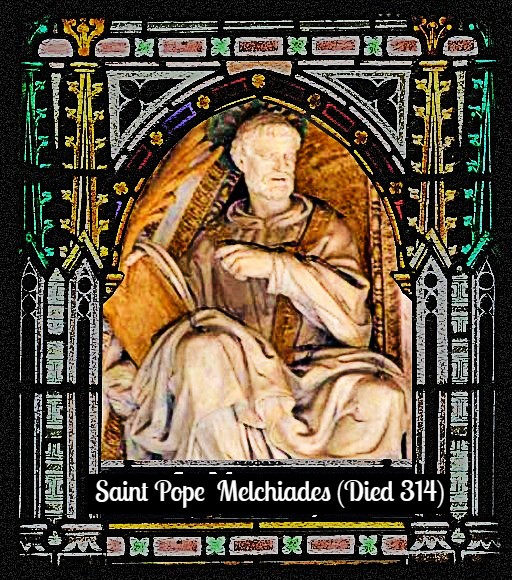
Saint of the Day – 10 December – Saint Melchiades (Died 314) Bishop of Rome from 2 July 311- 19 or 11 January 314). Born in Africa and died in Rome in 314. Also known as – Melchiade, Melquíades, Milziade, Miltiades.
The Roman Martyrology reads today: “At Rome, Pope St Melchiades, who, having suffered much in the persecution of Maxentius, rested in the Lord when peace was given to the Church.”

Pope Melchiades is the Holy Vicar of Christ, under whom the Cross, until then a sign of infamy, became a symbol of glory and a harbinger of victory, on the Imperial Banners of Constantine.
It is not, as one might think, Pope Saint Sylvester, under whose long Pontificate what is called “the Triumph of Christianity” was crowned and the Emperor Constantine, close to death, received Baptism. The extraordinary passage from the age of persecution to that of protection, from the atmosphere of suspicion, to that of respect towards Christians, occurred under the Pope celebrated today, Saint Melchiades.
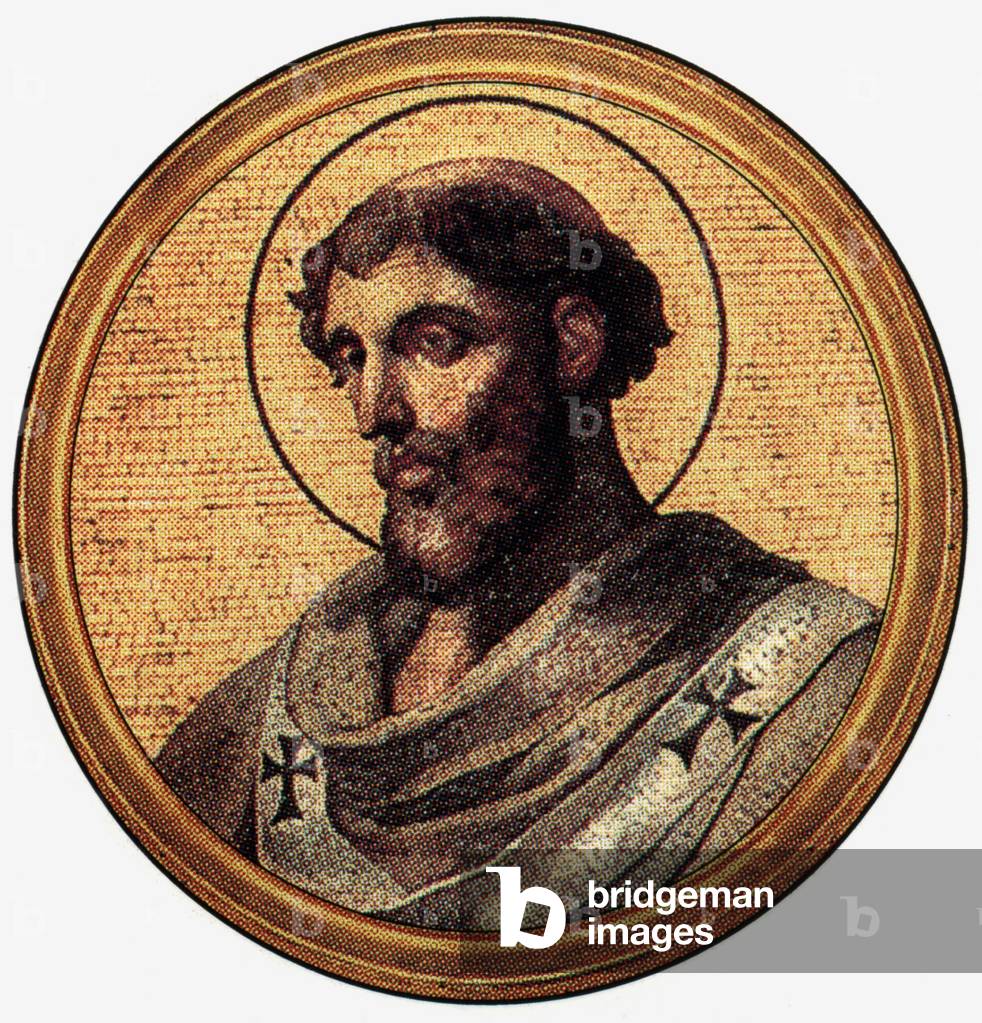
Almost nothing is known about his life, before his pontificate. He was of African origin and must have been in Rome at the end of the bloody persecution of Diocletian. He then witnessed the ambiguous conduct towards the Christians of the Emperor Maxentius, who, in order to quell the discord of the Roman Church, exiled both Pope Eusebius and an antipope, Heraclius, a representative of a group of poorly repentant apostates.
Eusebius died shortly after, in 310. The new Pope, who was Melchiades, was elected only a year later. In that year, in fact, an important event had occurred. Galerius had issued an Edict of religious tolerance, which was then signed by the ‘Augustes’ Licinius and Constantine. Maxentius had not signed that Edict but he still followed the policy of benevolence, towards the Christians. He did not want to jeopardise the favour of his subjects, in the imminence of the political dispute.
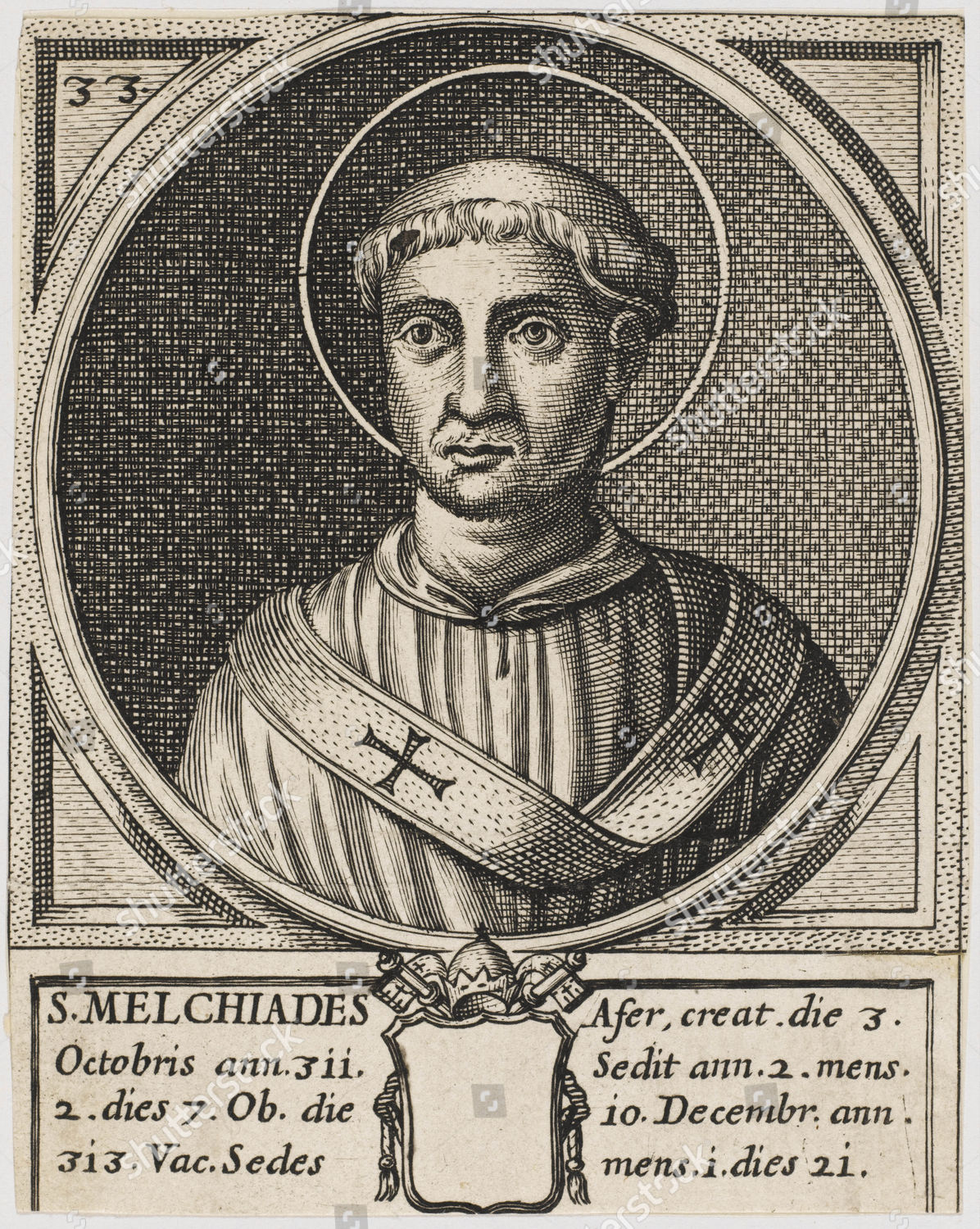
The newly elected Melchiades took advantage of this changed policy to energetically reorganise the Church. Firstly, he regained the property of the Christians of Rome confiscated during the persecutions. Then, he sent his Deacons to regain possession of the places of worship, which are, the ancient titular Churches.
After the battle of Ponte Milvio, having defeated Maxentius, Constantine entered Rome raising the Sign of the Cross. The Pope then exploited the situation effectively, the excellent dispositions of the victorious Emperor, in favor of the faithful. In fact, Constantine did not limit himself to returning the property of the Church; he established that the treasury should contribute to the needs of worship. He was not content to reintegrate the Christians in the modest homes where the sacred meetings took place; he wanted new and grandiose Basilicas to be built. The first to be begun was the one called the Lateran, the Basilkica of the Savioiur which has remained the Cathedral of Rome and in the Lateran, in a palace owned by the Imperial Treasury, Constantine hosted the Holy Bishop of Rome.
The Pontificate of Saint Melchiades was brief. In 314, the works he fervently began were continued by Saint Sylvester. But three years of government of the Church were enough to earn him the praise of Saint Augustine:
“A true son of peace and true father for Christians.”
Strangely enough, however, this “son of peace”, the first Pope of the Constantinian age of the “triumph of Christianity”received the honourary title of Martyr, perhaps for having been buried in the Catacombs.

 AnaStpaul
You must be logged in to post a comment.