
Saint of the Day – 1 February – Saint Severus (Died c344) the 12th Bishop of Ravenna, previously a married wool-merchant and father of 2 daughters. Severus had been miraculously elected as the Bishop by a Dove. Born in Ravenna and died there on 1 February in c344 of natural causes. Patronages – glove makers, hatters, weavers.
The Roman Martyrology states today: “At Ravenna, the holy Bishop Severus, whose great virtues deserved that he should be raised to the Episcopate by the sign of a Dove.”
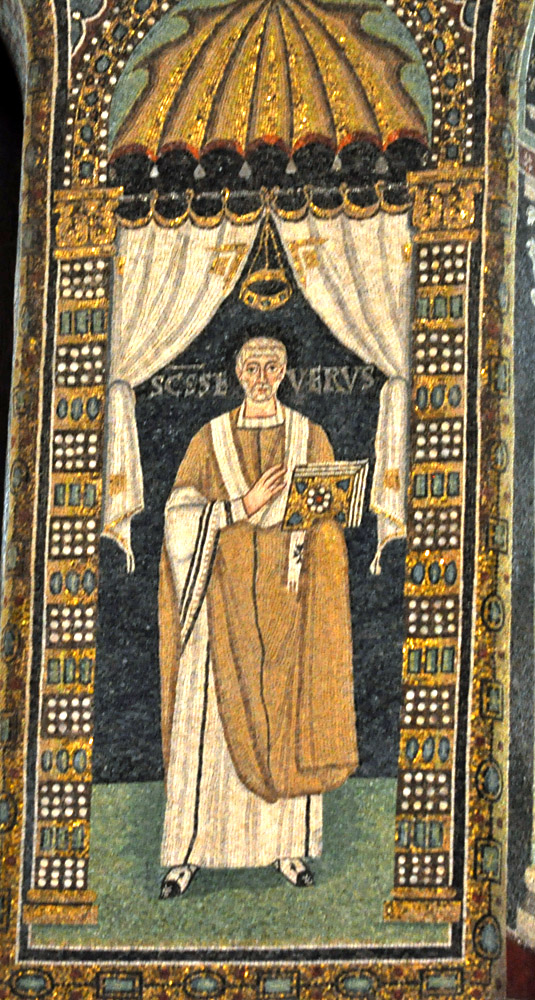
From the ancient ‘Episcopal Catalogue’ we discover that St Severus was the 12th Bishop of Ravenna, after Marcellinus and before Liberius; unfortunately nothing is known about his life, except that his name appears among the participants in the Council of Sardica (ancient name of Sofia in Bulgaria), held in 342-343. He is among the signatories of the Decrees of this Council, of the letter to Pope St Julius I (337-352) and of that, to all the Bishops.
As reported by the medieval hagiographers Agnellus and Liutulf, Severus died on 1 February in a year after 342 and on this day, he was remembered in the ancient Italian Calendar, later inserted in the ‘Martyrology of St. Jerome.’ He was buried in the area of Classe near Ravenna, called the ‘Vicus Salutaris’ in a Chapel called “monasterium St Rophili” adjoining the south, of the 6th Century Basilica.
Testimonies of the ancient cult were reported in two translations ofthe Relics of our holy Bishop, St Severus, one cited on 27 November which took place in Milan, shortly after the Episcopate of St Ambrose (340-397), together with those of four other Saints and a second translation celebrated on 3 September in Aquileia, also with those of four other Saints, including St Andrew the Apostle.
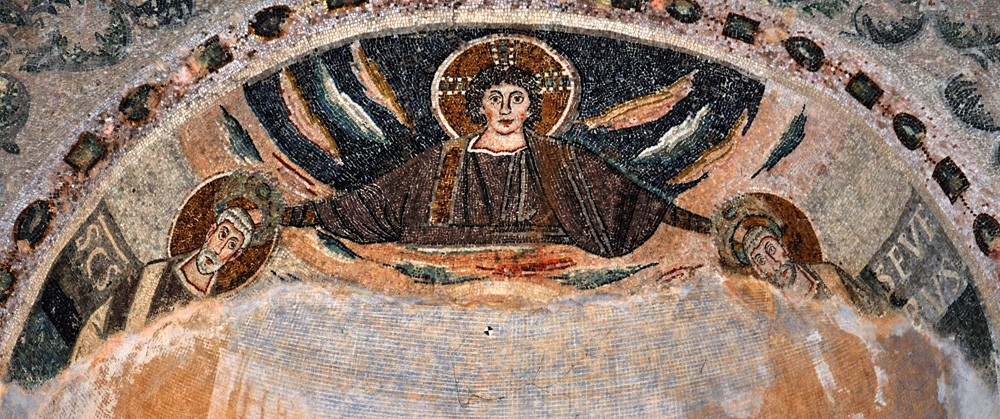
The great testimony of the cult paid to him in Ravenna are the mosaics of St Apollinare in Classe (consecrated in 549), located in the lower part of the apse, representing the Bishops St Severus, St Orsius, Ecclesius and Ursicinus, the first two bear the title “Sanctus” proof of this certain cult.
And then there is the great Basilica of St Severus, begun by Bishop Peter III in 575 and completed by Giovanni Romano (578-595) and Consecrated by him on 17 May 582, also placing the Sarcophagus of the Saint there.
This Basilica, combined with a large Benedictine Monastery, remained intact until the 15th Century, then after various events, it was definitively abandoned and destroyed. It was a large Basilica with three naves divided by twelve columns on each side; it had a polygonal apse on the outside and a semi-circular one on the inside (Ravenna type).
As for the literary texts concerning St Severo, they are largely legendary, collected and transcribed by medieval hagiographers. But the two sermons by St Peter Damian (1007-1072) are of great value. The details drawn from these sermons, says that Severus had been a poor wool merchant from Ravenna and after attending Church after the death of Bishop Marcellinus, mistakenly attended at the election of his successor. There, a dove landed several times on his head, so that all the people recognised that he was the chosen one of God. St Peter Damian also reports that during the celebration of the Sacrifice of the Mass, Severus fell into ecstasy. And by a miracle of bilocation, St Severus was present at the death of his friend Saint Geminianus of Modena. Finally, feeling close to death, he opens the Tomb which he had prepared, lay down in it and gives up his soul to God.
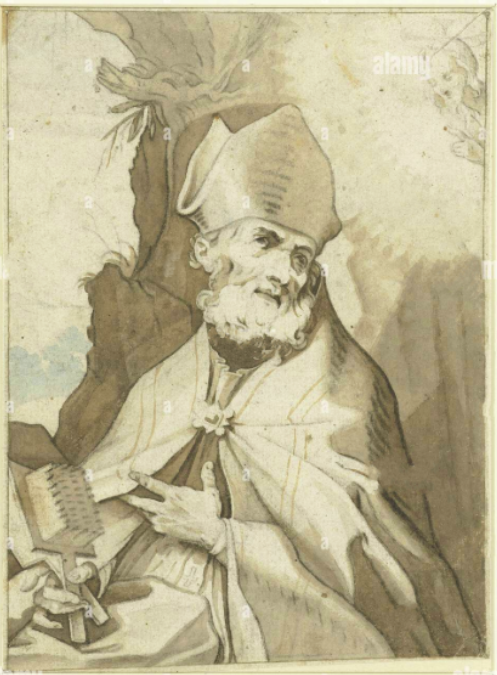
In 842 a Frankish Monk named Felix stole St Severus’ Relics and transferred them first to Mainz and then to Erfurt, thus spreading the cult throughout Germany, with Churches being built in his honour. But much more numerous were the Churches dedicated to him throughout Ravenna and in the surrounding Italian districts.
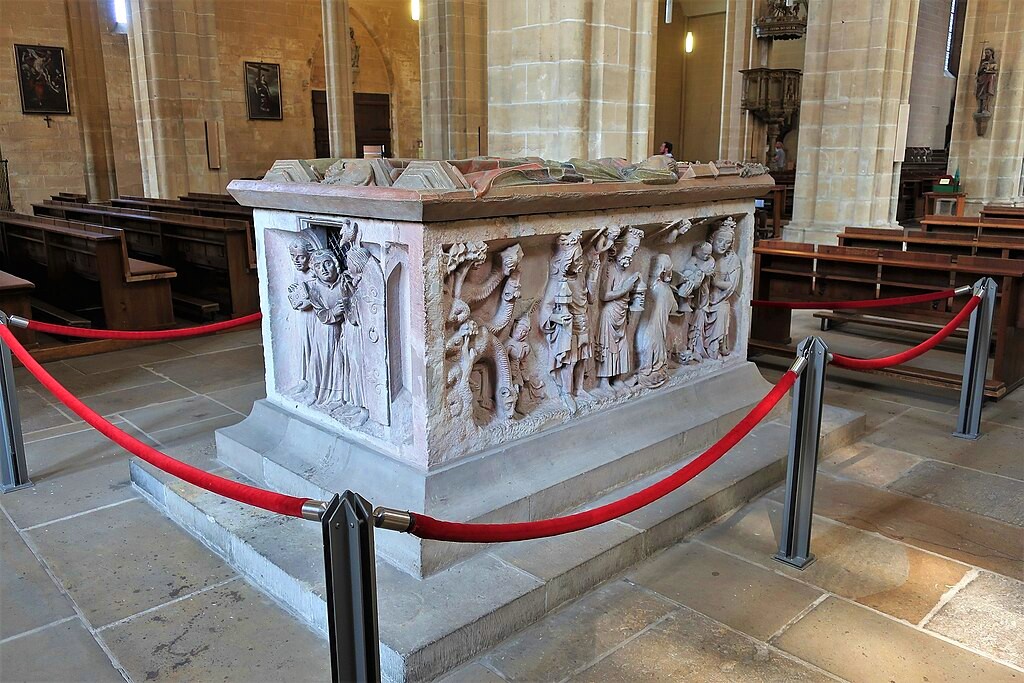
The marble bas-reliefs placed on the 14th Century Tomb in the Saint’s Church in Erfurt, depict him dressed in Bishop’s robes, surrounded by the figures of his wife and daughter, in a devout act of prayer.


 AnaStpaul
You must be logged in to post a comment.