Posted in Against SORE THROATS, COUGHS, WHOOPING COUGH,, SAINT of the DAY

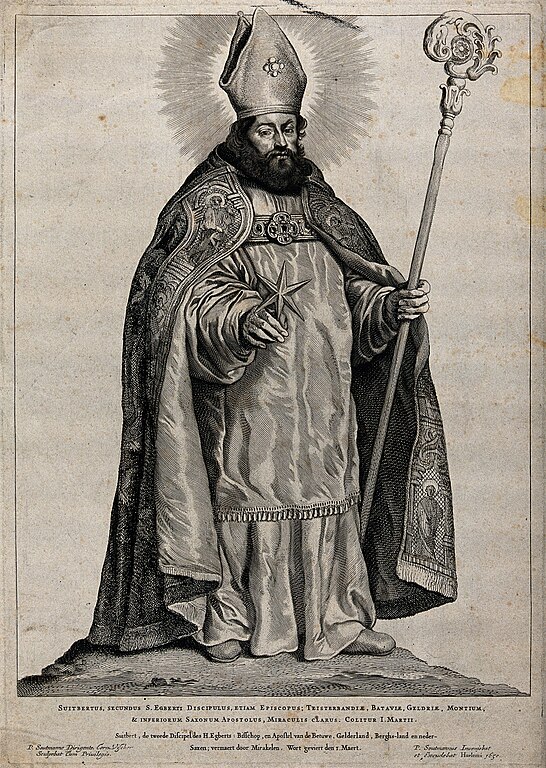
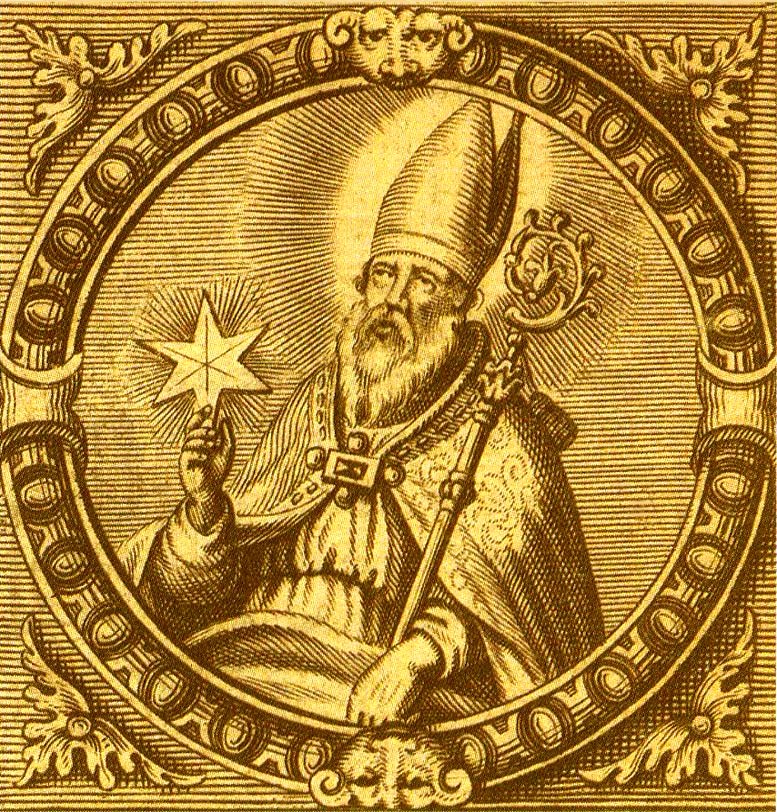
Saint of the Day – 1 March – Saint Swidbert (Died 713) Bishop, The Apostle of Friesland,

Saint of the Day – 1 March – Saint Swidbert (Died 713) Bishop, Missionary, Founder and Abbot of Kaiserswerth Monastery. Born in Northumbria, England and died on 1 March 713 in today’s Kaiserswerth near Düsseldorf in North Rhine-Westphalia. Patronages – of Germany, against sore throats, of Drevenack, Germany, of Friesland, Netherland, of Ripon, England. Also known as – … the Elder, Suitbert, Suidbert, Suitbertus, Swithbert, Apostle of Friesland, Apostle of the Bructeri. The Name from old High German means: “the strong shining one.

The Roman Martyrology reads today: “At Kaiserswerth, the Bishop, St Swidbert, who, in the time of Pope Sergius, preached the Gospel to the inhabitants of Friesland, Holland and to other Germanic peoples.

The tale of Swidbert’s birth which arose around 1500, tells how a star, sending out two rays, fell on his mother’s bed before his birth. Bishop St Aidan of Lindisfarne, interpreted her dream – the boy who was born would be called to work in two countries – Gaul and Germania.
Some traditions call Swidbert the son of Count Sigebert of Nottingham but he was most likely a Monk in the Monastery in Ripon under St Wilfrid of York. When St Wilfrid travelled to Rome in 678, Swidbert accompanied him and remained behind in Friesland on their return journey, as a missionary.
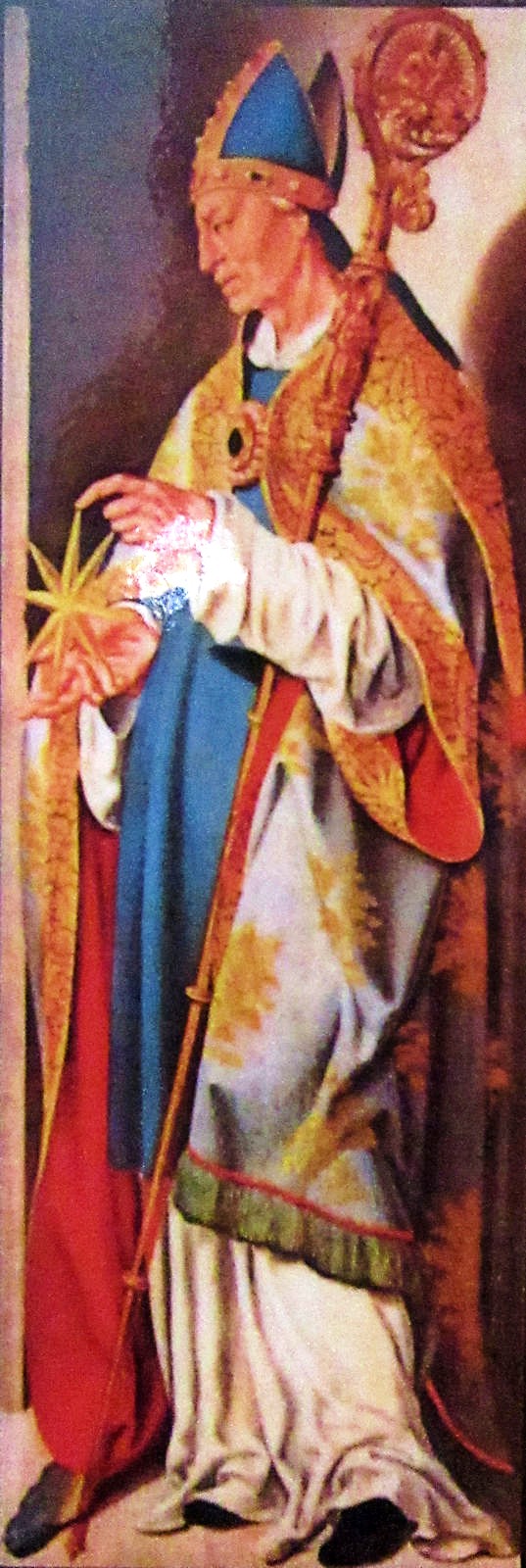
Another tradition reports that Swidbert left Ripon in 678 after Wilfrid’s departure and went to St Egbert in Rathmelsighe – today’s Mellifont – from wher, in 690, he was sent to southern Friesland together with twelve companions – including St Willibrord – as a Missionaries. In 692/693 his companions elected him as the Bishop, whereafter Swidbert returned to his homeland and was Ordained as a Missionary Bishop by St Wilfrid of York.

After another stay in Friesland, however, he then turned – as our wonderful Church Historian, the Venerable St Bede tells us – to missionary work in the area settled by the Bructeri on the Ruhr and Lippe. Swidbert’s work was unsuccessful – also because the invading Saxons destroyed his facilities. He now moved his activities to Frankish territory and in 695 founded the Benedictine Monastery of Swidbertswerth which was later named after him and later still, called Kaiserswerth and which, he headed as Abbot, on the Rhine island which had been given to him by the Mayor of the Merovingians, Pippin the Middle and his wife, Plektrudis

After his death, Swidbert was soon venerated as a Saint. In 877, the Church of his Monastery was dedicated, not only to Peter, as it had been from the beginning ,ut also to Swidbert. In 904, Swidbert was named as its sole Patron. His bones lie in a precious Shrine made between 1193 and 1332, in the collegiate Church in Kaiserswerth, where they were transferred in 1264, together with those of Abbot Wileich . Other Relics are kept in the Church of Peter and Paul in Duisburg-Süd.
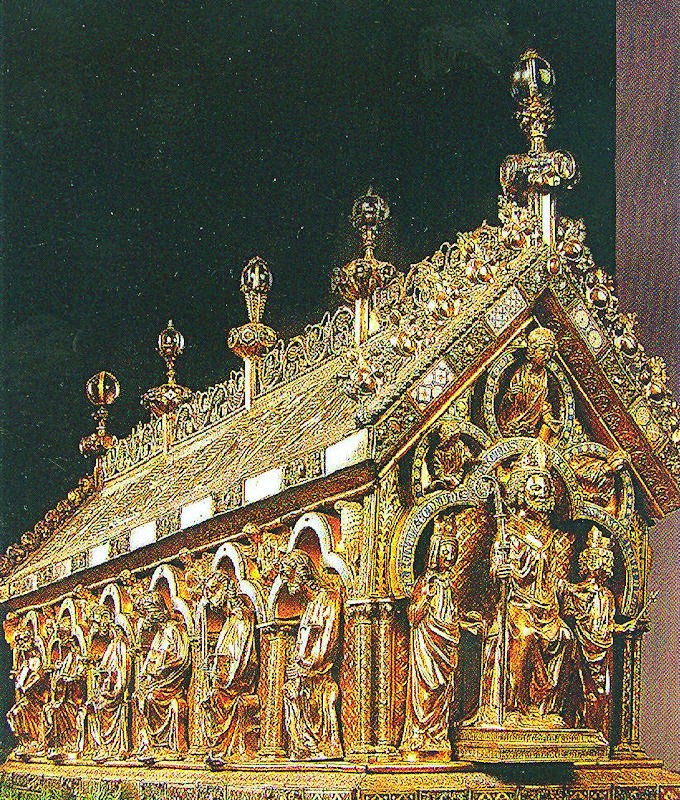
The precious Shrine in the Church in Kaiserswerth,

Swidbert’s Benedictine Monastery was apparently destroyed during the Saxon invasions at the end of the 8th Century, but was soon rebuilt. In the 12th Century, the Rhine Island previously named after Swidbert, was given its new name Kaiserswerth because of the importance of the imperial palace built in 1045. After secularisation, the Church became a Parish Church.
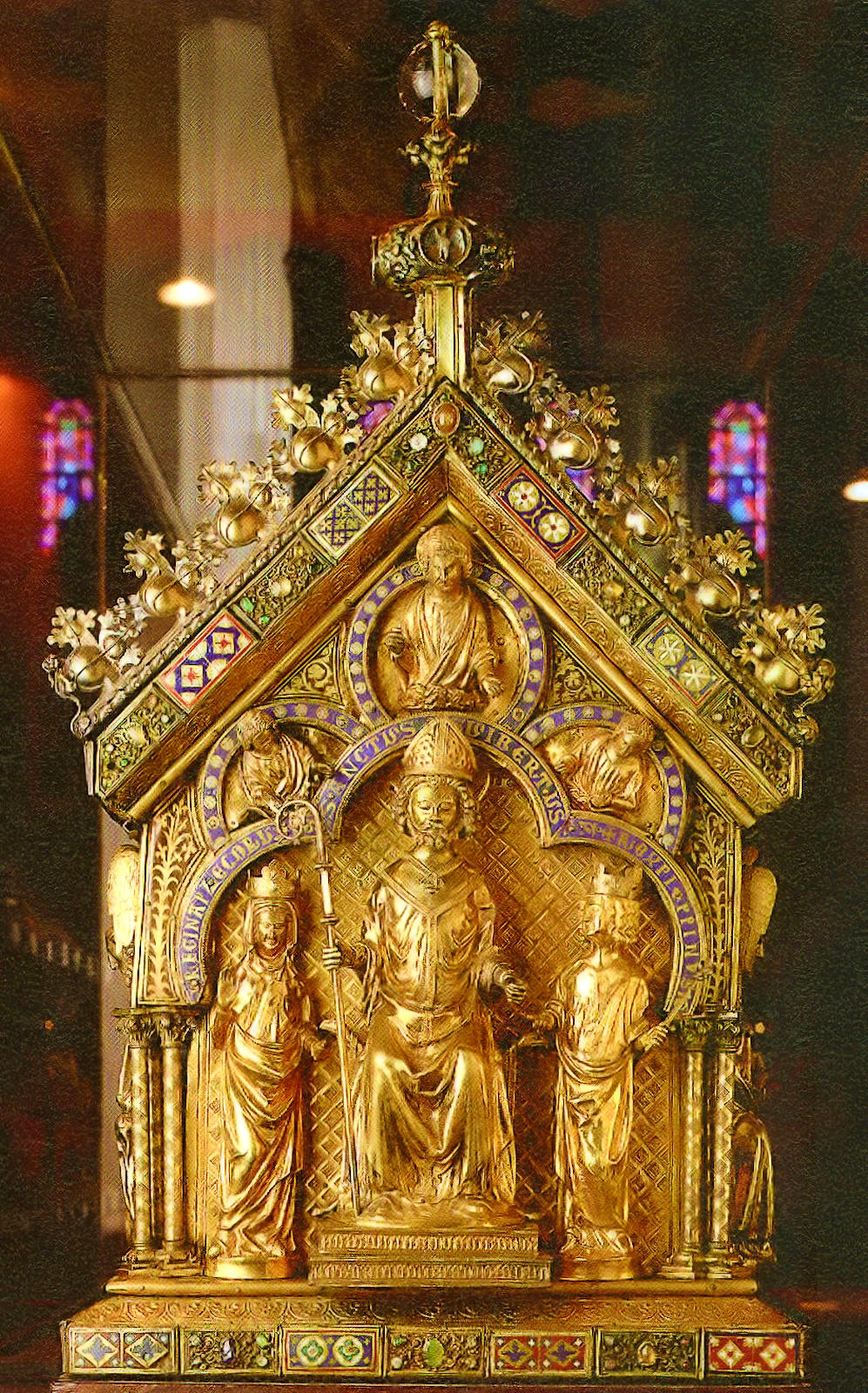

The Rear gable wall of the Swidbertus Shrine with Swidbert (centre), Plektrudis (Pippin’s wife)(left) and Pippin the Middle (right), 1264, in the Collegiate Church in Kaiserswerth
Posted in MARIAN TITLES, SAINT of the DAY

First Saturday, March Devotion – The Month of St Joseph, Madonna Della Croce, “Holy Mary of the Cross,” Italy (1490, St David of Wales and the Saints for 1 March

March Devotion – The Month of St Joseph

The First Saturday of March

Madonna Della Croce, “Holy Mary of the Cross,” Crema, Italy (1490) – 1 March:
HERE:

https://anastpaul.com/2021/03/01/our-lady-della-croce-holy-mary-of-the-cross-crema-italy-1490/

St David of Wales (c542-c601) Bishop, Prince, Monk, Confessor, Missionary, Founder of Monasteries. Uncle of King Arthur. David studied under Saint Paul Aurelian. Worked with Saint Columbanus, Saint Gildas the Wise and Saint Finnigan. He was officially Canonised in 1120 by Pope Callistus II.
Beloved St David
:
https://anastpaul.com/2017/03/01/saint-of-the-day-1-march-st-david-of-wales/

St Abdalong of Marseilles
St Adrian of Numidia
St Agapios of Vatopedi
St Agnes Cao Guiying

St Albinus of Angers (469-549) Bishop, Confessor, Monk, Abbot, miracle-worker.
His Life

https://anastpaul.com/2021/03/01/saint-of-the-day-1-march-saint-albinus-of-angers-469-549-bishop/

St Albinus of Vercelli
St Amandus of Boixe
St Antonina of Bithynia
Bl Aurelia of Wirberg
Bl Bonavita of Lugo
St Bono of Cagliari
Bl Christopher of Milan
Bl Claudius Gabriel Faber
St Domnina of Syria
St Domnina of Syria
St Donatus of Carthage
St Eudocia of Heliopolis
Bl George Biandrate
Bl Giovanna Maria Bonomo
Bl Gonzalo de Ubeda
St Hermes of Numidia
St Jared the Patriarch
St Leo of Rouen

St Leolucas of Corleone OBas (c815-c915) Abbot of the Basilian Order, Mystic, Ascetic, Miracle-worker. He lived as a Monk for more than 80 years.
The Roman Martyrology reads: “In the Monastery of Avena between the slopes of Mount Mercurio in Calabria, St Leone Luca, Abbot of Monte Mula, who shone in the hermitic life, as in the cenobitic life, following the rules of the oriental Monks.
His Biography:

https://anastpaul.com/2023/03/01/saint-of-the-day-1-march-saint-leolucas-of-corleone-obas-c815-c915-abbot/

St Lupercus
St Marnock
St Monan
Bl Pietro Ernandez
Bl Roger Lefort
St Rudesind
St Simplicius of Bourges
St Siviard
St Swidbert (Died 713) Bishop
St Venerius of Eichstätt

Martyrs of Africa – A group of 13 Christians executed together for their faith in Africa. The only details about them to survive are ten names – Abundantius, Adrastus, Agapius, Charisius, Donatilla, Donatus, Fortunus, Leo, Nicephorus and Polocronius. c290

Martyrs of Antwerp – A group of 14 Christians Martyred together, buried together and whose Relics were transferred and enshrined together. We know nothing else but their names – Benignus, Donatus, Felician, Fidelis, Filemon, Herculanus, Julius, Justus, Maximus, Pelagius, Pius, Primus, Procopius and Silvius. Died in the 2nd Century in Rome. They are buried in the St Callixtus Catacombs and their Relics were enshrined in the Jesuit Church in Antwerp on 28 February 1600.

Martyrs of the Salarian Way – A group of 260 Christians who, for their faith, were condemned to road work on the Salarian Way in Rome, Italy during the persecutions of Claudius II. When they were no longer needed for work, they were publicly murdered in the amphitheatre. Martyrs. c269 in Rome.

Martyrs Under Alexander – A large but unspecified number of Christians Martyred in the persecutions of Emperor Alexander Severus and the praefect Ulpian who saw any non-state religion to be a dangerous treason. c 19.