
Saint of the Day – 28 March – St Tutilo OSB (c850-c915) Monk of St Gall, Teacher and leader of the Monastic School, Musician, Poet, Painter, Sculptor, Builder, Goldsmith and Hymnist and Composer – truly a “Man for all Seasons.” Born in Ireland in c850 and died at the St Gall Monastery in c915.= of natural causes.Also known as – Tuathal, Tutilo von Gallen, Tutilo of Gall, Tuathal…Tuotilo… Tutilóne…
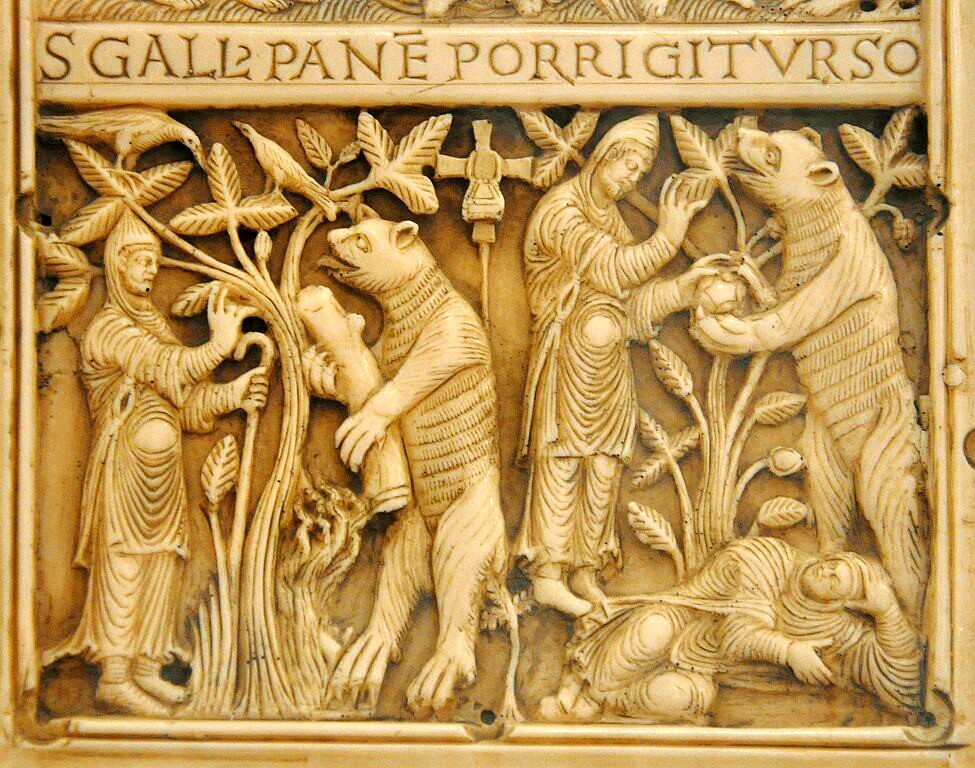
When St Gall, the companion of St Columban, died in Switzerland in 640, a Monastery was built over the place of his burial. This became the famous Monastery of St Gall, one of the most influential Monasteries of the Middle Ages and the centre of music, art and scholarly learning throughout that period.
In about the middle of the 9th Century, when travelliung on his return from a visit to Rome, an Irishman named Moengul stopped at the Abbey and decided to stay, along with a number of Irish companions, among them Tutilo. Moengul was given charge of the Abbey schools and he became the teacher of Tutilo, St Notker and St Radpert, who were distinguished for their learning and their artistic skills. Tutilo, in particular, was a universal genius – musician, poet, painter, sculptor, builder, goldsmith, head of the monastic school and composer.
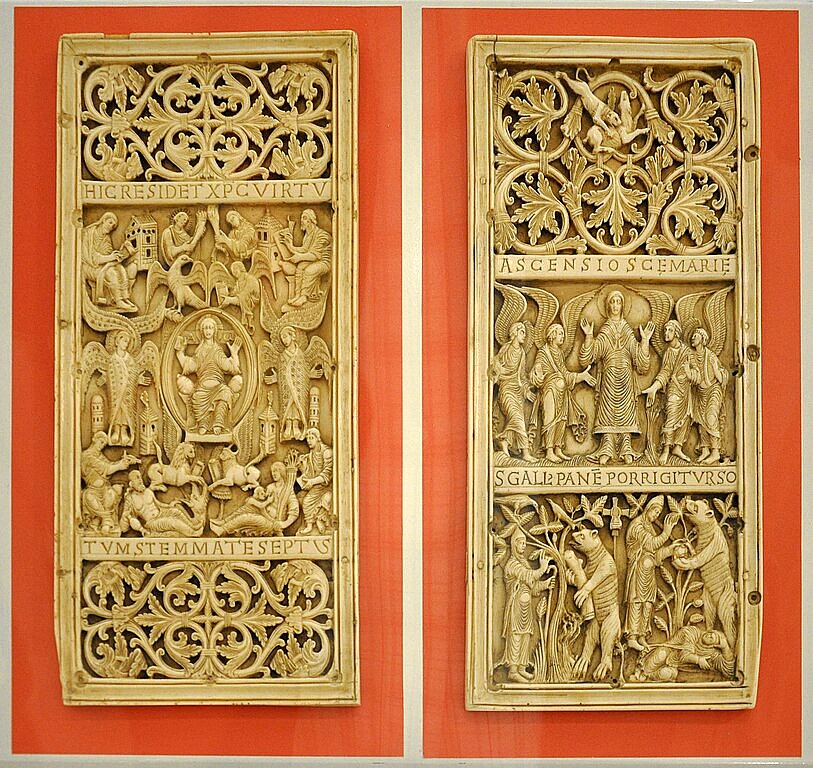
He was part of the Abbey at its greatest time and the influence of Gall spread throughout Europe. The Gregorian Chant manuscripts from the Monastery, many of them undoubtedly the work of St Tutilo, are considered among the most authentic and were studied carefully when the Monks of Solesmes were restoring the tradition of Gregorian Chant to the Catholic Church. The scribes of St Gall supplied most of the Monasteries of Europe with manuscript books of Gregorian Chant, all of them priceless works of the art of Illumination.
Proof of the Irish influence at St Gall is a large collection of Irish manuscripts at the Abbey from the 7th, 8th and 9th Centuries.
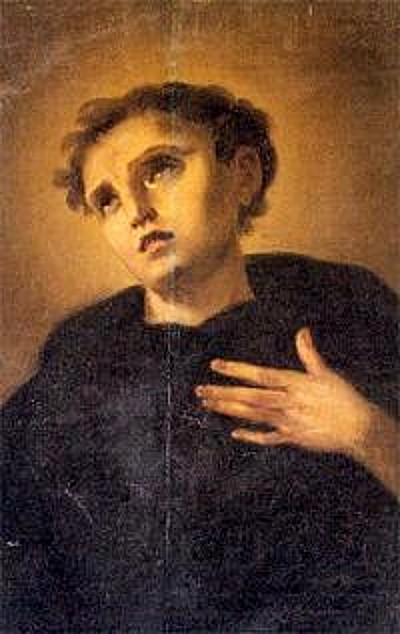
Tutilo was known to be handsome, a large, powerfully built man, eloquent and quick-witted, who brought something of the Irish love of learning and the arts, to St Gall. He died in c915 at the height of the abbey’s influence. He is remembered as an inspired Teacher, a dedicated Monk, an illustrious Musician and Hymnist and a highly competent scholar.

It is reported that the most interesting items at the St Gall Abbey are the ivory tablets attributed to Tutilo. His paintings and some other artworks can be found at Konstanz, Metz, St Gall and Mainz, Abbeys and Monasteries.
St Tutilo was buried at a Chapel dedicated to St Catherine in St Gall, which was later renamed and dedicated in his honour as a Saint. His Feastday is celebrated today, 28 March.




 AnaStpaul
You must be logged in to post a comment.