
Saint of the Day – 1 November – Saint Vigor (Died c537) Bishop of Bayeux for 27 years from from 511 until his death in around 537/538. Originally from Artois, in north western France, he knew and became a disciple of Saint Vaast, the Bishop of Arras, was educated by him and developed his vocation under the care of St Vaast. St Vaast’s influence was instrumental in the conversion of Clovis . Vigor passed on this dynamism and evangelical strength to his Diocese. Also known as – Vigeur, Vigile, Vigorus.
The Roman Martyrology reads today: “At Bayeux, St Vigor, Bishop in the time of Childebert I, King of the Franks.”
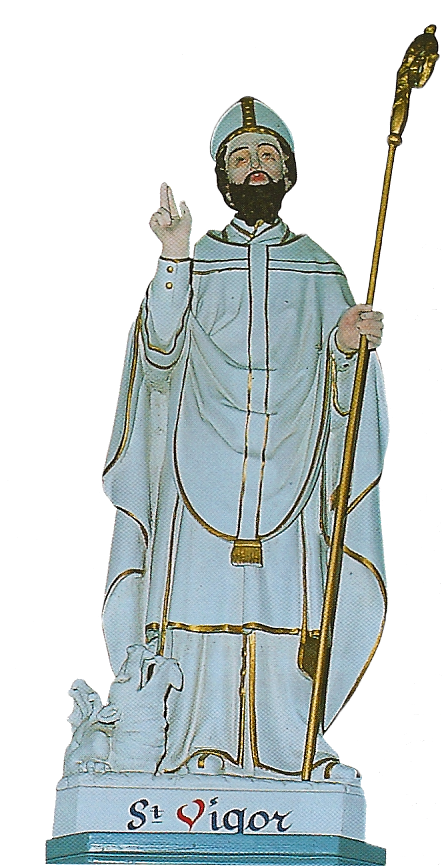
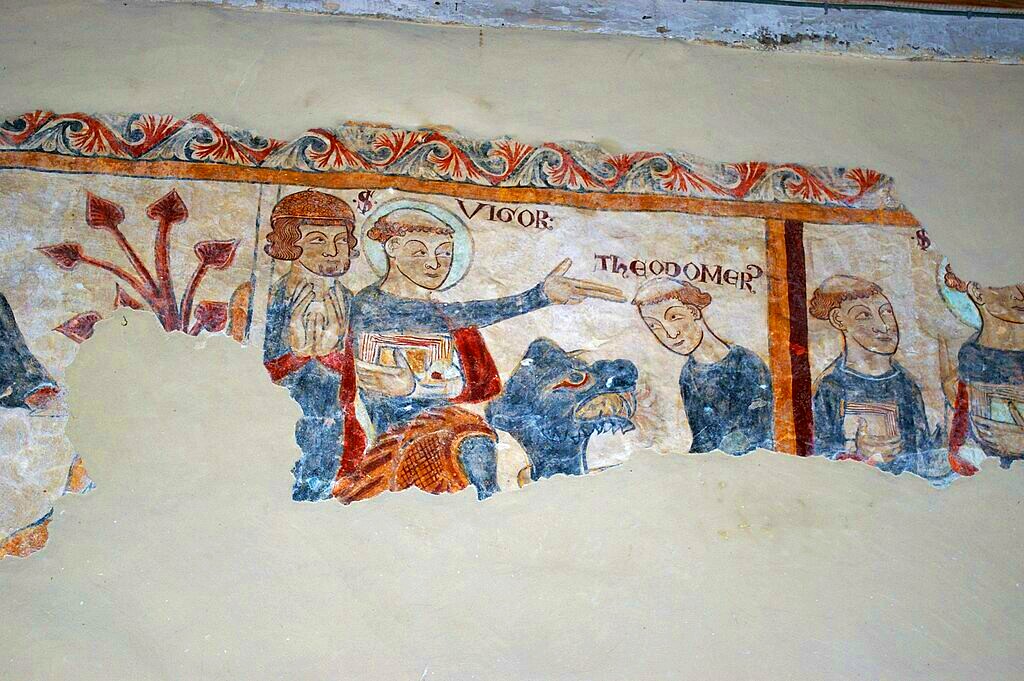
According to a brief Vita written in Latin in the 8th Century, Vigor was educated in Arras by Saint Vaast, thus maturing his vocation of the Priesthood.
Fearing his father’s disapproval, he then drew inspiration from the concept of monastic missionary journeys which was very popular at the time and fled with a companion, hiding in the Village of Ravière, near Bayeux. Despite their clandestine status, the two evangelised, preached and educated the local population.
After receiving the Priestly Ordination, Vigor greatly expanded the scope of his activity and finally becamethe Bishop of Bayeux in around 511. Discovering that many of the people were still pagans, he destroyed the stone idol they worshipped on a hill near the City and replaced it with a Church. The site was renamed ‘Hill of Unction.’ Count Bertulf, greatly enraged by the incident, attempted to reclaim the site but fell from his horse, breaking his neck. This incident was interpreted as Divine intervention in defence of the recently Consecrated site.
The holy Bishop finally died around 537 and was buried in the Monastery of Saint-Vigor-le-Grand which he had built in the area. The Relics were subsequently illegally sold to the Abbot of Saint-Riquier and his successor oversaw the publication of the Vita. In England, too, the Normans dedicated two or three Churches to our Saint Vigor’s memory.


 AnaStpaul
You must be logged in to post a comment.