Posted in CARMELITES, franciscan OFM, JESUIT SJ, MARIAN TITLES, SAINT of the DAY

SEXAGESIMA SUNDAY, St Scholastica Novena – The FOURTH DAY, Nostra Signora del Fuoco / Our Lady of the Fire, Forli, Italy (1428), St Andrew Corsini and the Saints for 4 February

SEXAGESIMA SUNDAY: (Latin – Sexagesima, sixtieth) is the eighth Sunday before Easter and the second before Lent. The Ordo Romanus, St Alcuin and others, count the Sexagesima from this day to Wednesday after Easter. The name was already known to the Fourth Council of Orléans in 541. To the Latins it is also known as “Exsurge” from the beginning of the Introit. The station was at Saint Paul’s Outside the Walls of Rome and hence, the oratio calls upon the Doctor of the Gentiles. The Epistle is from Paul, 2 Corinthians 11 and 12, describing his suffering and labours for the Church. The Gospel (Luke 8) relates the falling of the seed on good and on bad ground, while the Lessons of the first Nocturn continue the history of man’s iniquity and speak of Noah and of the Deluge.
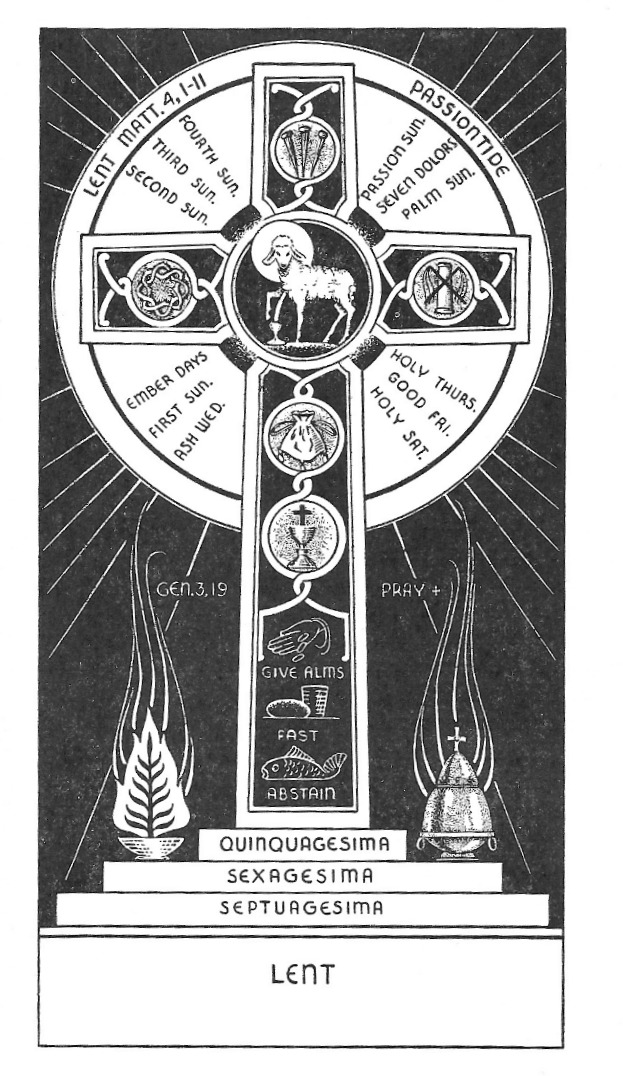
EPSON MFP image

St Scholastica Novena – The FOURTH DAY:
CLICK LINK BELOW
St Scholastica Noven
a

Bl Dionisio de Vilaregut
St Donatus of Fossombrone
St Eutychius of Rome
St Filoromus of Alexandria
St Firmus of Genoa
Bl Frederick of Hallum
St Gelasius of Fossombrone
St Geminus of Fossombrone
St Gilbert of Limerick (c1070–1145) Bishop

St Isidore of Pelusium

St John of Irenopolis
Bl John Speed

St Liephard of Cambrai
St Magnus of Fossombrone
St Modan
St Nicholas Studites
St Nithard
St Obitius
St Phileas of Alexandria

St Themoius
St Theophilus the Penitent
St Vincent of Troyes
St Vulgis of Lobbes

Posted in Of ANIMALS / ANIMAL WELFARE, Of the SICK, the INFIRM, All ILLNESS, PATRONAGE - HEADACHES, PRAYERS to the SAINTS, SAINT of the DAY

Saint of the Day – 4 February – Saint Aventinus of Troyes (Died c538) Priest, Hermit

Saint of the Day – 4 February – Saint Aventinus of Troyes (Died c538) Priest, Almoner and Administrator of the funds for the See of Troyes, Hermit, Miracle-worker, gifted with a great affinity with animals, who came to him for help when ill or hurt. Born in Bourges, France and died in c538 of natural causes. Patronages – headaches, nervous disorders, of ill animals, of Saint Aventin sous Verrières and the Town of Creney, France. Also known as – Aventin, Aventine.

In the heart of ancient Gaul (today’s France), in the second half of the fifth century, Saint Aventinus was born, probably in Bourges. From the few documents which have come down to us, we know that his parents belonged to the middle class and were very religious. According to tradition, Christianity in those lands already spread in the third century. The sound moral and Christian principles of the parents would form the basis of his holiness – from an early age, Aventinus was held up as a model.

As a teenager, he began to wonder about the purpose of his life. He wanted to visit the most famous holy manof that region, the Bishop St Lupus of Troyes who, in the year 451 had saved the city from the invasion of Attila the Hun, by offering himself as a hostage. The elderly prelate was not slow to see sincere Christian virtues in the young man and desiring to see them brought to fruition for the glory of the Lord and the Church and so, St Lupo kept him with him as a disciple and assistant. It was the happy meeting of two true men of God.

Aventinus distinguished himself by the humility and zeal with which he carried out the work; constant in the practices of piety, he was growing internally. He had as an example a Saint who continually turned his attentions to him. The virtue that shone most in him was charity towards others. Slavery of foreign prisoners of war was widespread in those days – St Lupus and Aventinus did not remain indifferent to the children of God who were treated like beasts. They ransomed as many as they could, collecting alms for this purpose. Given their freedom, they worried about their spiritual health, often helping them to approach the Sacraments. St Luuso died in 479 and was succeeded by St Camelianus, who, knowing well the virtues of Aventinus, made him Steward, with ample power to manage alms.

God only knows how widespread poverty was and Aventinus’ attention to the poor was never limited to material aid. He aroused amazement at the miraculous way the Bishop’s finances could cope with so many expenses, there was something supernatural at work. Aventinus fame went on spreading but he, keeping faith with his humility and with the deep regret of the Bishop, decided to retire.

He was welcomed into a hermitage with the will to sanctify himself by living in solitude. Although he was not inclined to lead, he was soon elected Superior of the community. Precious was his example and the retreat became a school of perfection. That place was later named after him.

While living withdrawn from the world, he could not help but think about the redemption of slaves. Among others, news reached him of a certain Fidolus, of rare virtues, perhaps already a cleric, originally from Auvergne, who had lost his freedom at the hands of Theodoric I, King of Austrasia. It was about the year 530. Aventinus ransomed him for twelve gold pieces. Fidolus’ happiness and gratitude was immense and he decided to join the holy community, which seemed a most natural development.

Meanwhile, Aventinus’ fame was spreading again among the people who often visited him. The tranquility of the brothers was compromised and Aventinus decided to leave. It was Fidolus himself who took over the position of Superior (he died with fame as a Saint on 16 May 540).

Aventinus withdrew to a solitary place along the Seine, about seven miles distant from Troyes. He had only brought with him some bread, legumes, a hoe and some seeds. He did not want to be a burden to anyone. Finally he had achieved the desired tranquility, dividing his time between prayer, work and penance. He slept little, wore a poor and rough dress, ate only three days a week.

A few years passed but even here he could not escape the admiration of the people, while not even the Bishop St Camelianus had forgotten about him. The latter, who also knew well of his knowledge of the Psalms and Sacred Scripture, conferred upon him Sacred Orders. The maturity of the years was crowned by the Priesthood. He lived peacefully the last period of his life celebrating Mass near his hut, for the benefit of the locals.
Demanding with himself, he looked to the needs of his neighbour with his big heart, also curing those who were sick. His charity became legendary and it is said that even a bear knocked on his door one night. He lay down on the ground and held out a paw in which a thorn was stuck. The hermit assisted him by releasing the thorn and bandaging his wound.

He fell asleep in the peace of the Lord on 4 February of the year 538. Acclaimed Saint and Patron of those places he had lived, a few years later Bishop Vincent had a Church built in his honour, where he placed his precious Relics and in which he then wanted to be buried. Chapels and Churches were erected in his honour, even outside France. From time immemorial he has been particularly invoked against headaches and nervous diseases. Today, near Troyes, a Town has his name (Saint Aventin sous Verrières) and Creney venerates him as Patron.

St Aventinus, Hermit and Priest, is not to be confused with the Aventinus, the Saint Bishop of Chartres, who died in 520, also venerated on today, 4 February.

PRAYER

Among the many graces
which the Lord grants through your intercession,
glorious Saint Aventinus,
frequent are the cures from headaches
and other nervous diseases,
of which you have been a singular protector
since time immemorial.
With all humility and trust
I resort to your patronage
and I ask you to obtain
from the Supreme Giver of all good,
health of mind and body
so that I may serve God with greater fervour
and attend to the duties of my state.
I ask you, not only for freedom from headaches
but also for the grace
to live as a studious emulator of your examples,
that I may one day attain eternal happiness,
where faith guides me
and hope invites me.
Amen

Posted in CARMELITES, franciscan OFM, JESUIT SJ, MARIAN TITLES, SAINT of the DAY

First Saturday, Nostra Signora del Fuoco / Our Lady of the Fire, Forli, Italy (1428), St Andrew Corsini and Memorials of the Saints – 4 February

First Saturday

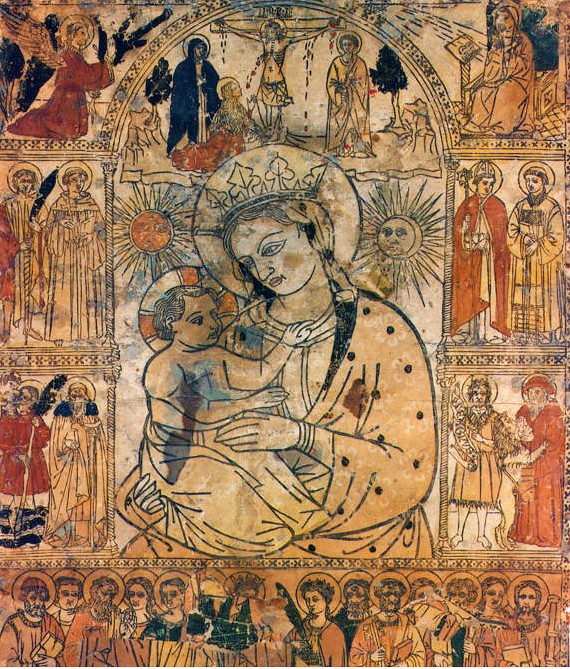
Nostra Signora del Fuoco / Our Lady of the Fire, Forli, Italy (1428) – 4 February:
HERE:

https://anastpaul.com/2021/02/04/our-lady-of-fire-forli-italy-1428-and-memorials-of-the-saints-4-february/
St Andrew Corsini O.Carm (1302-1373) Bishop of Fiesole from 1349 until his death,Confessor, known as the “Apostle of Florence,” Carmelite Friar, Penitent, Apostle of the poor, Peacemaker, Papal Legate.
Biography:

https://anastpaul.com/2021/02/04/saint-of-the-day-4-february-saint-andrew-corsini-o-carm-1302-1373-bishop/

Saint Aventinus of Troyes (Died c538) Hermit
Bl Dionisio de Vilaregut
St Donatus of Fossombrone
St Eutychius of Rome
St Filoromus of Alexandria
St Firmus of Genoa
Bl Frederick of Hallum
St Gelasius of Fossombrone
St Geminus of Fossombrone
St Gilbert of Limerick (c 1070–1145) Bishop

St Gilbert of Sempringham (c 1083-1189) Priest, Founder of the Gilbertine Order, Founder of 13 Monasteries and Churches, schools, homes and hostels for the sick and orphanages, Miracle-worker. He was Canonised in 1202 by Pope Innocent III.
His Zealous Life:

https://anastpaul.com/2022/02/04/saint-of-the-day-4-february-st-gilbert-of-sempringham-c-1083-1189/

St Isidore of Pelusium

St Jane de Valois O.Ann.M and TOSF (1464-1505) Princess, Queen, Founder, Religious Sister, Mystic, Teacher. Founded the monastic Order of the Sisters of the Annunciation of Mary. From this Order later sprang the religious congregation of the Apostolic Sisters of the Annunciation, founded in 1787 to teach the children of the poor. She was Canonised on 28 May 1950 by Pope Pius XII.
Biography:

https://anastpaul.wordpress.com/2018/02/04/saint-of-the-day-4-february-saint-jane-of-valois-o-ann-m-1464-1505/

St John de Britto SJ (1647-1693) Martyr, Priest, Missionary to India, Confessor, Preacher. Canonised on 22 June 1947 by Pope Pius XII.
His Life and Death:

https://anastpaul.com/2019/02/04/saint-of-the-day-4-february-st-john-de-britto-sj-1647-1693-martyr/

St John of Irenopolis
Bl John Speed

St Joseph of Leonissa OFM (Cap) (1556-1612) Friar of the Capuchin Franciscans, Missionary Preacher, Confessor. He was Canonised on 29 June 1746 by Pope Benedict XIV.
Biography:

https://anastpaul.wordpress.com/2017/02/04/saint-of-the-day-4-february-st-joseph-of-leonissa/

St Liephard of Cambrai
St Magnus of Fossombrone
St Modan
St Nicholas Studites
St Nithard
St Obitius
St Phileas of Alexandria

Blessed Rabanus Maurus OSB (776-856) Archbishop, Monk, Abbot,Theologian, Poet, Writer, Teacher, Encyclopedist, “The Teacher of Germany.”
Blessed Rabanus’ Life:

https://anastpaul.com/2020/02/04/saint-of-the-day-4-february-saint-rabanus-maurus-osb-776-856/

St Rembert
St Themoius
St Theophilus the Penitent
St Vincent of Troyes
St Vulgis of Lobbes

Jesuit Martyrs of Japan: A collective memorial of all members of the Jesuits who have died as Martyrs for the faith in Japan.

Martyrs of Perga – 4 Saints: A group of shepherds Martyred in the persecutions of Decius. The only details we have about them are the names – Claudian, Conon, Diodorus and Papias. They were Martyred in c 250 in Perga, Asia Minor (in modern Turkey).