Posted in SAINT of the DAY

Saint of the Day – 9 June – St Baithen of Iona (c 536-c 599)

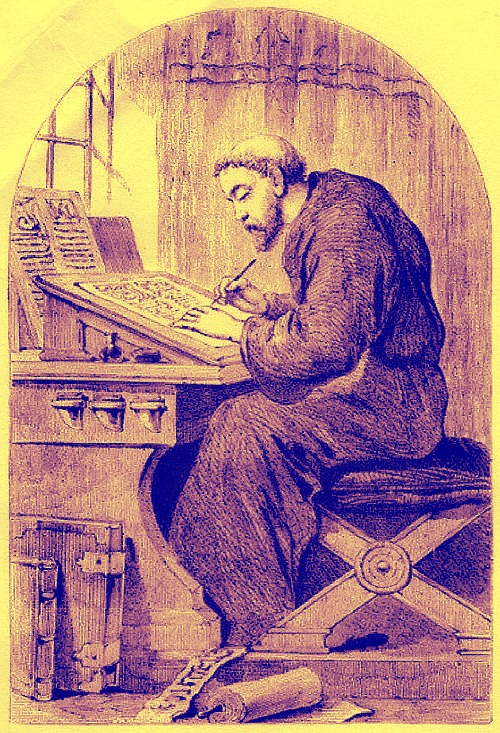
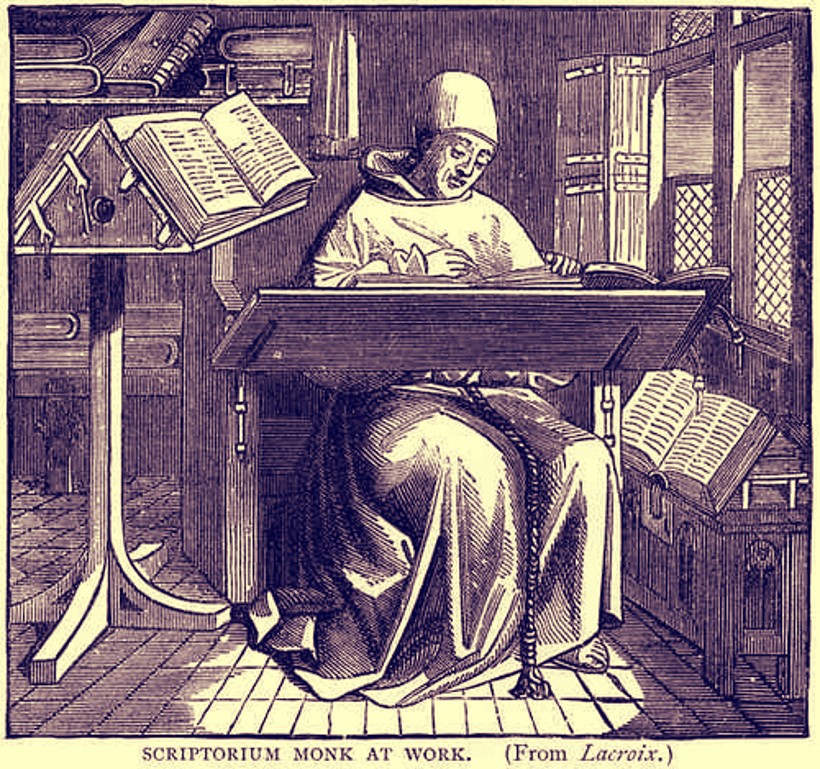
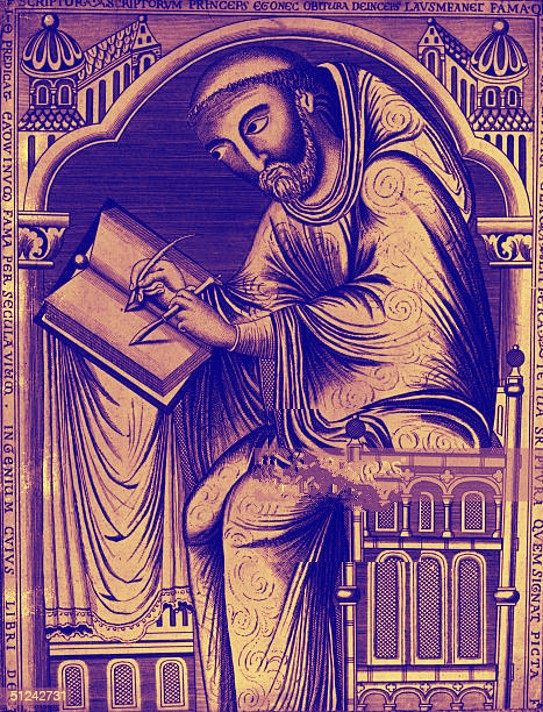
Saint of the Day – 9 June – St Baithen of Iona (c 536-c 599) Abbot, the disciple and first successor of St Columba, an Irish Monk, especially selected by St Columba, as one of the band of Missionaries who set sail for Scotland in 563. St Baithen of Iona is generally known as Baithen Mor, to distinguish him from eight other Saints of the same name — the affix mor meaning “the Great.” This holy man was closely related to the great St Columba. They were the sons of two brothers and consequently, first cousins. Born in c 536 in Ireland and died in c 599 of natural causes . Patronage – of Tibohin, in Elphin, Ireland. Also known as – Baithéne mac Brénaind, Baithen Mor, Baithen the Great, Baithin, Boethen, Baoithin, Baithenus, Comin, Cominus. We have no images of our Saint, those below, in the main, are images of Monks of Iona.
Baithen was born in around 536, the son of Brenaron. He was an ardent disciple of St Columba and was appointed Abbot of Tiree Island, a Monastery founded by St Comgall of Bangor. St Adamnan, in recording the death of St Columba, tells us that the dying words of the Apostle of Iona, as he was transcribing the fifty-third Psalm, were: “I must stop here, let Baithen write what follows.

Baithen had been looked on as the most likely successor of St Columba and so it happened, that on the death of that great Apostle, the Monks unanimously confirmed the choice of their Founder. St Baithen was in high esteem as a wise counsellor and his advice was sought by many Irish Saints.

According to his Acts, from the time he was a child, Baithen had been educated by St Columba. Under his holy discipline, he learned how to wage a perpetual war with idleness. As his years advanced, he grew stronger and more perfect, in the exercise of all good works. However, being a junior, by several years, he used to be always along with Columba because they were close in consanguinity and friendship, as they were thoroughly allied in the practice of holy works.
Baithen was always either reading, or praying, or serving his neighbour. Sometimes, for the latter purpose, his devotions were occasionally interrupted. When he used to eat, he was wont to say, “Deus in adjutorium meum intende,” “O God, come to my aid” between every two morsels. His devotions were so continually practised, that even when he was travelling, or working, or eating, or conversing with anyone, this holy man would still be communing with God and, under his tunic, his hands were often clasped in prayer, without anyone present knowing it. When he gathered corn along with the Monks, he held one hand up beseeching God, while the other hand was gathering the corn, as is contained in his Latin Acts, where we are informed, he would not brush away the troublesome midges from his face but rather suffer the bites and discomfort as a penance.

St Adamnan, the Biographer of St Columba, tells many interesting incidents in the life of Baithen but the mere fact of being the immediate successor of St Columba, by the express wish of that holy Apostle, is almost sufficient to attest to his great worth. The “Martyrology of Donegal” records the two following anecdotes.
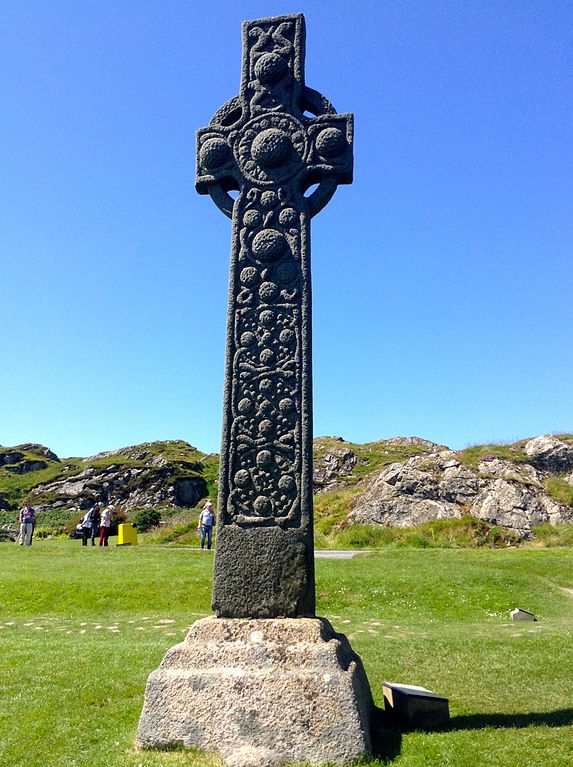
Baithen also served as Prior over a Monastery connected to Iona on the Island of Tiree. The name of the place where his Monastery was located on Tiree, was Mag Luinge or Campus Luinge. The Monastery was a house for penitents from Iona. Some historians have thought that it may have supplied food to Iona.

St Adamnan also recorded a story about a voyage he took to the island, when Columba first told a Monk who was heading to Tiree, that he should not sail directly from Iona to Tiree because a great whale would frighten him but this monk did not listen to his advice and took the direct route. A huge whale came out of the water and almost destroyed the boat, which was, terrofying! When Baithen departed the following day to Tiree, Columba told him about the whale, and Baithen responded that both he and the whale were in God’s power, to which Columba responded “Go in peace, your faith in Christ will shield you from danger.” And so Baithen then took the direct route and the whale came out of the water which terrified all in the boat, except Baithen, who instead blessed the sea and the whale. The whale immediately departed, descending into the depths.
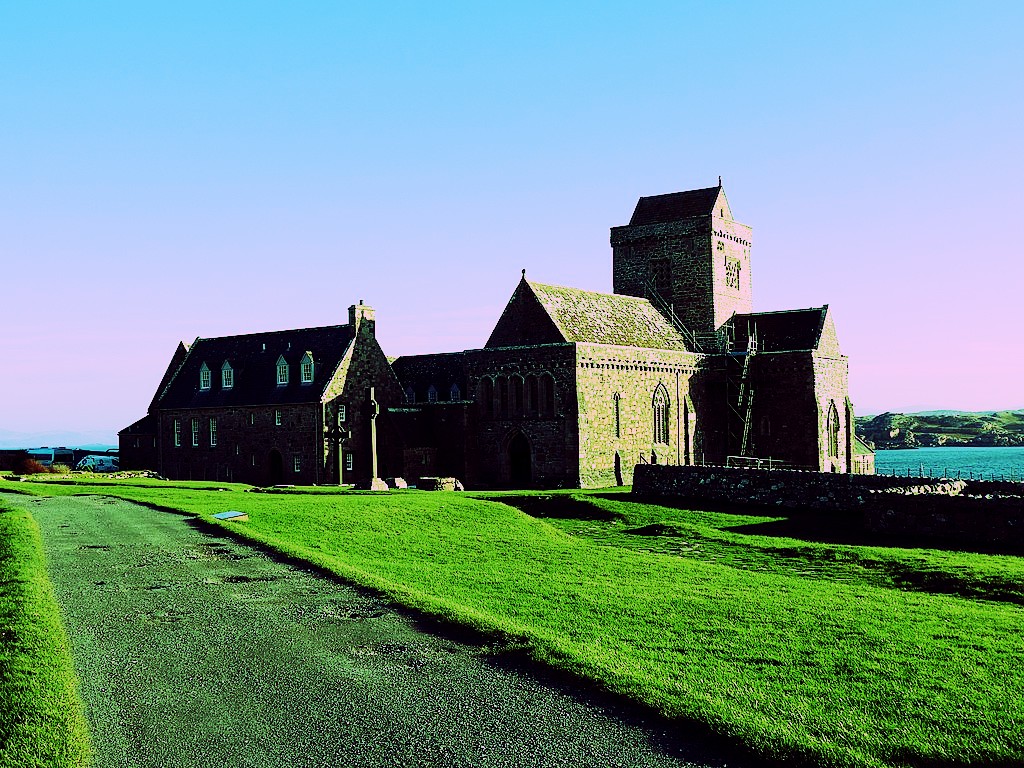
Iona todat

Baithen wrote a life of his master and some Irish poems, which are now lost but which were seen by St Adamnan. He only ruled Iona for three years, as his death took place in the year 600, though the “Annals of Ulster” give the date as 598. Perhaps the true year may be 599. Some writers assert that St. Baithen of Iona is the Patron of Ennisboyne, County Wicklow but this is owing to a confusion with St Baoithin, or Baithin mac Findech, whose feast is commemorated on 22 May. St Bathen is, however, the official Patron of Tibohin, in Elphin, Ireland.
Posted in MARIAN TITLES, SAINT of the DAY

Pentecost Thursday, Madonna, Madre delle Grazie / Our Lady, Mother of Grace (1610), Madonna della Fontenuova / Our Lady of the Plain , Monsummano Terme, Pistoia, Tuscany, Italy, (1573) and Memorials of the Saints – 9 June

Pentecost Thursday

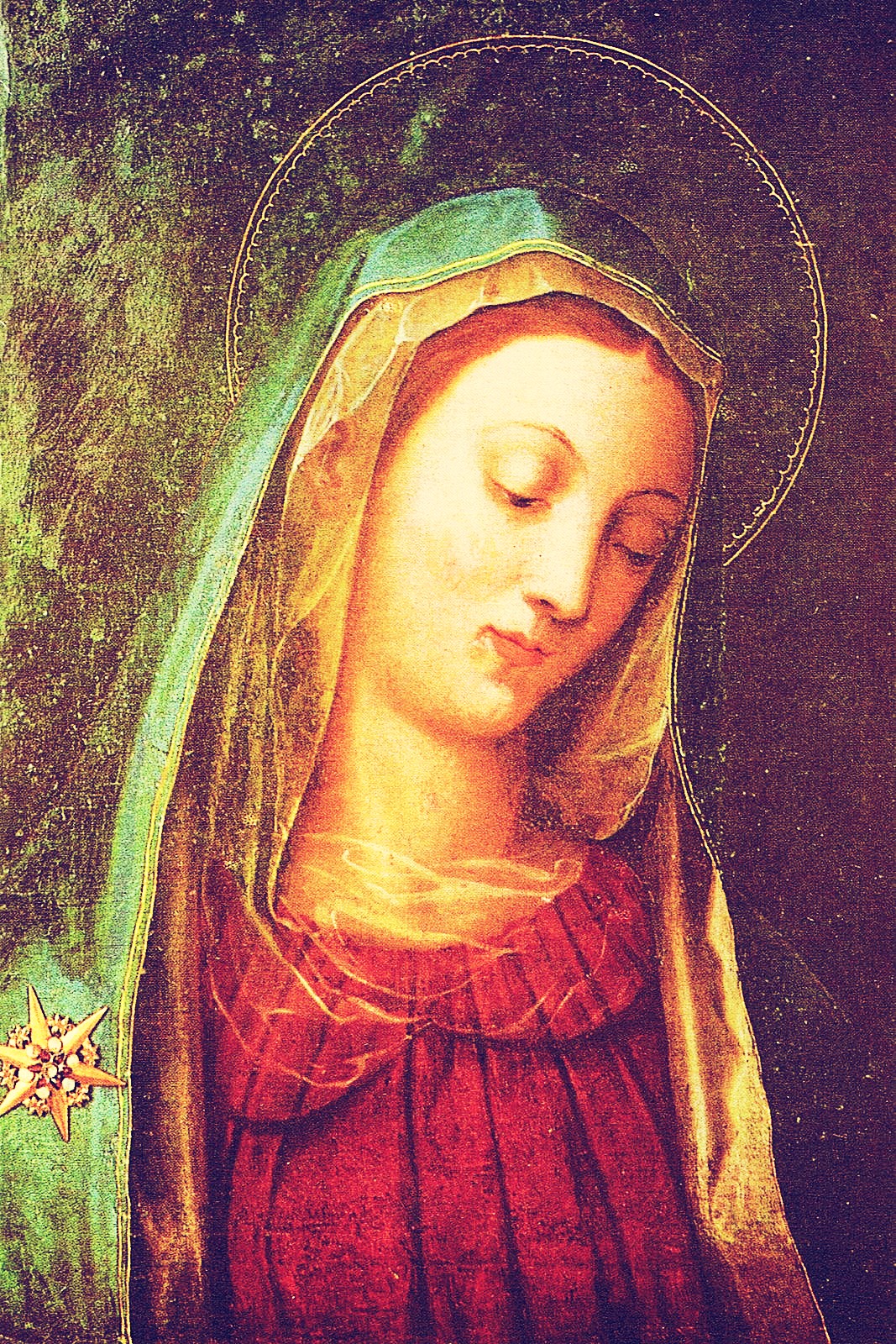
Madonna, Madre delle Grazie / Our Lady, Mother of Grace (1610) (Also known as Our Lady of the Bowed Head) – 9 June:

Among the many miraculous images of the Mother of God through which she deigns to grant her favours, there is one in the Monastery church of the Carmelites in Vienna, entitled the Mother of Grace.
In 1610 a Carmelite, Dominic of Jesus-Mary, found among the votaries of an old Altar in the Monastery Church of Maria della Scala in Rome and oil painting of the Mother of God, dust-covered and somewhat torn, which grieved him. Taking it into his hands, he shook the dust off it and kneeling down venerated it with great devotion.
He had the picture renovated and placed it on the shelf in his cell, where he made it the object of his love and supplications, in favour of those who came to him in their necessities and afflictions.
One night, while he was praying fervently before the picture, he noticed that some dust had settled on it. Having nothing but his course woolen handkerchief he dusted it with that and apologised:

O pure and holiest Virgin, nothing in the whole world is worthy of touching your holy face but since I have nothing but this coarse handkerchief, deign to accept my good will.

Fearing he was under an illusion, Dominic became troubled but Mary assured him that his requests would be heard, he could ask of her with full confidence, any favour he might desire. He fell upon his knees and offered himself entirely to the service of Jesus and Mary and asked for the deliverance of one of is benefactor’s souls in purgatory. Mary told him to offer several Masses and other good works. A short time later, when he was again praying before the image, Mary appeared to him bearing the soul of his benefactor to Heaven. Dominic begged that all who venerated Mary in this image of Our Lady of Grace might obtain all they requested. In reply the Virgin gave him this assurance:

All those who devoutly venerate me in this picture and take refuge with me, will have their requests granted and I will obtain for them many graces but especially, will I hear their prayers for the relief and deliverance of the souls in Purgatory.

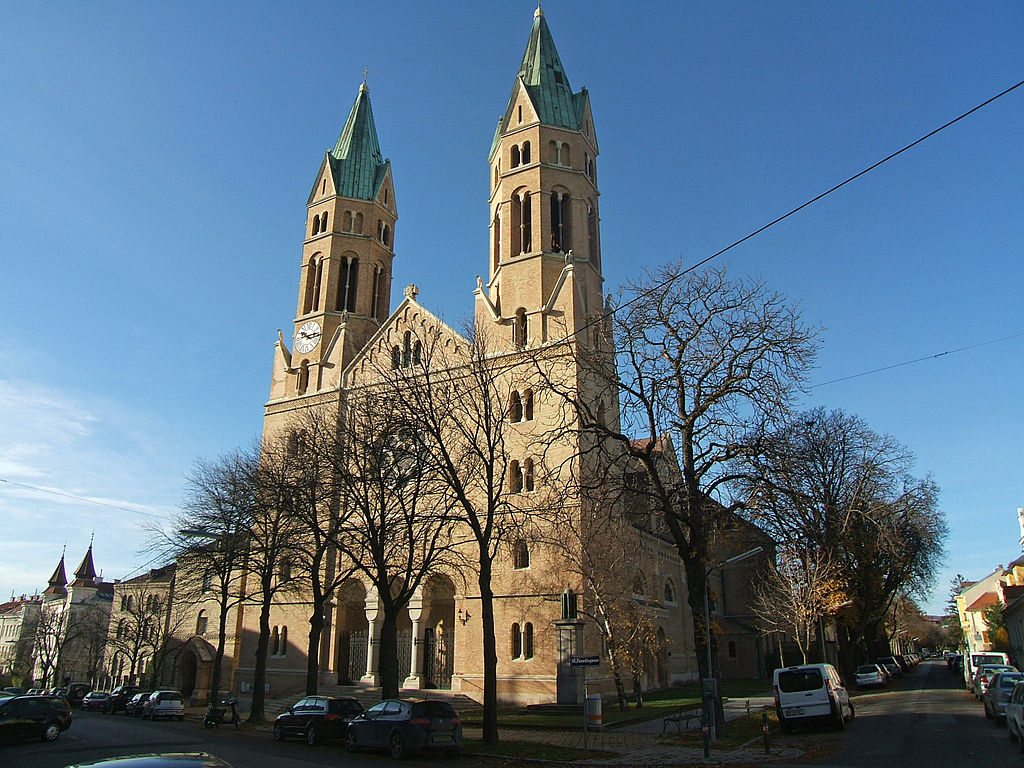
Dominic soon after placed the image in the Church of Maria Della Scala, so that more devotees of Mary could venerate it. Many wonderful favours were obtained by those who honored and invoked Mary here. Reproductions were made of Our Lady of Grace and sent to different parts of the world. After the death of Dominic the original painting was given to Prince Maximilian of Bavaria. He gave it to the discalced Carmelites in Munich in 1631; they gave it to Emperor Ferdinand II of Austria and his wife Eleanore. After Ferdinand’s death, Eleanore entered the Carmelite Convent in Vienna and took the picture with her. During the succeeding years the image was transferred to various places. Today it is in the Monastery Church of Vienna in Doabling. On 27 September 1931, it was solemnly crowned by Pope Pius XI – its 300th anniversary of arrival in Vienna. To his great surprise, the face of the Mother of God appeared to take on life and smiling sweetly at him, she bowed her head, which thereafter remained inclined.

The Carmelite Monastery Church of Vienna in dsDoabling.

Madonna della Fontenuova / Our Lady of the Plain , Monsummano Terme, Pistoia, Tuscany, Italy, (1573) – 9 June:
HERE:

https://anastpaul.com/2021/06/09/madonna-della-fontenuova-our-lady-of-the-plain-monsummano-terme-pistoia-tuscany-italy-1573-and-memorials-of-the-saints-9-june/

Bl Alexander of Kouchta
St Alexander of Prusa
St Arnulf of Velseca
St Baithen of Iona (c 536-c 599) Abbot, the first successor of St Columba

St Columba of Iona (521-597) Apostle of the Picts, Apostle to Scotland, Abbot, Missionary, Evangelist, Poet, Scholar and Writer .
He should not be confused with St Columban/us (543-615) – see here:

https://anastpaul.com/2018/11/23/saint-of-the-day-23-november-st-columban-543-615/
THE WONDROUS ST COLUMBA OF IONA:
https://anastpaul.com/2020/06/09/saint-of-the-day-9-june-saint-columba-of-iona-521-597-apostle-of-the-picts-apostle-to-scotland/

St Comus of Scotland
St Cumian of Bobbio
St Cyrus
Bl Diana d’Andalo OP
St Diomedes of Tarsus
St Felicianus
Bl Henry the Shoemaker
St Julian of Mesopotamia
St Luciano Verdejo Acuña
St Maximian of Syracuse
St Pelagia of Antioch
St Primus
St Richard of Andria
Bl Robert Salt
Bl Sylvester Ventura
St Valerius of Milan
St Vincent of Agen

Martyrs of Arbil – 5 Saints: Five nuns who were Martyred together in the persecutions of Tamsabur for refusing to renounce Christianity for sun-worship – Amai, Mariamne, Martha, Mary and Tecla. They were beheaded on 31 May 347 at Arbil, Assyria (in modern Kurdistan, Iraq).