One Minute Reflection – 24 July – “The Month of the Precious Blood” – St Christina of Bolsena (3rd Century) Virgin Martyr – Romans 6:19-23, Matthew 7:15-21
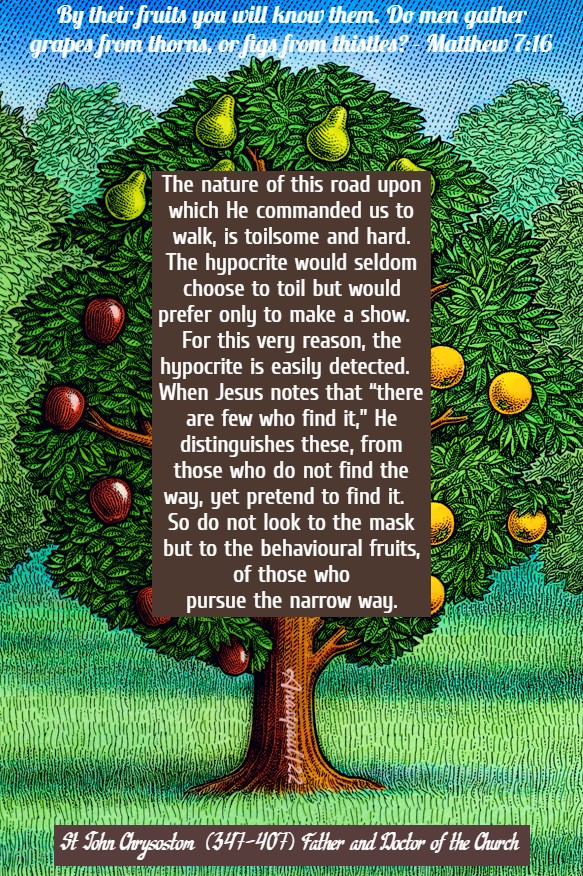
“By their fruits you will know them. Do men gather grapes from thorns, or figs from thistles?”- Matthew 7:16
REFLECTION – ““It does not seem to me that “false prophets” here refers to the heretics but rather to persons who live morally corrupt lives, while wearing a mask of virtue. They are usually called ‘frauds’ by most people. For this reason, Jesus continued by saying, “By their fruits you will know them.” For it is possible to find some virtuous persons, living among heretics. But among the corrupted of whom I speak, it is in not possible. “So what difference does it make,” Jesus says in effect, “if even among these false prophets some do put on a hypocritical show of virtue? Certainly, they will soon be detected.”
The nature of this road upon which He commanded us to walk, is toilsome and hard. The hypocrite would seldom choose to toil but would prefer only to make a show. For this very reason, the hypocrite is easily detected. When Jesus notes that “there are few who find it,” He distinguishes these, from those who do not find the way, yet pretend to find it. So do not look to the mask but to the behavioural fruits, of those who pursue the narrow way.” – St John Chrysostom (347-407) Archbishop of Constantinople, Father and Doctor of the Church (The Gospel of Matthew Homily 23).
PRAYER – O God, Who among the other miracles of Thy power have bestowed the victory of martyrdom even upon the weaker sex, graciously grant that we, who commemorate the anniversary of the death of blessed Christina, Your Virgin and Martyr, may come to Thee by the path of her example.Through Jesus Christ, Thy Son our Lord, Who lives and reigns with Thee, in the unity of the Holy Ghost, God, world without end. Amen (Collect).
St Aliprandus of Pavia St Antinogenes of Merida St Aquilina the Martyr St Arnulf of Gruyere Bl Balduino of Rieti St Boris of Kiev St Capito
St Christina Mirabilis/the Astonishing (1150-1224) Virgin, mendicant, Penitent, Mystic. St Christina the Astonishing has been recognised as a Saint since the 12th century. She was placed in the calendar of the saints by at least two bishops of the Catholic Church in two different centuries (17th & 19th Her Amazing Life: https://anastpaul.com/2019/07/24/saint-of-the-day-24-july-saint-christina-mirabilis-1150-1224/
St Cyriacus of Ziganeus St Declan of Ardmore Bl Diego Martinez Bl Donatus of Urbino
Saint of the Day – 24 July – Saint Christina Bolsena (3rd Century) Virgin Martyr. Born in the 3rd Century, probably at Rome, Italy into the family Anicii and died in the late 3rd Century at Lake Bolsena, Tuscany, Italy. Patronages – archers, mariners, millers . Also known as Cristina Anicii, Cristina of Tyro, Cristina.
Dolci, Carlo; Saint Christina of Bolsena
The Roman Martyrology’s entry today says: “At Tyro, in Tuscany, on the lake Bolsena, St Christina, Virgin and Martyr. Believing in Christ and breaking up her Father’s gold and silver idols to give them to the poor, she was cruelly scourged by his command, subjected to other most severe torments and thrown with a heavy stone into the lake, from which she was drawn out by an angel. Then, under another Judge, who succeeded her Father, she bore courageously still more bitter tortures. Finally, after she had been shut up by the Governor, Julian, in a burning furnace for five days, without any injury and being cured of the sting of serpents, she ended her Martyrdom by having her tongue cut out and being pierced with arrows.”
St Christina was the daughter of Urbain, a rich and powerful magistrate. . At least one account says that she destroyed her father’s golden idols and distributed their peices among the poor.
Saint Christina giving her father’s idols of gold to the poor, 17th-century painting.
By her father’s command, Christina was tortured to death. Her executions tore into her body with iron hooks. Afterward, they fastened her to a rack and lit a strong fire under her . Narratives say that God protected Christina by turning the burning flames against her onlookers. Next, although a heavy stone was tied around her neck to drown her in Bolsena Lake, an angel loosened the bonds and saved her. Unexpectedly, Christina’s father died while she was being tortured. Perhaps a glimmer of remorse saved his soul from eternal death!
Christina was again tortured by the magistrate who succeeded her father. The writer Fr Alban Butler states, that Christina remained unhurt inside a burning furnace for 5 days. Once removed, serpents could not bite her. In a rage, Christina’s torturers cut out her tongue and shot her to death with arrows. The island-city, Tyro, where she was executed was swallowed up by waters in the course of time.
Chapel of our Lady of the Rosary of Santi Giovanni e Paolo (Venice) – Martyrdom of St Christina by Sante Peranda
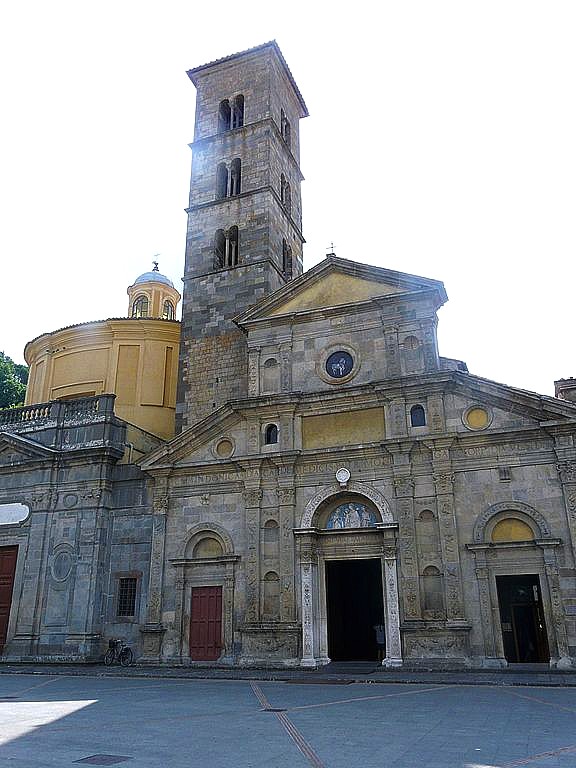
St.Christina’s relics are kept at Palermo in Sicily in a Basilica named for her. Her courage is testament to her perfect love for Jesus. “There is no fear in love but perfect love casts out fear. (Jn. 4:18)”
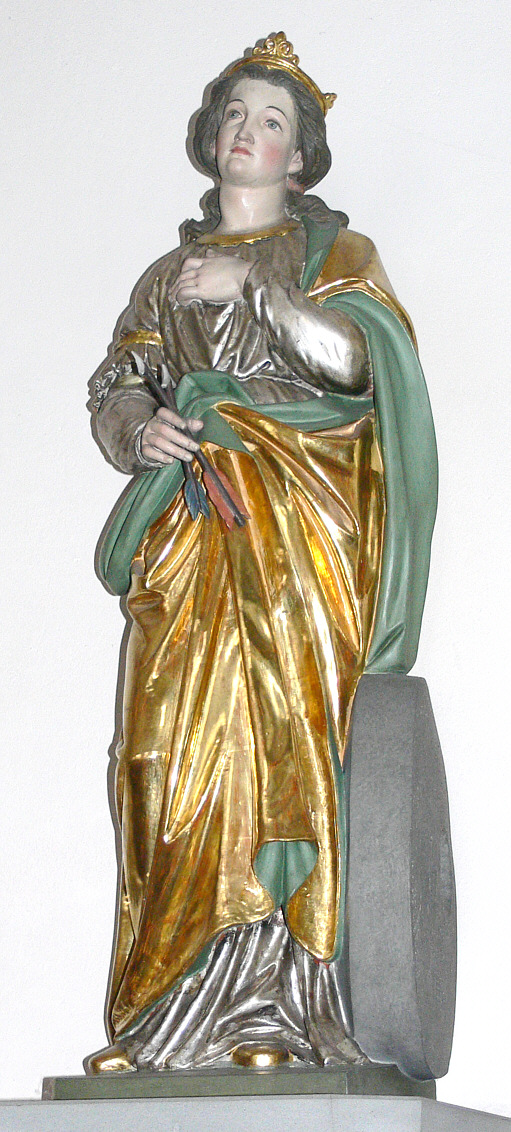
The Tomb of St Christina with Buglioni sculpture in the centre. Tthe Statue illustrates the stone used in the attempt to drown her.
Foundation of Our Lady of Cambron, France (1148) – 24 July:
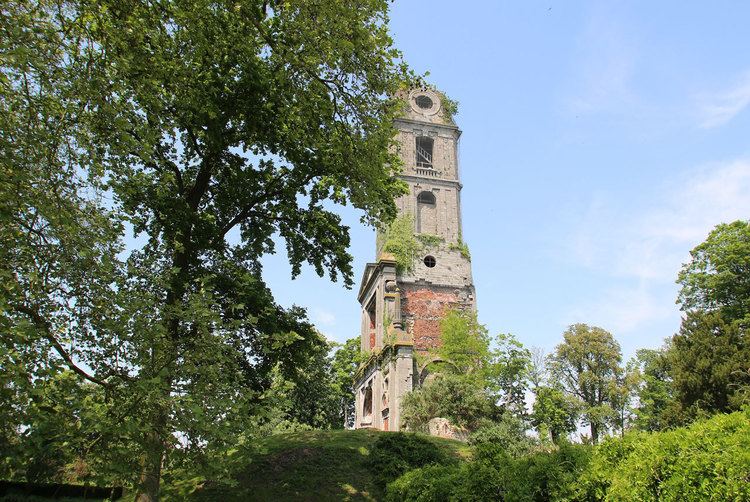
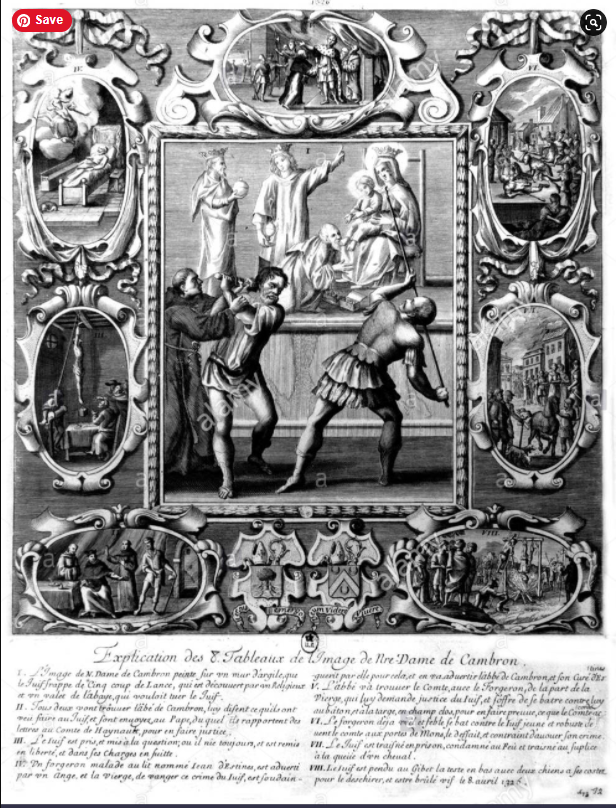
This feast day celebrates the Foundation of the Abbey of Our Lady of Cambron, near Mons, in Hainault, Belgium, by Anselm de Trasigny, Lord of Peronne and Canon of Soignies, in the year 1148. The Abbey of Cambron was founded on the River Blanche and was a daughter house of Saint Bernard of Clairvaux. It was situated some distance from Mons in Cambron-Casteau in Hainaut, Belgium and took its name from the land on which it was built. Cambron, in its turn, had daughter houses in the Abbeys of Fontenelle at Valenciennes and six other sites. The image of Our Lady formerly honoured at Cambron was famous for a great number of miraculous cures. A Chapel dedicated to Our Lady of Cambron, was built at Mons in 1550 in a part of the Prince’s park. In the following centuries the magistrates of Mons had a beautiful door built for the Shrine and added other embellishments. There was a small but well honoured and visited Oratory. In 1559, thieves broke into the Chapel and stole everything of value. After the French Revolution when the State took over all properties belonging to the Church, this Chapel of Our Lady of Cambron was also taken. It was demolished after all the wood, iron and lead was removed. The Statue of the Blessed Virgin which decorated the Altar was then placed in the Church of Saint Elizabeth at Mons. The Abbey of Cambron was rebuilt in the 18th Century but was ordered to be vacated in 1783 by the Holy Roman Emperor Joseph II. It was later sold to a wealthy Count who built a mansion on the property and the land remained in his family’s hands until it was sold in 1993 to a family, who turned the holy and once revered site, into the location of a public zoo known as the Pairi Daiza. Verneration of Our Lady of Cambron: “In 1322 there was a serious incident at Cambron. An image of the Virgin Mary was profaned. The widely held suspicion was that a Jewish perpetrator had falsified conversion to Christianity to gain access to the image. The affair caused significant unrest and provoked the sympathy of many Christians. There were prayers and devotions held to repair the image. Thus the devotion to Our Lady of Cambron was begun. After a request by the King of France Philip of Valois, Pope Benedict XII issued a Papal Bull granting indulgences to pilgrims to Cambron. The pilgrimage to the Virgin of Cambron was thus begun. A solemn procession takes place each year on the third Sunday of Easter.”
Among the pilgrims and visitors were several important figures, including the Emperor Maximilian I, who, passing through Belgium in the early 16th century, visited the Sanctuary of Our Lady of Cambron. He gave the Abbey sufficient funds to commission the restoration of the painted image.
The above very old and blurred image relates the legend of the attack on the Holy Painting
Martyred in England: John Boste Joseph Lambton Nicholas Garlick Richard Simpson Robert Ludlam
Martyred in the Spanish Civil War: Bl Cándido Castán San José Bl Cecilio Vega Domínguez St Ignacio González Calzada St Jaime Gascón Bordas Bl José Joaquín Esnaola Urteaga Bl José Máximo Moro Briz St Josep Guillamí Rodo St Marcos Morón Casas Bl Maria Angeles of Saint Joseph Bl Maria Mercedes Prat Bl Maria Pilar of Saint Francis Borgia Bl Teresa of the Child Jesus and of Saint John of the Cross St Xavier Bordas Piferrer










 AnaStpaul
You must be logged in to post a comment.