St Disibod of Disenberg St Ethelburgh of Kent St Faustus of Antioch St Isaac the Great Blessed István Pongrácz St Kingsmark St Peter of Chavanon Bl Seraphina Sforza
Martyrs of Alexandria – 5 Saints: A group of Christians Martyred together in the persecutions of Diocletian – Ammon, Dio, Faustus, Neoterius and Theophilus. Martyred in Alexandria, Egypt.
Martyrs of Japan – (21 Beati: A group of 21 Missionaries and Converts, who were executed together for their faith. They were: Antonio of Saint Bonaventure, Antonio of Saint Dominic, Dominicus Nihachi, Dominicus of Saint Francis, Dominicus Tomach, Francisco Castellet Vinale, Franciscus Nihachi, Ioannes Imamura, Ioannes Tomachi, Laurentius Yamada, Leo Aibara, Lucia Ludovica, Ludovicus Nihachi, Matthaeus Alvarez Anji, Michaël Tomachi, Michaël Yamada Kasahashi, Paulus Aibara Sandayu, Paulus Tomachi, Romanus Aibar, Thomas of Saint Hyacinth, Thomas Tomachi Died on 8 September 1628 in Nagasaki, Japan Beatified on 7 May 1867 by Pope Pius XI.
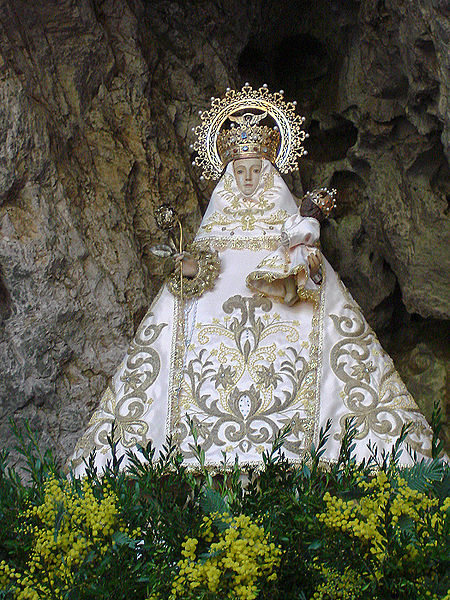
Nuestra Senora de la Covadonga, also named “La Santina” / Our Lady of Covadonga (720) – 8 September:
This is a title of the Blessed Virgin Mary and the name of a Marian Shrine devoted to her at Covadonga, Asturias. The Shrine in northwestern Spain rose to prominence following the Battle of Covadonga in about 720, which was the first defeat of the Moors during their invasion of Spain. A Statue of the Virgin Mary, secretly hidden in one of the caves, was believed to have miraculously aided the Christian victory. Our Lady of Covadonga is the Patron of Asturias, and a Basilica was built to house the current Statue. Our Lady of Covadong’s east day is 8 September.
Our Lady of Health of Vailankanni (16th Century) – 8 September:
This is the title given to the Blessed Virgin Mary by people as she twice appeared in the town of Velankanni, Tamil Nadu, India, in the 16th to 17th centuries. The Feast of the Nativity of Mary, is also commemorated as the feast of Our Lady of Good Health. The celebration starts on 29 August and ends on the day of the feast. The feast day prayers are said in Tamil, Marathi, East Indian, Malayalam, Telugu, Kannada, Konkani, Hindi and English.
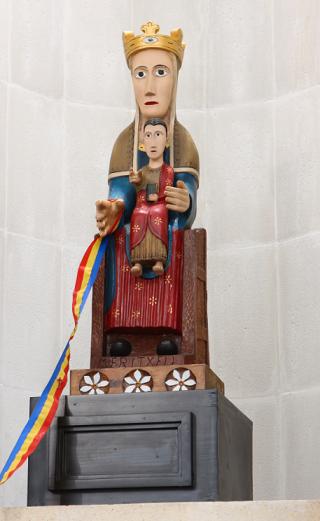
Nuestra Senora de la Meritxell / Our Lady of Meritxell (12th Century) – 8 September:
This is an Andorran Roman Statue depicting an apparition of the Virgin Mary. Our Lady of Meritxell is the Patron Saint of Andorra. On 6 January in the late 12th century, villagers from Meritxell, Andorra were going to Mass in Canillo. Though it was winter, they found a wild rose in bloom by the roadside. At its base was a Statue of the Virgin and Child. They placed the Statue in a Chapel in the Church in Canillo. The next day the Statue was found sitting under the wild rose again. Villagers from Encamp took the Statue to their Church but the next day the Statue had returned to the rose bush. Though it was snowing, an area the size of a Chapel was completely bare and the villagers of Meritxell took this to mean that they should build a Chapel to house the Statue and so they did. On 8-9 September 1972 the Chapel burned down and the Statue was destroyed, a copy now resides in the new Meritxell Chapel. The feast day of Our Lady of Meritxell is 8 September and the Andorran National Day.
St Adam Bargielski St Adela of Messines Bl Alanus de Rupe
St Disibod of Disenberg St Ethelburgh of Kent St Faustus of Antioch St Isaac the Great St István Pongrácz St Kingsmark St Peter of Chavanon Bl Seraphina Sforza St Pope Sergius I (c 650–701)
St Timothy of Antioch Bl Wladyslaw Bladzinski — Martyrs of Alexandria – (5 saints) A group of Christians martyred together in the persecutions of Diocletian – Ammon, Dio, Faustus, Neoterius and Theophilus. Martyred in Alexandria, Egypt.
Martyrs of Japan – (21 beati): A group of 21 missionaries and converts who were executed together for their faith. • Antonio of Saint Bonaventure • Antonio of Saint Dominic • Dominicus Nihachi • Dominicus of Saint Francis • Dominicus Tomachi • Francisco Castellet Vinale • Franciscus Nihachi • Ioannes Imamura • Ioannes Tomachi • Laurentius Yamada • Leo Aibara • Lucia Ludovica • Ludovicus Nihachi • Matthaeus Alvarez Anjin • Michaël Tomachi • Michaël Yamada Kasahashi • Paulus Aibara Sandayu • Paulus Tomachi • Romanus Aibara • Thomas of Saint Hyacinth • Thomas Tomachi Died on 8 September 1628 in Nagasaki, Japan Beatified on 7 May 1867 by Pope Pius XI
Martyred in England: Bl John Norton Bl Thomas Palaser
Martyred in the Spanish Civil War: • Blessed Adrián Saiz y Saiz • Blessed Apolonia Lizárraga Ochoa de Zabalegui • Blessed Bonifacio Rodríguez González • Blessed Dolores Puig Bonany • Blessed Eusebio Alonso Uyarra • Blessed Ismael Escrihuela Esteve • Blessed Josefa Ruano García • Blessed Josep Padrell Navarro • Blessed Mamerto Carchano y Carchano • Blessed Marino Blanes Giner • Blessed Miguel Beato Sánchez • Blessed Pascual Fortuño Almela • Blessed Segimon Sagalés Vilá • Blessed Tomàs Capdevila Miquel
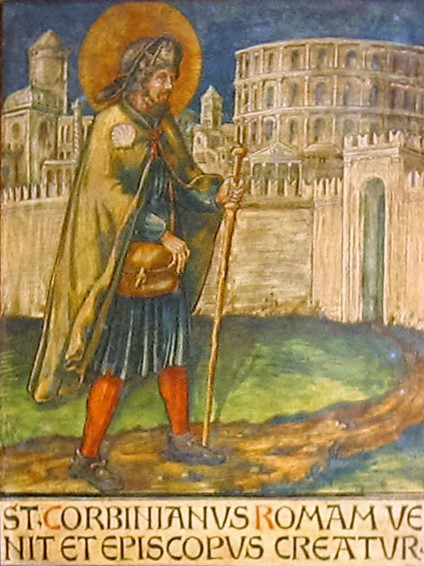
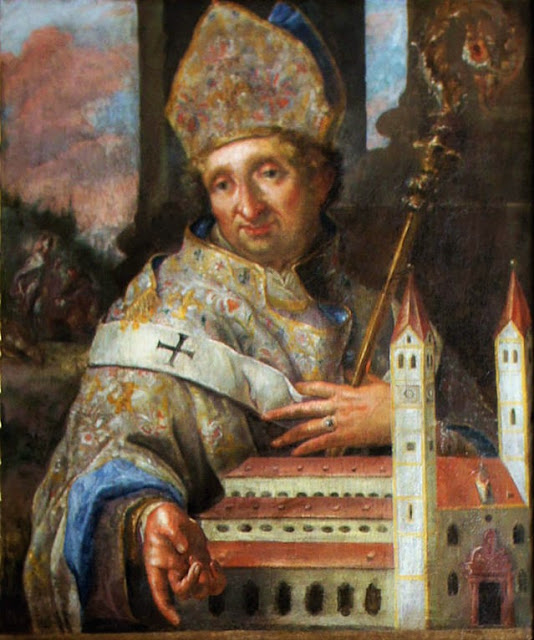
Saint of the Day – 8 September – Saint Corbinian (c 670–c 730) First Bishop of Freising and Founder of the Diocese, Hermit, Missionary, Confessor. After living as a hermit near Chartres for fourteen years, he made a pilgrimage to Rome. Pope Gregory II sent him to Bavaria. His opposition to the marriage of Duke Grimoald to his brother’s widow, Biltrudis, caused Corbinian to go into exile for a time. Also known as Latin: Corbinianus; French: Corbinien; German: Korbinian, Waldegiso.
Corbinian was born sometime around 670, not in today’s southern Germany but in what we now call France, indeed very near the centre of modern northern France, at Chatres.
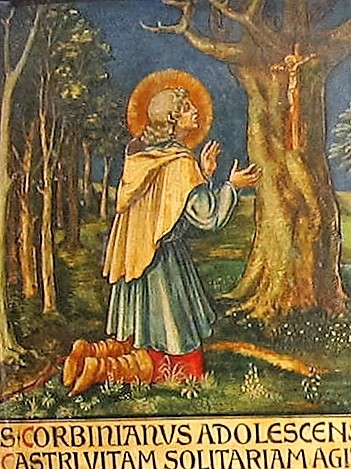
Corbinian’s life was recorded by Arbeo of Freising, one of his successors as Bishop of Freising, who lived from 723-784. According to Arbeo, Corbinian’s father, Waldegiso, after whom the boy was originally named, died when he was a child. His father’s death was followed some years later by that of his mother, who had renamed him after her own name, Corbiniana. For some years after her death the young Corbinian lived as a hermit in the forest not far from his home. Here he prayed and studied and attracted a number of disciples. Dismayed by the interruptions in his intended life of prayer that were being made by the demands of his followers, he decided to journey to Rome and become a hermit there, near the tomb of Saint Peter.
On arrival in Rome rumour of his spiritual prowess reached the ears of Pope Gregory II. Gregory suggested that he should use his abilities not in withdrawal into a hermitage but to bring the people of his homeland to the Gospel and he sent him back to the north, ordaining him as a Missionary Bishop before he left. This was fairly standard practice at this time, for a Missionary Bishop had the full power of the Church behind him. He could preach, offer the Eucharist, Baptise, Confirm and Ordain, thus enabling him to plant new Churches with complete structure,s in areas outside the surviving and functioning Roman towns, which still had resident Bishops.
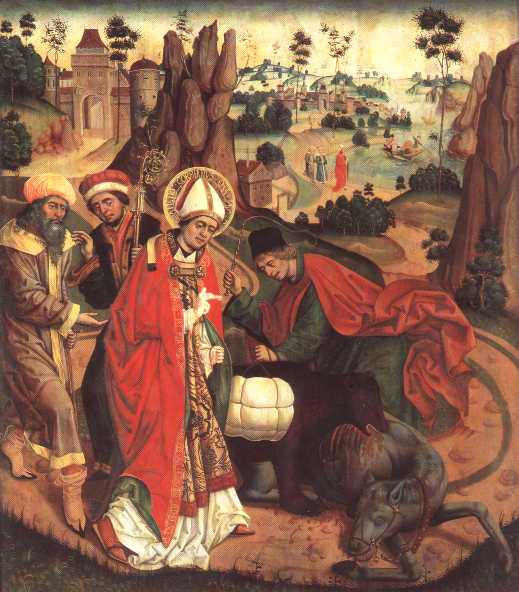
Corbinian set out as a pilgrim Bishop and was successful in the Frankish territories. Sometime around 723 he returned to Rome and on the way there acquired his most famous miracle and the symbol by which he is so well remembered.
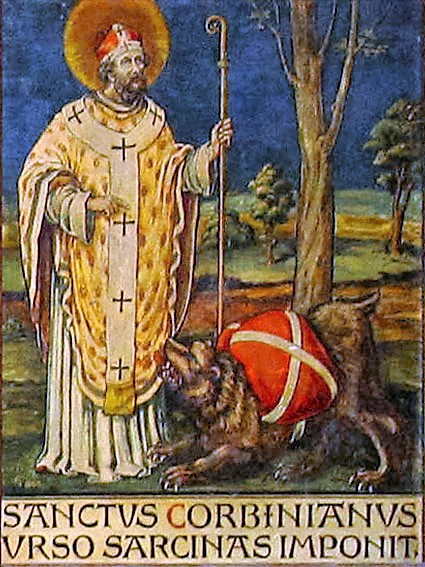
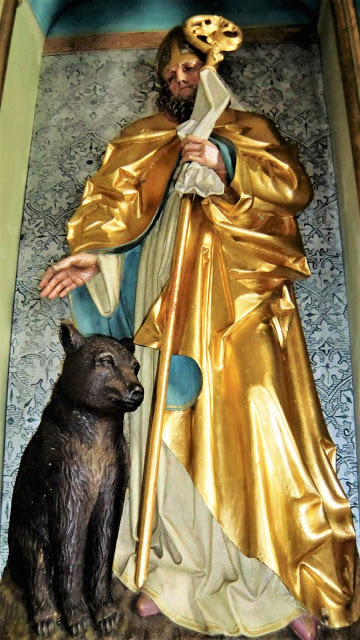
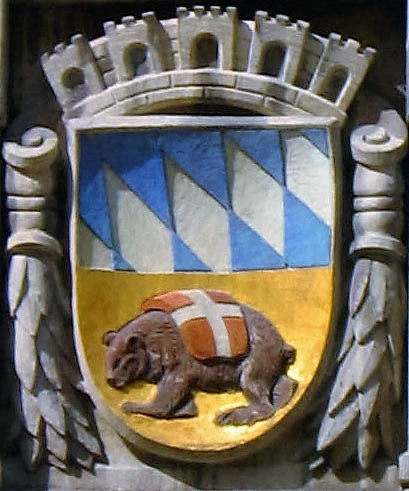
According to the story, as he travelled through the foothills of the Alps, his horse was attacked and killed by a bear. Nothing daunted, Corbinian subdued the bear and, as a penance for killing the horse, asked the bear to carry his bags in it’s stead. The bear accepted the penance . Corbinian saddled it and loaded his bags on its back. The bear was as good as its word, carrying them all the way to the gates of Rome. At Rome, Corbinian released it back to the wild with thanks. The bear became the symbol of Saint Corbinian as well as the symbol for the town of Freising.
After reporting to Pope Gregory II on this second trip to Rome, Saint Corbinian was sent back to the north to continue his Missionary work. He appears to have arrived in the Freising region about 724 and established a Benedictine Monastery there.
Franz Kobald, Saint Corbinian and His Bear German, 1899 Kuens, Parish church
Almost immediately he entered into a controversy with Grimoald, the duke then ruling the area now called Bavaria, on behalf of the Frankish kings. Grimoald, who, as a Frankish noble, was already a Christian, had contracted a marriage to his brother’s widow, Biltrudis. This kind of marriage was considered incest if undertaken without a dispensation (this is the very same issue that applied to Henry VIII of England and Catherine of Aragon hundreds of years later, causing Henry to break away from the Catholic Church). Corbinian denounced the marriage and was forced by threats from Grimoald and Biltrudis to leave the area, retreating to northern Italy for a while. On their deaths he was able to return to Freising and resume his work.
Anonymous, Saint Corbinian Confronting Grimoald German, c 1870-1880 Freising, Cathedral
He died there on 8 September 730 and this day became his feast day. Of course, his feast day was overshadowed by the greater feast of the Nativity of the Blessed Virgin Mary and it has subsequently been moved to 20 November in Freising in veneration of the translation of St Corbinian’s relics.
Jan Polack, Death of Saint Corbinian Polish, 1484-1485
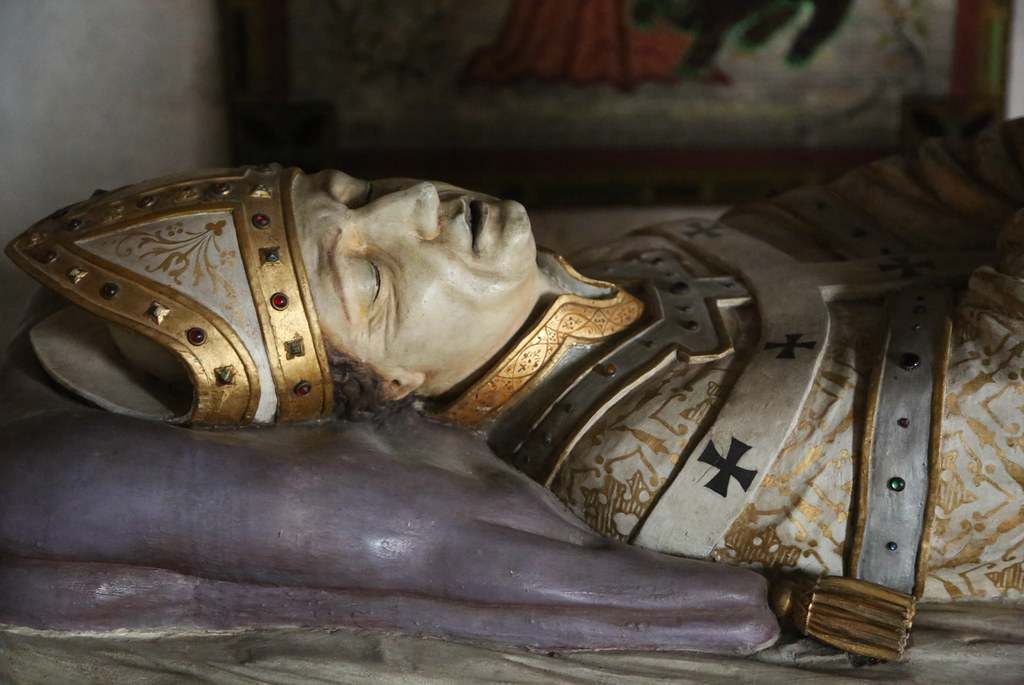
Tomb of St Corbinian at Freising Cathedral
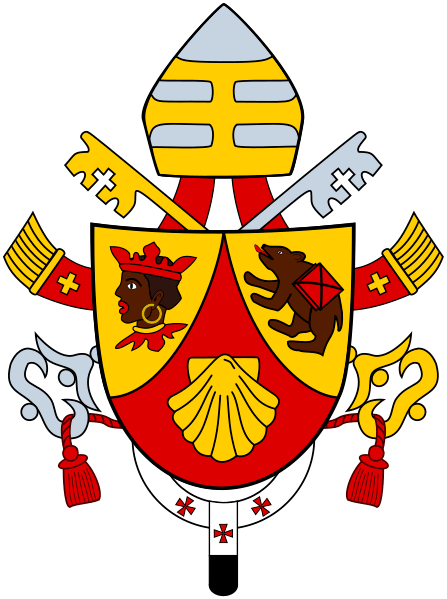
Corbinian’s Bear is used as the symbol of Freising in both civic and ecclesiastical heraldry. It appeared on the arms of Pope Benedict XVI, who first adopted the symbol when, still known as Joseph Ratzinger, he was appointed Archbishop of Freising-Munich in March 1977. He retained the bear in his revised coat of arms when he was elevated to Cardinal in June of the same year and again on his Papal Coat of Arms when he was elected in 2005.
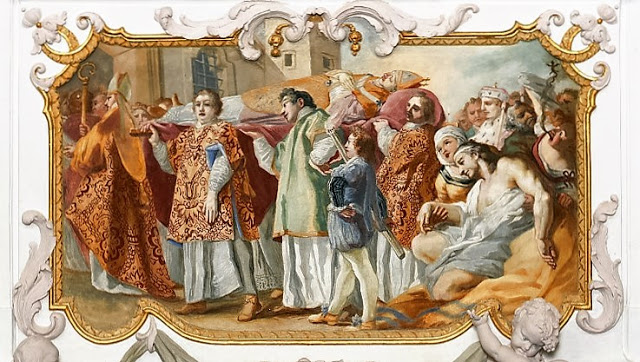
Transfer of the Body of Saint Corbinian German, 1724 Freising, Cathedral
Apotheosis of Saint Corbinian German, 1723-1724 Freising, Cathedral of Saint Mary and Saint Corbinian
In Catholic Iconography: The scallop shell is a traditional reference to pilgrimage. For Pope Benedict XVI, it also reminded him of the legend according to which one day St Augustine, pondering the mystery of the Trinity, saw a child at the seashore playing with a shell, trying to put the water of the ocean into a little hole. Then, St Augustine heard the words: “This hole can no more contain the waters of the ocean than your intellect can comprehend the mystery of God.” The crowned Moor is a regional motif in heraldry often seen in Bavaria, Benedict’s German homeland. Benedict has been quoted saying that, in addition to the obvious reference back to Saint Corbinian, the Founder of the Diocese where Benedict would become Bishop in 1977, the bear represents Benedict himself being “tamed by God” to bear the spiritual burdens of Benedict’s own ministries first as Bishop, then asCcardinal, and now as Pope.







 AnaStpaul
You must be logged in to post a comment.