Posted in MARIAN TITLES, SAINT of the DAY

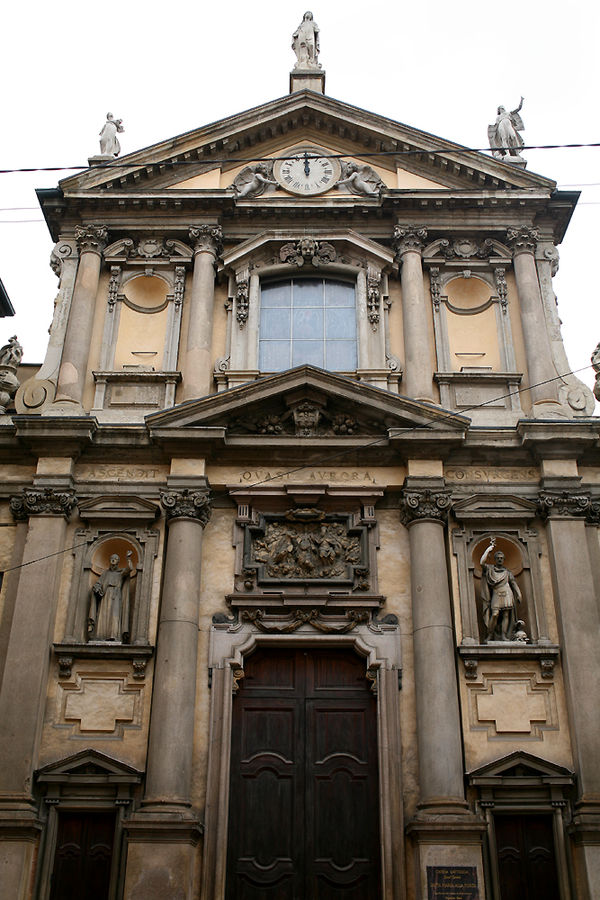
First Saturday, Santa Maria alla Porta Luigi / Our Lady of Port Louis, Milan, Italy, St Charles Borromeo, Sts Vitalis and Agricola, Martyrs and the Saints for 4 November

First Saturday

St Amandus of Avignon
St Amandus of Rodez
St Birstan
St Clarus the Hermit
St Clether

Bl Frances d’Amboise
St Gerard de Bazonches
St Gregory of Burtscheid
Bl Helen Enselmini
Bl Henry of Zweifalten
St Hermas of Myra
St Joannicus of Mount Olympus
St John Zedazneli
St Modesta of Trier
St Nicander of Lycia
St Patrobas
St Perpète
St Philologus
St Pierius (Died c309) Priest, Director of the Catechetical School of Alexandria

St Proculus of Autun

Posted in Uncategorized

Santa Maria alla Porta Luigi / Our Lady of Port Louis, Italy and Memorials of the Saints – 4 November

First Friday

Santa Maria alla Porta Luigi / Our Lady of Port Louis, Milan, Italy – 4 November:
HERE:

https://anastpaul.com/2021/11/04/89085/

St Charles Borromeo (1538-1584) Confessor Archbishop of Milan, Cardinal, Doctor of Theology, Civil and Canon Law, Reformer, Founder of Seminaries.  He is known as the “Father of the Clergy”   Born Count Carlo Borromeo .
About St Charles:

https://anastpaul.wordpress.com/2017/11/04/saint-of-the-day-st-charles-borromeo-1538-1584/

St Vitalis (Died c 304) Martyr and St Agricola (Died c 304) Martyr
St Amandus of Avignon
St Amandus of Rodez
St Birstan
St Clarus the Hermit
St Clether

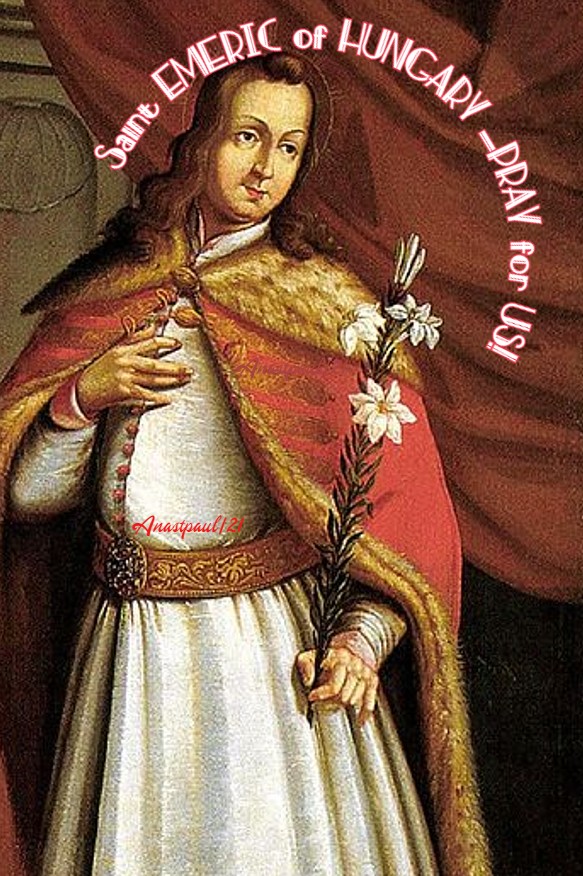
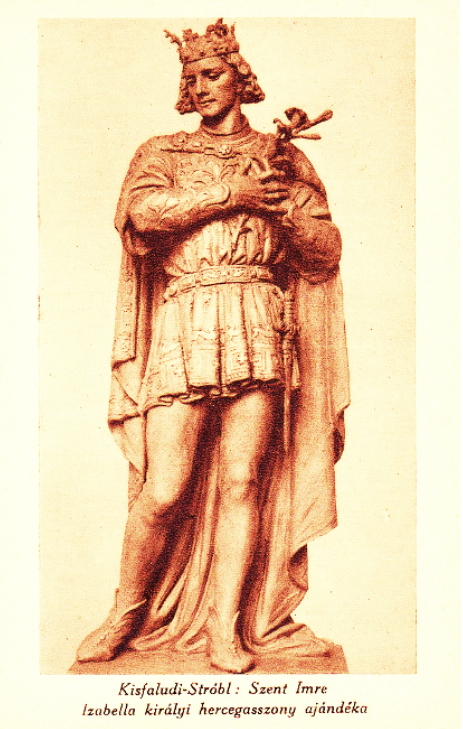
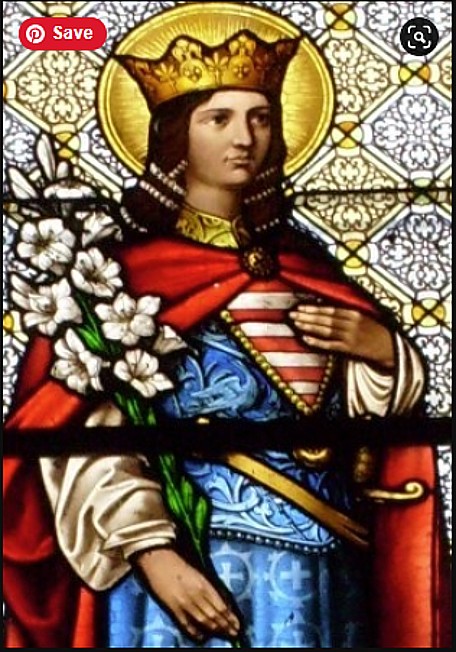
St Emeric of Hungary (c 1007-1031) Confessor, Prince and heir to the Hungarian Throne, Son of St Stephen, King of Hungary.
His Short Life of Chastity and Devotion:

https://anastpaul.com/2021/11/04/saint-of-the-day-4-november-saint-emeric-of-hungary-c-1007-1031/

Bl Frances d’Amboise
St Gerard de Bazonches
St Gregory of Burtscheid
Bl Helen Enselmini
Bl Henry of Zweifalten
St Hermas of Myra
St Joannicus of Mount Olympus
St John Zedazneli
St Modesta of Trier
St Nicander of Lycia
St Patrobas
St Perpète
St Philologus
St Pierius
St Proculus of Autun

Posted in CHRIST the WORD and WISDOM, DOCTORS of the Church, FATHERS of the Church, ONE Minute REFLECTION, The GOOD SHEPHERD, The WORD

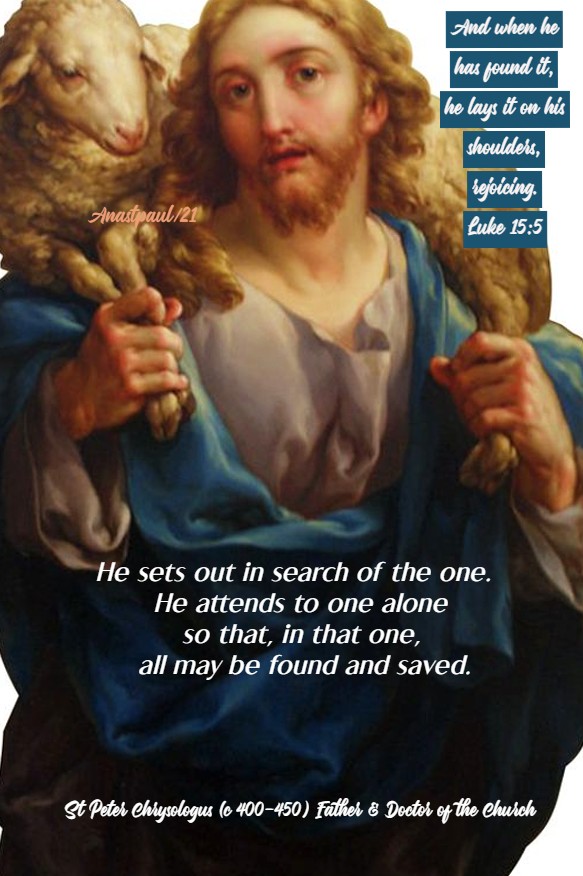
One Minute Reflection – 4 November – ‘ …He sets out in search of the one.’ 

One Minute Reflection – 4 November – “Month of the Holy Souls in Purgatory” – Readings: Romans 14: 7-12; Psalm 27: 1, 4, 13-14; Luke 15: 1-10 and the Memorial of Saint Charles Borromeo (1538-1584) and St Emeric of Hungary (c 1007-1031)

What man of you, having a hundred sheep, if he has lost one of them, does not leave the ninety-nine in the wilderness and go after the one which is lost, until he finds it? And when he has found it, he lays it on his shoulders, rejoicing.”…Luke 15:4-5

REFLECTION – “The fact of re-finding something we had lost always fills us anew with joy.   And this joy is greater than that we felt before losing it, when the thing was safely kept.   But the parable of the lost sheep speaks more of God’s tenderness than of the way in which people usually behave.   It expresses a profound truth.   To leave behind something of importance for love of what is more humble, is characteristic of divine power, not of human possessiveness.   For God even brings into existence what is not, He sets out in search of what is lost while still keeping what He had left in place and He finds what had strayed without losing what He has under His protection.
That is why, this Shepherd is not of earth but of heaven.   The parable is not in any respect, a representation of human achievements but it conceals divine mysteries, as the numbers it mentions immediately show: “What man among you,” says the Lord, “having a hundred sheep and losing one of them…”   As you see, the loss of a single sheep has sorely tried this Shepherd, as though, the whole flock, deprived of His protection, had set out along a treacherous path.   This is why, leaving the ninety-nine others there, He sets out in search of the one.   He attends to one alone so that, in that one, all may be found and savedSt Peter Chrysologus (c 400-450) Father and Doctor of the Church

PRAYER – Lord God, in Your wisdom, You created us, by Your providence You rule us, penetrate our inmost being with Your holy light, so that our way of life, may always be one of faithful service to You. With great love we thank You for the great gifts You shower upon us and for being our Father, who seeks and finds us when we are lost. Grant that by the intercession of St Charles Borromeo and St Emeric, we may ever seek to stay true to our baptism. Through Jesus, our Lord, with the Holy Spirit, God forever, amen.

Posted in CHILDREN / YOUTH, SAINT of the DAY

Saint of the Day – 4 November – Saint Emeric of Hungary (c 1007-1031)

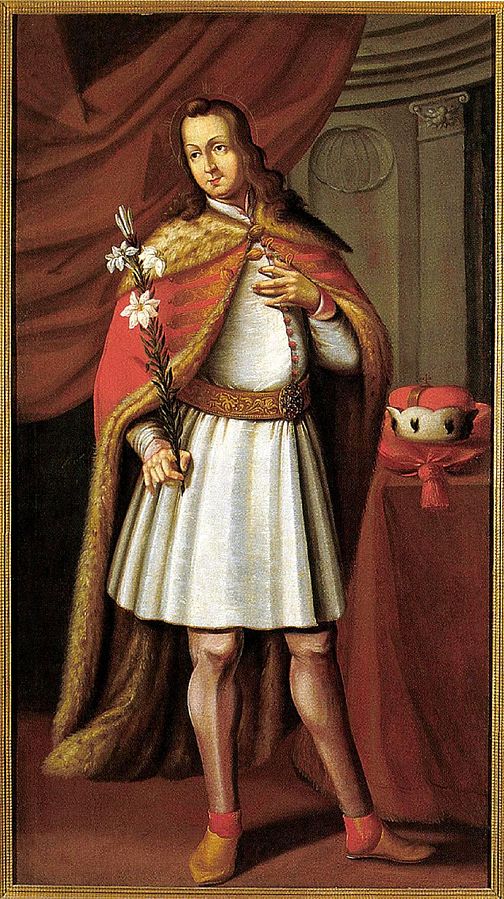
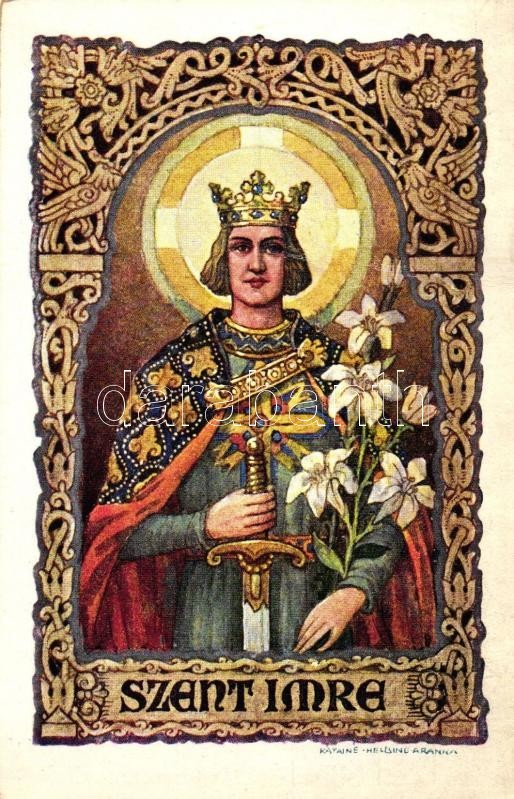
Saint of the Day – 4 November – Saint Emeric of Hungary (c 1007-1031) Confessor, Prince and Heir to the Hungarian Throne, Son of St Stephen, the first King of Hungary, Married but lived in continence with his wife, having vowed his virginity to God. Born in c 1007 in Veszprém, Hungary and died by being killed by a boar while hunting on 2 September 1031 in Hungary, aged 24. Patronages – Youth, Hungarian Americans. Also known as – Emerick, Emmerich, Emmericus, Henricus, Henry. Additional Memorial – 5 November the date of his Canonisation.

Emeric is believed to have been the second son of Saint Stephen I. Named after his maternal Uncle St Henry II, the Holy Roman Emperor, he was the only one of Stephen’s sons who reached adulthood.

Emeric was educated in a strict and ascetic spirit by the Benedictine Monk from Venice, St Gerard Sagredo (980-1046), from the age of 15 to 23. He was intended to be the next Monarch of Hungary and his father wrote his Admonitions to prepare him for this task – here: https://anastpaul.com/2019/08/16/thought-for-the-day-16-august-st-stephens-letter-to-st-emeric/

St Stephen here: https://anastpaul.com/2018/08/16/saint-of-the-day-16-august-st-stephen-of-hungary-c-975-038-apostle-of-hungary/ and St Gerard here: https://anastpaul.com/2020/09/24/saint-of-the-day-24-september-saint-gerard-sagredo-osb-980-1046-bishop-and-martyr-the-apostle-of-hungary/

Emeric married a Byzantine Princess but according to a biography written between 1109 and 1116, he lived during marriage in perfect chastity, collaborating with his father King Stephen in the conversion of his subjects.

The succession plans of Emeric’s father could never be fulfilled, for on 2 September 1031, at age 24, Emeric was killed by a boar while hunting. It is believed that this happened in Hegyközszentimre (presently Sântimreu, Romania). He was buried in the Székesfehérvár Basilica. Several wondrous healings and conversions happened at his grave. On 5 November 1083 King Ladislaus I translated Emeric’s relics in a large ceremony. Emeric was Canonised for his pious life and purity, along with his father and Bishop Gerard by Pope Gregory VII.

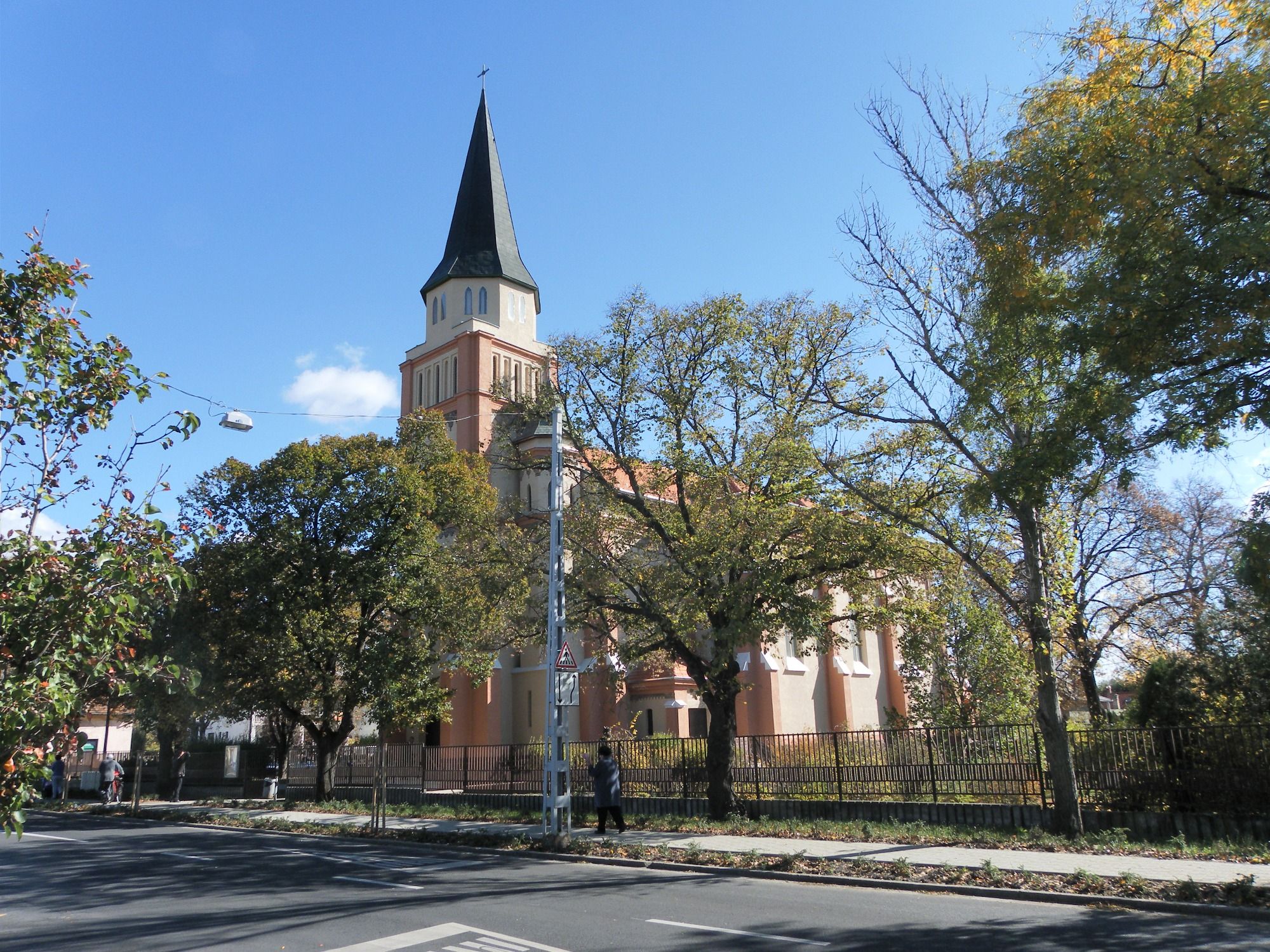
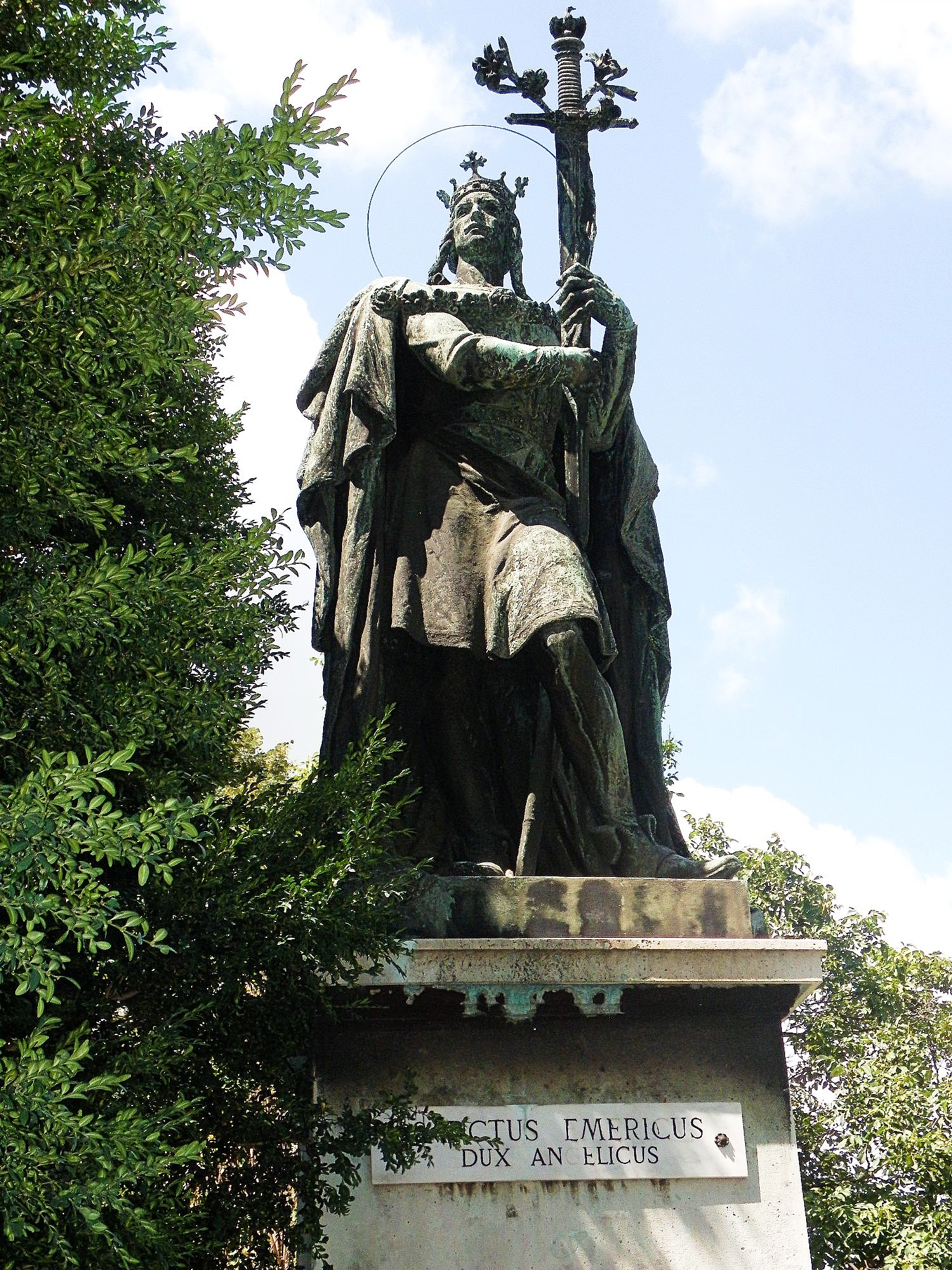
On the 900th Anniversary of the death of Prince Emeric, a National Memorial Year was organised in 1930–1931 and the village of Pestszentimre was named after him. The Church in the district also bears the name of the Saint-Prince and the first public Statue of the district depicts Saint Emeric. The Saint Emeric Memorial Year proclaimed for 1930–1931 moved the whole country and the settlements around Pest, which are now parts of Budapest. The two-year event series was such an important event that Pestszentimre, which belongs to the 18th District today, took the name of our first King’s, St. Stephen’s, son. The settlement had previously been called Soroksárpéteri.

St Emeric’s Church in the Town named for him
St Emeric in Pestszentimre
Posted in MARIAN TITLES, SAINT of the DAY

Santa Maria alla Porta Luigi / Our Lady of Port Louis, Milan and Memorials of the Saints – 4 November

Santa Maria alla Porta Luigi / Our Lady of Port Louis, Milan, Italy – 4 November:

The ancient City of Milan, Italy, has had three completely different systems of walls defending the City throughout the ages. The oldest walls were Roman, built in the Republican and Imperial eras. The second wall was built in the 12th century, shortly after the City was razed by Frederick Barbarossa. The third, and final wall system was built in the 16th century by the Spanish rulers of Milan. Even though in most places there is little left of the walls, the gates, or “ports” contributed to the layout of the City as the streets passed through the gates from a central hub. The Roman gates were Porta Romana, Porta Ticinese, Porta Vercellina and so on, with each wall having gates with a variety of names. None of them, however, has had the name of Porta Luigi There is no Church in Milan to St. Louis and I can find no reference to this feast of Mary, that was once famous enough to have a date on the calendar. (https://www.roman-catholic-saints.com/our-lady-of-port-louis.html).

I (Ana) have found a Church called “Santa Maria alla Porta” (Holy Mary at the Gate), see below, which dates from very early times, certainly before the 12th Century. Although a Church already stood in the same Milanese location since before the year 1105, the present Church was erected in 1652 under Spanish rule.

St Charles Borromeo (1538-1584) Archbishop of Milan (Memorial)
About St Charles:
https://anastpaul.wordpress.com/2017/11/04/saint-of-the-day-st-charles-borromeo-1538-1584/
And on the 400th Anniversary of St Charles’s Canonisation:
https://anastpaul.wordpress.com/2017/11/04/pope-benedict-xvi-on-the-commemoration-of-the-fourth-centenary-of-the-canonisation-of-st-charles-borromeo-1538-1584-4-november-2010/

St Agricola of Bologna
St Amandus of Avignon
St Amandus of Rodez
St Birstan
St Clarus the Hermit
St Clether
St Emeric of Hungary (c 1007-1031) Confessor, Prince and heir to the Hungarian Throne, Son of St Stephen, King of Hungary

St Felix of Valois (1127 – 1212) Priest, Confessor, Hermit, Co-Founder of the Trinitarians.
His Feast day should be 20 November by order of Pope Innocent XI (General Roman Calendar 1679-1969).
About St Felix:

https://anastpaul.com/2018/11/04/saint-of-the-day-4-november-st-felix-of-valois-1127-1212/

Bl Frances d’Amboise
St Gerard de Bazonches
St Gregory of Burtscheid
Bl Helen Enselmini
Bl Henry of Zweifalten
St Hermas of Myra
Bl Joan Antoni Burró Mas
St Joannicus of Mount Olympus
St John Zedazneli
St Modesta of Trier
St Nicander of Lycia
St Patrobas
St Perpète
St Philologus
St Pierius
St Proculus of Autun
Bl Teresa Manganiello
St Vitalis of Bologna