Portiuncula Indulgence: An Indulgence which may be gained in any Church so designated by the Bishop, by all the faithful who, after Confession and Holy Communion, visit such Churches between noon of 1 August and midnight of 2 August, or on the Sunday following. The Indulgence is toties quoties and is applicable to the souls in Purgatory.
St Exuperius of Bayeux St Faith St Faustus St Felix of Gerona St Friard Blessed Giovanni Bufalari OSA (c 1318-c 1350) St Hope St Jadwiga Karolina Zak St Jonatus St Justin of Paris St Kenneth of Wales St Leontius of Perga St Maur St Nemesius of Lisieux Bl Orlando of Vallombrosa St Peregrinus of Modena St Rioch Bl Rudolph St Secundel St Secundus of Palestrina St Sophia St Verus of Vienne
Seven Holy Machabees – 8 Saints: “At Antioch, the Martyrdom of the Seven Holy Brothers, the Machabees and thei mother, who suffered under King Antiochus Epiphanes. Their relics were transferred to Rome and placed in the Church of St Peter in Chains.”
Saints Faith, Hope and Charity: The daughters of Saint Sophia. While still children, they were tortured and Martyred for their faith in the persecutions of Hadrian. They were scourged, thrown into a fire, and then beheaded.
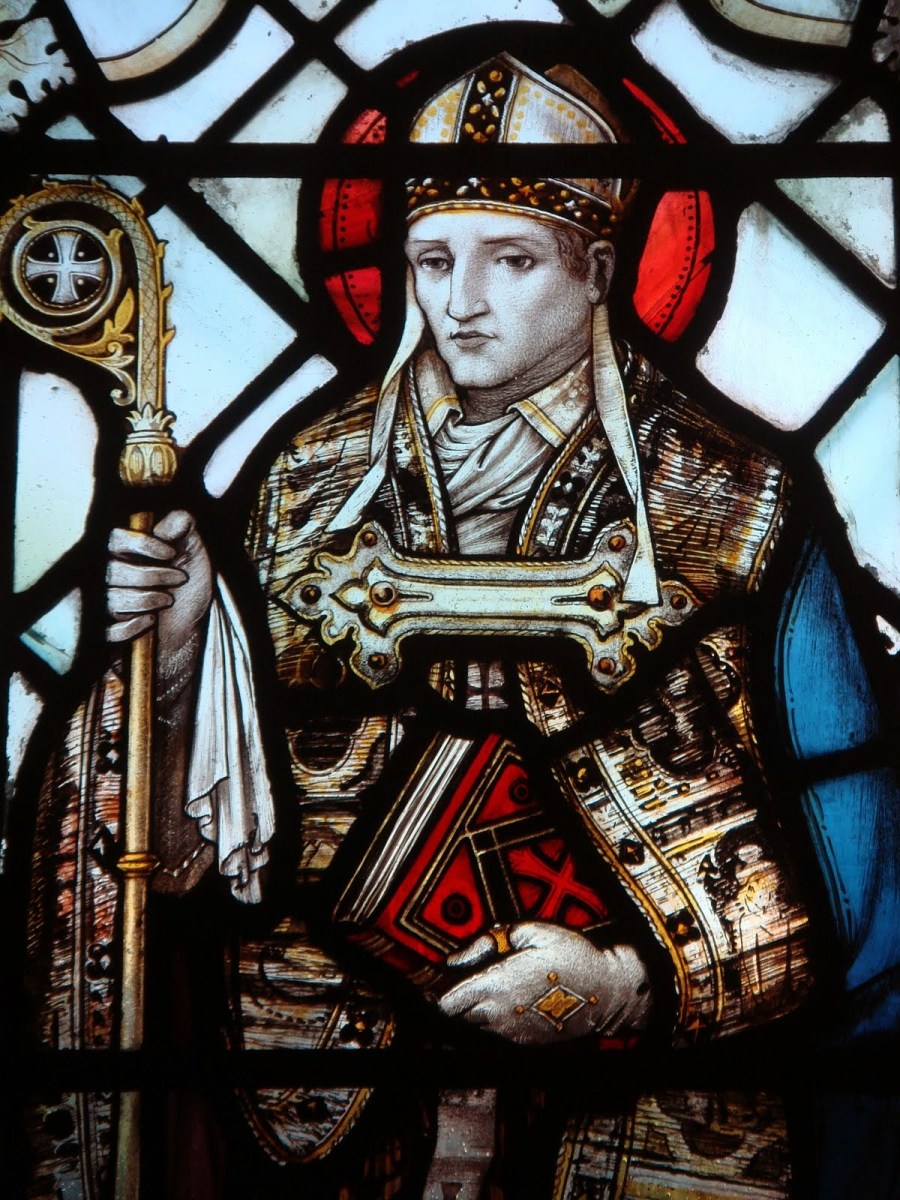
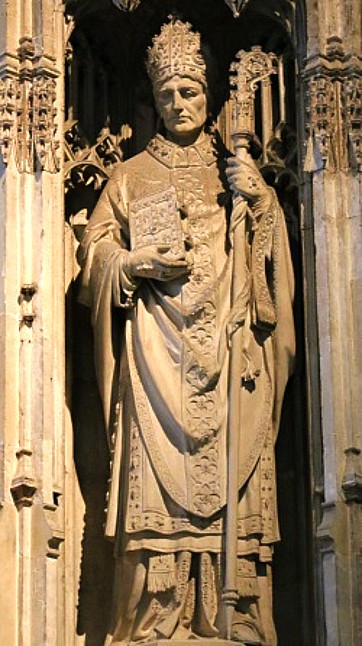
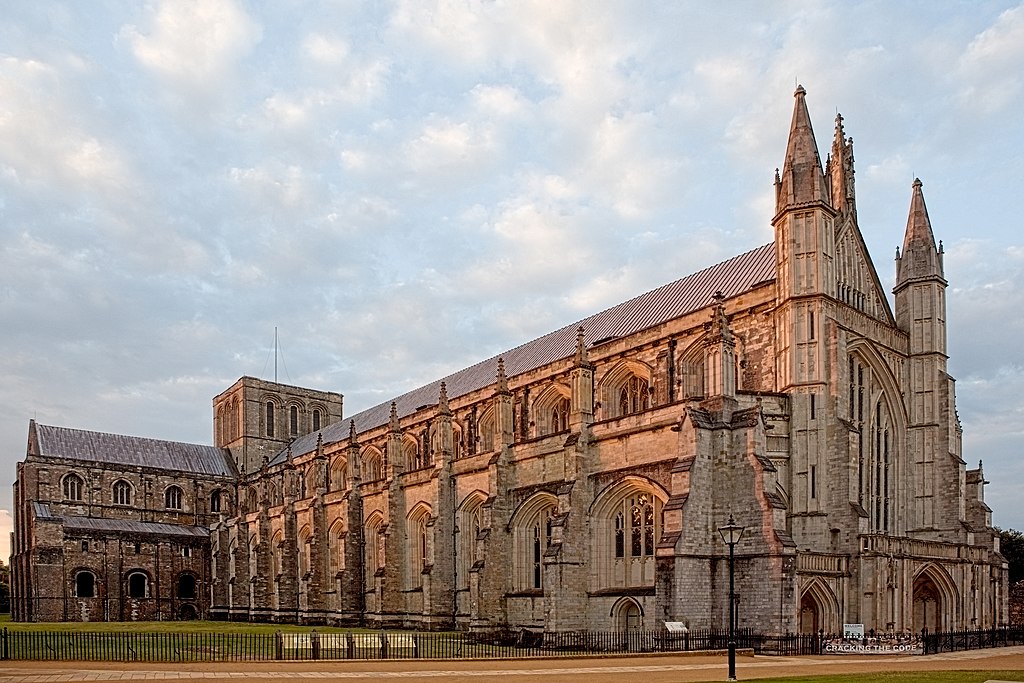
Saint of the Day – 1 August – Saint Ethelwold of Winchester (c 912-984) Bishop of Winchester, Monk, Abbot, Reformer, Founder and restorer of many Monasteries and Convents. Born in c 912 at Winchester, England and died on 1 August 984 of natural causes. Also known as – Adeluoldus, Aethelwald, Aethelwold, Etelvoldo, Etelwold, Ethelwald, “Father of Monks.”
Ethelwold was nobly born and a native of Winchester. Being moved in his youth with an ardent desire totally to devote himself to the divine service, he for some time made it his most earnest request to the Father of lights, that he might find an experienced guide in the paths of salvation. He met with this director in the great St Dunstan, then Abbot of Glastonbury, to whom he addressed himself and received, from his hands, the monastic habit. Knowing that heavenly wisdom is an inestimable treasure, to purchase which we must sell all things and exert our whole strength, he bid adieu to all other thoughts and pursuits and never ceased to sigh, to pray, to weep and to labour, with all the ardour of his soul. At the same time, his zeal for knowledge made him embrace every branch of the sacred sciences that these studies were to become his essential duty. St Dunstan, after some time, made him Dean of his Monks.
In 947, King Edred rebuilt and richly endowed the Abbey of Abingdon in Berkshire, which had been founded by King Cissa, in 675. Ethelwold was appointed Abbot of this great Monastery, where he rendered a perfect model of regular discipline and which became a nursery of other like establishments. He procured from Corbie, a master of church music and sent Osgar to Fleury, a Monastery which at that time, surpassed all others in the reputation of strict observance of the most perfect monastic discipline.
The fury of the Danes had made such havoc of religious houses, that no Monks were then left in all England except in the two Monasteries of Glastonbury and Abingdon, as the historian of this latter place testifies and the education of youth and every other support of learning and virtue, was almost banished by the ravages of those barbarians. These deplorable circumstances awaked the zeal of the virtuous, especially of St Dunstan, St Ethelwold and St. Oswald. These three also set themselves, with great industry, to restore learning.
Ethelwold was Consecrated Bishop of Winchester by St Dunstan. The disorders and ignorance which reigned among some of the clergy of England occasioned by the Danish devastations, produced a scandalous violation of some of the canons. Ethelwold found these evils obstinate and past recovery among the disorderly secular Canons of the Cathedral of Winchester. He expelled them, allotting to each of them a part of their prebends for their annual subsistence and placing Monks from Abingdon in their place with whom he kept choir as their Bishop and Abbot.† Three of the former Canons took the monastic habit, and continued to serve God in that Church. The year following, St Ethelwold expelled the seculars out of the new monastery of Winchester, and placed there Monks with an Abbot.
He repaired the nunnery dedicated to the Virgin Mary and bought of the King the lands and ruins of the great nunnery of St Audry in the isle of Ely, which had been burnt by the Danes a hundred years before and he erected, on the same spot, a sumptuous Abbey of Monks, which King Edgar exceedingly enriched, as is related by Thomas of Ely. He likewise purchased the ruins of Thorney in Cambridgeshire, which he restored in like manner about the year 970. He assisted and directed Adulph to buy the ruins of Peterborough Abbey and rebuilt the same in a most sumptuous manner.
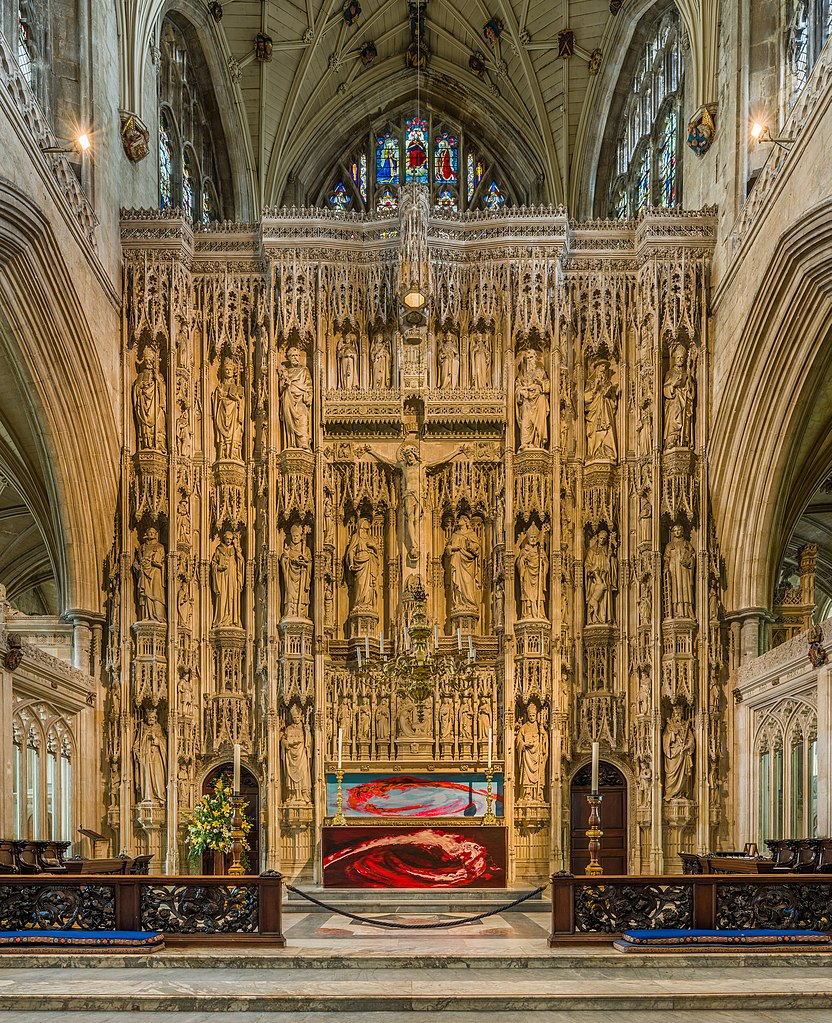
He rested from his labours on the 1st of August, 984 and was buried in the Cathedral of Winchester, on the south side of the High Altar. Authentic proofs of miracles wrought through his intercession having been made, his body was taken up and solemnly deposited under the Altar by St Elphege, his immediate successor, afterward Archbishop of Canterbury and Martyr.
Portiuncula Indulgence: An Indulgence which may be gained in any Church so designated by the Bishop, by all the faithful who, after Confession and Holy Communion, visit such Churches between noon of 1 August and midnight of 2 August, or on the Sunday following. The Indulgence is toties quoties and is applicable to the souls in Purgatory.
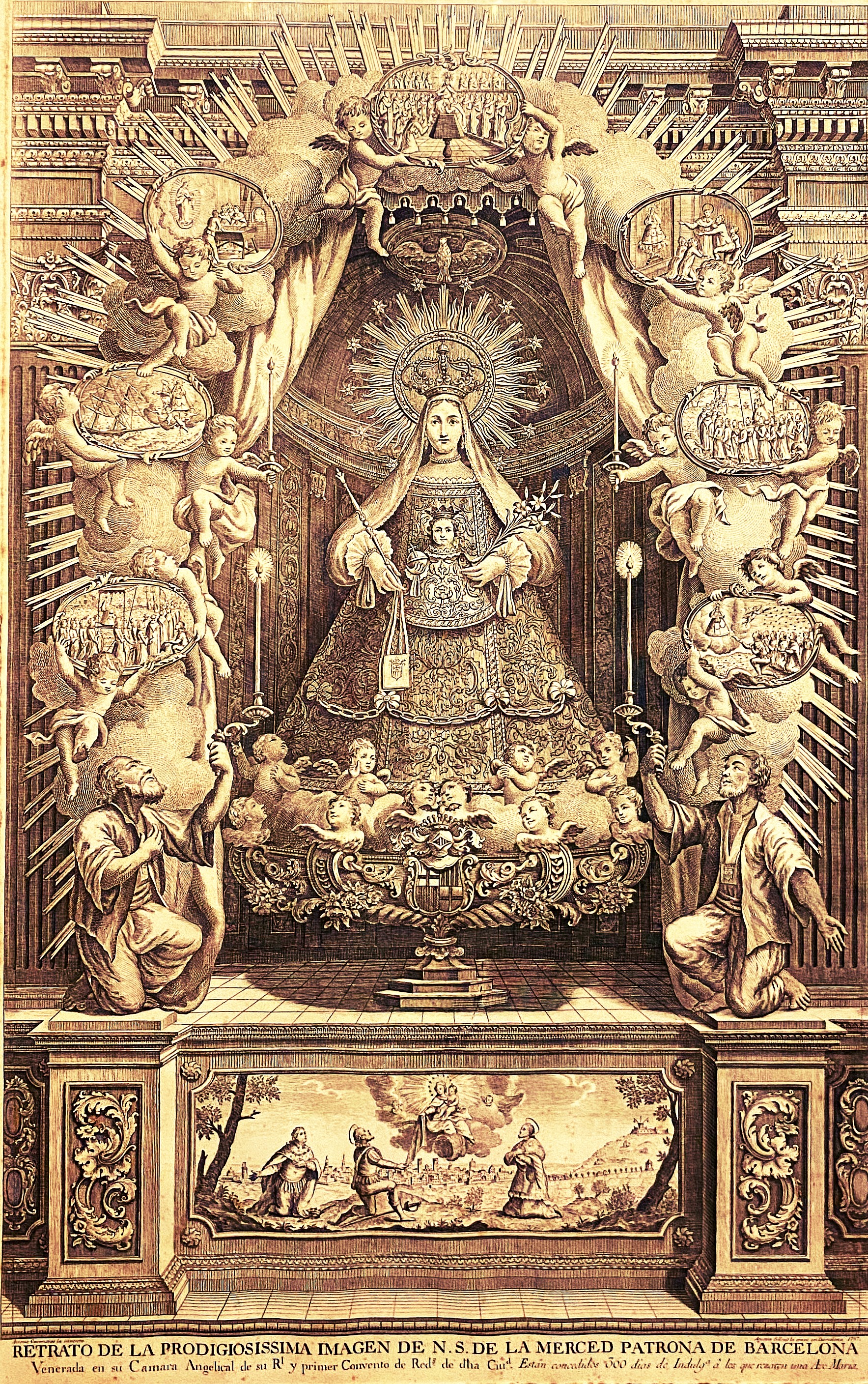
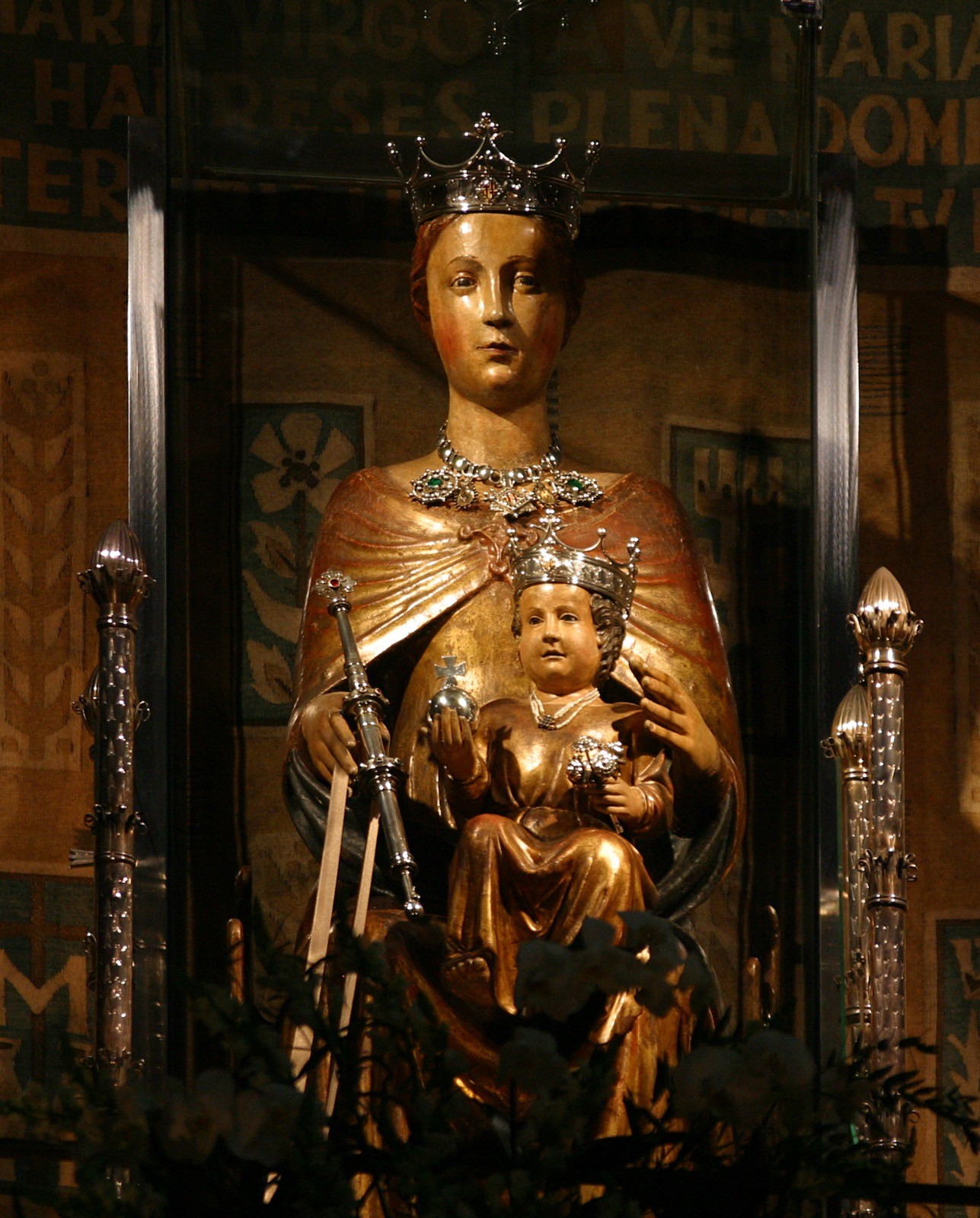
Nuestra Señora de las Mercedes / Our Lady of Mercy, Barcelona, Spain (1218,) Founding of the Mercedarian Order – 1 August, 24 September :
Original image from the Mercedarian website
On 1 August of 1218, St Peter Nolasco, St Raymund of Penafort and James, King of Aragon, each had a vision of the Virgin Mary asking them to found a religious Order devoted to freeing Christian captives from the Muslims, who still held much of Spain. The Order of the Blessed Virgin Mary of Mercy grew quickly, collecting alms for ransom and sometimes offering themselves in exchange for prisoners. The Statue of the Mother of God of Mercy in Barcelona (below) dates from the 1300s. She became the City’s Patron after saving it from a plague of locusts in 1687. Before the counter-reformation, the Mercedarian Order celebrated the Feast of Our Lady of Ransom on 1 August, the date when she showed St. Peter Nolasco their white habit. The Vatican changed the date to 24 September when it extended the feast to entire Church in 1696. Since Vatican II, Catholic observance of Our Lady of Mercy’s day is limited to places and organisations that claim her as Patron. Meanwhile, the Mercedarians have changed their mission to teaching and chaplaincy and the Barcelona soccer team visits the Basilica of La Mercè after victories in thanksgiving for her help. Her fiesta in Barcelona is a spectacular sequence of processions, dances, music, games and fireworks.
St Adela Mardosewicz Bl Aleksy Sobaszek St Alexander of Perga St Almedha St Arcadius St Attius of Perga St Buono St Brogan St Charity St Ethelwold of Winchester (c 912-984) Bishop St Exuperius of Bayeux St Faith St Faustus St Felix of Gerona St Friard Bl Giovanni Bufalari St Hope St Jadwiga Karolina Zak St Jonatus St Justin of Paris St Kenneth of Wales St Leontius of Perga St Maur St Nemesius of Lisieux Bl Orlando of Vallombrosa St Peregrinus of Modena St Rioch Bl Rudolph St Secundel St Secundus of Palestrina St Sophia St Verus of Vienne
Holy Maccabees: Jewish dynasty which began with the rebellion of Mathathias and his five sons against the Syrian king, Antiochus IV (168 BC) and ruled the fortunes of Israel until the advent of Herod the Great. Syrian attempts to force Greek paganism on the Jews, the profanation of the Temple at Jerusalem and the massacre which followed, brought the nation to arms under Mathathias, a priest of the sons of Joarib. At the death of Mathathias, Judas Machabeus, his third son, drove the Syrians and Hellenists out of Jerusalem, rededicated the Temple and began an offensive and defensive alliance with the Romans. Before the treaty was concluded, however, Judas, with 800 men, risked battle at Laisa with an overwhelming army of Syrians under Bacchides, and was slain. He was succeeded in command by his youngest brother, Jonathan (161 BC). Jonathan defeated Bacchides, revenged the death of his brother and made peace with Alexander who had usurped the throne of Demetrius, the successor to Antiochus. A period of peace followed in which Jonathan ruled as high priest in Jerusalem but Tryphon, who was plotting for the throne of Asia, treacherously captured him at ptolemais and later put him to death. The captaincy of the armies of Israel then fell to Simon, the second son of Mathathias. Under him the land of Juda flourished exceedingly. He obtained the complete independence of the country and a grateful people bestowed upon him the hereditary kingship of the nation. His rule marked five years of uninterrupted peace. He was treacherously slain by his son-in-law, Ptolemy, about the year 135 BC After Simon the race of the Machabees quickly degenerated. In 63 BC the Romans thought it necessary to interfere in the fratricidal war between Hyrcanus II and Aristobulus II. With this interference and the advent of Herod the Great the sceptre passed forever from the land of Juda. The story of the Machabees is written in the two books of the Old Testament which bear that name.
Saints Faith, Hope and Charity: The daughters of Saint Sophia. While still children, they were tortured and martyred for their faith in the persecutions of Hadrian. They were scourged, thrown into a fire, and then beheaded.
Martyrs of Nowogrodek – 11 beati: A group of eleven Holy Family of Nazareth nuns who were murdered by the Nazi Gestapo in exchange for 120 condemned citizens of Nowogrodek, Belarus who were scheduled for revenge killings. They are – • Adela Mardosewicz • Anna Kukolowicz • Eleonora Aniela Józwik • Eugenia Mackiewicz • Helena Cierpka • Jadwiga Karolina Zak • Józefa Chrobot • Julia Rapiej • Leokadia Matuszewska • Paulina Borowik • Weronika Narmontowicz They were machine-gunned by firing squad on 1 August 1943 by the Gestapo about three miles outside Novogrudok (Nowogródek), Hrodzyenskaya voblasts’, in Nazi occupied Belarus and buried on the site of the execution in a common grave. One of their surviving sisters, Maria Malgorzata Banas, located the grave on 19 March 1945 and tended to it until her death in 1966. Their relics have since been re-interred in a common sarcophagus in the chapel of the Novograd Farny Church (the Church of the Transfiguration, also known as Biala Fara or the White Church).





 AnaStpaul
You must be logged in to post a comment.