St Projectus St Sabinian of Troyes St Suranus of Sora St Thyrsus Bl essed William Ireland SJ (1636-1679) Priest Martyr
Martyrs of Asia Minor – 4 Saints: A group of ChristiansMmartyred together for their faith. The only details to survive are four of their names – Eugene, Mardonius, Metellus and Musonius. They were burned at the stake in Asia Minor.
Martyrs of Antioch: Babylas Epolonius Prilidian Urban
St Filip Geryluk St Guasacht St Ignacy Franczuk Bl John Grove St Julian Sabas the Elder St Macedonius Kritophagos Blessed Marcolino Amanni of Forli OP (1317-1397) Priest and Friar of the Order of Preachers, the Dominicans, Mystic.
St Projectus St Sabinian of Troyes St Suranus of Sora St Thyrsus Bl William Ireland
Martyrs of Asia Minor – 4 Saints: A group of ChristiansMmartyred together for their faith. The only details to survive are four of their names – Eugene, Mardonius, Metellus and Musonius. They were burned at the stake in Asia Minor.
Martyrs of Podlasie – 13 Beati: Podlasie is an area in modern eastern Poland that, in the 18th-century, was governed by the Russian Empire. Russian sovereigns sought to bring all Eastern-rite Catholics into the Orthodox Church. Catherine II suppressed the Greek Catholic Church in Ukraine in 1784. Nicholas I did the same in Belarus and Lithuania in 1839. Alexander II did the same in the Byzantine-rite Eparchy of Chelm in 1874 and officially suppressed the Eparchy in 1875. The Bishop and the Priests who refused to join the Orthodox Church were deported to Siberia or imprisoned. The laity, left on their own, had to defend their Church, their liturgy and their union with Rome. On 24 January 1874 soldiers entered the village of Pratulin to transfer the parish to Orthodox control. Many of the faithful gathered to defend their parish and Church. The soldiers tried to disperse the people but failed. Their commander tried to bribe the parishioners to abandon Rome but failed. He threatened them with assorted punishments but this failed to move them. Deciding that a show of force was needed, the commander ordered his troops to fire on the unarmed, hymn-singing laymen. Thirteen of the faithful died, most married men with families, ordinary men with great faith. We know almost nothing about their lives outside of this incident. Their families were not allowed to honour them or participate in the funerals and the authorities hoped they would be forgotten. Their names are:
Anicet Hryciuk
Bartlomiej Osypiuk
Daniel Karmasz
Filip Geryluk
Ignacy Franczuk
Jan Andrzejuk
Konstanty Bojko
Konstanty Lukaszuk
Lukasz Bojko
Maksym Hawryluk
Michal Wawryszuk
Onufry Wasyluk
Wincenty Lewoniuk Martyrdom:
shot on 14 January 1874 by Russian soldiers in Podlasie, Poland
buried nearby without rites by those soldiers.
Martyrs of Antioch: Babylas Epolonius Prilidian Urban
St Filip Geryluk Bl Francesc de Paula Colomer Prísas St Guasacht St Ignacy Franczuk Bl John Grove St Julian Sabas the Elder St Luigj Prendushi St Macedonius Kritophagos Blessed Marcolino Amanni of Forli OP (1317-1397) Bl Marie Poussepin
St Projectus St Sabinian of Troyes St Suranus of Sora St Thyrsus Bl William Ireland
Martyrs of Asia Minor – 4 Saints: A group of Christians martyred together for their faith. The only details to survive are four of their names – Eugene, Mardonius, Metellus and Musonius. They were burned at the stake in Asia Minor.
Martyrs of Podlasie – 13 Beati: Podlasie is an area in modern eastern Poland that, in the 18th-century, was governed by the Russian Empire. Russian sovereigns sought to bring all Eastern-rite Catholics into the Orthodox Church. Catherine II suppressed the Greek Catholic Church in Ukraine in 1784. Nicholas I did the same in Belarus and Lithuania in 1839. Alexander II did the same in the Byzantine-rite Eparchy of Chelm in 1874 and officially suppressed the Eparchy in 1875. The Bishop and the Priests who refused to join the Orthodox Church were deported to Siberia or imprisoned. The laity, left on their own, had to defend their Church, their liturgy and their union with Rome. On 24 January 1874 soldiers entered the village of Pratulin to transfer the parish to Orthodox control. Many of the faithful gathered to defend their parish and Church. The soldiers tried to disperse the people but failed. Their commander tried to bribe the parishioners to abandon Rome but failed. He threatened them with assorted punishments but this failed to move them. Deciding that a show of force was needed, the commander ordered his troops to fire on the unarmed, hymn-singing laymen. Thirteen of the faithful died, most married men with families, ordinary men with great faith. We know almost nothing about their lives outside of this incident. Their families were not allowed to honour them or participate in the funerals and the authorities hoped they would be forgotten. Their names are: • Anicet Hryciuk • Bartlomiej Osypiuk • Daniel Karmasz • Filip Geryluk • Ignacy Franczuk • Jan Andrzejuk • Konstanty Bojko • Konstanty Lukaszuk • Lukasz Bojko • Maksym Hawryluk • Michal Wawryszuk • Onufry Wasyluk • Wincenty Lewoniuk Martyrdom: • shot on 14 January 1874 by Russian soldiers in Podlasie, Poland • buried nearby without rites by those soldiers Beatified – 6 October 1996.
Martyrs of Antioch: Babylas Epolonius Prilidian Urban
Saint of the Day – 24 January – Saint Felician of Foligno (c 158-c 250) Bishop and Martyr, Confessor – born in c 158 in Foligno, Italy and died in c 250 just outside the City of Foligno as the result of his tortures and scourgings. Felician was one of the first Christian Bishops of northern Italy. Patronage – Foligno.
Felician was born in present-day Foligno, of a Christian family, around 158. He was the spiritual student of Pope Eleuterus and evangelised in Foligno, Spello, Bevagna, Assisi, Perugia, Norcia, Plestia, Trevi and Spoleto.
In c 204 he was Consecrated as the Bishop of Foligno by Pope Victor I. St Felician was the first Bishop to receive the Pallium as a symbol of his office.
He ordained St Valentine of Rome as a Priest. His Episcopate lasted for more than 50 years. he was one of the first Christian Bishops of northern Italy.
He was arrested at an advanced age (he was in his nineties) for refusing to sacrifice to the Roman gods during the persecutions of Decius.
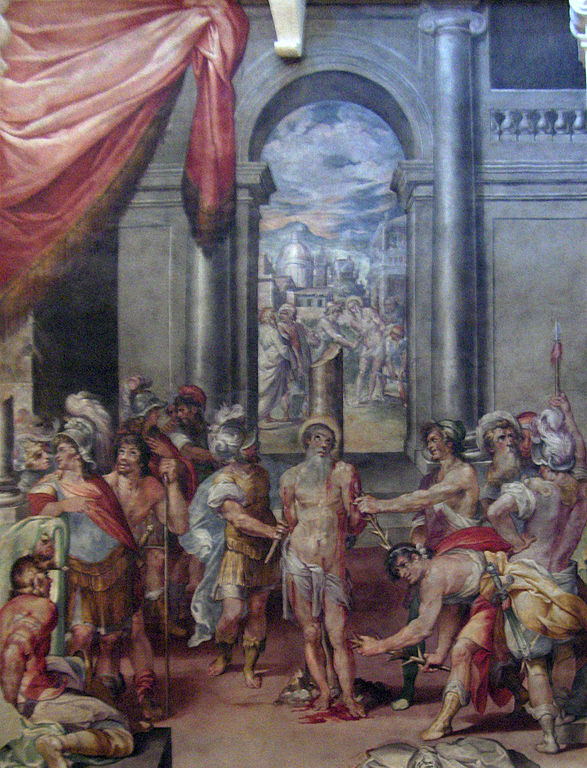
Martyrdom of St Felician
He was tortured and scourged and died outside Foligno while being conveyed to Rome for his execution.
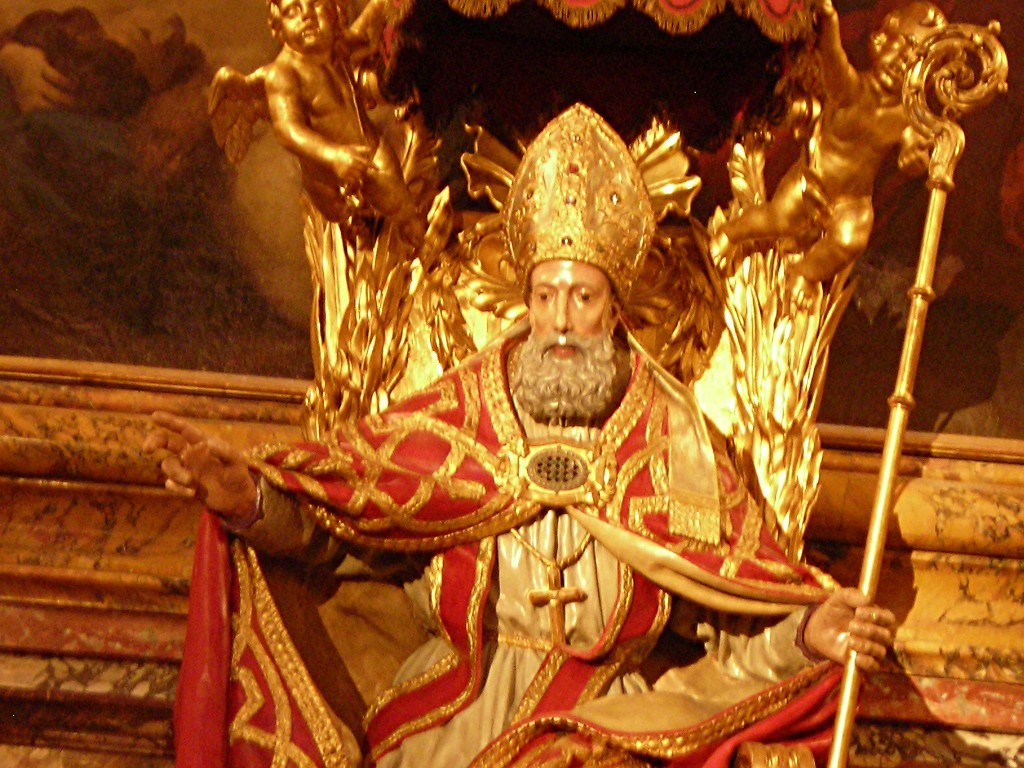
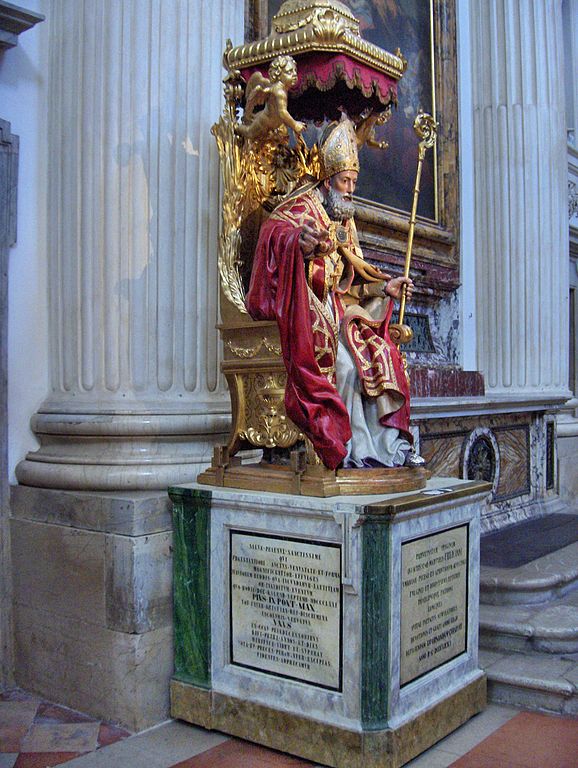
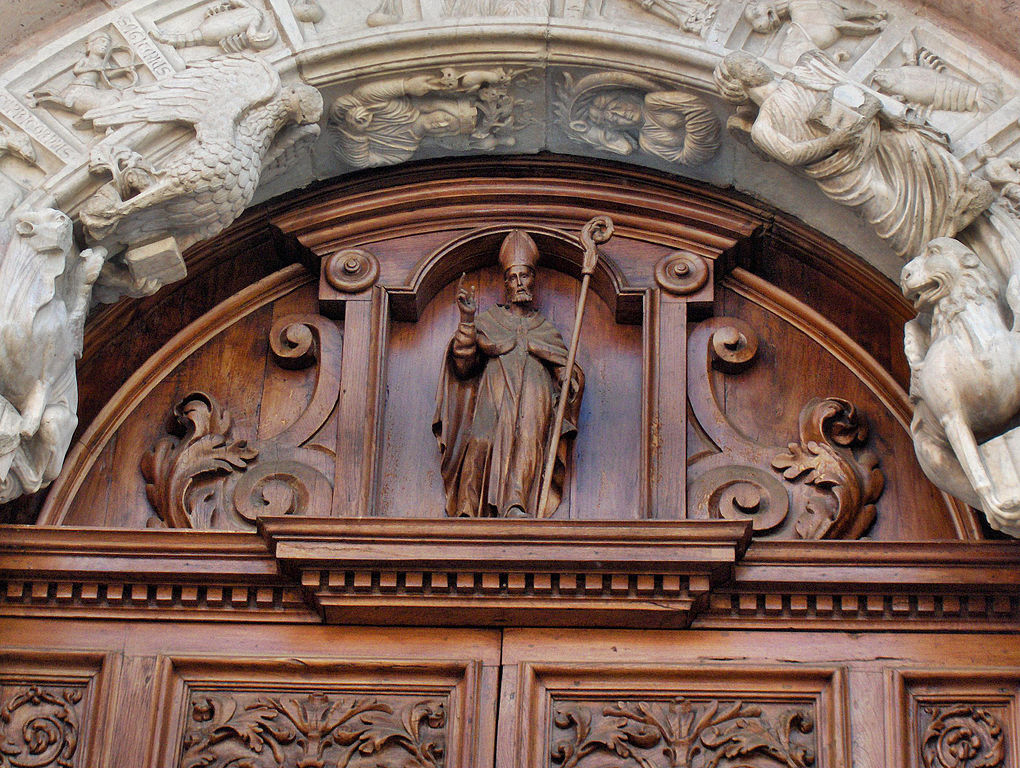
Sculpture of St Felician in Foligno Cathedral
A Church (now a Cathedral) was built over his grave at Foligno. His relics were transferred to Metz on 4 October 970. In 965 some relics were translated to Minden in Germany; Felician was thus erroneously considered a bishop of that German city (and he had a separate feast day of 20 October), an error that entered the Roman Martyrology. Some of his relics were later returned to Foligno in 1673-4.
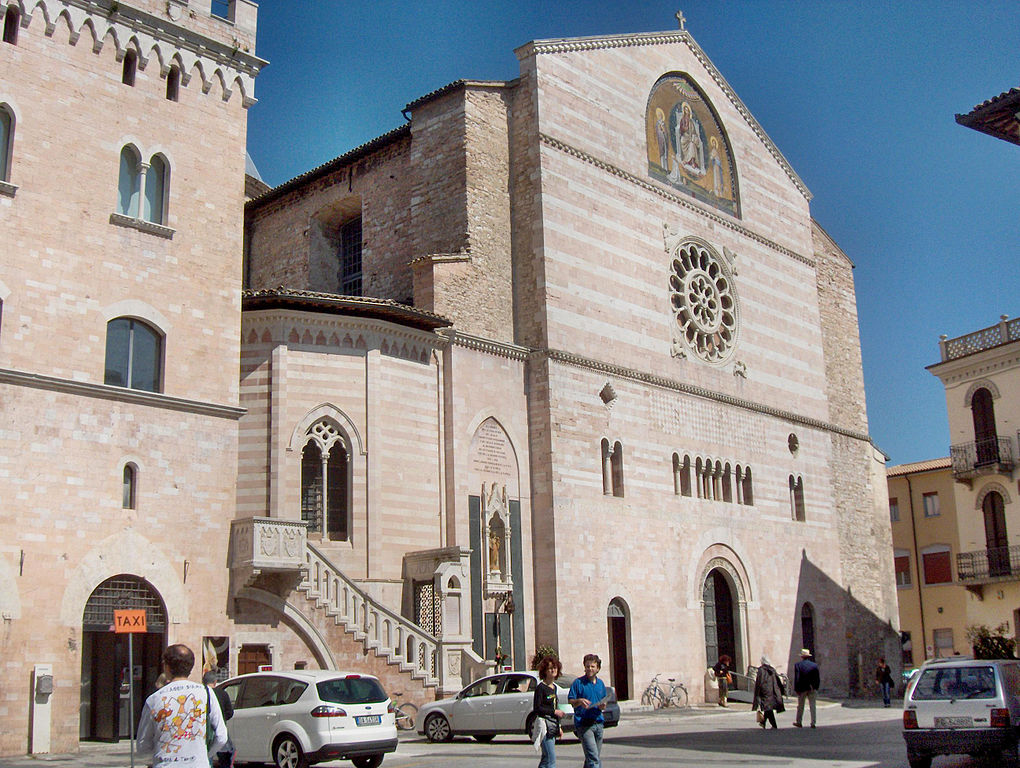
Foligno Cathedral
Foligno Cathedral preserves a statue of the saint, of silver and bronze.
Third Sunday in Ordinary Time +2021 Third Sunday after Epiphany (Traditional Calendar) +2021
St Francis de Sales (1567-1622)– Doctor of the Church: Doctor caritatis (Doctor of Charity) “The Gentle Christ of Geneva” and the “Gentleman Saint” – (Memorial)
St Anicet Hryciuk St Artemius of Clermont St Bartlomiej Osypiuk Bertrand of Saint Quentin St Daniel Karmasz St Exuperantius of Cingoli St Felician of Foligno (c 158-c 250) Bishop and Martyr St Filip Geryluk Bl Francesc de Paula Colomer Prísas St Guasacht St Ignacy Franczuk Bl John Grove St Julian Sabas the Elder St Luigj Prendushi St Macedonius Kritophagos Bl Marcolino of Forli Bl Marie Poussepin Blessed Paola Gambara Costa TOSF (1463-1515) His Life: https://anastpaul.com/2020/01/24/saint-of-the-day-24-january-blessed-paola-gambara-costa-tosf-1463-1515/ St Projectus St Sabinian of Troyes St Suranus of Sora St Thyrsus Bl William Ireland — Martyrs of Asia Minor – 4 saints: A group of Christians martyred together for their faith. The only details to survive are four of their names – Eugene, Mardonius, Metellus and Musonius. They were burned at the stake in Asia Minor.
Martyrs of Podlasie – 13 beati: Podlasie is an area in modern eastern Poland that, in the 18th-century, was governed by the Russian Empire. Russian sovereigns sought to bring all Eastern-rite Catholics into the Orthodox Church. Catherine II suppressed the Greek Catholic church in Ukraine in 1784. Nicholas I did the same in Belarus and Lithuania in 1839. Alexander II did the same in the Byzantine-rite Eparchy of Chelm in 1874 and officially suppressed the Eparchy in 1875. The bishop and the priests who refused to join the Orthodox Church were deported to Siberia or imprisoned. The laity, left on their own, had to defend their Church, their liturgy, and their union with Rome. On 24 January 1874 soldiers entered the village of Pratulin to transfer the parish to Orthodox control. Many of the faithful gathered to defend their parish and church. The soldiers tried to disperse the people, but failed. Their commander tried to bribe the parishioners to abandon Rome but failed. He threatened them with assorted punishments but this failed to move them. Deciding that a show of force was needed, the commander ordered his troops to fire on the unarmed, hymn-singing laymen. Thirteen of the faithful died, most married men with families, ordinary men with great faith. We know almost nothing about their lives outside of this incident. Their families were not allowed to honour them or participate in the funerals and the authorities hoped they would be forgotten. Their names are: • Anicet Hryciuk • Bartlomiej Osypiuk • Daniel Karmasz • Filip Geryluk • Ignacy Franczuk • Jan Andrzejuk • Konstanty Bojko • Konstanty Lukaszuk • Lukasz Bojko • Maksym Hawryluk • Michal Wawryszuk • Onufry Wasyluk • Wincenty Lewoniuk Martyrdom: • shot on 14 January 1874 by Russian soldiers in Podlasie, Poland • buried nearby without rites by those soldiers Beatified 6 October 1996 by Pope John Paul II
Martyrs of Antioch: Babylas Epolonius Prilidian Urban




 AnaStpaul
You must be logged in to post a comment.