Posted in DOMINICAN OP, MARIAN TITLES, SAINT of the DAY

Within the All Saints Octave, Onze Liewe Vrou van Scherpenheuvel / Our Lady of Scherpenheuvel Belgium (17th Century) and Memorials of the Saints – 7 November

Within the All Saints Octave

The Feast of All Saints of the Order of Preachers:
Fountain of all holiness, You stirred up in our holy brothers and sisters an extraordinary love of truth, conformity to Christ Crucified and a thirst for the salvation of souls: may we imitate them in offering You thanksgiving on account of the way of life they gave us.” — From the Intercessions at Lauds for the Feast of All Saints of the Order of Preachers.
HERE:
https://anastpaul.com/2019/11/07/thought-for-the-day-7-november-feast-of-all-dominican-saints/

St Achillas (Died 313) Bishop of Alexandria, Egypt.
St Amarand
St Amaranthus

St Athenodorus of Neo-Caesarea
St Auctus of Amphipolis
St Baud of Tours
St Blinlivet
St Congar

St Ernest of Mecca

St Gebetrude of Remiremont
St Herculanus of Perugia
St Hesychius of Mytilene
St Hieron of Mytilene
Bl Hyacinth Castañeda Puchasons
St Lazarus the Stylite
Bl Lucia of Settefonti
St Nicander of Mytilene
Bl Peter Ou
St Prosdocimus of Padua
St Prosdocimus of Rieti
St Raverranus of Séez
St Rufus of Metz
St Taurion of Amphipolis
St Thessalonica of Amphipolis
St Tremorus of Brittany

Posted in Against HERNIA/Rupture, SAINT of the DAY

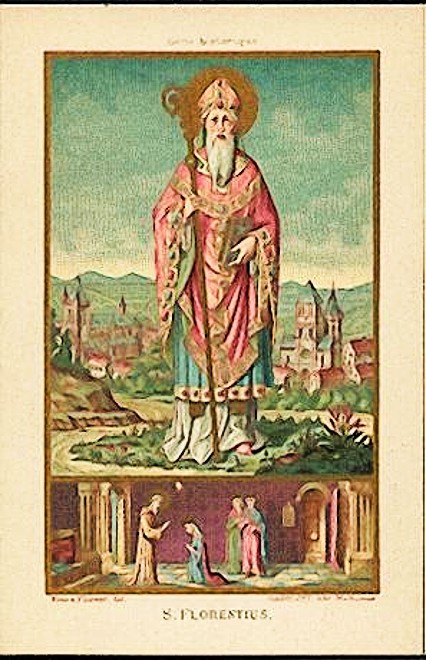
Saint of the Day – 7 November – St Florentius of Strasburg (Died 693) t

Saint of the Day – 7 November – St Florentius of Strasburg (Died 693) the 13th Bishop of Strasburg in Germany from 618–624, Missionary, Miracle-worker, founder of Monasteries and Churches, Hermit. Born in Ireland and died in 693 in Strasburg. Patronages – against rupture (hernia), Haslach, Germany. Also known as – Florent.

Florentius was an Irishman who laboured in Strasburg, in the seventh Century. Below is an account of his life from a study of early Irish Saints in Europe. Among the many points of interest, is that his Church had an Altar dedicated to Saint Brigid and like Saint Brigid, Florentius is also said to have hung his cloak on a sunbeam!

The fame of Florentius, whose Bishopric is not clearly dated but succeeded that of Arbogast, is due to his two important monastic foundations – St Thomas in the periphery of Strasburg,and that of Niederhaslach, in a valley to the west of the City. There, Florentius erected his first Monastery with the help of his Irish companions. Excavations have revealed that his Church, built on a Roman site, was no mean wooden structure but a stone edifice with three naves in the Byzantine style. Here his followers, it is explicitly stated, obeyed the Rule he laid down for them, adhering later to that of St Columban before adopting that of St Benedict.

Louis the Pious, son of Charlemagne, caused a new Church to be built over the Haslach foundation to receive the remains of the holy Bishop Florentius who was first buried in St Thomas in Strasbourg where he died. The translatio took place on 7 November 810 and was pronounced a Feast day to be celebrated by the entire Diocese and so it has remained.

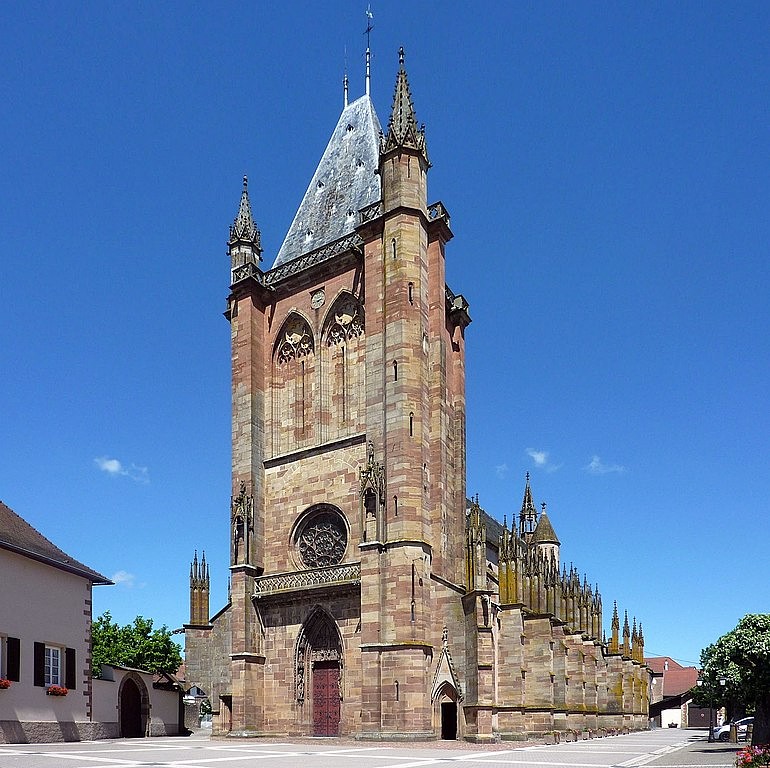
Collegiate church Saint Florentius

This is the Florentiusfest, held yearly on the Sunday following 7 November when the Shrine and a life-size wooden Statue of the Patron Saint are borne in procession around the village of Niederhaslach. Later in the day, pilgrims visit Oberhaslach where they pray in the Chapelle Saint-Florent.

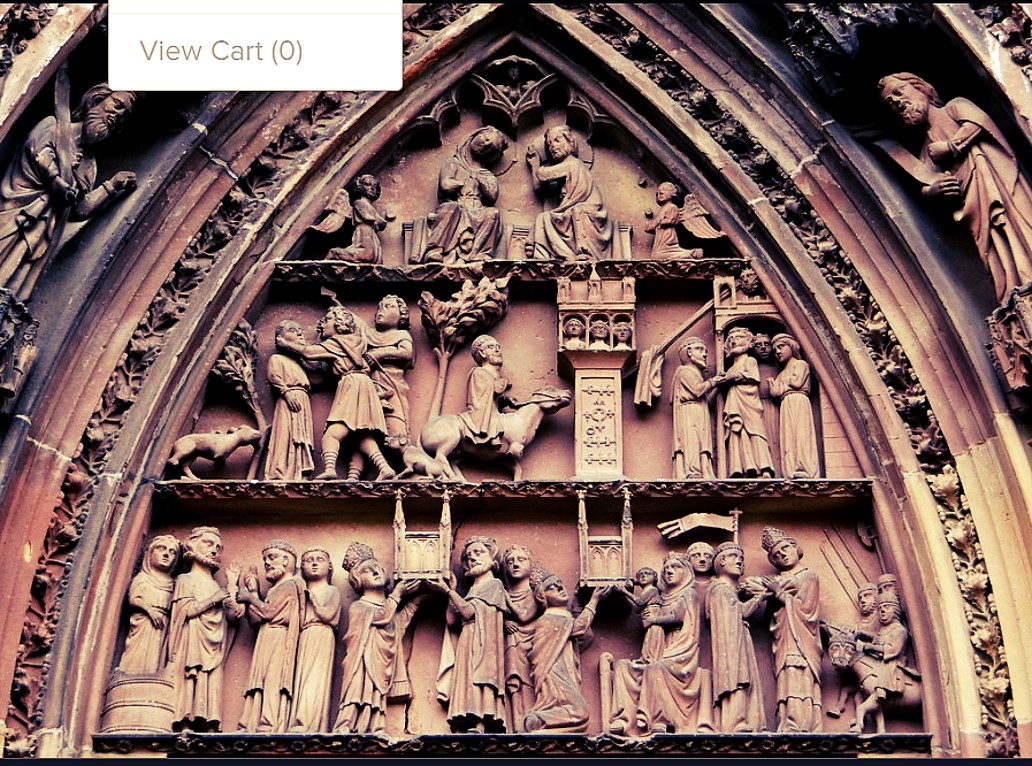
Halsach, whether Ober (Upper)or Nieder (lower), are modest enough villages to harbour so majestic a Church, but the Bishops of Strasburg had once their summer residence here and the place was not divided… The west facade with its slender Gothic portal bears the legend of St Florentius. Inside, we encounter again, the story of Florentius, as a worker of miracles, in one of the stained glass windows… The Altar of St Brigid is gone but Florentius’ relics are in a niche in the choir, his gilded Shrine of 1716 replacing a priceless relic that was robbed in 1525, when the Saint’s remains were thrown on the Church floor. Taken to safety, restored to the Church, then hidden again in various private houses, they were eventually brought back to rest after the French Revolution subsided.

The Life and Miracles of St Florentius

Beside these depredations, the worldy remains of Florentius had other ordeals to overcome, being for centuries the object of fierce controversy between Strasburg and Haslach, both proclaiming to be in possession of them. This endless ‘War of the Relics’ obliged the German Emperor, Karl IV to intervene in the year 1353 in person. He caused the contents of both reliquaries to be examined, after which,, to the joy of Haslach’s Augustinians, the affair was settled in their favour. Gratified, they presented the monarch wih an arm of the holy Patron, which he took with him to his residence in Prague. A special Altar was provided for the Florentius relic in the Cathedral and there it has, hopefully, remained.

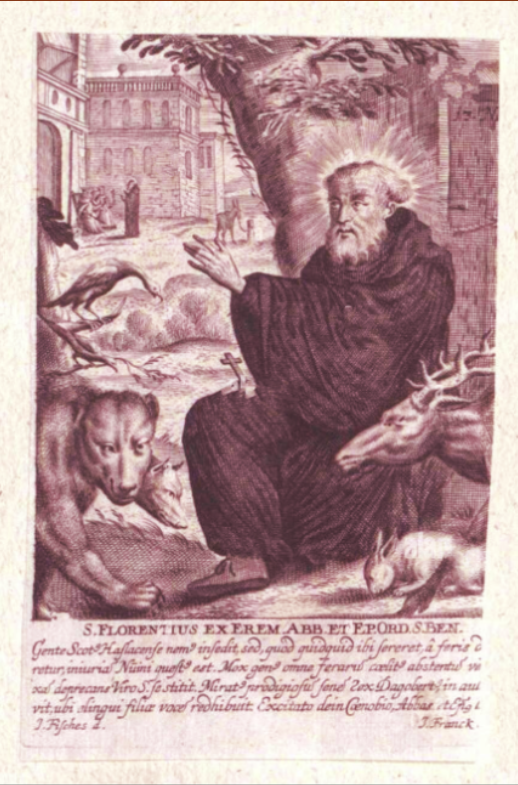
Florentius had started off with a hermitage in the wooded Haslach valley, near the present village of Oberhaslach. Several place-names in the vicinity bear out the tradition of this eremitic community, a site to the northeast of the village. References are given in Strasburg’s early Diocesan files to ‘Priests’ quarters, described as ‘of the Irish’. Considering that these sites were wiped out in the wars, the reference is most welcome and revealing. The pilgrims’ Church of Oberhaslach, does its part in keeping alive the Florentius tradition. The vintage image below shows St Florentius with wild animals on the edge of a ‘cityscape’ – it seems to indicate the many wondrous talents and achievements of this ancient Saint – what a pity we have such a sparcity of information on his holy life.

There an old Roman road leading off in a north-easterly direction to Marlenheim is also indicative. Marlenheim was once the seat of Merovingian Royalty, who donated land to Florentius for a missionary station. The proximity of the Palace brings to mind the miraculous cure of King Dagobert’s daughter, a miracle performed by Florentius, portrayed both in stone and in painted glass, in Niederhaslach’s noble Church. The legend records how the Saint, on arrival, hung up his cloak on a sunbeam – how lovely a thought!

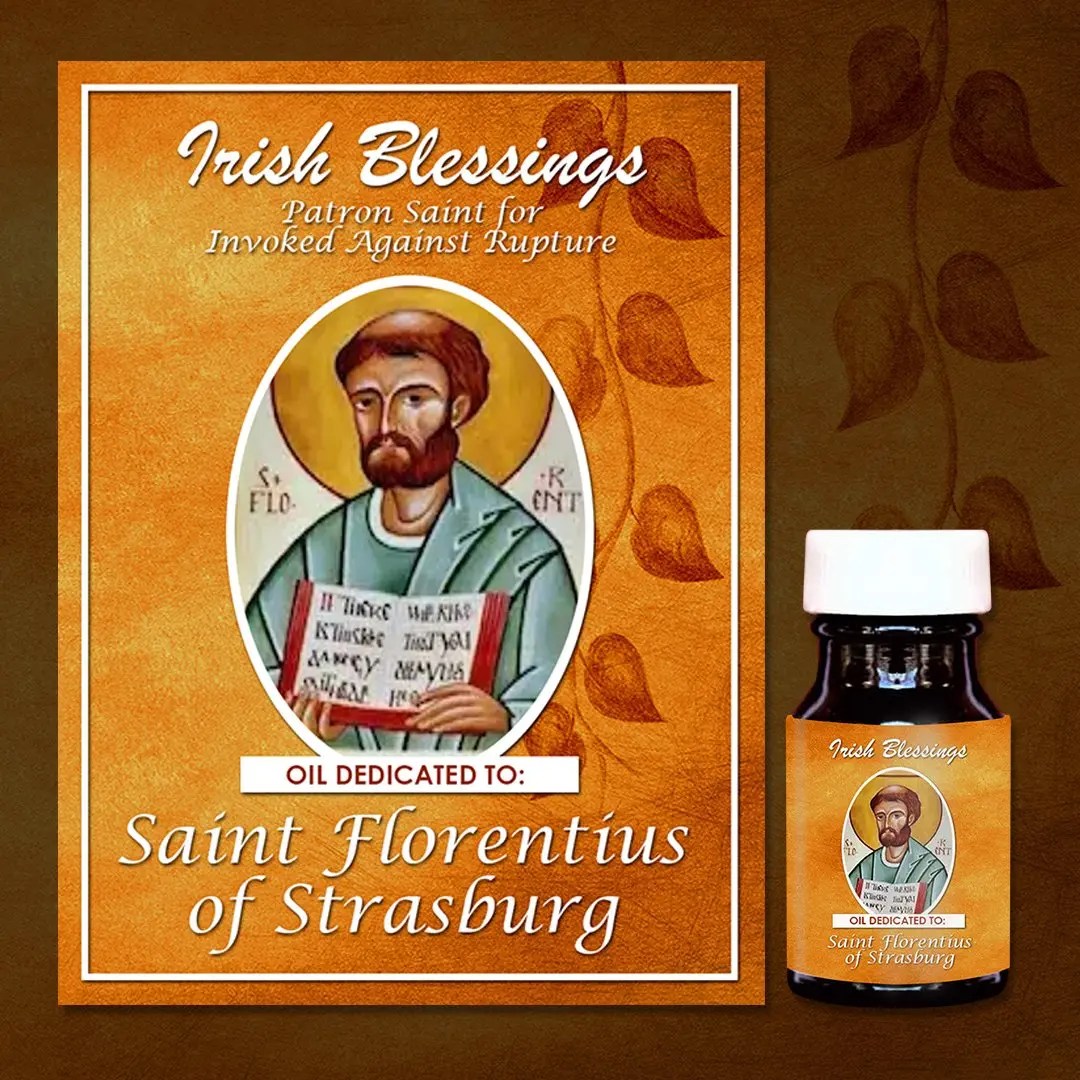
I cannot find exactly why St Florentius is the Patron against Hernia/rupture but this Healing Oil is available to purchase for these and other ailments. https://ablessedcalltolove.com/products/sacred-healing-oils/st-florentius-of-strasburg-healing-oil-patron-for-invoked-against-rupture/

Posted in DOMINICAN OP, MARIAN TITLES, SAINT of the DAY

Within the All Saints Octave, Onze Liewe Vrou van Scherpenheuvel / Our Lady of Scherpenheuvel, Belgium (17th Century) and Memorials of the Saints – 7 November

Within the All Saints Octave

The Feast of All Saints of the Order of Preachers:
Fountain of all holiness, You stirred up in our holy brothers and sisters an extraordinary love of truth, conformity to Christ Crucified and a thirst for the salvation of souls: may we imitate them in offering You thanksgiving on account of the way of life they gave us.” — From the Intercessions at Lauds for the Feast of All Saints of the Order of Preachers.
HERE:

https://anastpaul.com/2019/11/07/thought-for-the-day-7-november-feast-of-all-dominican-saints/

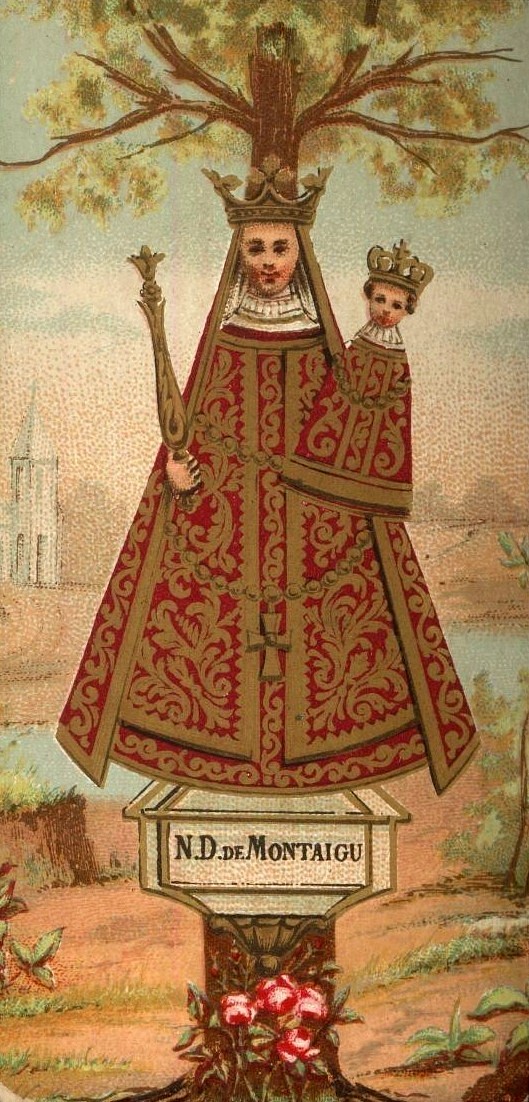
Onze Liewe Vrou van Scherpenheuvel / Our Lady of Scherpenheuvel
Scherpenheuvel-Zichem, Belgium (17th Century) – Commemorated on the First Sunday after the Feast of All Saints
HERE:

https://anastpaul.com/2021/11/07/twenty-fourth-sunday-after-pentecost-the-feast-of-all-saints-of-the-order-of-preachers-onze-liewe-vrou-van-scherpenheuvel-our-lady-of-scherpenheuvel-scherpenheuvel-zichem-belgium-17th-century/
St Achillas
St Amarand
St Amaranthus

Blessed Anthony Baldinucci SJ (1665-1717) Priest of the Society of Jesus, Preacher, Writer and Missionary. Fr Baldinucci was Beatified by Pope Leo XIII on 25 March 1893.
Biography here:

tps://anastpaul.wordpress.com/2017/11/07/saint-of-the-day-blessed-anthony-baldinucci-s-j-1665-1717/

St Athenodorus of Neo-Caesarea
St Auctus of Amphipolis
St Baud of Tours
St Blinlivet
St Congar

St Engelbert of Cologne (c 1185-1225) Archbishop Martyr, Count, Guardian and Chancellor of the Empire on behalf of the young King, protector of the Monasteries and religious Orders, Apostle of the poor.
His Life and Death:

https://anastpaul.com/2021/11/07/saint-of-the-day-7-november-saint-engelbert-of-cologne-c-1185-1225/

St Ernest of Mecca
St Florentius of Strasburg (Died 693) Bishop
St Gebetrude of Remiremont
St Herculanus of Perugia
St Hesychius of Mytilene
St Hieron of Mytilene
St Hyacinth Castañeda Puchasons
St Lazarus the Stylite
Bl Lucia of Settefonti
St Nicander of Mytilene
Bl Peter Ou
St Prosdocimus of Padua
St Prosdocimus of Rieti
St Raverranus of Séez
St Rufus of Metz
St Taurion of Amphipolis
St Thessalonica of Amphipolis
St Tremorus of Brittany

St Willibrord (c 658 – 739) “Apostle to the Frisians,” Bishop, Missionary.
Biography:

https://anastpaul.com/2018/11/07/saint-of-the-day-7-november-st-willibrord-c-658-739-apostle-to-the-frisians/