
Saint of the Day – 9 October – Saint Gislenus (Died c680) Priest, Basilian Monk, Abbot of the Monastery of Hainault, which he founded, Hermit, Missionary and friend of bears! Born either in Germany or in Greece (records differ but the name Gislenus is of Germanic origin) in the early 600s and died in c680, of natural causes, in the Town named after him, Saint-Ghislain, in modern day Belgium. Also known as – The Apostle of Hainault, Ghislain, Gislain, Gisleno, Gisileno, Guislain. Patronages – Saint-Ghislain, against epilepsy, also known as “St Gislenus’ disease” children’s illnesses and during difficult births.
The Roman Martyrology states: “In the Hainault region of Austrasia, in today’s Belgium, Saint Gislenus, who led a monastic life in a cell he built himself [and later extended into a Monastery of which he was the first Abbot.]”
Gislenus completed his studies and then abandoned the world to follow the Rule of St Basil. He was later Ordained a Priest. He travelled to Rome, where the Pope sent him, together with his disciples, Lambert and Berler (both of these too are Saints), to Belgium. as Missionaries.
He made a clearing in the vicinity of Mons, in Hainault, later moving his abode at a place called Ursidongus,- meaning “Bear’s den” and named for our Saint and his friend, the Bear, who had chosen the site – where he built a Chapel and Monastery dedicated to the Princes of the Apostles, Saints Peter and Paul.
Many Bishops had deep esteem and veneration for him – StAubert, the Bishop of Cambrai (Died c720) protected him in a particular way. St Waltrude (c612-686) Widow, gave him a gift of lands and Gislenus influenced her to supply the funds to build a Monastery.
Gislenus exerted a strong influence on the women of the nobility and stimulated them to enter monastic life. These included StAldegonda, St Aldetrude, St Madelberta and of course, the most renowned, St Waltrude.
He died at an advanced age on 9 October between 680 and 685 at his Monastery which later took his name. The cult was already witnessed in the 9th Century. The Saint is particularly invoked against epilepsy, also known as “St Gislenus’ disease” children’s illnesses and during difficult births. The two disciples of the Saint, Lambert and Berler are generally commemorated with him.
The Relics of the Saint were first disinterred in c929. They were translated to Grandlieu, near Quaregnon, about the end of the tenth century or the beginning of the eleventh and, in 1025, Gerard of Florennes, Bishop of Cambrai, removed them to Le Cateau-Cambrésis. They were visited several times in the course of the Middle Ages by the Bishops of Cambrai.
In 1647 they were removed to St-Ghislain, of which place he is Patron.
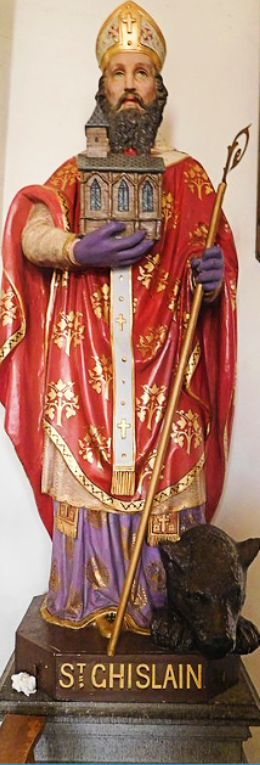
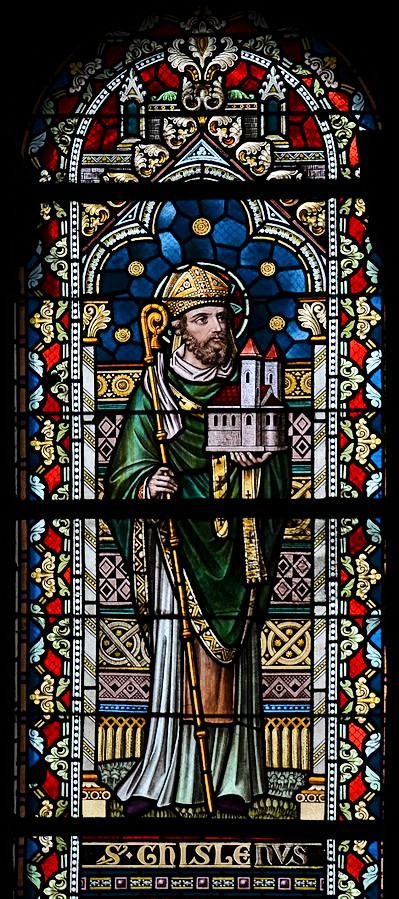
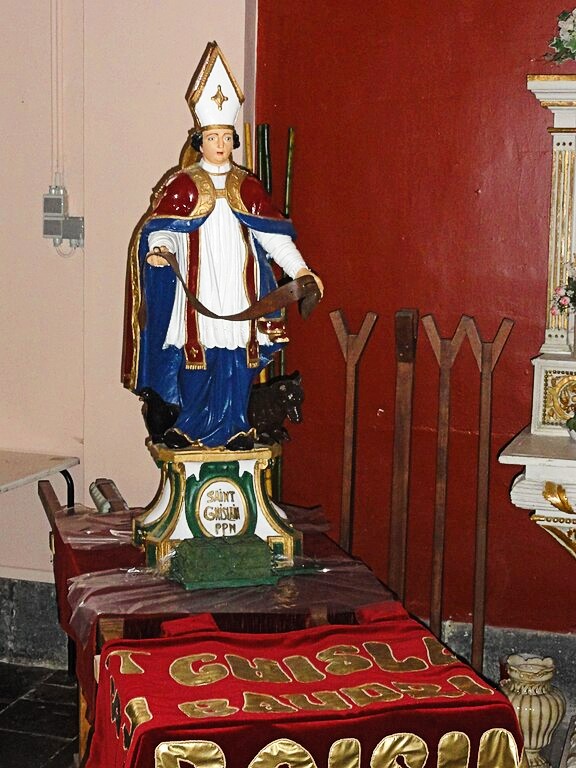
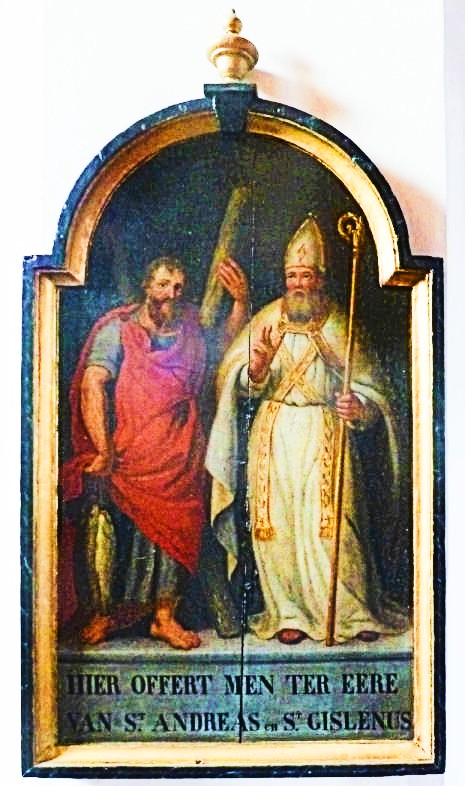
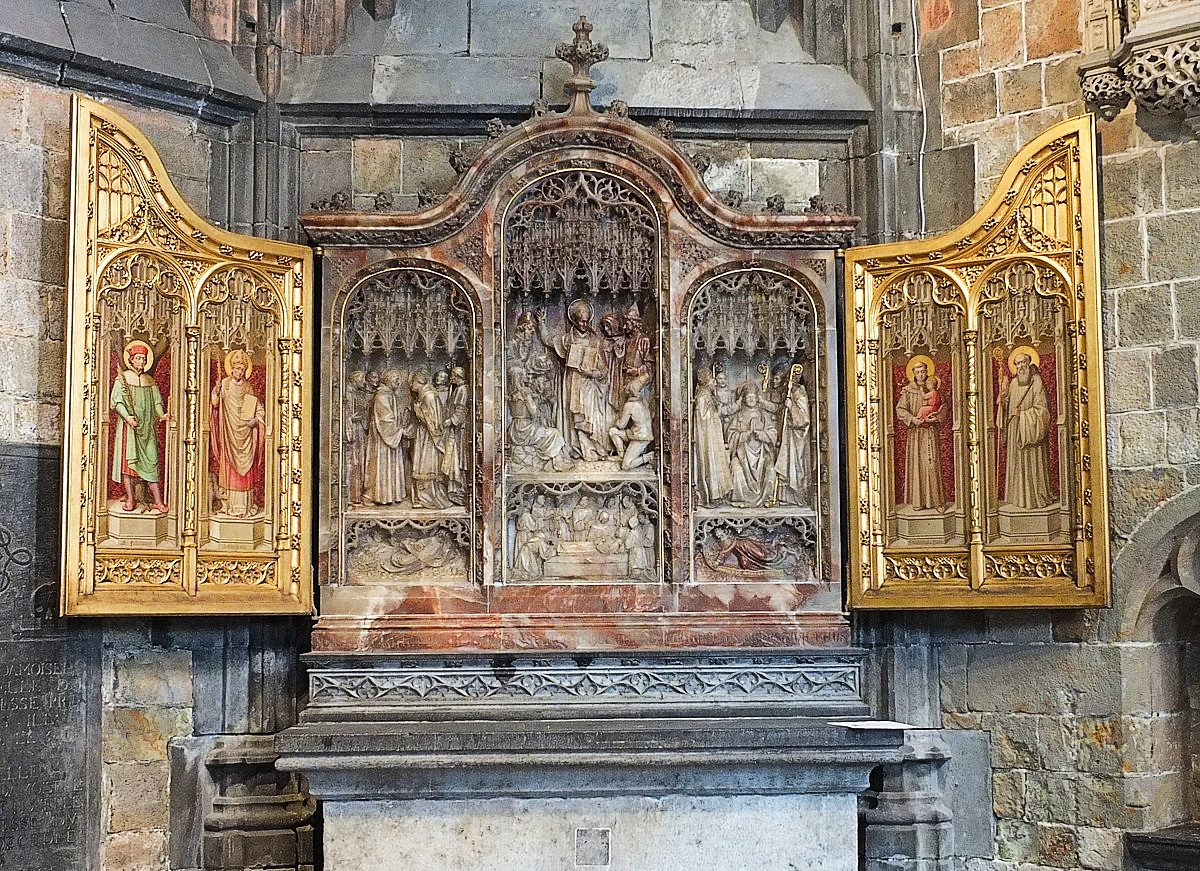
In iconography he is frequently represented with a bear or bear’s cub beside him. This relates to the wonderful prodigy of the a bear, who being pursued in the chase by King Dagobert I, sought refuge with Gislenus and later showed him the place where he should establish a Monastery. Moreover, the site of the Saint’s cell was called Ursidongus, “Bear’s den,” He is also frequently represented holding a Church.
There is a Rue Saint-Ghislain/Sint-Gissleinsstraat in Brussels.



 AnaStpaul
You must be logged in to post a comment.