Posted in MARIAN TITLES, SAINT of the DAY

St Jerome, Nostra Signora di Loreto di Forno / Our Lady of Loreto of Forno, Italy (1629) and the Saints for 30 September

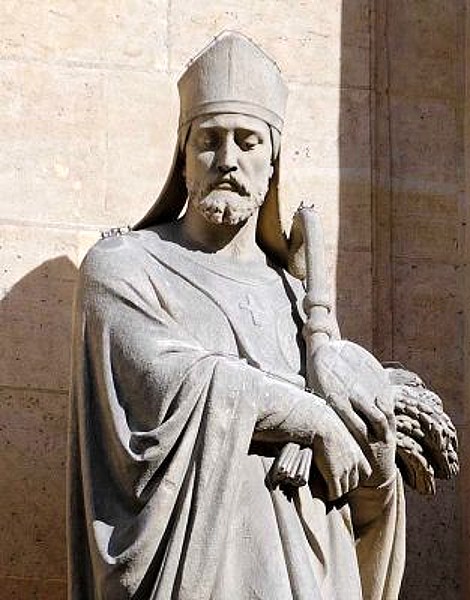
St Antoninus of Piacenza (Died c303) Soldier of the Theban Legion, Martyr
St Castus of Piacenza
St Colman of Clontibret

St Desiderius of Piacenza
St Enghenedl of Anglesey
St Eusebia of Marseilles
Bl Frederick Albert

St Ismidone of Die
Bl Jean-Nicolas Cordier
Blessed Conrad of Urach
St Laurus
St Leopardus the Slave
St Midan of Anglesey
St Simon of Crépy
St Ursus the Theban
St Victor the Theban

Posted in MARIAN TITLES, SAINT of the DAY

Nostra Signora di Loreto di Forno / Our Lady of Loreto of Forno, Alpi Graie, Italy (1629) and Memorials of the Saints – 30 September

St Jerome (347-419) Confessor, Father and Doctor, Priest, Monk, Translator of the Scriptures into Latin (the Vulgate), Theologian, Historian, Hermit, Mystic.
St Jerome, here:

https://anastpaul.com/2018/09/30/saint-of-the-day-30-september-st-jerome-347-419-father-and-doctor-of-the-church-2/
AND:
https://anastpaul.wordpress.com/2017/09/30/saint-of-the-day-30-september-st-jerome-347-419-father-and-doctor-of-the-church/

Nostra Signora di Loreto di Forno / Our Lady of Loreto of Forno, Alpi Graie, Italy (1629) – 30 September:
HERE:

https://anastpaul.com/2021/09/30/nostra-signora-di-loreto-di-forno-our-lady-of-loreto-of-forno-alpi-graie-italy-1629-and-memorials-of-the-saints-30-september/
St Amato of Nusco (c 1003-1093) Bishop, Confessor, Monk, Apostle of the poor.
Biography:

https://anastpaul.com/2020/09/30/saint-of-the-day-30-september-saint-amato-of-nusco-c-1003-1093/

St Antoninus of Piacenza
St Castus of Piacenza
St Colman of Clontibret
Blessed Conrad of Urach O.Cist (c 1180-1227) Priest, Prior, Abbot, General of the Cistercians, Cardinal and Bishop, Papal legate to France from 1220 to 1223.
St Desiderius of Piacenza
St Enghenedl of Anglesey
St Eusebia of Marseilles
Bl Felicia Meda
Bl Frederick Albert

St Gregory the Illuminator (c 257 – c 331) “Apostle to Armenia” and “Father of Armenia”- Bishop, First Patriarch of the Armenian Church, Missionary, Wonder-worker.
Biography:

https://anastpaul.com/2019/09/30/saint-of-the-day-30-september-saint-gregory-the-illuminator-c-257-c-331/

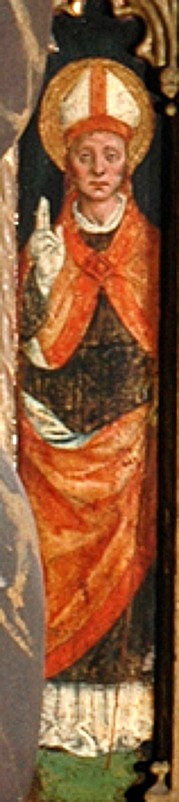
St Honorius of Canterbury (Died 653) Archbishop of Canterbury. The Fifth Successor of St Augustine as Archbishop of Canterbury, Confessor, Missionary.
His Life:

https://anastpaul.com/2021/09/30/saint-of-the-day-30-september-st-honorius-of-canterbury-died-653/

St Ismidone of Die
Bl Jean-Nicolas Cordier
Blessed Conrad of Urach
St Laurus
St Leopardus the Slave
Bl Ludwik Gietyngier
St Midan of Anglesey
St Simon of Crépy
St Ursus the Theban
St Victor the Theban

Martyrs of Valsery Abbey: An unknown number of Premonstratensian Monks at the Abbey of Notre-Dame de Valsery, Picardie, France who were Martyred by Calvinists. They were martyred in 1567 at Valsery, Pircardy, France.

Posted in SAINT of the DAY

Saint of the Day – 30 September – St Honorius of Canterbury (Died 653)

Saint of the Day – 30 September – St Honorius of Canterbury (Died 653) The Fifth Successor of St Augustine as Archbishop of Canterbury, Confessor, Missionary. Born at Rome, Italy and died in 653 at Canterbury, England of natural causes. Also known as Honoratus.

From St Bede we gather that he was a Roman Monk, a disciple of St. Gregory the Great and probably a Benedictine Monk. He either accompanied St.Augustine in 596 or was one of the second band of Missionaries sent by Pope Gregory in 601.

As a member of that apostolic company, he must have led that life of fervent piety, which, we are told, had so much effect in converting the inhabitants of Kent. When Honorius’s predecessor, Justus died, St Paulinus of York, fresh from the conversion of Northumbria, was the only English Bishop left to Consecrate him.

From two letters of Pope Honorius I, preserved in the writings of St Bede, it appears that Honorius and his Consecrator, in applying to Rome, asked that, in order to avoid the delays and uncertainties then involved in a journey to Italy, whenever the occupant of one of the metropolitan Sees should die, the survivor should have power to Consecrate the successor, a request which the Pope granted and sent a pallium.

The chief act of Honorius’s episcopate was the mission of St. Felix, whom he consecrated and sent to convert the East Angles, an expedition which was crowned with complete success. He administered his own Diocese with great zeal and energy. The Pope’s letter to him shows that his life was spent in the vigorous exercise of the duties of his office and in the faithful observance of the rule of his master, St. Gregory the Great. On the overthrow of the flourishing Kingdom and Church of Northumbria by Cadwalla of Wales and Penda of Mercia in 633, he received St Paulinus and appointed him to the vacant See of Rochester. On the death of Paulinus in 644, Honorius Consecrated Ithamar, a native of Kent, as his successor. And some years later, he Consecrated a deacon of Mercia, Thomas, to succeed Felix in East Anglia,and in or about 652 Beretgils or Boniface, a native of Kent, to succeed Thomas. The following year, 653, our Saint himself died and was buried with his predecessors in the Church of Saints Peter and Paul, founded by Saint Augustine.

Posted in MARIAN TITLES, SAINT of the DAY

Nostra Signora di Loreto di Forno / Our Lady of Loreto of Forno, Alpi Graie, Italy (1629) and Memorials of the Saints – 30 September

Nostra Signora di Loreto di Forno / Our Lady of Loreto of Forno, Alpi Graie, Italy (1629) – 30 September:

At the beginning of the Vallone di Sea, at about 1340 metres above sea level, in the Forno di Groscavallo hamlet, stands the Sanctuary dedicated to the Madonna di Loreto, built around 1630, after the apparition occurred to Pietro Garino, a native of Forno.
In those times, the region was tormented by the wars fought by Carlo Emanuele of Savoy against the neighbouring states; by the increasingly high taxes that weighed on the poor people, by hunger and the plague.

It was customary for devotees to go annually to the Chapel of the Virgin on Rocciamelone. On that occasion, Pietro Garino found the small pictures, which are still preserved in the Church, depicting the Madonna of Loreto and San Carlo Borromeo, leaning against the facade of the Chapel. They were in bad shape. Pietro took them with him to have them restored and promised himself to bring them back to the Chapel the following year, keeping them in the meantime at his home in Forno.
Twice the pictures eluded his custody – the first time he found them right up there, at the mouth of the Vallone di Sea, where he had gone to collect leaves for the litter intended for livestock. On that occasion he had an apparition – the Virgin appeared to him between two women and promised him to stop the plague that claimed victims among the population of the plain. Brought home by Pietro, the paintings again disappeared from his home and were found in the same place as the apparition – it was a precise indication of the Virgin’s desire to see a Chapel built in that place.
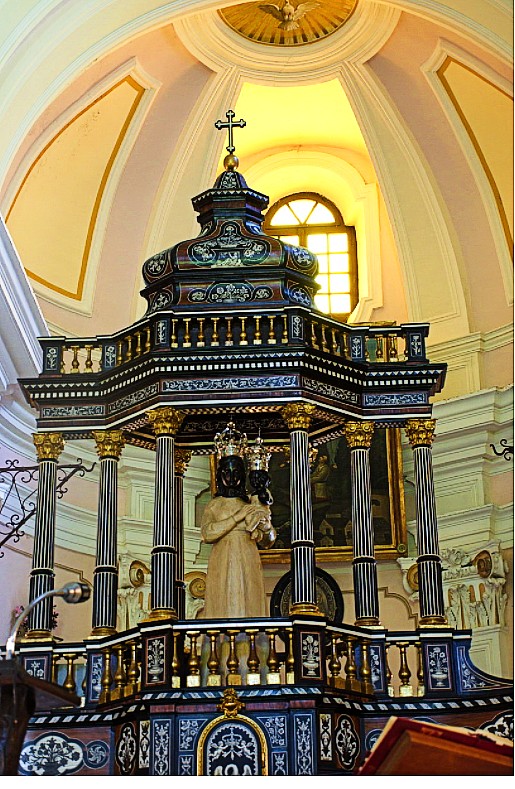
A Chapel was built at the spot of the apparition, of which the remains have recently been found. The current building dates back to the second half of the 1700s; it is the work of Luigi Baretta; internally it has elements of considerable artistic and historical interest. The marvelous Altar by Prinotto, a masterpiece of eighteenth-century cabinet-making; the baroque reliquary, in which the pictures are kept; hundreds of ex-votos, including some of considerable value.
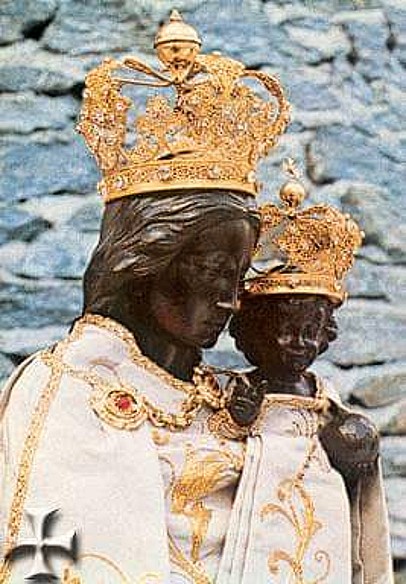
Historically, a Madonna with black features did not appear but the Sanctuary is known as such, as the faces of the Madonna and the Child she holds in her arms are ebony. The current Statue is the work of Raimondo Santifaller, from Ortisei and replaces the original one from the 18th century, stolen in 1977.

To access the Sanctuary it is necessary to climb the 440 steps that must be taken to reach the small square where the Sanctuary stands and which, pilgrims climb on their knees and in prayer.

The Sanctuary is open from July to September and Our Lady is celebrated annually on the Feast of the Assumption (16 August), the Nativity of Mary (8 September) and the Apparition of the Virgin Mary (30 September).
The video below shows this beautiful Sanctuary very clearly.

St Jerome (Memorial) (347-419) Father and Doctor
St Jerome, here:

https://anastpaul.com/2018/09/30/saint-of-the-day-30-september-st-jerome-347-419-father-and-doctor-of-the-church-2/
AND:
https://anastpaul.wordpress.com/2017/09/30/saint-of-the-day-30-september-st-jerome-347-419-father-and-doctor-of-the-church/

St Amato of Nusco (c 1003-1093) Bishop, Confessor, Monk, Apostle of the poor.
Biography
:
https://anastpaul.com/2020/09/30/saint-of-the-day-30-september-saint-amato-of-nusco-c-1003-1093/

St Antoninus of Piacenza
St Castus of Piacenza
St Colman of Clontibret
St Desiderius of Piacenza
St Enghenedl of Anglesey
St Eusebia of Marseilles
Bl Frederick Albert

St Gregory the Illuminator (c 257 – c 331) “Apostle to Armenia” and “Father of Armenia”- Bishop, First Patriarch of the Armenian Church, Missionary, Wonder-worker.
Biography:

https://anastpaul.com/2019/09/30/saint-of-the-day-30-september-saint-gregory-the-illuminator-c-257-c-331/

St Honorius of Canterbury (Died 653) Archbishop of Canterbury
St Ismidone of Die
Bl Jean-Nicolas Cordier
St Laurus
St Leopardus the Slave
Bl Ludwik Gietyngier
St Midan of Anglesey
St Simon of Crépy
St Ursus the Theban
St Victor the Theban

Martyrs of Valsery Abbey: An unknown number of Premonstratensian monks at the Abbey of Notre-Dame de Valsery, Picardie, France who were martyred by Calvinists. They were martyred in 1567 at Valsery, Pircardy, France.