Posted in CHRISTMASTIDE!, DOCTORS of the Church, FATHERS of the Church, FEASTS and SOLEMNITIES, MORNING Prayers, QUOTES of the SAINTS, The BLESSED VIRGIN MARY, The CHRIST CHILD

Quote/s of the Day – 7 January – The Solemnity of the Epiphany of Our Lord Jesus Christ

Quote/s of the Day – 7 January – The Solemnity of the Epiphany of Our Lord Jesus Christ

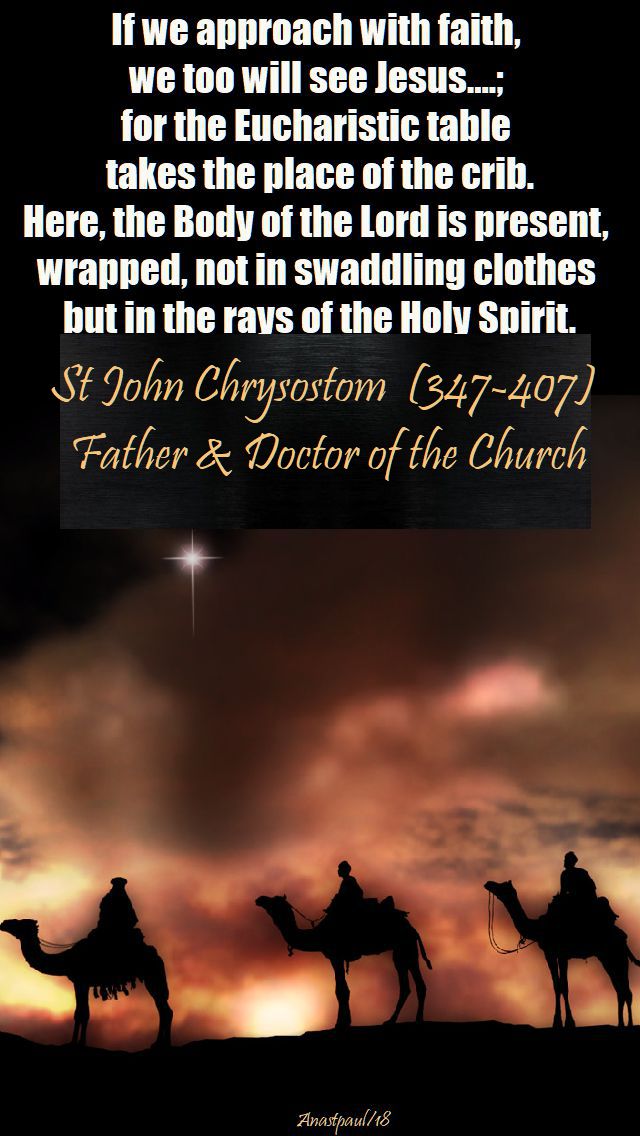
“If we approach with faith,
we too will see Jesus….;
for the Eucharistic table
takes the place of the crib.
Here the Body of the Lord is present,
wrapped not in swaddling clothes
but in the rays of the Holy Spirit.”

St John Chrysostom (347-407) Father & Doctor of the Churchif we approach with faith - st john chrysostom - 7 jan 2018

“Truth, by which the world is held together,
has sprung from the earth,
in order to be carried in a woman’s arms.”

St Augustine (354-430) Father & Doctor of the Churchtruth, by which the world - st augustine - 7 jan 2018

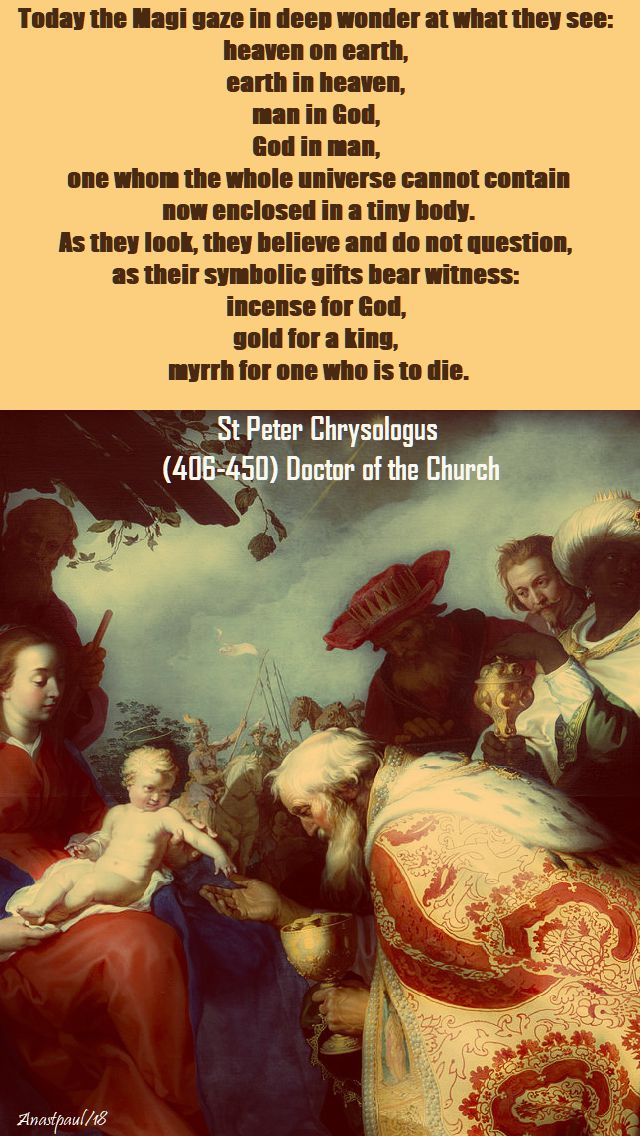
“Today the Magi gaze in deep wonder at what they see:
heaven on earth,
earth in heaven,
man in God,
God in man,
one whom the whole universe cannot contain
now enclosed in a tiny body.
As they look, they believe and do not question,
as their symbolic gifts bear witness:
incense for God,
gold for a king,
myrrh for one who is to die.”

St Peter Chrysologus (406-450) Doctor of the Churchtoday the magi gaze in deep wonder - st peter chrysologus - 7 jan 2018

“What are you doing, O Magi?
Do you adore a little Babe, in a wretched hovel,
wrapped in miserable rags?
Can this Child be truly God? …
Are you become foolish, O Wise Men …
Yes, these Wise Men have become fools
that they may be wise!”

St Bernard of Clairvaux (1090-1153) Doctor of the Churchwhat are you doing o magi - st bernard - 7 jan 2018

“It is no magic formula He brings
because He knows that the salvation
He offers must pass through human hearts.
What does He first do?
He laughs and cries and sleeps defenceless,
as a baby, though He is God incarnate.
And He does this,
so that we may fall in love with Him,
so that we may learn to take Him in our arms….”it is no magic formula he brings - st josemaria - 7 jan 2018

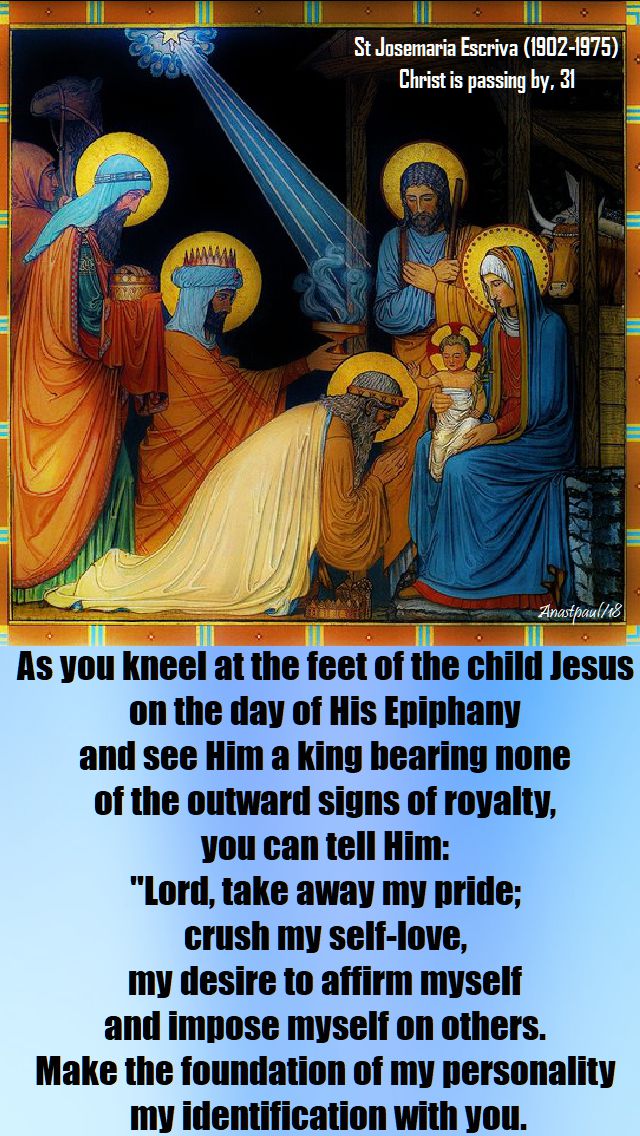
“As you kneel at the feet of the child Jesus
on the day of His Epiphany
and see Him a king bearing none
of the outward signs of royalty,
you can tell Him:
“Lord, take away my pride;
crush my self-love,
my desire to affirm myself
and impose myself on others.
Make the foundation of my personality
my identification with you.”

St Josemaria Escriva (1902-1975)
Christ is passing by, 31as you kneel at the feet of the child jesus - st josemaria - 7 jan 2018

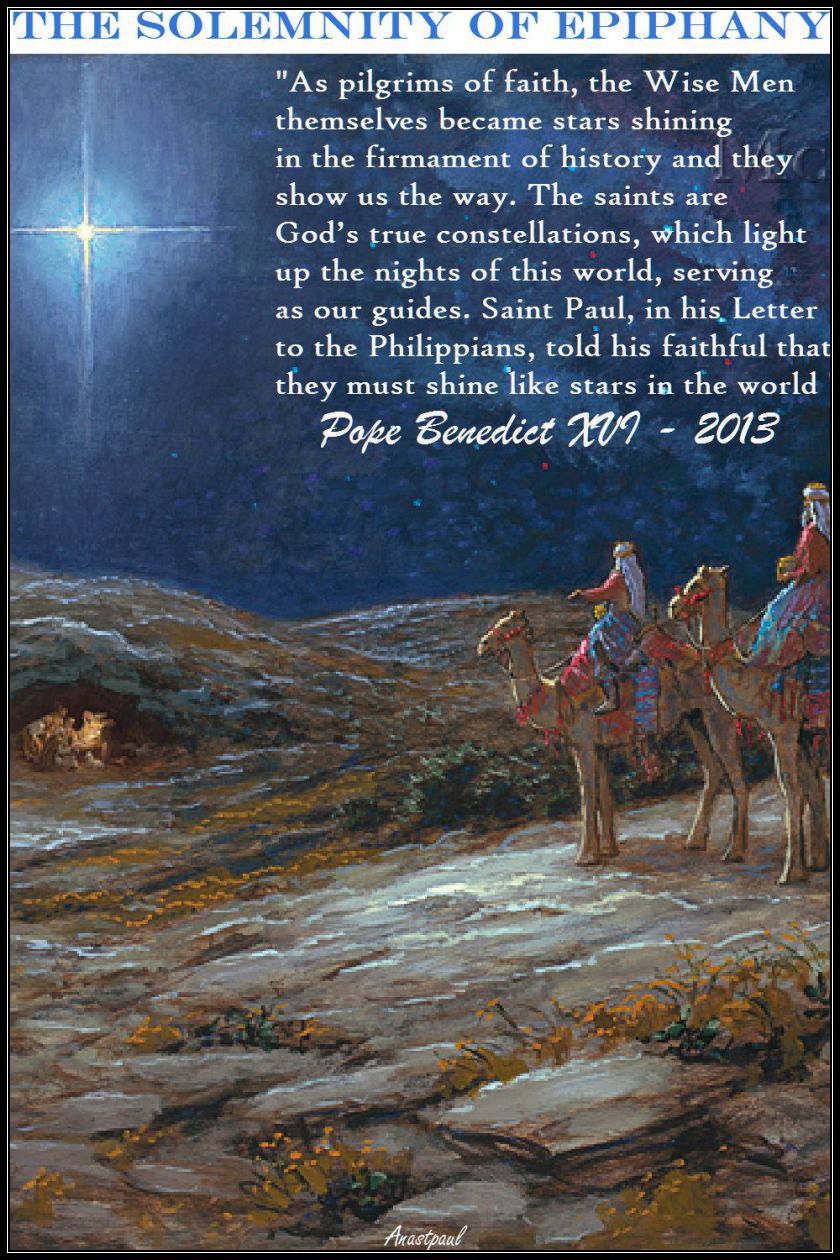
“As pilgrims of faith, the Wise Men themselves
became stars shining in the firmament of history
and they show us the way.
The saints are God’s true constellations,
which light up the nights of this world,
serving as our guides.
Saint Paul, in his Letter to the Philippians,
told his faithful that they must shine like stars in the world.”

Extract from the Homily of His Holiness Benedict XVI
Vatican Basilica, Sunday, 6 January 2013benedict-on-epiphany.7 jan 2018

Posted in ADVENT, MORNING Prayers, QUOTES - J R R Tolkien and MORE, QUOTES of the SAINTS

Quote/s of the Day – 5 December – Tuesday of the First Week of Advent

Quote/s of the Day – 5 December – Tuesday of the First Week of Advent

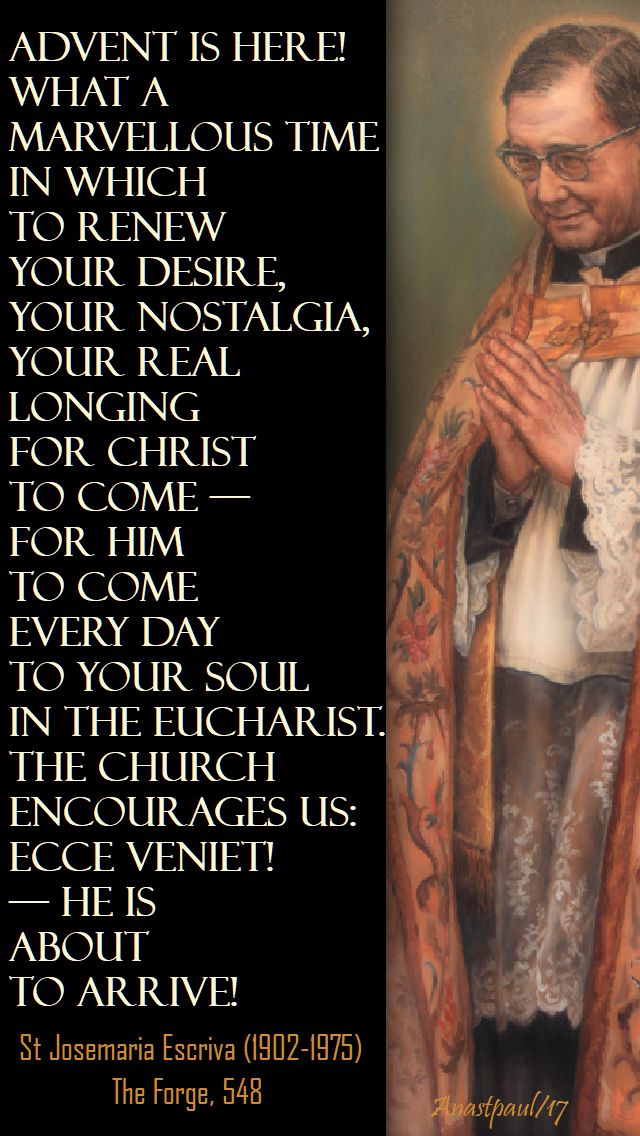
“Advent is here!
What a marvellous time in which to renew your desire,
your nostalgia, your real longing for Christ to come —
for Him to come every day to your soul in the Eucharist.
The Church encourages us: Ecce veniet! — He is about to arrive!”

St Josemaria Escriva (1902-1975) – The Forge, 548advent is here! - st josemaria - 5 dec 2017

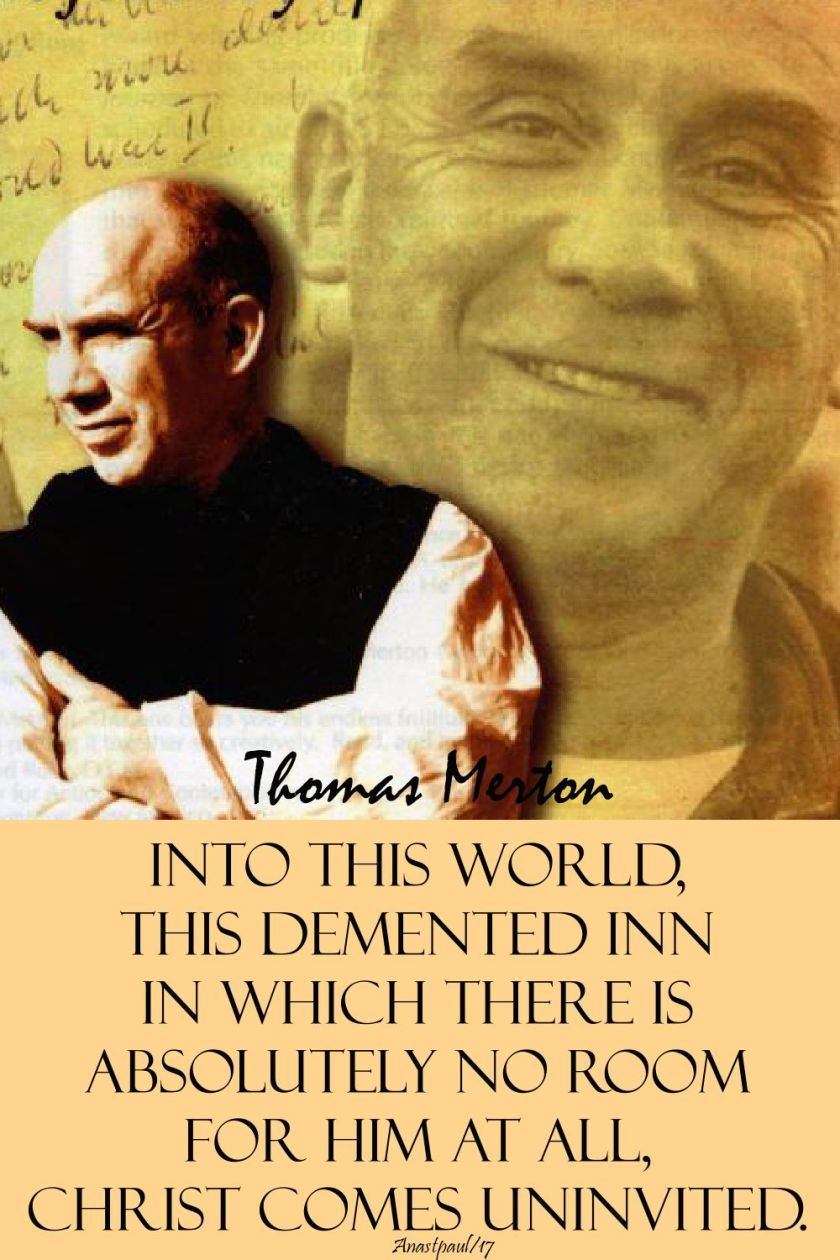
“Into this world, this demented inn
in which there is absolutely no room for Him at all,
Christ comes uninvited.”

Thomas Merton  (1915-1968)into this world - thomas merton - advent - 5 dec 2017

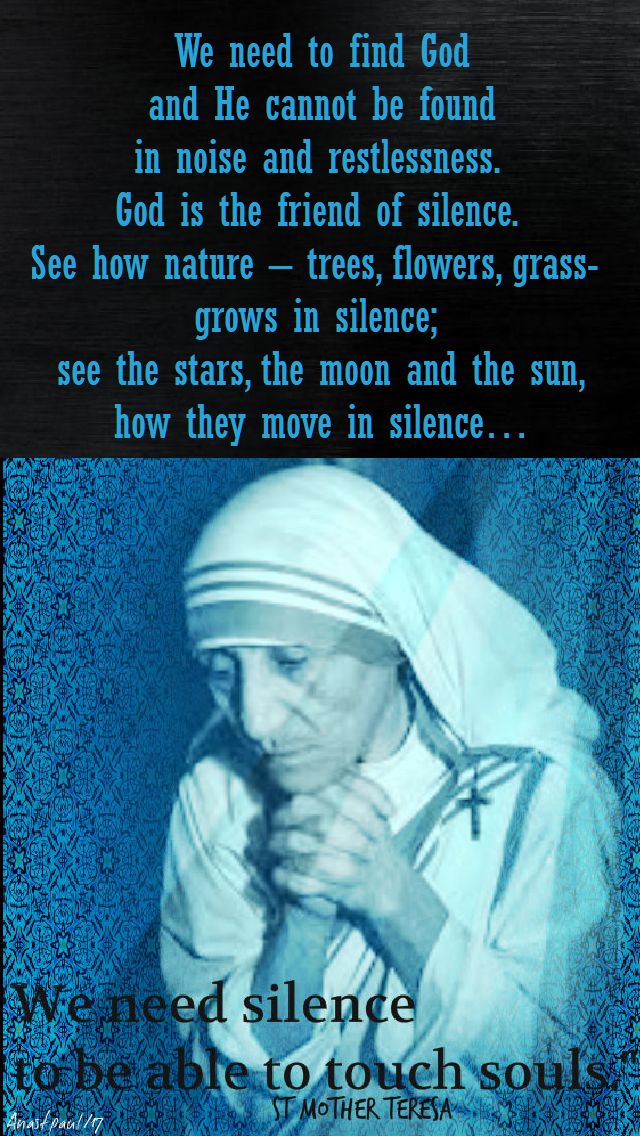
“We need to find God and He cannot be found
in noise and restlessness.
God is the friend of silence.
See how nature – trees, flowers, grass- grows in silence;
see the stars, the moon and the sun, how they move in silence…
We need silence to be able to touch souls.”

St Mother Teresa  (1910-1997)we need to find god - 5 dec 2017

Posted in DOCTORS of the Church, MORNING Prayers, ON the SAINTS, QUOTES of the SAINTS, QUOTES on SANCTITY

Quote/s of the Day – 7 November “On Achieving Sanctity”

Quote/s of the Day – 7 November “On Achieving Sanctity”

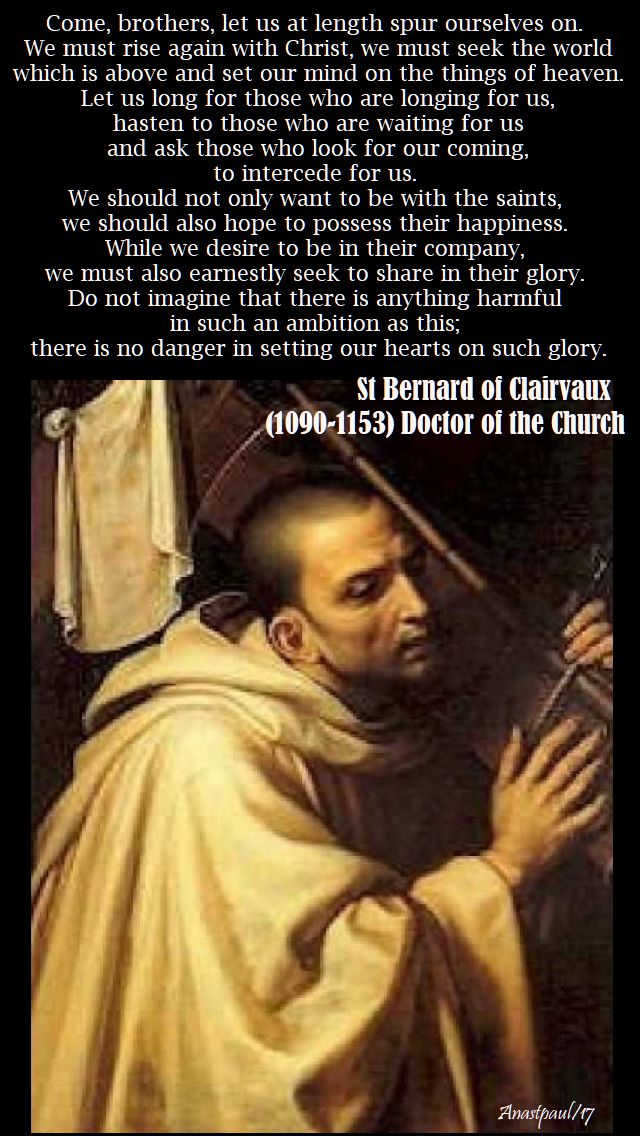
“Come, brothers, let us at length spur ourselves on.
We must rise again with Christ, we must seek the world
which is above and set our mind on the things of heaven.
Let us long for those who are longing for us,
hasten to those who are waiting for us
and ask those who look for our coming to intercede for us.
We should not only want to be with the saints,
we should also hope to possess their happiness.
While we desire to be in their company,
we must also earnestly seek to share in their glory.
Do not imagine that there is anything harmful
in such an ambition as this;
there is no danger in setting our hearts on such glory.”

St Bernard of Clairvaux (1090-1153) Doctor of the Churchcome brothers - st bernard - 7 nov 2017

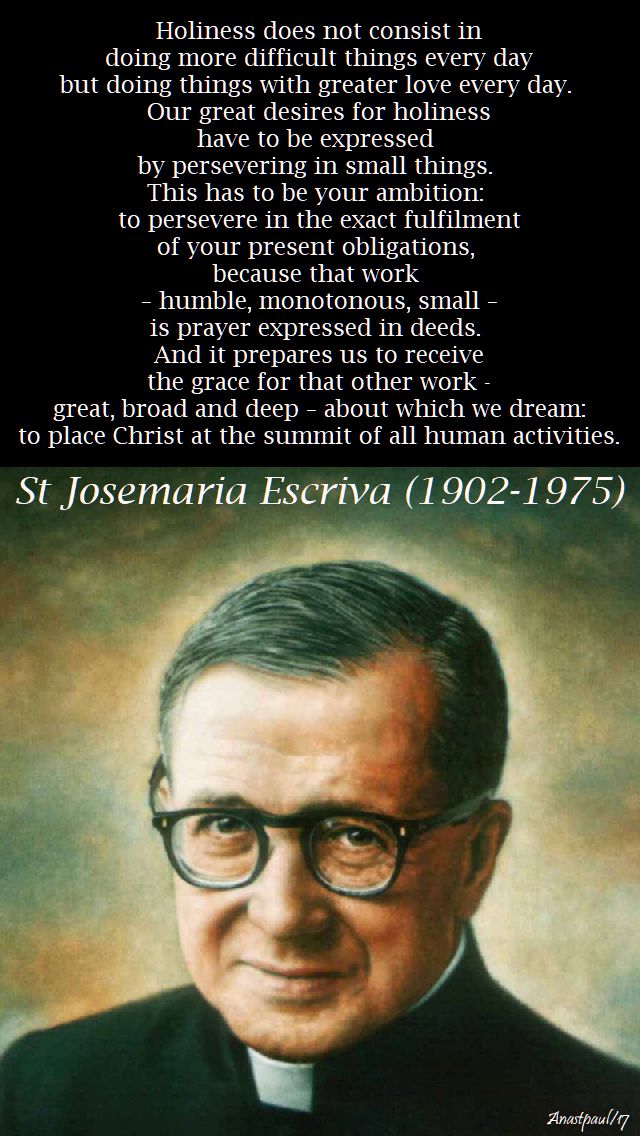
“Holiness does not consist of doing more difficult things every day
but doing things with greater love every day.
Our great desires for holiness have to be expressed
by persevering in small things.
This has to be your ambition:
to persevere in the exact fulfilment of your present obligations,
because that work – humble, monotonous, small –
is prayer expressed in deeds.
And it prepares us to receive the grace for that other work –
great, broad and deep – about which we dream:
to place Christ at the summit of all human activities.”

St Josemaria Escriva (1902-1975)holiness does not consist - st josemaria - 7 nov 2017

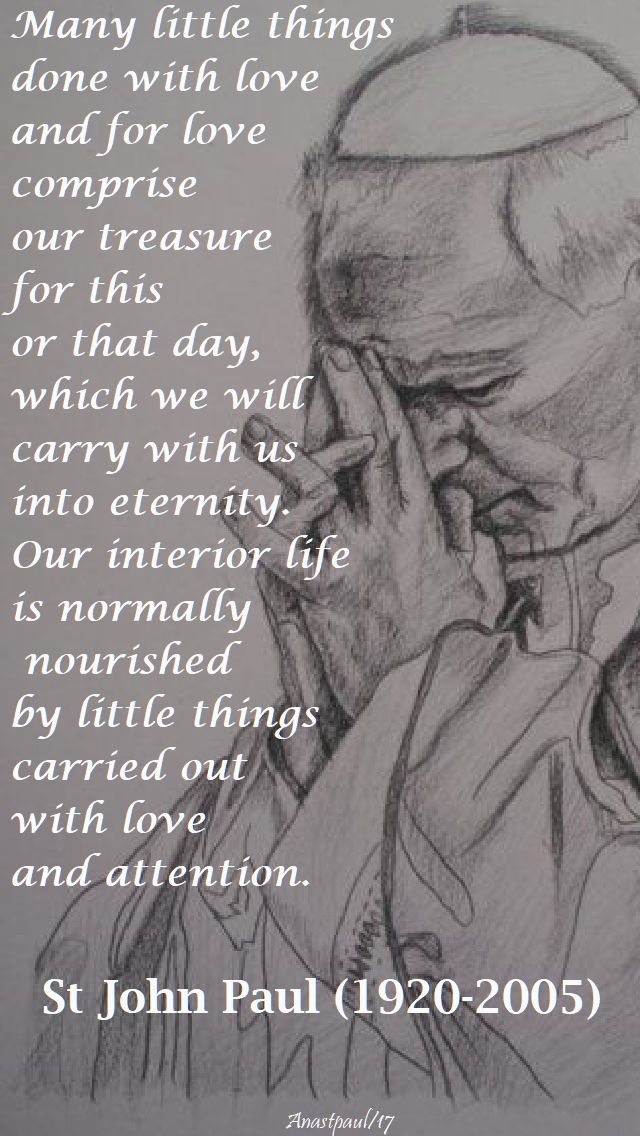
“Many little things done with love and for love
comprise our treasure for this or that day,
which we will carry with us into eternity.
Our interior life is normally nourished
by little things carried out with love and attention.”

St John Paul (1920-2005)many little things - st john paul - 7 nov 2017

Posted in JESUIT SJ, MORNING Prayers, QUOTES of the SAINTS, The HOLY GHOST

Quote/s of the Day – 21 October

Quote/s of the Day – 21 October

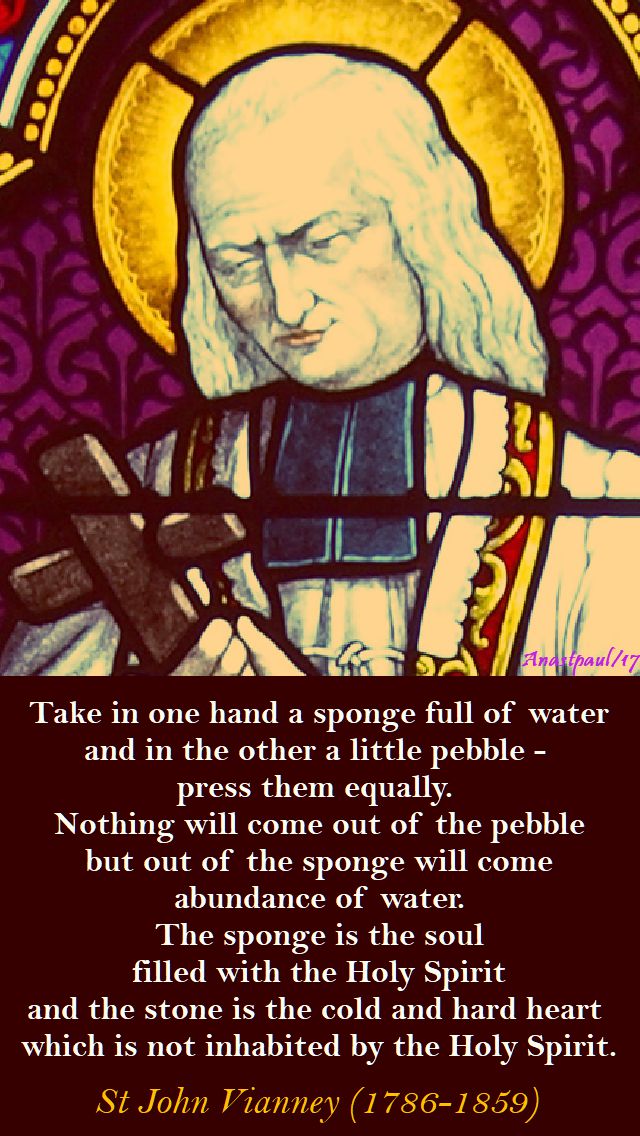
“Take in one hand a sponge full of water
and in the other a little pebble – press them equally.
Nothing will come out of the pebble
but out of the sponge will come abundance of water.
The sponge is the soul filled with the Holy Spirit
and the stone is the cold and hard heart
which is not inhabited by the Holy Spirit.”

St John Vianney (1786-1859)take in one hand - st john vianney - 21 oct 2017

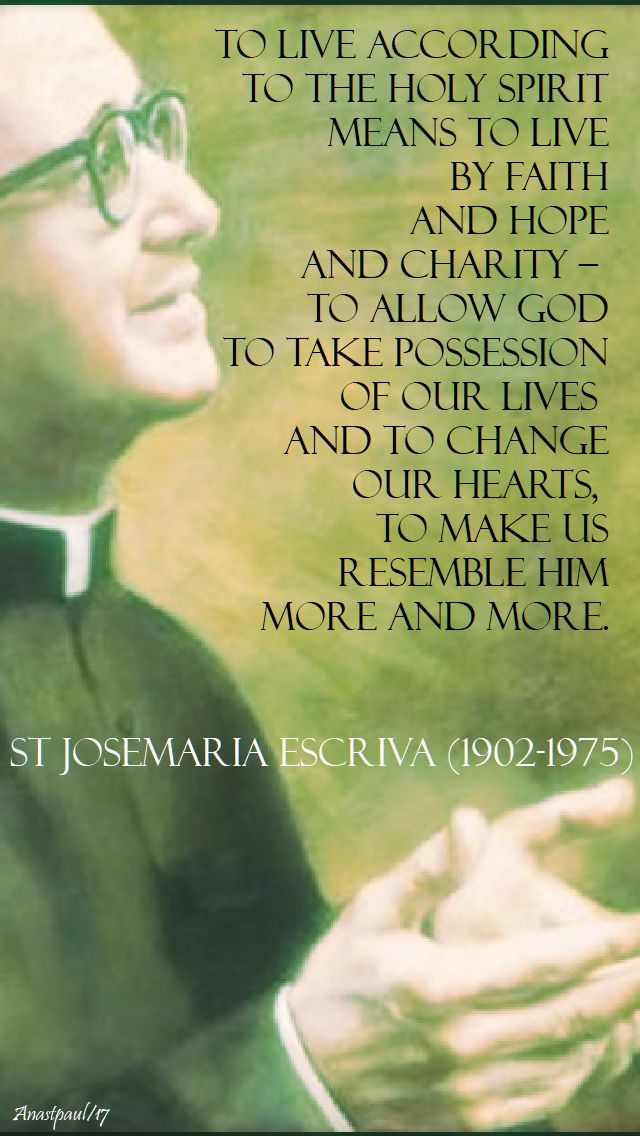
“To live according to the Holy Spirit
means to live by faith and hope and charity –
to allow God to take possession of our lives
and to change our hearts,
to make us resemble him more and more.”

St Josemaria Escriva (1902-1975)to live according - st josemaria - 21 oct 2017

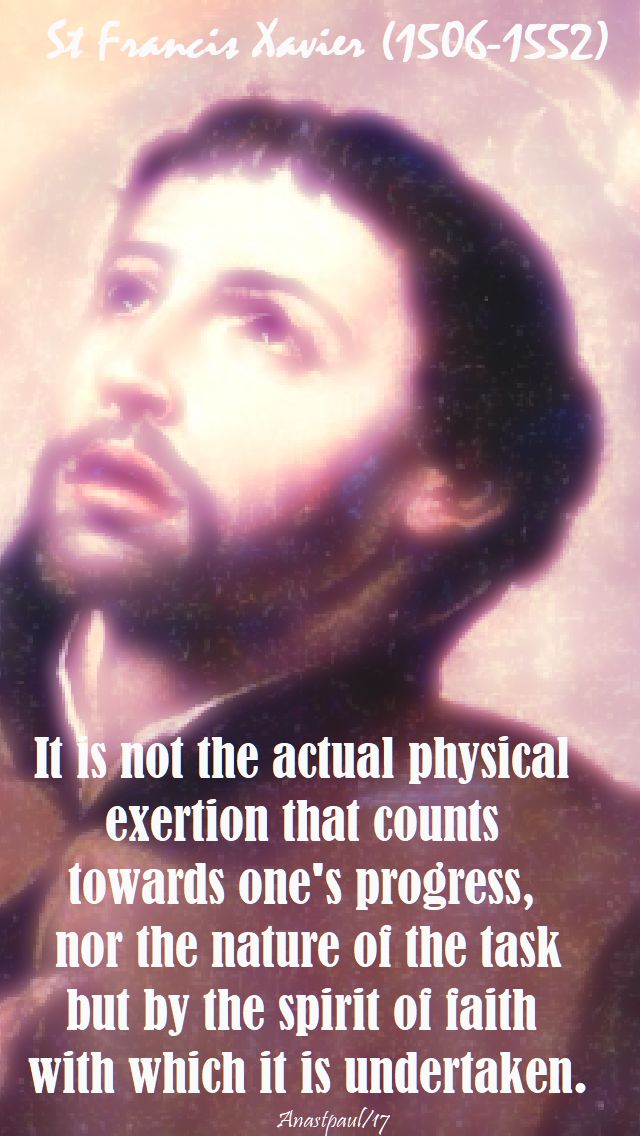
“It is not the actual physical exertion that counts
towards one’s progress, nor the nature of the task
but by the spirit of faith with which it is undertaken.”

St Francis Xavier (1506-1552)it is not - st francis xavier - 21 oct 2017

Posted in MORNING Prayers, PRAYERS of the CHURCH, SAINT of the DAY, The HOLY GHOST

Our Morning Offering – 26 June

Our Morning Offering – 26 June

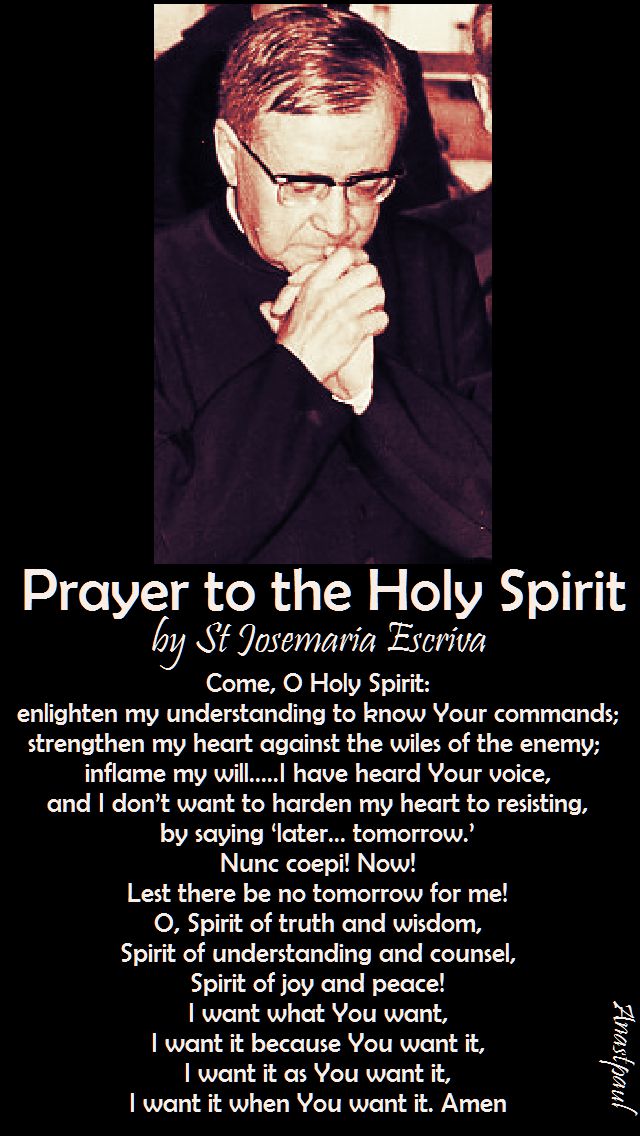
Prayer to the Holy Spirit
by St Josemaria Escriva

Come, O Holy Spirit:
enlighten my understanding
to know Your commands;
strengthen my heart
against the wiles of the enemy;
inflame my will…
I have heard Your voice,
and I don’t want to harden my heart to resisting,
by saying ‘later… tomorrow.’
Nunc coepi! Now!
Lest there be no tomorrow for me!
O, Spirit of truth and wisdom,
Spirit of understanding and counsel,
Spirit of joy and peace!
I want what You want,
I want it because You want it,
I want it as You want it,
I want it when You want it.
Amen

prayer to the holy spirit by st josemaria

Posted in QUOTES of the SAINTS, SAINT of the DAY

Saint of the Day – 26 June – Josemaría Escrivá de Balaguer y Albás

Saint of the Day – 26 June – Josemaría Escrivá de Balaguer y Albás – (9 January 1902 at Barbastro, Spain Died– 26 June 1975 of natural causes in his office in Rome, Italy; his body is interred at Prelatic Church of Our Lady of Peace at Viale Bruno Buozzi 75, Rome, Italy) – Priest, Founder Writer, Teacher, Doctor of Civil Law and Theology – known as “The Saint of Ordinary Life”.; St Josemaria was Beatified on 17 May 1992 by Pope John Paul II: the beatification miracle involved the cure in 1976 of Carmelite Sister Concepcion Boullon Rubio from the nearly-fatal cancerous form of lipomatosis following prayers by her family for the intercession of Father Josemaria and was Canonised on 6 October 2002 by Pope John Paul II: the canonization miracle involved saving a surgeon’s hands from a career-ending disease. Patron of Opus Dei and of Ordinary Life.

1312215965_stjosemariaprayercard-127878617_1458725696

St Josemaria founded Opus Dei, an organization of laypeople and priests dedicated to the teaching that everyone is called to holiness by God and that ordinary life can result in sanctity.   He was canonised during 2002 by Pope John Paul II, who declared Saint Josemaría should be “counted among the great witnesses of Christianity.”
His principal work was the initiation, government and expansion of Opus Dei.  Escrivá’s best-known publication is The Way, which has been translated into 43 languages and has sold several million copies.

St Josemaria Escrivá and Opus Dei have aroused controversy, primarily concerning allegations of secrecy, elitism, cult-like practices and political involvement with right-wing causes, such as the dictatorship of General Franco in Spain (1939–1975).   After his death, his canonisation attracted considerable attention and controversy, by some Catholics and the worldwide press.   Several journalists who have investigated the history of Opus Dei, among them Vatican analyst John L. Allen, Jr., have argued that these accusations are unproven or have grown from allegations by enemies of Escrivá and his organization.   Cardinal Albino Luciani (later Pope John Paul I), John Paul II, Benedict XVI, Francis, Oscar Romero and many Catholic leaders have endorsed Escrivá’s teaching concerning the universal call to holiness, the role of laity and sanctification of ordinary work.   According to Allen, among Catholics, Escrivá is “reviled by some and venerated by millions more”.

Early life
José María Mariano Escrivá y Albás was born to José Escrivá y Corzán and his wife, María de los Dolores Albás y Blanc on 9 January 1902, in the small town of Barbastro, in Huesca, Aragon, Spain, the second of six children and the first of two sons.   José Escrivá was a merchant and a partner of a textile company which eventually became bankrupt, forcing the family to relocate during 1915 to the city of Logroño, in the northern province of La Rioja, where he worked as a clerk in a clothing store.   Young Josemaría first felt that “he had been chosen for something”, it is reported, when he saw footprints left in the snow by a monk walking barefoot.

With his father’s blessing, Escrivá prepared to become a priest.   He studied first in Logroño and then in Zaragoza, where he was ordained as deacon on Saturday, 20 December 1924.   He was ordained a priest, also in Zaragoza, on Saturday, 28 March 1925. After a brief appointment to a rural parish in Perdiguera, he went to Madrid, the Spanish capital, during 1927 to study law at the Central University.   In Madrid, Escrivá was employed as a private tutor and as a chaplain to the Foundation of Santa Isabel, which comprised the royal Convent of Santa Isabel and a school managed by the Little Sisters of the Assumption.

Mission as the founder of Opus Dei
A prayerful retreat helped him to discern more definitely what he considered to be God’s will for him and, on 2 October 1928, he “saw” Opus Dei (English: Work of God), a way by which Catholics might learn to sanctify themselves by their secular work.   He founded it during 1928 and Pius XII gave it final approval during 1950.   According to the decree of the Congregation for the Causes of Saints, which contains a condensed biography of Escrivá, “[t]o this mission he gave himself totally. From the beginning his was a very wide-ranging apostolate in social environments of all kinds. He worked especially among the poor and the sick languishing in the slums and hospitals of Madrid.”

During the Spanish Civil War, Escrivá fled from Madrid, which was controlled by the republicans, via Andorra and France, to the city of Burgos, possessed by the nationalist forces of General Francisco Franco.   After the war ended during 1939 with Franco’s victory, Escrivá was able to resume his studies in Madrid and complete a doctorate in law, for which he submitted a thesis on the historical jurisdiction of the Abbess of Santa María la Real de Las Huelgas.

The Priestly Society of the Holy Cross, affiliated with Opus Dei, was founded on Sunday, 14 February 1943.   Escrivá relocated to Rome during 1946.  The decree declaring Escrivá “Venerable” states that “in 1947 and on Monday, 16 June 1950, he obtained approval of Opus Dei as an institution of pontifical right.   With tireless charity and operative hope he guided the development of Opus Dei throughout the world, activating a vast mobilization of lay people … He gave life to numerous initiatives in the work of evangelisation and human welfare;  he fostered vocations to the priesthood and the religious life everywhere… Above all, he devoted himself tirelessly to the task of forming the members of Opus Dei.”\

Later years
According to some accounts, at the age of two he suffered from a disease (perhaps epilepsy) so severe that the doctors expected him to die soon but his mother had taken him to Torreciudad, where the Aragonese locals venerated a statue of the Virgin Mary (as “Our Lady of the Angels”), thought to date from the 11th century.   Escrivá recovered and as the director of Opus Dei during the 1960s and 1970s, promoted and oversaw the design and construction of a major shrine at Torreciudad.   The new shrine was inaugurated on 7 July 1975, soon after Escrivá’s death and to this day remains the spiritual center of Opus Dei, as well as an important destination for pilgrimage.   By the time of Escrivá’s death during 1975, the members of Opus Dei numbered some 60,000 in 80 countries.   As an adult, Escrivá suffered from type 1 diabetes and, according to some sources, also epilepsy.

During 1950, Escrivá was appointed an Honorary Domestic Prelate by Pope Pius XII, which allowed him to use the title of Monsignor.   During 1955, he received a doctorate of theology from the Pontifical Lateran University in Rome.   He was a consultor to two Vatican congregations (the Congregation for Seminaries and Universities and the Pontifical Commission for the Authentic Interpretation of the Code of Canon Law) and an honourary member of the Pontifical Academy of Theology.   The Second Vatican Council (1962–65) confirmed the importance of the universal call to holiness, the role of the laity, and the Mass as the basis of Christian life.

During 1948 Escrivá founded the Collegium Romanum Sanctae Crucis (Roman College of the Holy Cross), Opus Dei’s educational center for men, in Rome. During 1953 he founded the Collegium Romanum Sanctae Mariae (Roman College of Saint Mary) to serve the women’s section (these institutions are now joined into the Pontifical University of the Holy Cross.)   Escrivá also established the University of Navarre, in Pamplona, and the University of Piura (in Peru), as secular institutions affiliated with Opus Dei. Escrivá died on 26 June 1975, aged 73.

Three years after Escrivá died, the then Cardinal Albino Luciani (later Pope John Paul I) celebrated the originality of his contribution to Christian spirituality.   The Statue below is at St Peter’s the Vatican.

St Josemaria and the Blessed Virgin Mary 
Pope John Paul II stated on Sunday, 6 October 2002, after the Angelus greetings:  “Love for our Lady is a constant characteristic of the life of Josemaría Escrivá and is an eminent part of the legacy that he left to his spiritual sons and daughters.”   The Pope also said that “St. Josemaría wrote a beautiful small book called The Holy Rosary which presents spiritual childhood, a real disposition of spirit of those who wish to attain total abandonment to the divine will”.

When Escrivá was 10 or 11 years old, he already had the habit of carrying the rosary in his pocket.   As a priest, he would ordinarily end his homilies and his personal prayer with a conversation with the Blessed Virgin.   He instructed that all rooms in the offices of Opus Dei should have an image of the Virgin.   He encouraged his spiritual children to greet these images when they entered a room.   He encouraged a Marian apostolate, preaching that To Jesus we go and to Him we return through Mary”. While looking at a picture of the Virgin of Guadalupe giving a rose to San Juan Diego, he commented:  “I would like to die that way.”   On 26 June 1975, after entering his work room, which had a painting of the Virgin of Guadalupe, he slumped on the floor and died.

st josemaria 3200px-Univnavarrefairlovest josemaria 12

Teachings and legacy
The significance of Escrivá’s message and teachings has been a topic of debate, by Catholics and others.   The Protestant French historian Pierre Chaunu, a professor at the Sorbonne and president of the Academy of Moral and Political Sciences, said that “the work of Escrivá de Balaguer will undoubtedly mark the 21st century.   This is a prudent and reasonable wager.   Do not pass close to this contemporary without paying him close attention”.   The Catholic theologian Hans Urs von Balthasar, who was appointed cardinal by Pope John Paul II (but died during 1988 before his investiture), dismissed Escrivá’s principal work, The Way, as “a little Spanish manual for advanced Boy Scouts” and argued that it was quite insufficient to sustain a major religious organization. However, the monk and spiritual writer Thomas Merton declared that Escrivá’s book “will certainly do a great deal of good by its simplicity, which is the true medium for the Gospel message”.

Critics of Opus Dei have often argued that the importance and originality of Escrivá’s intellectual contributions to theology, history and law, at least as measured by his published writings, has been grossly exaggerated by his devotees.   However, various officials of the Catholic church have spoken well of Escrivá’s influence and of the relevance of his teachings.  In the decree introducing the cause of beatification and canonisation of Escrivá, Cardinal Ugo Poletti wrote during 1981:  “For having proclaimed the universal call to holiness since he founded Opus Dei during 1928, Msgr. Josemaría Escrivá de Balaguer, has been unanimously recognized as the precursor of precisely what constitutes the fundamental nucleus of the Church’s magisterium, a message of such fruitfulness in the life of the Church.”  Sebastiano Baggio, Cardinal Prefect of the Congregation for Bishops, wrote a month after Escrivá’s death:  “It is evident even today that the life, works, and message of the founder of Opus Dei constitutes a turning point, or more exactly a new original chapter in the history of Christian spirituality.”   A Vatican peritus or consultor for the process of beatification said that “he is like a figure from the deepest spiritual sources”. Franz König, Archbishop of Vienna, wrote in 1975:

“The magnetic force of Opus Dei probably comes from its profoundly lay spirituality.   At the very beginning, in 1928, Msgr. Escrivá anticipated the return to the Patrimony of the Church brought by the Second Vatican Council … [H]e was able to anticipate the great themes of the Church’s pastoral action in the dawn of the third millennium of her history.”

The “absolutely central” part of Escrivá’s teaching, says American theologian William May, is that “sanctification is possible only because of the grace of God, freely given to his children through his only-begotten Son and it consists essentially in an intimate, loving union with Jesus, our Redeemer and Saviour.”

Escrivá’s books, including Furrow, The Way, Christ is Passing By and The Forge, continue to be read widely and emphasize the laity’s calling to daily sanctification (a message also to be found in the documents of Vatican II).   Pope John Paul II made the following observation in his homily at the beatification of Escrivá:

“With supernatural intuition, Blessed Josemaría untiringly preached the universal call to holiness and apostolate.   Christ calls everyone to become holy in the realities of everyday life.   Hence work too is a means of personal holiness and apostolate, when it is done in union with Jesus Christ.”

John Paul II’s decree Christifideles omnes states:  “By inviting Christians to seek union with God through their daily work — which confers dignity on human beings and is their lot as long as they exist on earth — his message is destined to endure as an inexhaustible source of spiritual light regardless of changing epochs and situations”   St Josemaria pray for us!
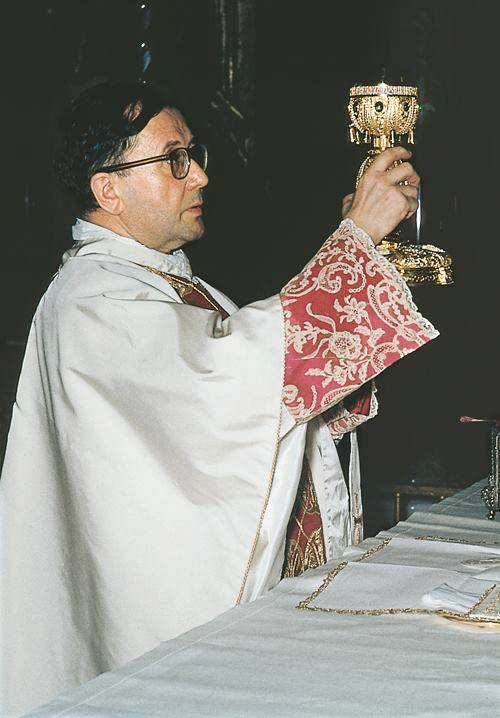
st josemaria 14st-josemaria-escriva-sylvia-castellanosst josemaria 13st josemaria 11

Posted in CATHOLIC DEVOTIONS of the Month, FEASTS and SOLEMNITIES, MORNING Prayers, QUOTES of the SAINTS, SACRED and IMMACULATE HEARTS

Celebrating the Solemnity of the Most Sacred Heart of Jesus – 23 June 2017

Celebrating the Solemnity of the Most Sacred Heart of Jesus – 23 June 2017

Excerpts from “To Be Loved by a Sacred Heart” – St Josemaria Escriva
“Christ is Passing By,” no. 162

“That Christ has come to us with a heart made of flesh tells us a lot about how the Sacred Heart loves us and about the kind of love we need.   We are loved by any number of hearts during our earthly lives but one alone among them we call Sacred.   We know how it feels to be loved by fallen people—by those who try but cannot love perfectly.   But what it is to be loved by a Sacred Heart?

At the outset of the last supper, the Lord gets down on His hands and knees and washes the feet of His disciples.  “Do you understand this?”  He asks them.   Before He tells the Apostles about union with Him, about the great commandment of love, about His joy, Jesus first shows them what it all “looks” like.

“Do you understand this?”   This is perhaps the ultimate question as we reflect on what it means to be loved by the Sacred Heart.   Perhaps the answer will be an honest, “No, Lord, I do not understand your love for me,” and that could be nearer the truth than anything. “I don’t understand what God is doing on His hands and knees wiping the dirt off of my feet.   If I were Jesus, I wouldn’t treat me like He treats me.   I wouldn’t be so tolerant and forgiving.  I wouldn’t keep on loving someone like me.”

But to spend our lives in contemplation of His love for us, as the apostles surely did, is what will bring us ever closer to the source of the Love that constantly reaches into our lives, showing itself to be subtle, selfless and inexhaustible.   If the fire, thorns and blood are the divinely revealed gauge of divine love in a human heart, then the more I welcome His tireless forgiveness, His unflinching friendship in the face of my infidelity, the more I will appreciate the mystery of divine charity which the Sacred Heart reveals.
Now we see imperfectly, in part but the part we do see should teach us why He needed to come to us with a heart of flesh, like ours.”

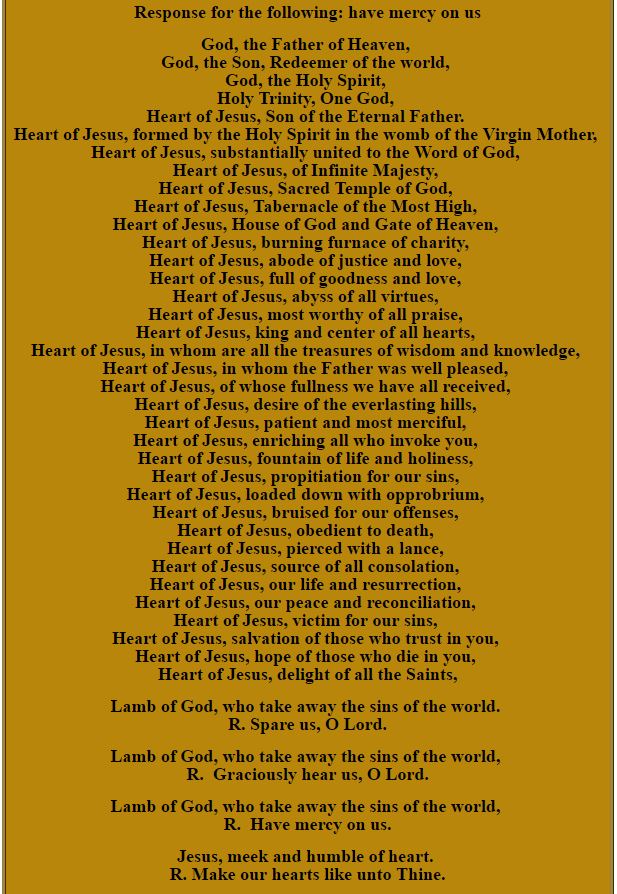
Devotion to the Saced Heart 1litany of the sh 1 - sh 8litany of the sh 2 - sh 8litany of the sh 3 - sh 10

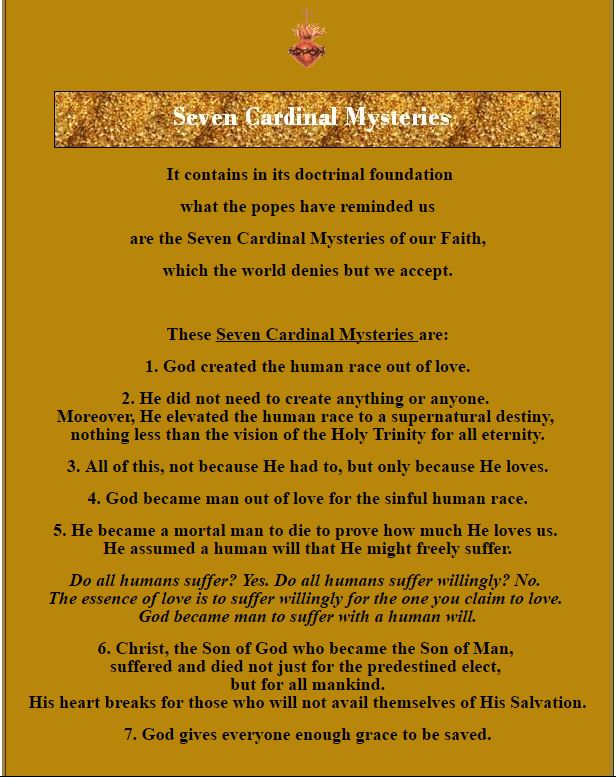
sh3 snip3seven cardinal mysteries - sh 2sh 4 - enthronement


Posted in CATHOLIC DEVOTIONS of the Month, EUCHARISTIC Adoration, FEASTS and SOLEMNITIES, MORNING Prayers, QUOTES of the SAINTS, SACRED and IMMACULATE HEARTS, The WORD

One Minute Reflection – 18 June – Feast of Corpus Christi

One Minute Reflection – 18 June – Feast of Corpus Christi

He who abides in me and I in him, he it is that bears much fruit, for apart from me you can do nothing……John 15:5

REFLECTION – “Eternal happiness begins now for the Christian who is comforted with the definitive manna of the Eucharist. The old life has gone forever. Let us leave everything behind us so that everything will be new, “our hearts, our words and our actions.” This is the Good News. News, because it speaks to us of a deep love which we never could have dreamed of. Good, because there is nothing better than uniting ourselves to God, the greatest Good of all. It is Good News, because in an inexplicable way it gives us a foretaste of heaven.”……….St Josemaria Escriva (Christ is passing By – On the Feast of Corpus Christ No 153)

eternal happiness begins now - st josemaria

PRAYER – In response to Your Presence, O Lord,
I offer You my presence.
In response to Your silence,
I offer You my silence.
In response to the gaze of Your Eucharistic Face,
I offer You my eyes.
In response to Your Eucharistic Heart,
I offer You every heartbeat of mine.
In response to the mystery of Your Eucharistic poverty,
I offer You my poverty.
My one desire is to remain before You
even as You remain before me
in this the Sacrament of Your Love.
(Benedictines of Perpetual Adoration)

BENEDICTINES OF PERPETUAL ADORATION - in reponse to your presence o Lord

Posted in MORNING Prayers, QUOTES of the SAINTS

Quote of the Day – 3 June

Quote of the Day – 3 June

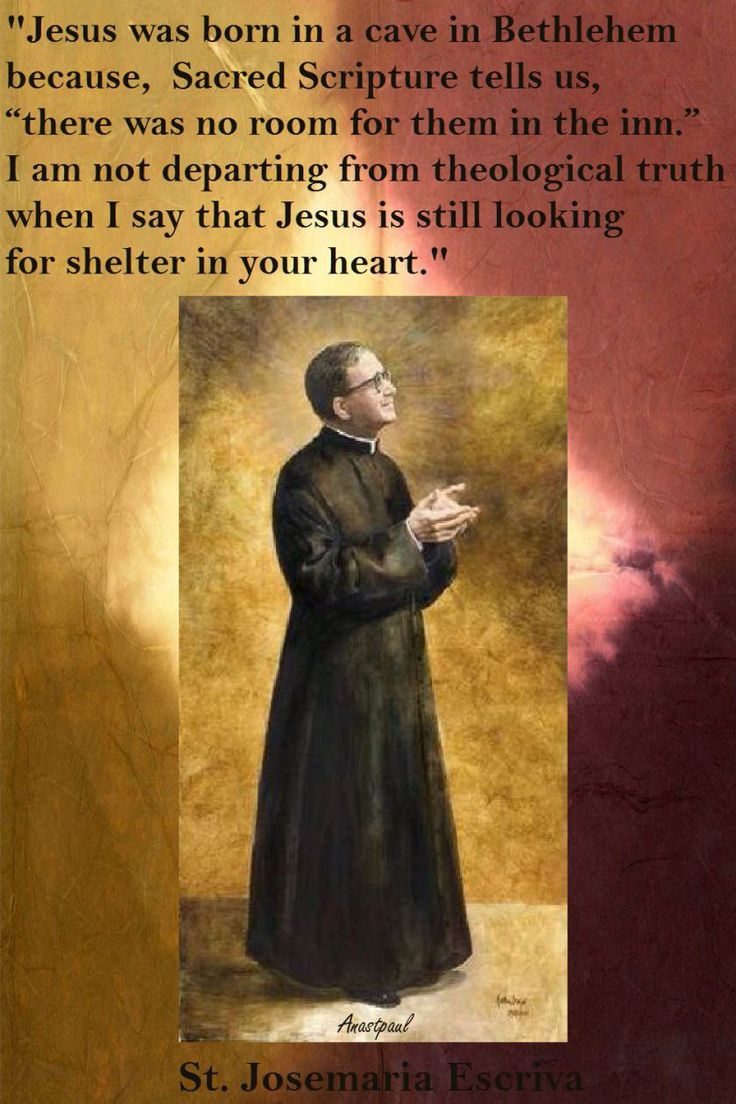
“Jesus was born in cave in Bethlehem because, Sacred Scripture tells us,
“there was no room for them in the inn.”
I am not departing from theological truth when I say that
Jesus is still looking for shelter in your heart.”

St Josemaria Escriva

8679f665742eade2d158309661fb6a1e

Posted in EASTER, MORNING Prayers, QUOTES of the SAINTS

Quote of the Day – 19 April

Quote of the Day – 19 April

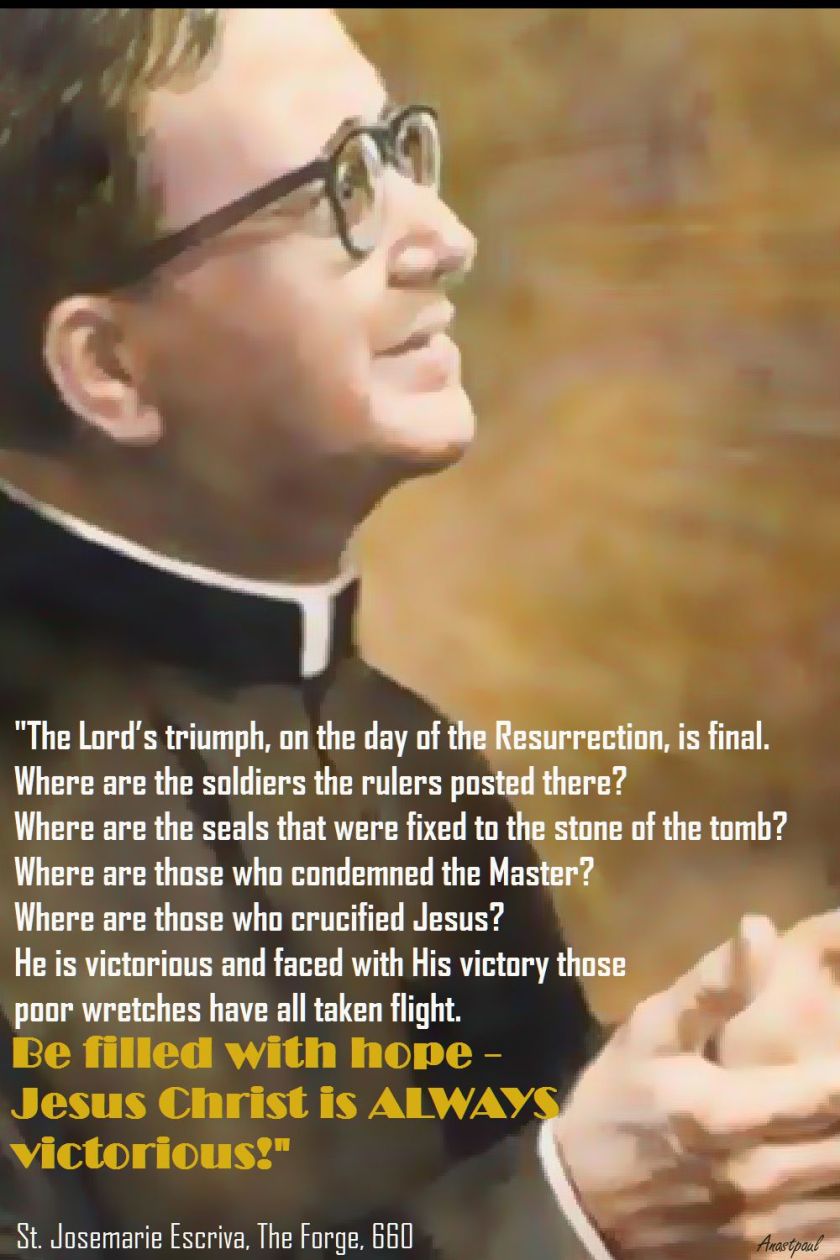
“The Lord’s triumph, on the day of the Resurrection, is final.
Where are the soldiers the rulers posted there?
Where are the seals that were fixed to the stone of the tomb?
Where are those who condemned the Master?
Where are those who crucified Jesus?
He is victorious and faced with His victory those
poor wretches have all taken flight.
Be filled with hope –
Jesus Christ is always victorious!”.

St. Josemarie Escriva, The Forge, 660

JESUS CHRIST IS ALWAYS VICTORIOUS-STJOSEMARIA

Posted in MORNING Prayers, QUOTES of the SAINTS, SAINT of the DAY

Thought for the Day – 5 March

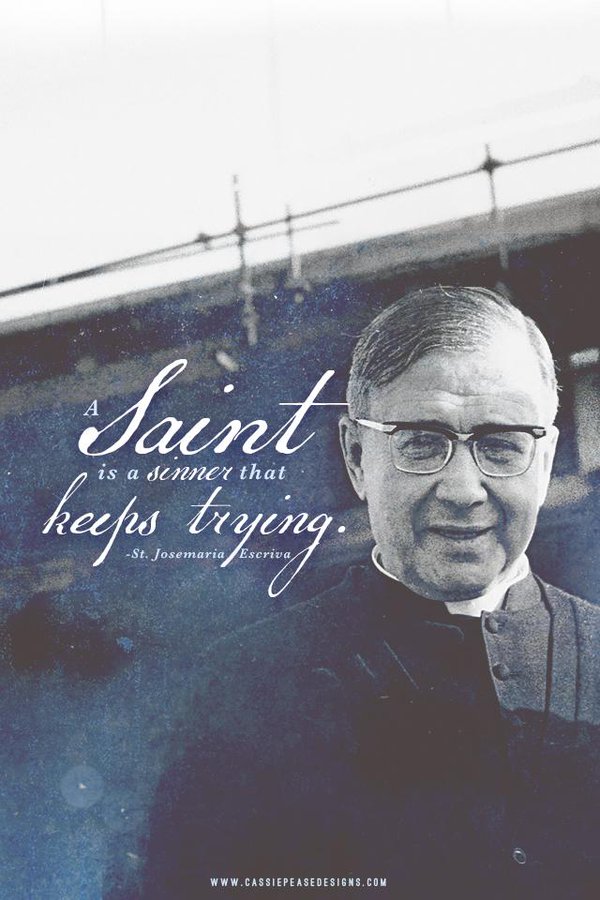
When St Eisebius of Cremona (memorial today) went to Rome to collect funds on behalf of St Jerome, he noticed that Rufinus, an old friend of Jerome’s – though not on good terms with him, was translating the works of Origen, against whose writing St Jerome was arguing.   Eusebius secretly removed the works and sent them to Jerome, thus in fact stealing and causing a final rift between the two.   So even saints sometimes do disgraceful things and St Eusebius’ theft of Rufinus’ manuscript was a thoughtless act of an overzealous friend embroiled in the controversies of the day.   It is good to know that even saints have faults and that such faults detract nothing from their holiness.   For – a saint is a sinner who keeps on trying!   NEVER FORGET IT!

cibw5u5uyaakn5i