Posted in SAINT of the DAY

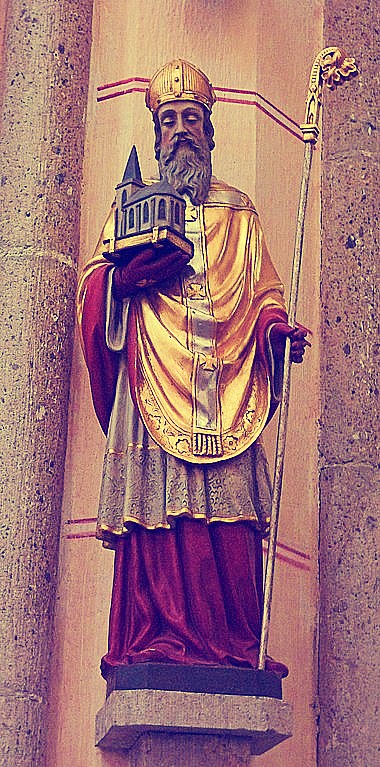
Saint of the Day – 29 May – St Maximinus of Trier (Died c 346) Confessor, Defender of the True Faith

Saint of the Day – 29 May – St Maximinus of Trier (Died c 346) the Fifth Bishop of Trier and Confessor, Defender of the True Faith, Miracle-worker. (Died c 346) Born at Silly near Poitiers, France and died in c 346. Patronage – of the City of Trier and of the Diocese, protection against perjury, loss at sea and destructive rains. Also known as – Maximus, Maximin.

The Roman Martyrology states of him today: “At Treves, the blessed Maximinus, Bishop and Confessor, who received, with honour, the father St Athanasius, banished by the Arian persecutors.

Maximinus was an opponent of Arianism and was supported by the courts of Constantine II and Constans, who harboured, as an honoured guest, St Athanasius twice during his exile from Alexandria. These two incidents were in 336–37 and again, in 343. In the Arian controversy, Maximinus had begun in the party of St Paul I of Constantinople; however, he took part in the Synod of Sardica convoked by Pope Julius I (c 342) and, when four Arian Bishops consequently came from Antioch to Trier, with the purpose of winning Emperor Constans to their side, Maximinus refused to receive them and induced the Emperor to reject their proposals.

He was born near Poitiers, nobly descended, and related to Maxentius, Bishop of that City before St.Hilary. The reputation of the sanctity of St Agritius, Bishop of Triers, drew him, as a young man. to Trier and after a most virtuous education, he was admitted to Holy Orders. Upon the death of Agritius, Maximinus was chosen as his successor.
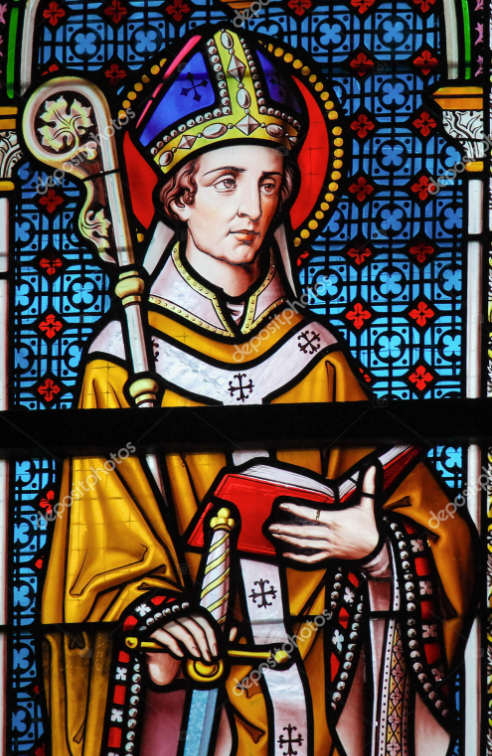
When St Athanasius was banished to Triers in 336, Maximinus received him, not as a person disgraced but, as a most glorious Confessor of Christ and thought it a great happiness, to enjoy the company of so illustrious a Saint. St Athanasius stayed with him for two years; and his works bear evidence to the indefatigable vigilance, heroic courage and exemplary virtue, of our Saint, who was before that timem famous for the gift of miracles.
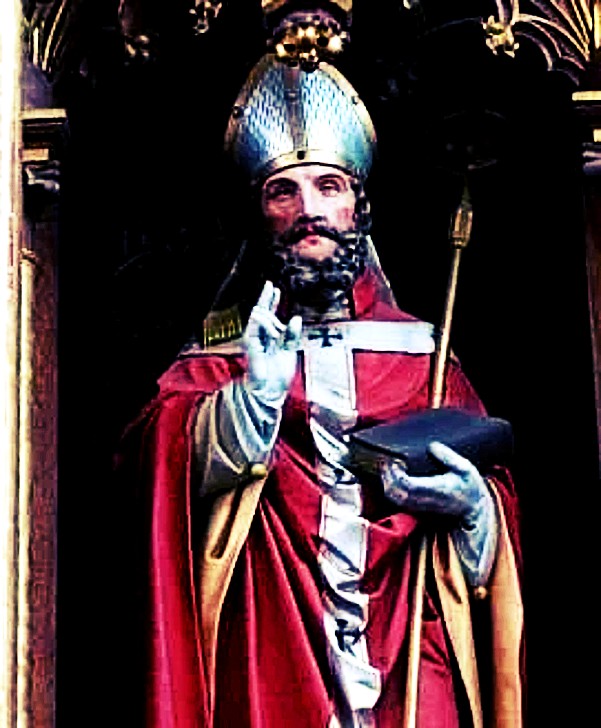
St Paul, Bishop of Constantinople, being banished by Constantius, found also a retreat at Triers and, in Maximinus, a powerful protector. Our saint, by his counsels, precautioned the Emperor Constans against the intrigues and snares of the Arians and on every occasion, discovered their artifice and opposed their faction.

He was one of the most illustrious Defenders of the Catholic Faith in the Council of Sardica in 347 and had the honour to be ranked, by the Arians, together with St Athanasius, in an excommunication, which they pretended to fulminate against them at Philippopolis.
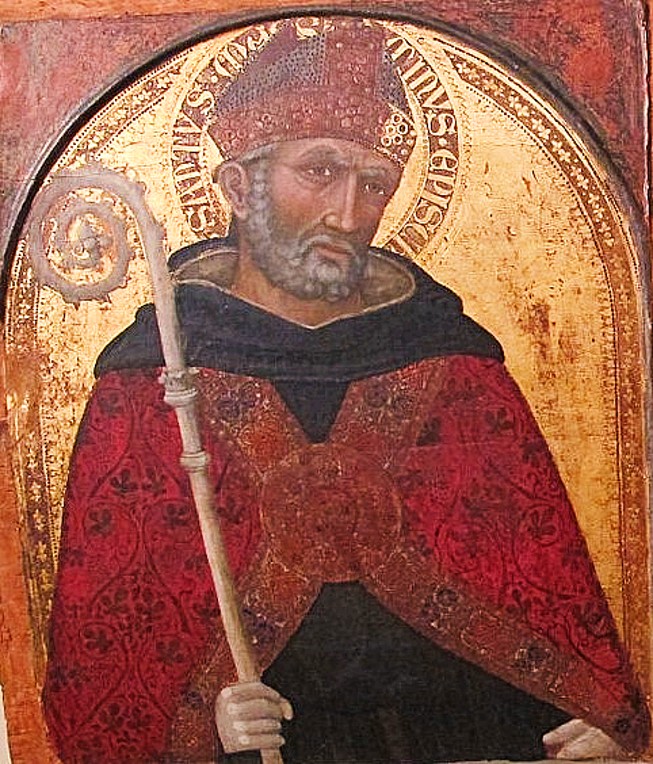
He also sent Sts Castor and Lubentius as Missionaries to the valleys of the Mosel and the Lahn.

Maximinus is said to have died in Poitou in 349, having made a journey thither to see his relatives. His cult began right after his death. His feast is celebrated on 29 May, on which day his name stands in the Martyrologies of St Jerome, St Bede, St Ado,and others. Trier honours him as its Patron. In the autumn of 353 his body was buried in the Church of St John near Trier, where in the seventh century was founded the famous Benedictine Abbey of St.Maximinus, which flourished till 1802.
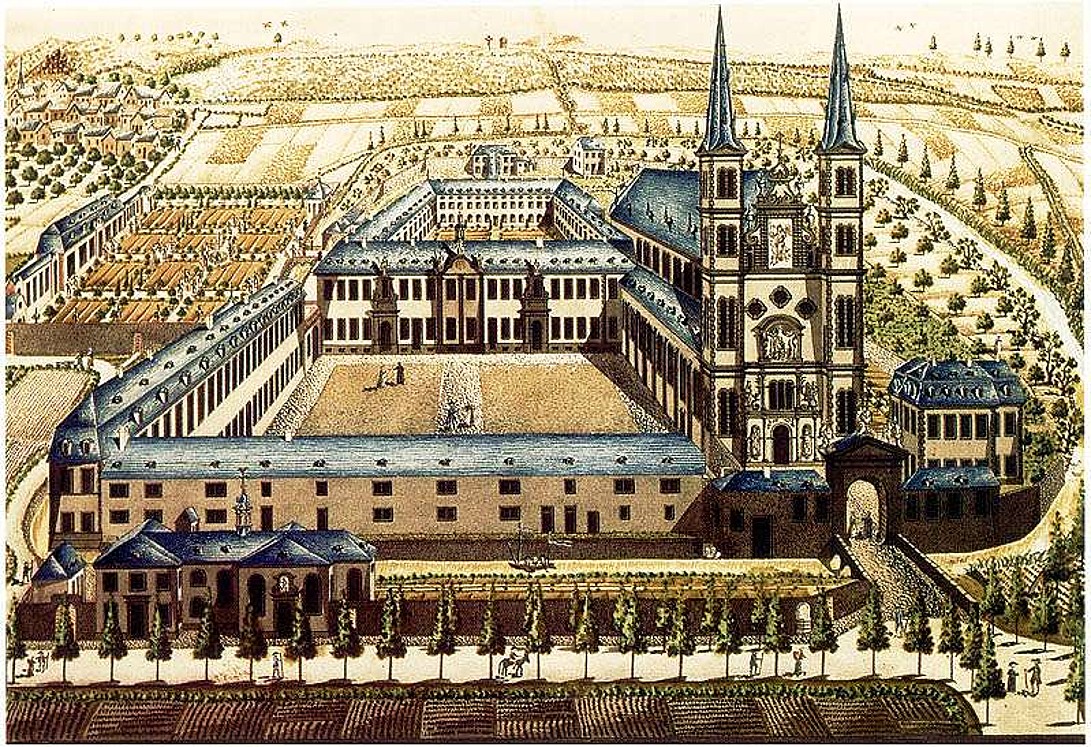
St Maximinus Abbey at Trier

His body was afterwards translated to Triers on the day which is now devoted to his memory. St Maximinus, by protecting and harbouring Saints, received himself the recompense of a Saint.
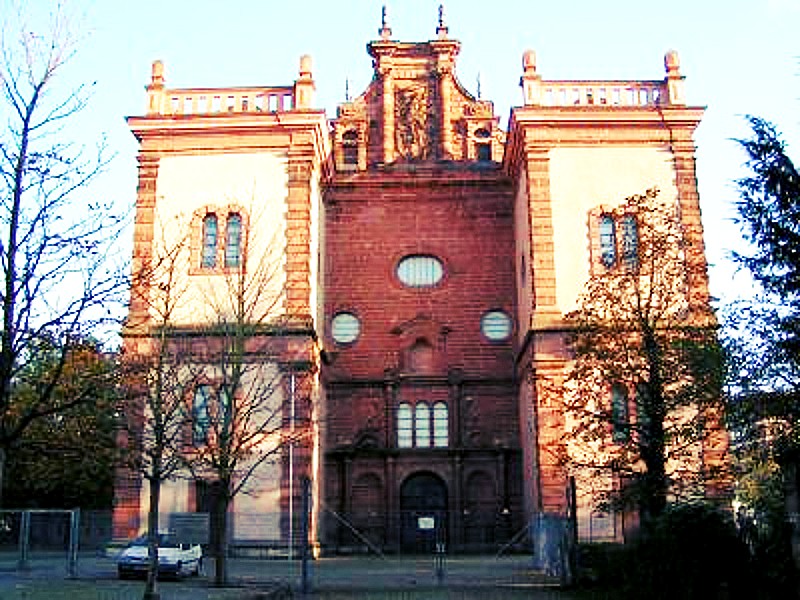

St Maximinus Church in Trier
Posted in CARMELITES, INCORRUPTIBLES, MARIAN TITLES, SAINT of the DAY

Sunday within the Octave of Ascension, Notre-Dame des Ardents / Our Lady of Ardents, Arras, France (1095) and Memorials of the Saints – 29 May

Sunday within the Octave of Ascension

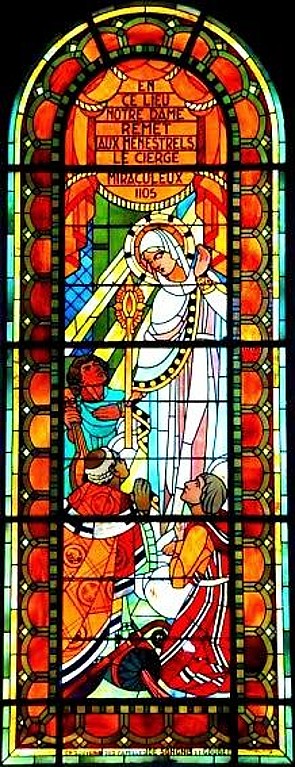
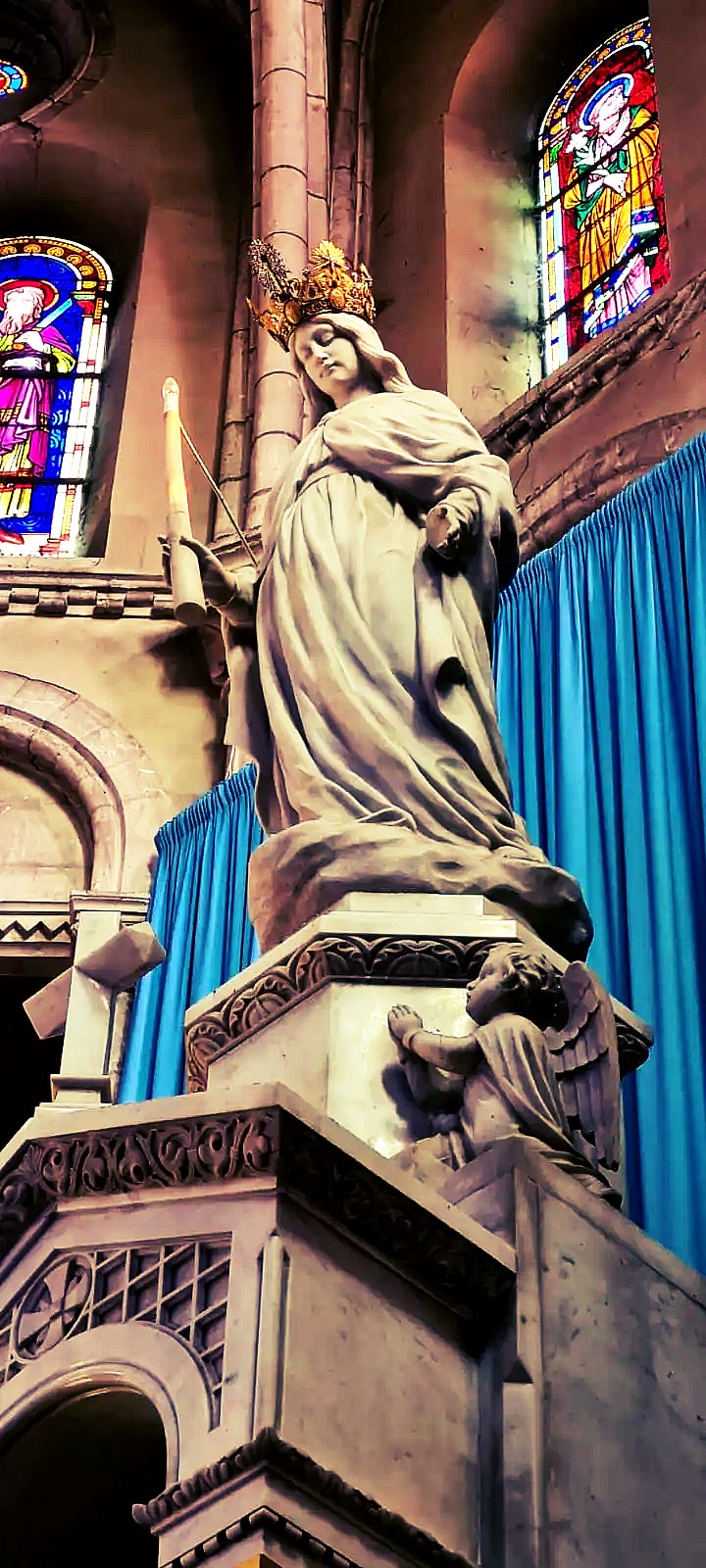
Notre-Dame des Ardents / Our Lady of Ardents, Arras, France (1095) – 29 May:

The Abbot Orsini wrote: “A wax candle is kept in the Cathedral of Arras, which is held to have been brought thither by Our Lady, in the year 1095.

Our Lady of Ardents, or Notre-Dame des Ardents d’Arras in French, is a small, charming red brick Church in the lower part of Town in Arras.. It was built in the beautiful style unique to the twelfth Century, in order to celebrate the appearance of the Blessed Virgin and to commemorate the miraculous assistance, she gave to the people then living in the region.
According to Tradition, there was a terrible epidemic that was given the name ‘the hellfire’ that ravaged the countryside in that year of 1105 and all men felt, that they were in the clutches of the specter of Death. The Evil of Ardent, the disease caused a kind of gangrene in the limbs and the strange sickness, caused terrible suffering in all parts of the body and laid low, both men and women and even their children, throughout the whole of the region.

There were, at that time, two minstrels, one named Itier, who lived in Brabant and the other, named Norman, who lived in the Chateau de Saint-Pol. They had vowed a mortal hatred, as Norman had killed Itier’s brother.
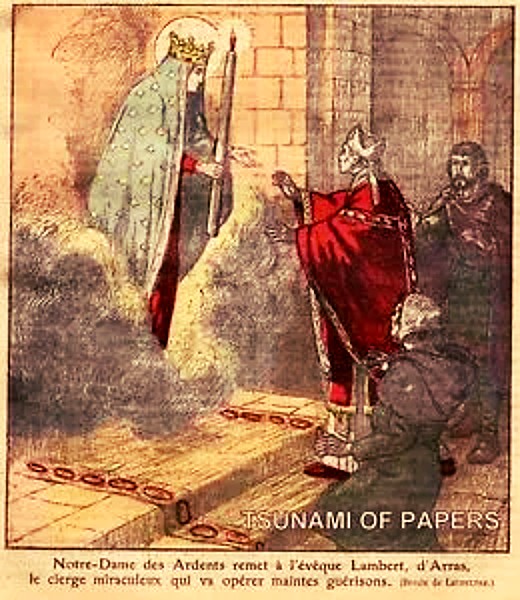
One night they both had the same dream – the Virgin Mary, dressed in white, appeared to them and told them to go to the Cathedral. Norman, who was closer, arrived first. As he entered the Cathedral he saw all the patients who had taken refuge there. He found the Bishop and told him of the apparition but Bishop Lambert thought that Norman was mocking him and sent him away. Itier arrived the following day and also spoke to the Bishop. When the Bishop told Itier that someone named Norman had come to tell him of the same vision, Itier asked where he was because he intended to kill him on the field, to avenge his brother’s death. Bishop Lambert then understood, that the Blessed Virgin had sent the two men to be reconciled. The Bishop spoke to each separately and then put them in each other’s presence and asked them to give each other, the kiss of peace and then spend the night in prayer, inside the Cathedral.

It was Pentecost Sunday, 28 May 1105, at about three o’clock in the morning, when the Virgin Mary appeared to the two minstrels in the Cathedral. Norman and Itier witnessed a sudden light as the Blessed Virgin descended from the height of the nave, carrying a lighted candle in her hands. She gave the men the candle intended for the healing of the sick and explained to them, what they must do. A few drops of the wax that fell from the candle were to be mingled with water, giving it miraculous properties the people would then drink this water.

All who believed were healed. The two minstrels, now brothers, distributed the miraculous water and the epidemic ceased. There were many prodigies of healing that went on for hundreds of years, especially with wounds, inflammations and ulcers. All of this shows how reconciliation and prayer, are pleasing to God and can precipitate great miracles, as well as ending or preventing wars. The Bishop of Arras wanted to build a Church worthy of Our Lady of Ardents and to receive the relic of the Holy Candle. The Church was consecrated in 1876 just before the definitive establishment of the Third Republic.

The Reliquary of the Holy Candle

This relic, the Holy Candle, can still be seen today. On the eve of Corpus Christi and the four following days, the Holy Candle was lit and shown to the people. It has not diminished!
The reliquary of the Holy Candle is a masterpiece of art, which preserves the relic of the Holy Candle. The content of the reliquary has been the object of veneration and every year, it is presented to pilgrims, during the time period which runs between Ascension Thursday and Pentecost.

St Maria Magdalena de’ Pazzi O.Carm (1566-1607) Carmelite Nun and Mystic, Ecstatic, she bi-located and was the intercessor of many miracles, Stigmatist. She was Beatified in 1626 by Pope Urban VIII. At her Canonisation in 1668, her body was declared miraculously incorrupt. Her Feast day was moved in 1969 to 25 May.
Biography:

https://anastpaul.com/2020/05/25/saint-of-the-day-25-may-saint-maria-magdalena-de-pazzi-o-carm-1566-1607/

St Bona of Pisa
St Conon the Elder
St Conon the Younger
St Daganus
St Eleutherius of Rocca d’Arce
St Felix of Atares
St Gerald of Mâcon
Bl Gerardesca of Pisa
Bl Giles Dalmasia
St Hesychius of Antioch
St John de Atarés

St Maximinus of Trier (Died c 346) Bishop and Confessor
St Maximus of Verona
St Restitutus of Rome
Bl Richard Thirkeld
St Theodosia of Caesarea and Companions
St Votus of Atares
St William of Cellone

Martyrs of Toulouse: A group of eleven Dominicans, Franciscans, Benedictines, clergy and lay brothers who worked with the Inquisition in southern France to oppose the Albigensian heresy. Basing their operations in a farmhouse outside Avignonet, France, he and his brother missioners worked against heresy. Murdered by Albigensian heretics while singing the Te Deum on the eve of Ascension. They were beaten to death on the night of 28 to 29 May 1242 in the church of Avignonet, Toulouse, France and Beatified on 1 September 1866 by Pope Pius IX (cultus confirmation).
• Adhemar
• Bernard of Roquefort
• Bernard of Toulouse
• Fortanerio
• Garcia d’Aure
• Pietro d’Arnaud
• Raymond Carbonius
• Raymond di Cortisan
• Stephen Saint-Thibery
• William Arnaud
• the Prior of Avignonet whose name unfortunately has not come down to us.
The Church in which they died was placed under interdict as punishment to the locals for the offense. Shortly after the interdict was finally lifted, a large statue of the Blessed Virgin Mary was found on the door step of church. Neither the sculptor nor the patron was ever discovered, nor who delivered it or how. The people took it as a sign that they were forgiven, but that they should never forget, and should renew their devotion to Our Lady. They referred to the image as “Our Lady of Miracles.”
Until recently there was a ceremony in the church on the night of the 28th to 29th of May, the anniversary of the martyrdom. Called “The Ceremony of the Vow”, parishioners would gather in the church, kneel with lit candles, and process across the Church on their knees, all the while praying for the souls of the heretics who had murdered the Martyrs.

Martyrs of Trentino: Three missionaries to the Tyrol region of Austria, sent by Saint Ambrose and welcomed by Saint Vigilius of Trent. All were Martyred – Alexander, Martyrius and Sisinius. They were born in Cappadocia and died in 397 in Austria.