
EMBER FRIDAY – FAST and ABSTINENCE
In case you have forgotten about Ember Days as they are not promoted or encouraged since Vatican II, here is a reminder:
https://anastpaul.com/2020/12/16/today-is-an-ember-day-did-you-remember/
The Feast of the Sacred Lance and Nails – Friday after the 1st Sunday in Lent:
The Supreme Pontiff, Innocent VI, in his Decree establishing the Feast and Office of the Lance and Nails which pierced the Body of our Crucified Lord Jesus Christ, exhorts all the faithful to have a special veneration for and devotion to, all the Sacred Instruments of our Saviour’s Passion.
The following are the Holy Father’s words:
“We should honour the most holy Passion of our Lord and Redeemer, Jesus Christ, in such manner that, meditating on all the mysteries and merits of the same Passion, we venerate also each Sacred Instrument thereof.”
Then this holy and zealous Pontiff, coming more directly to the honour due to the Lance and Nails, says:
“Although the Lance and Nails and the other Sacred Instruments of the Passion, should be enerated everywhere, by the faithful of Christ and although every year the Church celebrates the Solemn Offices of the same Passion, yet, we deem it proper and fitting, that a special Solemn Feast should be instituted and celebrated in honour of those particular Instruments of the Passion, more especially, in those places wherein these salutary Instruments are preserved. Hence, we wish to encourage this devotion by a special Office and privileges.” (Innocent VI in Decret. de Fest. Lane, et Clav. Domini).
The Lance, also known as “The Spear of Longinus” is kept in the Vatican Basilica, given to Innocent VIII in 1492. The Nails were kept with the Crown of Thorns, along with a small piece of the Lance of Longinus at Saint Chapelle, France and were subsequently lost during the French Revolution. The Crown of Thorns was the only Relic saved and is now kept at Notre Dame Cathedral.

In a Leap Year, the Vigil of St Matthias, Apostel, is not announced today because it is transferred to the 24th.
St Peter Damian OSB (1007-1072) Cardinal Bishop of Ostia, Benedictine Monk, Confessor, Theologian, Reformer, Writer, Teacher, Preacher, Poet, Papal Envoy, Father and Doctor of the Church. Dante placed him in one of the highest circles of Paradiso as a great predecessor of Saint Francis of Assisi. Peter was acclaimed as “one of the most accomplished Latinists of his time, one of the greatest writers of medieval Latin.”
The wonderful St Peter here:
https://anastpaul.wordpress.com/2017/02/21/saint-of-the-day-21-february-st-peter-damian/
AND:
https://anastpaul.com/2019/02/21/saint-of-the-day-21-february-st-peter-damian-osb-1007-1072-doctor-of-the-church/
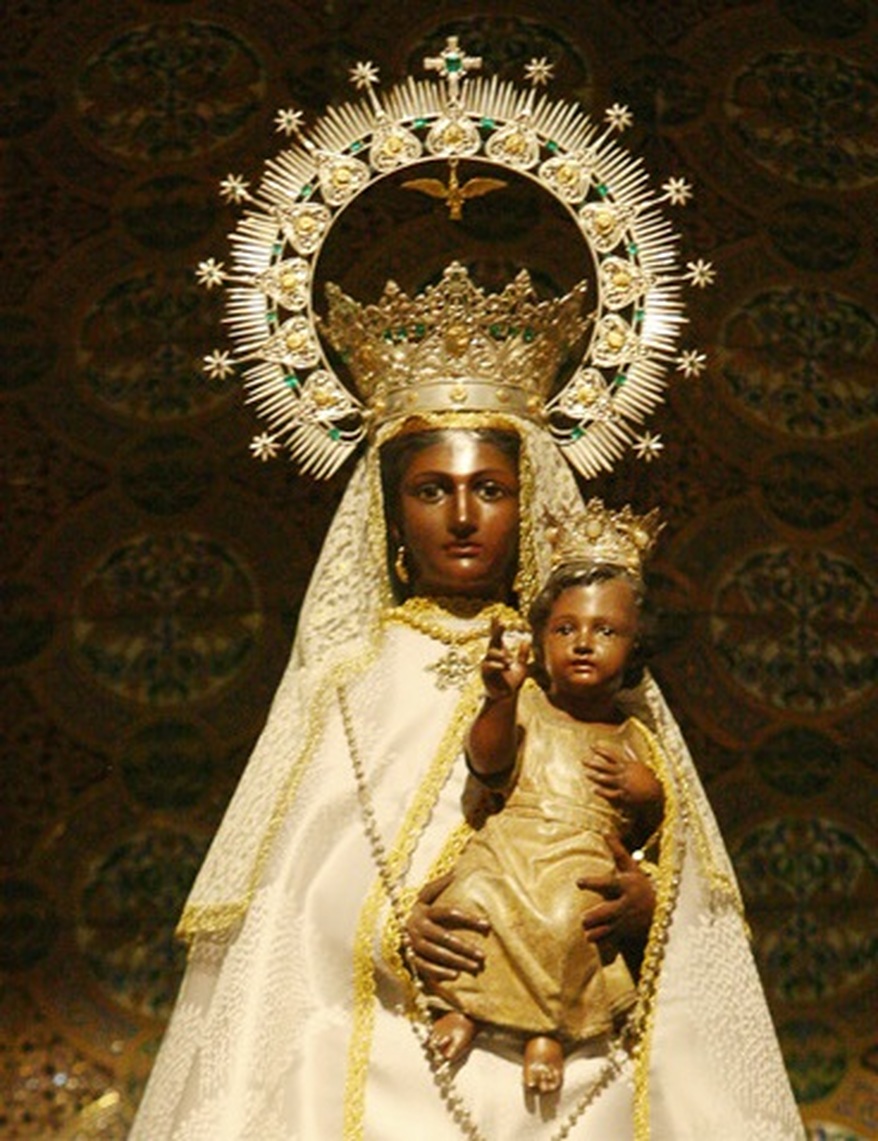
Nuestra Señora de la Peña / Our Lady of the Rock, Pena de Francia, near Salamanca, Spain (1434) – 23 February:
HERE:
https://anastpaul.com/2021/02/23/our-lady-of-the-rock-pena-de-francia-near-salamanca-spain-1434-and-memorials-of-the-saints-23-february/
St Alexander Akimetes
St Boswell
St Dositheus of Egypt
St Felix of Brescia
St Florentius of Seville
St Giovanni Theristi (1049–1129) Monk
Bl John of Hungary
St Lazarus Zographos (c810-c 867) Priest, Monk known as “the Painter and the Iconographer.” Lazarus lived before and during the second period of Byzantine Iconoclasm.
The Roman Martyrology states of him today: “St Lazarus, a Monk, whom the Iconoclast Emperor Theophilus ordered to be put to torture for having painted holy images. His hand was burned with a hot iron but, being healed by the power of God, he painted anew the holy images which had been defaced and finally rested in peace.”
Biography:
https://anastpaul.com/2022/02/23/saint-of-the-day-23-february-st-lazarus-zographos-810-865/
St Martha of Astorga
St Medrald
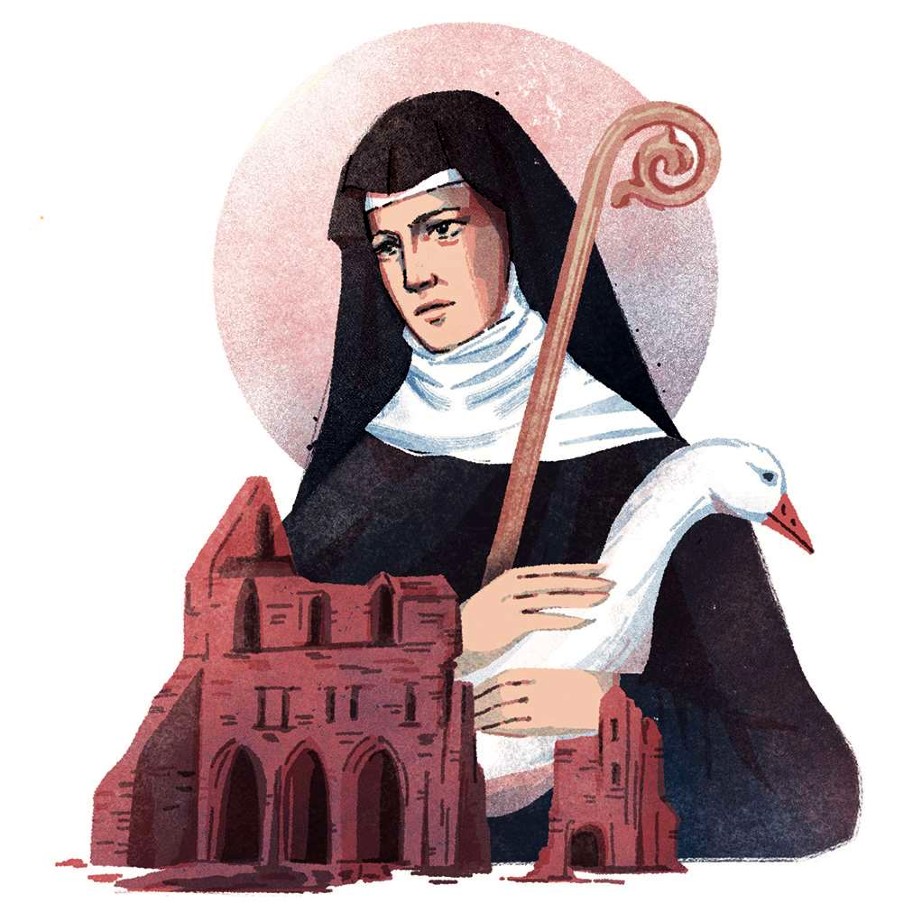
St Milburga (Died 715) Virgin, Prioress, Abbess, Miracle-worker.
Biography:
https://anastpaul.com/2023/02/23/saint-of-the-day-23-february-saint-milburga-died-715-abbess/
St Milo of Benevento (Died c1077) Bishop
St Ordonius
St Polycarp of Rome
St Romana
St Serenus the Gardener (Died 307) Martyr. Serenus was by birth a Grecian. He left his family estate, friends and country to serve God in celibacy, penance and prayer. With this design he bought a garden in Sirmium in Pannonia, which he cultivated with his own hands and lived on the fruits and herbs it produced.
His Life and Death:
https://anastpaul.com/2019/02/23/saint-of-the-day-23-february-st-serenus-the-gardener-died-307-martyr/
St Willigis of Mainz (c940-1011) Archbishop of Mainz, Reformer, builder of the Cathedral of Mainz and many Churches, bridges and roads throughout his Diocese, de facto Regent of Germany during the minority of Otto III, to whom he was Guardian.
About St Willigis:
https://anastpaul.com/2021/02/23/saint-of-the-day-23-february-saint-willigis-of-mainz-c-940-1011-archbishop/
St Zebinus of Syria
Martyrs of Syrmium – 73 Christians who were Martyred together in the persecutions of Diocletian. We know no details about them, and only six of their names – Antigonus, Libius, Rogatianus, Rutilus, Senerotas and Syncrotas.







 AnaStpaul
You must be logged in to post a comment.