
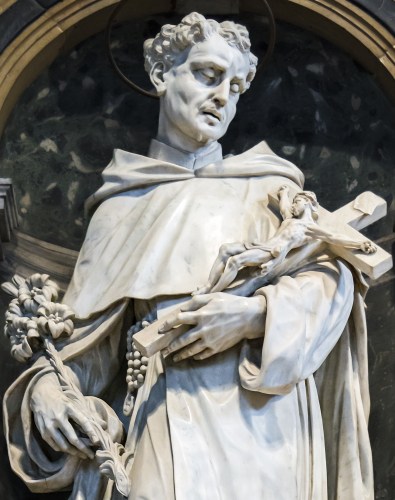
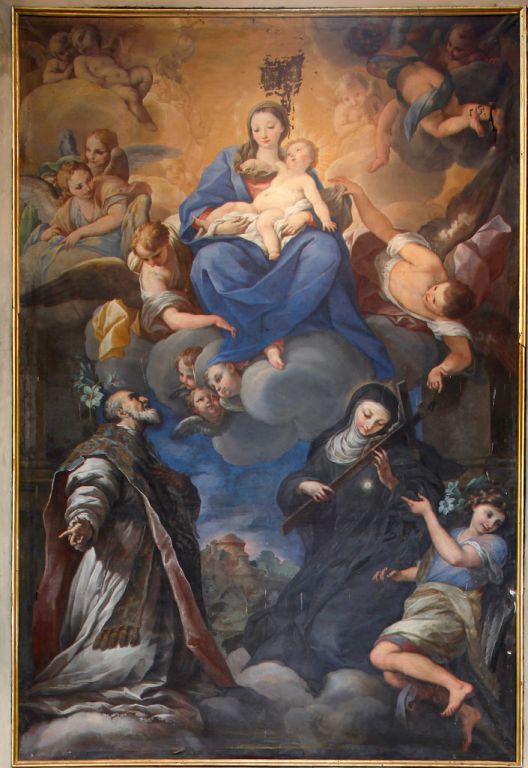
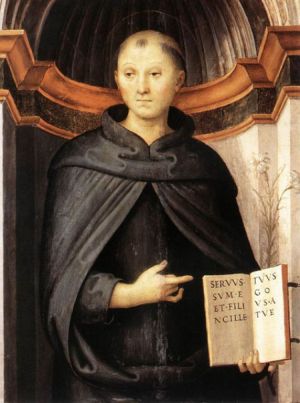
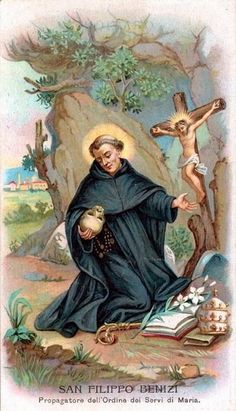
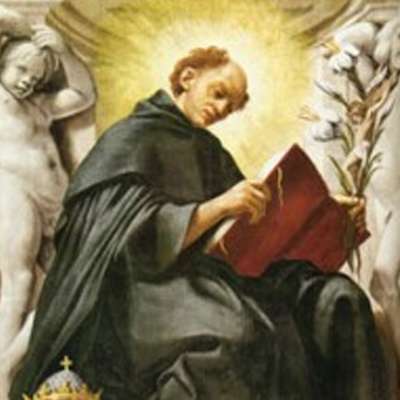
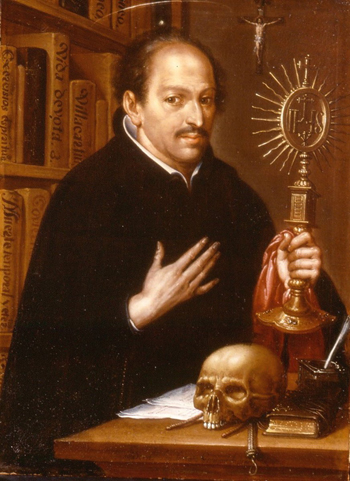
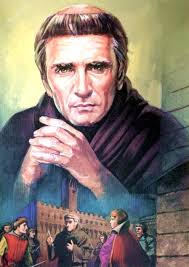
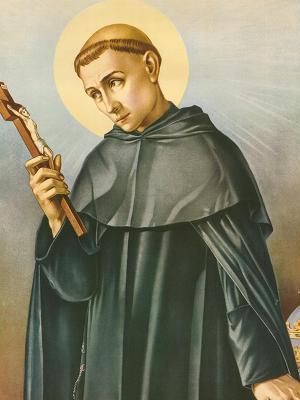
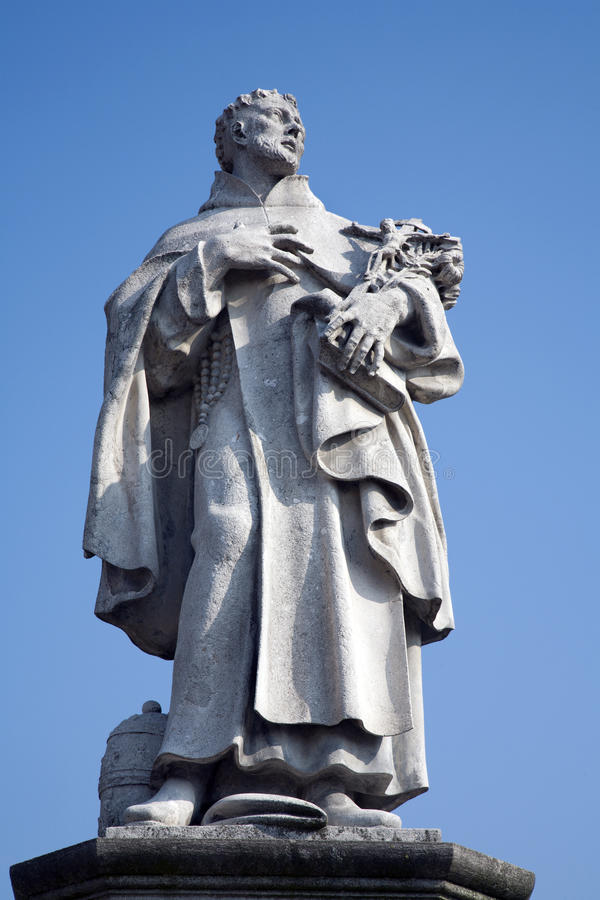
Saint of the Day – 23 August – St Philip Benizi OSM (1233-1285) Confessor, Priest and Co-Founder (one of the Seven Holy Founders of the Order of Servants of Mary) OSM, Servite Priest General of his Order, Reformer, Preacher, Medical Doctor., Miracle-worker.
St Philip Benizi, Confessor
By Fr Francis Xavier Weninger SJ (1805-1888)
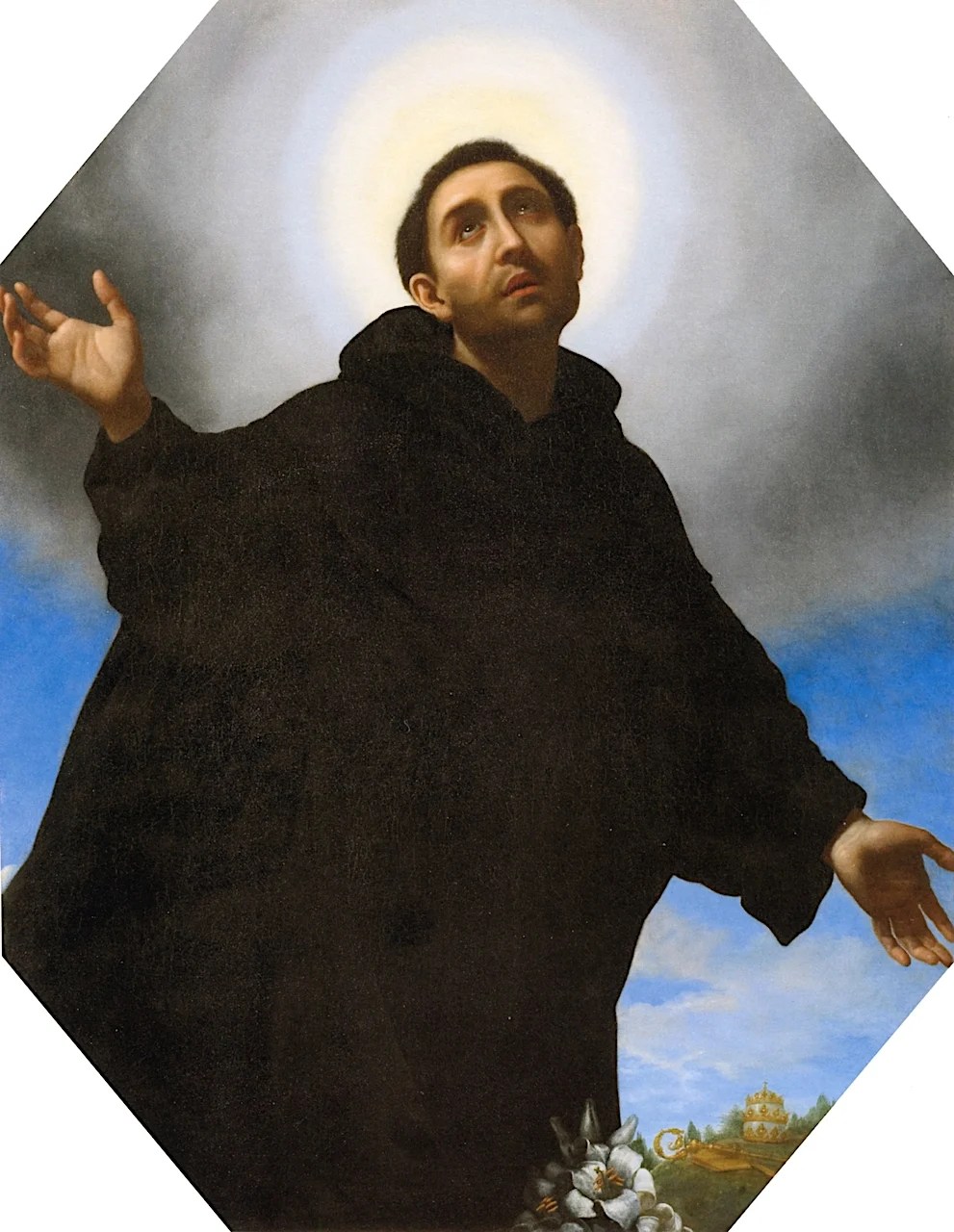
St Philip was born at Florence into the noble Florentine family of Benizi and before his birth, the Almighty had revealed to his pious mother, that he would become illustrious for his holiness. It seemed to her that a bright shining light emanated from her, which, spreading more and more, at last illumined the whole world with its rays. This was one of the inducements which led her to neglect nothing, which was necessary, to form in her son, the mind and heart of a Saint. She was still more strengthened in this decision, by the following event:
Two Religious of the newly founded Order of the Servites, came to her house. Philip, at that time only five months old, after looking at them for some moments, said:
“Behold the servants of Mary, give alms to them, my mother.”
All present, greatly surprised at this miracle, concluded, rightly that God had ordained a remarkable future for this child. The same might be divined from his entire conduct, while yet but a child: all his actions seemed to be imprinted with the seal of holiness.
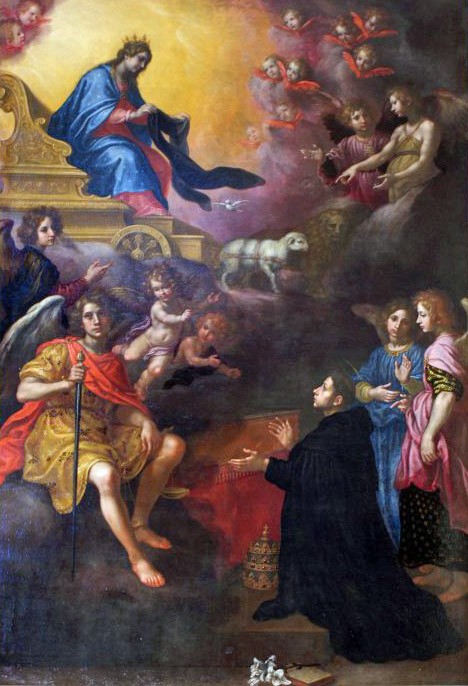
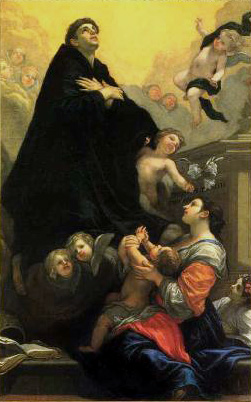
Having finished his studies, he was one day thinking about his vocation and it being the Thursday after Easter, he went into the Chapel of the Servites, which stood on the outskirts of Florence, to attend Holy Mass. At the Epistle were read the words of the Holy Ghost to St Philip: “Draw near and join thyself to the chariot.”” Having heard these words, he went into an ecstasy and it seemed to him that he was alone in a vast wilderness, where nothing was to be seen but sterile mountains, steep rocks and cliffs, or marshes overgrown with thorns, swarming with poisonous reptiles and full of snares. He screamed with fear and looking around, for a meabs to save himself, he saw, high in the air, the Blessed Virgin in a chariot, surrounded by Angels and Saints and holding in her hand, the habit of the Servites. At the same time, he heard from the lips of Mary the words which had just been read in the Epistle. “Draw near and join thyself to the Chariot.”
After this revelation, Philip no longer doubted that he was called to enter the Order of the Servites and going, the following day, to the dwelling of the seven Founders of this Order, he requested to be received as a lay-brother.
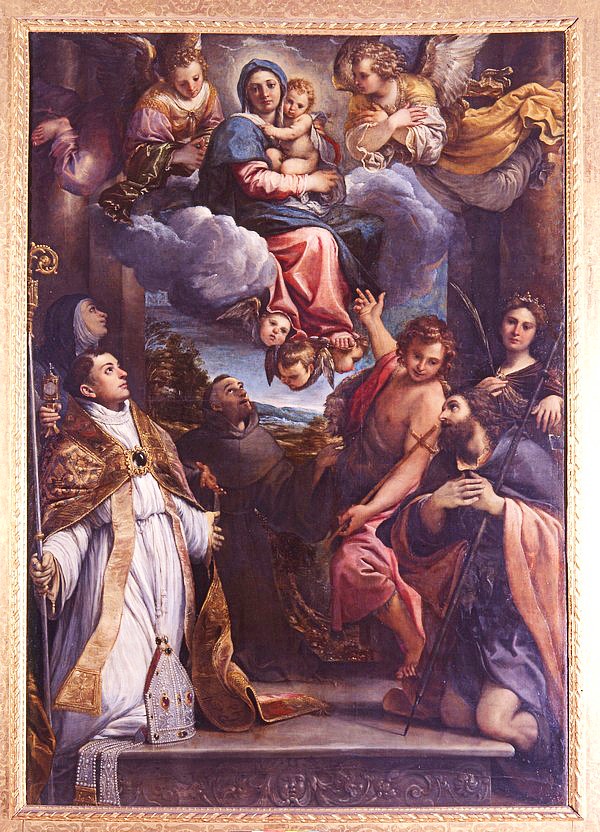
He was readily accepted, but after having served in that capacity for a few years, his talent, knowledge and holiness were so manifest that he was Ordained Priest, after which, he was raised from one dignity to another, until he was at last made General of the entire Order.
Although he at first humbly opposed this choice, yet when forced to obey, he became zealous in his labours to disseminate the principles of the holy Order, whose object is to reverence the Blessed Virgin and to promote her honour. He sent some of the religious to Scythia, to preach the Gospel and to spread the veneration of the Blessed Virgin. He himself, with two companions went through an incredible number of Cities and Provinces, everywhere exhorting sinners to repentance, endeavouring to calm the contentions which, at that period, disturbed the Christian world, disabusing, by his sermons, those who refused obedience to the Pope and animating all, to greater love of God and devotion to the Blessed Virgin.
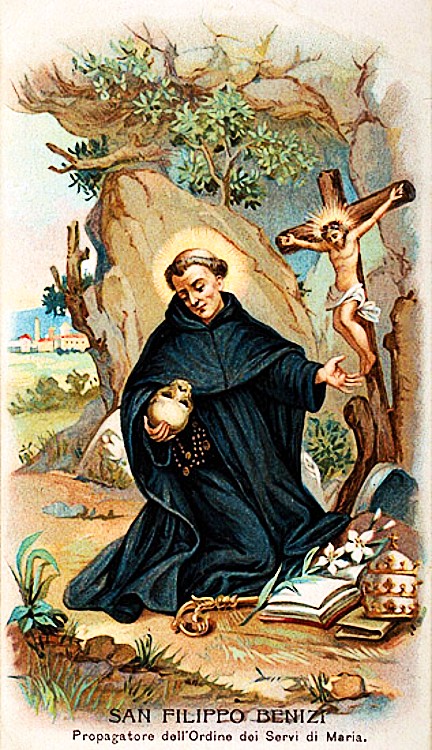
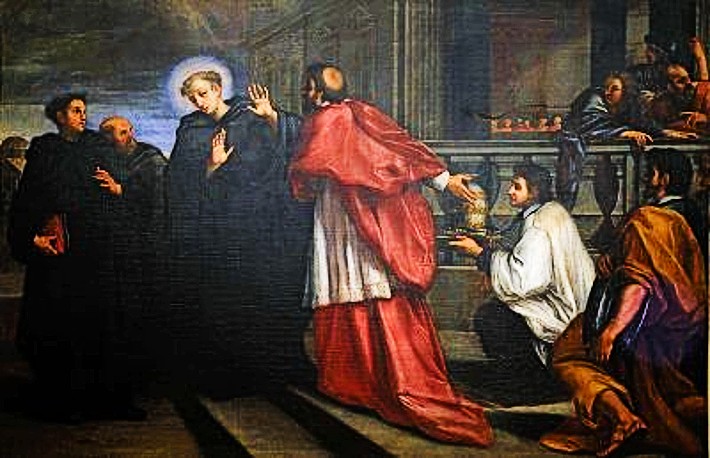
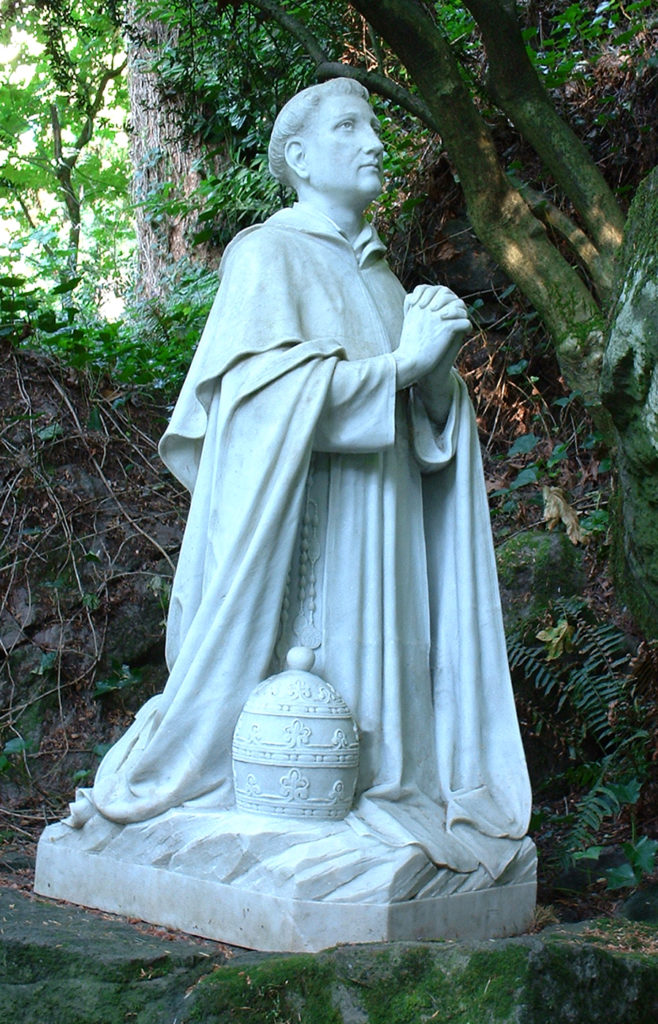
The Lord aided him visibly in all his undertakings and obtained for him, the highest regard from both clergy and laity. When the Cardinals, assembled at Viterbo to elect a new Pope, were unable to agree, they, at length, unanimously chose Philip, as all deemed him worthy of this high dignity. Philip, informed of it, was terrified and fled into the desert of Mount Thuniat, where he remained concealed in a cave, until another was elected Pope. This was not less an evidence, of his humility, than his election had been, of the high regard in which his virtues and the many miracles he had performed, were held by the Prelates of the Church.
His innocence and purity he carried unspotted to the grave but in order to preserve them, he was very severe to himself. He possessed in an eminent degree, the spirit of prayer, for, besides occupying a great portion of the night in devotional exercises, he also raised his mind to God, during his various occupations, by means of short aspirations. He never undertook anything without first recommending it in prayer to God and, the more important the affair, the longer and more fervent were his prayers.
The only object of his many and labourious voyages, was the glory of God and the good of men and his constant endeavour was, to prevent offences of the Divine Majesty and to work for the salvation of souls. But how shall we express his tender devotion to the Blessed Virgin, whom he had loved and honoured as a mother from his earliest childhood? In her honour, while yet a youth, he kept several festivals and performed many prayers.
He entered the Order of the Servites, because they regarded it their duty, to promote her veneration and honour. In every sermon, he admonished the people to honour Mary and to call upon her in all their troubles. In a word, he neglected nothing which he deemed necessary or useful, to institute and disseminate, due devotion to the Queen of Heaven. Although in many places, he had to endure much hardship and persecution, his love of God and the Blessed Virgin could not be discouraged from continuing in his apostolic labours.
Meanwhile, the weakness of his body manifested plainly that his last hour was approaching. He ,therefore, went to his Convent at Todi and there, first visited the Church. He prostrated himself before the Altar and when, after a long and fervent prayer, he again rose, he said:
“Lord, receive my thanksgiving,; here is my place of rest.”
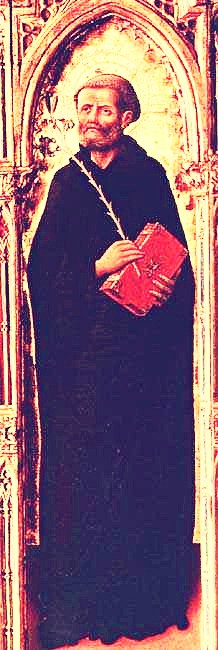
On the festival of the Assumption of Our Lady, he preached his last sermon, with such eloquence and unction, that all his listeners were greatly moved. On leaving the pulpit, he was seized with a fever, which, although by others thought of no consequence, was regarded by himself, as a messenger of death. Hence, he had himself carried into a special apartment and laid down but could not be persuaded to divest himself, of the rough hair-shirt which he constantly wore.
The days that he remained on earth after this, he employed in instructing and exhorting his religious, in prayers to God and invoking the intercession of the Blessed Virgin, in repenting of his sins and in longing to be admitted to the presence of the Most High. After having received,, with great devotion, the holy Sacraments, he requested his brethren to say the Litany of the Saints. When they came to the words:
“We sinners. we beseech Thee to hear us!” he fell into an ecstasy and lost his consciousness to such a degree that he seemed already to have expired.
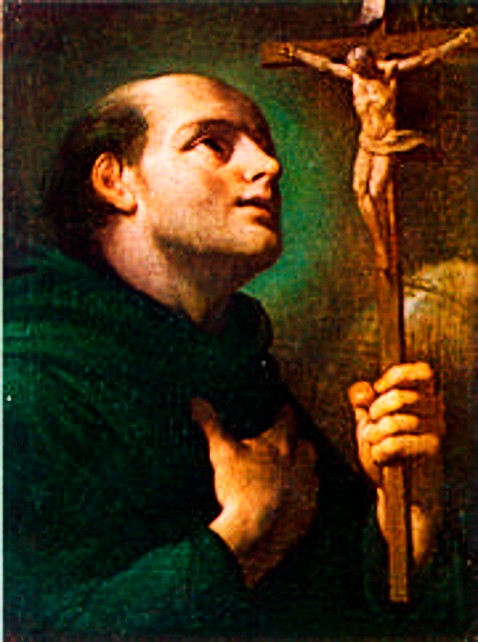
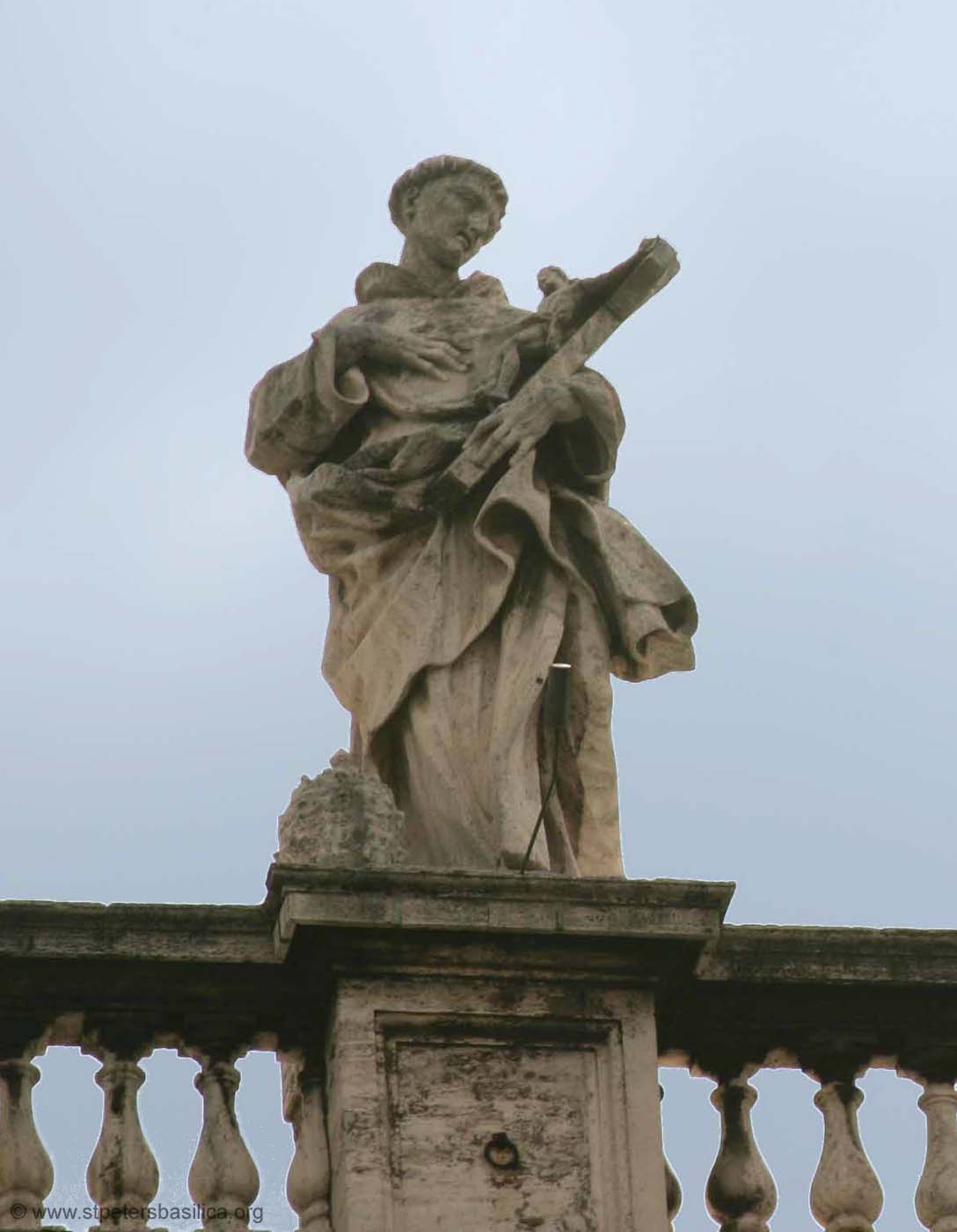
In this state he remained for three hours, when one of his friends loudly called him. He awakened as if from a deep slumber and related how fearful a struggle, he had had with Satan. How the latter had reproached him with his sins and endeavoured to make him despair of the mercy of God. But when the combat was at its height, the Blessed Virgin had appeared to him and, driving away Satan, had not only saved him from all danger,but had also shown him the crown which awaited him in the other world. Having related this to those around him, who were all awestruck, he requested what he called “his book,” the Crucifix and pressing it to his heart, he intoned the hymn of praise of St Zachary and after it, the 30th Psalm: “In thee, O Lord, have I hoped!” Arriving at the words: “Into thy hands I commend my spirit,” he looked once again at the Crucifix and ended his holy and useful life, on the Octave of Our Lady’s Assumption, in the year 1285.
The biography of this Saint contains many miracles which he performed during his life and many more which took place, by his intercession, after his happy death.

 AnaStpaul
You must be logged in to post a comment.