Posted in MARIAN TITLES, SAINT of the DAY

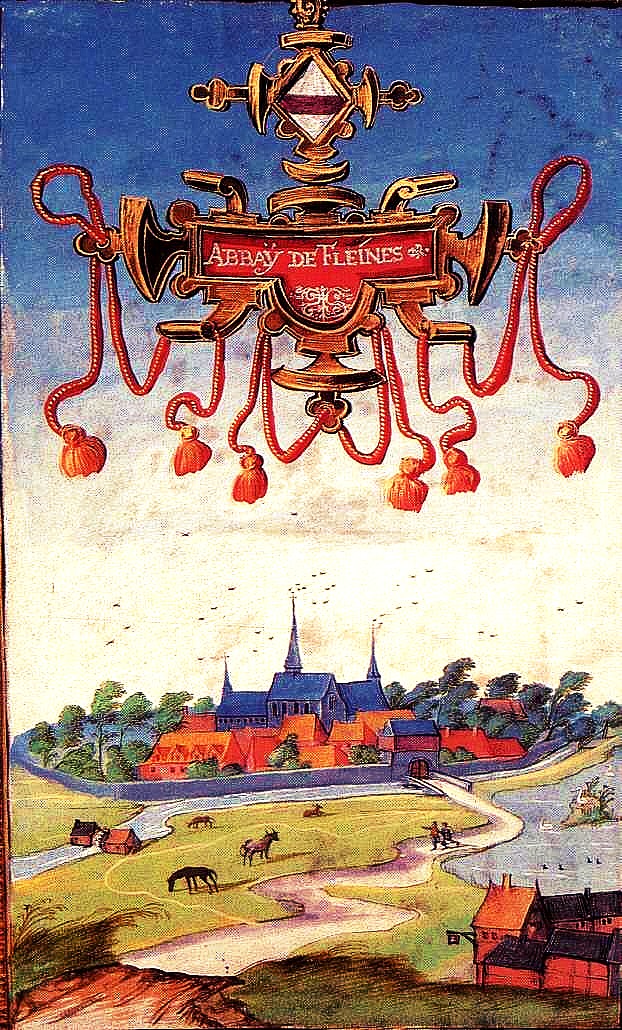
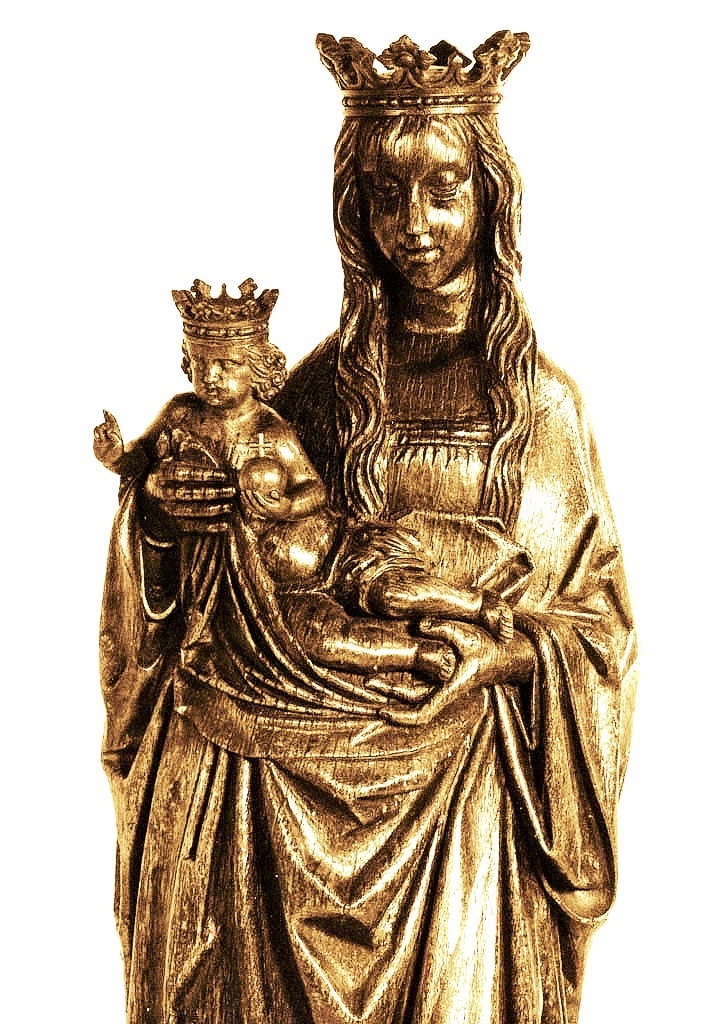
Notre-Dame de Flines / Our Lady of Flines, Douay (1279), St Pope Celestine V and Memorials of the Saints – 19 May

Notre-Dame de Flines / Our Lady of Flines, Douay (1279) – 20 May:
HERE:

https://anastpaul.com/2021/05/19/notre-dame-de-flines-our-lady-of-flines-douay-1279-and-memorial-of-the-saints-19-may/

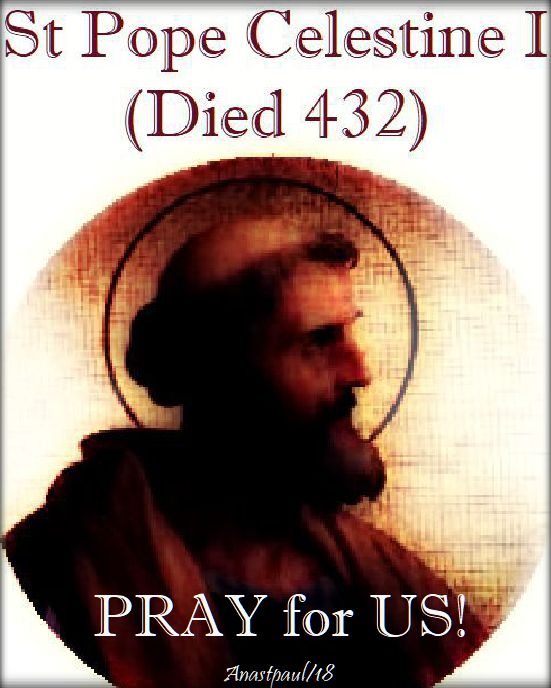
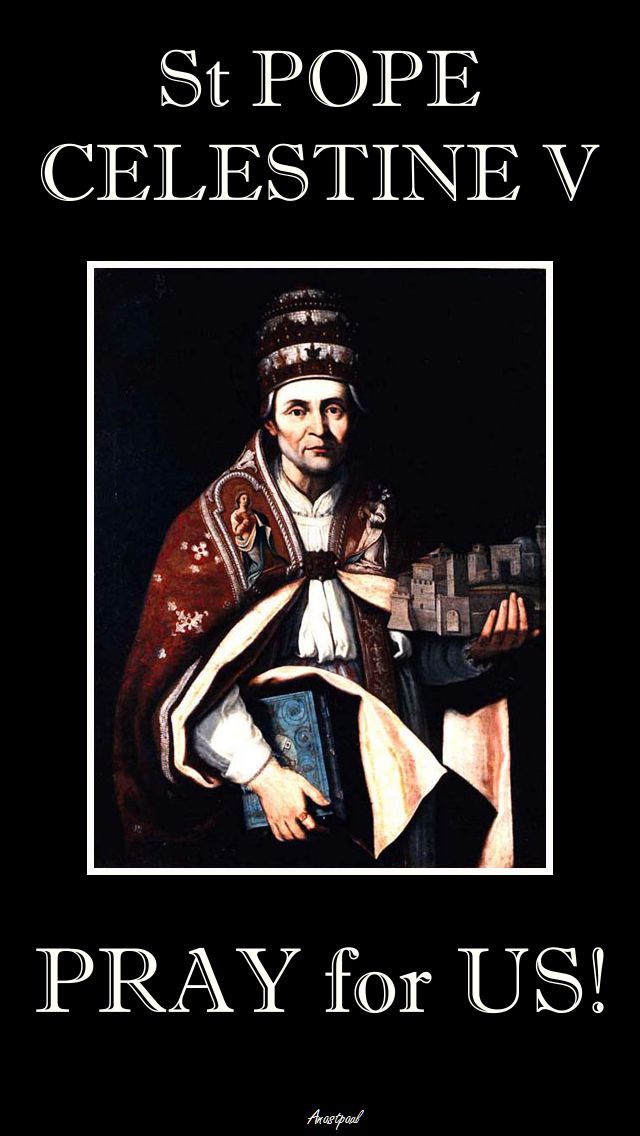
St Pope Celestine V (1210-1296) Papal Ascension , 5 July 1294 – Papal Abdication, 13 December 1294.
Biography:

https://anastpaul.wordpress.com/2017/05/19/saint-of-the-day-19-may-st-pope-celestine-v/

St Pudentiana of Rome

St Alcuin of York (c735-804) Deacon, Confessor, Teacher, Founder of educational institutions in Monasteries and Cathedral Chapters. Accredited with the the invention of cursive script.

Blessed Augustine Novello OSA (1240– 1309) Priest and Friar of the Order of St Augustine. Miracle-worker, Prior General of the Order, Reformer of the Constitutions, Professor of Canon and Civil Law.
Blessed Augustine’s life:

https://anastpaul.com/2021/05/19/saint-of-the-day-19-may-blessed-augustine-novello-osa-1240-1309/

St Calocerus of Rome
St Crispin of Viterbo
St Cyriaca of Nicomedia and Companions
St Cyril of Trèves
St Dunstan of Canterbury
St Evonio of Auvergne
St Hadulph of Saint-Vaast
Bl Humiliana de’ Cerchi

St Ivo Hélory of Kermartin TOSF (1253-1303) “Advocate of the Poor,” Priest, Franciscan Tertiary
An interesting man and Saint:

https://anastpaul.wordpress.com/2018/05/19/saint-of-the-day-19-may-st-ivo-of-kermartin-1253-1303-advocate-of-the-poor/

Bl Juan of Cetina
St Parthenius of Rome
Bl Peter de Duenas
Bl Peter Wright
St Philoterus of Nicomedia
St Pudens of Rome
St Theophilus of Corte

Posted in CHRIST the WORD and WISDOM, DOCTORS of the Church, FATHERS of the Church, ONE Minute REFLECTION, QUOTES on the CHURCH, SAINT of the DAY, St PETER!, The APOSTLES & EVANGELISTS, The WORD

One Minute Reflection – 19 May – ,“Upon this rock I will build my church” …

One Minute Reflection – 19 May – The Memorial of St Peter Celestine (1210-1296) Pope and Confessor – 1 Peter 5:1-4; 5:10-11, Matthew 16:13-19

Upon this rock I will build my church” … Matthew 16:18

REFLECTION – “Nothing escaped the Wisdom and Power of Christ, the elements of nature lay at His service, spirits obeyed Him, Angels served Him. … And yet, out of all the world, Peter alone was chosen to stand at the head, for the calling of all the peoples and the oversight of all the Apostles and Fathers of the Church. Thus, even though there are many Priests and shepherds among the People of God, Peter governed them all in person, while Christ also governs them in the capacity of Head. …

The Lord asks all the Apostles what people think of Him and they all say the same thing, so long as they are making known the doubts deriving from human ignorance. But when the Lord demands to know, what the disciples themselves think, the first to confess the Lord, is he, who is the first in dignity of the Apostles. As he had said: “You are the Christ, the Son of the Living God,” Jesus answers him: “Blessed are you, Simon son of Jonah. For flesh and blood has not revealed this to you, but my heavenly Father.” That is to say, blessed are you because my Father taught this to you. Earthly opinion has not led you astray but it is heavenly inspiration that has instructed you. It is not flesh and blood that enabled you to discover Me but He, Whose only Son I am.

And so I say to you,” that is to say- just as my Father has manifested My Divinity to you, so, I Am making known your superiority to you. “You are Peter” namely, I am the unshakeable Rock, the Cornerstone who makes two peoples one (Eph 2:14), the foundation other than which, no-one can lay any other (1 Cor 3:11). But you also, you are rock, since you are impregnable by My Strength and, what I have by virtue of My Power, you have in common with Me, by the fact,, that you participate in it. “On this rock I will build my Church” … On the firmness of this foundation, He says, will I build an everlasting temple and my Church, whose summit is to reach to Heaven, will be raised on the strength of that faith.” … Saint Pope Leo the Great (400-461) Father and Doctor of the Church ( 4th sermon for the Anniversary of his Conse

PRAYER – O God, Who raised blessed Peter Celestine to the lofty dignity of Supreme Pontiff and taught him to prefer self-abasement instead; mercifully grant that by his example, we may look upon all worldly things as naught and may be worthy, to reap in joy, the rewards promised to the humble. Through Jesus Christ, Thy Son our Lord, Who lives and reigns with Thee, in the unity of the Holy Ghost, God, world without end. Amen (Collect).

Posted in AUGUSTINIANS OSA, DOMINICAN OP, franciscan OFM, MARIAN TITLES, SAINT of the DAY

Notre-Dame de Flines / Our Lady of Flines, Douay (1279) and Memorials of the Saints – 19 May

Notre-Dame de Flines / Our Lady of Flines, Douay (1279) – 20 May:
HERE:

https://anastpaul.com/2021/05/19/our-morning-offering-19-may-blessed-are-you-o-mary-by-st-jacob-of-sarug/

St Pope Celestine V (1210-1296) Papal Ascension , 5 July 1294 – Confessor, Papal Abdication, 13 December 1294.
Biography:

https://anastpaul.wordpress.com/2017/05/19/saint-of-the-day-19-may-st-pope-celestine-v/

Blessed Augustine Novello OSA (1240– 1309) Priest and Friar of the Order of St Augustine, Miracle-worker, Prior General of the Order, Reformer of the Constitutions, Professor of Canon and Civil Law.
Biography:

https://anastpaul.com/2021/05/19/saint-of-the-day-19-may-blessed-augustine-novello-osa-1240-1309/

St Calocerus of Rome

St Crispin of Viterbo
St Cyriaca of Nicomedia and Companions
St Cyril of Trèves
St Dunstan of Canterbury (909-988) Bishop of London, Worcester then Archbishop of Canterbury
St Evonio of Auvergne

Saint Francisco Coll y Guitart OP (1812-1875) Spanish Priest of the Order of Preachers, (the Dominicans), Founder of the Dominican Sisters of the Annunciation of the Blessed Virgin, Confessor, Holy See Apostolic Missionary and was known as “The Apostle of Modern Times.”
About this Saint for modern times:

https://anastpaul.com/2020/05/19/saint-of-the-day-19-may-st-francisco-coll-y-guitart-op-1812-1875-the-apostle-of-modern-times/

St Hadulph of Saint-Vaast
Bl Humiliana de’ Cerchi

St Ivo Hélory of Kermartin TOSF (1253-1303) “Advocate of the Poor,” Priest, Franciscan Tertiary
An interesting man and Saint:

https://anastpaul.wordpress.com/2018/05/19/saint-of-the-day-19-may-st-ivo-of-kermartin-1253-1303-advocate-of-the-poor/

Bl Jean-Baptiste-Xavier Loir
Bl Józef Czempiel
Bl Juan of Cetina
Bl Louis Rafiringa
Bl Lucinio Fontanil Medina

St Maria Bernarda Bütler (1848-1924) Religious Sister, Founder, Missionary
Her Life:

https://anastpaul.com/2019/05/19/saint-of-the-day-19-may-st-maria-bernarda-butler-1848-1924/

St Parthenius of Rome
Bl Peter de Duenas
Bl Peter Wright
St Philoterus of Nicomedia
St Pudens of Rome
St Pudentiana of Rome
St Theophilus of Corte

Posted in MARIAN TITLES, SAINT of the DAY

Notre-Dame de Flines / Our Lady of Flines, Douay (1279) and Memorial of the Saints – 19 May

Notre-Dame de Flines / Our Lady of Flines, Douay (1279) – 20 May:

The Abbot Orsini writes: “Dedication of Our Lady of Flines, near Douay, by Peter, Archbishop of Rheims, in the year 1279. This Abbey of Nuns, of the Order of Citeaux, was given to Saint Bernard by Margaret de Dampierre, in the year 1234.”

Margaret de Dampiere, also known as Margaret of Constantinople, was a relative of the Count Guy de Dampier. It appears that Saint Bernard had recently established an Order of Nuns according to the Rule of his Order and in the year 1234, Margaret presented Saint Bernard with the Abbey located near Douay.
Five years previous to this, Archbishop Peter of Rheims had dedicated the Shrine to Our Lady of Flines. This Shrine became a place of pilgrimage as a result of the miraculous cure of a child protégé of Margaret’s. The little one, unseen by Margaret’s coachman, had been seriously injured while playing about the stable-yard. The doctors pronounced her hopelessly lame for life.
Margaret, however, was confident in Our Lady’s intercession and took the child to the neighbouring Shrine every Saturday and begged the Mother of God to be merciful to the child, as well as to the grieving parents. After the fifteenth visit, the little girl, with a happy cry, jumped from the arms of her mother. “I can walk straight, see?” and proved that Our Lady had indeed cured her in that instant.
When Margaret de Dampiere died in 1280, she was buried in the centre of the choir.
The renown of the Shrine continued to spread over time and resulted in many pilgrimages to Our Lady of Flines. The Blessed Virgin Mary proved the words of her loyal son Saint Bernard, “Never was it known that anyone who fled to thy protection, implored thy help, or sought thine intercession was left unaided” to be true.
The Abbey was destroyed by the partisans of the French Revolution and there is now no trace of the once thriving and beautiful Convent and Shrine.

St Alcuin of York
Blessed Augustine Novello OSA (1240– 1309) Priest and Friar of the Order of St Augustine.
St Calocerus of Rome

St Pope Celestine V (1210-1296) Papal Ascension , 5 July 1294 – Papal Abdication, 13 December 1294.
Biography:

https://anastpaul.wordpress.com/2017/05/19/saint-of-the-day-19-may-st-pope-celestine-v/

St Crispin of Viterbo
St Cyriaca of Nicomedia and Companions
St Cyril of Trèves
St Dunstan of Canterbury
St Evonio of Auvergne

Saint Francisco Coll y Guitart OP (1812-1875) Spanish Priest of the Order of Preachers, (the Dominicans), Founder of the Dominican Sisters of the Annunciation of the Blessed Virgin, Confessor, Holy See Apostolic Missionary and was known as “The Apostle of Modern Times.”
About this Saint for modern times:

https://anastpaul.com/2020/05/19/saint-of-the-day-19-may-st-francisco-coll-y-guitart-op-1812-1875-the-apostle-of-modern-times/

St Hadulph of Saint-Vaast
Bl Humiliana de’ Cerchi

St Ivo Hélory of Kermartin TOSF (1253-1303) “Advocate of the Poor,” Priest, Franciscan Tertiary
An interesting man and Saint:

https://anastpaul.wordpress.com/2018/05/19/saint-of-the-day-19-may-st-ivo-of-kermartin-1253-1303-advocate-of-the-poor/

Bl Jean-Baptiste-Xavier Loir
Bl Józef Czempiel
Bl Juan of Cetina
Bl Louis Rafiringa
Bl Lucinio Fontanil Medina

St Maria Bernarda Bütler (1848-1924) Religious Sister, Founder, Missionary
Her Life:

https://anastpaul.com/2019/05/19/saint-of-the-day-19-may-st-maria-bernarda-butler-1848-1924/

St Parthenius of Rome
Bl Peter de Duenas
Bl Peter Wright
St Philoterus of Nicomedia
St Pudens of Rome
St Pudentiana of Rome
St Theophilus of Corte

Posted in SAINT of the DAY

Memorials of the Saints – 19 May

St Alcuin of York
Bl Augustine Novello
St Calocerus of Rome
St Pope Celestine V (1210-1296)
Biography:
https://anastpaul.wordpress.com/2017/05/19/saint-of-the-day-19-may-st-pope-celestine-v/
St Crispin of Viterbo
St Cyriaca of Nicomedia and Companions
St Cyril of Trèves
St Dunstan of Canterbury
St Evonio of Auvergne
Saint Francisco Coll y Guitart OP (1812-1875)
St Hadulph of Saint-Vaast
Bl Humiliana de’ Cerchi
St Ivo Hélory of Kermartin TOSF (1253-1303)
An interesting man and Saint:
https://anastpaul.wordpress.com/2018/05/19/saint-of-the-day-19-may-st-ivo-of-kermartin-1253-1303-advocate-of-the-poor/
Bl Jean-Baptiste-Xavier Loir
Bl Józef Czempiel
Bl Juan of Cetina
Bl Louis Rafiringa
Bl Lucinio Fontanil Medina
St Maria Bernarda Bütler (1848-1924)
Her Life:
https://anastpaul.com/2019/05/19/saint-of-the-day-19-may-st-maria-bernarda-butler-1848-1924/
St Parthenius of Rome
Bl Peter de Duenas
Bl Peter Wright
St Philoterus of Nicomedia
St Pudens of Rome
St Pudentiana of Rome
St Theophilus of Corte

Posted in SAINT of the DAY

Memorials of the Saints – 19 May

St Alcuin of York
Bl Augustine Novello
St Calocerus of Rome
St Pope Celestine V (1210-1296)
Biography:   https://anastpaul.wordpress.com/2017/05/19/saint-of-the-day-19-may-st-pope-celestine-v/
St Crispin of Viterbo
St Cyriaca of Nicomedia and Companions
St Cyril of Trèves
St Dunstan of Canterbury
St Evonio of Auvergne
St Hadulph of Saint-Vaast
Bl Humiliana de’ Cerchi
St Ivo Hélory of Kermartin TOSF (1253-1303)
An interesting man and Saint:   https://anastpaul.wordpress.com/2018/05/19/saint-of-the-day-19-may-st-ivo-of-kermartin-1253-1303-advocate-of-the-poor/
Bl Jean-Baptiste-Xavier Loir
Bl Józef Czempiel
Bl Juan of Cetina
Bl Louis Rafiringa
Bl Lucinio Fontanil Medina
St Parthenius of Rome
Bl Peter de Duenas
Bl Peter Wright
St Philoterus of Nicomedia
St Pudens of Rome
St Pudentiana of Rome
St Theophilus of Corte
St Maria Bernarda Bütler (1848-1924)

Posted in MORNING Prayers, SAINT of the DAY

Thought for the Day – 19 May

Thought for the Day – 19 May

St Celestine V tasted bitterly his own failure but this did not prevent him from being a saint.   When he realised that he was in the wrong place, he quickly did something about it, whatever the consequences.   To admit failure, particularly in a place of importance and public scrutiny, takes a rare kind of courage and that kind of courage is the stuff that saints are made of.  Say no more!

St Pope Celestine V, please pray for us, that we may have the courage to admit our failures.

ST CELESTINE V-PRAY FOR USST POPE CELESTINE V - MAY 19 ST PAULS

Posted in SAINT of the DAY

Saint of the Day – 19 May – St Pope Celestine V

Saint of the Day – 19 May – St Pope Celestine V  Born 1210 at Isneria, Abruzzi, Italy as Pietro del Morrone;  Papal Ascension – 5 July 1294 – Papal Abdication – 13 December 1294.  Died:  • 19 May 1296 in Rome, Italy of natural causes.  St Celestine is buried in the church of Saint Agatha, Ferentino, Italy and re-interred in the Church of Saint Maria di Collemaggio, Aquila, Italy.  Monk, Hermit, Pope, Founder.  Patron of Bookbinders,Papal resignations, Aquila, Urbino, Molisem Sant’Angelo Limosano.   Attributes – Papal vestments, Papal tiara, Book

B_Colestin_V

Peter Celestine, was Pope for five months from 5 July to 13 December 1294, when he resigned.   He was also a monk and hermit who founded the order of the Celestines as a branch of the Benedictine order.
He was elected pope in the Catholic Church’s last non-conclave papal election, ending a two-year impasse.   Among the only edicts of his to remain in force was the confirmation of the right of the pope to abdicate;  nearly all of his other official acts were annulled by his successor, Boniface VIII.   On 13 December 1294, a week after issuing the decree, Celestine resigned, stating his desire to return to his humble, pre-papal life.   He was subsequently imprisoned by Boniface in the castle of Fumone in the Campagna region, in order to prevent his potential installation as antipope.   He died in prison on 19 May 1296 at the age of 81.
St Celestine was canonized on 5 May 1313 by Pope Clement V.   No subsequent pope has taken the name Celestine.
celestine_full_size_clour

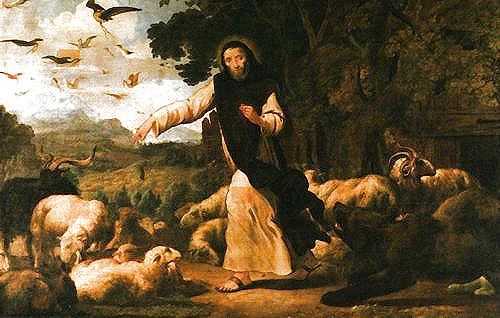
Pietro Angelerio was born to parents Angelo Angelerio and Maria Leone in a town called Sant’Angelo Limosano, in the Kingdom of Sicilia (Sicily).   After his father’s death he began working in the fields.   His mother Maria was a key figure in Pietro’s spiritual development:  she imagined a different future for her deeply beloved son than becoming just a farmer or a shepherd.   From the time he was a child, he showed great intelligence and love for others.   He became a Benedictine monk at Faifoli in the Diocese of Benevento when he was 17.   He showed an extraordinary disposition toward asceticism and solitude and in 1239 retired to a solitary cavern on the mountain Morrone, hence his name (Peter of Morrone).   Five years later he left this retreat and went with two companions to a similar cave on the even more remote Mountain of Maiella in the Abruzzi region of central Italy, where he lived as strictly as possible according to the example of St. John the Baptist.   Accounts exist of the severity of his penitential practices.
cel-as-Shepherd

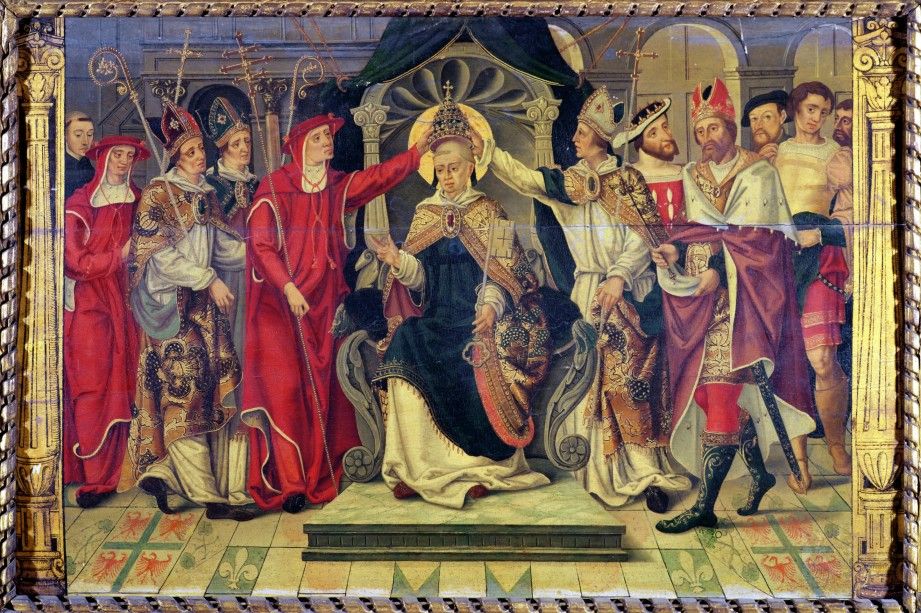
The cardinals assembled at Perugia after the death of Pope Nicholas IV in April 1292. After more than two years, a consensus had still not been reached.   Pietro, well known to the cardinals as a Benedictine hermit, sent the cardinals a letter warning them that divine vengeance would fall upon them if they did not quickly elect a pope.   Latino Malabranca, the aged and ill dean of the College of Cardinals cried out, “In the name of the Father, the Son, and the Holy Ghost, I elect brother Pietro di Morrone.” The cardinals promptly ratified Malabranca’s desperate decision.   When sent for, Pietro obstinately refused to accept the papacy and even, as Petrarch says, tried to flee, until he was finally persuaded by a deputation of cardinals accompanied by the king of Naples and the pretender to the throne of Hungary.   Elected on 5 July 1294, at age 79, he was crowned at Santa Maria di Collemaggio in the city of Aquila in the Abruzzo on 29 August, taking the name Celestine V.

St Celestinus V 4

Shortly after assuming office, Celestine issued a papal bull granting a rare plenary indulgence to all pilgrims visiting Santa Maria di Collemaggio through its holy door on the anniversary of his papal coronation.   The Perdonanza Celestiniana festival is celebrated in L’Aquila every 28–29 August in commemoration of this event.

With no political experience, Celestine proved to be an especially weak and ineffectual pope.   He held his office in the Kingdom of Naples, out of contact with the Roman Curia and under the complete power of King Charles II.    He appointed the king’s favorites to church offices, sometimes several to the same office.   One of these was Louis of Toulouse, whom Celestine ordered given clerical tonsure and minor orders, although this was not carried out.   He renewed a decree of Pope Gregory X that had established stringent rules for papal conclaves after a similarly prolonged election.   In one decree, he appointed three cardinals to govern the church during Advent while he fasted, which was again refused.  Realizing his lack of authority and personal incompatibility with papal duties, he consulted with Cardinal Benedetto Caetani (his eventual successor) about the possibility of resignation.   This resulted in one final decree declaring the right of resignation, which he promptly exercised after five months and eight days in office, thus on 13 December 1294, Celestine V resigned.   In the formal instrument of renunciation, he recited as the causes moving him to the step: “The desire for humility, for a purer life, for a stainless conscience, the deficiencies of his own physical strength, his ignorance, the perverseness of the people, his longing for the tranquility of his former life”.   Having divested himself of every outward symbol of papal dignity, he slipped away from Naples and attempted to retire to his old life of solitude.

The next pope to resign of his own accord was Pope Benedict XVI in 2013, 719 years later.

The former Celestine, now reverted to Pietro Angelerio, was not allowed to become a hermit once again.   Various parties had opposed his resignation and the new Pope Boniface VIII had reason to worry that one of them might install him as an antipope.  To prevent this he ordered Pietro to accompany him to Rome.   Pietro escaped and hid in the woods before attempting to return to Sulmona to resume monastic life.   This proved impossible and Pietro was captured after an attempt to flee to Dalmatia was thwarted when a tempest forced his ship to return to port. Boniface imprisoned him in the castle of Fumone near Ferentino in Campagna, attended by two monks of his order, where Pietro died after 10 months at about the age of 81.   His supporters spread the allegation that Boniface had treated him harshly and ultimately executed Pietro but the historical evidence is lacking.   Pietro was buried at Ferentino but his body was subsequently removed to the Basilica Santa Maria di Collemaggio in Aquila.

Philip IV of France, who had supported Celestine and bitterly opposed Boniface, nominated Celestine for sainthood following the election of Pope Clement V.   The latter signed a decree of dispensation on 13 May 1306 to investigate the nomination.   He was canonised on 5 May 1313 after a consistory.   Most modern interest in Celestine V has focused on his resignation.   He was the first pope to formalise the resignation process and is often said to have been the first to resign.   In fact he was preceded in this by Pope Pontian (235), John XVIII (1009), Benedict IX (1045) and Gregory VI (1046).   As noted above, Celestine’s own decision was brought about by mild pressure from the Church establishment.   His reinstitution of Gregory X’s conclave system established by the papal bull Ubi periculum has been respected ever since.

A 1966 visit by Pope Paul VI to Celestine’s place of death in Ferentino along with his speech in homage of Celestine prompted speculation that the Pontiff was considering retirement.

Celestine-V-remains-new-silver-mask

Celestine’s remains survived the 2009 L’Aquila earthquake with one Italian spokesman saying it was “another great miracle by the pope”.   They were then recovered from the basilica shortly after the earthquake.   While inspecting the earthquake damage during a 28 April 2009 visit to the Aquila, Pope Benedict XVI visited Celestine’s remains in the badly damaged Santa Maria di Collemaggio and left the woolen pallium he wore during his papal inauguration in April 2005 on his glass casket as a gift.

To mark the 800th anniversary of Celestine’s birth, Pope Benedict XVI proclaimed the Celestine year from 28 August 2009 through 29 August 2010.   Benedict XVI visited the Sulmona Cathedral, near Aquila, on 4 July 2010 as part of his observance of the Celestine year and prayed before the altar consecrated by Celestine containing his relics, on 10 October 1294.