One Minute Reflection – 23 March – Saturday in Passion Week – Jeremias18:18-23, John 12:10-36 – Scripture search here: https://www.drbo.org/
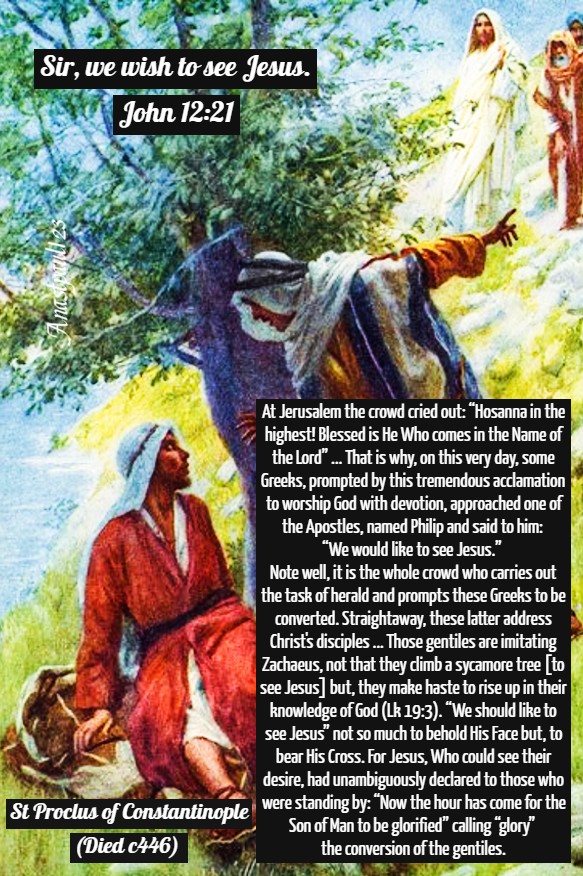
“Sir, we wish to see Jesus.” – John 12:21
REFLECTION – “At Jerusalem the crowd cried out: “Hosanna in the highest! Blessed is He Who comes in the Name of the Lord, the King of Israel” (cf Mk 11:10). The phrase “He Who comes.” is well said because He is always coming, He never fails us – “The Lord is close to those who call upon Him in truth. Blessed is He Who comes in the Name of the Lord” (Ps 144:18; 117:26). The gentle King of peace stands at our door… Soldiers here below, Angels in Heaven, mortals and immortals… cry aloud: “Blessed is He Who comes in the Name of the Lord, the King of Israel.” The Pharisees, however, stand aloof (Jn 12:19) and the priests are incensed by it. But the voices which sing God’s praises ring out without ceasing – creation is full of joy…
That is why, on this very day, some Greeks, prompted by this tremendous acclamation to worship God with devotion, approached one of the Apostles, named Philip and said to him: “We would like to see Jesus.” Note well, it is the whole crowd who carries out the task of herald and prompts these Greeks to be converted. Straightaway, these latter address Christ’s disciples – “We would like to see Jesus.” Those gentiles are imitating Zachaeus, not that they climb a sycamore tree [to see Jesus] but, they make haste to rise up in their knowledge of God (Lk 19:3). “We should like to see Jesus” not so much to behold His Face but, to bear His Cross. For Jesus, Who could see their desire, had unambiguously declared to those who were standing by: “Now the hour has come for the Son of Man to be glorified” calling “glory” the conversion of the gentiles.
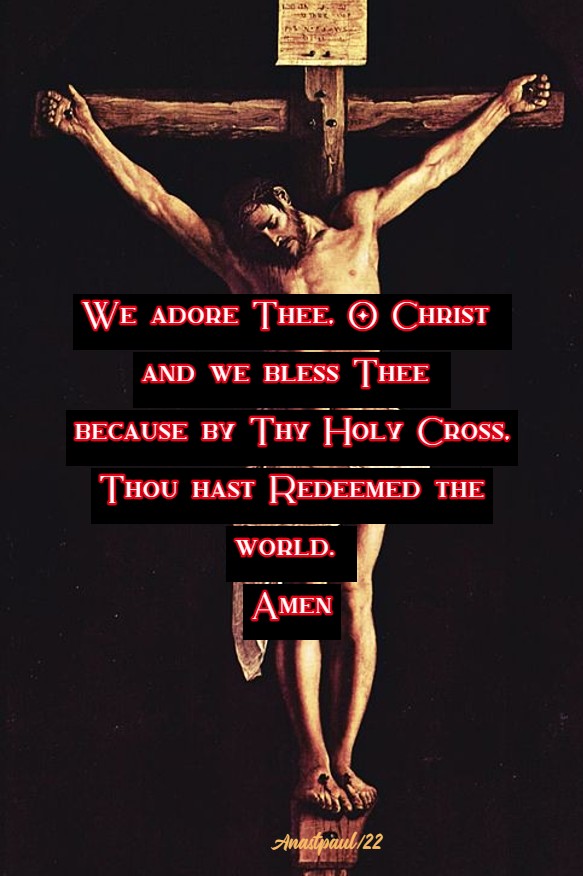
And He gave the name “glory” to the Cross. For, from that day to this, the Cross is glorified. Indeed, it is the Cross which still today, Consecrates Kings, adorns Priests, protects Virgins, gives constancy to Hermits, reinforces the Marriage bond and strengthens Widows. It is the Cross which makes the Church fruitful, brings light to the peoples, guards the desert, opens paradise.” – St Proclus of Constantinople (Died c446) Archbishop of Constantinople, Confessor, Defender of the Church and of the Blessed Virgin, Writer, renowned Preacher, Father of the C hurch (Sermon for Palm Sunday).
PRAYER – O Lord, may the people dedicated to Thee desire to serve Thee more and more that, taught by these sacred rites, they may be enriched by more precious gift,s as they grow in favour with Thy majesty. Through Jesus Christ, Thy Son our Lord, Who lives and reigns with Thee, in the unity of the Holy Ghost, God, world without end. Amen (Collect).
Saint Raphael the Archangel The Feast day of Saint Raphael was included for the first time in the General Roman Calendar in 1921, for celebration on 24 October. With the 1969 revision of the General Roman Calendar, the Feast was transferred to 29 September for celebration together with Archangels Saints Michael and Gabriel. St Raphael: https://anastpaul.com/2021/10/24/saint-of-the-day-24-october-st-raphael-the-archangel/
Bl Amado García Sánchez St Audactus of Thibiuca St Cadfarch St Ciriacus of Hierapolis St Claudian of Hierapolis St Ebregislus of Cologne St Felix of Thibiuca St Fortunatus of Thibiuca St Fromundus of Coutances St Maglorius of Wales (Died 575) Bishop
St Marcius of Monte Cassino St Mark of Campania Hermit
St Senoch St Senócus of Tours St Septimus of Thibiuca
Martyrs of Ephesus – 3 Saints: Three Christians Martyred together. All we know about them are the names Mark, Sotericus and Valentina. They were stoned to death near Ephesus, Asia Minor (in modern Turkey). Their relics are enshrined on the island of Tasos.
One Minute Reflection – 1 April – “The Month of the Resurrection” – Saturday in Passion Week – Jeremias18:18-23, John 12:10-36 – Scripture search here: https://www.drbo.org/
“Sir, we wish to see Jesus.” – John 12:21
REFLECTION – “At Jerusalem the crowd cried out: “Hosanna in the highest! Blessed is He Who comes in the Name of the Lord, the King of Israel” (cf Mk 11:10). The phrase “He Who comes.” is well said because He is always coming, He never fails us – “The Lord is close to those who call upon Him in truth. Blessed is He Who comes in the Name of the Lord” (Ps 144:18; 117:26). The gentle King of peace stands at our door… Soldiers here below, Angels in Heaven, mortals and immortals… cry aloud: “Blessed is He Who comes in the Name of the Lord, the King of Israel.” The Pharisees, however, stand aloof (Jn 12:19) and the priests are incensed by it. But the voices which sing God’s praises ring out without ceasing – creation is full of joy…
That is why, on this very day, some Greeks, prompted by this tremendous acclamation to worship God with devotion, approached one of the Apostles, named Philip and said to him: “We would like to see Jesus.” Note well, it is the whole crowd who carries out the task of herald and prompts these Greeks to be converted. Straightaway, these latter address Christ’s disciples – “We would like to see Jesus.” Those gentiles are imitating Zachaeus, not that they climb a sycamore tree [to see Jesus] but, they make haste to rise up in their knowledge of God (Lk 19:3). “We should like to see Jesus” not so much to behold His Face but, to bear His Cross. For Jesus, Who could see their desire, had unambiguously declared to those who were standing by: “Now the hour has come for the Son of Man to be glorified” calling “glory” the conversion of the gentiles.
And He gave the name “glory” to the Cross. For, from that day to this, the Cross is glorified. Indeed, it is the Cross which still today, Consecrates Kings, adorns Priests, protects virgins, gives constancy to hermits, reinforces the marriage bond and strengthens widows. It is the Cross which makes the Church fruitful, brings light to the peoples, guards the desert, opens paradise.” – St Proclus of Constantinople (Died c446) Archbishop of Constantinople, Confessor, Defender of the Church and of the Blessed Virgin, Writer, renowned Preacher, Father of the C hurch (Sermon for Palm Sunday).
PRAYER – O Lord, may the people dedicated to Thee desire to serve Thee more and more that, taught by these sacred rites, they may be enriched by more precious gift,s as they grow in favour with Thy majesty. Through Jesus Christ, Thy Son our Lord, Who lives and reigns with Thee, in the unity of the Holy Ghost, God, world without end. Amen (Collect).
One Minute Reflection – 10 January – “The Month of the Most Holy Name of Jesus” –Within the Octave of Epiphany – Isaias 60:1-6, Matthew 2:1-12 – Scripture search here: https://www.drbo.org/
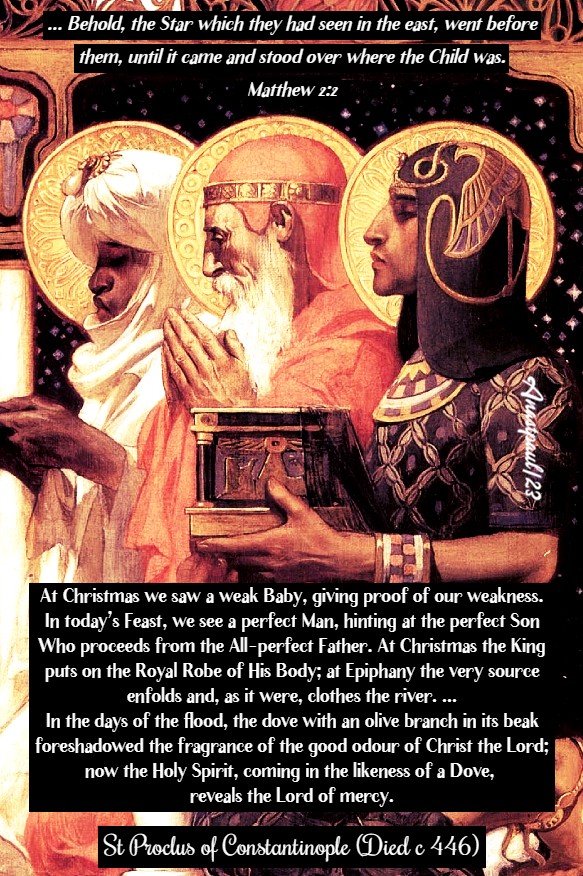
“ … Behold, the Star which they had seen in the east, went before them, until it came and stood over where the Child was. ” – Matthew 2:9
REFLECTION – “Christ appeared in the world and, bringing beauty out of disarray, gave it lustre and joy. He bore the world’s sin and crushed the world’s enemy. He sanctified the fountains of waters and enlightened the minds of men. Into the fabric of miracles, He interwove ever greater miracles.
For on this day, land and sea share between them, the grace of the Saviour and the whole world is filled with joy. Today’s Feast of the Epiphany manifests even more wonders than the Feast of Christmas.
On the Feast of the Saviour’s birth, the earth rejoiced because it bore the Lord in a manger but on today’s Feast of the Epiphany, it is the sea that is glad and leaps for joy; the sea is glad because it receives the blessing of holiness in the river Jordan.
At Christmas we saw a weak Baby, giving proof of our weakness. In today’s Feast, we see a perfect Man, hinting at the perfect Son Who proceeds from the All-perfect Father. At Christmas the King puts on the Royal Robe of His Body; at Epiphany the very source enfolds and, as it were, clothes the river.
Come then and see new and astounding miracles – the Sun of Righteousness washing in the Jordan, fire immersed in water, God sanctified by the ministry of man.
Today every creature shouts in resounding song – Blessed is He who comes in the name of the Lord. Blessed is He who comes in every age, for this is not His first coming. And Who is He? Tell us more clearly, I beg you, blessed David – the Lord is God and has shone upon us. David is not alone in prophesying this; the Apostle Paul adds his own witness, saying: the grace of God has appeared, bringing salvation for all men and instructing us. Not for some men but for all. To Jews and Greeks alike God bestows salvation through Baptism, offering Baptism as a common grace for all.
Come, consider this new and wonderful deluge, greater and more important than the flood of Noah’s day. Then, the water of the flood destroyed the human race but now, the water of Baptism has recalled the dead to life, by the power of the One Who was Baptised. In the days of the flood, the dove with an olive branch in its beak foreshadowed the fragrance of the good odour of Christ the Lord; now the Holy Spirit, coming in the likeness of a Dove, reveals the Lord of mercy.” – St Proclus of Constantinople (Died c 446) Confessor, Archbishop of Constantinople, Father (An excerpt from On the Holy God-showing, Sermon 7)
PRAYER – O God, Thou Who by the guidance of a star this day revealed Thy Only-begotten Son to the Gentiles, mercifully grant that we, who know Thee now by faith, may come to behold Thee in glory. Through the same Jesus Christ, Thy Son our Lord, Who lives and reigns with Thee, in the unity of the Holy Ghost, God, world without end. Amen (Collect).
Saint Raphael the Archangel The Feast day of Saint Raphael was included for the first time in the General Roman Calendar in 1921, for celebration on 24 October. With the 1969 revision of the General Roman Calendar, the Feast was transferred to September 29 for celebration together with Archangels Saints Michael and Gabriel. St Raphael: https://anastpaul.com/2021/10/24/saint-of-the-day-24-october-st-raphael-the-archangel/
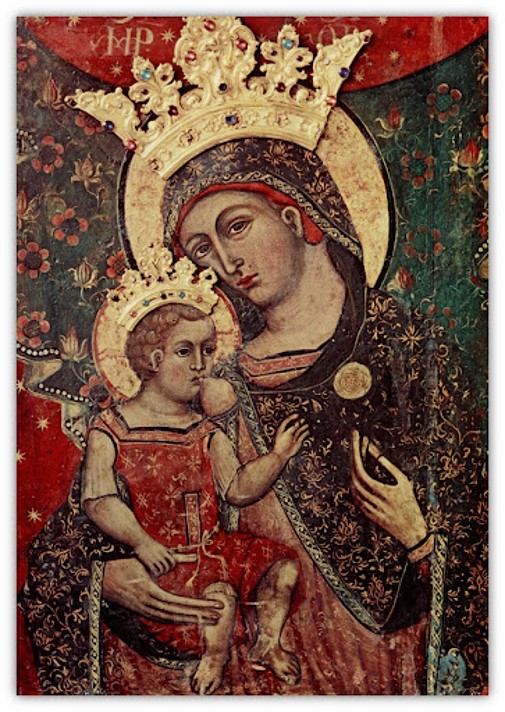
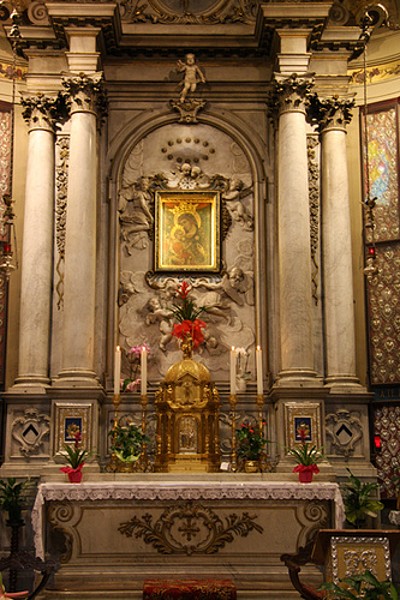
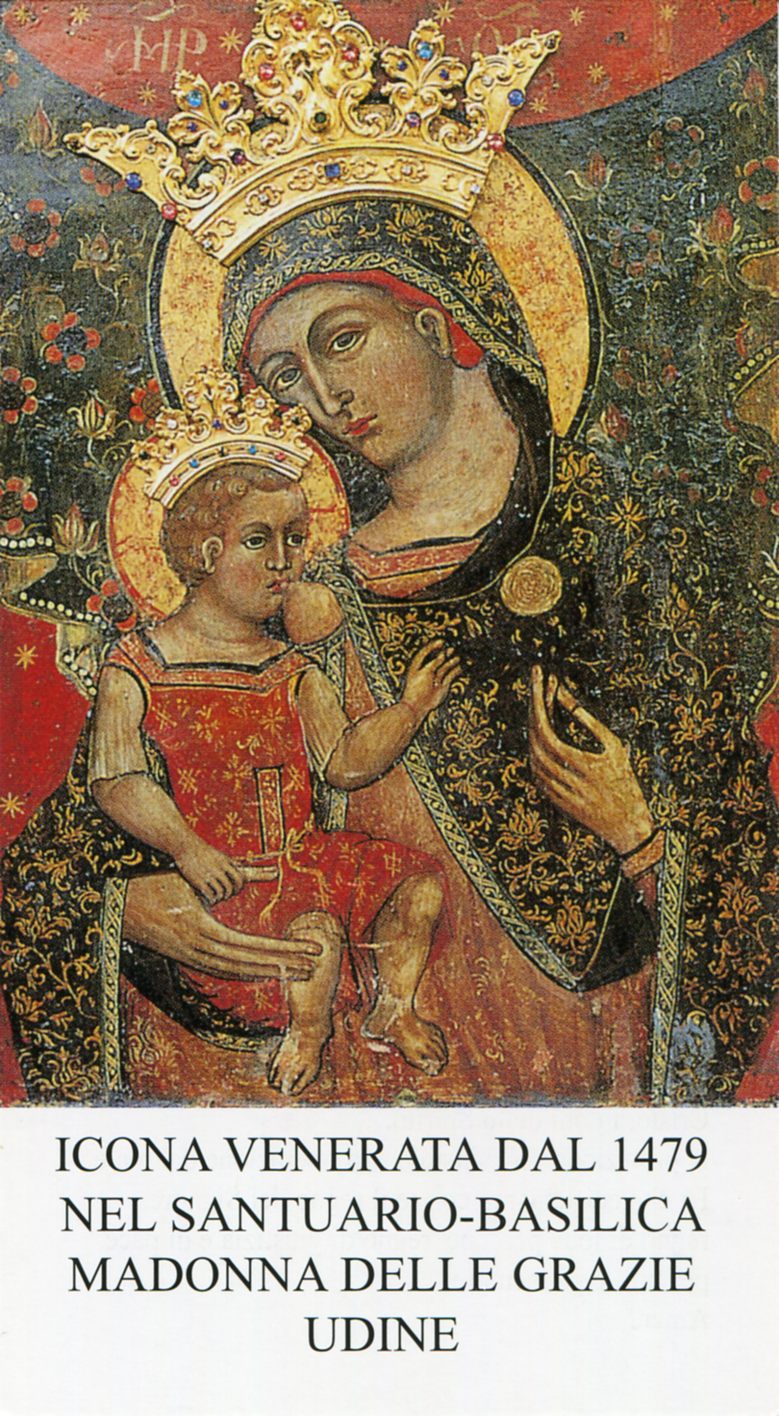
Beata Vergine delle Grazie / The Blessed Virgin of Grace, Udine, Friuli-Venezia Giulia, Italy (1479) – Fourth Sunday of October:
Bl Amado García Sánchez St Audactus of Thibiuca St Cadfarch St Ciriacus of Hierapolis St Claudian of Hierapolis St Ebregislus of Cologne St Felix of Thibiuca St Fortunatus of Thibiuca St Fromundus of Coutances St Maglorius of Wales St Marcius of Monte Cassino St Martin of Vertou (527–601) Abbot, Hermit
St Senoch St Senócus of Tours St Septimus of Thibiuca
Martyrs of Ephesus – 3 Saints: Three Christians Martyred together. All we know about them are the names Mark, Sotericus and Valentina. They were stoned to death near Ephesus, Asia Minor (in modern Turkey). Their relics are enshrined on the island of Tasos.
Twenty Second Sunday after Pentecost Thirtieth Sunday in Ordinary Time
Saint Raphael the Archangel The Feast day of Saint Raphael was included for the first time in the General Roman Calendar in 1921, for celebration on 24 October. With the 1969 revision of the General Roman Calendar, the Feast was transferred to September 29 for celebration together with Archangels Saints Michael and Gabriel.
Beata Vergine delle Grazie / The Blessed Virgin of Grace, Udine, Friuli-Venezia Giulia, Italy (1479) – Fourth Sunday of October:
When Sir John Emo was serving as Venetian Ambassador to Constantinople, Sultan Mohammed II gave him a Byzantine-style icon of the Virgin nursing the Child. In 1479, Sir Emo became Lieutenant of Udine, a City in northeast Italy then under the Republic of Venice, bringing the icon with him to the governor’s castle. Not long afterward, one of the palace cooks nearly lost a hand in the kitchen but it healed when touched to the image. News of the miracle inspired popular devotion, so Sir Emo decided to move the image to the Church of Sts. Gervais and Protasius, where it entered in procession on 8 September 1479. By 1495, the Church was too small for all the pilgrims and a new Sanctuary was begun, consecrated to Our Lady of Graces and run by the Servants of Mary. On 6 September 1870 the Church Crowned the icon; in 1922, it named the Shrine a Minor Basilica.
On the fourth Sunday of October, the City both fulfills and renews, a vow made during the plague of 1555. The Beata Verginedelle Grazie is also credited with saving the region from the plague of 1599, the cholera of 1836 and the bombardment of the war in1944.
St Anthony Mary Claret CMF (1807-1870) Known as “The Spiritual Father of Cuba.” In the first years, records show, that he Confirmed 100,000 people and performed 9,000 Sacramental Marriages.Archbishop of Cuba, one of the Fathers of the First Vatican Council,Confessor to the Queen of Spain, Missionary, Founder of the Congregation of Missionary Sons of the Immaculate Heart of Mary, commonly called the Claretians, Confessor, Mystic, Social Reformer, Spiritual Director, Writer, Publisher, Preacher, Apostle of Charity. He was declared venerable by Pope Leo XIII in 1899. He was Beatified in 1934 and in 1950, Canonised by Pope Pius XII. His heart is incorrupt. The 1969 revision of the calendar moved St Anthony Feast to the day of his death, 24 October (from the 23rd) which had been the Feast of Saint Raphael the Archangel since 1921. (Optional Memorial) About St Anthony Mary here: https://anastpaul.wordpress.com/2017/10/24/saint-of-the-day-24-october-st-anthony-mary-claret-1807-1870-cmf/
Bl Amado García Sánchez St Audactus of Thibiuca St Cadfarch St Ciriacus of Hierapolis St Claudian of Hierapolis St Ebregislus of Cologne St Felix of Thibiuca St Fortunatus of Thibiuca St Fromundus of Coutances St Giuse Lê Dang Thi
St Luigi Guanella (1842-1915) “Servant of Charity,” Priest, Founder the Daughters of Saint Mary of Providence (1890) and the Servants of Charity (24 March 1908) alongside his friends Fr David Albertario (1846-1902) and Blessed Giuseppe Toniolo (1845-1918). Apostle of Charity, Marian devotee, Eucharistic Adorer and passionate promoter. Guanella also founded the Pious Union of Saint Joseph (1914) with his supporter and first member St Pope Pius X. St Luigi’s Life: https://anastpaul.com/2018/10/24/saint-of-the-day-24-october-st-luigi-guanella-1842-1915-servant-of-charity/
St Maglorius of Wales St Marcius of Monte Cassino St Martin of Vertou
St Senoch St Senócus of Tours St Septimus of Thibiuca — Martyrs of Ephesus – 3 saints: Three Christians martyred together. All we know about them are the names Mark, Sotericus and Valentina. They were stoned to death near Ephesus, Asia Minor (in modern Turkey). Their relics are enshrined on the island of Tasos.
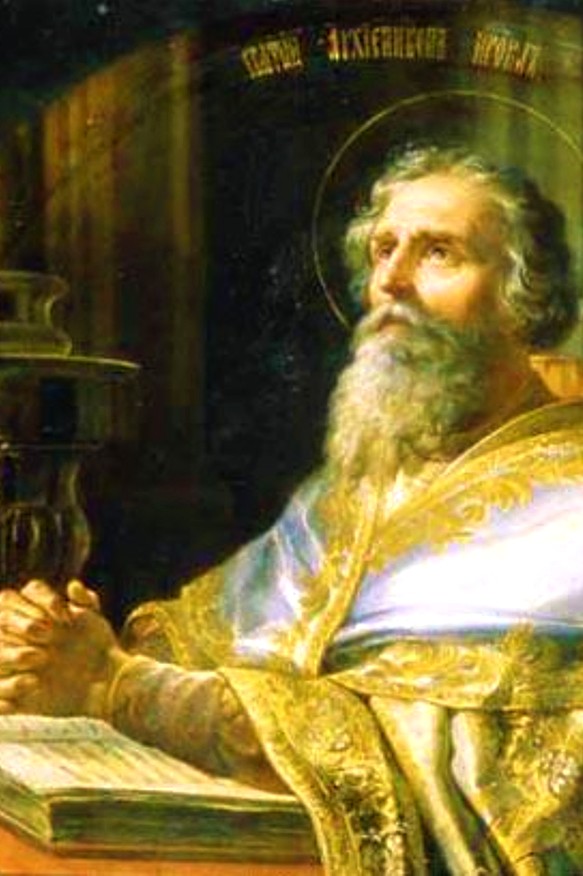
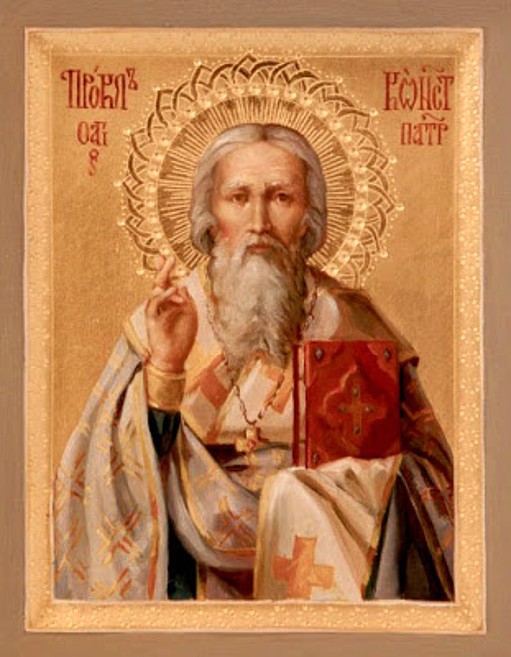
Saint of the Day – 24 October – Saint Proclus of Constantinople (Died c 446) Confessor, Archbishop of Constantinople, Defender of the Church and of the Blessed Virgin, Writer, renowned Preacher – born in Constantinople (modern Istanbul, Turkey) and died in c 446 in the area of modern Turkey of natural causes. He defended the divine maternity of Mary, fought against the heresy of Nestorius and, after Nestorius’ deposition, became Bishop of Constantinople. Roman Martyrology: In Constantinople, St Proclus, Bishop, who courageously proclaimed Blessed Mary as the Mother of God and brought the body of St John Chrysostom back from exile to the city with a solemn procession, thus deserving the title of the Ecumenical Council of Chalcedon, as “Great.”
The friend and disciple of Saint John Chrysostom, Proclus became secretary to Archbishop Atticus of Constantinople (406–425), who ordained him Deacon and Priest. Atticus’ successor, Sisinnius I (426–427), consecrated him Bishop of Cyzicus but the Nestorians there, refused to receive him and he remained at Constantinople. On the death of Sisinnius, the infamous Nestorius succeeded as Archbishop of Constantinople (428–431) and early in 429, on a festival of the Blessed Virgin Mary, Proclus preached his celebrated sermon on the Incarnation, which was later inserted in the beginning of the Acts of the Council of Ephesus. Below is an excerpt from St Proclus sermon:
“Our present gathering in honour of the Most Holy Virgin inspires me, brethren, to offer her a word of praise, of benefit also for those who have come to this holy celebration. It is a praise of women, a glorification of their gender, which (glory) she brings to it, she who is both Mother and Virgin at the same time.
O desired and wondrous gathering! O nature, celebrate that whereby honour is rendered to woman! Rejoice, O human race, that in which the Virgin is glorified. “But where sin abounded, grace did much more abound” [Romans 5:20]. The Holy Mother of God and Virgin Mary has gathered us here. She is the pure treasure of virginity, the intended paradise of the Second Adam, the place where the union of natures (divine and human) was accomplished and the Counsel of salvific reconciliation was affirmed.
Who has ever seen, who has ever heard, that the Limitless God would dwell within a womb? He Whom the Heavens cannot circumscribe is not limited by the womb of a Virgin! He Who is born of woman is not just God and He is not just Man. He Who is born has made woman the gateway of salvation. Where evil poured forth its poison, bringing on disobedience, there the Word made a living temple for Himself, bringing obedience there. From the place where the archsinner Cain sprang forth, there Christ the Redeemer of the human race was born without seed. The Lover of Mankind did not disdain to be born of woman, since She gave Him life (in His human nature). He was not subject to impurity by being in the womb which He Himself arrayed free from all harm. If this Mother had not remained a Virgin, then the Child born of her might be a mere man and the birth would not be miraculous in any way. Since she remained a Virgin after giving birth, then how is He Who is born not God? It is an inexplicable mystery, for He Who passed through locked doors without hindrance was born in an inexplicable manner. Thomas cried out, “My Lord, and my God!” [John 20:28], thus confessing the union of two natures in Him.”
When Archbishop Maximianus (431–434) died on Holy Thursday, Proclus was immediately enthroned by the permission of the Emperor Theodosius II and the Bishops gathered at Constantinople. His first care was the funeral of his predecessor and he then sent to both Bishops, St Cyril of Alexandria and St John of Antioch, the usual synodical letters announcing his appointment, both of whom approved of it.
In 436 the Bishops of Armenia consulted Proclus upon certain doctrines prevalent in their country and attributed to Theodore of Mopsuestia, asking for their condemnation. Proclus replied the next year in the celebrated letter known as the Tome to the Armenians, which he sent to the Eastern Bishops, asking them to sign it and to join in condemning the doctrines arraigned by the Armenians. They approved the letters but from admiration of Theodore, hesitated to condemn the doctrines attributed to him. Proclus replied that while he desired the extracts subjoined to his Tome to be condemned, he had not attributed them to Theodore or any individual, not desiring the condemnation of any single person.
A rescript from Theodosius procured by Proclus, declaring his wish that all should live in peace and that no imputation should be made against anyone who died in communion with the church, appeased the storm. The whole affair showed, conspicuously, the moderation and tact of Proclus. In 438, he transferred the relics of his old master, Saint John Chrysostom, from Comana back to Constantinople, where he interred them with great honour in the Church of the Twelve apostles. This action reconciled to the church those of Saint John’s adherents, who had separated themselves in consequence of his unjust removal as Archbishop.
In 439, at the request of a deputation from Caesarea in Cappadocia, Proclus selected as their new Bishop Thalassius, who was about to be appointed praetorian prefect of the East.
Proclus died most probably in October, 446. He appears to have been wise, moderate and conciliatory, desirous, while strictly adhering to Orthodoxy himself, to win over those who differed from him by persuasion rather than force.
The works of Proclus consist of 20 sermons. Five were published by Cardinal Mai, of which 3 are preserved only in a Syriac version, the Greek being lost; 7 letters, along with several addressed to him by other persons and a few fragments of other letters and sermons.
Proclus was cited by St John Henry Newman for his work on Mariology and his strong support of the conciliar dogma on the Mother of God. With his Marian doctrine, St Proclus opened the door to the further development of Marian doctrine during the period following the Council of Ephesus. Thanks to him, the faithful understood in a clearer way the great dignity of Mary, the power of her intercession and the need to honour her with special devotion.
St Maglorius of Wales St Marcius of Monte Cassino St Martin of Vertou St Proclus of Constantinople (Died c 446) Bishop St Senoch St Senócus of Tours St Septimus of Thibiuca — Martyrs of Ephesus – 3 saints: Three Christians martyred together. All we know about them are the names Mark, Sotericus and Valentina. They were stoned to death near Ephesus, Asia Minor (in modern Turkey). Their relics are enshrined on the island of Tasos.




 AnaStpaul
You must be logged in to post a comment.