St Felix of Como (Died 390) the first Bishop of Como. Felix was a friend of Saint Ambrose, who praised him for his missionary activity and Ordained him a Priest in 379 and Consecrated him as Bishop in 386. St Ambrose sent him to evangelise the City of Como, as a testimony to the great missionary drive of the Church of Milan. St Felix is honoured as a zealous shepherd of souls. More about St Felix: https://anastpaul.com/2021/10/08/saint-of-the-day-8-october-saint-felix-of-como-died-390/
St Felix of Como (Died 390) the first Bishop of Como. Felix was a friend of Saint Ambrose, who praised him for his missionary activity and Ordained him a Priest in 379 and Consecrated him as Bishop in 386. St Ambrose sent him to evangelise the City of Como, as a testimony to the great missionary drive of the Church of Milan. St Felix is honoured as a zealous shepherd of souls. More about St Felix: https://anastpaul.com/2021/10/08/saint-of-the-day-8-october-saint-felix-of-como-died-390/
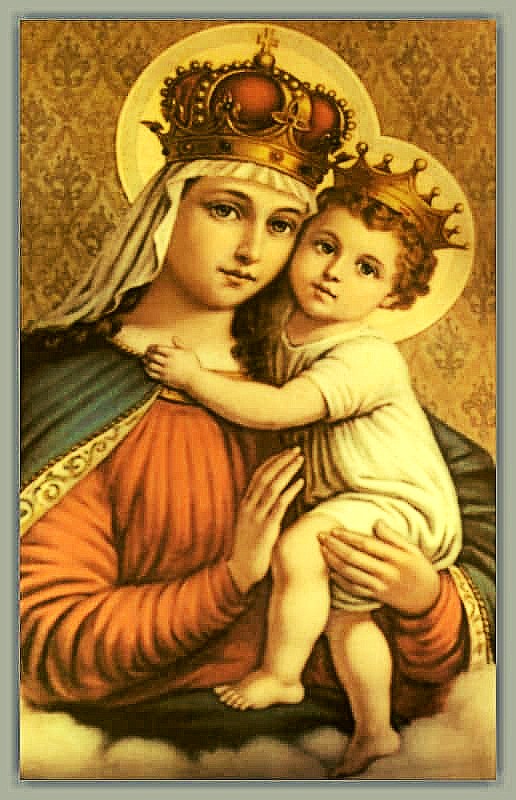
Notre-Dame du Bon Remède / Our Lady of Good Remedy, France (1197) – 8 October:
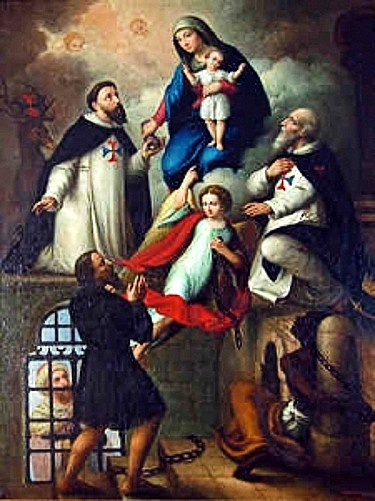
In 1197, a Sorbonne Doctor of Theology and newly Ordained Priest, Jean de Matha, while saying his first Holy Mass, saw a vision of an Angel with a red and blue cross on his chest and his hands resting on the heads of two captives. The following year, St Jean founded a religious order dedicated to the redemption of Christians held as slaves by Moslems — the Hospitaler Order of the Most Holy Trinity and of Captives, commonly called the Trinitarians. On their habit, Jean placed the Cross he had seen on the Angel,and, as their Patron, he gave them Notre-Dame du Bon Remède, a popular devotion in his Provençal homeland. Now devoted largely to education and evangelisation, for three centuries they raised funds and travelled from Europe into Africa to buy thousands of captives’ freedom with Our Lady’s help. A painting (right) in the Trinitarian Motherhouse of Cerfroid in northern France, shows Our Lady of Good Remedy giving a bag of money to St Jean/John of Matha, while a grateful freedman and St Felix of Valois, look on. The Order celebrates her feast day 8 October.
800 years ago Christians were being captured and sold into slavery by the thousands, and nobody knew what to do about it. Then, in the year 1198, a man had an idea. St. John of Matha founded the Trinitarians to go to the slave markets, buy the Christian slaves and set them free. To carry out this plan, the Trinitarians needed large amounts of money. So, they placed their fund-raising efforts under the patronage of Mary. They were so successful that, over the centuries, the Trinitarians were able to free thousands and thousands of people and to return them safely home. In gratitude for her miraculous assistance, St. John of Matha honoured Mary with the title of “Our Lady of Good Remedy.” Devotion to Mary under this ancient title is widely known in Europe and Latin America and the Church celebrates her feast day on 8 October. Our Lady of Good Remedy is often depicted as the Virgin Mary handing a bag of money to St. John of Matha. When in need – for whatever reason but especially where you have had difficulty obtaining help – invoke the aid of Our Lady of Good Remedy and you will surely experience the power of her intercession.
St Amor of Aquitaine St Artemon of Laodicia St Badilo St Benedicta of Laon St Benedicta of Origny-sur-Oise St Evodius of Rouen St Felix of Como (Died 390) Bishop St Gratus of Chalons
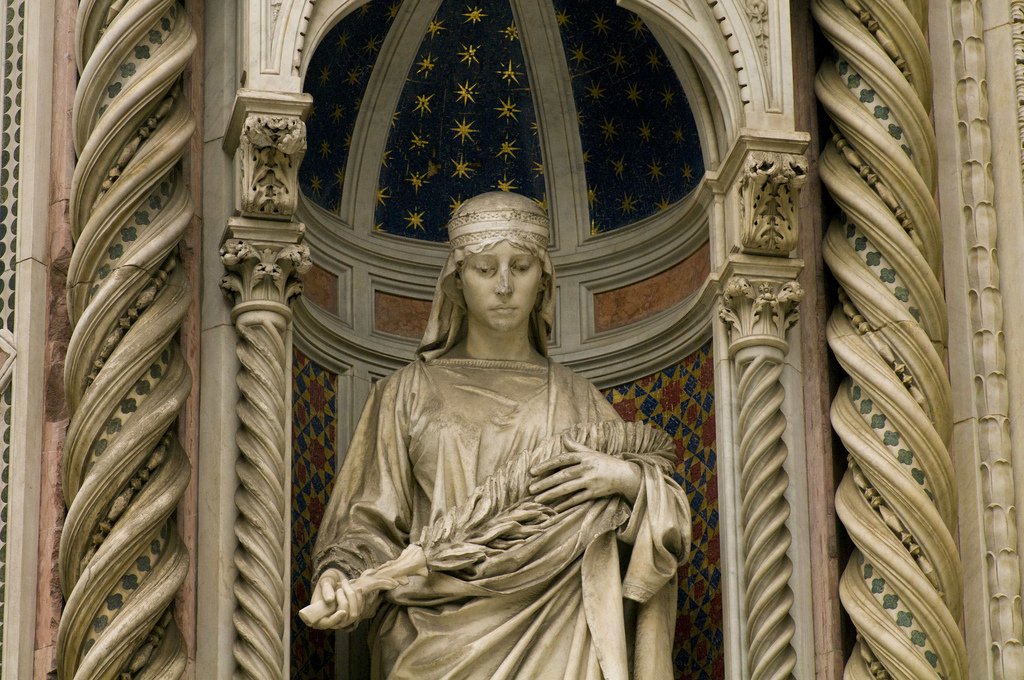
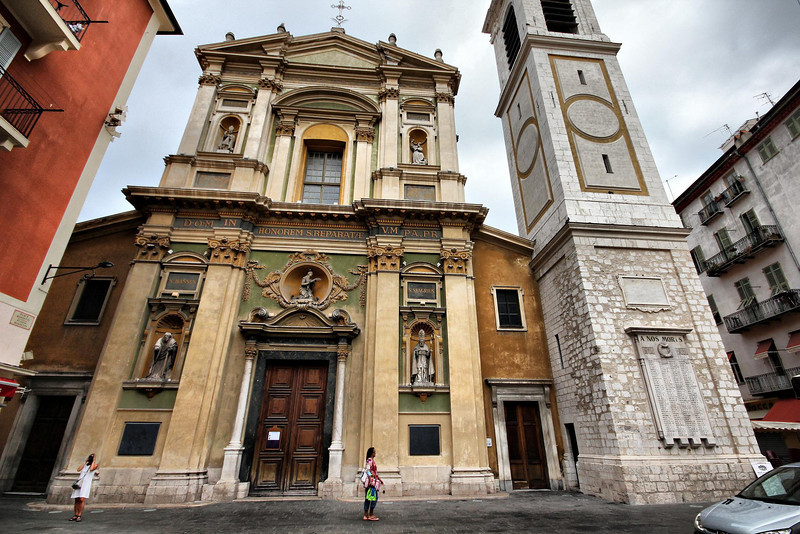
Saint of the Day – 8 October – St Reparata – Virgin, Martyr (3rd century Caesarea, Palestine – beheaded in the 3rd century). Her relics translated to the Nice Cathedral in 1690. Patronages – Florence, Italy, Nice, France, city of, Nice, France, diocese of, Teano, Italy. Attributes – banner with red cross on a white background, dove, holding a crown and palm of martyrdom, sitting in fire, standing near the Blessed Virgin Mary, with Saint Ansanus.
St Reparata was a third-century Christian virgin and martyr of Caesarea in Palestine. Sources vary as to her age – from 11 to 20 years old – though the Sainte-Réparate cathedral in Nice gives it as 15. She was arrested for her faith and tortured during the persecution of Decius.
Arrest of St Reparata
Trial of St Reparata – Bernardo Daddi
Her persecutors tried to burn her alive but she was saved by a shower of rain. She was then made to drink boiling pitch. When she again refused to apostatise, she was beheaded. Her legend states that as she fell dead, her spirit emerged from her body in the form a dove. Later elaborations of her legend state that her body was laid in a boat and blown by the breath of angels to the bay now known as the Baie des Anges in Nice.
Evidence of her cult does not exist before the ninth century, when her name appears in the martyrology of Bede. She is not mentioned by Eusebius of Caesarea, who recorded the martyrdoms that took place in the Holy Land during the 3rd century.
Her cult became widespread in Europe during the Middle Ages, as evidenced by the multiple Passiones found in various parts of the continent -especially Italy, where her cult was particularly popular in Florence, Atri, Naples, and Chieti. Numerous painters created depictions of her, including Fra Bartolomeo, Arnolfo di Cambio, Andrea Pisano, Domenico Passignano, Lorenzo di Niccolò and Bernardo Daddi.
Scenes from the Life of St Reparata – Lorenzo di Niccolò
She is the patron saint of Nice and a co-patron saint of Florence (with Saint Zenobius). The former cathedral of Santa Reparata in Florence was dedicated to her. Sainte-Réparate Cathedral, in Nice, is also dedicated to her.
Florence holds a celebration in honour of Reparata each year on October 8 in commemoration of its deliverance from the Ostrogoths in 406, which they attribute to the intercession of St Reparata.






 AnaStpaul
You must be logged in to post a comment.