Posted in franciscan OFM, MARIAN TITLES, SAINT of the DAY

The last Sunday after Pentecost, Onze-Lieve-Vrouw van Westrozebeke / Our Lady of Westrozebeke, Belgium (1482), St Leonard of Port Maurice and many more Saints for 26 November

The last Sunday after Pentecost

Bl Albert of Haigerloch
St Alypius Stylites
St Amator of Autun
St Basolus of Verzy

St Bertger of Herzfeld
St Conrad of Constance
Bl Delphine of Glandèves
St Egelwine of Athelney
St Ida of Cologne
St James the Hermit
St Magnance of Ste-Magnance
St Marcellus of Nicomedia
St Martin of Arades
St Nicon of Sparta
Bl Pontius of Faucigny
St Sabaudus of Trier
St Siricius, Pope (c334-399) Confessor, Bishop of Rome from December 384


St Stylinus
St Vacz

Posted in MARIAN TITLES, SAINT of the DAY, Uncategorized

Onze-Lieve-Vrouw van Westrozebeke / Our Lady of Westrozebeke,Belgium (1482) and Memorials of the Saints – 26 November

Onze-Lieve-Vrouw van Westrozebeke / Our Lady of Westrozebeke, Staden, West Flanders, Belgium (1482) – 26 November, Third Sunday of June:
HERE:

https://anastpaul.com/2021/11/26/onze-lieve-vrouw-van-westrozebeke-our-lady-of-westrozebeke-staden-west-flanders-belgium-1482-and-memorials-of-the-saints-26-november/
St Leonard of Port Maurice OFM (1676-1751) Confessor, Priest and Friar of the Friars Minor, reacher – in particular Parish Mission Preacher, Ascetic Writer, Spiritual Director. St Leonard founded many pious societies and confraternities and exerted himself to spread devotion to the Sacred Heart of Jesus, the Perpetual Adoration of the Most Blessed Sacrament, the Blessed Virgin Mary and the Passion of Christ. He was among the few to insist that the concept of the Immaculate Conception of Mary be defined as a Dogma of the Faith. He was Beatified on 19 June 1796 by Pope Pius VI and Canonised on 29 June 1867 by Pope Pius IX.
About St Leonard:

https://anastpaul.com/2018/11/27/saint-of-the-day-27-november-st-leonard-of-port-maurice-ofm-1676-1751/

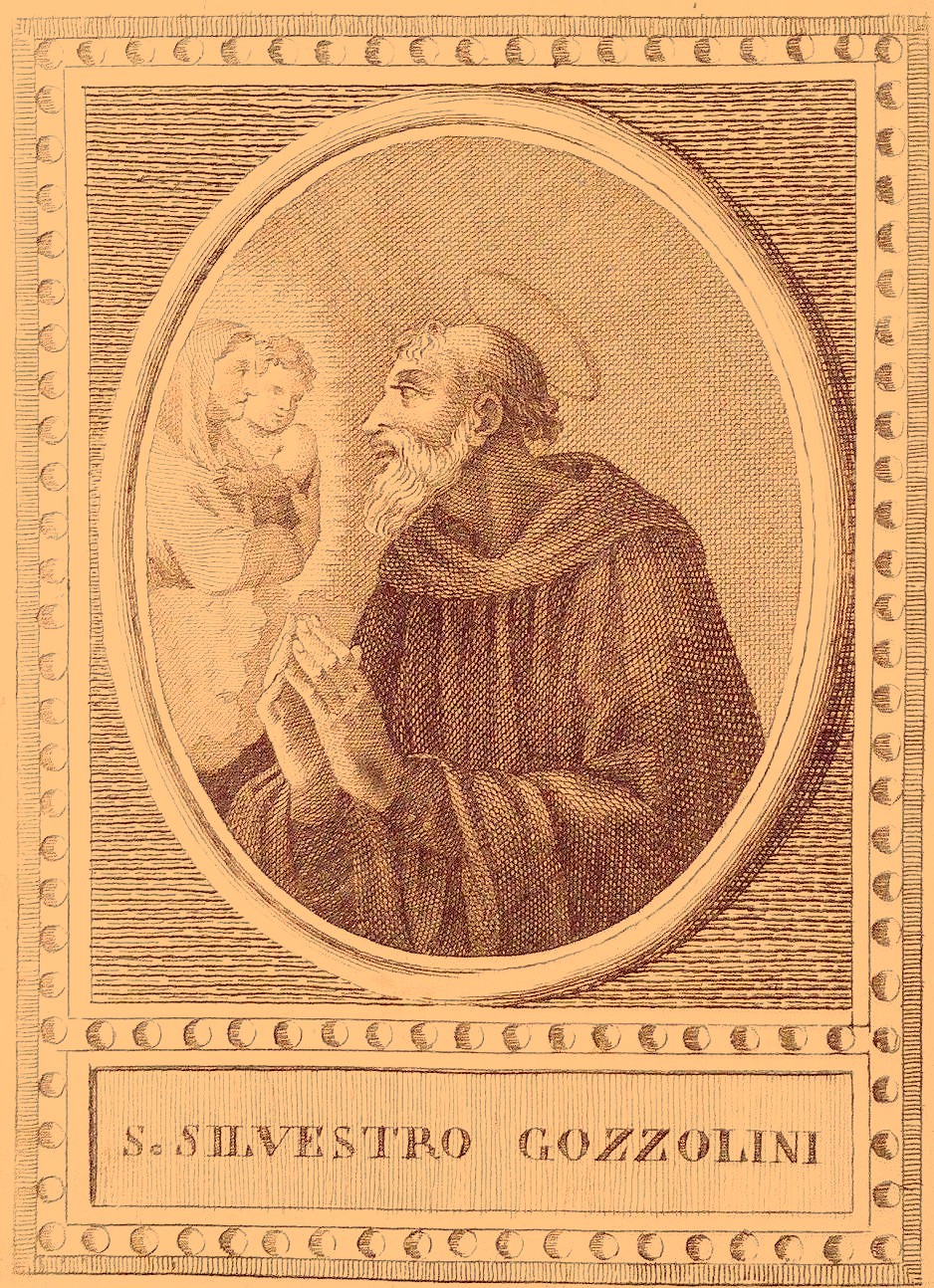
St Sylvester Gozzolini OSB Silv. (1177– 1267) Priest, Abbot, Founder of the Silvestrini Congration, Mystic, gifted with the charism of prophecy and miracles, but also subject to violent attacks by the devil.
St Sylvester’s Life:

https://anastpaul.com/2021/11/26/saint-of-the-day-26-november-saint-sylvester-gozzolini-osb-silv-1177-1267/

St Peter of Alexandria (Died 311) Martyr, “The Seal of the Martyrs” Bishop of Alexandria. Tradition attests that the Egyptian Bishop, St Peter, was the last believer to suffer death at the hands of Roman imperial authorities for his faith in Christ. Hence the title “The Seal of the Martyrs.”
His Life and Death:

https://anastpaul.com/2018/11/26/saint-of-the-day-26-november-st-peter-of-alexandria-died-311-martyr-the-seal-of-the-martyrs/
AND (I posted St Peter on the 25th in error):
https://anastpaul.com/2022/11/25/saint-of-the-day-25-november-saint-peter-of-alexandria-died-311-bishop-martyr-the-seal-of-the-martyrs/

Bl Albert of Haigerloch
St Alypius Stylites
St Amator of Autun
St Basolus of Verzy
St Bellinus of Padua (Died 1151) Bishop and Martyr
St Bertger of Herzfeld
St Conrad of Constance
Bl Delphine of Glandèves
St Egelwine of Athelney
St Ida of Cologne
St James the Hermit
St Magnance of Ste-Magnance
St Marcellus of Nicomedia
St Martin of Arades
St Nicon of Sparta
Bl Pontius of Faucigny
St Sabaudus of Trier
St Siricius, Pope
St Stylianus
St Vacz

Martyrs of Alexandria – 650+- Saints: A group of approximately 650 Christian Priests, Bishops and Laity Martyred together in the persecution of Maximian Galerius. We have the names and a few details only seven of them – Ammonius, Didius, Faustus, Hesychius, Pachomius, Phileas and Theodore. The were born in Egypt and were martyred there in c 311 in Alexandria, Egypt.

Martyrs of Capua – 7 Saints: A group of seven Christians Martyred together. The only details about them to survive are the names – Ammonius, Cassianus, Felicissimus, Nicander, Romana, Saturnin and Serenus. They were martyred in Capua, Campania, Italy, date unknown.

Martyrs of Nicomedia – 6 Saints: A group of six Christians Martyred by Arians. Few details have survived except their names – Marcellus, Melisus, Numerius, Peter, Serenusa and Victorinus. Martyred in 349 in Nicomedia, Bithynia, Asia Minor (modern Izmit, Turkey).
Posted in SAINT of the DAY

Saint of the Day – 26 November – Saint Sylvester Gozzolini OSB Silv. (1177– 1267)

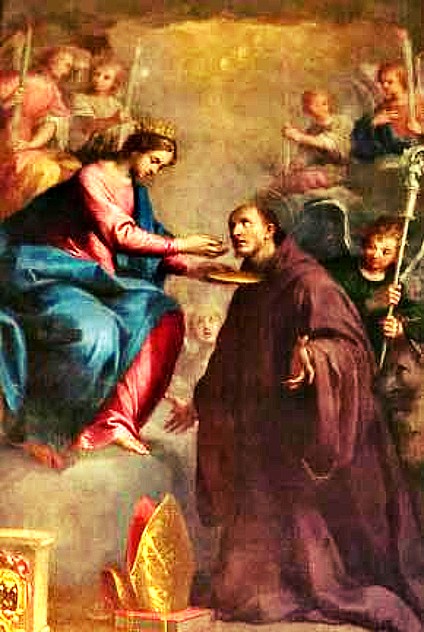
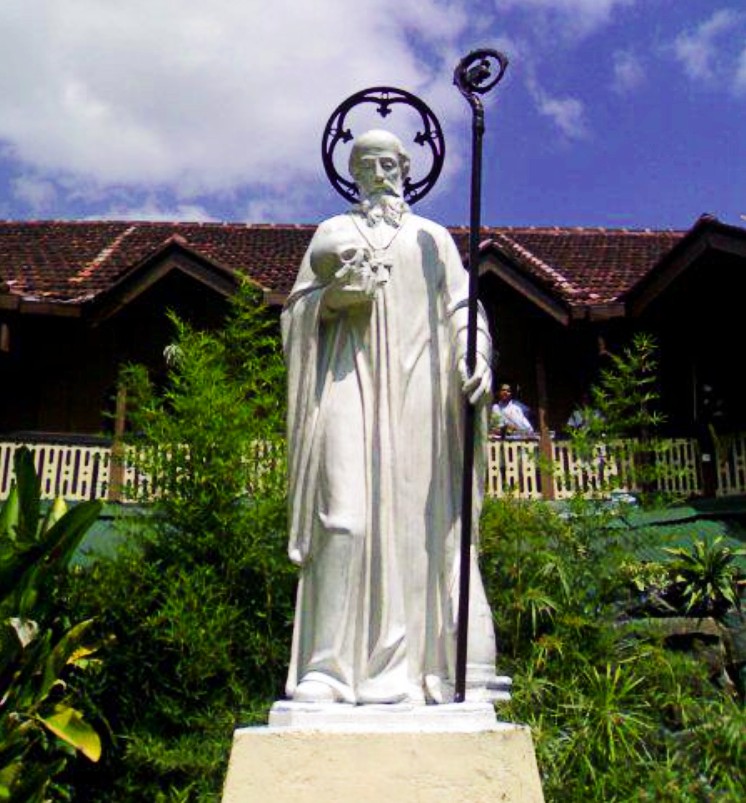
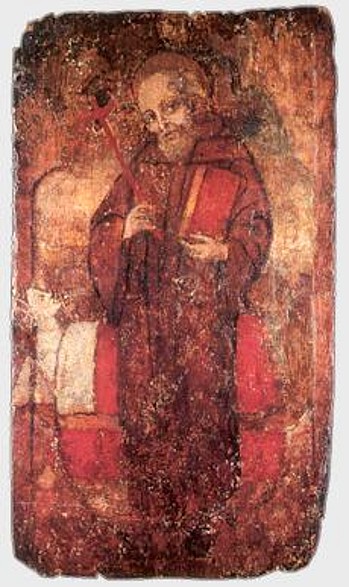
Saint of the Day – 26 November – Saint Sylvester Gozzolini OSB Silv. (1177– 1267) Priest, Abbot, Founder of the Silvestrini Congration, Mystic, gifted with the charism of prophecy and miracles, but also subject to violent attacks by the devil. Born in 1177 in Osimo, Marche, Italy and died on 26 November 1267 at Monte Fano, Fabriano, Italy of natural causes aged 90. Also known as – Silvestro, Sylvester of Osimo.

Sylvester was born of a noble family at Osimo in the Marches of Ancona and in his boyhood was remarkable for his love of study and his good conduct. As a youth, he was sent by his father to Bologna to study jurisprudence but was admonished by God to devote himself to sacred learning. Thus he abandoned the study of law for that of theology and Holy Scripture, giving long hours daily to prayer. This incited his father to anger, which Sylvester patiently endured when his father would not speak to him for ten years. On account of his remarkable virtue, the Canons of Osimo elected him an honorary member of their chapter, in which position he benefited the people by his prayers, his example and his sermons.

While assisting at the funeral of a nobleman, his relative, who had been unusually handsome, he looked into the open coffin and seeing the corpse all deformed, said to himself: “What this man was, I am now; what he is now, I shall be hereafter. As soon as the funeral was over, reading these words of our Lord: “If any one will come after me, let him deny himself and take up his cross and follow me,” he retired into solitude in order to attain greater perfection.

There he gave himself up to watching, prayer and fasting, often eating nothing but raw herbs. The better to conceal himself from men he frequently changed his place of abode;and at length settled at Monte Fano, which, though near to Fabriano, was at that time, a desert. There he built a Church in honour of the most holy father St Benedict and founded the Congregation of Sylvestrians, under the Rule and Habit shown him by St.Benedict in vision.

Satan, roused to envy, strove in many ways to terrify his Monks, making assaults by night at the Monastery gates. But the man of God repressed the enemy’s attacks with such vigour, that the Monks, recognising their father’s sanctity, were more and more confirmed in their holy purpose.

Sylvester was remarkable for the spirit of prophecy and other gifts, which he guarded by deep humility. This so stirred up the devil’s envy that he cast the saint headlong down the oratory stairs and well nigh killed him but the blessed Virgin at once graciously restored him to health. In gratitude for this benefit, Sylvester showed her the tenderest unfailing piety to the end of his life.

 In 1247 he obtained from Pope Innocent IV, at Lyons, a Bull confirming his Order and before his death, founded a number of Monasteries. 

He died at the age of ninety years, renowned for sanctity and miracles in1267. He was Beatified in1269 by Pope Clement IV who also added him to the Martyrology) and Canonised in 1598 by Pope Clement VIII. His body was disinterred and placed in a Shrine (1275-85) and is still honoured in the Church of Monte Fano.  In 1890, the Sovereign Pontiff Leo XIII, extended his Office and Mass to the universal Church, with the rank of Double (third-class feast in the 1960 reform of Pope John XXIII), therefore, reducing today’s memorial to the status of a commemoration, as well as that of Saint Peter of Alexandria, who shares today as his Feast. In 1970, both these were removed altogether and relegated to the local calendars. These wonderful Saints were packed away in dark storage where no-one ever venerates or prays to them for their holy intercession.., but you and I will pray the Collect below and remember .him ..

Collect:
May the intercession, O Lord,
of blessed Sylvester, the Abbot,
recommend us to Thee;
that what we cannot hope for
through any merits of our own,
we may obtain by his prayers.
Through our Lord Jesus Christ,
Thy Son, Who lives and reigns with Thee,
in the unity of the Holy Ghost,
God, world without end.
Amen

Posted in franciscan OFM, MARIAN TITLES, SAINT of the DAY

Onze-Lieve-Vrouw van Westrozebeke / Our Lady of Westrozebeke, Staden, West Flanders, Belgium (1482) and Memorials of the Saints – 26 November

Onze-Lieve-Vrouw van Westrozebeke / Our Lady of Westrozebeke, Staden, West Flanders, Belgium (1482) – 26 November, Third Sunday of June:

On 26 November 1382, opposing armies camped around the Village of Westrozebeke: rebels recently victorious in Ghent vs. Louis II, King of Flanders and French troops brought in to help him. The residents congregated at a forest Chapel to beg the Virgin’s help. At the battle the next day, the rebels fled after their leader was killed. Afterward, a red silk thread encircling the area the King’s forces had occupied, with seven knots equally spaced along it and crosses where the ends met, was discovered – this was interpreted as a sign of the Virgin’s protection. The silk thread was soon distributed for relics and in its place, eight Chapels were built – seven to honour each of Mary’s Sorrows, where the knots had lain and a larger one to honour the Holy Cross. In 1384, Louis II’s son-in-law Philip II of Burgundy, instituted an annual procession and Mass in thanksgiving for the victory.
Many pilgrims sought out the circuit of eight Chapels and the help of Our Lady of Roosebeke (“rosy stream“), especially sufferers from the streptococcal skin infection erysipelas, known as St Anthony’s fire in English but as wondroos (“rosy wound“) in Dutch. And they continued to frequent the old forest Chapel of Our Lady of the Fountain, near a spring with waters believed to cure eye diseases.
The annual pilgrimage continued for centuries. The faithful from the Provincial Capital of Bruges, brought new clothes for Our Lady’s Statue, while those from Menen, to the south, came in thanksgiving for their deliverance from an epidemic in the early 1500s.
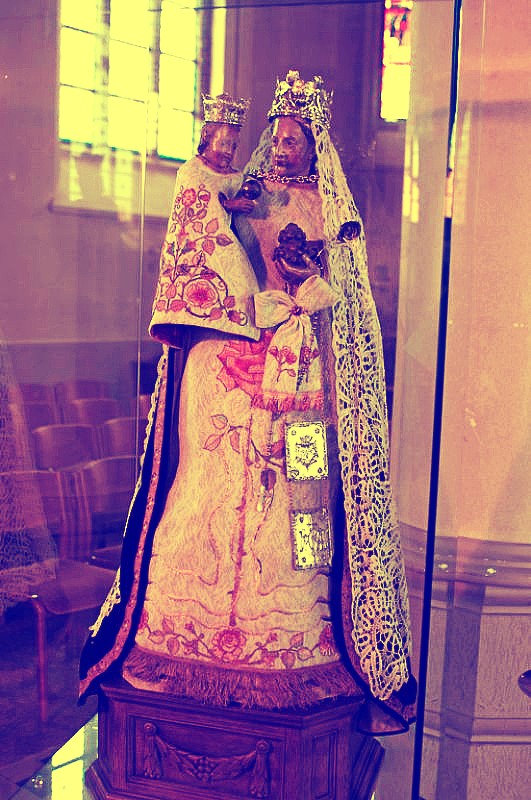
In 1566, iconoclasts destroyed the Statue. Believers installed a new one in 1584.
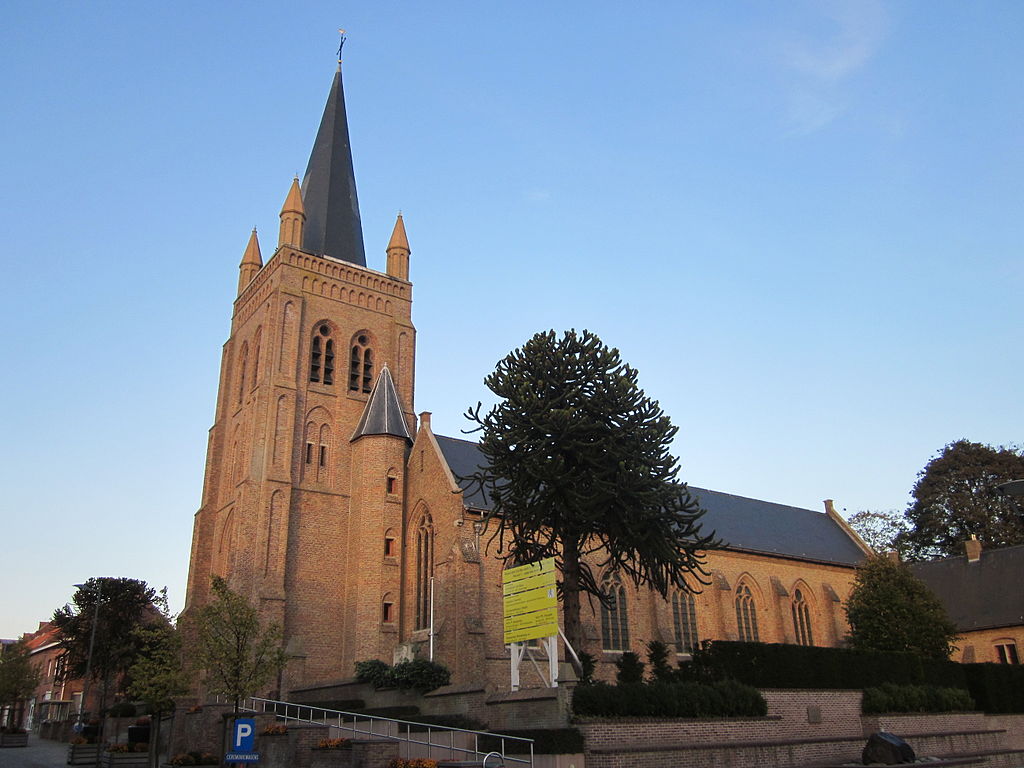
During World War I, another miracle came to light. In 1916, when Germans torpedoed the ferry “Sussex” as it crossed the English Channel toward France, sailors from Westrozebeke prayed to Our Lady and were spared. But their Village was not so fortunate: it was destroyed during the war. Our Lady’s beloved Statue, which had been moved away for safekeeping, returned afterwards and was installed in the new Church of St Bavo on 13 June1924.

St Bavo’s Church

Now part of the Municipality of Staden, Westrozebeke holds a 10-day festival in July, starting on the third Sunday, when firemen throw roses from the Church tower. The religious portion culminates in Our Lady’s Pageant on the following Saturday, with a procession and Mass in St Bavo’s Church, where roses encircle the Statue of Our Lady.

Bl Albert of Haigerloch
St Alypius Stylites
St Amator of Autun
St Basolus of Verzy
St Bellinus of Padua
St Bertger of Herzfeld
St Conrad of Constance
St Ðaminh Nguyen Van Xuyên
Bl Delphine of Glandèves
St Egelwine of Athelney

Blessed Gaetana Sterni (1827-1889) Widow, Religious, Founder of the Sisters of Divine Will.
Biography:

https://anastpaul.com/2019/11/26/saint-of-the-day-26-november-blessed-gaetana-sterni-1827-1889/

Bl Giacomo Alberione
Bl Hugh Taylor
St Humilis of Bisignano
St Ida of Cologne
St James the Hermit

St Leonard of Port Maurice OFM (1676-1751) Priest and Friar of the Friars Minor, Confessor, Preacher – in particular Parish Mission Preacher, Ascetic Writer, Spiritual Director.
About St Leonard:

https://anastpaul.com/2018/11/27/saint-of-the-day-27-november-st-leonard-of-port-maurice-ofm-1676-1751/

St Peter of Alexandria (Died 311) Martyr, “The Seal of the Martyrs” Bishop of Alexandria. Tradition attests that the Egyptian Bishop, St Peter, was the last believer to suffer death at the hands of Roman imperial authorities for his faith in Christ. Hence the title “The Seal of the Martyrs.”
His Life and Death:

https://anastpaul.com/2018/11/26/saint-of-the-day-26-november-st-peter-of-alexandria-died-311-martyr-the-seal-of-the-martyrs/

St Magnance of Ste-Magnance
St Marcellus of Nicomedia
Bl Marmaduke Bowes
St Martin of Arades
St Nicon of Sparta
Bl Pontius of Faucigny
St Sabaudus of Trier
St Siricius, Pope
St Stylianus
St Sylvester Gozzolini OSB Silv. (1177– 1267) Priest, Abbot, Founder
St Tôma Ðinh Viet Du
St Vacz

Martyrs of Alexandria – 7+ saints: A group of approximately 650 Christian priests, bishops and laity martyred together in the persecution of Maximian Galerius. We have the names and a few details only seven of them – Ammonius, Didius, Faustus, Hesychius, Pachomius, Phileas and Theodore. The were born in Egypt and were martyred there in c 311 in Alexandria, Egypt.

Martyrs of Capua – 7 saints: A group of seven Christians martyred together. The only details about them to survive are the names – Ammonius, Cassianus, Felicissimus, Nicander, Romana, Saturnin and Serenus. They were martyred in Capua, Campania, Italy, date unknown.

Martyrs of Nicomedia – 6 saints: A group of six orthodox Christians martyred by Arians. Few details have survived except their names – Marcellus, Melisus, Numerius, Peter, Serenusa and Victorinus. Martyred in 349 in Nicomedia, Bithynia, Asia Minor (modern Izmit, Turkey).