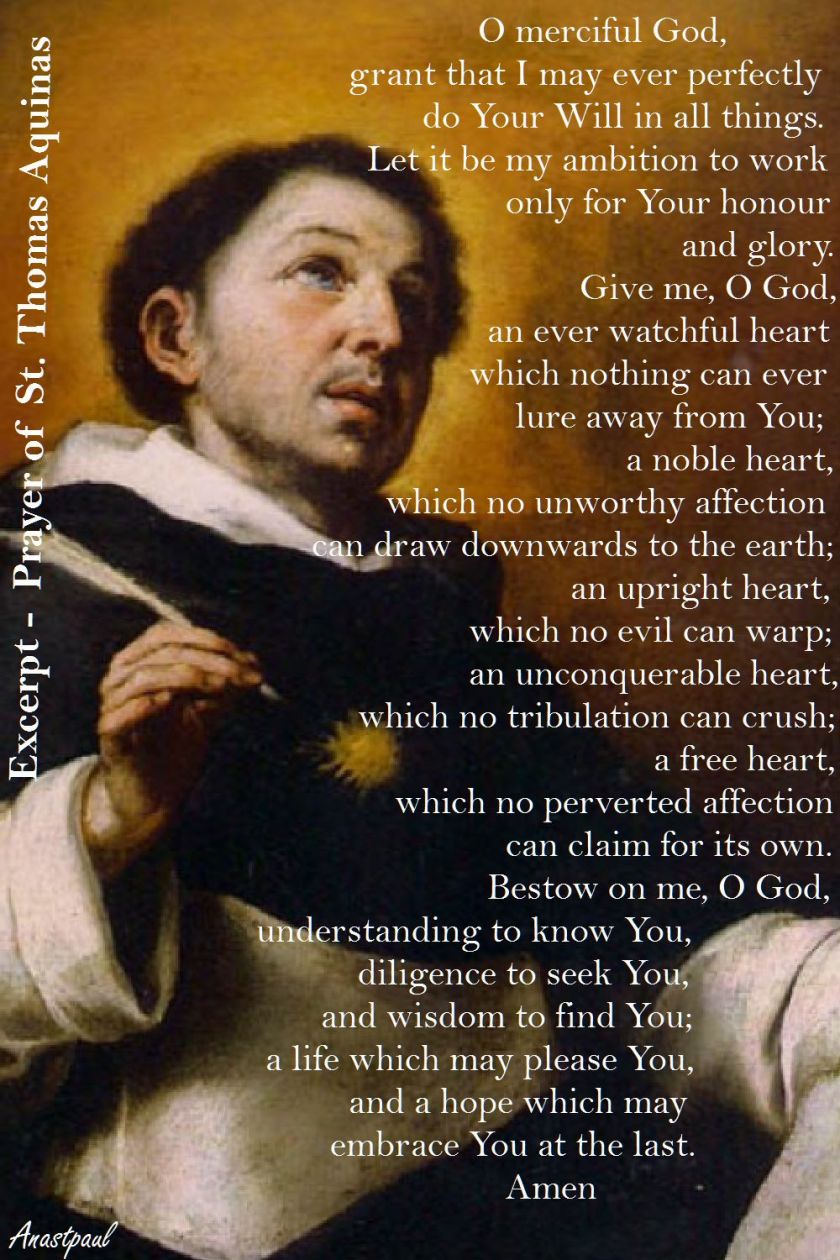
O merciful God,
grant that I may ever perfectly
do Your Will in all things.
Let it be my ambition to work
only for Your honour and glory.
Give me, O God,
an ever watchful heart
which nothing can ever
lure away from You;
a noble heart,
which no unworthy affection
can draw downwards to the earth;
an upright heart,
which no evil can warp;
an unconquerable heart,
which no tribulation can crush;
a free heart,
which no perverted affection
can claim for its own.
Bestow on me, O God,
understanding to know You,
diligence to seek You,
and wisdom to find You;
a life which may please You,
and a hope which may
embrace You at the last.
Amen
All who believe………………have eternal life in him……….John 3:15
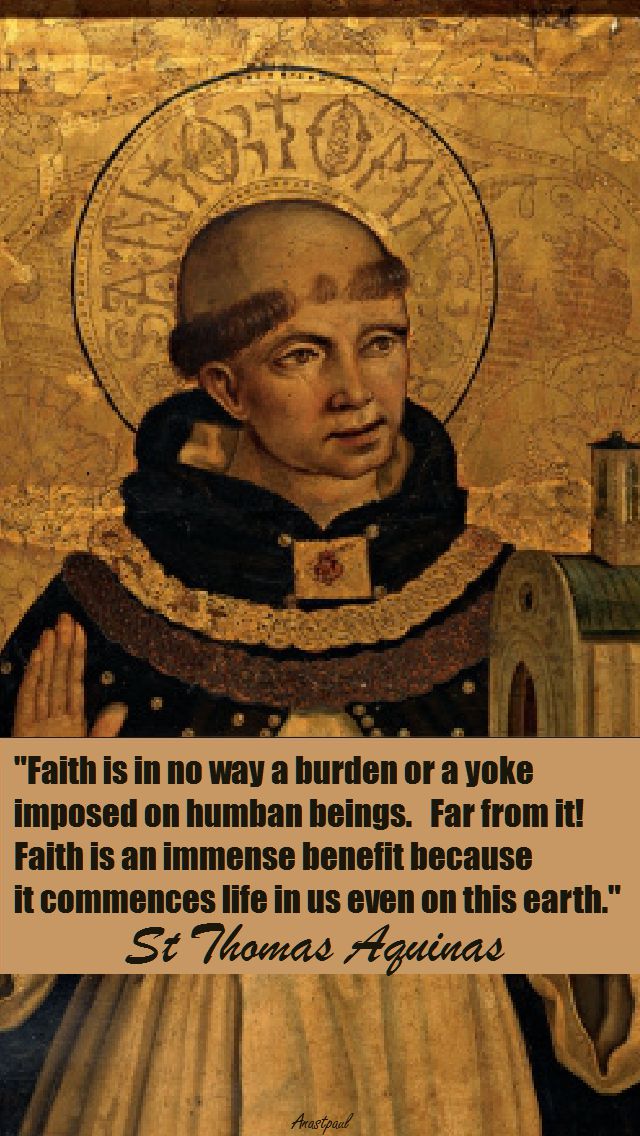
REFLECTION – “Faith is in no way a burden or a yoke imposed on humban beings. Far from it! Faith is an immense benefit because it commences life in us even on this earth.”………….St Thomas Aquinas
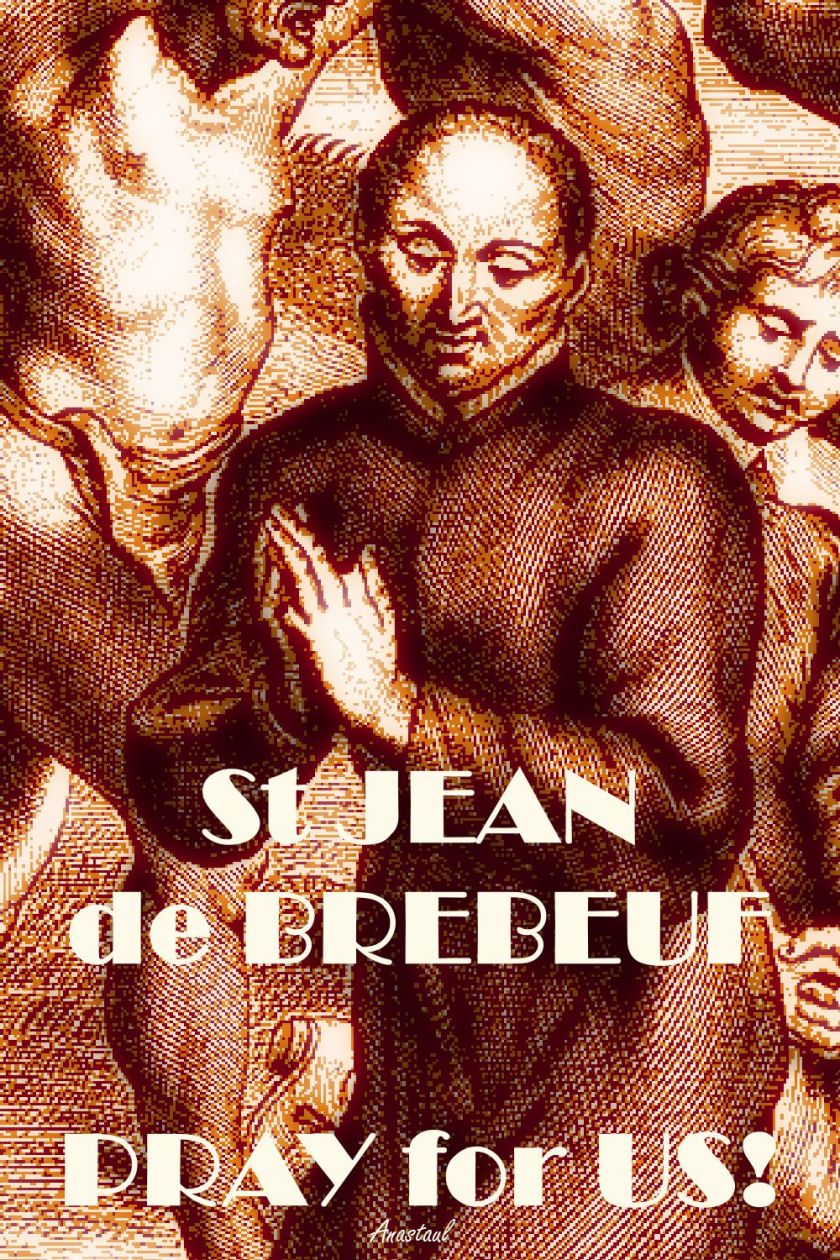
PRAYER – Heavenly Father, thank You for giving me the gift of faith. Help me to remain firm in my faith throughout my life and to strive, no matter to what suffering You call me, to increase in faith and love for You, day by day. St Jean de Brebeuf, you have reached the glory of heaven and by your life and suffering for your faith, you taught us the true beauty of love for Christ the Lord, please pray for us all, amen.
“Mary means enlightener, because She brought forth the Light of the world. In the Syriac tongue, Mary signifies Lady.”
~~~~~ St Isidore of Seville
“Let me say something concerning this name also, which is interpreted to mean Star of the sea, and admirably suits the Virgin Mother.”
~~~~~ St Bernard
“Mary means Star of the sea, for as mariners are guided to port by the ocean star, so Christians attain to glory through Mary’s maternal intercession.”
~~~~~St Thomas Aquinas
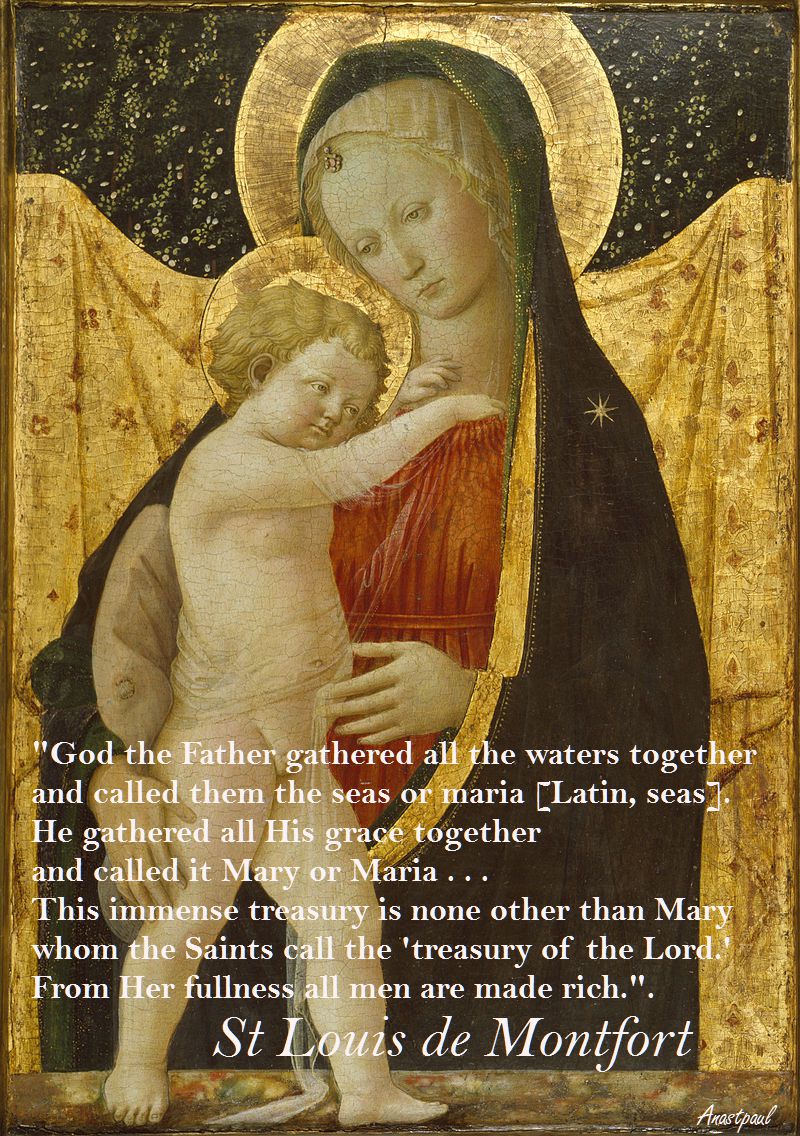
“God the Father gathered all the waters together
and called them the seas or maria [Latin, seas].
He gathered all His grace together
and called it Mary or Maria . . .
This immense treasury is none other than Mary
whom the Saints call the ‘treasury of the Lord.’
From Her fullness all men are made rich.”
~~~~~ St Louis de Montfort
“This most holy, sweet and worthy name was ’eminently fitted to so holy, sweet and worthy a virgin. For Mary means a bitter sea, star of the sea, the illuminated or illuminatrix. Mary is interpreted Lady. Mary is a bitter sea to the demons; to men She is the Star of the sea; to the Angels She is illuminatrix, and to all creatures She is Lady .”
~~~~~St Bonaventure
“When you find yourself tossed by the raging storms on this great sea of life, far from land, keep your eyes fixed on this Star to avoid disaster. When the winds of temptation or the rocks of tribulation threaten, look up to the Star, call upon Mary!”
~~~~~ St Bernard
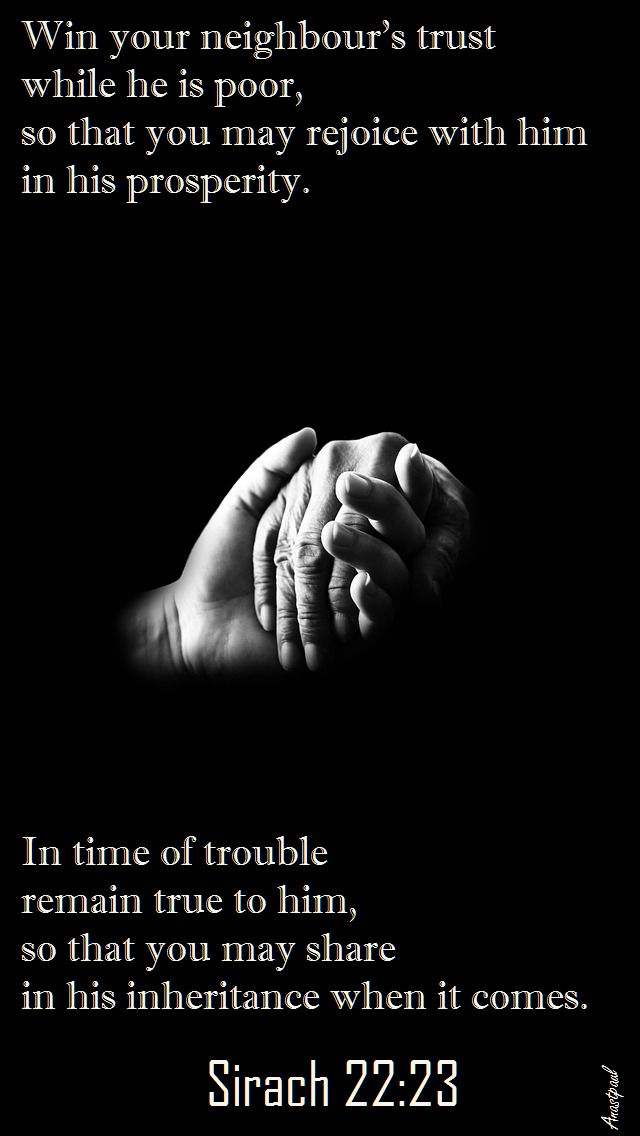
Win your neighbour’s trust while he is poor, so that you may rejoice with him in his prosperity.
In time of trouble remain true to him,so that you may share in his inheritance when it comes………..Sir 22:23
REFLECTION – “Every virtue can attract the friendship of others to us. For every virtue is a good and anything good is lovable to all and renders lovable all who possess it. Friendship blossoms, grows and is strengthened in the measure that virtue develops.”…….St Thomas Aquinas
PRAYER – Lord Jesus, our true Friend, help me to cultivate virtues and so gain friends. In turn let my friends also pursue virtues – making our friendship closer and bringing us all into Your eternal Friendship in heaven, amen.
For St Thomas, the goodness of God can be seen in everything and the whole of creation is a mighty love song of God. He learned more at the foot of the Crucifix and before the Blessed Sacrament, he said, than in all his readings and writings. We can look to Thomas Aquinas as a towering example of Catholicism in the sense of broadness, universality and inclusiveness. We should be determined anew to exercise the divine gift of reason in us, our power to know, learn and understand. At the same time we should thank God for the gift of His revelation, the incarnation of His Son, Jesus Christ who is here with us always in the Holy Sacrament.
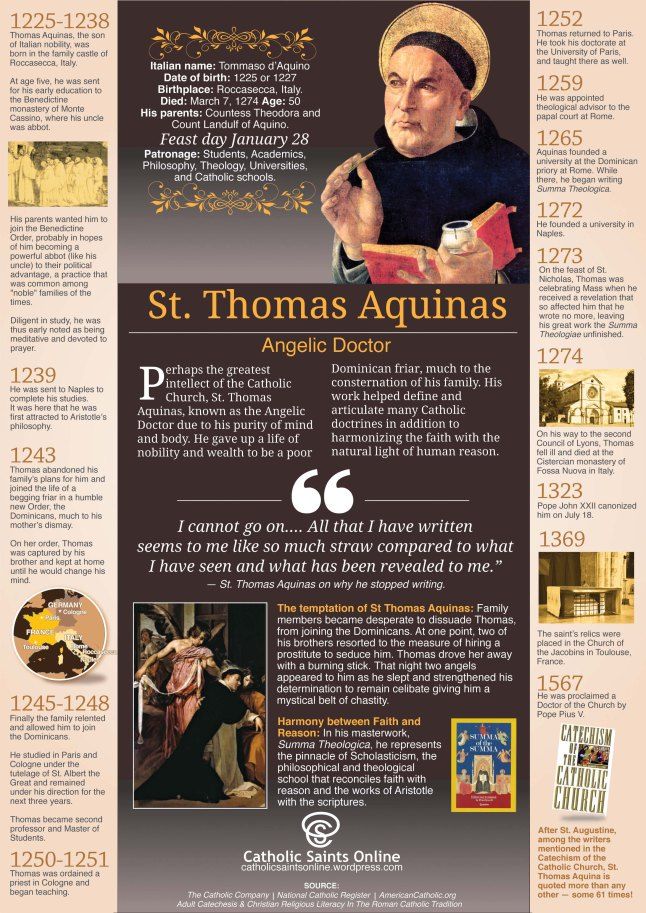
Saint of the Day – 28 January – St Thomas Aquinas O.P. (1225-1274 aged 49) THE ANGELIC DOCTOR – DOCTOR of the CHURCH/Priest, Religious, Theologian, Philosopher, Write, Teacher, Jurist. Also known as: Angelic Doctor/Doctor Angelicus/Doctor Communis/Great Synthesizer/The Dumb Ox/The Universal Teacher. Patron of Academics, Theologians, against storms; against lightning; apologists; book sellers; Catholic academies, Catholic Schools – (proclaimed on 4 August 1880 by Pope Leo XIII), Catholic universities, Catholic Colleges, chastity, learning; pencil makers, philosophers; publishers; scholars; students; University of Vigo and of St. Tomas;, Batangas; theologians, Aquino, Italy; Belcastro, Italy, Diocese of Aquino, Falena, Italy.
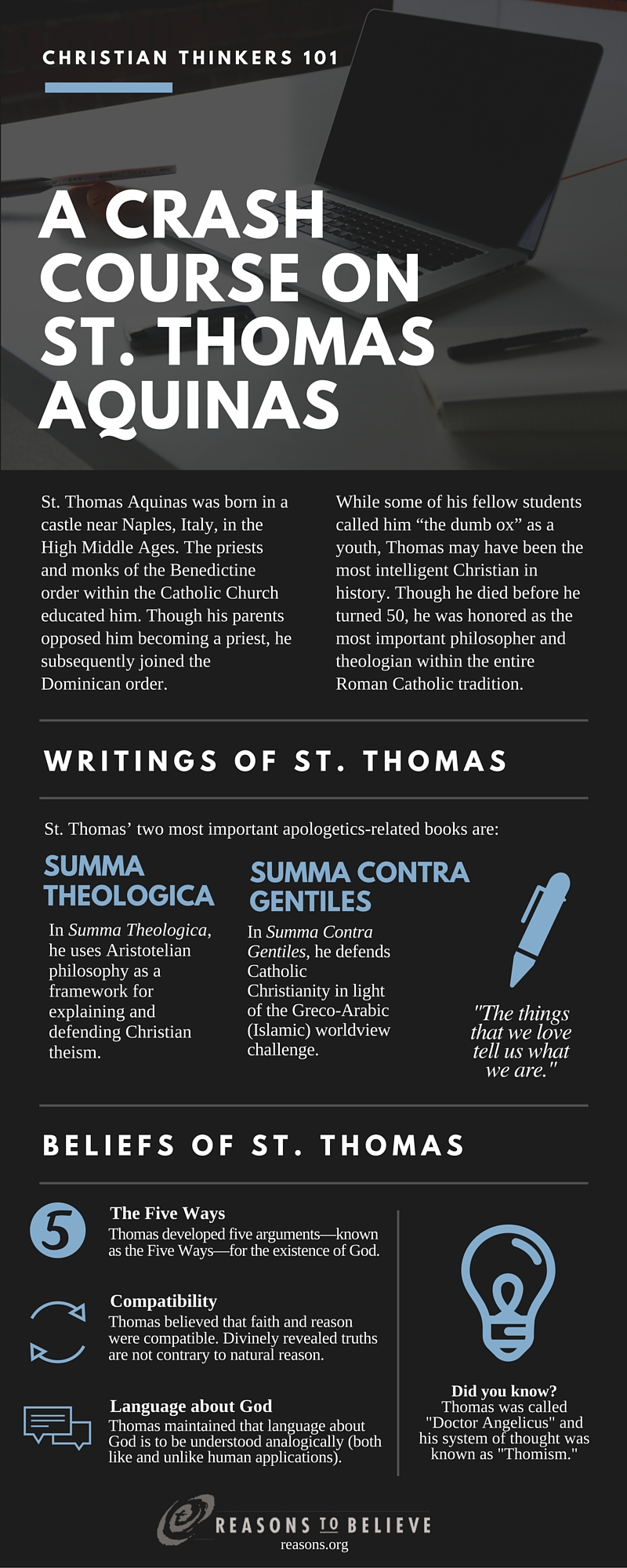
St Thomas Aquinas was an Italian Dominican friar, Catholic priest and Doctor of the Church. He was an immensely influential philosopher, theologian and jurist in the tradition of scholasticism, within which he is also known as the Doctor Angelicus and the Doctor Communis. The name Aquinas identifies his ancestral origins in the county of Aquino in present-day Lazio.
He was the foremost classical proponent of natural theology and the father of Thomism. His influence on Western thought is considerable, and much of modern philosophy developed or opposed his ideas, particularly in the areas of ethics, natural law, metaphysics and political theory. Unlike many currents in the Church of the time, Thomas embraced several ideas put forward by Aristotle—whom he called “the Philosopher”—and attempted to synthesize Aristotelian philosophy with the principles of Christianity. The works for which he is best known are the Summa Theologiae and the Summa contra Gentiles. His commentaries on Scripture and on Aristotle form an important part of his body of work. Furthermore, Thomas is distinguished for his eucharistic hymns, which form a part of the Church’s liturgy.
The Catholic Church honours Thomas Aquinas as a saint and regards him as the model teacher for those studying for the priesthood, and indeed the highest expression of both natural reason and speculative theology. In modern times, under papal directives, the study of his works was long used as a core of the required program of study for those seeking ordination as priests or deacons, as well as for those in religious formation and for other students of the sacred disciplines (philosophy, Catholic theology, church history, liturgy, and canon law).
Thomas Aquinas is considered one of the Catholic Church’s greatest theologians and philosophers. Pope Benedict XV declared: “This (Dominican) Order … acquired new luster when the Church declared the teaching of Thomas to be her own and that Doctor, honoured with the special praises of the Pontiffs, the master and patron of Catholic schools.”
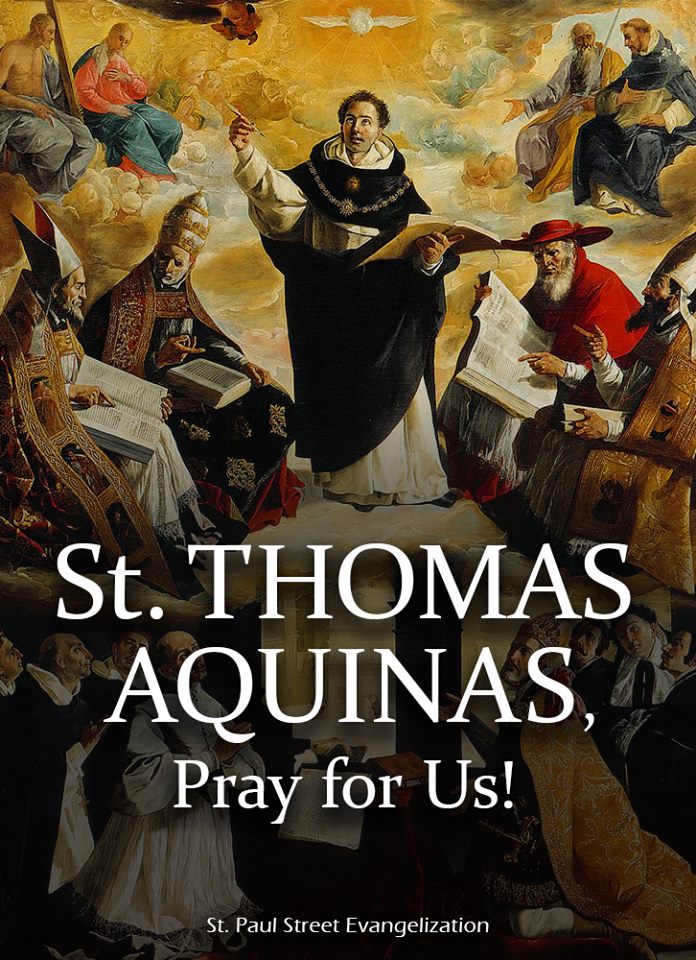
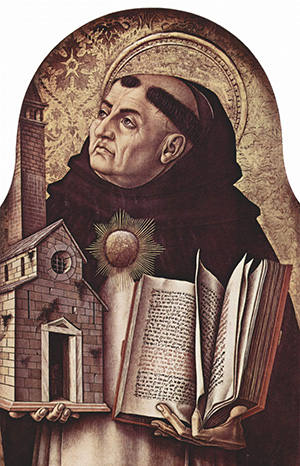
By universal consent, Thomas Aquinas is the preeminent spokesman of the Catholic tradition of reason and of divine revelation. He is one of the great teachers of the medieval Catholic Church, honoured with the titles Doctor of the Church and Angelic Doctor. (Image below – Benozzo Gozzoli – Triumph of St Thomas Aquinas)
At five he was given to the Benedictine monastery at Monte Cassino in his parents’ hopes that he would choose that way of life and eventually became abbot. In 1239, he was sent to Naples to complete his studies. It was here that he was first attracted to Aristotle’s philosophy. By 1243, Thomas abandoned his family’s plans for him and joined the Dominicans, much to his mother’s dismay. On her order, Thomas was captured by his brother and kept at home for over a year. Once free, he went to Paris and then to Cologne, where he finished his studies with Albert the Great. In class, his silence during discussions and his large size earned him the nickname “the dumb ox.” He held two professorships at Paris, lived at the court of Pope Urban IV, directed the Dominican schools at Rome and Viterbo, combated adversaries of the mendicants, as well as the Averroists and argued with some Franciscans about Aristotelianism.
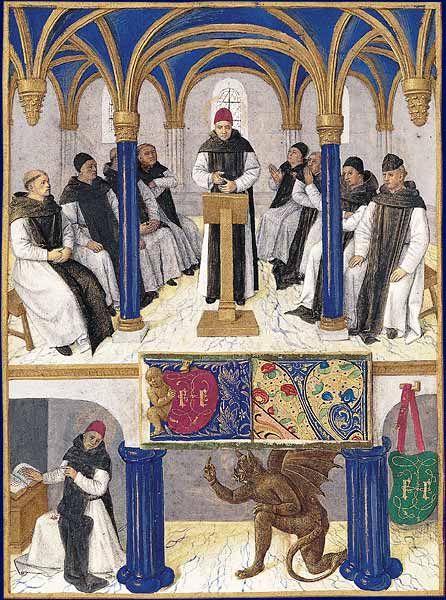
Jean Fouquet
His greatest contribution to the Catholic Church are his writings. The unity, harmony and continuity of faith and reason, of revealed and natural human knowledge, pervades his writings. One might expect Thomas, as a man of the gospel, to be an ardent defender of revealed truth. But he was broad enough, deep enough, to see the whole natural order as coming from God the Creator, and to see reason as a divine gift to be highly cherished.
The Summa Theologiae, his last and, unfortunately, uncompleted work, deals with the whole of Catholic theology. But this brilliant man was very humble. He knew that all his gifts came from God. While celebrating Mass on December 6, 1273, he received a revelation from God. After that, he stopped writing. He said “I cannot go on…. All that I have written seems to me like so much straw compared to what I have seen and what has been revealed to me.” Thomas died at age 49 on his way to the Council of Lyons, France. Pope Gregory X had asked him to come. When asked why he stopped writing, he replied, He died March 7, 1274.
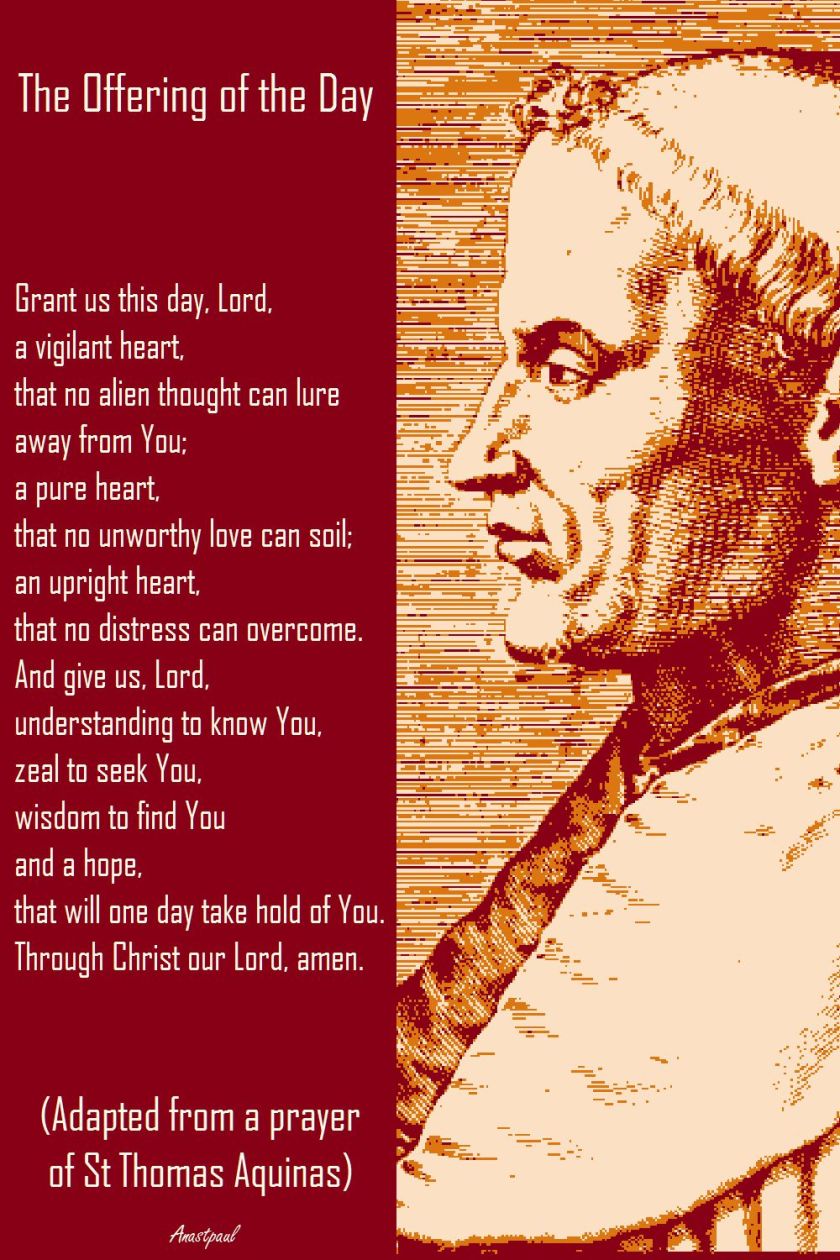
Grant us this day, Lord,
a vigilant heart,
that no alien thought can lure
away from You;
a pure heart,
that no unworthy love can soil;
an upright heart,
that no distress can overcome.
And give us, Lord,
understanding to know You,
zeal to seek You,
wisdom to find You
and a hope,
that will one day take hold of You.
Through Christ our Lord, amen.





 AnaStpaul
You must be logged in to post a comment.