St Agrarius the Martyr St Amand of Grisalba St Berthanc of Kirkwall St Brychan of Brycheiniog Blessed Catharine of Pallanza (c1437-1478) Virgin St Celsus Bishop St Diogenes of Philippi St Elstan of Abingdon St Galla of Rome St Gennard St Irenaeus of Sirmium St Marcellinus the Martyr
Martyrs of Sirmium : 7 Saints: A group of fourth century Martyrs at Sirmium, Pannonia (modern Sremska Mitrovica, Serbia). We know little more than seven of their names – Florentius, Geminianus, Moderata, Romana, Rufina, Saturus and Secundus.
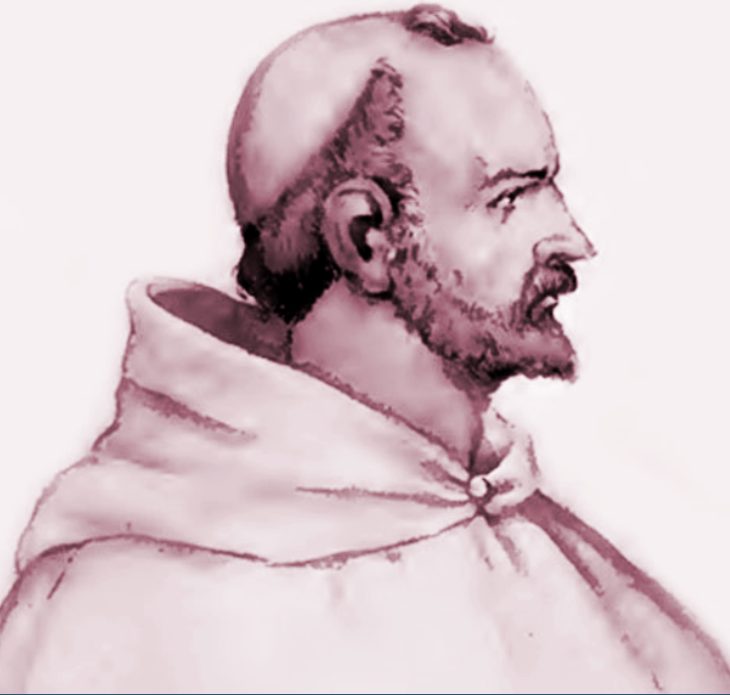
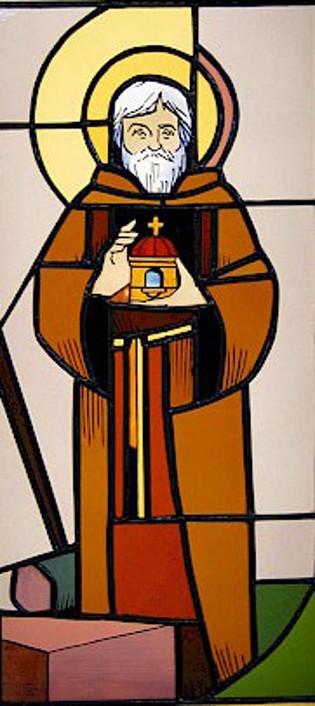
Saint of the Day – 6 April – St William of Eskilsoe (1125-1203) Priest, Abbot, Reformer – be it by his fervour, mortification, charity to the poor and uprightness of life. Born IN 1125 at Paris, France and died ion Easter Sunday, 6 April 1203 in Denmark of natural causes. Also known as – William of Aebelhold, William of Aebelholt, William of Ebelholt, William of Eskhill, William of Eskyll, William of Ise Fjord, William of Paris, William of the Paraclete, Wilhelm, Willem, Villem. St William was Canonised on 21 January 1224 by Pope Honorius III.
William was born of an illustrious family in Paris, about the year 1125 and received his education in the Abbey of St Germain-des-Prez, under his uncle Hugh, the Abbot. By the regularity of his conduct,and the sanctity of his manners, he was the admiration of the whole community. Having finished his studies, he was Ordained Deacon, then Priest and installed as a Canon in the Church of St Genevieve au-Mont. His assiduity in prayer, love of retirement and mortification,and exemplary life, seemed a troublesome censure of the slothful and worldly life of his colleagues and what ought to have gained him their esteem and affection, served to provoke their envy and malice against him.
Having in vain endeavoured to prevail on this reformer of their Chapter, as they called him, to resign his Canonry, in order to remove him, they presented him to the curacy of Epinay, a Church five leagues from Paris, depending on their chapter.
But not long after, Pope Eugenius III coming to Paris, in 1147 and being informed of the irregular conduct of these Canons, he commissioned the celebrated Sugar, Abbot of St Denys and Prime Minister to King Louis the Young, to expel them and introduce in their place, regular Canons from the Abbey of St Victor which was happily carried into execution, Eudo of St Victor’s being made the first Abbot. William with joy embraced this institution and was, by his fervour and devotion, a pattern of the most perfect Priest and Monk. He was in a short time chosen Sub-Prior.
The perfect spirit of religion and regularity which he established in that community, was an illustrious proof of the incredible influence which the example of a prudent Superior has over docile religious minds. His zeal for regular discipline, he tempered with so much sweetness and modesty in his injunctions, that made all to love the precept itself and, to practice with cheerfulness, whatever was prescribed them. The reputation of his wisdom and sanctity reached the ears of Absalon, Bishop of Roschild, in Denmark, who, being one of the most holy prelates of his age, earnestly sought to allure him into his Diocese. In 1161, he sent the provost of his Church, who seems to have been the learned historian Saxo the Grammarian, to Paris on this errand. A prospect of labours and dangers for the glory of God was a powerful motive with the Saint and, in 1165, he cheerfully undertook the voyage, taking with him 3 Monks.
The Bishop appointed him Abbot of Eskilsoe, a Monastery of Regular Canons which he had reformed. But when Abbot William arrived there were only six religious left at Eskilsoe, two of whom were dismissed when they refused to submit to the new rule. Here William sanctified himself by a life of prayer and austere mortification but had much to suffer from the persecutions of powerful men, from the extreme poverty of his house in a severe climate and, above all, from a long succession of interior trials but the most perfect victory over himself, was the fruit of his constancy, patience and meekness. On prayer was his chief dependence and it proved his constant support. And by his life of holiness, he soon filled the Monastery with new Monks who were drawn by the sanctity of their Abbot.
During the thirty years of his Abbacy, he had the comfort of seeing many walk with fervour in his steps. He never omitted wearing his hair-shirt, lay on straw and fasted every day. Penetrated with a deep sense of the greatness and sanctity of our Mysteries, he never approached the Altar without watering it with his tears, making himself a victim to God in the spirit of adoration and sacrifice, together with and through, the merits of the Holy Victim offered thereon: the dispositions in which every Christian ought to assist at it.
William died on 6 April, 1203, which that year was Easter Sunday. Numerous miracles were reported at his grave and in 1218 the Archbishop of Lund, Anders Sunesen, requested that Pope Honorius III appoint a local commission to investigate the claims of William’s sanctity. William was Canonised only 21 years after his death by Pope Honorius III in 1224. In 1238 St William’s Relics were translated to the new Church built at his Abbey of Eskilsoe. In time some of his Relics were shared in various Cathedrals and Churches across Denmark.
St Agrarius the Martyr St Amand of Grisalba St Berthanc of Kirkwall St Brychan of Brycheiniog Bl Catherine of Pallanza St Diogenes of Philippi St Elstan of Abingdon St Galla of Rome St Gennard St Irenaeus of Sirmium St Marcellinus the Martyr
St Philaret of Calabria St Platonides of Ashkelon St Prudentius of Troyes St Pope Sixtus I St Timothy of Philippi St Ulched St Urban of Peñalba St William of Eskilsoe (1125-1203) Priest, Abbpt St Winebald
Martyrs of Sirmium : 7 Saints – A group of fourth century Martyrs at Sirmium, Pannonia (modern Sremska Mitrovica, Serbia). We know little more than seven of their names – Florentius, Geminianus, Moderata, Romana, Rufina, Saturus and Secundus.

 AnaStpaul
You must be logged in to post a comment.