St Antony St Beatrix of Rome Bl Beatrix of Valfleury St Callinicus of Paphlagonia St Faustinus of Rome St Faustinus of Spello St Felix of Rome St John the Soldier Bl José Calasanz Marqués St Kilian of Inishcaltra St Lek Sirdani Bl Luis Bertran OP (1594-1627) Martyr, Spanish Priest and Missionary of the Order of Preachers. St Lupus of Troyes Bl Mancius of the Cross St Olaf II St Olaus of Sweden Bl Petrus of Saint Mary St Pjetër Çuni St Prosper of Orleans St Rufo of Rome St Seraphina St Serapia of Syria St Sulian
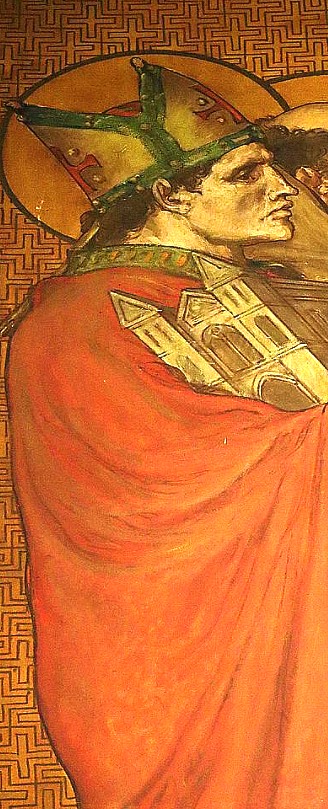
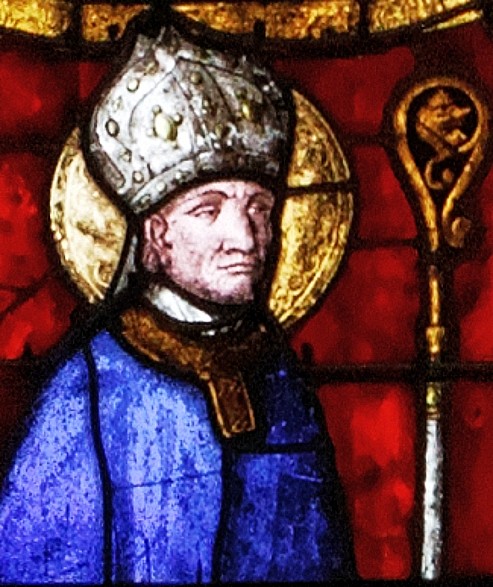
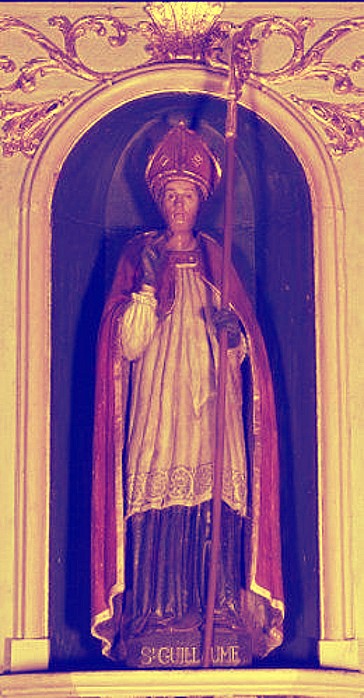
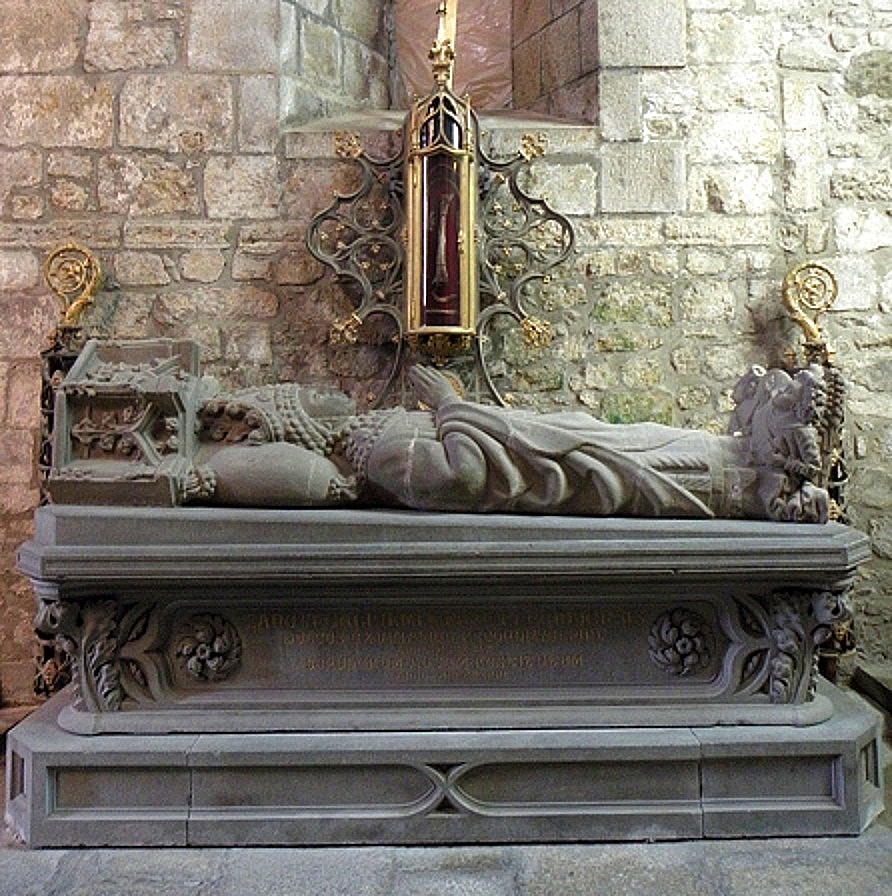
Saint of the Day – 29 July – St William Pinchon of Saint Brieuc (1180-1234) Bishop of Saint Brieuc, Confessor Born as Guillaume Pinchon on 11 October 1180 in Saint-Alban, San-Brieuc, Brittany (in France) and died on 29 July 1234 of natural causes. William was a champion for the poor and defended the rights and privileges of the Church against secular intervention. This was a cause of his exile from his Diocese but he returned not long after his exile and set himself on the construction of a new Cathedral which was still in construction at the time of his death. Patronage – Diocese of Saint-Brieuc, France. Also known as – William Pinchon, William of San Brieuc, Guillaume Pinchon.His body is incorrupt.
William was born in 1175 in Saint-Alban to the peasants Oliver Pinchon and Jane Fortin. He was, from a young age,, by the innocence of his manners, his admirable meekness, humility, chastity, mortification, charity and devotion, an accomplished model of all virtues. He received the tonsure and some years later, the Holy Orders of Deacon and Priest, at the hands of Josselin, Bishop of Saint-Brieuc.
He served that Church and Diocese, under his two predecessors, Bishops Peter and Sylvester and succeeded the latter in the episcopal dignity about the year 1220.
The poor were his treasurers and not content to exhaust on them whatever he possessed, he often borrowed great stores of corn and other necessary provisions for their relief. The bare boards were usually his bed – for his domestic servants discovered that he never made use of the soft bed which they prepared for him. In 1225 he sold all his possessions in a famine to aid the poor and homeless.
The Duke Peter I forced him into a brief exile in 1228 and he spent that time living for a while in Poitiers before he returned to his Diocese in 1230 after the Duke reconciled with Pope Gregory IX. It was during his exile in Poitiers that he assisted the ill Bishop there and helped him in his ecclesial duties.
He died in 1234 and his body was deposited in his Cathedral and taken up incorrupt in 1284 . Pope Innocent IV Canonised Pinchon on 24 March 1247 a mere 13 years after his death.
Saint Guillaume Pinchon and Saint Maurice Duault – Saints of the Diocèse of Saint-Brieuc by Pierre de Rennes
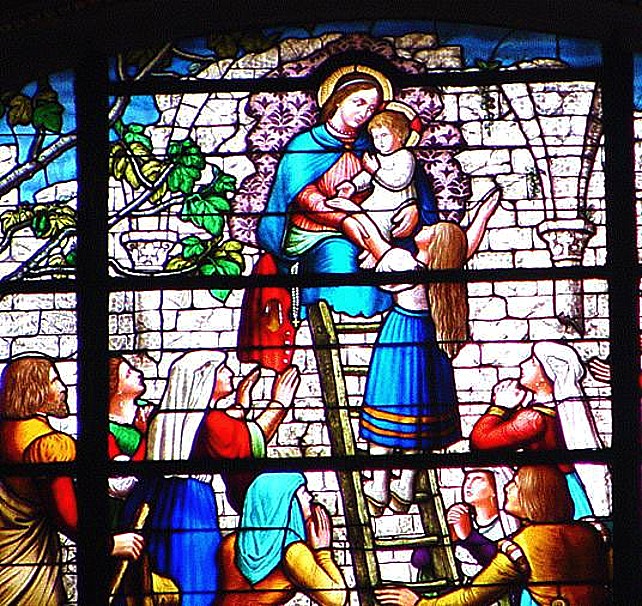
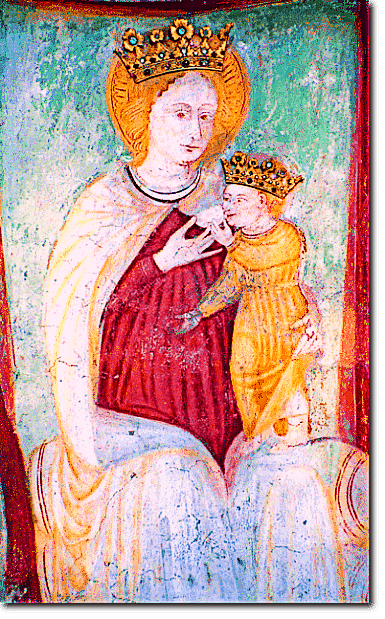
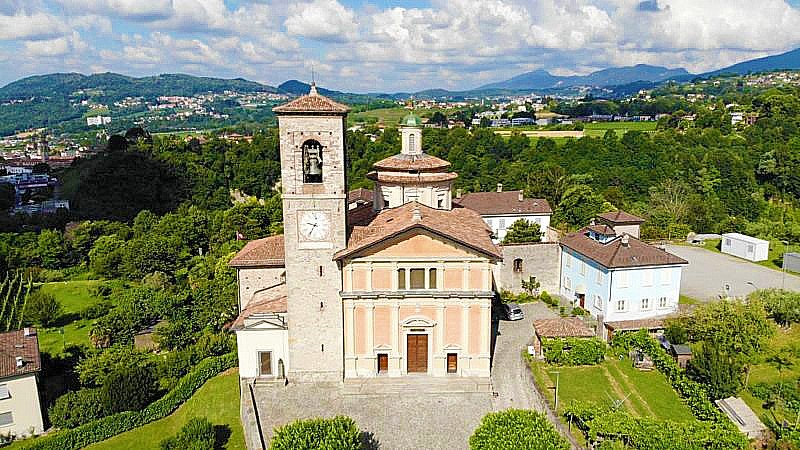
Madonna dei Miracoli / Holy Mary of Miracles, Morbio Inferiore, Ticino, Switzerland (1594) – 29 July:
Where the Sanctuary of Morbio now stands, a castle stood centuries ago, attested in 1198 and destroyed in the first half of the sixteenth century. Only the ruins of a Chapel, dedicated to St Bernardino of Siena, transformed over time into a pile of rubble, buried by weeds, brambles and thorns., remained. Surrounded by ivy and fortunately well preserved, remained the Fresco in the Chapel, depicting the Virgin with the Child. The history of the Sanctuary of Holy Mary of Miracles began on 29 July 1594. It was a Friday when the two mothers with their daughters, Catherine and Angela , respectively ten and seven years old, travelled to Morbio to entreat the assistance of Fr Gaspare Basbetrini. They were sick girls, tormented by the devil and had travelledp to Morbio, to ask for the blessing of Don Gaspare Barberini, the assistant Priest at Morbio, who was well-known as an Exorcist. However, sadly for the pilgrims, Fr Basbetrini was absent. To the tiredness of the journey and the sadness of illness, the bitterness of disappointment was added. Among the ruins of the ancient castle the little group of supplicants waited and discovered on the crumbling and crumbling walls, the faded remains of a fresco depicting the Virgin in a deeply maternal position nursing Baby Jesus. The two mothers knelt before the Virgin with their daughters and prayed in deep sadness and devotion for the intercession of the Holy Mother to come to the aid of the sick children. And then the miracle happened. Those two poor simple and innocent creatures were cured. This is Morbio’s miracle – the Madonna appeared to the two little girls and cureds them of all their illnesses, dispelling any demonic presence within them. Our Lady spoke to the elder girl, Catherine and instructed her to tell the Bishop that the Church should be rebuilt and that the Holy Rosary must be said everyday. Eight days after the event, on 5 August 1594, the episcopal curia of Como, whose ecclesiastical jurisdiction also extended to the southern regions of Ticino, instructed the regular canonical process, which recognized , upon the sworn deposition of the main eyewitnesses, the truth of what happened and their prodigious and supernatural nature. A stained-glass window, located at the top of the apse and placed at the beginning of this century, illustrates and reminds those who enter the Sanctuary of this miracle. Catherine is depicted on a ladder, with her arms outstretched, listening in front of the image of the Madonna dei Miracoli. At the foot of the ladder, Angela, the other sick girl, is lying asleep.
In a short while an Oratory was built on the site to recite the Rosary and celebrate Mass there, as the Madonna had said to Catherine, while on 29 July 1595, the Anniversary of the apparition and the miracle, the first stone was blessed and laid for the construction of the Sanctuary, Consecrated on 16 May 1631 by the Bishop of Como, Msgr Filippo Archinti.
St Antony St Beatrix of Rome Bl Beatrix of Valfleury St Callinicus of Paphlagonia Bl Charles-Antoine-Nicolas Ancel St Faustinus of Rome St Faustinus of Spello St Felix of Rome St John Baptist Luo Tingyin St John the Soldier Bl José Calasanz Marqués St Joseph Zhang St Kilian of Inishcaltra St Lek Sirdani Bl Luis Bertran St Lupus of Troyes Bl Mancius of the Cross St Martha Wang St Olaf II St Olaus of Sweden St Paulus Chen Changpin Bl Petrus of Saint Mary St Pjetër Çuni St Prosper of Orleans St Rufo of Rome St Seraphina St Serapia of Syria St Simplicius of Rome St Sulian
St William Pinchon of Saint Brieuc (1180-1234) Bishop of Saint Brieuc, Confessor — Four Anonymous Martyrs
Martyrs of Calanda – 8 beati: A group of Dominican priests and friars who were martyred over the course of a day in the same town by the same group of anti-Christian forces in the Spanish Civil War. • Antonio Manuel López Couceiro • Felicísimo Díez González • Gumersindo Soto Barros • Lamberto María de Navascués de Juan • Lucio Martínez Mancebo • Matías Manuel Albert Ginés • Saturio Rey Robles • Tirso Manrique Melero They were martyred on 29 July 1936 in Calanda, Teruel, Spain I.
Martyrs of Lleida – 12 beati: Carmelites of the Ancient Observance novices, friars and priests who were all martyred together in the Spanish Civil War. • Àngel Prat Hostench • Eliseo Maneus Besalduch • Gabriel Escoto Ruiz • Ginés Garre Egea • Joan Maria Puigmitjà Rubió • Joan Prat Colldecarrera • Josep Solé Rovira • Lluis Fontdecava Quiroga • Manuel Serrano Buj • Miquel Soler Sala • Pere Dorca Coromina • Pere Ferrer Marín They were martyred on 29 July 1936 in Clot dels Aubens, Cervera, Lleida, Spain and Martyred in the Spanish Civil War: Thousands of people were murdered in the anti-Catholic persecutions of the Spanish Civil War from 1934 to 1939. • Blessed Bartolomé Rodríguez Soria
Martyrs of Rome – 23 saints Eugene Flora the Martyr Lucilla Theodore




 AnaStpaul
You must be logged in to post a comment.