Posted in Against EPIDEMICS, Against SNAKE BITES / POISON, EYES - Diseases, of the BLIND, GOUT, KNEE PROBLEMS, ARTHRITIS, etc, Of ANIMALS / ANIMAL WELFARE, PATRONAGE-INFERTILITY & SAFE CHILDBIRTH, SAINT of the DAY, The CREED

Saint of the Day – 3 November – Saint Pirminus (c690-753) Bishop

Saint of the Day – 3 November – Saint Pirminus (c690-753) Missionary Bishop on the Upper Rhine in Germany, Abbot, Founder of Monasteries, Reformer, Miracle-worker, Born in around 690 in Ireland or in Narbonne or in Paris, France and died on 3 November in 753 in Hornbach, Germany. Patronages – against eye ailments, against plague/epidemics, against poisoning, against rheumatism, against snake bites, against vermin, for happy birth, of livestock; in Austria –
Innsbruck; in France – Alsace; in Germany – Amorbach, Monsheim, Palatinate, Pirmasens, Reichenau Island, Speyer, Diocese (with St Bernard).
Also known as – Pirmin, Pirminius.

The Roman Martyrology reads today: “The departure from this life of St Pirminus, Bishop of Meaux.

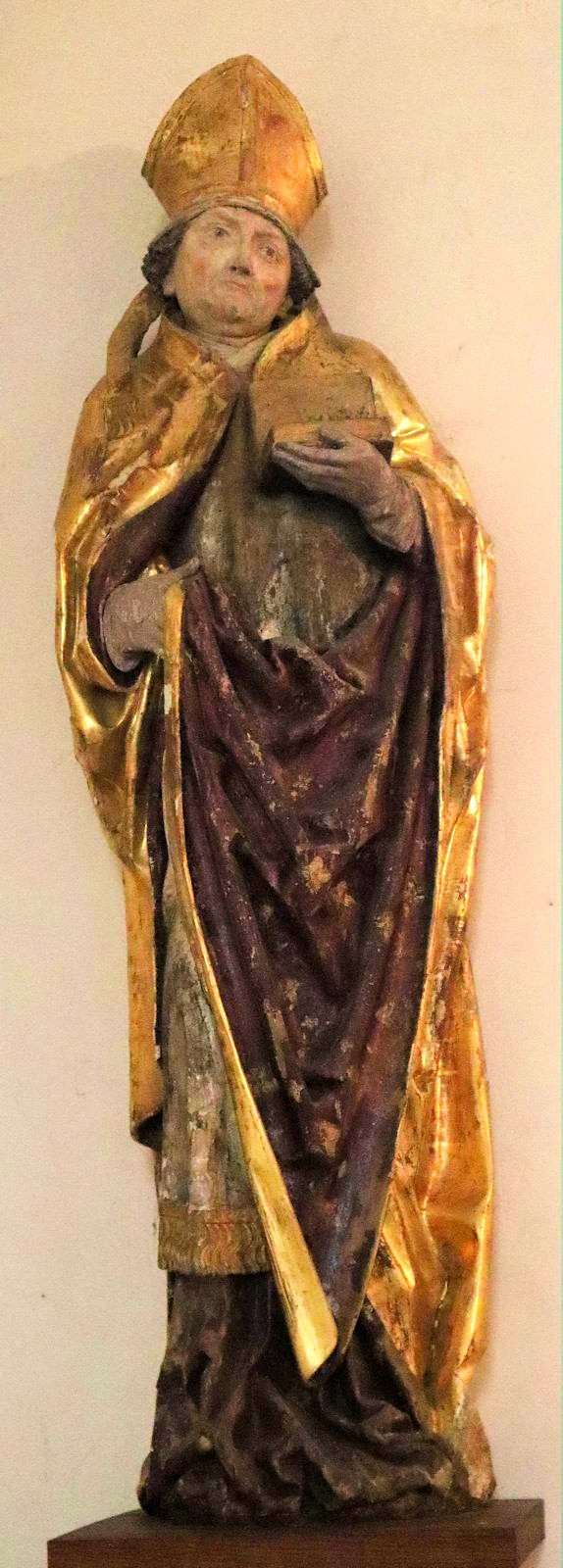
St Pirminus Statue in the Murbach Monastery

Pirminus is described in various sources, as a Visigoth, an Irish Scot, or of Roman origin. He was Consecrated as an itinerant Bishop around 720 – possibly in Meaux in France – and sent on a mission to north-western France and the Upper Rhine region.
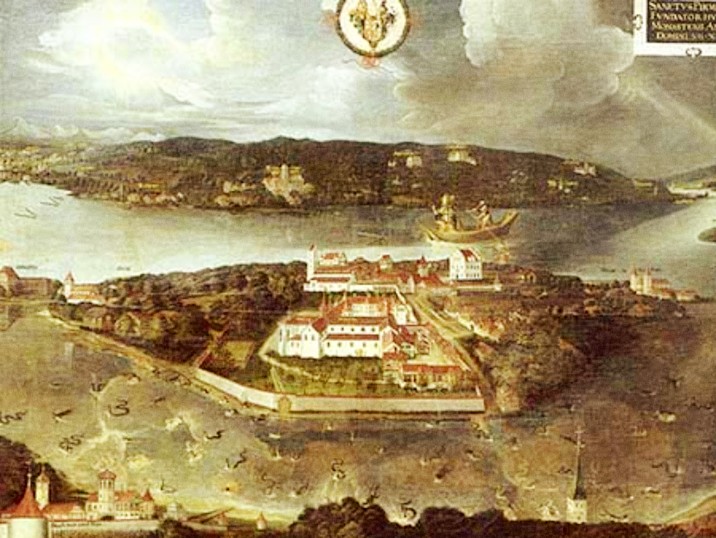
Arrival of Saint Pirmin on the Island of Reichenau

He maintained good relations with the Frankish Mayor of the Palace, Charles Martel, who, in 724, placed him under his protection and founded numerous Monasteries, including probably Pfungen near Winterthur and certainly the Mittelzell Monastery on the Lake Constance Island of Reichenau. All the crawling creatures which damaged the Island are said to have fallen into the water upon his arrival and thus disappeared. According to tradition, Pirminus remained on Reichenau until 726 and was then expelled by Duke Theobald.

Pirminus then went to Alsace to continue his work there. Here he was active in the Carolingian territory. In 727, he founded what was then Murbach Abbey and was able to realise his ideas there, that is, monastic life based on the Benedictine Rule, understood as a permanent pilgrimage without worldly ties and the Abbey’s freedom from the local Bishop, led by its own Abbot. Pirminus held this office in Murbach. The founding of the Monasteries in Neuweiler (present-day Neuwiller-lès-Saverne ) , Schwarzach in Rheinmünster in Baden and Pfäfers near Chur, are also attributed to Pirminus. According to local tradition, he lived for a time in the cave near Winterthur which was later named after him.
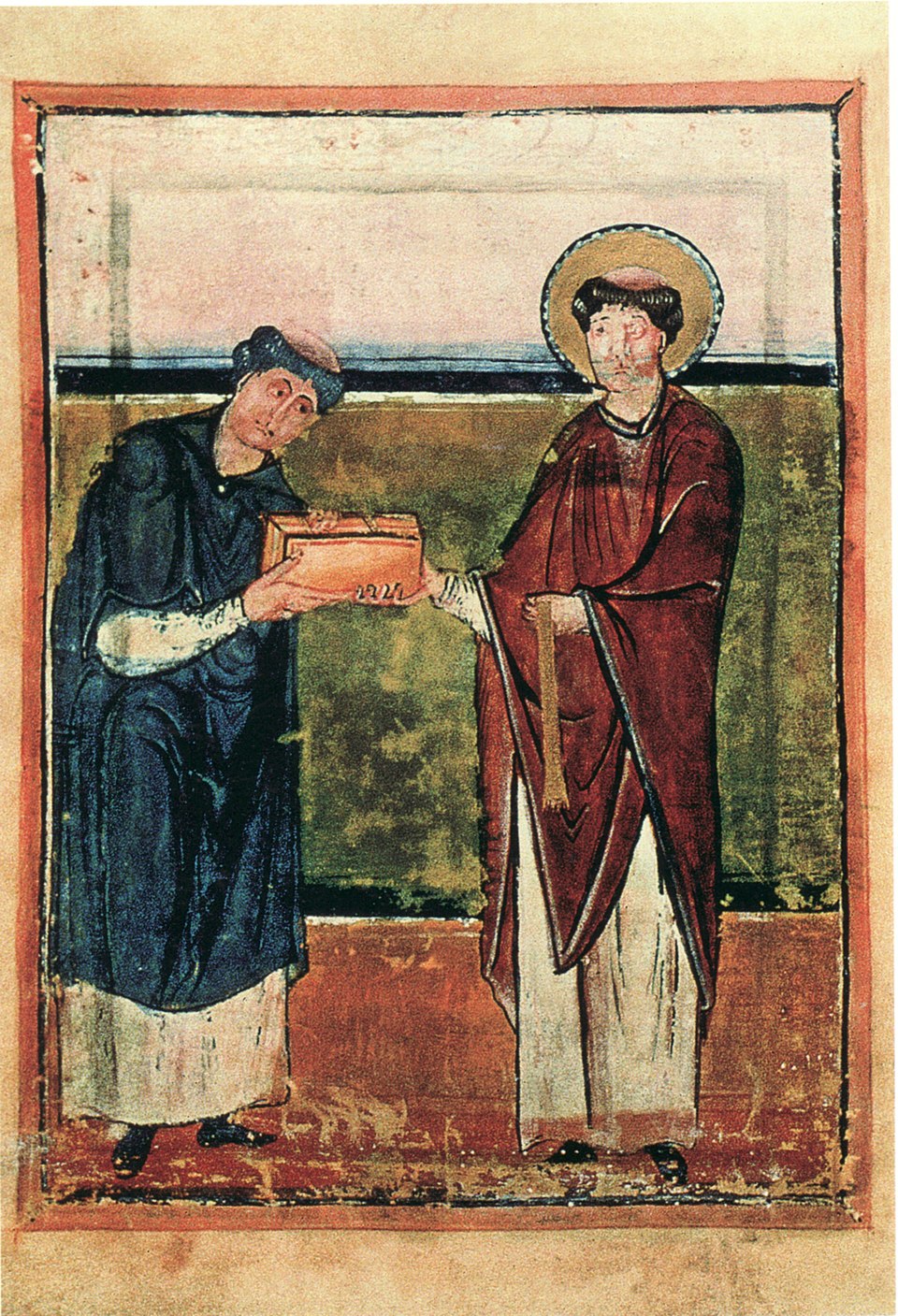
Illustration from the Hornbach Sacramentary: Abbot Adalbert of Hornbach presents the manuscript to his Patron Saint, St Pirminus

According to 9th and 12th Century traditions, Pirminus founded the Monastery in Gengenbach with the support of the Frankish nobleman Ruthard. By 820, it was the largest Monastery in the region and an Imperial Abbey. He is said to have introduced the Benedictine Rule at the Monastery in Schuttern, thus initiating its flourishing. The Monastery of Amorbach in the Odenwald may also indeed, have originated by our Saint Pirminus. In around 742, Pirminus founded the Monastery in Hornbach in the Palatinate on a hill where a Roman sanctuary had likely previously stood. He reformed the Monasteries in Weißenburg /Wissembourg and Maursmünster Marmoutier in Alsace which had been founded in the 5th/6th Centuries and, in 741 he sent Monks from Mittelzell to found Niederaltaich Abbey.

St Pirminus Relics at Speyer Cathedral

Pirminus died in his Monastery in Hornbach. As early as the end of the 8th Century, he was referred to as a Saint in a manuscript from Metz . After 814, Abbot Wyerund of Hornbach Monastery had Pirminus’ remains exhumed and interred in the Church he had recently built. In 827, Pirminus was first mentioned as the Church’s Patron Saint, and Hrabanus Maurus wrote a Tomb Inscription. The Tomb was excavated in 1953 and, in 1957, the present Chapel was built over it.
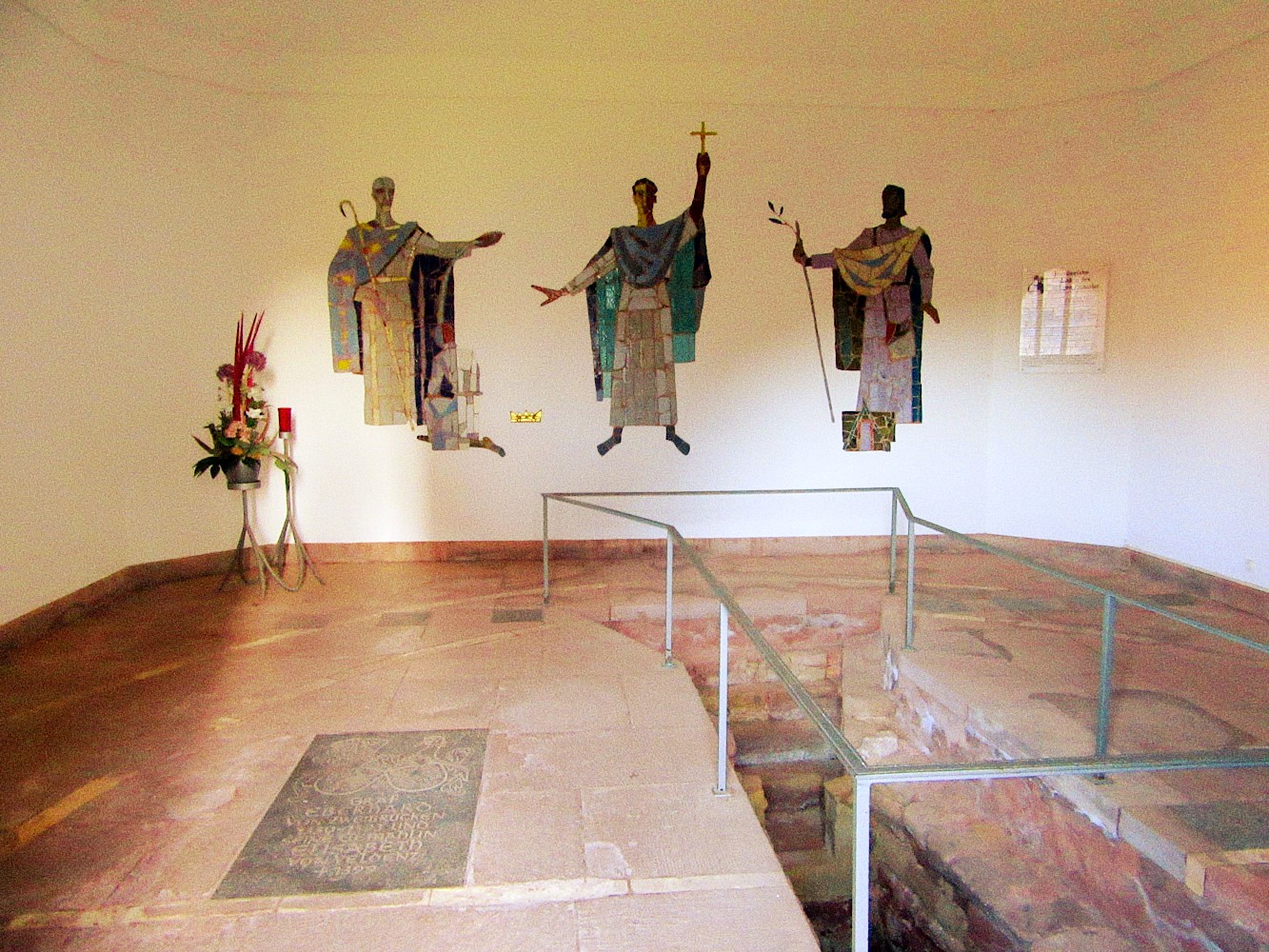
St Pirminus Grave built in 1957

“The first recorded version of the Apostles’ Creed, as it is known today, is found in the Treatise De singulis libris canonicis scarapsus (Excerpt from the Unique Canonical Books), most possibly written by St Pirminus.
In it, he describes how the Apostles were gathered at Pentecost, the Holy Ghost descended upon them and they then began to speak in turn:
Peter : I believe in God, the Father Almighty, Creator of Heaven and earth.
John : And in Jesus Christ, His only Son, our Lord.
James said: He was conceived by the Holy Ghost and born of the Virgin Mary.
Andrew said: He suffered under Pontius Pilate, was Crucified, Died and was buried.
Philip said: He descended into Hades.
Thomas said: On the third day He Rose from the dead.
Bartholomew said: He Ascended into Heaven and was seated at the Right Hand of God the Father Almighty.
Matthew said: From thence He shall come to judge the living and the dead.
James, the son of Alpheus, said: I believe in the Holy Ghost.
Simon the Zealot said: And the Holy Catholic Church.
Jude, the son of James, said: In the communion of the Saints and the forgiveness of sins.
Likewise, Thomas said [he spoke a second time]: In the Resurrection of the body and eternal life.”
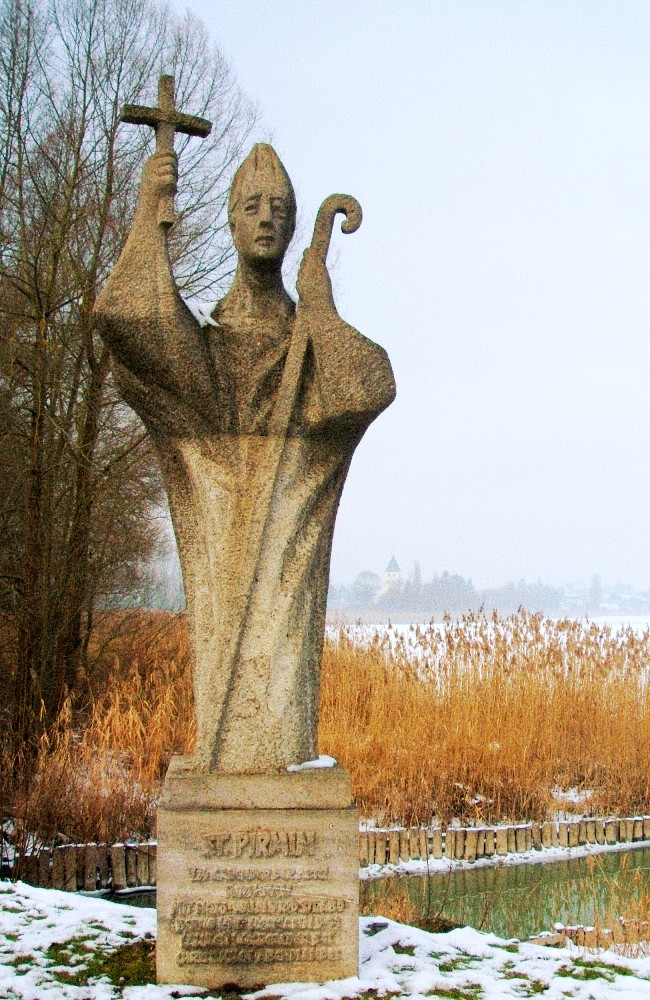
Pirminus Statue on Reichenau Island
Posted in "Follow Me", CREEDS, DOCTORS of the Church, FATHERS of the Church, PRAYERS of the SAINTS, QUOTES on LOVE, QUOTES on LOVE of GOD, QUOTES on SUFFERING, QUOTES on VOCATIONS, The APOSTLES & EVANGELISTS

Quote/s of the Day – 28 October – The Apostles Sts Simon and Jude

Quote/s of the Day – 28 October – The Feast of Saints Simon and Jude, Apostles

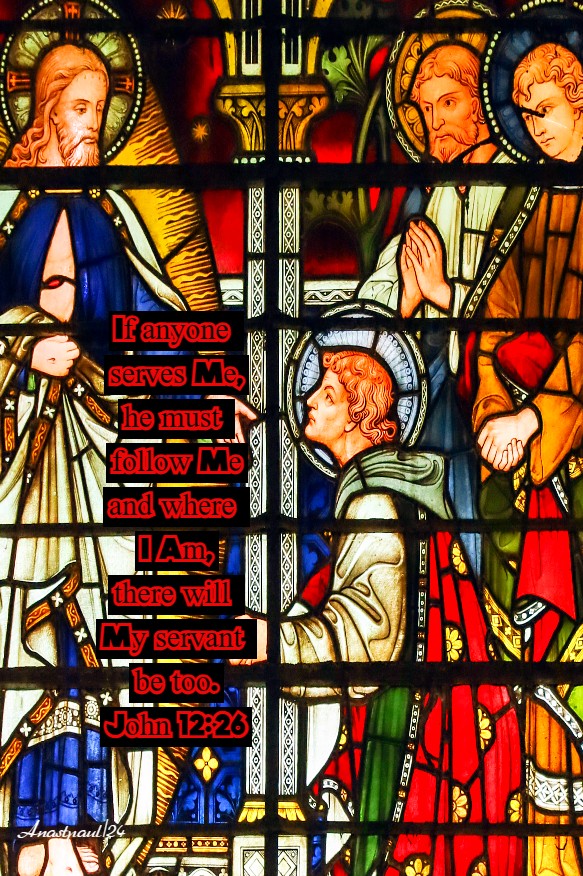
If anyone serves Me,
he must follow Me
and where I Am,
there will My servant be too.

John 12:26

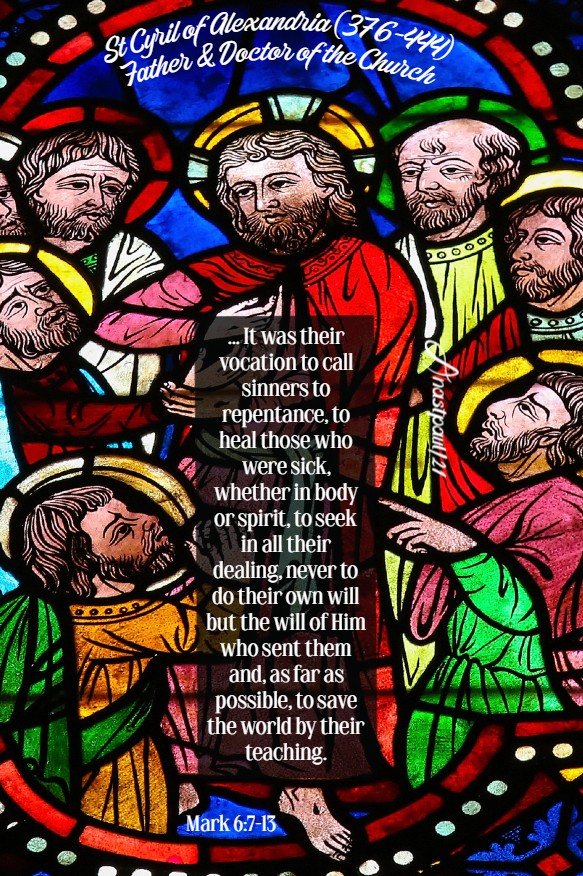
“… It was their vocation
to call sinners to repentance,
to heal those who were sick,
whether in body or spirit,
to seek in all their dealing,
never to do their own will
but the Will of Him who sent them and,
as far as possible, to save the world
by their teaching.”

St Cyril of Alexandria (376-444)
Bishop, Father & Doctor of the Church

Love consists,
not in feeling great things
but, in having great detachment
and in suffering for the Beloved.

St John of the Cross (1542-1591)
Doctor Mysticus

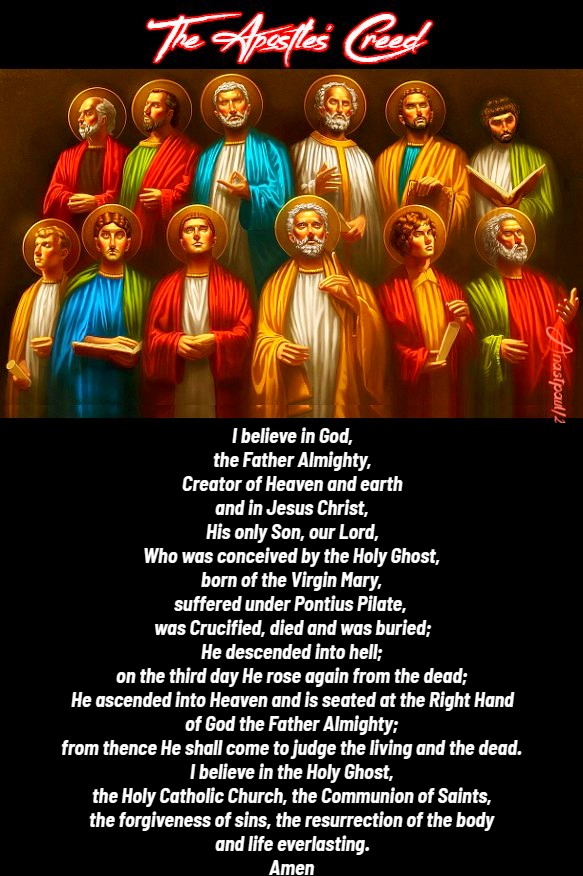
The Apostles’ Creed

I believe in God,
the Father Almighty,
Creator of Heaven and earth
and in Jesus Christ,
His only Son, our Lord,
Who was conceived by the Holy Ghost,
born of the Virgin Mary,
suffered under Pontius Pilate,
was crucified, died and was buried;
He descended into hell;
on the third day He rose again from the dead;
He ascended into Heaven
and is seated at the Right Hand
of God the Father Almighty;
from thence He shall come
to judge the living and the dead.
I believe in the Holy Ghost,
the Holy Catholic Church,
the Communion of Saints,
the forgiveness of sins,
the resurrection of the body
and life everlasting.
Amen

Prayer of St Patrick

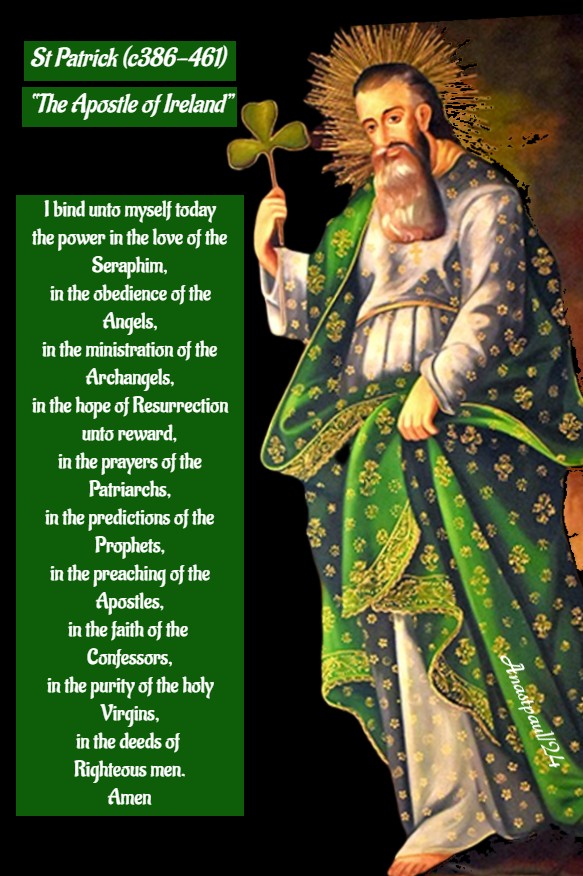
I bind unto myself today
the power in the love of the Seraphim,
in the obedience of the Angels,
in the ministration of the Archangels,
in the hope of Resurrection unto reward,
in the prayers of the Patriarchs,
in the predictions of the Prophets,
in the preaching of the Apostles,
in the faith of the Confessors,
in the purity of the holy Virgins,
in the deeds of Righteous men.
Amen

St Patrick (c386-461)
“The Apostle of Ireland”

Posted in "Follow Me", ArchAngels and Angels, CATHOLIC-PRAYERS OF THE CHURCH, CHRIST, the WAY,TRUTH,LIFE, CREEDS, DOCTORS of the Church, FATHERS of the Church, GOD ALONE!, In the PRESENCE of GOD, Of and for VOCATIONS, PRAYERS of the CHURCH, PRAYERS of the SAINTS, QUOTES on PURITY, Quotes on SALVATION, QUOTES on SELF-DENIAL, The APOSTLES & EVANGELISTS, The HEART, The WILL of GOD

Quote/s of the Day – 15 July – The Division of The Apostles

Quote/s of the Day – 15 July – “The Month of the Most Precious Blood” – The Feast of the the “Divisio Apostolorum – The Division of the Apostles” also known as (‘Dispersion’)

“… It was their vocation
to call sinners to repentance,
to heal those who were sick,
whether in body or spirit,
to seek in all their dealing,
never to do their own will
but the Will of Him who sent them and,
as far as possible, to save the world
by their teaching.”

St Cyril of Alexandria (376-444)
Bishop, Father & Doctor of the Church

The Apostles’ Creed

I believe in God,
the Father Almighty,
Creator of Heaven and earth
and in Jesus Christ,
His only Son, our Lord,
Who was conceived by the Holy Ghost,
born of the Virgin Mary,
suffered under Pontius Pilate,
was crucified, died and was buried;
He descended into hell;
on the third day He rose again from the dead;
He ascended into Heaven
and is seated at the Right Hand
of God the Father Almighty;
from thence He shall come
to judge the living and the dead.
I believe in the Holy Ghost,
the Holy Catholic Church,
the Communion of Saints,
the forgiveness of sins,
the resurrection of the body
and life everlasting.
Amen

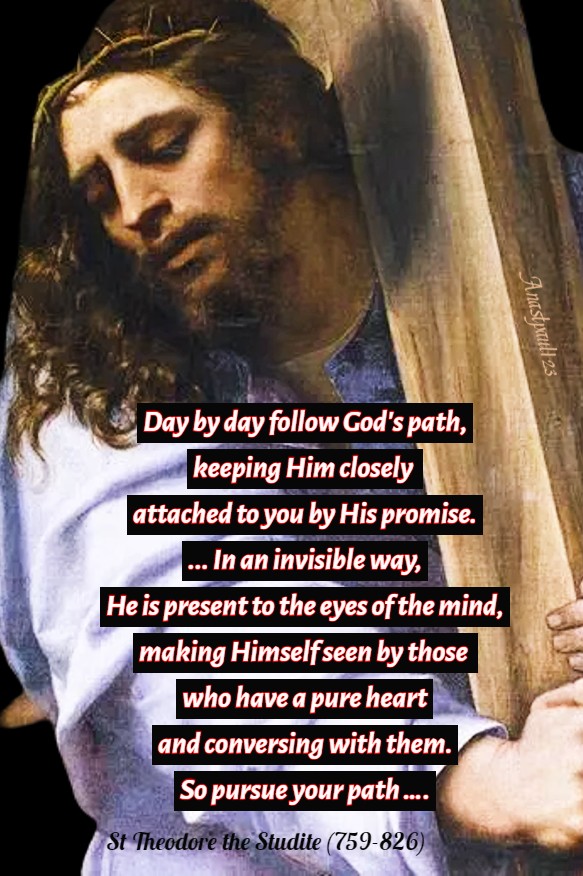
Day by day follow God’s path,
keeping Him closely attached to you by His promise.
In fact, He Himself said, through the mediation of His Apostles,
to all those who seek His will and His testimonies
that He would be with them
until the end of the world (Mt 28:20)
where paths and footsteps
will be unknown (cf Ps 76:20),
as the divine David said in his songs.
Yet, in an invisible way,
He is present to the eyes of the mind,
making Himself seen by those
who have a pure heart
and conversing with them.
So pursue your path 
…. ”

St Theodore the Studite (759-826)
Abbot, Confessor, Father of the Church

Prayer of St Patrick

I bind unto myself today
the power in the love of the Seraphim,
in the obedience of the Angels,
in the ministration of the Archangels,
in the hope of Resurrection unto reward,
in the prayers of the Patriarchs,
in the predictions of the Prophets,
in the preaching of the Apostles,
in the faith of the Confessors,
in the purity of the holy Virgins,
in the deeds of Righteous men.
Amen

St Patrick (c386-461)
“The Apostle of Ireland”